Description
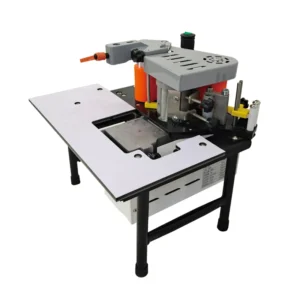
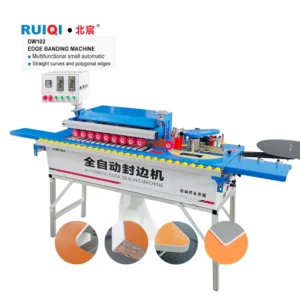
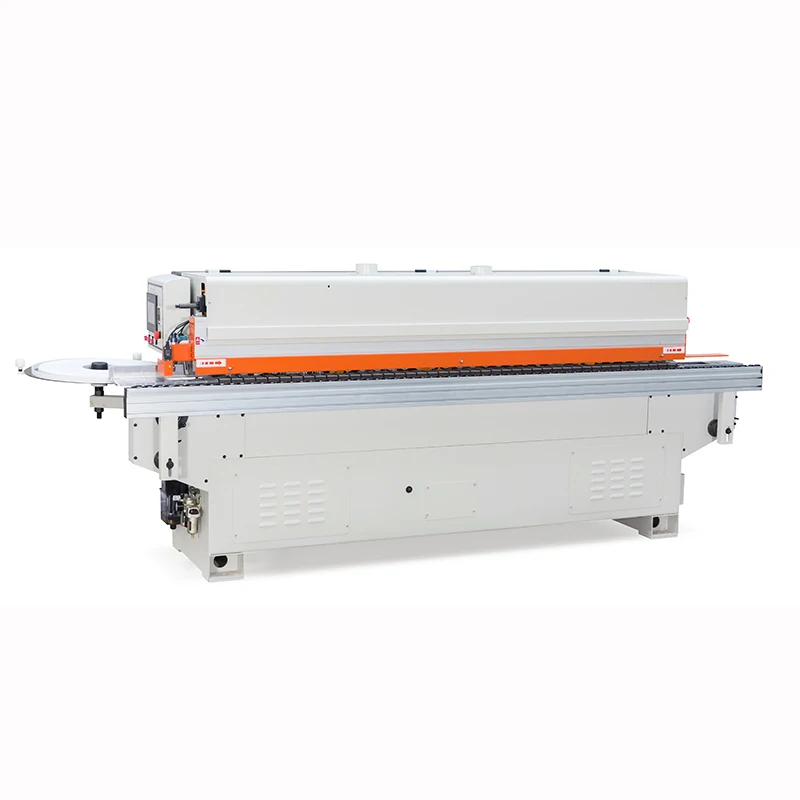
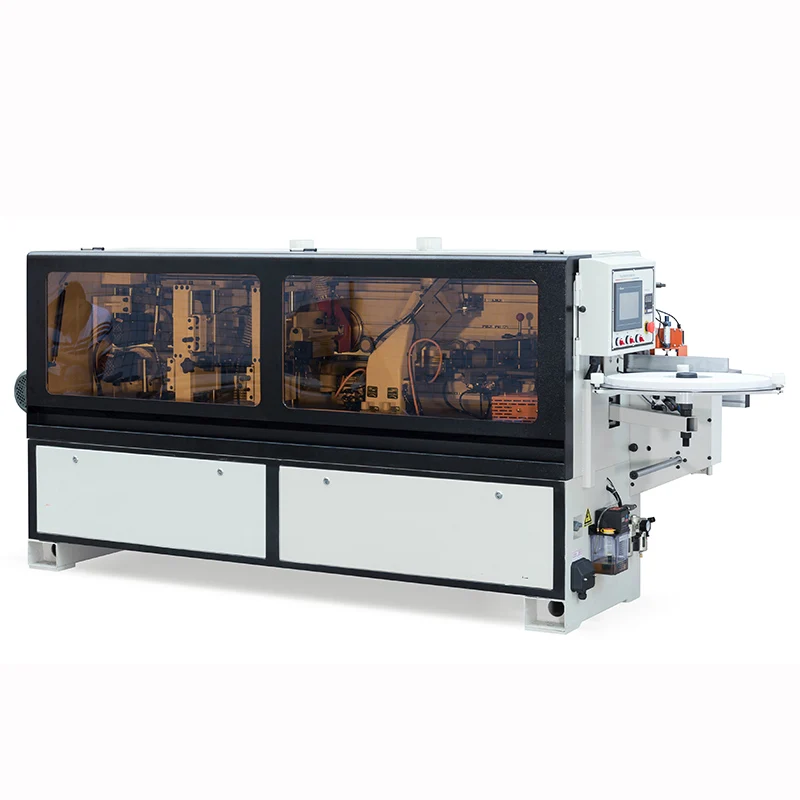
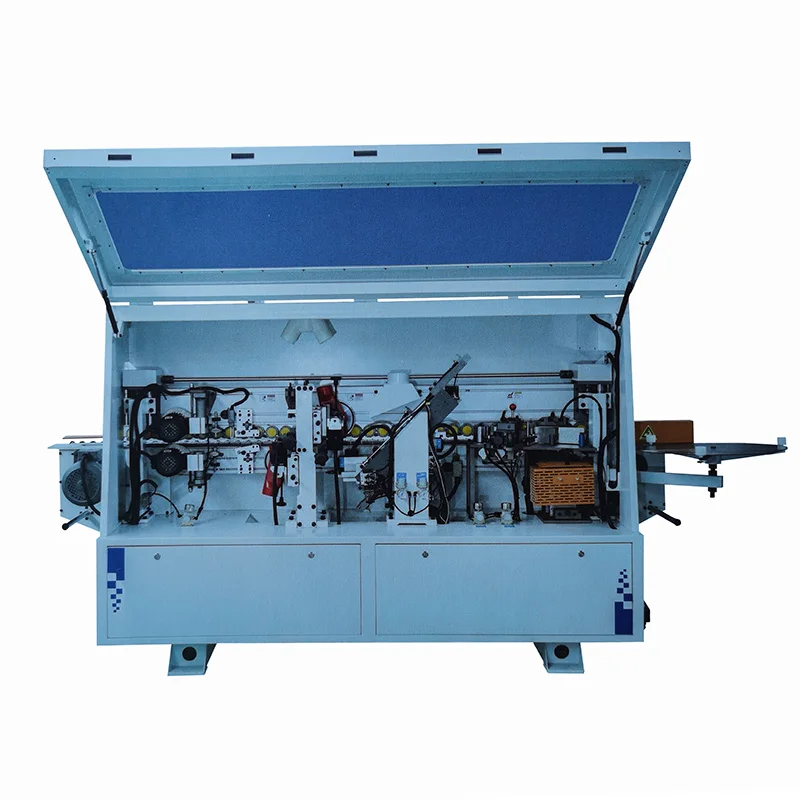
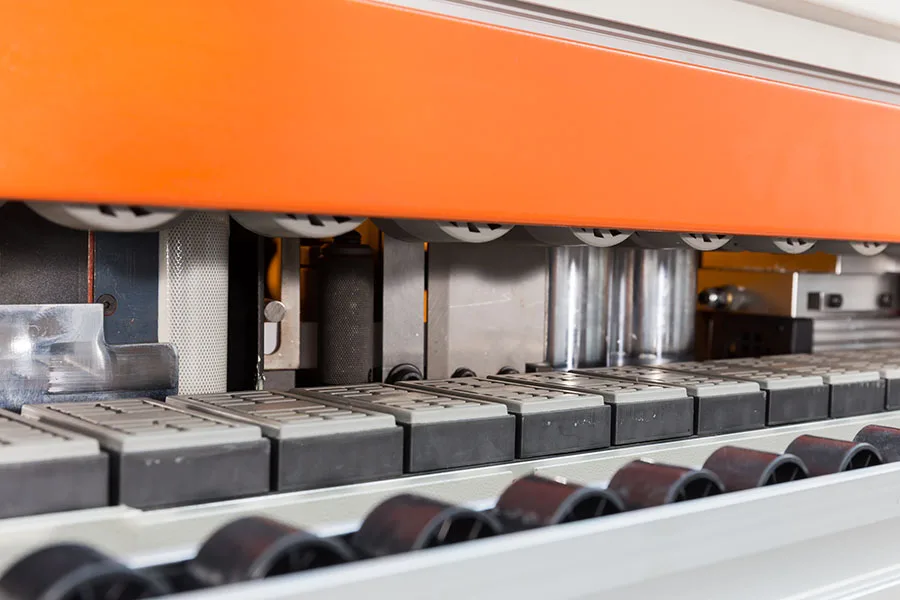
Complete Trimming & Buffing Line — The ZDS280 integrates gluing, trimming, scraping, and buffing into one continuous station array, enabling furniture workshops to maintain edge quality across MDF, plywood, and particleboard without switching machines.
Technical Specifications
| Parameter | Value |
|---|---|
| Model | ZDS280 |
| Product Type | Automatic Edge Banding Machine |
| Main Functions | Gluing, End Trimming, Fine Trimming, Scraping, Buffing, Cleaning |
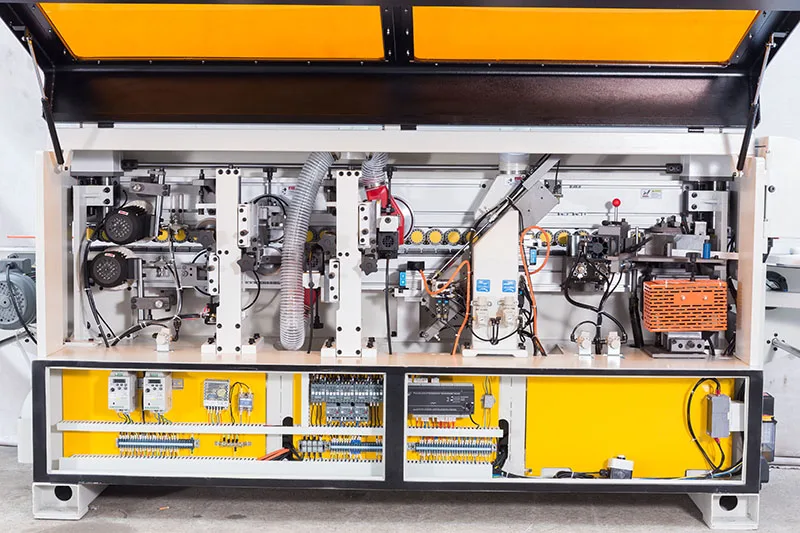
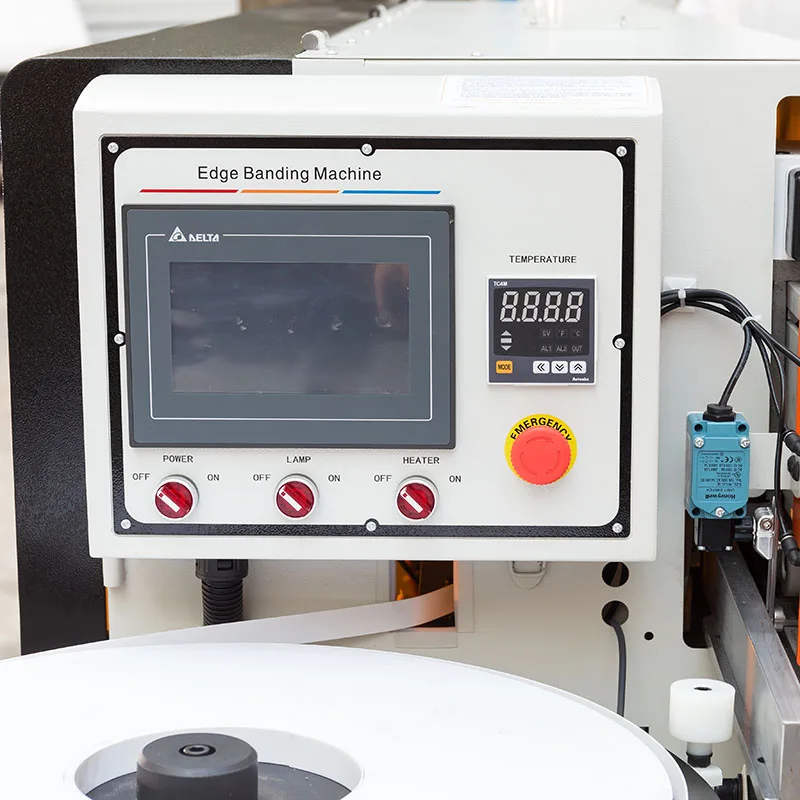
| Control System | PLC with touch screen (Taiwan Delta) |
| Conveyor Belt Speed (Feed Speed) | 9–12 m/min |
| Panel Thickness Range | 10–60 mm |
| Edge Thickness Range | 0.3–3 mm |
| Min. Panel Width × Length | 60 mm × 120 mm |
| Rated Power | 9 kW |
| Voltage | 380V–3HP |
| Working Pressure | 0.65 MPa |
| Glue Pot | Teflon spraying process with anti-carbonization design |
| Pressing System | Dual air pressure with adjustable pressure rollers |
| Electrical Components | Schneider contactors |
| Buffing Motor | 0.37 kW × 2 |
| Motor | UFC high speed motor |
| Net Weight | 890 kg |
| Overall Dimensions (L×W×H) | 2950 × 750 × 1250 mm |
Application Suitability
| Application | Material or Output |
|---|---|
| Custom furniture panel edge banding | MDF and particleboard with PVC edge banding |
| Cabinet door and carcass edge finishing | Plywood panels with 0.3–3 mm veneer or ABS banding |
| Small-batch joinery production runs | Solid wood panels requiring fine trimming and scraping |
| Panel processing for retail fixtures | Mixed substrate batches needing consistent glue line control |
Why Glue Lines Appear on Some Substrates but Not Others
Uniform bonding depends more on glue temperature stability and pressure distribution than on feed speed alone.
When particleboard arrives with high resin content or moisture variation, the glue film can cool unevenly before the pressure rollers make full contact. I have seen Automatic Edge Banding Machine manufacturers of this class ship units with single-pressure systems that leave visible gaps on the denser side of a board. The ZDS280 addresses this through its Teflon-sprayed glue pot, which resists carbon buildup that otherwise disrupts heat transfer, and a dual air pressure pressing arrangement that can be adjusted to match edge thickness. [NEED_CITE: substrate moisture impact on hot-melt adhesive bonding in edge banding]
How the ZDS280 Positions Within a Workshop’s Growth Path
An Automatic Edge Banding Machine purchase at this tier typically serves workshops moving away from manual edge application or replacing an aging single-function unit. The ZDS280 covers the full sequence — gluing through buffing — without requiring a separate scraping station downstream. For a cabinet maker processing 10–60 mm panels in PVC or veneer, this means one machine handles both thin decorative edges and thicker protective banding on structural panels.
What Delta PLC Control Means for Batch Consistency
Touch screen control through a Taiwan Delta PLC gives operators repeatable parameter recall across jobs. When a factory runs the same cabinet door profile in batches spread across different weeks, the stored feed speed, glue temperature, and roller pressure settings reduce setup drift between runs. This matters especially when switching between 0.3 mm veneer and 3 mm PVC, where trimming station positions and buffing motor engagement must shift to avoid over-cutting or leaving residue. [NEED_CITE: PLC parameter recall benefits in batch woodworking production]
Reading the Specs That Directly Affect Edge Quality
The panel thickness range of 10–60 mm determines which furniture components this machine can handle in a single pass. Drawer sides at 12 mm and shelving panels at 25 mm both fall within range, but the feed speed of 9–12 m/min must be matched to the thinner boards to prevent the end trimming station from chipping the leading edge. The dual-pressure roller system compensates for warp in particleboard by allowing independent adjustment on top and bottom contact points. Glue pot anti-carbonization design keeps the Teflon coating effective longer, which matters when running light-colored PVC where carbonized adhesive would show as dark streaks. The 9 kW rated power supports all six stations running simultaneously without voltage sag affecting the UFC high-speed motors at the trimming heads.
The Cost of Skipping Voltage Confirmation Before Shipment
Machines arriving with the wrong voltage or frequency configuration stall commissioning for weeks while transformers are sourced locally. I have seen Automatic Edge Banding Machine installations delayed because the buyer’s facility runs 415V three-phase but the machine was wired for 380V without step-down provision. The ZDS280 is configured for 380V–3HP as standard, but the Schneider contactors and Delta PLC can be verified against the destination country’s electrical standard before dispatch. [NEED_CITE: voltage and frequency standards by export market] Skipping this confirmation turns a scheduled installation day into a troubleshooting exercise that delays the entire production line.
What Separates This Build from Assembled-Only Alternatives
The ZDS280 is manufactured in-house with proprietary trimming mechanisms rather than sourced as a kit for final assembly, which means component alignment is verified at the grinding stage rather than corrected on the shop floor. Four-stage quality control covers incoming material inspection, in-process checks during assembly, finished product testing, and pre-shipment verification — so the factory test record you receive reflects actual panel runs, not a bench spin. Voltage and control panel language customization is handled as part of standard configuration rather than treated as a special request. The complete edge banding function family — from entry-level single-station models to full-function pre-milling configurations — sits within one product range, so scaling throughput later does not mean learning a new control interface or retraining operators on a different brand.
Documentation & Verification
- Machine specification sheet listing confirmed voltage, feed speed, and panel thickness range against your production requirement
- Factory test record demonstrating trimming tolerance on your sample panel substrate and edge thickness
- Operation and maintenance manual written in the language your operators will read on the shop floor
- CE declaration of conformity and ISO 9001 certificate available for review before order confirmation
- Electrical schematic with voltage and wiring configuration matching your facility’s incoming supply
Installation, Commissioning & Support
- Floor space of approximately 2950 × 750 mm footprint required with clear access on the infeed side for panel loading
- Dedicated 380V three-phase circuit with stable supply to support 9 kW rated draw across all six stations
- KD packing option available for container shipping, with on-site reassembly guidance provided
- First-run parameter tuning for glue temperature, roller pressure, and trimming depth matched to your panel material
- Spare parts list covering buffing wheels, trimming blades, and glue pot elements with reorder references
What to Include When Requesting a Configuration Quote
To match the ZDS280 to your actual production conditions rather than catalog assumptions, share the panel substrates you run most frequently, the edge banding material types and thicknesses, and the daily linear meter target you need to sustain. Confirm your facility voltage and frequency, the control panel language your operators require, and whether existing upstream saws or downstream boring machines constrain the feed height or conveyor direction.
Frequently Asked Questions
Q: How can I verify edge banding tolerance on my specific panel material before committing to an order?
A: Submit a sample of your most challenging substrate — such as high-resin particleboard or warped MDF — along with your preferred edge banding material. The factory will run a processing test on the ZDS280 and provide a factory test record documenting trimming accuracy and glue line appearance. This lets you evaluate results on your actual material rather than relying on standard test boards.
Q: What voltage and frequency options are available for the ZDS280?
A: The standard configuration is 380V three-phase at 50 Hz, but the machine can be confirmed against your country’s electrical standard before production. The Schneider contactors and Taiwan Delta PLC are compatible with various configurations. Always provide your facility’s exact supply specification during the inquiry stage to avoid on-site commissioning delays.
Q: Can the control panel be supplied in a language my operators understand?
A: The Delta touch screen interface supports multilingual configuration, which is confirmed during the specification stage before the machine enters production. Operators unfamiliar with English technical menus can work in their native language, reducing setup errors and speeding up commissioning once the machine arrives at your facility.
Q: How does the ZDS280 fit if my workshop needs to scale capacity later?
A: The ZDS280 sits within a broader Automatic Edge Banding Machine range that includes entry-level and full-function pre-milling models sharing similar control architecture. When production volume grows, you can move to a higher-throughput model within the same product family without retraining operators on a different brand’s interface or rebuilding your maintenance knowledge from scratch.
Q: Is it possible to visit the factory and see a sample processing run in person?
A: Factory visits are welcomed and can be arranged alongside a sample processing test using your own panel materials and edge banding stock. Seeing the ZDS280 run your specific substrate in real time gives you direct evidence of edge quality, trimming accuracy, and glue line consistency before the order is placed.