Description
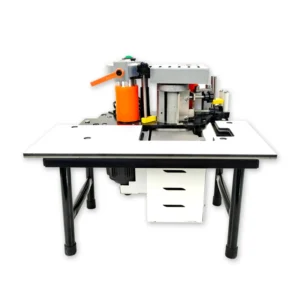
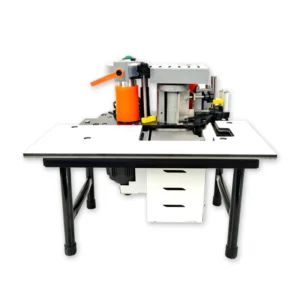
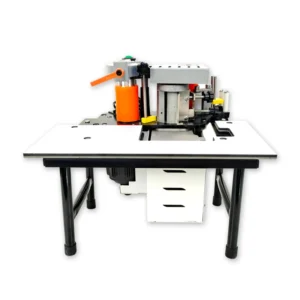
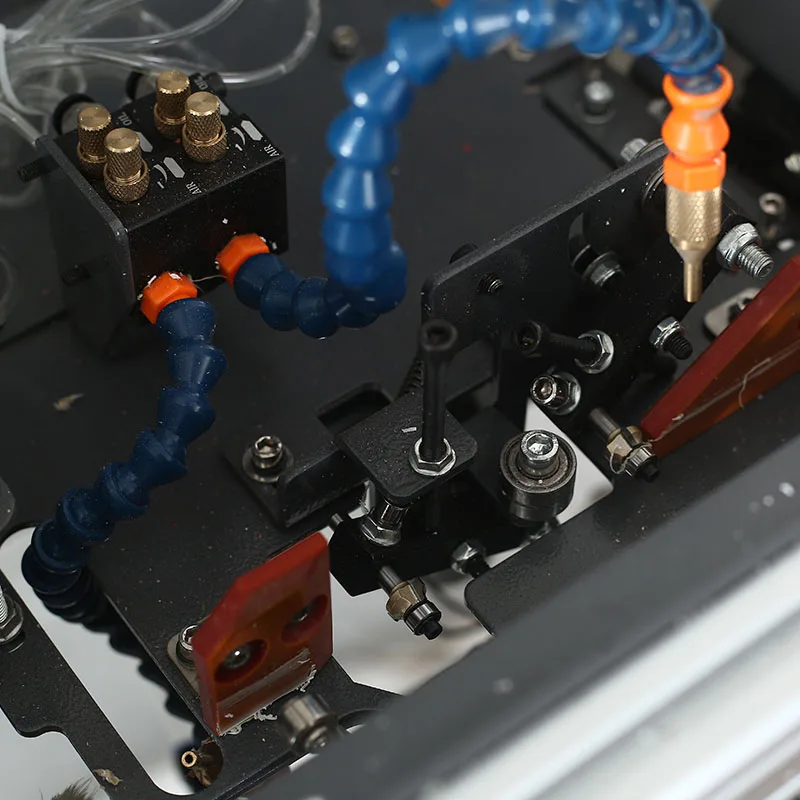
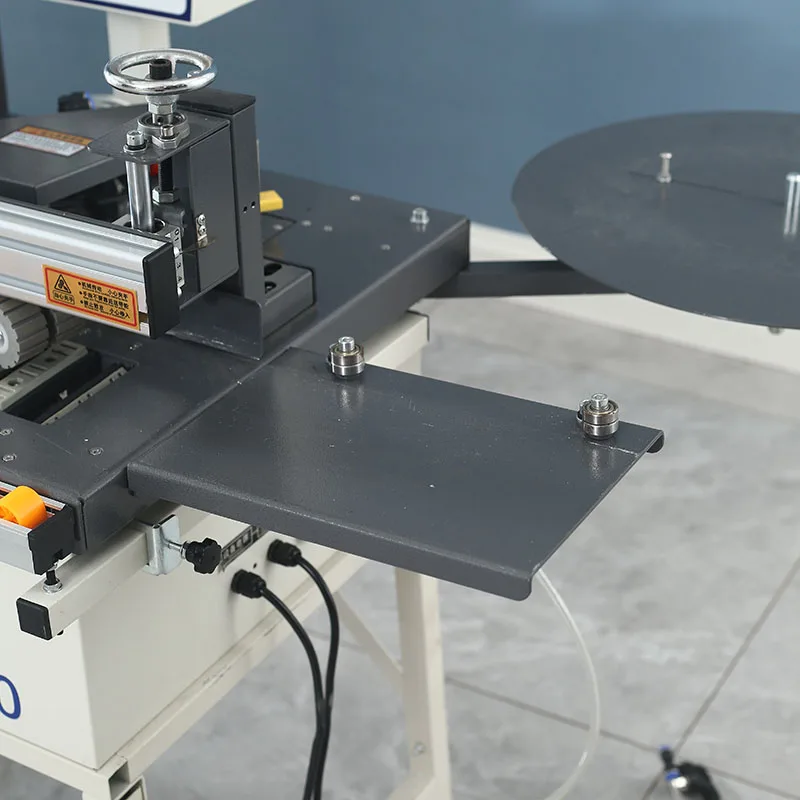
Precision-ground steel rod guide rail — the ZDSF210 feeds panels along a machined steel rod rail rather than a stamped channel, keeping the edge band square to the substrate through every trimming and polishing station.
Technical Specifications
| Parameter | Value |
|---|---|
| Model | ZDSF210 |
| Product Type | Full Line High Speed Edge Banding Machine |
| Edge Banding Speed | 6 m/min |
| Belt Feed Motor | 25 W |
| Board Feed Motor | 120 W |
| Trimming Motor | 800 W × 2 |
| Heating Motor | 800 W |
| Vacuum Fan | 1200 W |
| Glue Capacity | 1000 ml |
| Guide Rail Type | Steel rod guide rail |
| Glue Pot Type | Front and rear anti-shape glue pot |
| Pressing System | Elastic device secondary pressing |
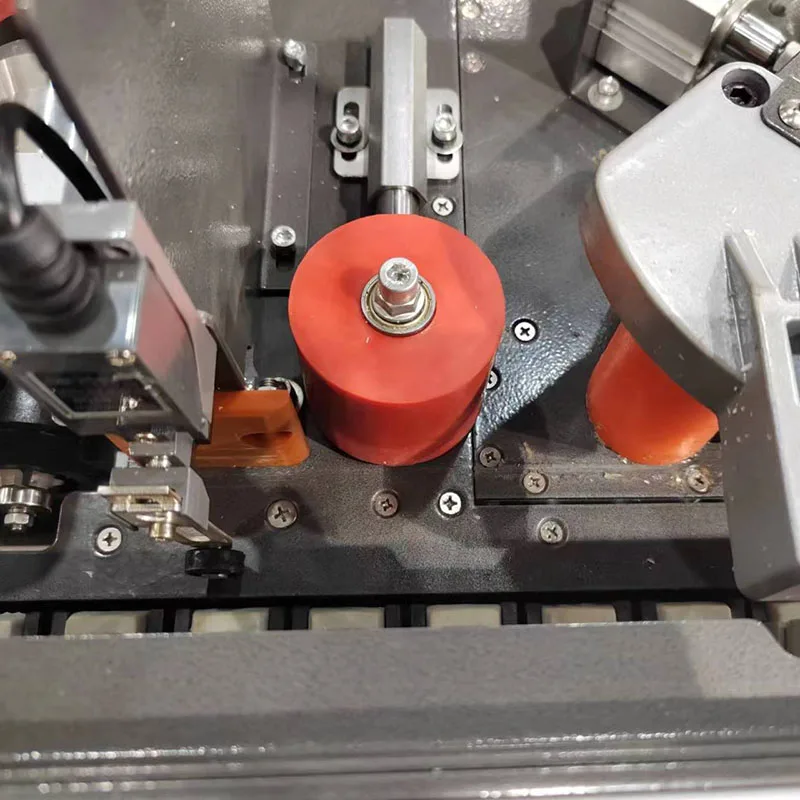
| Trimming Function | Up, down, left and right profiling trimming |
| Scraping | Flexible edge scraping |
| Polishing | Cross polishing |
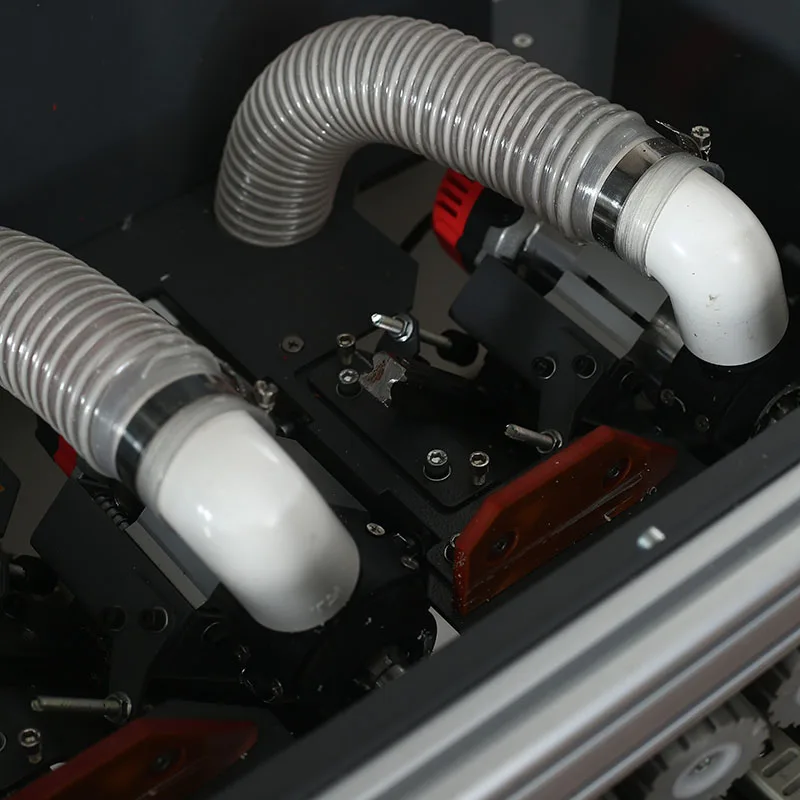
| Dust Collection | Airtight dust collection and cleaning |
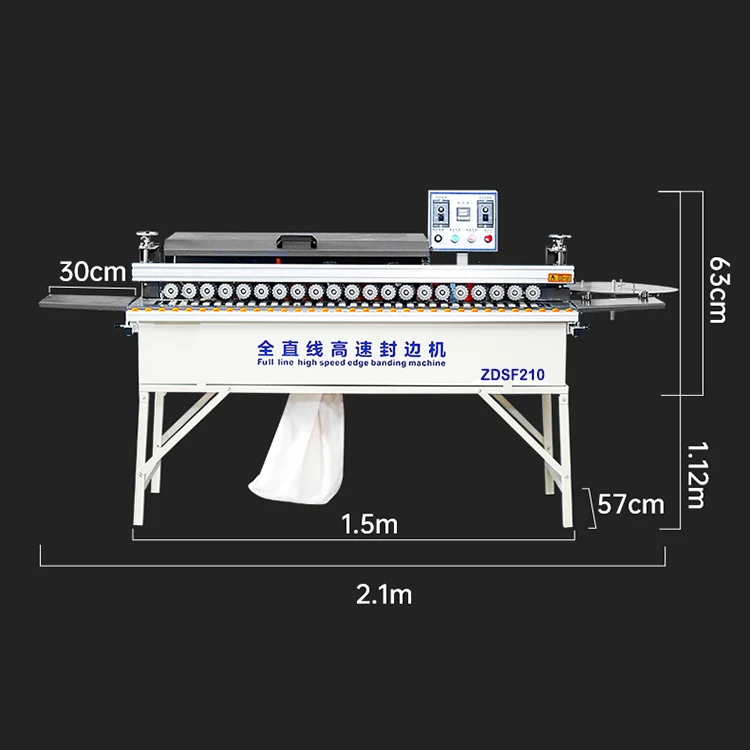
| Overall Dimensions (L×W×H) | 1500 × 570 × 630 mm |
| Net Weight | 155 kg |
| Assembly State | New |
| Warranty | 1 Year (Core Components: Motor, Engine) |
| Panel Thickness Range | (basis to be confirmed) |
| Panel Width Range | (basis to be confirmed) |
| Voltage & Frequency | (basis to be confirmed) |
| Control System | (basis to be confirmed) |
| Tolerance | (basis to be confirmed) |
Application Suitability
| Application | Material or Output |
|---|---|
| Custom cabinet door edge banding | MDF and particleboard with PVC edge band |
| Wardrobe side panel finishing | Plywood and melamine-faced board with wood veneer banding |
| Small-batch furniture runs | Solid wood panels requiring profiling trim and cross polish |
| Workshop upgrade from manual banding | Pre-cut panels entering automated gluing and trimming stations |
Why the Voltage Question Should Come Before the Quotation
A machine rated for the wrong frequency will never reach its designed feed speed, no matter how well the trimming stations are aligned.
I once watched a full-function pre-milling edge bander sit idle for three weeks because the workshop ran 220 V single-phase while the machine was built for 415 V three-phase. The buyer had compared quotations down to the last decimal but never confirmed the electrical spec. Rewiring a workshop costs more than the machine itself [NEED_CITE: voltage and frequency standards by export market]. That is why confirming local voltage and frequency is the first line on any configuration sheet before a Full Line Edge Banding Machine manufacturer releases a build order.
Mapping the Complete Edge Banding Sequence
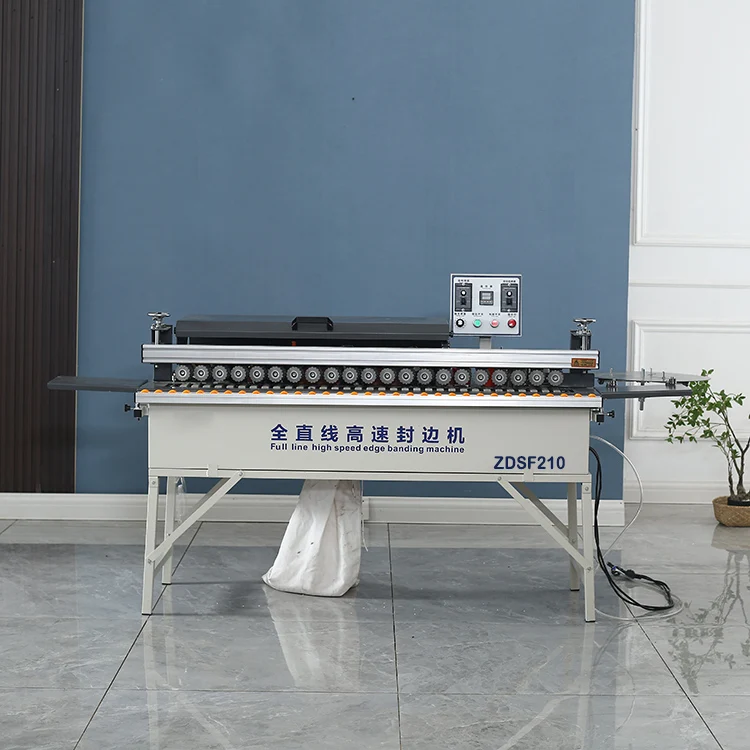
A buyer surveying a complete machine range needs to see where each model fits within the broader family. The ZDSF210 covers gluing, profiling trimming, flexible scraping, and cross polishing in a single pass, placing it in the tier that serves workshops moving beyond basic straight-edge banding. When production volume grows, the same engineering platform scales to higher-throughput models, so the operator does not have to relearn a different control layout or glue pot design. This continuity is what makes a full-range catalogue valuable to a buyer planning several years of capacity growth.
Compact Footprint, Full Station Lineup
Workshops with limited floor space often sacrifice station count to keep the machine under a certain length. The ZDSF210 holds trimming, scraping, and polishing functions inside a 1500 mm envelope, which means a small joinery shop can install it against a wall and still maintain walkway clearance [NEED_CITE: typical workshop layout clearance standards]. The 155 kg net weight keeps the machine stable during profiling trimming without requiring a reinforced concrete pad, a practical advantage for rented factory spaces.
How Steel Rod Guide Rail and Profiling Trimming Shape Edge Quality
The steel rod guide rail provides a hard, low-friction surface that resists the wear patterns common in stamped channel rails. Over months of continuous panel feeding, a worn channel introduces lateral drift that shows up as uneven glue lines on the leading edge of the board. The ZDSF210’s rod rail maintains alignment, which matters most when profiling trimming motors cut at 800 W each to follow contoured edges. The up, down, left, and right trimming movement follows curves on shaped cabinet doors, while the elastic device secondary pressing keeps the band flat against the substrate during the glue curing window. Combined with the airtight dust collection, chips are pulled away before they can embed in the fresh adhesive, keeping the downstream scraping and cross polishing stations working on a clean surface.
The Hidden Cost of Skipping the Factory Test
A machine that bands PVC cleanly may leave visible glue lines on wood veneer if the glue pot temperature profile is wrong for that material. Buyers who skip a sample run on their own panel stock discover the mismatch only after the first production batch fails assembly. The front and rear anti-shape glue pot on the ZDSF210 holds 1000 ml of adhesive, but the thermal response depends on the banding thickness and substrate density [NEED_CITE: adhesive open-time variation across substrate types]. A live factory test eliminates the guesswork and lets the operator see exactly how the flexible scraping and cross polishing stages finish the edge.
Why Source This Model from Ruiqi’s Range
In-house manufacturing means the steel rod guide rail and profiling trimming mechanism are machined on the same factory floor, so tolerance stacks are controlled under one quality system rather than negotiated across multiple subcontractors. The four-stage QC process covers incoming material inspection through pre-shipment verification, catching dimensional drift before the machine is crated. Voltage and control language are configured to the destination market before dispatch, preventing the dead-on-arrival scenario described earlier. Because Ruiqi produces the full edge banding family, a buyer can start with the ZDSF210 and add a higher-speed model later without mixing incompatible feed heights or glue systems. Factory visits are open to any buyer who wants to witness a live banding test on their own material samples.
Documentation & Verification
- Machine specification sheet listing every motor rating, dimension, and glue capacity for the ZDSF210
- Electrical schematic and written voltage confirmation matched to your workshop supply before production begins
- Factory test record showing banding result on your exact panel material and edge band type
- Operation and maintenance manual written in your agreed language, covering all stations from gluing to polishing
- Spare parts list identifying wear items for each trimming and scraping station with order codes
Installation, Commissioning & Support
- Position the 1500 × 570 mm footprint on a level floor; no special foundation required at 155 kg
- Confirm dedicated circuit matching the voltage and frequency stated on the electrical schematic before first power-on
- Calibrate the steel rod guide rail and elastic pressing device during commissioning to match your thinnest panel
- Run the profiling trimming motors on scrap stock to verify contour tracking before switching to production panels
- Schedule airtight dust collection duct routing to match your existing extraction system diameter and static pressure
- Receive a starter set of trimming cutters and scraper blades matched to the PVC and wood veneer bands you use most
Preparing Your Inquiry
Share your typical panel thickness range, the edge banding materials you run most often, and your local voltage and frequency so the configuration matches your workshop from day one. If you plan to scale throughput within the next production cycle, mention your target daily output so the upgrade path can be mapped alongside the ZDSF210. Sending a sample panel and edge band strip allows a live factory test before the build order is finalized.
Frequently Asked Questions
Q: Where does the ZDSF210 sit within the full Ruiqi edge banding range, and what is the upgrade path?
A: The ZDSF210 sits in the compact full-function tier, offering profiling trimming, flexible scraping, and cross polishing in a 1500 mm footprint. As volume grows, buyers can move to higher-throughput models within the same product family, keeping identical glue pot design and control layout, so operators transition without retraining.
Q: What panel thickness and width range does this model handle?
A: The exact panel thickness and width range depends on the configuration selected at order time. Ruiqi confirms these dimensions on the specification sheet before production, ensuring they match the buyer’s most common panel sizes and do not overlap unnecessarily with higher-tier models.
Q: Is the voltage and frequency confirmed for my market before the machine leaves the factory?
A: Yes. Voltage and frequency are confirmed in writing during the quotation stage and printed on the electrical schematic. The machine is then built and tested at the specified supply, preventing the dead-on-arrival failures that occur when assumptions are made about local power standards.
Q: Which edge banding materials are compatible with the ZDSF210’s glue pot and trimming stations?
A: The 1000 ml front and rear anti-shape glue pot and 800 W profiling trimming motors handle PVC, wood veneer, and melamine edge bands. A factory test on the buyer’s specific material confirms optimal glue temperature, feed speed, and trimmer cutter selection before dispatch.
Q: Can I visit the factory to see a live banding test on my own panel samples?
A: Factory visits are welcome at any stage. Buyers can bring or ship their own panel stock and edge banding material to watch the ZDSF210 run a full cycle from gluing through cross polishing, verifying edge quality in person before committing to a purchase order.