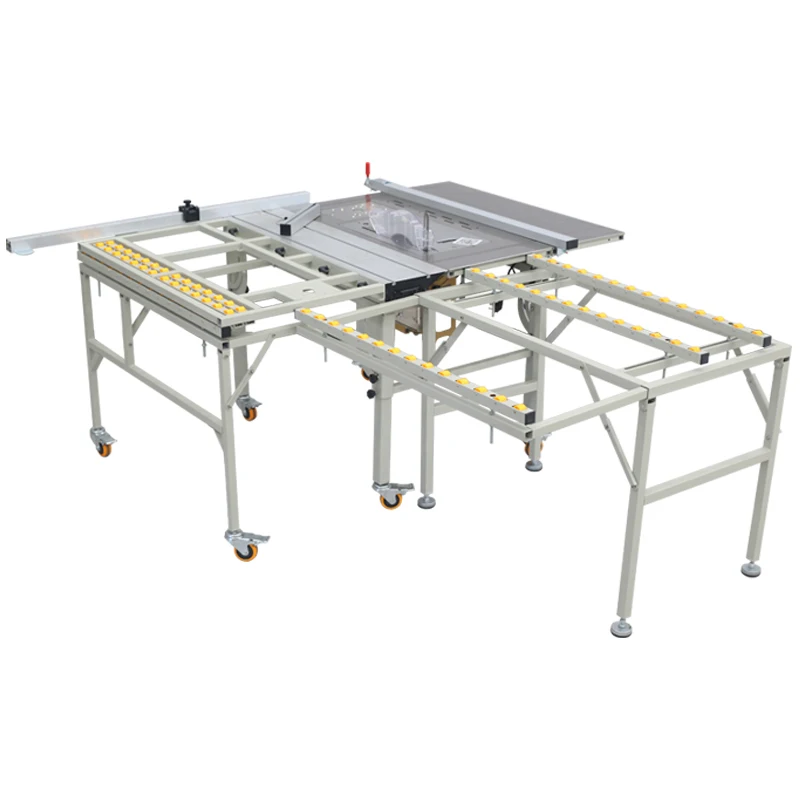
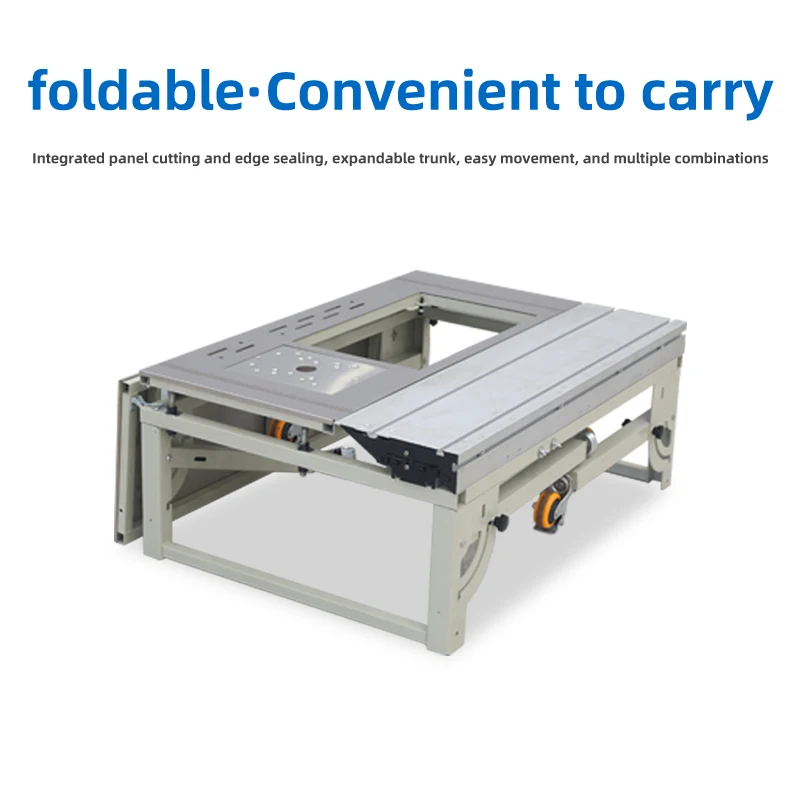
Description
Verified Voltage Matching — every JT-550S order ships with electrical schematics confirming your workshop’s exact voltage, frequency, and plug configuration before dispatch.
Technical Specifications
| Parameter | Value |
|---|---|
| Model | JT-550S |
| Product Type | Sliding Table Saw |
| Tilt Angle Adjustment | 45°/90° via aluminum alloy flip plate |
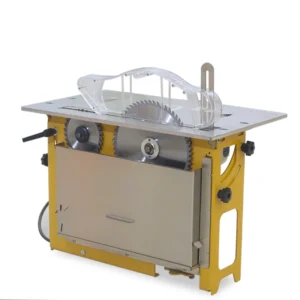
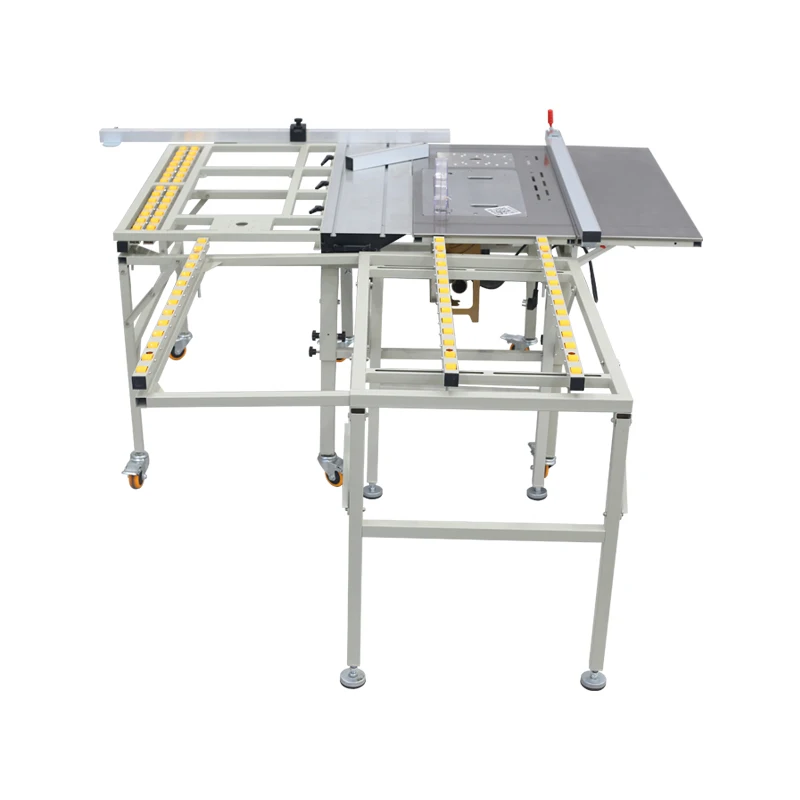
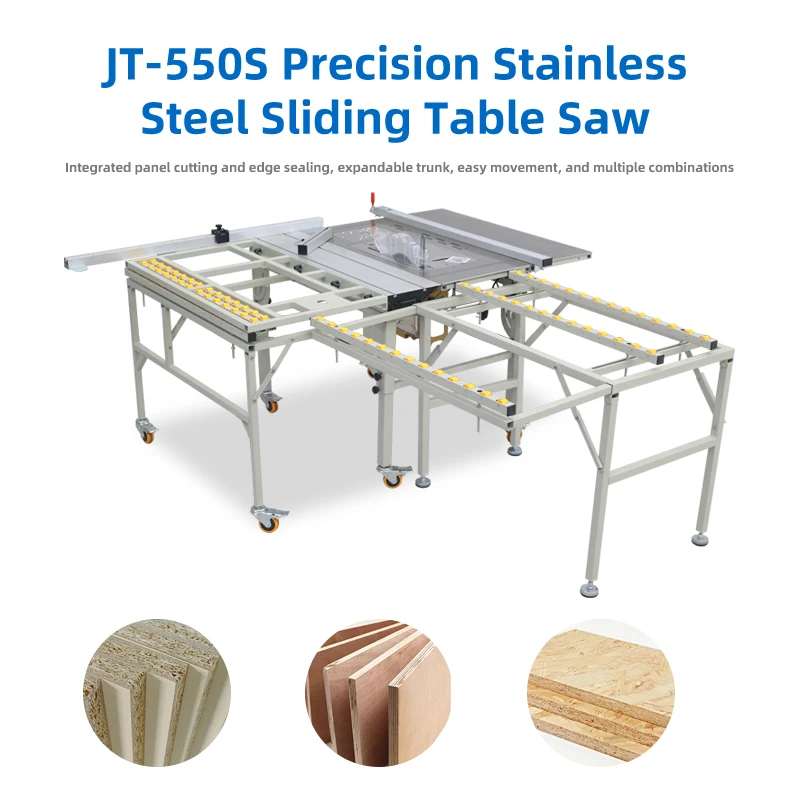
| Saw Blade Configuration | Integrated sub and master saw with aluminum alloy chip design |
| Motor Type | Copper wire motor (rated power to be confirmed) |
| Control System | Manual operation with independent switch |
| Dust Extraction | Integrated dust protection cover with dust absorption design |
| Working Table Extension | Sliding roller extension bracket |
| Voltage & Frequency | Customizable plug options (EU, USA, AU, UK); exact voltage/frequency to be confirmed |
| Language Options | Chinese and English standard; Spanish, French, and others on request |
| Assembly State | Fully assembled |
| Certification | CE, ISO 9001 |
Application Suitability
| Application | Material or Output |
|---|---|
| Custom cabinet panel sizing | MDF, plywood, particleboard cross-cutting at 90° and 45° |
| Joinery workshop production | Solid wood panels and laminated board ripping and trimming |
| Furniture component preparation | Melamine-faced chipboard and veneered panel dimensioning |
| Small-batch bespoke cutting | Hardwood and softwood stock for door and frame assembly |
Why the Voltage Question Must Come Before the Quotation
A sliding table saw that trips the breaker on day one is not a machine problem — it is a communication failure.
I once watched a furniture line in Southeast Asia stall for three weeks because a sliding table saw arrived configured for a supply that did not match the workshop’s actual 220V/60Hz feed. The factory had to source a variable-frequency drive locally, rewire the motor connections, and recalibrate the control panel while production orders piled up. [NEED_CITE: voltage and frequency standards by export market] That is not an isolated event — it happens regularly when buyers and suppliers skip the electrical confirmation step. The JT-550S Sliding Table Saw manufacturer process starts with verifying your facility’s voltage, frequency, and plug type so the machine arrives ready to run the moment it is uncrated.
The Complete Saw Range Under One Roof
A joinery workshop moving off handheld circular saws needs a stable, guided cutting station but may not yet require a fully automated beam saw. The JT550S occupies the entry-to-mid tier within a broader Sliding Table Saw manufacturer lineup, meaning the same supplier ecosystem covers your next upgrade when volume justifies a larger table or higher feed rate. You keep one technical contact, one spare parts channel, and one set of maintenance procedures as your capacity grows.
Angle Changeover Without Recalibration Delays
The aluminum alloy flip plate on the JT550S allows operators to switch between 90° square cuts and 45° bevel cuts without reaching for wrenches or recalibrating the fence. For a custom cabinet shop running mixed batches — shelving one hour, mitred carcass panels the next — this reduces the dead time between jobs. [NEED_CITE: CE machinery directive requirements for industrial woodworking equipment] The integrated sub and master saw pair works through the aluminum alloy chip design to score the laminate underside before the main blade passes, keeping edge tear-out minimal on both melamine and veneered substrates.
How Specifications Translate to Workshop Output
Panel thickness capacity and blade tilt range determine which jobs a saw can accept without secondary passes. The 45°/90° tilt on the JT550S covers the two angles that account for the vast majority of furniture joinery cuts, from square dimensioning to mitred edges on cabinet face frames. The copper wire motor delivers consistent torque under load, which matters when ripping dense MDF or thick plywood sheets that would bog down a lower-grade winding. The sliding roller extension bracket addresses a practical constraint: standard table length handles most panel widths, but oversize sheets need support beyond the table edge to prevent tipping and binding. Dust extraction through the integrated cover keeps airborne particulate down, which directly affects operator endurance over a full shift and reduces settling on downstream finishing surfaces.
What Happens When Configuration Details Get Skipped
Machines ordered without confirming local electrical supply arrive as expensive dead weight until an electrician can adapt them. Control panels in an unreadable language stall commissioning while the operator guesses at switch functions. A single sliding table saw bought in isolation may later prove mismatched in feed height with a panel loader or edge bander added months afterward. [NEED_CITE: industrial equipment compatibility and integration standards] These are not hypothetical complaints — they surface repeatedly when purchasing decisions focus solely on unit price.
Why Source the JT550S Through This Channel
In-house manufacturing with patented cutting mechanisms means tolerance claims are verifiable on your actual panel stock before commitment. The full product family lets a workshop scale from the JT550S to higher-throughput models without changing supplier or retraining operators. Voltage, plug type, and control panel language customization is treated as standard configuration rather than a special request. Four-stage quality control with pre-shipment verification catches electrical and mechanical faults before the crate closes. An engineer reviews your factory scale and processing requirements to recommend configuration, with a formal quotation typically returned within 24 hours.
Documentation & Verification
- Machine specification sheet confirming JT550S voltage, frequency, and plug type matched to your supply
- Electrical schematic and voltage confirmation document included in the shipping package
- CE declaration of conformity and ISO 9001 certificate available for download
- Factory test record run on your specified panel thickness range before dispatch
- Operation and maintenance manual provided in the agreed language at shipment
Installation, Commissioning & Support
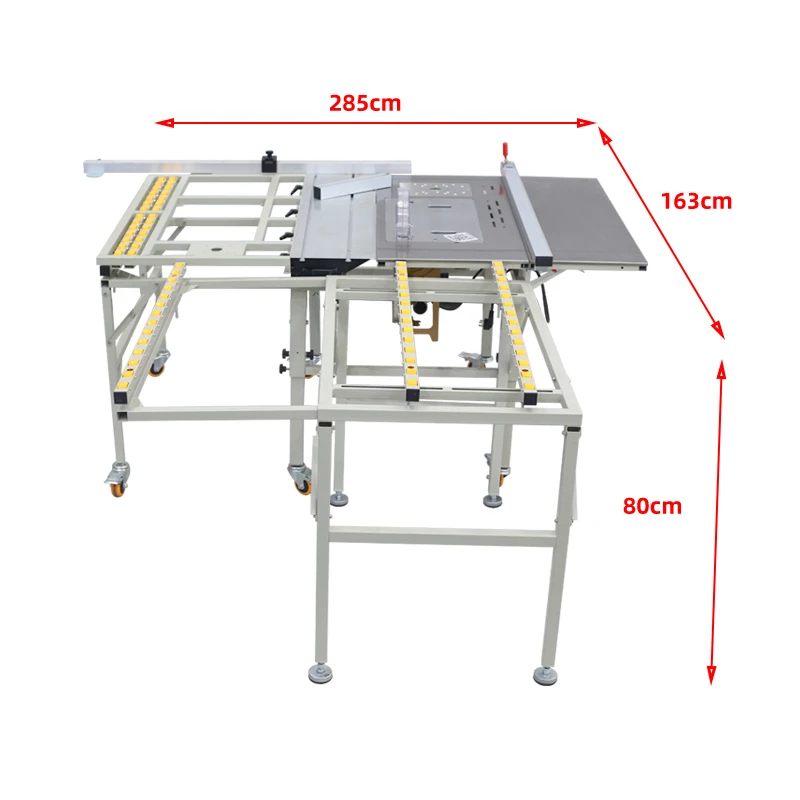
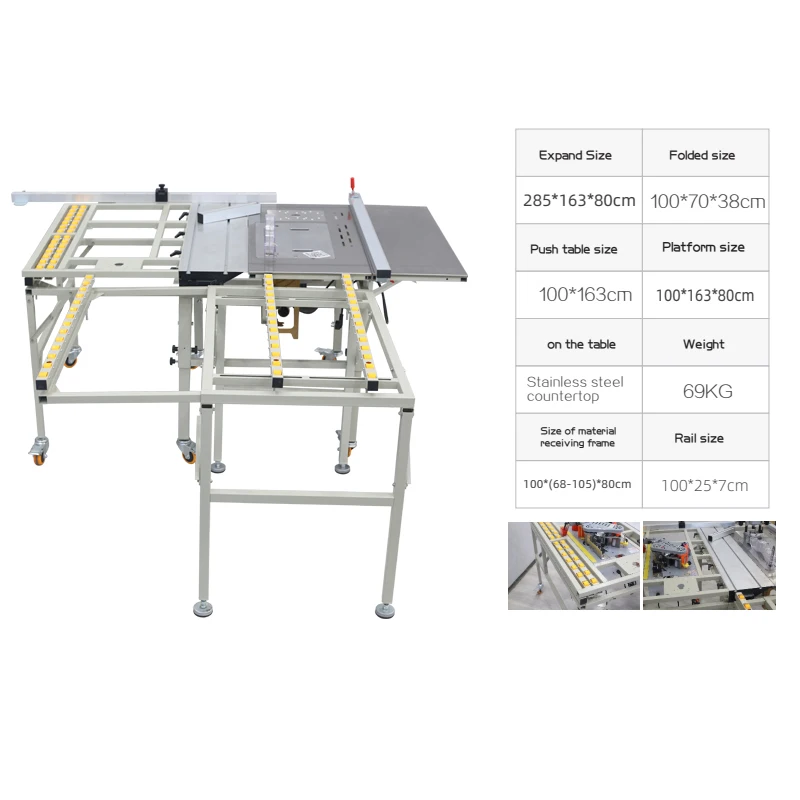
- Floor space planning based on JT550S overall dimensions plus roller extension bracket clearance
- Dedicated circuit sizing confirmed against the copper wire motor rated power before energizing
- Machine arrives fully assembled — level the table, connect power, and verify blade alignment
- First-run parameter setting covers blade height, fence parallelism, and sub-saw scoring depth
- Spare parts list identifies wear items including saw blades, bearings, and dust cover seals
- Routine maintenance schedule details lubrication intervals for the sliding carriage rails
Preparing Your Inquiry
Share the panel materials you cut most often, the typical sheet dimensions, and whether 45° bevel cuts are routine or occasional. Confirm your workshop’s voltage, frequency, and preferred plug type so the quotation reflects the correct electrical configuration from the start. If you already run upstream or downstream equipment, noting the feed height and throughput helps the engineer position the JT550S within your existing line.
Frequently Asked Questions
Q: How do I confirm the JT550S voltage and plug match my workshop’s electrical supply?
A: Provide your facility’s voltage, frequency, and plug standard during inquiry. The engineering team verifies compatibility and documents the confirmed configuration on the electrical schematic included with shipment. If your supply is non-standard, a custom motor winding or transformer recommendation is issued before production begins.
Q: What panel thickness and width can this sliding table saw handle?
A: The JT550S handles MDF, plywood, particleboard, and solid wood panels across a range confirmed at quotation stage. Share your typical sheet dimensions so the engineer validates capacity and recommends whether the sliding roller extension bracket provides sufficient support for your largest panels.
Q: Where does the JT550S sit in the Ruiqi saw range, and what is the upgrade path?
A: The JT550S serves joinery workshops and small furniture factories transitioning from manual cutting. As volume grows, higher-throughput models within the same product family offer larger tables, faster feed rates, and additional automation while maintaining compatibility with your existing tooling and operator knowledge.
Q: What control panel language options are available for the JT550S?
A: Chinese and English are standard. Spanish, French, and other languages are available on request. Specify your preferred language during inquiry so the control labels and operation manual match your operator’s reading language before the machine ships.
Q: Can I visit the factory or request a sample cut test before placing an order?
A: Factory visits are welcomed, and sample processing tests can be run on your panel material. Submit your material type, thickness, and required cut angles to arrange a test. Results including edge quality photographs and measured tolerance are shared before you commit to the order.