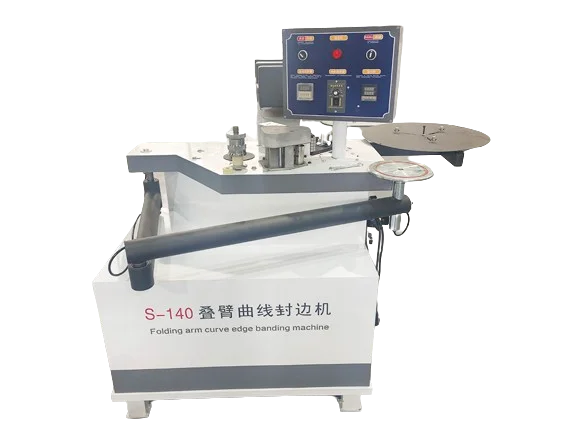
Description
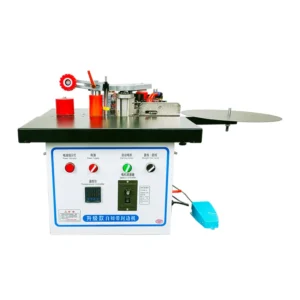
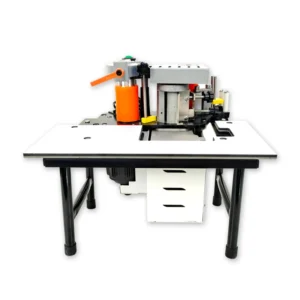
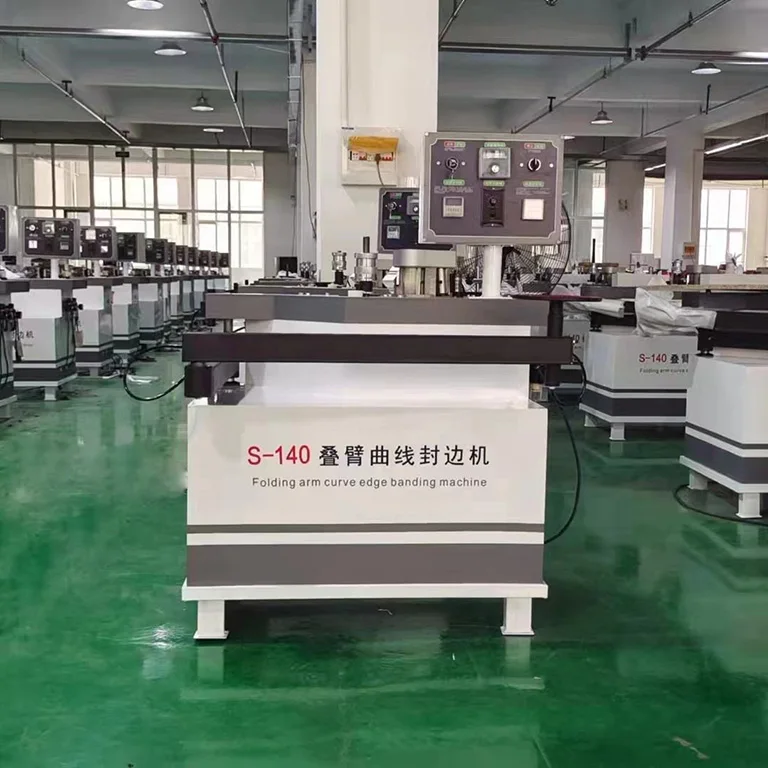
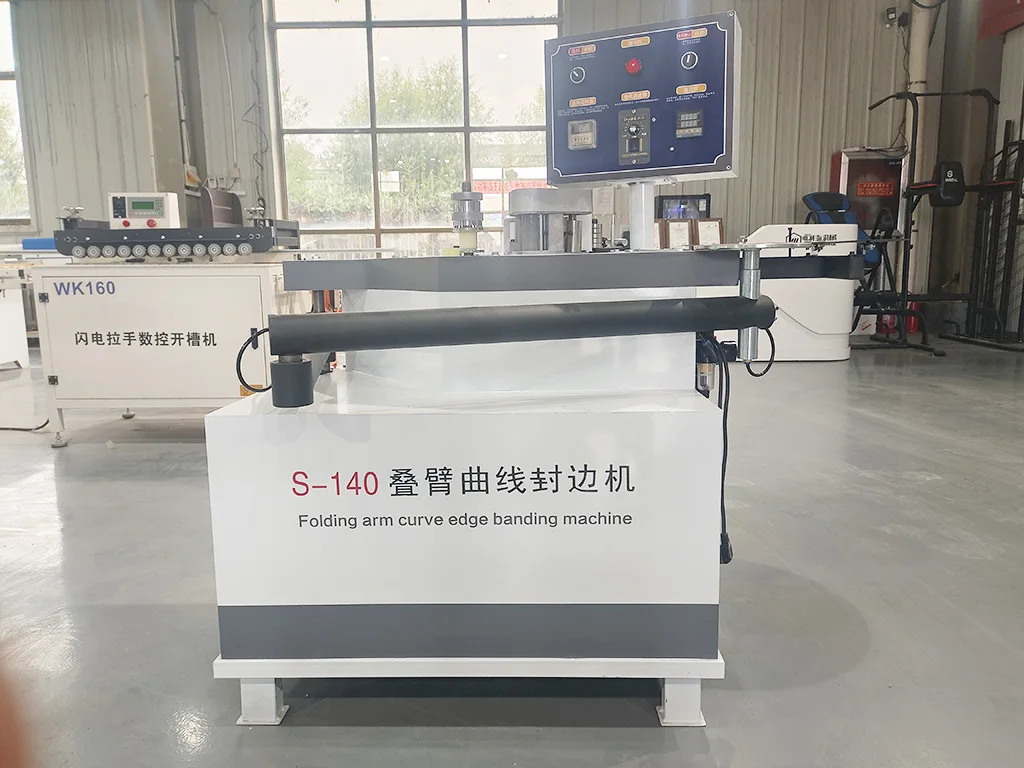
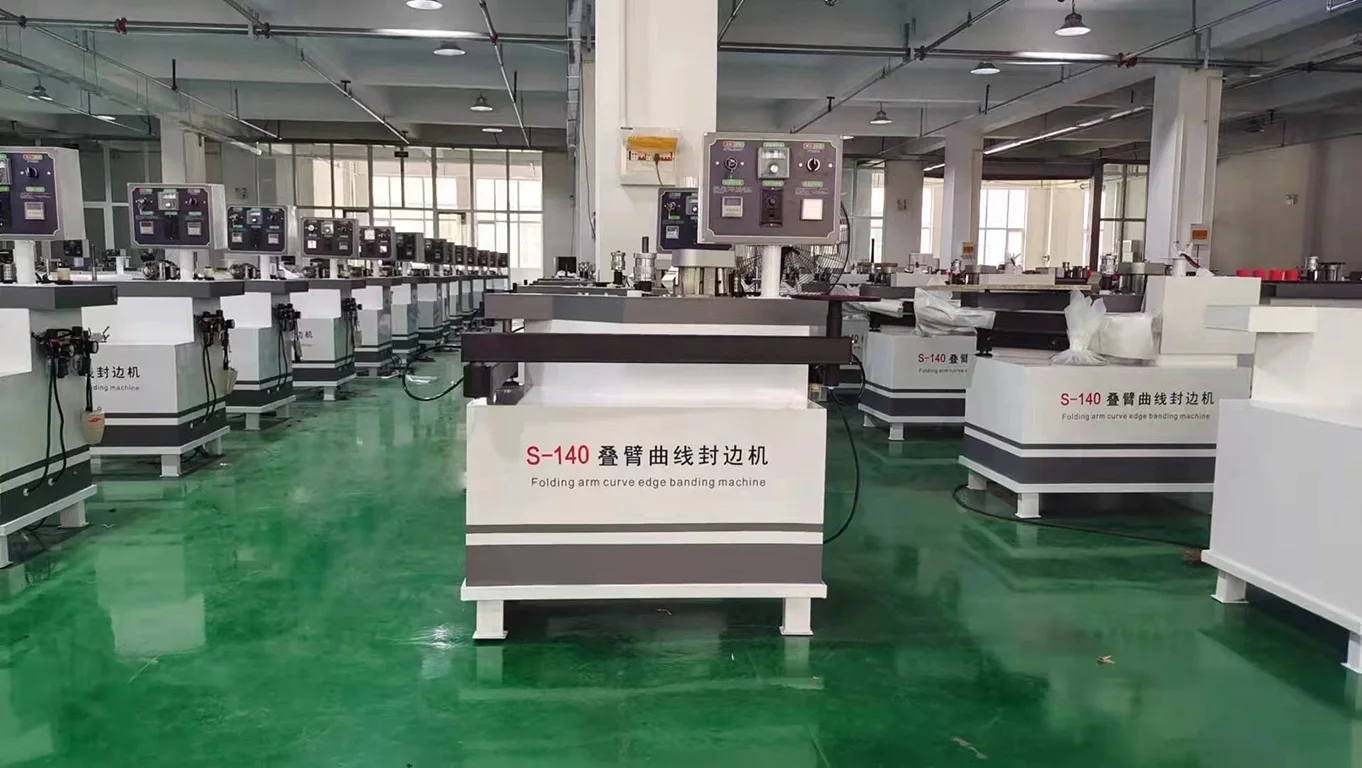
In-house manufacturing with patented cutting mechanisms — The S-140 curve edge banding machine is built on verified tolerance and double-sided gluing technology developed within our own facility, allowing workshops to evaluate the complete model range from a single manufacturing source.
Technical Specifications
| Parameter | Value |
|---|---|
| Model | S-140 |
| Product Type | Curve Edge Banding Machine |
| Voltage | 220V (configurable from 110V to 440V) |
| Total Power | 1.4kW |
| Air Source Pressure | 0.5-0.8MPa |
| Edge Banding Speed | 0-180mm/s |
| Overall Dimensions | 96×62×88cm |
| Machine Size | 105×65×120cm |
| Net Weight | 88kg |
| Standard Suction Cup | 200×26mm |
| Edge Band Thickness Range | 0.4-2mm |
| Edge Band Width Range | 8-50mm |
| Breaking Method | Automatic tape break via double cylinders |
| Glue Pot Capacity | 1000ml |
| Motor Type | Pure copper motor |
| Hot Air Device | Bottom-up hot air heating |
| Gluing Method | Double-sided gluing |
| Function | Straight and curved dual purpose |
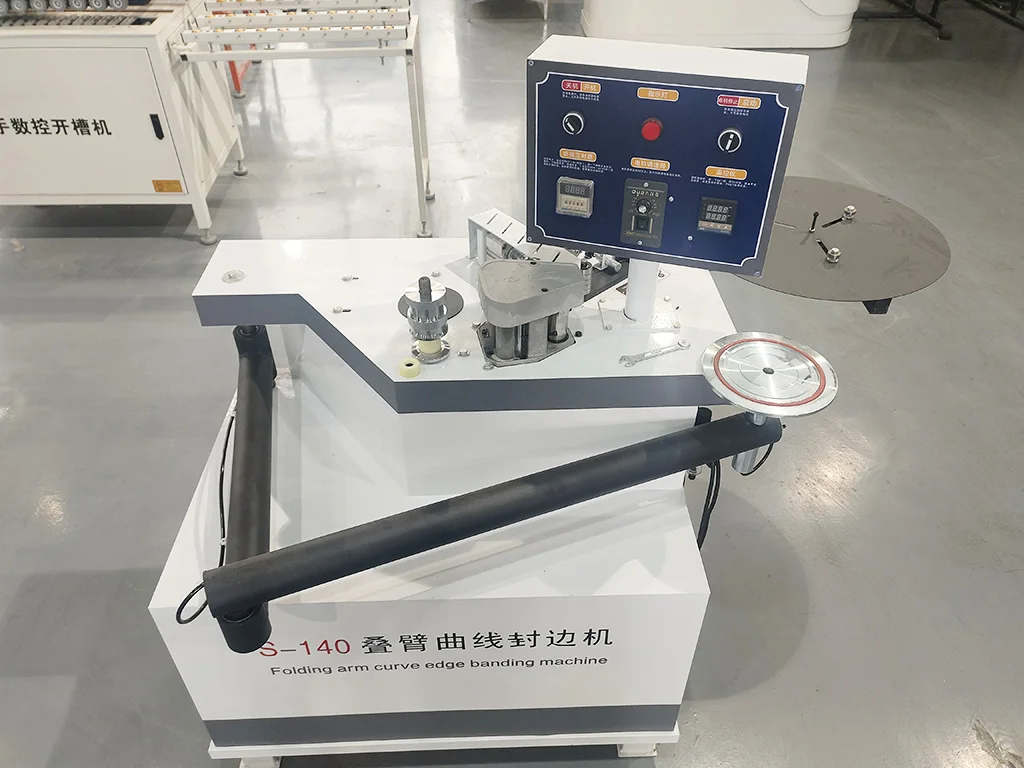
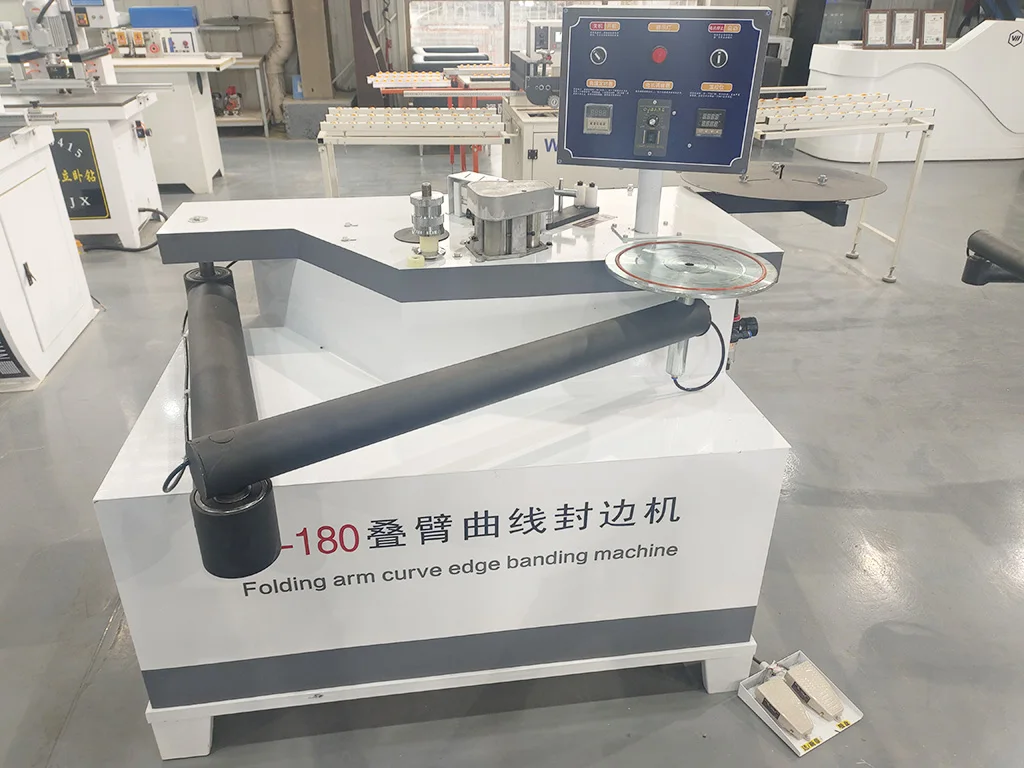
| Arm Device | Folding arm |
| Control Panel Features | Intelligent temperature control, speed adjustment, timer |
Application Suitability
| Application | Material or Output |
|---|---|
| Custom curved-edge cabinets and wardrobes | MDF and plywood with PVC or veneer banding |
| Panel furniture shaped components | Particleboard with 0.4-2mm melamine or PVC edges |
| Joinery workshop mixed straight and arc orders | Solid wood panels and veneer edge banding |
| Office furniture and study desk profiles | MDF substrates requiring double-sided glue adhesion |
| Door and window decorative trim | Plywood with thin veneer or PVC strip materials |
What "Universal Edge Banding" Leaves Out When Substrates Change
A machine must be matched to the actual board density and edge material running through the workshop, not just the brochure category.
I remember a custom cabinet shop that ran medium-density fibreboard all through their sample trials without issue. The day they switched to high-density board for a commercial contract, the glue penetration depth was not enough, and every curved edge came back with weak adhesion. The batch had to be reworked entirely. That workshop learned the hard way that edge banding quality inconsistent across panel materials is not a machine defect — it is a configuration oversight [NEED_CITE: substrate density effects on hot-melt adhesive penetration]. When you source a curve edge banding machine manufacturer, the first question should always be which exact boards and edge strips will run on the floor.
Where the S-140 Fits in a Growing Workshop Line
The S-140 occupies the compact dual-purpose tier within a complete edge banding machine family that spans from entry-level manual units to full-function pre-milling inline models. A joinery workshop moving away from hand-applied banding can start here, handling both straight panels and curved components on one footprint. When production volume grows and curved work becomes a smaller share of output, the same supplier offers full-auto straight-line machines, so the workshop scales without changing its equipment source or retraining operators on a different control philosophy.
Dual-Purpose Flexibility Without Sacrificing Adhesion
Double-sided gluing applies adhesive to both the panel edge and the banding strip simultaneously, which matters most on curved sections where contact pressure varies along the arc. The bottom-up hot air heating keeps the glue at working temperature right at the application point, reducing the cold-joint failures that show up days after delivery when furniture reaches the end customer. The intelligent temperature control on the panel lets the operator set and hold the correct heat for PVC, melamine, or veneer without guesswork, and the timer function standardises the curve banding cycle across repeated pieces [NEED_CITE: hot-melt adhesive open time and temperature relationship].
Reading the Specs That Actually Matter on the Shop Floor
The 0.5-0.8MPa air source pressure requirement tells you this machine needs a dedicated compressed air line — sharing with a large CNC router on the same circuit can cause pressure drops that affect the automatic tape break timing. The 88kg net weight and 105×65×120cm machine size mean it sits on a standard workshop floor without special foundation work, but you still need clearance around the folding arm for loading larger panels. Edge band thickness from 0.4mm to 2mm covers the typical PVC and veneer range for furniture, but running consistently at the 2mm upper limit on tight curves requires the operator to reduce feed speed below the 180mm/s maximum to maintain full adhesive contact. The 200×26mm suction cup provides the holding force to prevent board displacement during curved passes, which is where most manual banding operations introduce error.
The Cost of Skipping Substrate Verification Before Order
Buyers who select a machine based on general capacity descriptions rather than running their actual board samples through a test discover adhesion problems only after the equipment is installed and production has started. Curved edges on high-density substrates demand deeper glue penetration, and if the hot air and gluing parameters were never tuned for that specific material combination, the output looks acceptable on day one but fails under the stress of humidity changes over the following weeks [NEED_CITE: edge banding adhesion failure modes in furniture assembly]. Reworking a full batch of curved cabinet doors costs far more in labour and material waste than a pre-shipment sample test would have required.
Why Source This Machine Through the Full Catalogue
Every model in the edge banding range is manufactured in-house with proprietary cutting mechanisms and verified tolerance, so the S-140 shares the same quality standards as the full-auto pre-milling lines. Voltage is configurable from 110V to 440V as standard, confirmed in writing before production begins. A four-stage QC process covers incoming material, in-process assembly, finished product, and pre-shipment verification — each S-140 ships with its own factory test record. Engineer-led configuration recommendations are provided within 24 hours of receiving your panel samples and production requirements. Factory visits are welcomed so you can watch the S-140 run your own board stock before committing to an order.
Documentation & Verification
- CE declaration of conformity issued for the S-140 curve edge bander
- ISO 9001 certificate covering the manufacturing facility
- Electrical schematic with confirmed voltage and frequency for your market
- Factory test record on your specified panel thickness and edge material
- Operation and maintenance manual in your agreed operator language
- Spare parts list with part numbers matching the as-built machine
Installation, Commissioning & Support
- Requires a level floor area of approximately 105×65cm with arm clearance around the unit
- Dedicated 220V circuit rated for the 1.4kW total power draw with appropriate breaker
- Arrives partially assembled; folding arm and suction cup require on-site mounting
- First commissioning includes setting intelligent temperature control for your specific glue type
- Operator training covers double-sided gluing adjustment and automatic tape break timing
- Pure copper motor and standard suction cup are stocked as routine spare parts
- Daily maintenance focuses on glue pot cleaning and hot air device filter inspection
Preparing Your Inquiry for Accurate Configuration
To receive a specification proposal that matches your actual production conditions, share the panel materials you run most often — MDF, plywood, or particleboard — along with the edge banding type and thickness. Let us know your local voltage and frequency so the electrical system is built correctly from the start. If curved components make up a significant share of your output, describe the typical arc radii and whether you also need straight-edge capability on the same machine.
Frequently Asked Questions
Q: When should a workshop move from the S-140 to a full-auto inline edge bander?
A: The S-140 handles mixed straight and curved work at moderate volumes. When your output shifts heavily toward straight panels and daily throughput exceeds what a semi-automatic cycle allows, a full-auto inline model with pre-milling and multiple finishing stations becomes the better fit. The full catalogue covers that transition within the same supplier.
Q: What voltage options are available for export markets?
A: The S-140 is configurable from 110V to 440V. Voltage and frequency must be confirmed before production so the motor, control panel, and heating elements are matched to your local grid. A formal electrical schematic is provided with every order for your installation team.
Q: Which edge banding materials work best with the double-sided gluing system?
A: PVC, melamine, and veneer strips from 0.4mm to 2mm thickness are all compatible. Veneer on tight curves benefits most from double-sided application because it ensures full adhesive coverage where single-sided gluing can leave dry spots. Confirm your exact strip material during the inquiry stage.
Q: Can I visit the factory and test the S-140 on my own panels?
A: Factory visits are welcomed at any stage. You can bring your own board samples and edge banding stock to run through the S-140, verify adhesion quality on your specific substrate, and discuss configuration adjustments with the engineering team before placing an order.
Q: What spare parts and consumables ship with the machine?
A: Each S-140 ships with a documented spare parts list matched to the as-built configuration. Standard wear items include suction cups and heating elements. Consumable glue specifications are noted in the manual, and replacement parts are available through the same supply channel for overseas buyers.