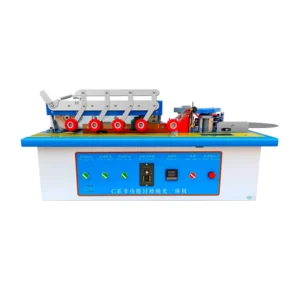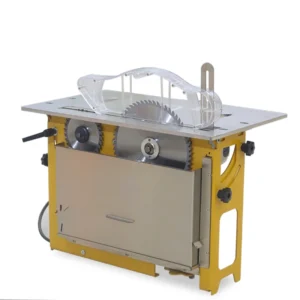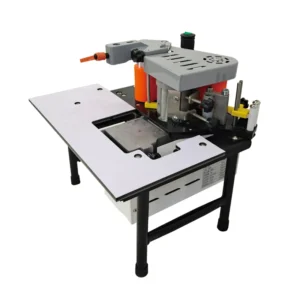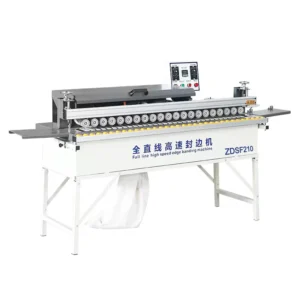
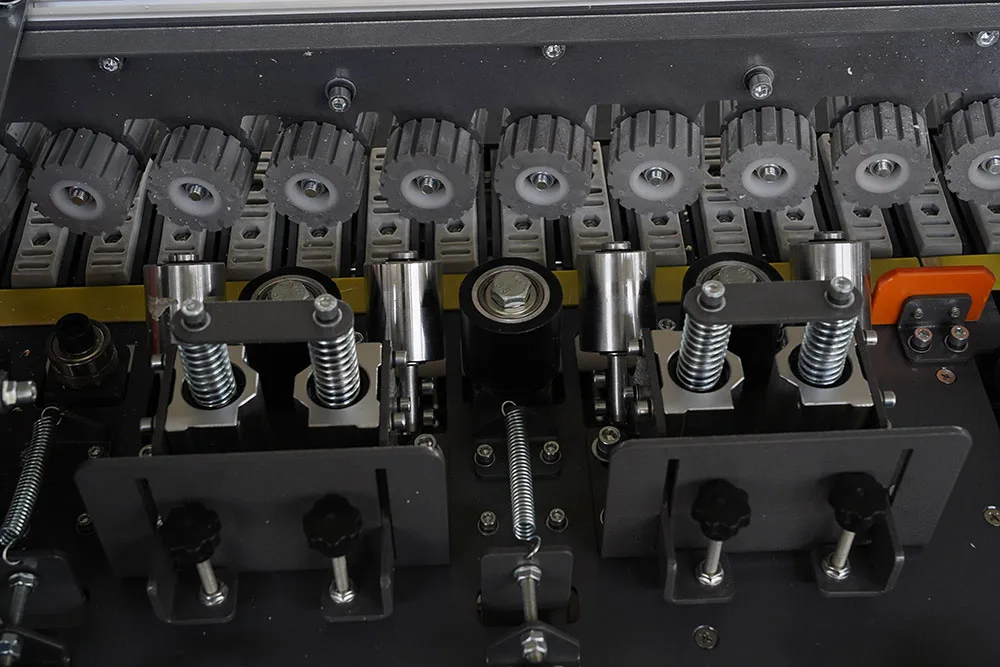
Description
Verified Tolerance Range — Every WF-2000 leaving our Ningjin assembly line carries a factory test record on your specified panel substrate before it is crated for export.
Technical Specifications
| Parameter | Value |
|---|---|
| Model | WF-2000 |
| Product Type | Automatic Edge Banding Machine |
| Overall Dimensions (L×W×H) | 2100×600×630 mm |
| Net Weight | 137 kg |
| Panel Thickness Range | 18–25 mm |
| Edge Strip Thickness | up to 1.2 mm |
| Rated Voltage | 220V |
| Rated Power | 6.17 kW |
| Air Supply Requirement | 0.4–0.6 MPa |
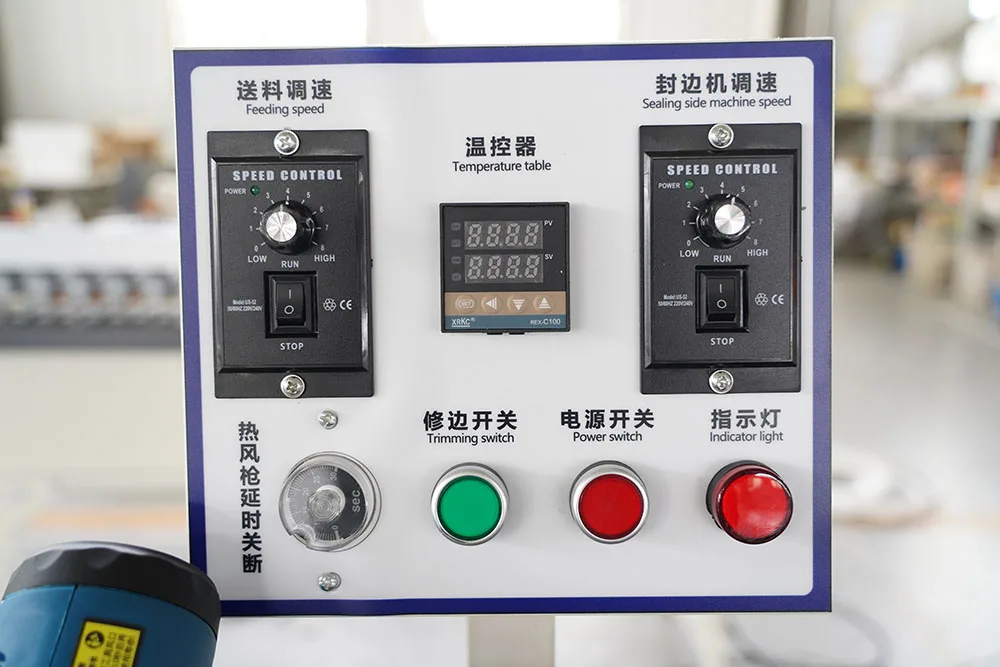
| Feed Speed | 0–14 m/min |
| Control System | Panel-mounted controls |
| Glue Heating Method | Hot air heating |
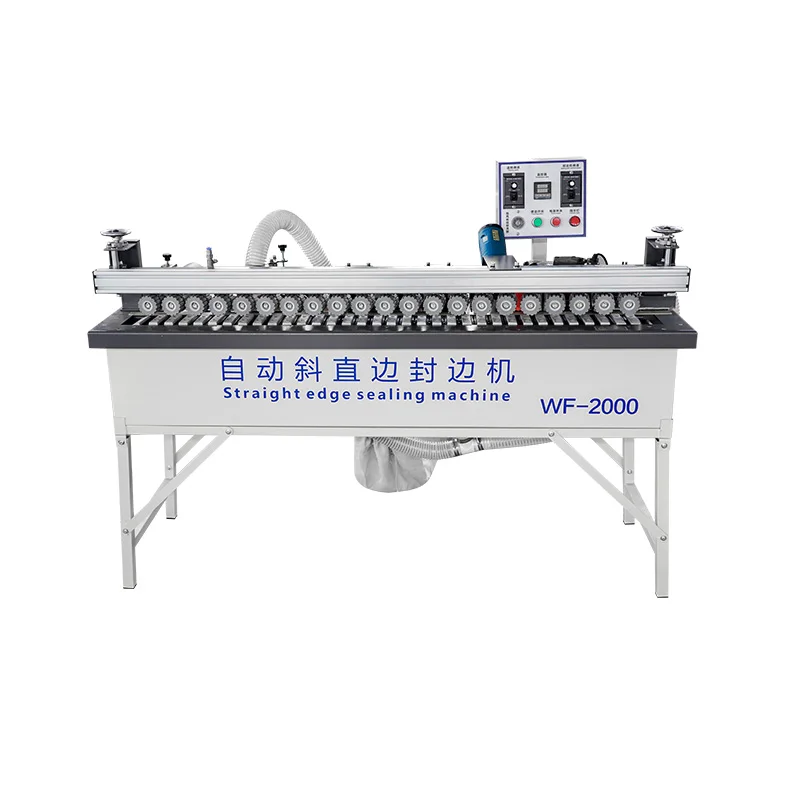
| Pressing System | 8 pressing rollers |
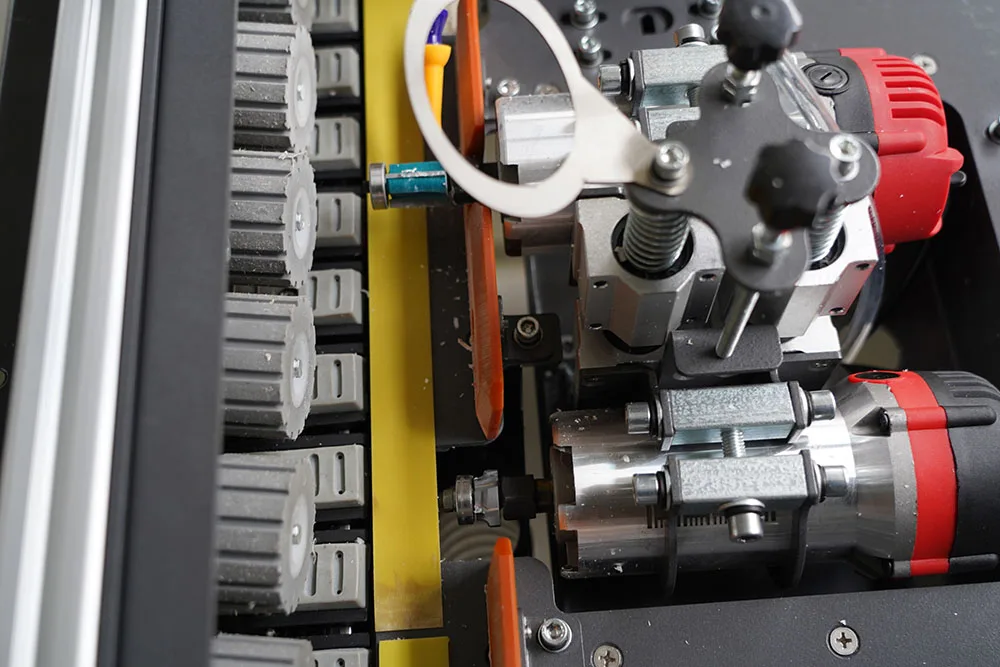
| Functional Stations | Gluing, slotting edge banding, elastic profiling trimming, polishing |
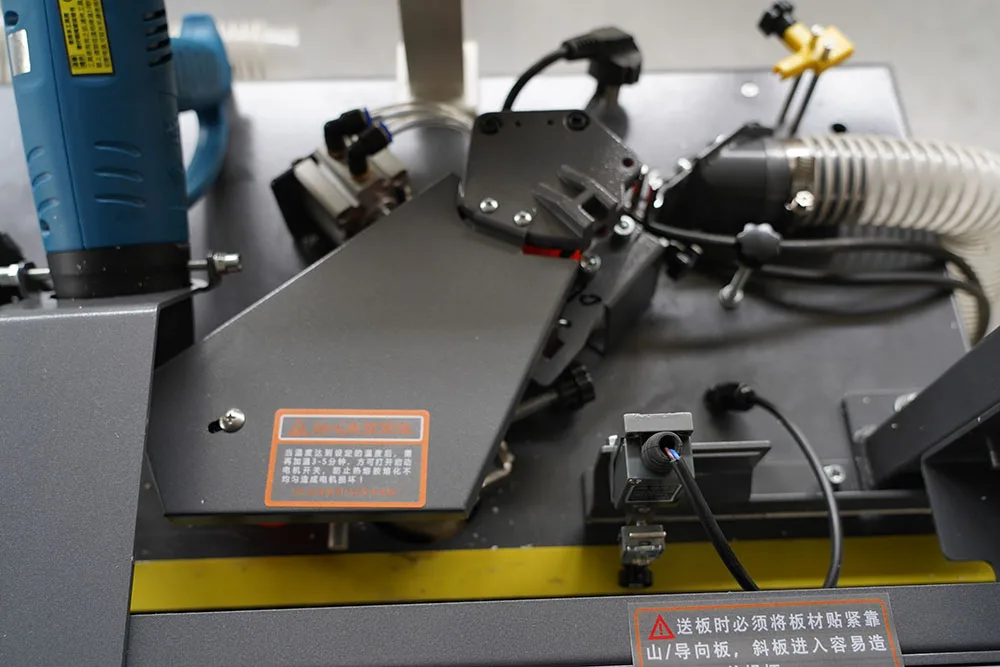
| Auxiliary Feature | Self-contained vacuum device |
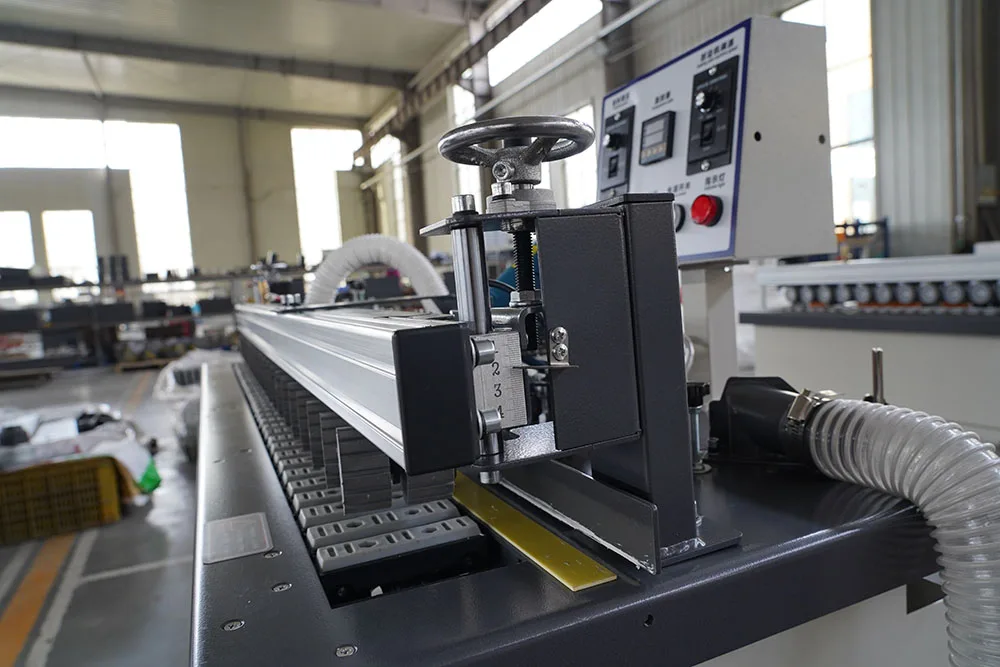
| Pressure Beam | Aluminum alloy, manually adjustable |
| Belt Breaking | Automatic belt breaking device |
| Assembly State | Assembled (KD packing for select spare parts) |
| Warranty | 1 year |
| Delivery Time | 25–30 days |
Application Suitability
| Application | Material or Output |
|---|---|
| Custom cabinet door production | MDF and particleboard with PVC edge banding |
| Small-batch furniture panel edging | Plywood substrates up to 25 mm thickness |
| Workshop-scale straight edge finishing | PVC strip up to 1.2 mm on flat panel stock |
| Interior joinery component edging | Standard board stock requiring gluing, trimming, and polishing in one pass |
Why Voltage Must Be Confirmed Before the Edge Banding Machine Manufacturer Sends a Quotation
A machine wired for the wrong frequency will burn out its motor within the first production week.
I have watched a workshop in Southeast Asia receive an edge bander built for 380V/50Hz when their local supply ran 220V/60Hz. The motor overheated on day three, the glue pot never reached stable temperature, and every panel that week showed delamination along the trim line. The buyer had to rewind the motor locally and replace the heating elements — costs that were never in their budget. When sourcing an automatic edge banding machine for sale, the first question should never be about feed speed; it should be about the exact voltage and frequency at the facility door [NEED_CITE: voltage and frequency standards by export market]. Confirming this before production starts avoids weeks of downtime and expensive field rewiring.
Mapping the Full Catalogue to Workshop Throughput
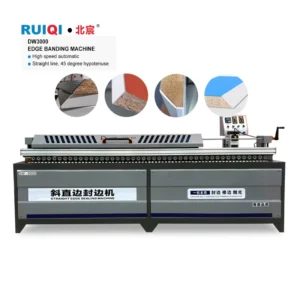
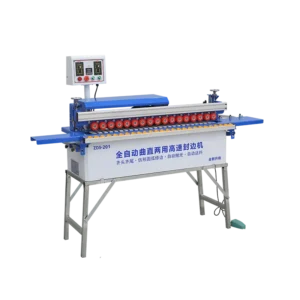
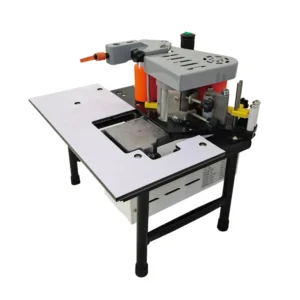
This page exists to show where each model sits in our edge banding lineup, and the WF-2000 occupies the compact, single-station tier. Workshops processing several hundred linear meters of panel edge per week find this footprint practical: the 2100 mm length fits between a sliding table saw and a boring machine without requiring a dedicated cell. The catalogue above and below this model covers wider panel ranges, pre-milling stations, and multi-function trimming, so a shop can plan its next equipment step without switching to a different edge banding machine manufacturer.
How Entry-Level and Full-Function Configurations Differ
An entry-level unit like the WF-2000 concentrates on gluing, slotting, elastic profiling trimming, and polishing — the four operations that resolve the majority of straight-edge PVC banding on standard 18 mm particleboard. Full-function models further up the catalogue add pre-milling to square imperfect cuts, corner rounding to soften sharp profiles, and scraping to remove residual adhesive waves [NEED_CITE: edge banding process stages and substrate preparation]. Choosing between tiers depends on whether incoming panels already arrive with clean, square edges from a well-tuned beam saw, or whether they need remedial milling before the glue station.
Reading the Specs That Actually Affect Edge Quality
The 18–25 mm panel thickness range means the aluminum alloy pressure beam must be manually repositioned when switching between 18 mm particleboard and 25 mm MDF — a five-minute adjustment, but one that operators sometimes skip during short runs, leading to uneven roller pressure and visible glue squeeze-out. The eight pressing rollers distribute bonding force across the strip width; fewer rollers on smaller machines leave the top and bottom edges under-pressed. Hot air heating keeps the adhesive at a consistent viscosity throughout the glue pot cycle, which matters when the workshop temperature drops in winter months. The 0–14 m/min variable feed speed lets operators slow down on difficult substrates where the glue needs extended open time, and speed up on straightforward PVC-on-MDF runs where throughput is the priority. Elastic profiling trimming follows the panel contour without digging into the decorative surface — a common failure point on rigid trimmers when the substrate density varies from sheet to sheet.
The Hidden Cost of Specifying the Wrong Tier
A joinery shop that wins a large apartment fit-out contract may be tempted to run an entry-level edge bander at continuous full-speed shifts. These machines are built for batch work with natural pauses between batches, not for eight-hour uninterrupted feed [NEED_CITE: duty cycle considerations for woodworking machinery]. The glue pot cycling, the trimming blade wear, and the polishing wheel saturation all accelerate under sustained load. What follows is not a sudden breakdown but a gradual decline in edge quality: glue lines widen, trimming leaves micro-chatter marks, and polishing fails to remove the adhesive haze. The rework cost on several hundred cabinet doors far exceeds what a mid-tier machine would have cost from the start.
What Sets This Catalogue Apart
Every model in our range shares the same hot air gluing architecture, so operators trained on the WF-2000 move to higher-tier machines without relearning the glue station. Voltage is configurable from 110V to 440V as a standard option, confirmed in writing before the machine enters assembly. Our four-stage QC process covers incoming material inspection, in-process assembly checks, finished product testing, and a pre-shipment verification run on sample panels matching the buyer’s substrate. The Ningjin facility holds ISO 9001 and CE certification, and documentation travels with every shipment. Engineer-led configuration recommendations arrive within 24 hours of a confirmed inquiry, specifying the exact model tier for the stated throughput.
Documentation & Verification
- CE declaration of conformity issued for the WF-2000 model family
- ISO 9001 certificate covering the manufacturing and assembly process
- Machine specification sheet with verified feed speed and tolerance data
- Electrical schematic confirming rated voltage and circuit protection requirements
- Factory test record run on buyer-specified panel thickness before crating
- Operation and maintenance manual in the buyer’s agreed language
Installation, Commissioning & Support
- Requires a level concrete floor with clearance for the 2100 mm machine length plus panel infeed space
- Dedicated 220V circuit rated for at least 6.17 kW continuous draw with appropriate breaker sizing
- Delivered assembled; operator connects compressed air supply at 0.4–0.6 MPa before first run
- Initial commissioning includes pressure beam height setting for the target 18–25 mm panel range
- Spare parts list covers trimming blades, polishing wheels, and feed belt segments for local stocking
- Self-contained vacuum device reduces dependency on external dust extraction during initial setup
Before You Send an Inquiry
To match the right catalogue tier to your workshop, we need to know the panel substrates you run most often and their typical thickness range, your local supply voltage and frequency, and the approximate linear meters of edge banding you process per shift. If you are evaluating a complete line rather than a standalone edge bander, share your existing saw and boring equipment so we can confirm feed height and throughput compatibility.
Frequently Asked Questions
Q: How do I decide between the WF-2000 and a full-function model in the catalogue?
A: The decision rests on your substrate condition and production volume. If your beam saw delivers consistently square edges and your daily output stays within batch-scale volumes, the WF-2000 covers gluing, trimming, and polishing adequately. Full-function models add pre-milling and corner rounding for shops handling rougher cuts or higher throughput where every edge must be finished in one uninterrupted pass.
Q: Can this machine run both PVC and wood veneer edge banding?
A: The WF-2000 handles PVC strip up to 1.2 mm as its primary application. Veneer banding is more rigid and brittle, requiring different trimming geometry and lower feed speeds. If veneer is a regular part of your production mix, a higher-tier model with dedicated veneer trimming stations is the more reliable choice across the catalogue.
Q: How do I verify that the panel thickness range matches my material?
A: The WF-2000 accepts panels from 18 to 25 mm. If your stock includes 12 mm or 16 mm board, the pressure beam adjustment range on this model will not accommodate it. Confirm your thinnest and thickest panel dimensions before ordering, as different catalogue models cover different thickness windows and feed height clearances.
Q: What happens if the machine arrives with a voltage mismatch?
A: Voltage and frequency are confirmed in writing during the quotation stage and verified again before assembly begins. Our documentation package includes an electrical schematic matching the agreed specification. The pre-shipment test run is conducted at the confirmed voltage, so any mismatch would be caught before the machine leaves the factory floor.