

Description
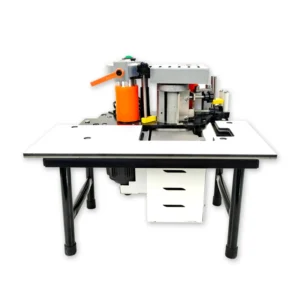
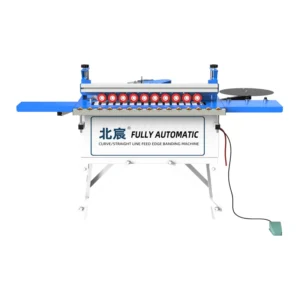
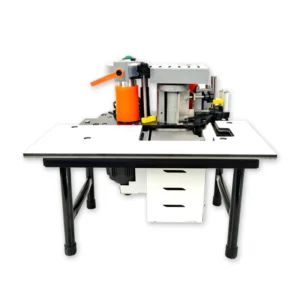
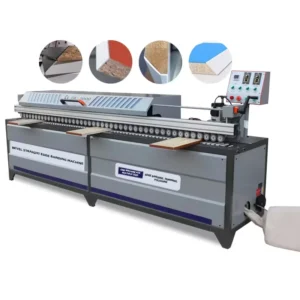
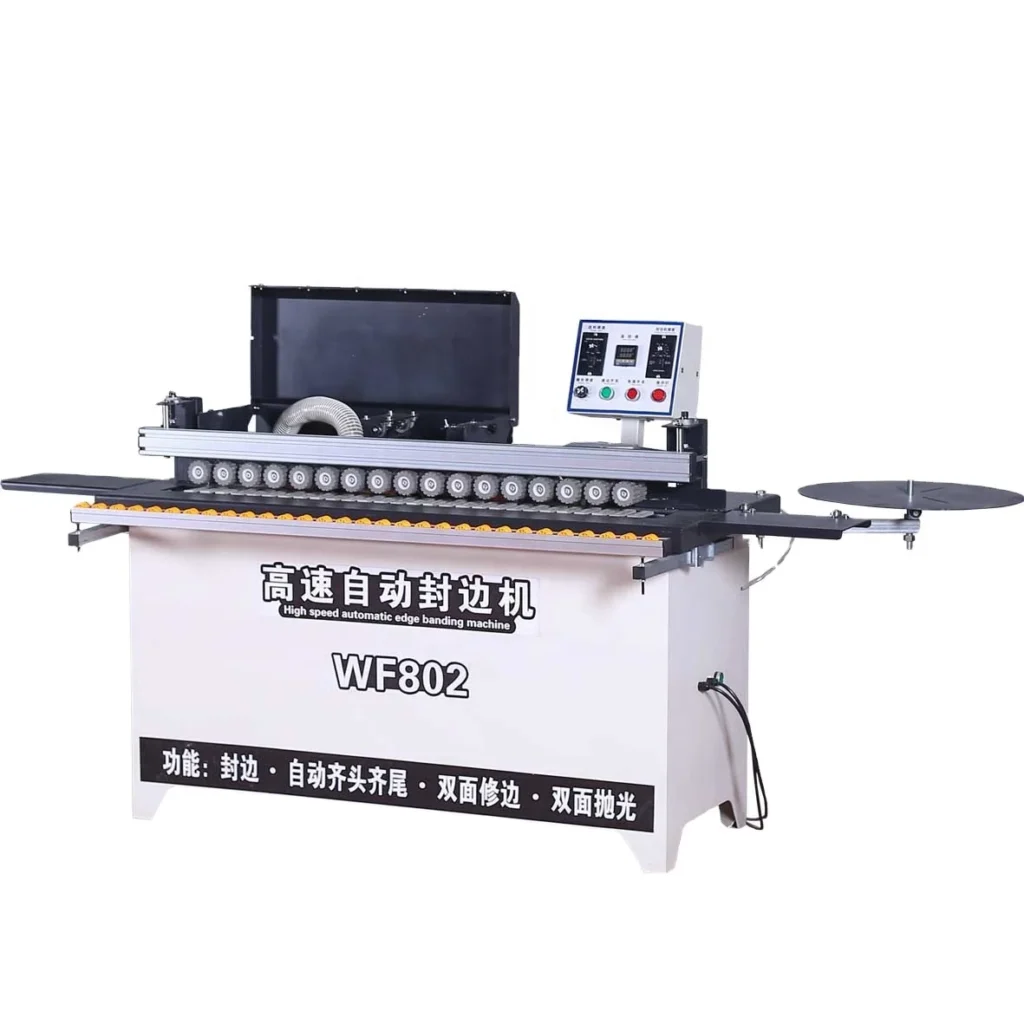
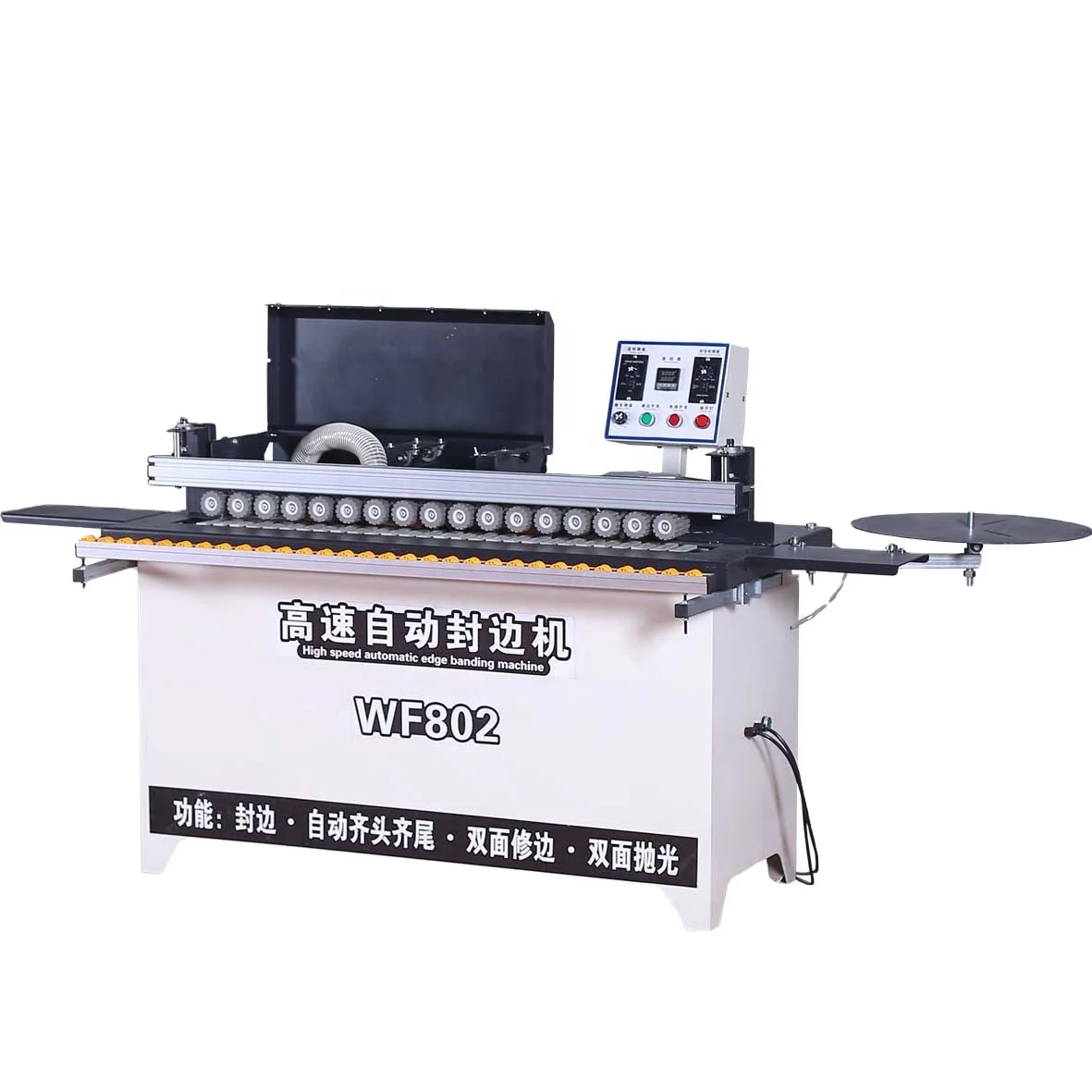
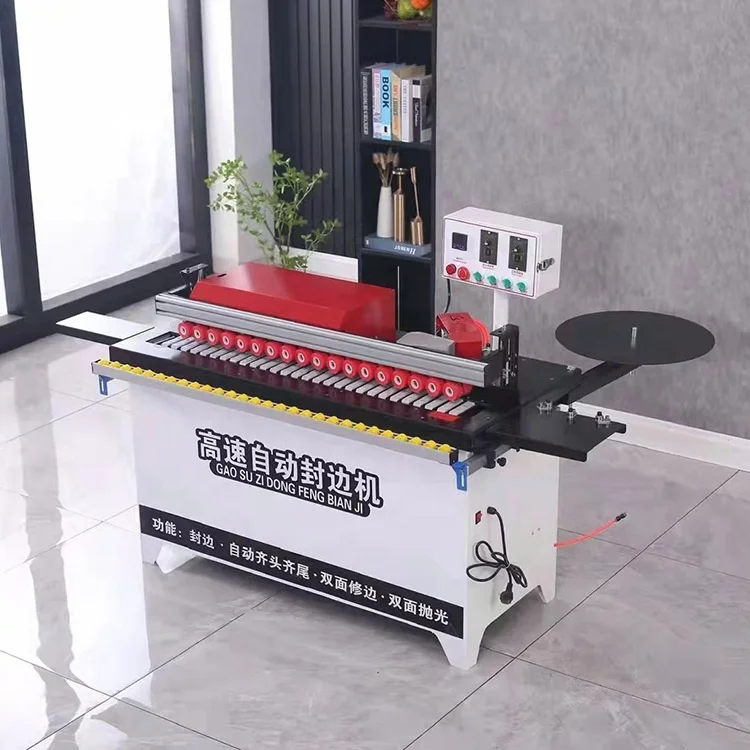
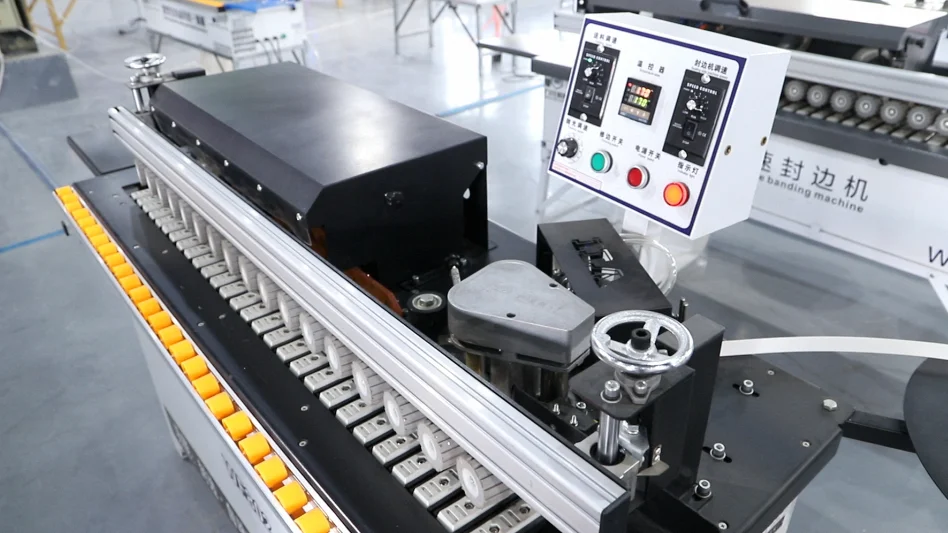
Compact Footprint, Full Automation — The Model 802 integrates trimming, polishing and dust collection in a single automatic edge banding machine, letting small workshops scale production without changing supplier.
Technical Specifications
| Parameter | Value |
|---|---|
| Model | 802 |
| Product Type | Automatic Edge Banding Machine |
| Edge Type | Straight line |
| Rated Voltage | 220V (configurable 110V–440V) |
| Strip Thickness | 0.5–2.5 mm |
| Sheet Thickness | 10–50 mm |
| Feed Speed | 0–10 m/min |
| Trimming Power | 800 W × 2 |
| Polishing Power | 180 W × 2 |
| Suction Power | 1200 W |
| Rated Power | 4 kW |
| Rated Air Pressure | 0.4–0.6 MPa |
| Glue Capacity | 4000 ml |
| Heating Power | 1000 W (5–10 min warm-up) |
| Pressure Beam | One-piece, double rows of pressure wheels |
| Conveyor Belt Material | Silicone |
| Belt Breaking Method | Pneumatically controlled |
| Control Panel | Digital display of glue pot temperature, independent switch |
| Extendable Support | Fluent strips for large plate stability |
| Overall Dimensions | 130 × 65 × 75 cm (basis not stated in source — confirm with manufacturer) |
| Machine Weight | 150 kg (basis not stated in source — confirm with manufacturer) |
Application Suitability
| Application | Material or Output |
|---|---|
| Custom furniture panel edging | MDF, plywood and particleboard with PVC banding |
| Cabinet door and drawer front finishing | Solid wood panels with veneer edge banding |
| Small-batch joinery production | Melamine-faced boards, straight-line edges |
| Workshop scaling from manual to automated | Mixed panel substrates 10–50 mm thick |
Why the Voltage Question Should Come Before the Quotation
Confirming local voltage and frequency prevents a machine from arriving unusable on your shop floor.
I remember a project in the Middle East where a client ordered an edge banding machine based on our sample capacity. But their actual MDF had higher moisture content, causing glue adhesion issues and halting their output. That taught me to always verify material specs and electrical conditions before finalizing configurations. An Automatic Edge Banding Machine manufacturer must ask these questions early — otherwise the machine sits idle while transformers are sourced locally [NEED_CITE: voltage and frequency standards by export market]. Mismatched electrical supply remains one of the most common reasons imported woodworking equipment fails during commissioning.
Where the 802 Sits in the Complete Machine Range
The Model 802 occupies the compact-format tier within Ruiqi’s full catalogue, designed for workshops that need automated edge finishing without the floor space a full production-line bander demands. Its 0–10 m/min feed speed positions it for small-to-medium batch runs rather than high-volume continuous output. As an Automatic Edge Banding Machine manufacturer offering a tiered range, Ruiqi ensures that buyers who start with the 802 can move to higher-throughput models later without changing supplier or retraining operators on a different control philosophy.
Planning Your Next Upgrade from Day One
Single machines bought piecemeal often turn out incompatible in feed height or throughput with the rest of the line. The 802 shares the same control logic and edge banding material compatibility as larger models in the range, so panel thickness capacity and strip thickness remain consistent when you add upstream saws or downstream boring machines. This continuity matters when a joinery workshop grows from prototyping to regular production volumes [NEED_CITE: production scaling challenges in small woodworking shops]. Evaluating where this model sits relative to higher-capacity units helps you plan phased investment without stranded equipment.
Reading the Numbers That Matter Most
The 10–50 mm sheet thickness range means the 802 handles everything from thin cabinet shelving to thick worktop panels, but feed speed must be reduced as panel weight increases to maintain edge contact pressure. The 4000 ml glue pot capacity allows extended runs between refills — important when processing a full batch of cabinet components without stopping mid-run. Double trimming motors at 800 W each provide enough torque for clean upper and lower edge cuts on PVC and veneer, while the silicone conveyor belt prevents surface marking on finished melamine faces. The pneumatically controlled belt breaking system eliminates manual strip cutting, reducing operator fatigue over a full shift.
The Hidden Cost of Skipping Configuration Checks
Machines quoted without confirming local voltage and frequency arrive unusable, sitting on the dock while electricians rewire the facility. Control panels in a language the operator cannot read stall commissioning for days, sometimes weeks, until translated overlays are sourced. Entry-level machines sold into production volumes they were never designed for develop premature wear on conveyor bearings and trimming motors — problems that surface only after warranty disputes begin [NEED_CITE: common warranty disputes in imported woodworking machinery]. Tolerance claimed but not verifiable becomes a costly discovery when panels fail assembly and entire batches must be re-cut.
Why Source This Model Through Ruiqi
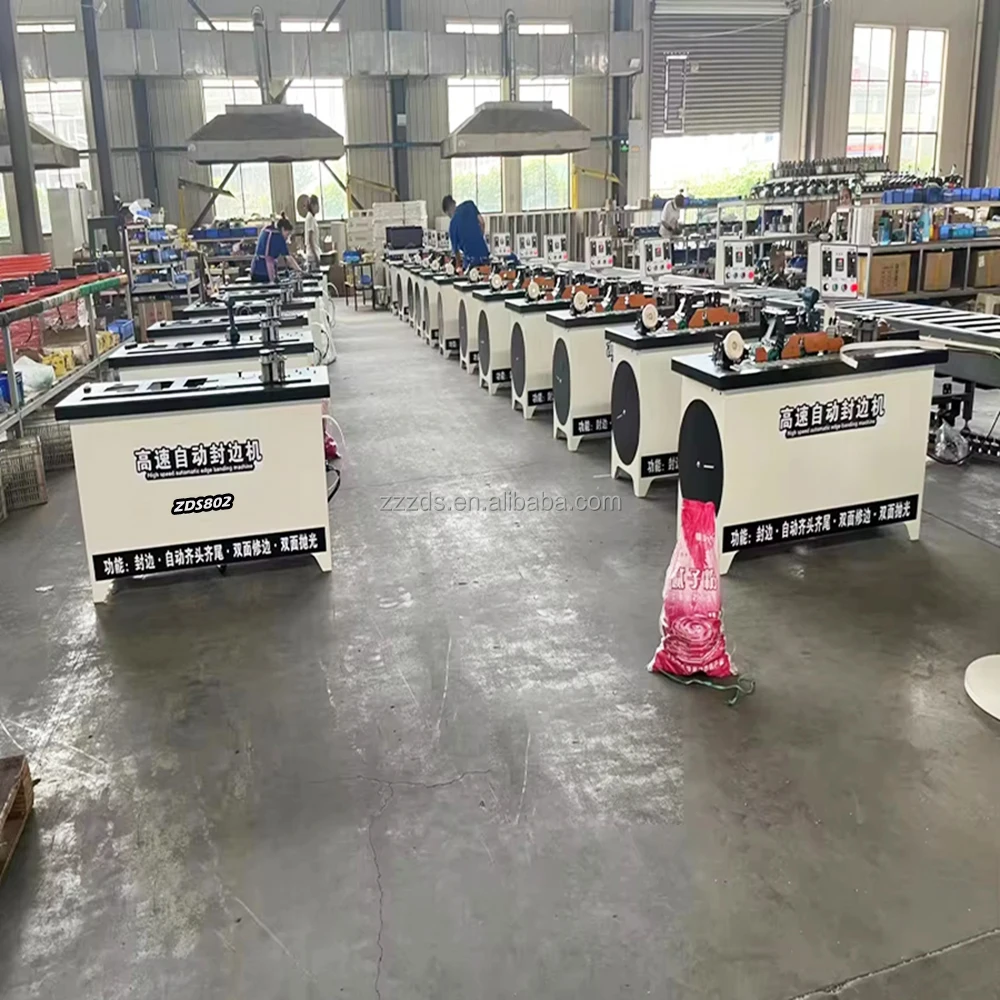
In-house manufacturing with patented cutting mechanisms means tolerance claims can be verified at the factory before shipment, not discovered on your assembly floor. The full range from entry-level to full-function within one product family lets a workshop scale without changing supplier or relearning controls. Voltage, language and specification customization are handled as standard configuration steps, not special requests. Four-stage QC with pre-shipment verification ensures the 802 is tested on your specified panel material before it leaves the facility. Engineer-led configuration recommendations arrive as formal quotations within 24 hours, reducing the back-and-forth that delays capital equipment purchases.
Documentation & Verification
- CE declaration of conformity applicable to this model’s electrical and mechanical safety
- Machine specification sheet confirming 802 dimensions against your workshop layout
- Electrical schematic and voltage confirmation matched to your local supply standard
- Factory test record on your specific panel thickness and edge banding material
- Operation and maintenance manual produced in your operator team’s agreed language
Installation, Commissioning & Support
- 4 kW rated power requires a dedicated circuit matching the confirmed 220V or customized supply
- Pneumatically controlled belt system needs stable 0.4–0.6 MPa air supply at the connection point
- Digital glue pot display and independent switches simplify first-day operator familiarization
- 1000 W heating element requires 5–10 minute warm-up before first edge banding pass each shift
- Fluent strip extendable supports must be positioned level with the conveyor for large plate stability
- Silicone conveyor belt inspection and cleaning forms part of weekly maintenance routine
What to Include in Your Inquiry
Provide your panel substrate types and typical thickness range so the feed speed and pressure beam settings can be matched before quotation. Confirm your local voltage and frequency to ensure the electrical configuration ships correctly the first time. If you plan to integrate the 802 with existing panel saws or boring machines, share their feed heights and throughput rates so compatibility can be verified at the configuration stage.
Frequently Asked Questions
Q: How does the Model 802 compare to other models in the Ruiqi edge banding range in terms of feed speed and panel thickness capacity?
A: The 802 offers 0–10 m/min feed speed and handles 10–50 mm sheet thickness, positioning it for small-to-medium batch production. Higher-tier models in the range provide faster feed rates and additional processing stations for high-volume environments, while maintaining the same control logic for operator continuity.
Q: Can the voltage be customized from the rated 220V to match my local power supply?
A: Yes. Voltage is configurable from 110V to 440V as part of standard order processing. The electrical schematic and voltage confirmation document ships with the machine so your electrician can verify the installation matches local requirements before first power-on.
Q: What panel materials and edge banding types is the 802 designed to handle?
A: The 802 processes MDF, plywood, particleboard and solid wood panels using PVC or veneer edge banding within the 0.5–2.5 mm strip thickness range. A sample processing test on your specific substrate can be arranged before shipment to verify edge finish quality.
Q: How does this model integrate with upstream panel saws and downstream boring machines in a full production line?
A: The 802 shares the same panel thickness range and feed height conventions as other models in the Ruiqi catalogue. When planning a full line, throughput matching between stations is reviewed during the engineer configuration stage to prevent bottlenecks at any single point.