Description
Verified Tolerance — proprietary cutting mechanisms on the DW1800 hold edge finish within ±0.02 mm, confirmed on every unit before it leaves the Shandong floor.
Technical Specifications
| Parameter | Value |
|---|---|
| Model | DW1800 |
| Product Type | Automatic Edge Banding Machine |
| Total Power | 4.9 kW |
| Voltage Options | 380V / 220V / 415V (frequency confirmed per market) |
| Feed Speed | 0–14 m/min |
| Edge Banding Height | 0–50 mm |
| Edge Banding Thickness | 0.3–3 mm |
| Minimum Sheet Length | 200 mm |
| Minimum Sheet Width | 100 mm |
| Glue Pot Capacity | 4000 ml |
| Air Source Pressure | 0.4–0.6 MPa |
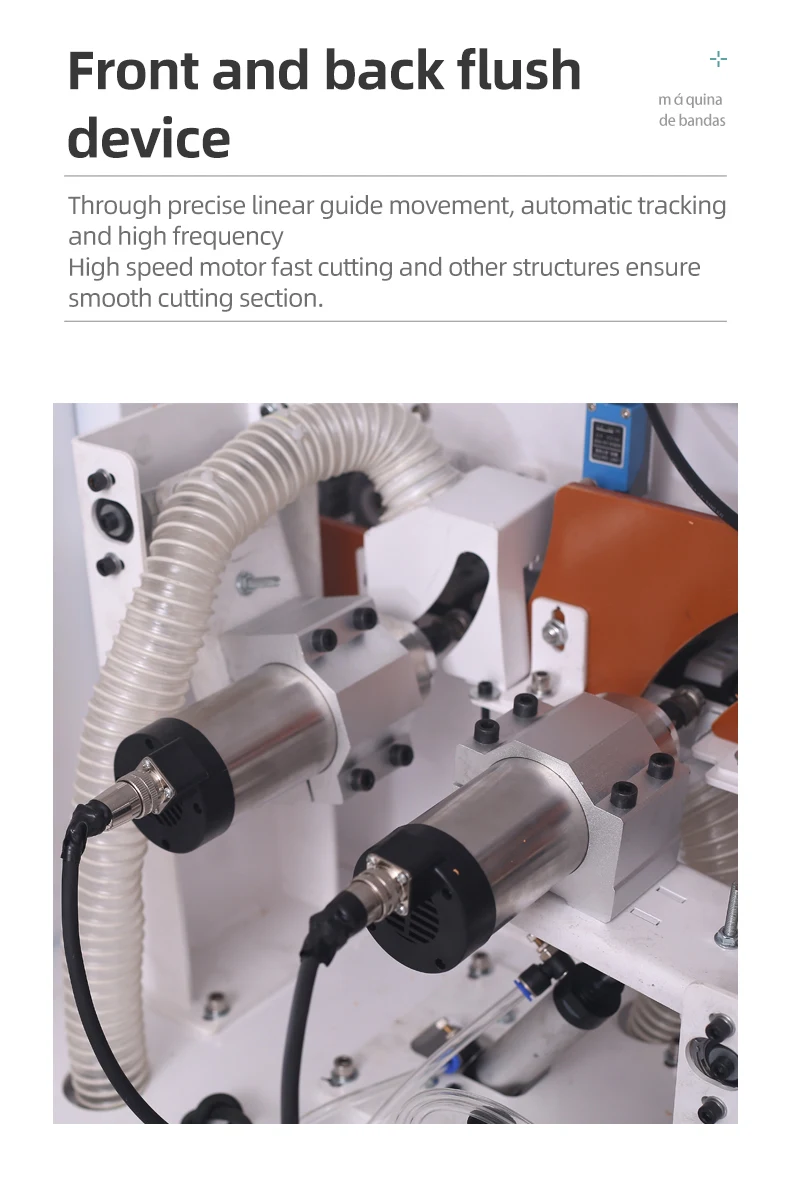
| Trimming Motors | 800 W × 2 at 24,000 r/min |
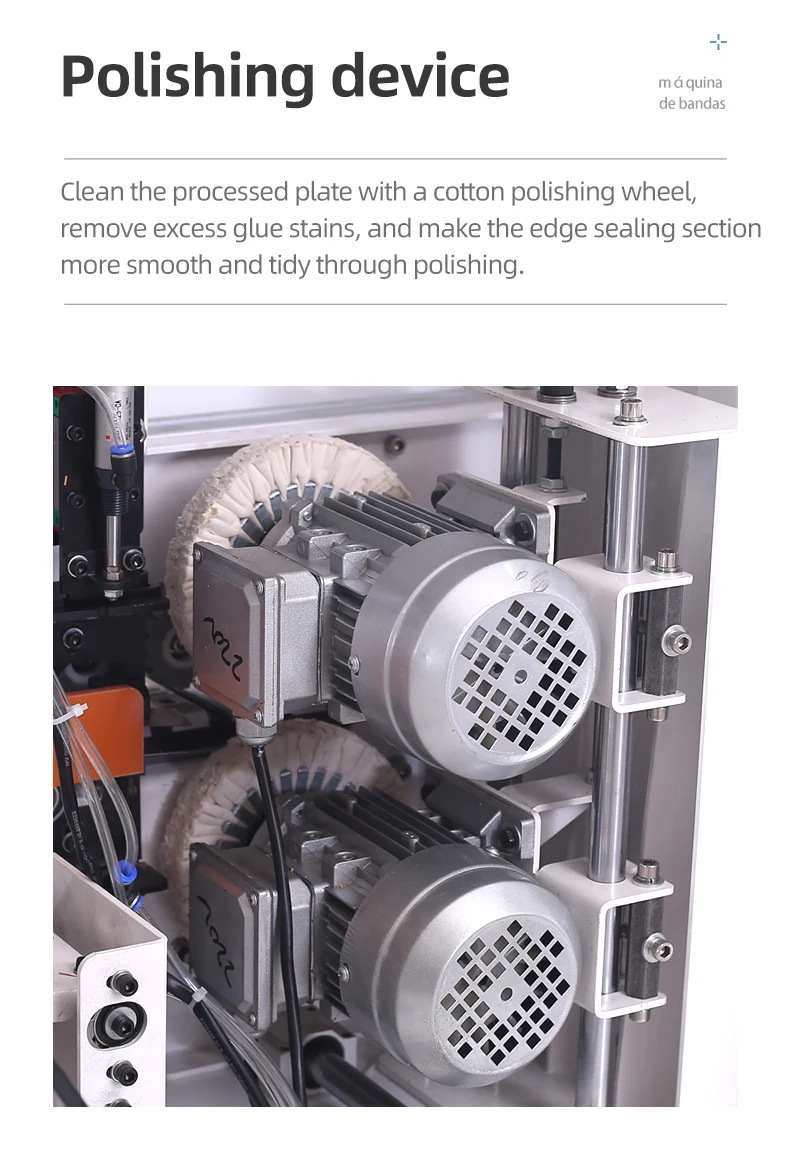
| Polishing Motors | 380 W × 2 |
| Vacuum Power | 550 W |
| Machine Dimensions | 2200 × 650 × 1250 mm |
| Machine Weight | 320 kg |
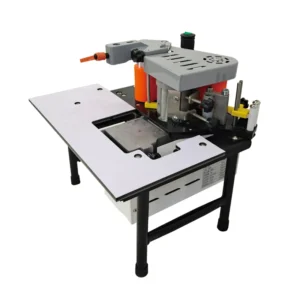
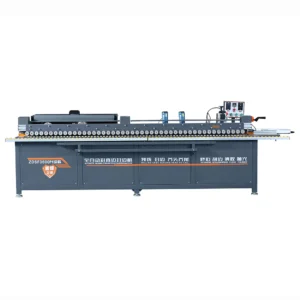
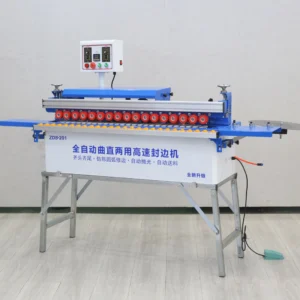
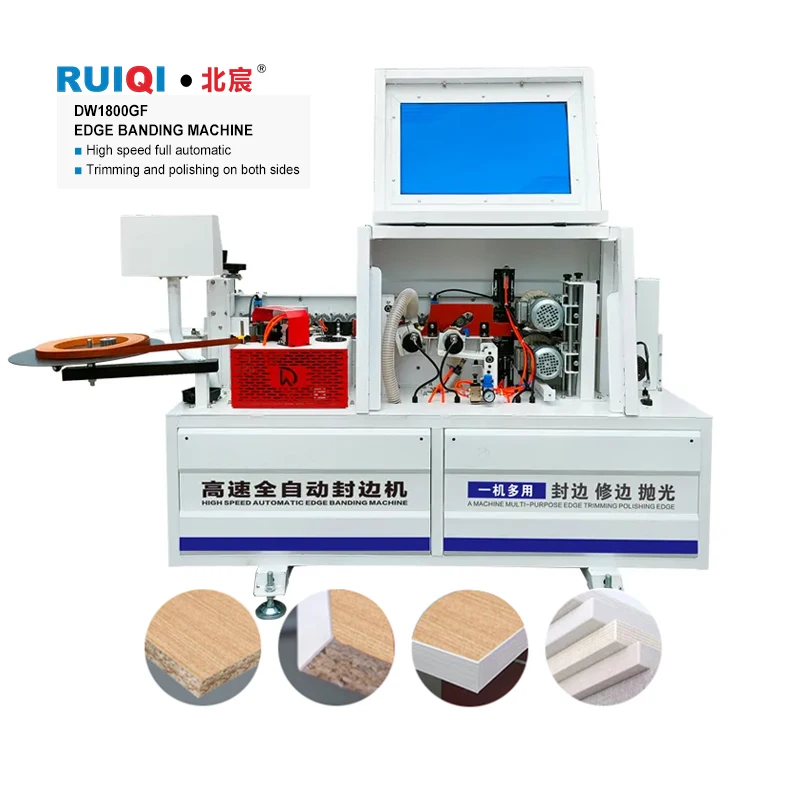
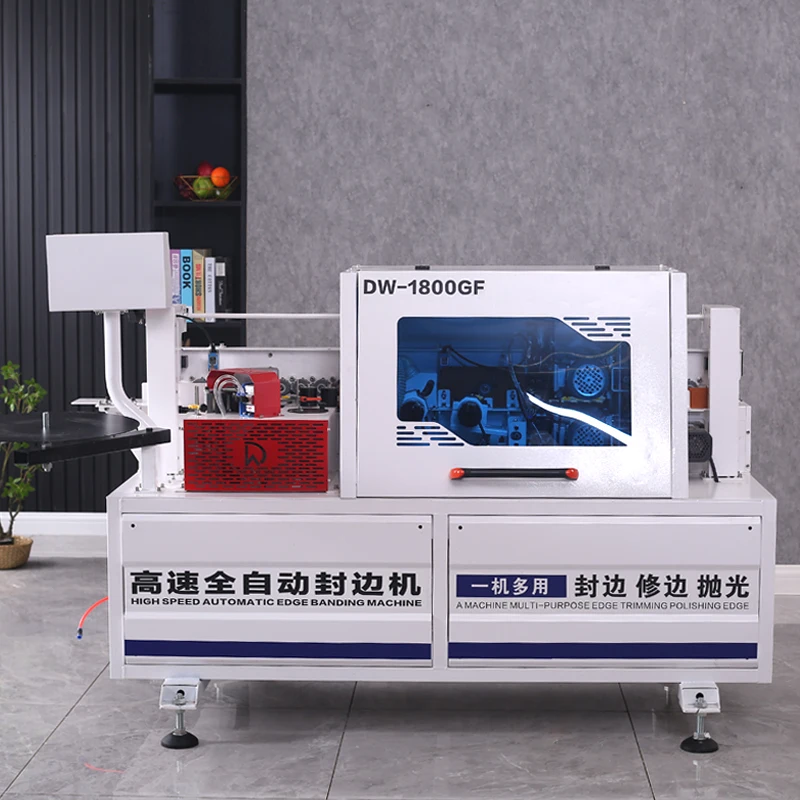
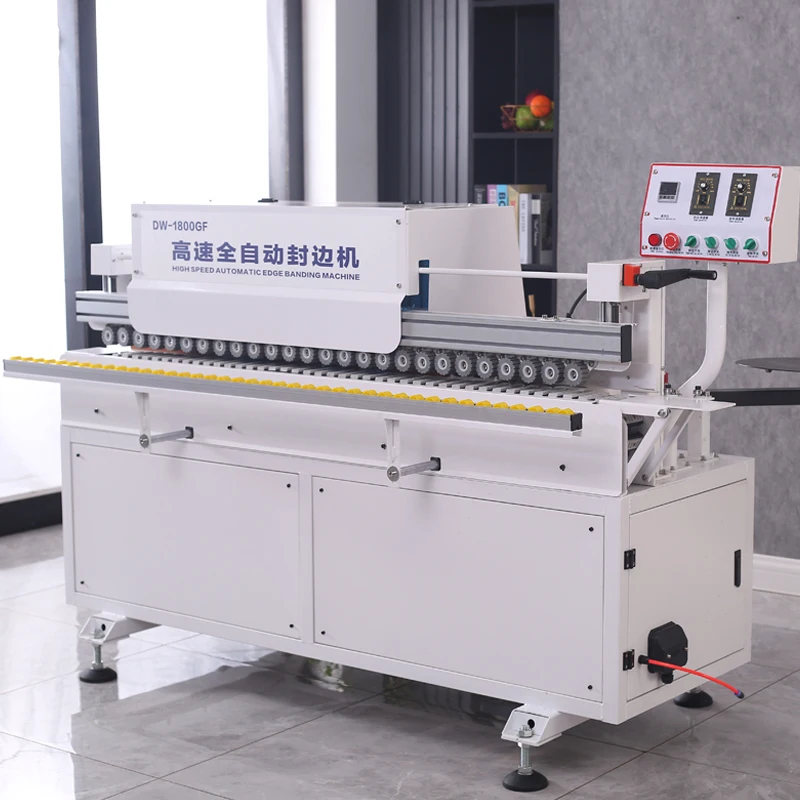
| Key Features | Double-sided gluing, front/rear alignment, top/bottom trimming, profile tracking, flexible scraping, top/bottom polishing, dust extraction port |
Application Suitability
| Application | Material or Output |
|---|---|
| Custom cabinet door edging | MDF and particleboard with 0.4–2 mm PVC banding |
| Wardrobe side panel finishing | Plywood panels with melamine or veneer edge strips |
| Office furniture carcass production | Particleboard sheets up to 50 mm thickness |
| Shop fitting and display joinery | ABB boards and organic glass plates with thin PVC |
| Small-batch solid wood furniture | Solid wood panels requiring flexible edge scraping |
Why the Voltage Question Should Come Before the Price on Any Automatic Edge Banding Machine Manufacturer Order
Confirming local supply voltage and frequency before production starts prevents a machine that sits dead on the workshop floor.
I once shipped a fully automatic edge bander to a Middle East cabinet factory. The purchase order listed 440V, so that is what we wired. When the container arrived, the site supply was 380V. The inverter faulted immediately, and the entire panel line stood idle for three weeks while a step-up transformer was sourced locally. Since that day, I ask every buyer for a photo of their main distribution board nameplate before I finalise any quotation. An automatic edge banding machine manufacturer that does not verify your electrical environment is leaving your commissioning date to chance [NEED_CITE: voltage and frequency standards by export market].
Station Sequence That Covers the Complete Edge Finish in One Pass
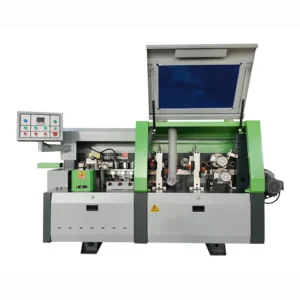
The DW1800 runs a continuous station sequence: double-sided gluing, front and rear alignment, top and bottom rough trimming, fine trimming, profile tracking, flexible edge scraping, and top and bottom polishing. Each station is independently adjustable, so switching from 0.4 mm PVC to 2 mm veneer requires only dial changes at the control panel rather than mechanical reconfiguration. This matters when a custom furniture factory runs five different board thicknesses in a single shift.
Mobile Worktable and Feed Accuracy
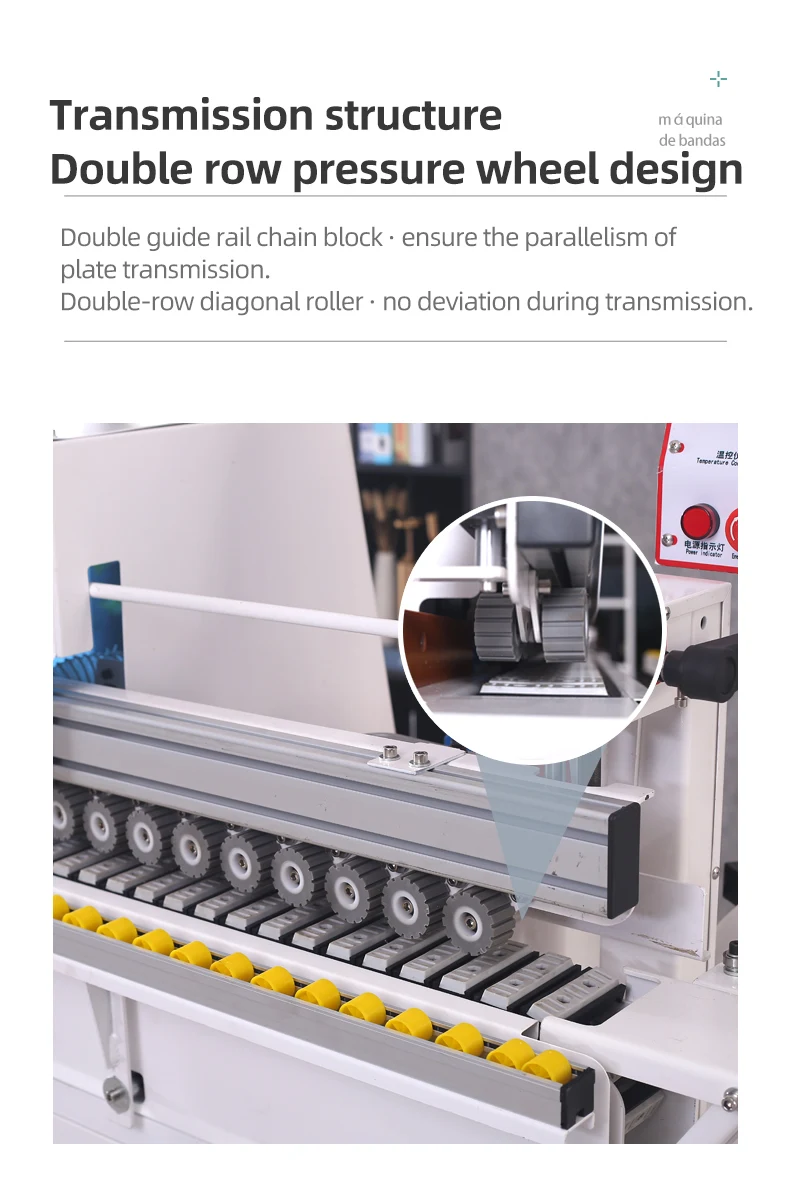
The mobile guide uses a roll-ball differential structure on a high-strength extruded aluminium alloy rail, oxidation-treated for wear resistance. Combined with the 0–14 m/min variable feed speed, the operator can slow the feed for difficult substrates like organic glass plates without losing tracking accuracy. The result is a consistent glue line and clean trim across the full 0.3–3 mm banding thickness range, which is where an automatic edge banding machine manufacturer earns its reputation.
How Trimming Speed and Glue Pot Volume Affect Daily Output
The 24,000 r/min trimming motors cut cleanly through PVC and veneer without chipping the substrate edge, even at the upper 14 m/min feed rate. A 4000 ml glue pot means the operator is not stopping mid-batch to refill adhesive — a practical advantage when running long wardrobe side panels. The 550 W vacuum extraction port ties into the workshop dust collection system, keeping the glue roller and trimming zone free of swarf that would otherwise mark the next panel [NEED_CITE: dust extraction requirements for woodworking machinery].
The Cost of Skipping Specification Alignment
Buyers who select a machine on price alone often discover hidden costs after arrival. A control panel in a language the operator cannot read delays commissioning until a translator is found. A machine rated for light-duty use but pushed into two-shift production wears its trimming bearings prematurely, and replacement parts may not be stocked locally. These are not defects — they are mismatches that an experienced automatic edge banding machine manufacturer would have caught during the configuration stage [NEED_CITE: common causes of woodworking machine downtime in export markets].
What Ruiqi Wood Brings to This Model Range
Ruiqi Wood keeps the DW1800 within a broader family that stretches from entry-level manual feed machines to full pre-milling lines, so a workshop can add capacity later without changing supplier. Voltage, plug type (EU, US, AU, UK) and control panel language are confirmed at quotation stage, not guessed at packing. A four-stage QC process — incoming material, in-process, finished product, pre-shipment — generates a factory test record on your actual panel thickness before the crate is sealed. Engineer-led configuration means the proposal arrives within 24 hours and includes an electrical schematic matching your site supply.
Documentation & Verification
- CE declaration of conformity matched to the DW1800 configuration shipped
- Electrical schematic confirming your verified voltage and plug type
- Factory test record run on panel thickness within your specified range
- Operation and maintenance manual printed in the agreed operator language
- Spare parts list with part numbers cross-referenced to the trimming and polishing motors
- Packing photographs showing crate bracing and moisture barrier before container loading
Installation, Commissioning & Support
- Floor space of approximately 2200 × 650 mm plus infeed and outfeed clearance required
- Dedicated 380V or 415V circuit with isolator rated for the 4.9 kW total draw
- Machine arrives on a single pallet; legs and dust hood bolt on at site
- Glue pot first heat-up and roller alignment checked during commissioning call
- Trimming motor speed and scraping blade angle set to your primary banding thickness
- Daily cleaning of the glue roller and vacuum port covered in the operator manual
What to Include in Your Enquiry
To receive a configuration proposal that matches your workshop, share the board materials you run most often, the edge banding thickness range you need, and your daily panel volume. A photo of your main electrical panel nameplate lets us confirm voltage and frequency before we quote. If you plan to integrate the DW1800 with existing sliding table saws or boring machines, tell us the infeed height and throughput of those units so we can verify line compatibility.
Frequently Asked Questions
Q: How do you confirm the correct voltage and frequency for my workshop before production?
A: We ask for a photograph of your main distribution board nameplate. From that, we confirm voltage, phase and frequency, then issue an electrical schematic showing the exact motor wiring and plug type for the DW1800. This document is part of the shipping package, so your electrician can verify the connection before first power-on.
Q: What edge banding materials does the DW1800 handle, and where does it sit in your range?
A: The machine runs PVC, melamine, veneer and ABS banding from 0.3 to 3 mm thick and up to 50 mm high. It sits in the mid-tier of our automatic edge banding machine manufacturer catalogue — above entry-level models that omit profile tracking, and below pre-milling models designed for high-volume panel plants.
Q: Can the control panel and manual be supplied in my operator’s language?
A: Yes. Standard panels are Chinese and English, and we configure Spanish or other languages before shipment. The operation and maintenance manual is printed in the same language, with illustrated troubleshooting pages so your operator can resolve common alarms without calling a translator.
Q: What documents travel with the machine in the crate?
A: You receive the CE declaration of conformity, an electrical schematic matching your confirmed voltage, a factory test record run on your panel thickness range, the operator manual in your chosen language, a numbered spare parts list, and packing photographs taken before the crate was sealed.
Q: How does the DW1800 integrate with other machines in a furniture production line?
A: Its 0–14 m/min feed speed and 50 mm maximum panel height align with standard sliding table saws and multi-boring machines. For full line layout including material flow and throughput matching between stations, we provide a separate production line proposal once we understand your daily volume and floor plan.