
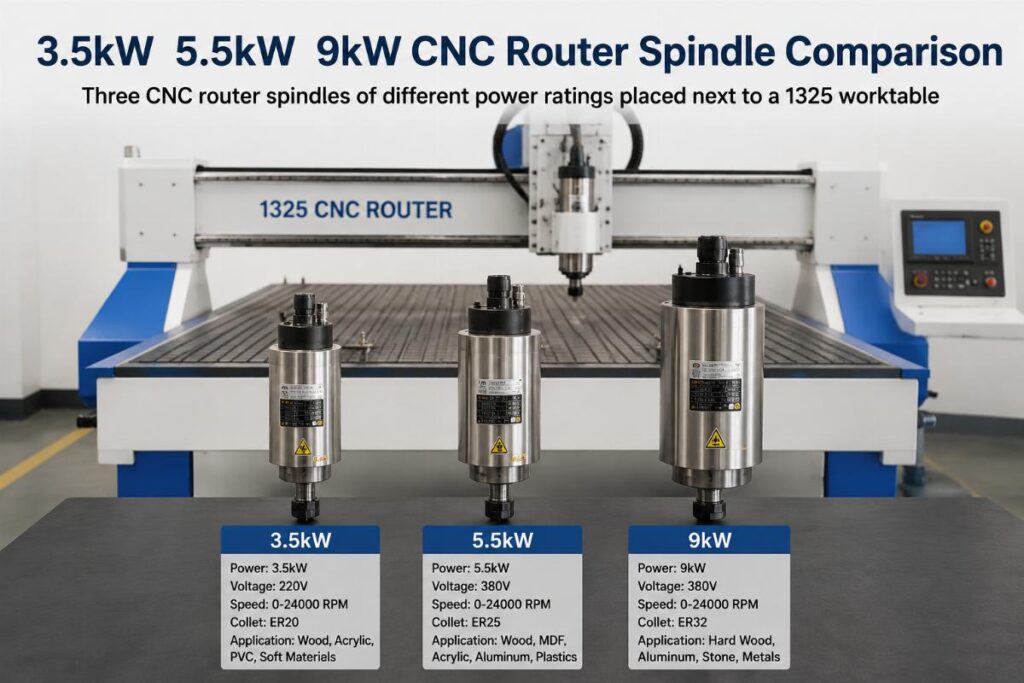
CNC Router Spindle Comparison: 3.5kW vs 5.5kW vs 9kW 2026 Buyer Guide from Chinese Manufacturers Higher spindle power does not always equal faster processing speed or better cost efficiency for most woodworking operations. Many buyers default to picking the highest power option available assuming it will deliver universal performance gains, but this decision often leads […]
CNC Router Spindle Comparison: 3.5kW vs 5.5kW vs 9kW 2026 Buyer Guide from Chinese Manufacturers
Higher spindle power does not always equal faster processing speed or better cost efficiency for most woodworking operations. Many buyers default to picking the highest power option available assuming it will deliver universal performance gains, but this decision often leads to unnecessary upfront costs, elevated failure rates, and wasted operational resources that cut into long-term profit margins.
The optimal spindle choice between 3.5kW, 5.5kW and 9kW models depends entirely on your core processing material, daily output volume, and existing CNC machine frame specifications, with no one-size-fits-all solution for all woodworking and sign-making operations.
As someone who has supported over 200 woodworking operation upgrades across Southeast Asia, the Middle East, and Latin America over the last decade, I have seen first-hand how mismatched spindle selections can derail even the most well-planned production lines. [NEED_CITE: Mismatched spindle and machine frame configurations increase equipment failure rates by 15-20% within the first 12 months of operation.]
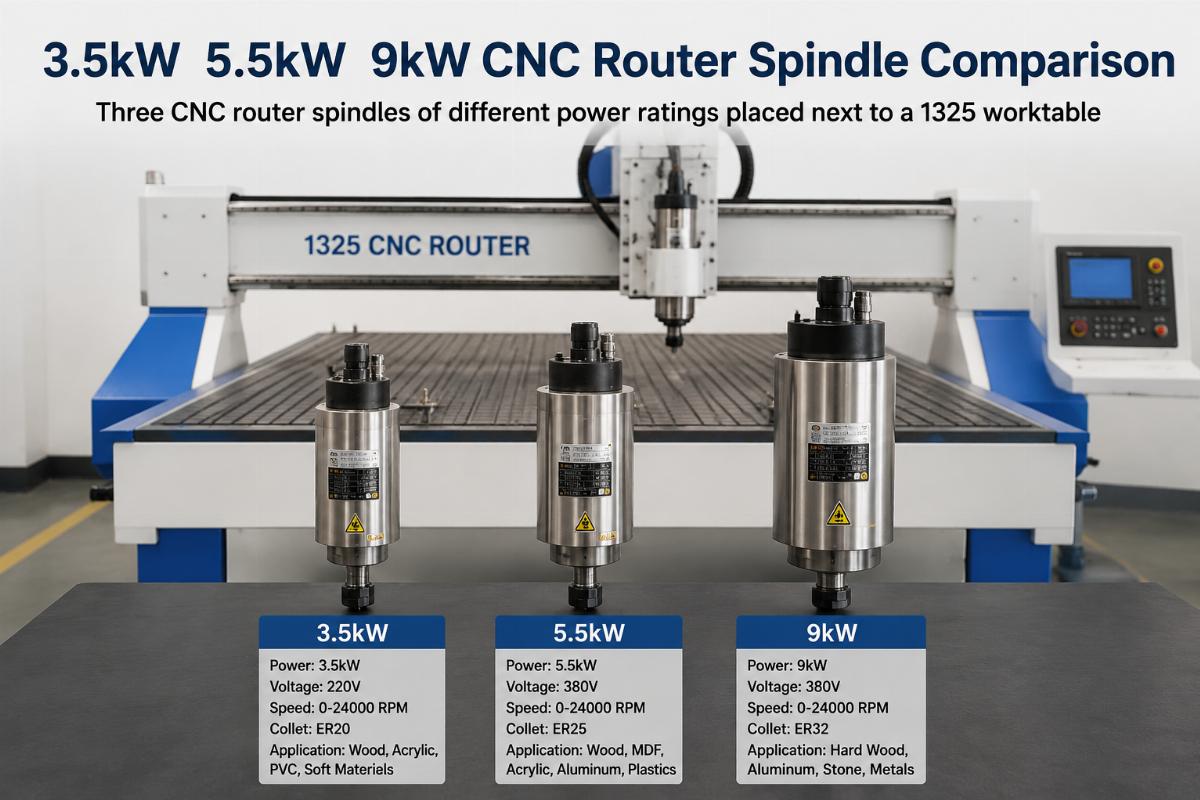
Below we break down verified performance data, real-world use cases, and actionable selection rules to help you pick the right configuration without overspending.
What Core Performance Differences Separate 3.5kW, 5.5kW and 9kW CNC Router Spindles?
The three models vary most dramatically in supported material thickness, maximum feed speed, and continuous operation stability under full load. While all three can handle standard MDF and thin plywood cuts, their performance gaps widen significantly when processing thick solid wood, particle board for mass production, or non-wood materials like aluminum composite panels.
| Comparison Factor | Common Misaligned Choice | Evidence-Based Recommended Choice |
|---|---|---|
| Maximum Supported Material Thickness | Selecting any spindle based on budget alone for all material types | 3.5kW for <15mm materials, 5.5kW for 15-40mm materials, 9kW for >40mm solid wood cuts |
| Continuous Operation Compatibility | Running a 3.5kW spindle at full load for 8+ hour daily production shifts | Match spindle load rating to your daily runtime to avoid overheating and premature wear |
| Upfront Cost Premium | Paying 30-40% extra for a 9kW spindle for standard panel furniture nesting work | Select the lowest power that meets your core production requirements to minimize unnecessary expenditure [NEED_CITE: Over-specifying spindle power leads to 30-40% unnecessary upfront equipment cost increases.] |
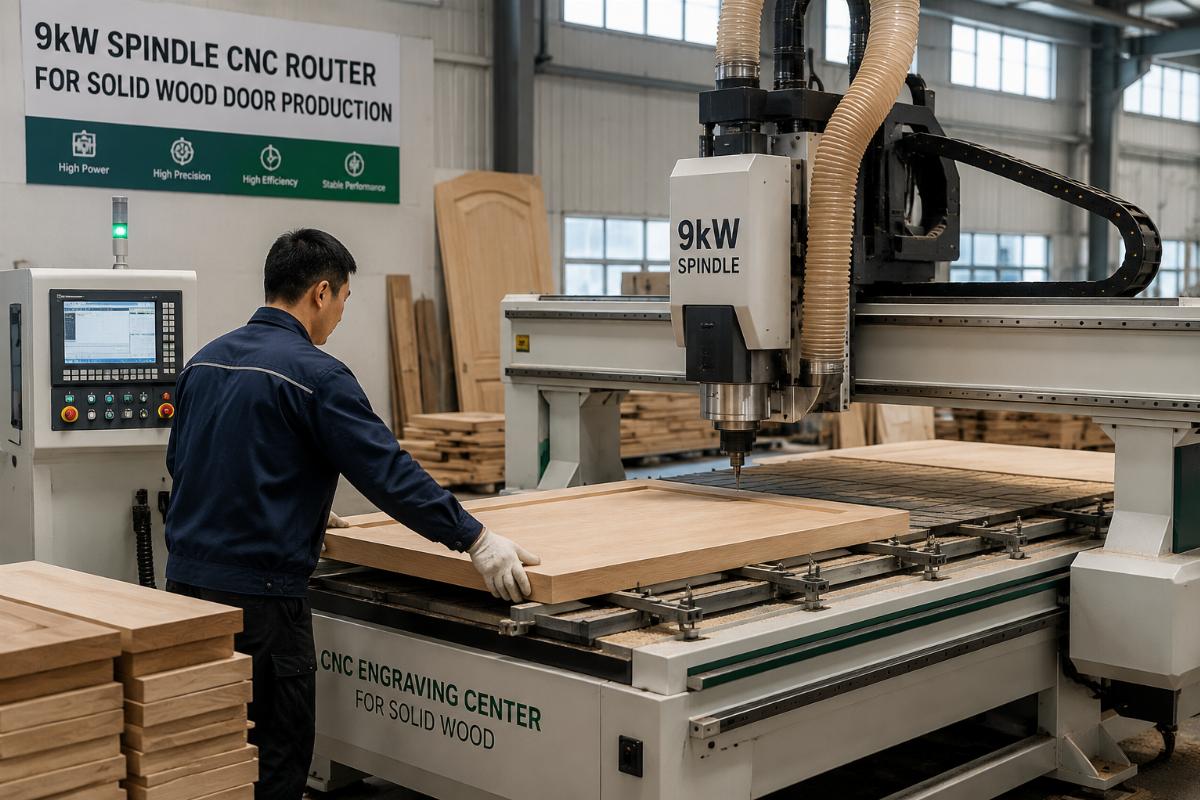
A 20-person custom wood door workshop in Turkey that switched to a 9kW spindle CNC engraving center saw its daily solid wood door output jump from 12 units to 35 units, while reducing per-piece power consumption by 22% for 45mm thick solid wood door blanks. The team had previously used a 5.5kW spindle that could not keep up with their order volume without running at 100% load for extended periods, leading to monthly spindle replacements that cut into their profit margins.
- Core Parameter Verification – Confirm the spindle’s rated load runtime and maximum material thickness rating before placing an order, rather than relying solely on advertised peak power numbers.
- Machine Frame Alignment – Cross-check that the spindle’s weight and vibration rating are compatible with your existing or planned CNC machine frame, as underrated frames cannot support high-power spindle operation.
- Wear Rate Testing – Request 2-hour full-load test data from suppliers to confirm the spindle’s tool wear performance matches your expected material processing volume.
Which Spindle Power Best Fits My Specific Production Scenario?
Matching your spindle to your primary output type and daily volume will deliver 2-3x higher performance returns than picking a higher power model for non-aligned use cases. The three most common production segments each have a clear optimal spindle configuration that delivers the best balance of cost and efficiency.
| Production Scenario | Common Suboptimal Pick | Verified Optimal Pick |
|---|---|---|
| Startup sign making studios processing acrylic and thin MDF | 5.5kW spindle to "future proof" the machine | 3.5kW spindle for 2-3 person operations with <50 daily sign units |
| Mid-sized panel furniture factories running nested production lines | 3.5kW spindle to cut initial equipment costs | 5.5kW spindle for 50+ panel pieces per hour target output |
| High-volume solid wood door manufacturing operations | 5.5kW spindle to reduce initial equipment investment | 9kW spindle for operations processing >30 solid wood units per day [NEED_CITE: A properly matched 9kW spindle only increases power costs by 10% while cutting 40mm solid wood processing time by 60% per unit.] |
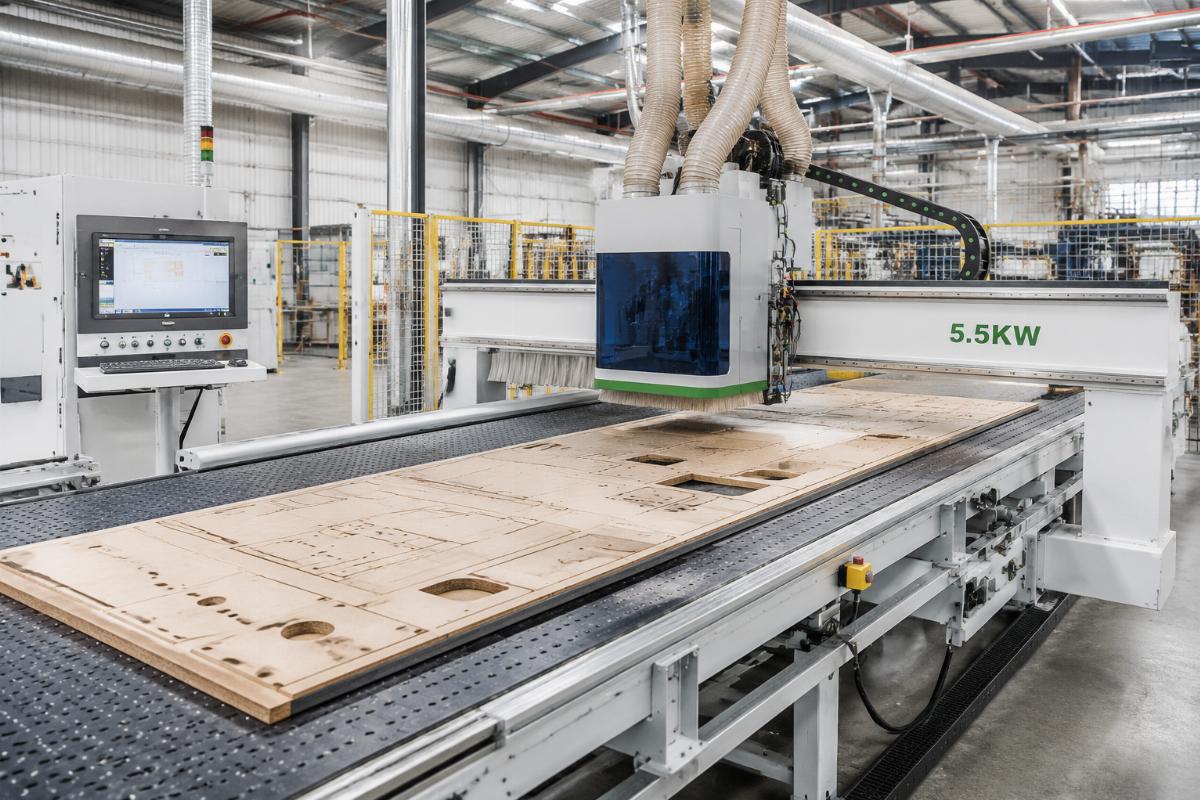
An 80-staff panel furniture factory in Vietnam upgraded from manual cutting to a 5.5kW spindle nested CNC line, increasing their hourly panel processing output by 3x and reducing their rework rate by 40% within the first 6 months of operation. A separate startup sign making studio in Mexico that selected a 3.5kW spindle entry-level 1325 CNC router kept their total equipment cost 45% lower than equivalent European brand products while fully meeting their daily acrylic and MDF processing demands.
- Primary Material Prioritization – Rank your most commonly processed material by volume, and select the spindle that is optimized for that material’s thickness and density.
- Volume Threshold Check – Cross-reference your daily output targets against published spindle performance data to avoid underpowered configurations that create production bottlenecks.
- Total Cost Calculation – Factor in 2-year tool wear, power consumption, and maintenance costs rather than only comparing upfront purchase prices to find the lowest total cost of ownership.
What Common Mistakes Should I Avoid When Selecting a CNC Router Spindle?
The single most frequent buyer error is selecting a spindle power without aligning it to the machine’s frame, control system, and intended use case. Two other common pitfalls include overestimating the efficiency gains from high-power spindles for thin material processing and underestimating long-term tool wear costs for low-power spindles used in mass production.
| Mistake Category | Common Unplanned Outcome | Correct Mitigation Step |
|---|---|---|
| Power Over-Specification | 30-40% extra upfront cost with no corresponding efficiency gains for standard use cases | Require suppliers to provide scenario-specific performance data for your exact production parameters |
| Power Under-Specification | 3x higher tool consumption and 2x more processing cycles for 18mm particle board mass production | Test spindle performance on your core production material before full deployment [NEED_CITE: 3.5kW spindles cause 3x higher tool consumption for 18mm particle board mass production runs.] |
| Misaligned System Matching | 15-20% higher equipment failure rate within 2 years of continuous operation | Only select pre-tested spindle and machine combinations from suppliers with verified after-sales support infrastructure |
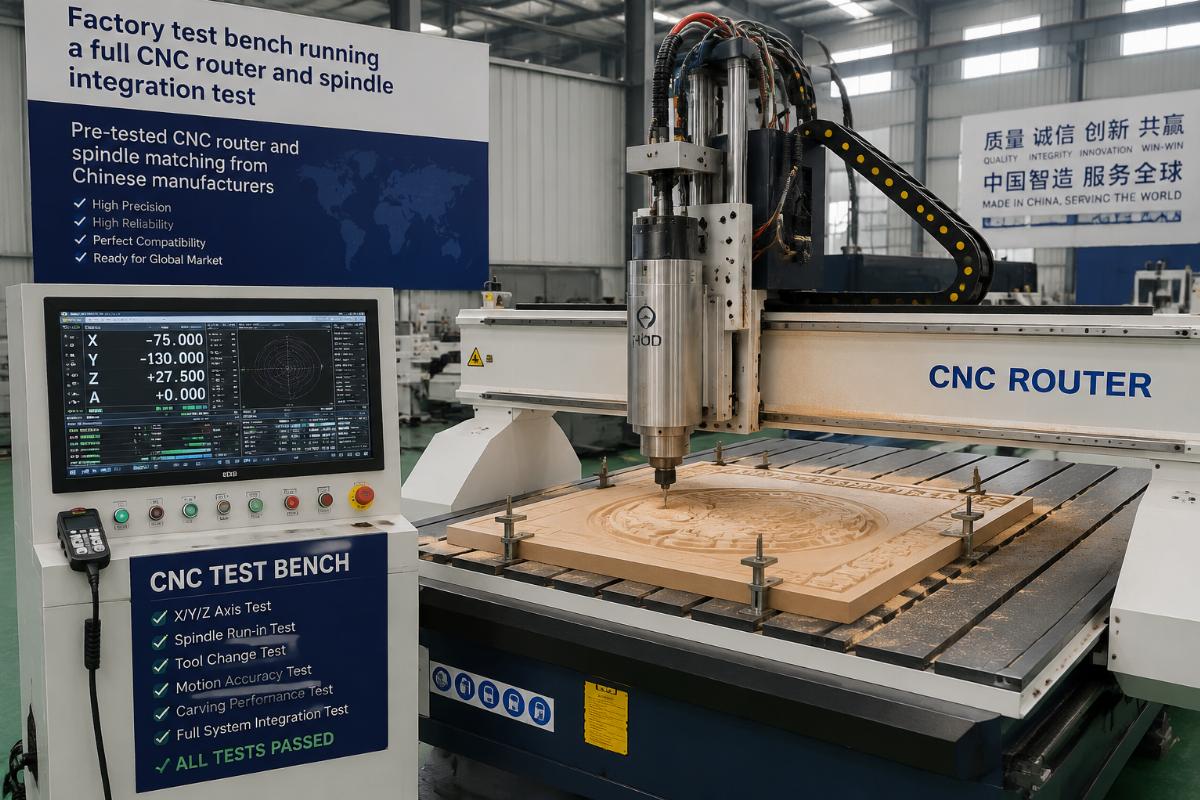
If you are sourcing a fully integrated solution rather than a standalone spindle, experienced Chinese woodworking machinery manufacturers with over 20 years of production history can provide fully tested matching configurations that eliminate the guesswork from the selection process. Shandong Ruiqi Machinery, for example, offers flexible spindle configuration options for single-unit orders, a 2-year warranty, and lifelong technical support to align with different buyer needs across all global regions.
- Avoid Generic Recommendations – Reject one-size-fits-all spindle suggestions from suppliers and demand data specific to your production volume and material types.
- Long-Term Cost Forecasting – Build a 2-year operational cost model that includes power, tool wear, and maintenance to compare total ownership costs across all three power options.
- Supplier Qualification Check – Prioritize suppliers that offer pre-tested spindle and machine combinations rather than companies that sell unconfigured standalone components.
Conclusion
The 3.5kW, 5.5kW, and 9kW spindle options each deliver the highest value for specific, well-defined production use cases, with no universal "best" option for all operations. By prioritizing alignment to your core processing material and daily output volume over raw power ratings, you can avoid common overspending and underperformance pitfalls while building a production line that delivers consistent efficiency gains over its operational lifespan. The key to a low

Written by
author
Editor covering global sourcing, supplier verification, and industrial product knowledge. Content is compiled from manufacturer specifications, industry standards, and hands-on experience with international B2B buyers. Every article is fact-checked before publishing to help procurement professionals make informed decisions.
View all posts