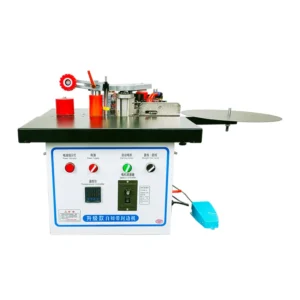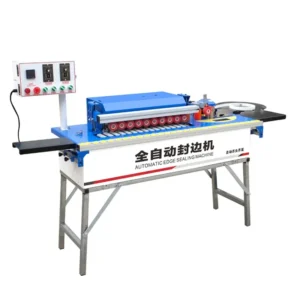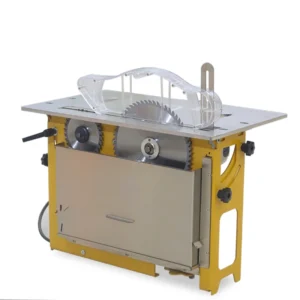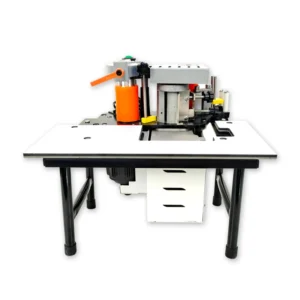

Description
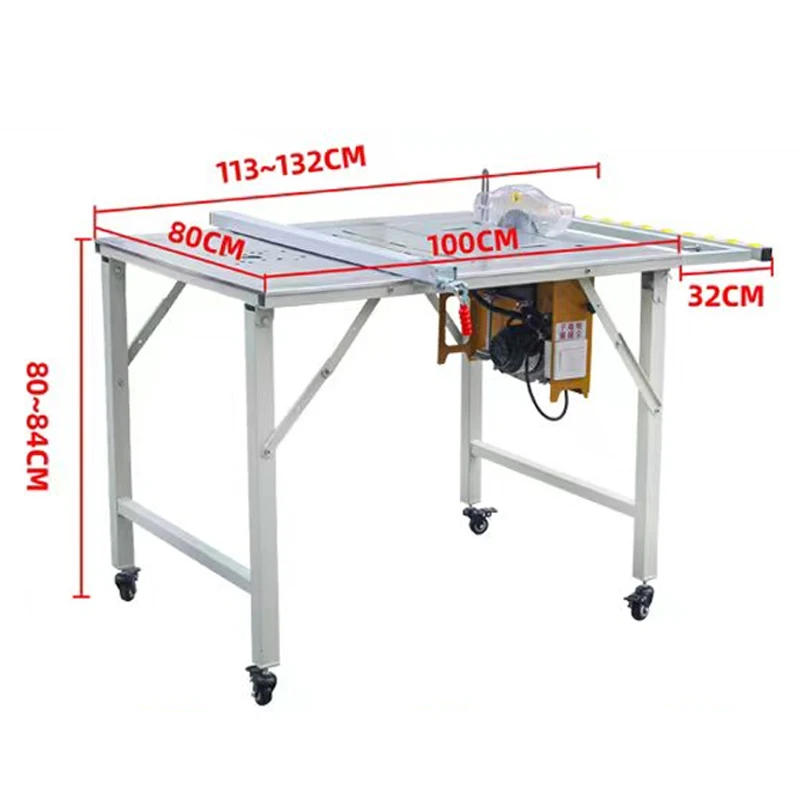
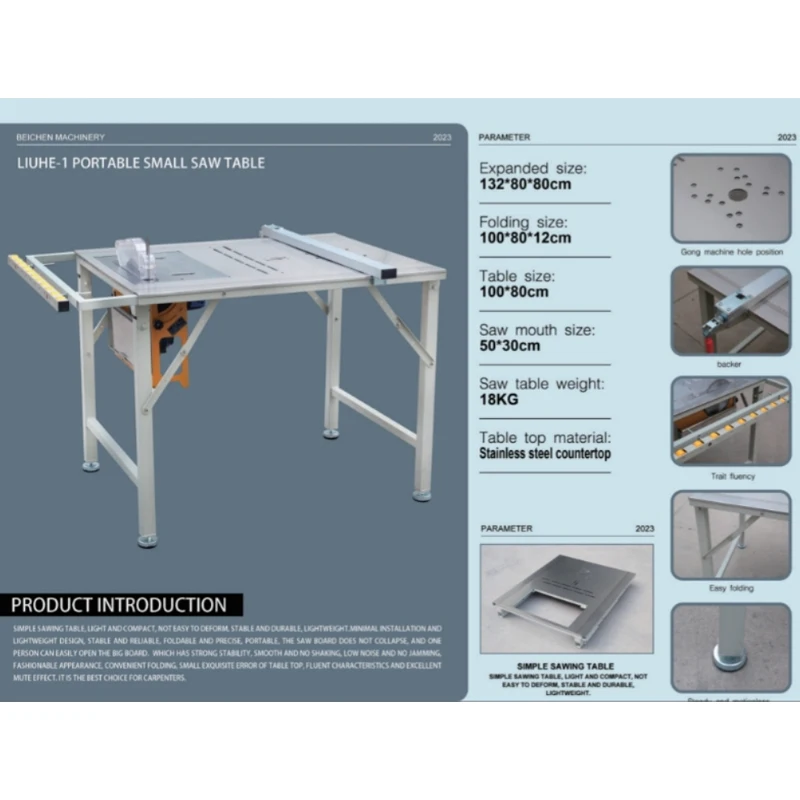
Compact Footprint Engineering — the J50 LIUHE-1 anchors the entry-level tier of our saw table range, letting small workshops start mechanized cutting without overcommitting floor space or capital.
Technical Specifications
| Parameter | Value |
|---|---|
| Model | J50 LIUHE-1 |
| Product Type | Portable Small Saw Table |
| Assembly State | Portable / Compact |
| Language Options | Chinese and English (customizable to Spanish, French, or other languages) |
| Plug Options | EU / USA / AU / UK |
| Voltage & Frequency | Configurable per local supply (basis not stated in source — confirm before ordering) |
| Rated Power | To be confirmed per voltage configuration |
| Panel Thickness Range | Suitable for standard panel stock (basis to be confirmed) |
| Dust Extraction Port | Fitted for workshop dust collection integration |
| Control System | Manual operation with multilingual panel option |
| Certification | CE (per company profile) |
Application Suitability
| Application | Material or Output |
|---|---|
| Joinery workshop panel sizing | MDF, plywood, particleboard up to standard sheet thickness |
| Custom cabinet component cutting | Melamine-faced chipboard and veneered panels |
| Auxiliary cross-cutting station | Solid wood panels and edge-trimming offcuts |
| Startup furniture production | Small-batch panel breakdown before assembly |
Why the Voltage Question Comes Before the Price on a Portable Saw Table
Confirm your workshop supply before you confirm the order.
I have watched crates arrive at overseas joinery shops with a plug that fits the wall but a motor wound for the wrong frequency. The machine powers on, the blade spins, but the torque curve is off — and the first dense sheet of particleboard stalls the feed. A portable saw table for sale is only useful if it actually runs on your local grid. We wire every J50 LIUHE-1 to the voltage and Hz you confirm in writing, and we ship the electrical schematic so your electrician can verify before the crate is opened [NEED_CITE: voltage and frequency standards by export market].
Where This Model Sits in the Full Saw Table Range
The J50 LIUHE-1 occupies the entry point of the Ruiqi saw table catalogue. It is designed for workshops that have outgrown hand-held circular saws but are not yet processing volume that justifies a full sliding table saw with scoring blade and powered fence. Buyers evaluating the complete machine range use this model as the baseline — if your daily panel count stays in the low tens, the portable saw table for sale here covers your needs without tying up floor space a larger unit would demand.
Planning the Upgrade Path Before You Outgrow It
Single machines bought in isolation often become bottlenecks the moment order volume climbs. Because the J50 LIUHE-1 shares the same Ruiqi product family as our mid-range sliding table saws and full panel sizing lines, a workshop can plan a phased investment. Start with this portable unit for breakdown cuts, add a precision panel saw when tolerance demands tighten, and integrate an edge bander when throughput requires it. The catalogue is structured so each tier feeds into the next without redundant equipment [NEED_CITE: phased machinery investment planning for small manufacturers].
Reading the Specs That Matter for Panel Cutting
Panel thickness range and blade diameter together determine which stock you can rip cleanly. A portable saw table in this class typically handles sheet goods rather than thick solid timber, so verifying the maximum cut depth against your most common board is essential before ordering. The plug and voltage configuration must match your single-phase or three-phase supply — a mismatch here means a motor rewind or a transformer, both of which add cost and complexity after the machine has already shipped. Multilingual control panels matter less on a manual portable unit than they do on CNC equipment, but when you eventually add automated machines to the same workshop, having operators already reading Ruiqi panel layouts shortens commissioning time across the line. Dust extraction port sizing should match your existing collector hose diameter to avoid adapter leaks that reduce suction at the blade guard.
The Hidden Cost of Specifying a Saw Table in Isolation
Buying a portable saw table without mapping it to the rest of your equipment creates feed-height mismatches at the next station. Panels cut on a low-bed portable unit often need manual lifting onto a higher edge bander infeed, introducing chip damage and operator fatigue. We have seen workshops run three shifts on a machine rated for occasional use, burning out motors that were never spec’d for continuous duty [NEED_CITE: duty cycle classification for intermittent versus continuous woodworking machinery].
Why Source This Model Through the Full Catalogue Channel
The J50 LIUHE-1 is manufactured in the same facility as our full-function panel saws, meaning component sourcing, precision grinding standards, and four-stage quality control apply uniformly across the range. Voltage and plug customization is handled at the order stage rather than retrofitted after arrival. Factory test records are generated on your specified panel material before the machine is crated, so cut quality is verified against your actual substrate — not a generic sample board. The engineer configuration proposal arrives within one working day of your inquiry, giving you a documented baseline to compare against other portable saw table for sale options in the market.
Documentation & Verification
- Electrical schematic confirming your ordered voltage and plug type
- Factory test record on your specified panel material and thickness
- Machine specification sheet with dimensional and power data
- Operation manual in your chosen language
- CE declaration of conformity for the J50 LIUHE-1
- Packing photographs before crate closure
Installation, Commissioning & Support
- Verify single-phase or three-phase supply matches the confirmed voltage before uncrating
- Allow floor space for operator clearance on all sides of the portable table
- First-run blade alignment check using your actual panel stock
- Dust extraction hose connection matched to port diameter on the J50 LIUHE-1
- Spare blade and drive belt list included for workshop inventory planning
What to Include in Your Inquiry
Send us your most common panel material, typical board dimensions, and daily cut volume so we can confirm this model covers your throughput. Include your local voltage and frequency, plus the plug type your workshop uses. If you are planning a phased line build-out, note which Ruiqi stations you expect to add next so we can verify feed-height and workflow compatibility from the start.
Frequently Asked Questions
Q: Where does this portable saw table sit in the full Ruiqi machine range, and what is the upgrade path?
A: The J50 LIUHE-1 is the entry-level portable tier. As your panel volume grows, the catalogue steps up through mid-range sliding table saws and full panel sizing lines, all from the same manufacturer, so feed heights and workflow planning stay coherent across each phase of investment.
Q: How do I confirm the correct voltage and plug type for my country before ordering?
A: Provide your local supply voltage and frequency in writing during the inquiry stage. We configure the motor winding and plug accordingly, and ship an electrical schematic so your on-site electrician can verify the match before the crate is opened.
Q: Can the control panel language be customized to match my operators?
A: Yes. The standard offering includes Chinese and English, with customization to Spanish, French, or other languages on request. This is confirmed at the quotation stage so the correct panel is fitted before dispatch.
Q: What panel materials and thicknesses can this model handle compared to larger sliding table saws?
A: The J50 LIUHE-1 handles MDF, plywood, particleboard, and solid wood panels within its portable-class cut depth. For thicker stock or high-volume continuous ripping, a larger sliding table saw in the catalogue provides greater depth capacity and powered feed.