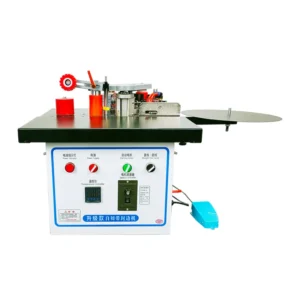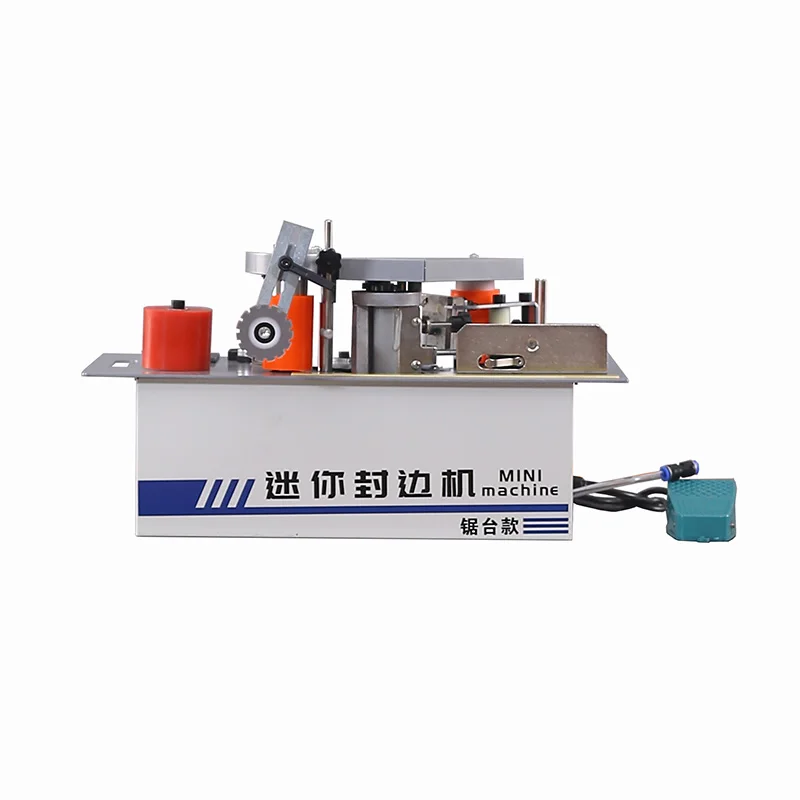

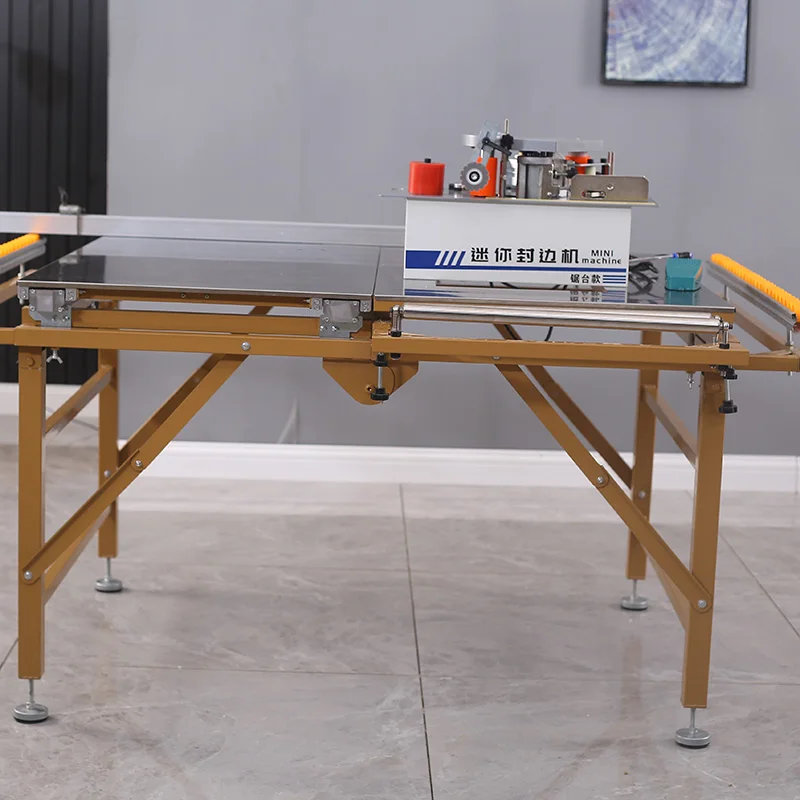
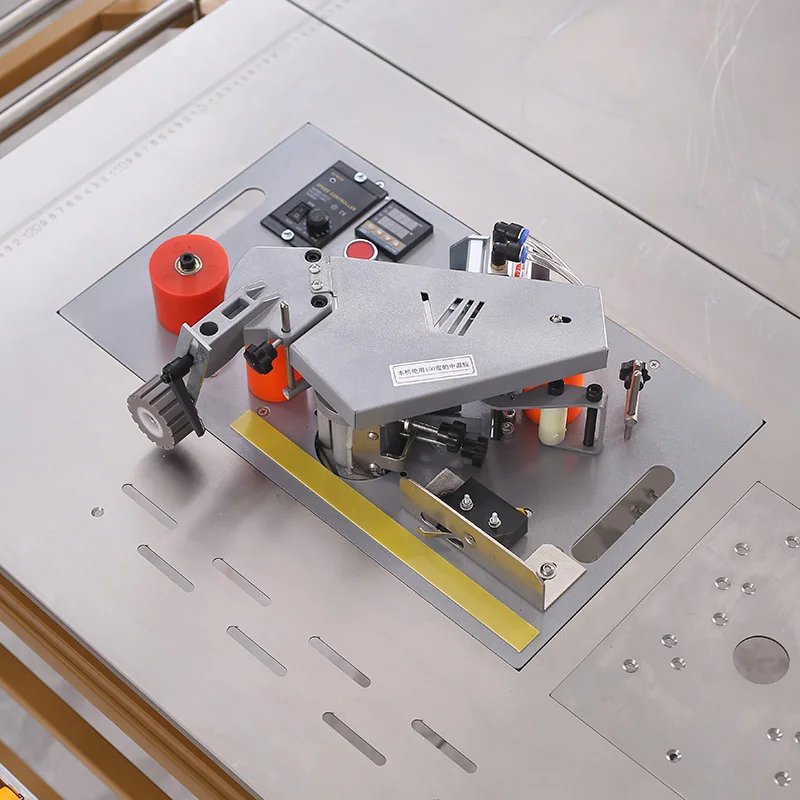
Description
Voltage-verified dispatch — every portable edge bander we ship carries a confirmed electrical schematic matched to the buyer’s local grid, preventing the main-board failures that idle workshops for weeks.
Technical Specifications
| Parameter | Value |
|---|---|
| Product Type | Portable Automatic Edge Banding Machine |
| Voltage | 220V (frequency and plug type to be confirmed per destination market) |
| Rated Power | 825 W |
| Heating Time | 5–10 min |
| Air Pressure Requirement | 0.4–0.6 MPa |
| Glue Pot Capacity | 1000 ml |
| Feed Speed | 0–10 m/min |
| Edge Pattern Compatibility | Curves, straight lines, special-shaped profiles |
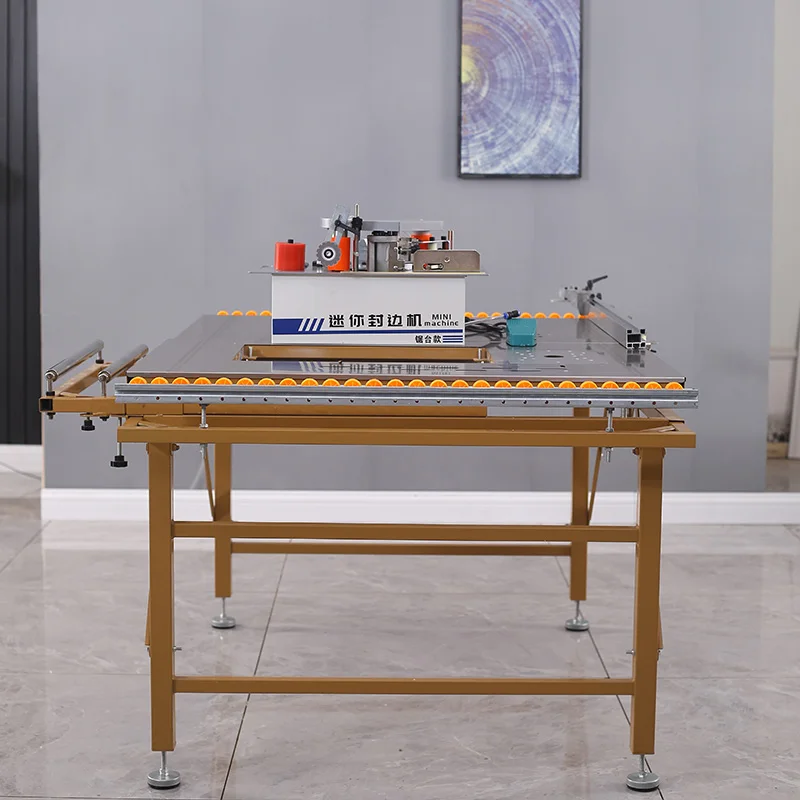
| Overall Dimensions (L×W×H) | 50×30×27 cm (body footprint — verify against full assembly configuration) |
| Warranty | 1 year |
| Assembly State | KD packing, user assembly with manual and video guidance |
| Key Features | Compact footprint, adjustable feed speed, curve and straight-line capability, pneumatic glue application |
Application Suitability
| Application | Material or Output |
|---|---|
| Small-workshop edge banding on custom cabinet panels | MDF, particleboard, plywood with PVC or melamine edging |
| On-site furniture installation adjustments | Pre-cut panels requiring edge finishing at the job site |
| Low-volume rework and repair edge banding | Damaged or delaminated edges on existing furniture components |
| Prototyping and sample production runs | Mixed substrates where full-line machine setup is not yet justified |
Why the Voltage Question Should Come Before the Price on Any Portable Edge Banding Machine
Confirming frequency and plug configuration before order placement eliminates the single most common cause of commissioning failure in export markets.
A workshop in Colombia once received a portable edge bander rated at 220V, which matched their supply voltage on paper. What nobody confirmed was the 60Hz frequency standard in Latin America versus the 50Hz default the machine was wired for. The main board failed within seconds of power-on. The replacement transformer took nearly a month to arrive, and the entire workshop sat idle during that period [NEED_CITE: voltage and frequency standards by export market]. That outcome is entirely preventable when electrical specifications are locked down during the quotation stage rather than discovered at the destination.
Where This Portable Model Fits in the Broader Machine Range
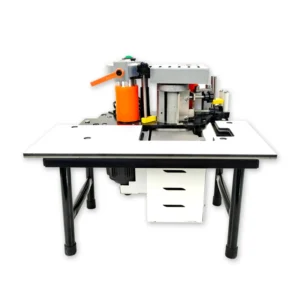
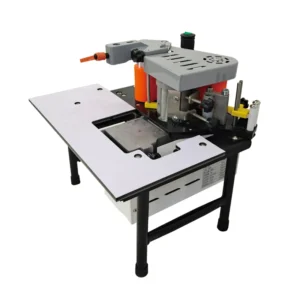
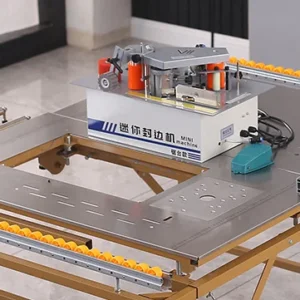
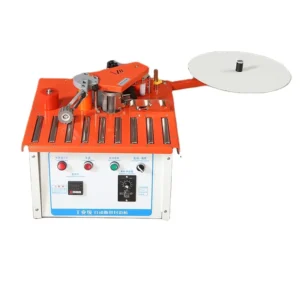
A Portable Edge Banding Machine manufacturer typically offers models spanning from compact bench-top units to full-line automated banders with pre-milling and multi-stage trimming. This portable unit occupies the entry point of that range. Workshops transitioning from manual iron-on edge banding to a mechanized process find this model covers their initial volume without over-investing in capacity they cannot yet fill. The advantage of sourcing from a single product family is that when throughput requirements grow, stepping up to a bench-top or floor-standing model keeps the same support channel, the same spare parts ecosystem, and the same documentation standards.
Matching Feed Speed to Operator Pace and Substrate Behaviour
The adjustable feed speed of 0–10 m/min allows the operator to match the feed rate to the edge material and the panel geometry. Straight edges on standard particleboard panels can run at the higher end of that range, while curved profiles on MDF require slower feeding to maintain consistent glue transfer and edge adhesion. The 1000 ml glue pot supports intermittent production sessions without frequent refill interruptions, which suits the stop-start workflow typical of custom furniture shops handling varied panel sizes and edge profiles throughout a single shift [NEED_CITE: edge banding adhesion factors across wood-based substrates].
Reading the Specifications That Actually Affect Edge Quality
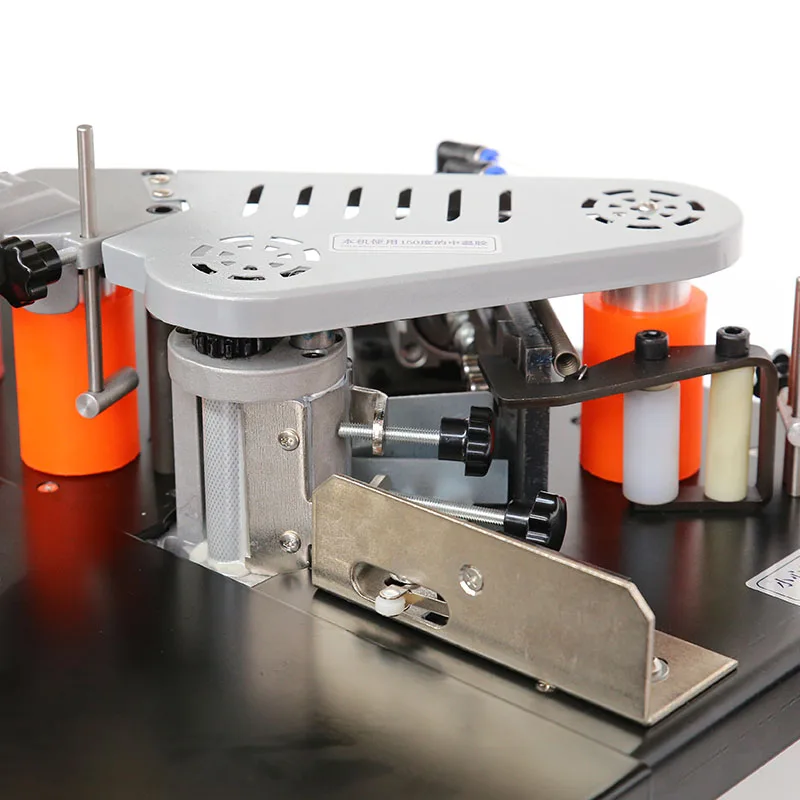
The air pressure requirement of 0.4–0.6 MPa drives the pneumatic glue roller and pressure zone. Running below the lower threshold results in uneven glue distribution, which becomes visible as intermittent bonding failures along the edge, particularly on curved profiles where consistent roller contact is already harder to maintain. The 825 W rated power is sufficient to bring the glue pot to operating temperature within the stated 5–10 minute heating window, though ambient workshop temperature in colder climates extends that warm-up period. The compact 50×30×27 cm body footprint means the machine can be positioned on a standard workbench beside a panel saw, eliminating the dedicated floor space a full-size bander demands. Curve and straight-line compatibility in a single unit removes the need for separate jigs when a custom furniture order mixes rectangular cabinet sides with shaped shelving profiles.
The Cost of Ordering a Portable Unit Into a Production Role It Was Never Meant For
Pain points emerge when buyers treat an entry-level portable bander as a production machine. The glue pot capacity and feed speed range support intermittent, low-volume workflows. Running this class of machine at sustained high-volume output leads to thermal instability in the glue pot, inconsistent edge adhesion, and accelerated wear on the feed mechanism. Workshops that discover this mismatch after delivery face the choice of living with quality inconsistency or purchasing a second, larger machine — effectively paying twice [NEED_CITE: equipment sizing errors in small-scale furniture manufacturing].
What Distinguishes This Portable Edge Banding Machine Manufacturer
In-house manufacturing with patented cutting mechanisms means edge trimming quality is verified at the factory level, not left to chance. Voltage, language, and specification customization is standard practice rather than a special request, so the machine arrives configured for the destination market. A four-stage QC process with pre-shipment verification catches electrical and mechanical discrepancies before the crate is sealed. Engineer-led configuration recommendations within 24 hours ensure the quoted model actually matches the buyer’s substrate, edge material, and daily output requirement. Factory visits and sample processing tests are available before commitment, allowing buyers to verify edge quality on their own panels.
Documentation & Verification
- Machine specification sheet confirming voltage, frequency, and plug type for your destination market
- Electrical schematic matching the exact wiring configuration shipped
- Factory test record on your specified panel thickness and edge material before dispatch
- Operation and maintenance manual in the operator’s language
- Spare parts list with part numbers for glue pot elements, feed rollers, and pneumatic seals
- Packing photographs documenting machine condition prior to crating
Installation, Commissioning & Support
- KD packing requires user assembly following the supplied manual and video guidance before first operation
- 220V power supply with correct frequency and dedicated circuit required — confirm plug type at quotation stage
- 0.4–0.6 MPa compressed air source must be available at the installation point for pneumatic functions
- Initial glue pot warm-up and feed speed calibration performed against your actual panel and edge material samples
- Wear items including glue roller and pneumatic seals listed in the spare parts documentation for routine replacement
- Annual warranty covers component defects with remote diagnostic support for fault identification
Starting the Specification Conversation
Share your primary panel substrate, the edge banding materials you plan to run, and your typical daily edge-banding volume so we can confirm whether this portable model covers your requirement or whether a bench-top unit is the more appropriate starting point. Specify your local voltage, frequency, and plug configuration to ensure the electrical build matches your workshop supply. If you have shaped panels requiring curved edge banding, send profile drawings or samples so compatibility can be verified before quotation.
Frequently Asked Questions
Q: How do I know if this portable model covers my daily output, or if I need a larger machine?
A: Share your average daily edge-banding meters and the mix of straight versus curved profiles. This portable unit suits intermittent, low-volume workflows. If your volume requires sustained operation across full shifts, a bench-top or full-line model within the same product family would provide the thermal stability and feed speed range your throughput demands.
Q: What electrical details must I confirm before placing the order?
A: We need your local supply voltage, frequency in Hz, and plug type. A 220V/50Hz machine wired for a 220V/60Hz market will suffer main-board failure at first power-on. Confirming these three parameters during the quotation stage ensures the machine is built and tested for your exact grid specification before dispatch.
Q: Which edge banding materials and panel thicknesses does this unit handle?
A: The machine is designed for standard PVC and melamine edge banding on wood-based panels including MDF, particleboard, and plywood. Specific panel thickness range and compatibility with ABS or wood veneer edging should be confirmed with your sample materials during the pre-order specification stage to avoid adhesion issues at commissioning.
Q: Can I send my own panels for a test run before committing to the order?
A: Yes. Send representative samples of your panel substrate and edge banding material to the factory. We run a processing test on this portable model, document the edge adhesion and finish quality, and share the results with photographs and a test record before you make any purchasing commitment.