
Description
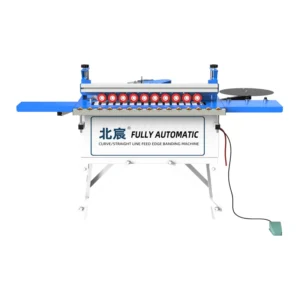
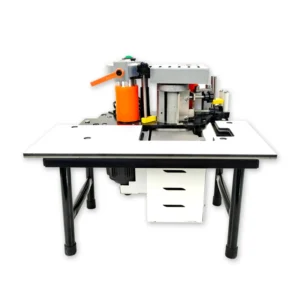
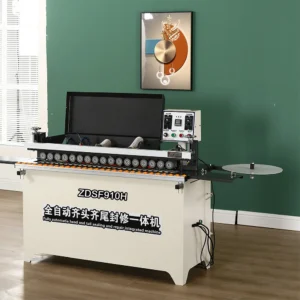
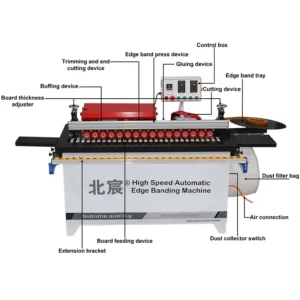
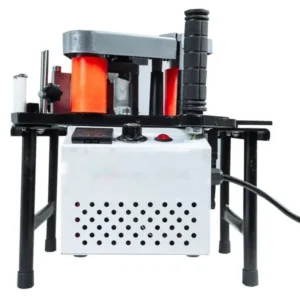
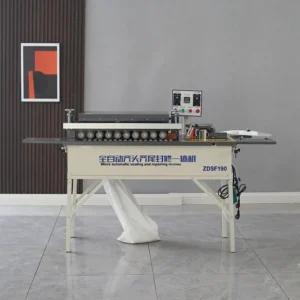
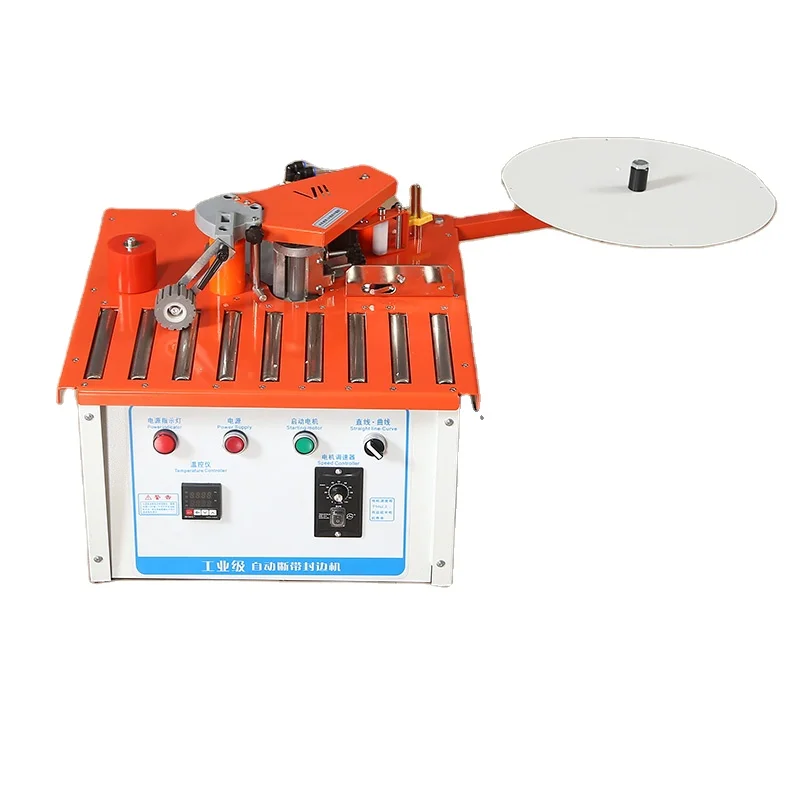
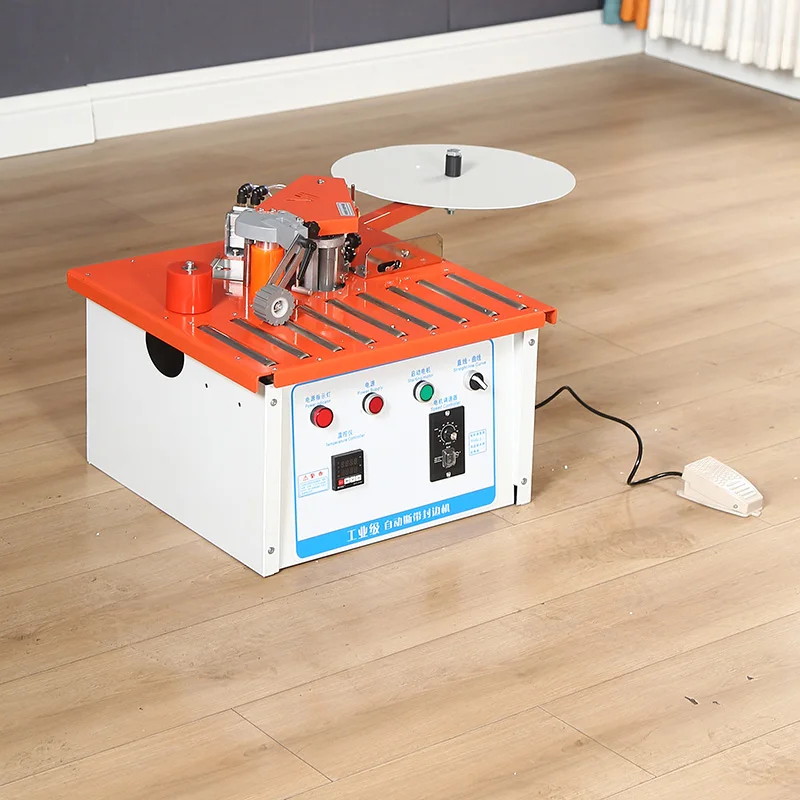
Double-side gluing at bench scale — the ZDSF50 Mini Edge Banding Machine applies adhesive uniformly to both strip and panel edge, addressing the inconsistent glue lines small workshops face when moving beyond manual application.
Technical Specifications
| Parameter | Value |
|---|---|
| Model | ZDSF50 |
| Product Type | Mini Edge Banding Machine |
| Rated Power | 1.2 kW |
| Voltage & Frequency | 220V / 110V (frequency to be confirmed based on local grid) |
| Control System | Manual operation with pneumatic-assisted strip cutting |
| Overall Dimensions | 54 × 54 × 56 cm |
| Net Weight | 26 kg |
| Edge Banding Speed | 0–6 m/min |
| Strip Thickness Range | 0.5–1.5 mm |
| Sheet Thickness Range | 10–60 mm |
| Glue Pot Capacity | 1000 ml |
| Heating Time | 5–10 min |
| Gluing Method | Double-side gluing for straight, curved, and shaped edges |
| Air Supply Requirement | 0.4–0.6 MPa |
| Heating Elements | 4 heating tubes |
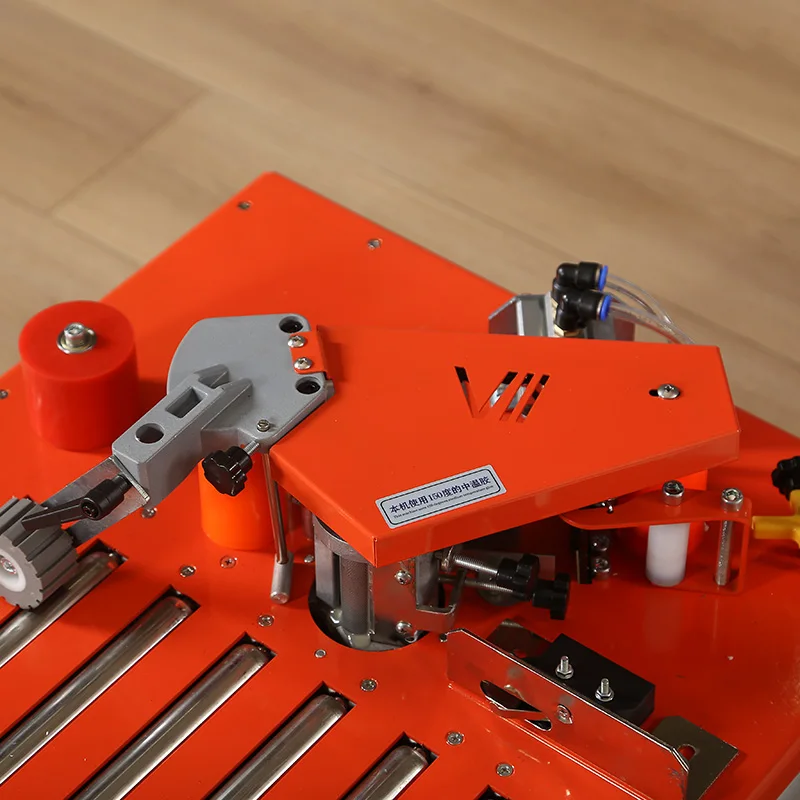
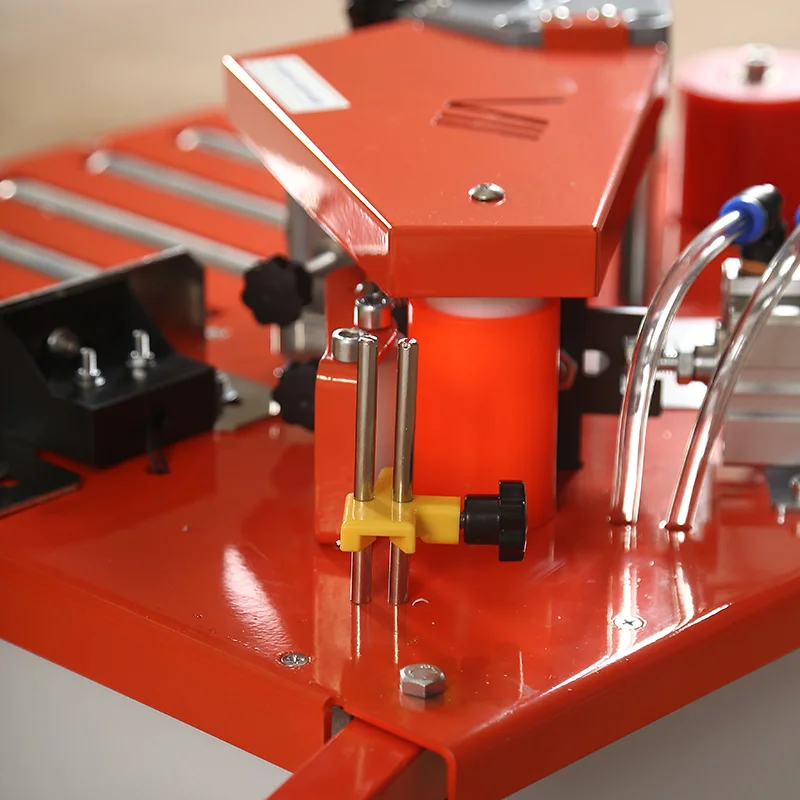
| Edge Strip Cutting | Pneumatically controlled belt breaking device with foot switch |
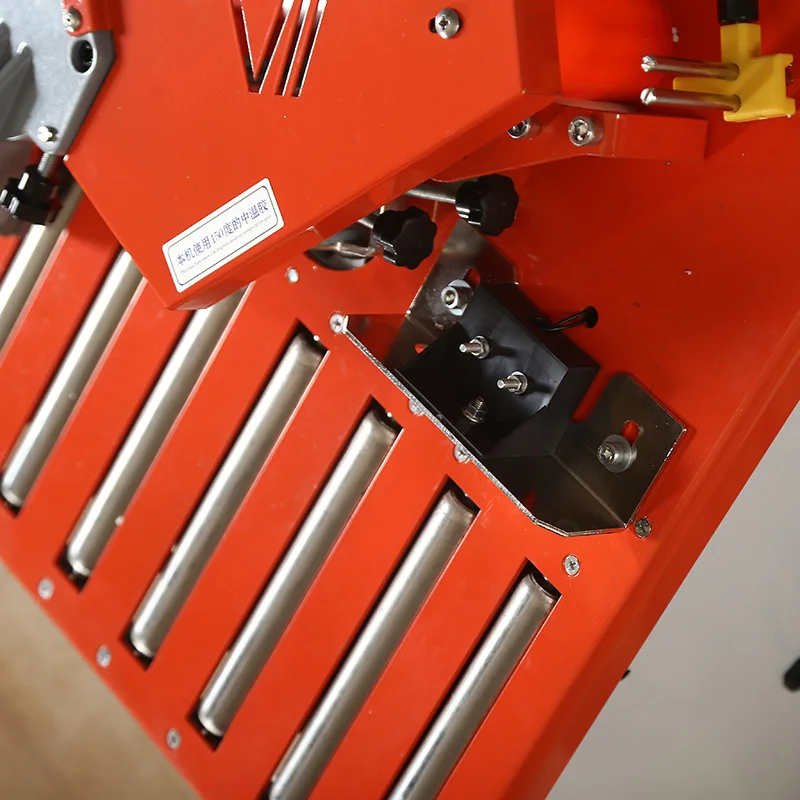
| Straight Edge Auto-Cut | Travel switch for automatic belt breaking |
| Pressure Rollers | Adjustable, rubber material |
| Assembly State | Portable / tabletop |
| Warranty | 1 year |
Application Suitability
| Application | Material or Output |
|---|---|
| Small-batch custom cabinet edge finishing | MDF and particleboard panels with PVC edge banding |
| Curved and shaped furniture components | Plywood contoured panels with 0.5–1.5 mm strips |
| On-site installation repair and touch-up | Solid wood panels requiring portable edge banding |
| Joinery workshop transitioning from hand application | Mixed substrates at low daily volume |
| Prototype and sample production | Short runs on varied panel thicknesses from 10 to 60 mm |
Why Voltage Must Be Settled Before the Edge Banding Machine Manufacturer Ships
Ordering an Edge Banding Machine for sale without confirming local voltage and frequency is the single fastest way to stall commissioning on arrival.
I have seen a 110V market receive a 220V unit, and the control board burned out the moment the operator switched it on. The ZDSF50 is available in both configurations, but the frequency — 50 Hz or 60 Hz — changes motor behavior and heating element response. A 4-heating-tube glue pot designed for 50 Hz runs hotter at 60 Hz, pulling adhesive viscosity out of spec for thin veneer. Confirming these two values against your site supply before production starts is non-negotiable. [NEED_CITE: voltage and frequency standards by export market]
How Double-Side Gluing Changes Adhesion on Mixed Substrates
Single-side glue application works adequately on smooth PVC against sealed MDF, but the moment you switch to porous plywood or unsealed particleboard, adhesive starves on one surface and the strip lifts within days. The ZDSF50 applies hot melt to both the strip and the panel edge simultaneously through its 1000 ml glue pot. This Edge Banding Machine manufacturer designed the system so that adhesive bridges the gap rather than relying on one surface to carry the bond — a practical difference you notice when the same machine handles PVC one hour and thin veneer the next.
Foot-Operated Strip Cutting for Curved Work
Straight edges are forgiving; curves are not. When you are feeding a contoured panel through, both hands must guide the workpiece to maintain consistent pressure against the rubber rollers. The pneumatically controlled belt-breaking device on this Edge Banding Machine for sale is activated by a foot switch, leaving your hands free to steer the panel. The travel switch handles straight-line auto-cutting on flat runs, reducing manual intervention. This split-control approach matters in a small workshop where one operator manages the entire edge banding step without a second pair of hands. [NEED_CITE: ergonomic control layout for single-operator edge banding]
Reading the Numbers That Actually Matter
The 10–60 mm sheet thickness range defines what panel stock you can run without swapping pressure roller setups. Below 10 mm, the adjustable rubber rollers cannot maintain even contact; above 60 mm, the feed bayonet geometry prevents proper strip alignment. The 0–6 m/min feed speed is deliberately slow — at this scale, the operator hand-feeds each panel, and the speed control lets you slow further on tight curves where adhesive needs time to tack. Four heating tubes bring the 1000 ml glue pot to working temperature in 5–10 minutes, which is a practical constraint if you are batching different adhesive types across a morning’s work. The 0.4–0.6 MPa air supply requirement means a standard small workshop compressor handles the pneumatic strip cutter without a dedicated line.
The Cost of Skipping the Voltage and Air Supply Check
A workshop that buys a portable edge bander and plugs it into an unverified circuit risks more than a tripped breaker. Inconsistent voltage sags the heating elements, dropping glue temperature below the melt point and leaving cold joints that fail during transport. On the pneumatic side, running below 0.4 MPa means the belt-breaking device hesitates mid-cut, leaving ragged strip ends on curved panels. [NEED_CITE: pneumatic pressure requirements for consistent edge bander strip cutting] These are not warranty claims — they are commissioning delays that cost production days before anyone identifies the root cause.
What This Edge Banding Machine Manufacturer Brings to Small-Scale Buyers
Every ZDSF50 ships with a factory test record run on the panel thickness and strip material you specify, so adhesion quality is verified before dispatch. Voltage configuration is confirmed in the electrical schematic provided before production, eliminating the arrival-day surprise. The operation manual is supplied in your agreed language, not a generic translation. A formal quotation with engineer-led configuration guidance arrives within 24 hours of inquiry. The machine sits at the entry point of a product family that extends to full-function pre-milling lines, meaning you can scale throughput later without changing supplier. [NEED_CITE: CE machinery directive requirements for portable woodworking equipment]
Documentation & Verification
- CE declaration of conformity provided for the ZDSF50 on request
- Electrical schematic confirming 110V or 220V and frequency before production
- Factory test record on your specified panel thickness and strip type
- Operation and maintenance manual in your agreed language
- Spare parts list covering rollers, glue pot, and pneumatic components
Installation, Commissioning & Support
- Place the 26 kg unit on a stable bench with clearance for panel infeed and outfeed on all sides
- Connect to a dedicated 220V or 110V circuit matching the confirmed frequency specification
- Allow 5–10 minutes for the 4 heating tubes to bring the 1000 ml glue pot to working temperature on first start
- Set pneumatic supply to 0.4–0.6 MPa and verify foot-switch strip cutting before running production panels
- Adjust rubber pressure rollers to match your sheet thickness within the 10–60 mm range
How to Structure Your Inquiry
Send the panel material you run most often — MDF, particleboard, plywood, or solid wood — along with the strip type and thickness. Confirm your site voltage and frequency so the correct configuration is quoted. If you are evaluating this as a first machine-assisted step, describe your current daily volume and whether curved or shaped edges are part of your output.
Frequently Asked Questions
Q: How do I confirm whether I need the 220V or 110V version of the ZDSF50?
A: Check your workshop supply or consult your electrician. The frequency — 50 Hz or 60 Hz — is equally important because it affects heating element behavior and motor speed. Provide both values with your inquiry so the electrical schematic matches your site before production begins.
Q: Can the ZDSF50 handle both straight and curved edge banding in the same session?
A: Yes. The travel switch handles automatic strip cutting on straight runs, while the foot-switch pneumatic cutter gives you hands-free control on curves. If your production volume grows beyond what a hand-fed machine supports, the range includes full-function automatic edge banders as the next step.
Q: What type of hot-melt adhesive works with the 1000 ml glue pot?
A: Standard EVA hot-melt adhesives for edge banding are compatible. The four heating tubes reach working temperature within 5–10 minutes. For specialty adhesives or high-temperature formulations, confirm the melt point with your adhesive supplier and cross-check against the machine’s operating range.
Q: When should I consider moving from the ZDSF50 to a larger automatic edge bander?
A: The shift point is when your daily volume makes hand-feeding a bottleneck, or when you need pre-milling and multi-stage finishing stations for consistent edge quality across long production runs. The ZDSF50 remains useful as a secondary unit for prototypes and repair work.
Q: What spare parts should I keep on hand for the ZDSF50?
A: Rubber pressure rollers, glue pot heating tubes, and pneumatic seals for the belt-breaking device are the most common wear items. A spare parts list is included with every shipment, and replacements can be ordered based on your expected usage interval.