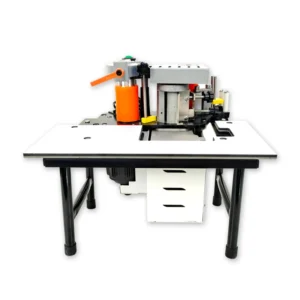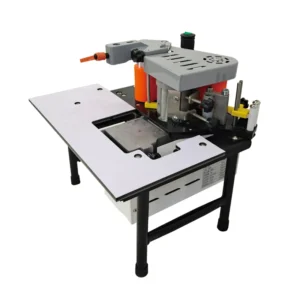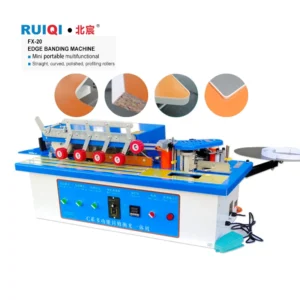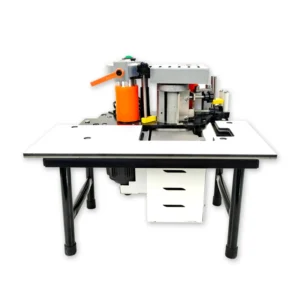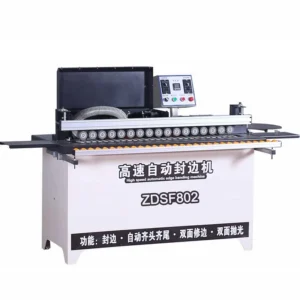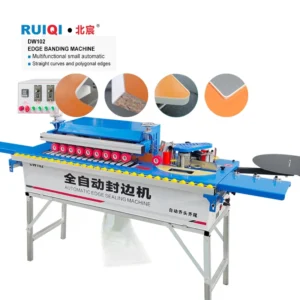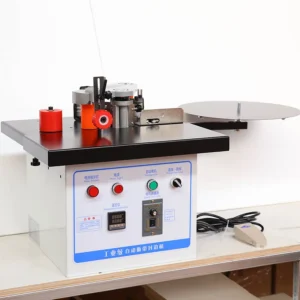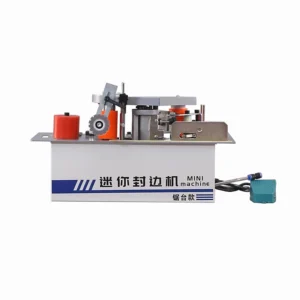
Description
Verified Tolerance Assurance — every bevel edge banding unit leaves the factory with a documented ±0.02mm test record on your specified panel thickness, not just a catalog claim.
Technical Specifications
| Parameter | Value |
|---|---|
| Product Type | Automatic Edge Banding Machine |
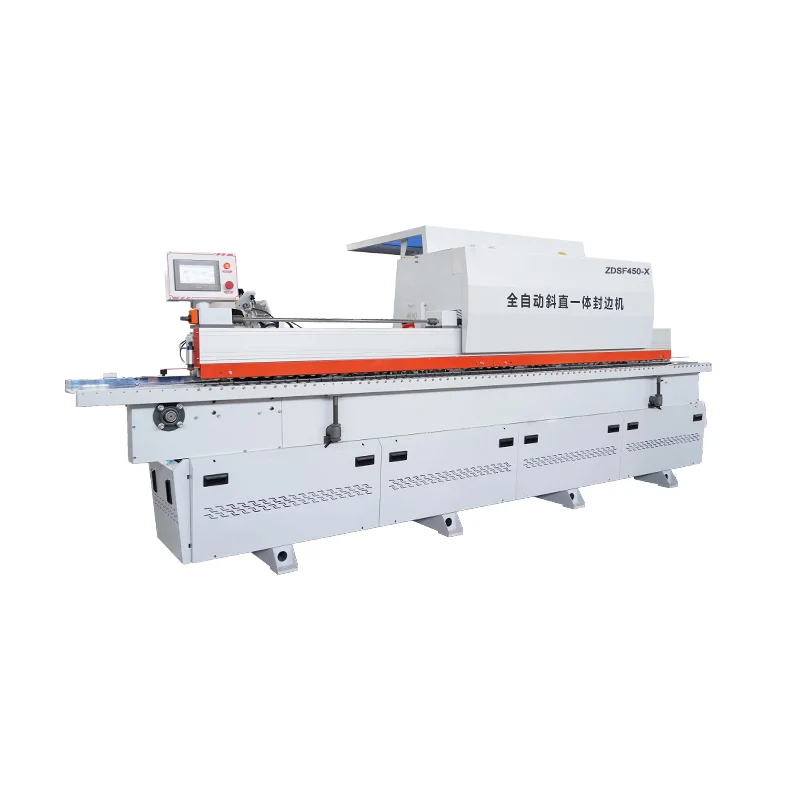
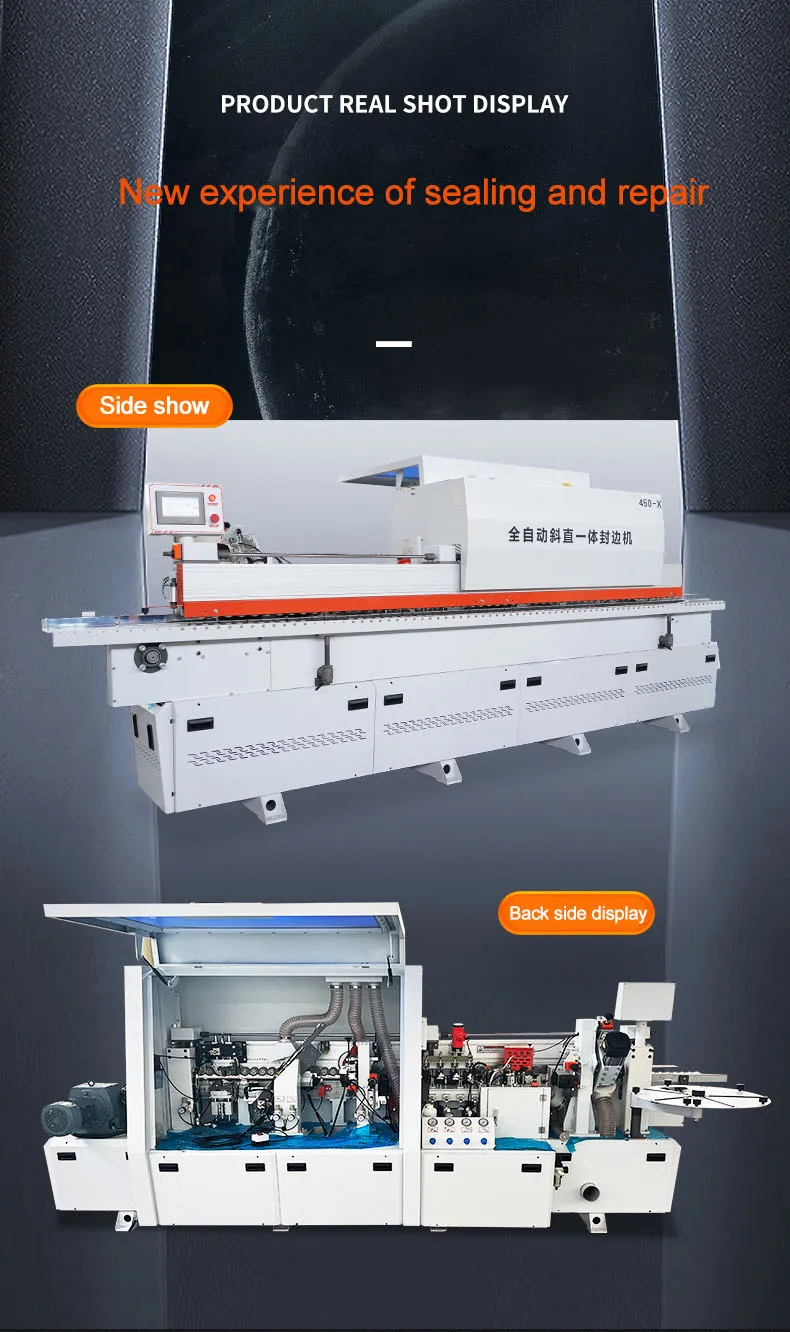
| Overall Dimensions (L×W×H) | 4350×920×1650 mm |
| Total Power | 17.5 kW |
| Voltage & Frequency | 380V / three-phase five-wire / 50Hz (configurable 110V–440V) |
| Conveying Motor | 380V 2.2 kW with frequency converter |
| Feed Speed | 0–12 m/min (variable speed, inclined straight edge) |
| Glue Pot Capacity | 2000 mL |
| Glue Pot Use Temperature | 150–170 °C |
| Glue Pot Heating Power | 1.2 kW |
| Bevel Angle | 45 Degree |
| Edge Banding Thickness | up to 1.2 mm (material dependent) |
| Edge Strip Width | 20–50 mm |
| Panel Thickness | 18 / 22 / 25 mm |
| Min. Sheet Width | >100 mm |
| Min. Sheet Length | >250 mm |
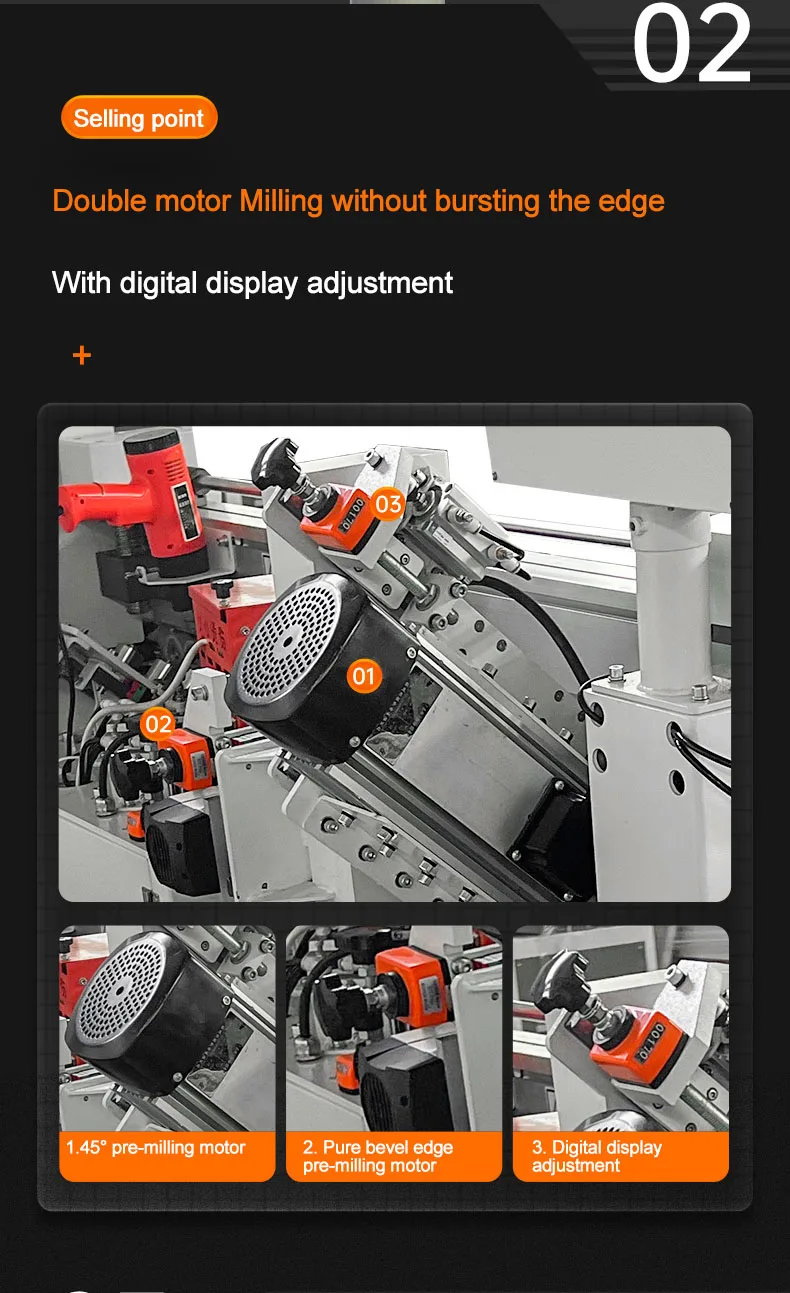
| Milling Motor B | 380V 3.5 kW |
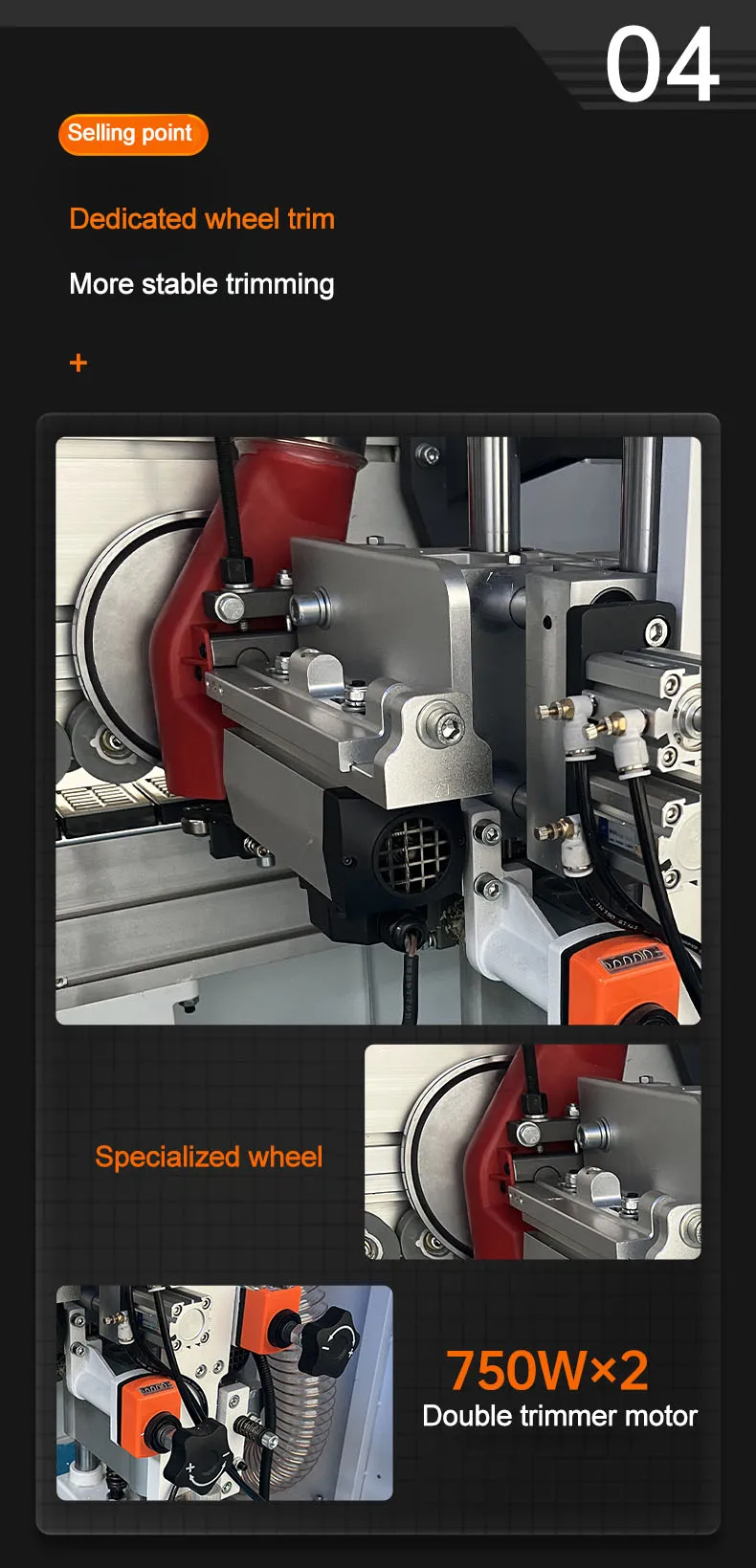
| Trimming Motor | 380V 0.75 kW × 2 |
| Polishing Motor | 380V 0.37 kW × 2 |
| Control System | PLC with Xinjie industrial touch screen |
| Inverter | Xinjie Industrial Inverter |
| Air Source Pressure | 0.6 MPa – 0.8 MPa |
| External Suction Port Diameter | 100 mm |
| Certification | CE |
Application Suitability
| Application | Material or Output |
|---|---|
| Cabinet door and carcass panel edging | MDF and particleboard with PVC strip |
| Custom furniture panel finishing | Plywood and MDF with veneer or PVC banding |
| Joinery workshop batch production | Solid wood panels requiring 45° bevel profiling |
| Shelving and storage unit components | Particleboard panels with straight and beveled edges |
| Office furniture panel processing | MDF substrates with PVC edge strips up to 1.2 mm |
Why the Voltage Question Should Come Before the Price
Confirming your local voltage and frequency at the quotation stage prevents three-week installation standoffs on the factory floor.
Early in my career I configured an automatic edge banding machine for a Middle East customer and accepted a 380V supply assumption without written confirmation. The machine arrived, and the workshop ran a 440V grid — the unit sat idle while a transformer was sourced and fitted. Production halted for nearly three weeks [NEED_CITE: voltage and frequency standards by export market]. Since that incident, every contract I write locks voltage, frequency, and phase configuration before production starts. An Automatic Edge Banding Machine manufacturer that does not ask about your power supply is leaving a costly variable on the table.
Mapping the Complete Machine Range to Your Production Stage
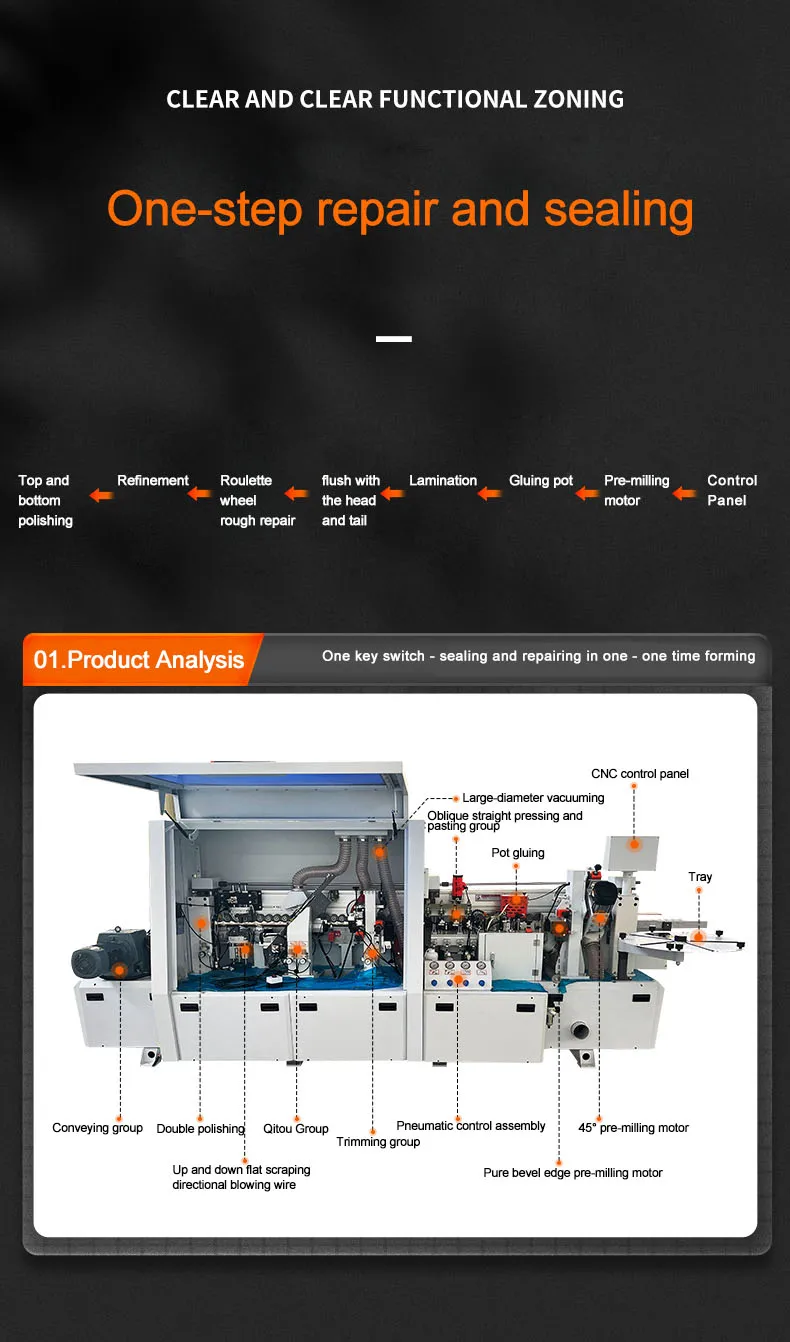
A joinery workshop starting with two hundred panels a day has different requirements from a cabinet factory pushing continuous shifts. This product family spans entry-level units with compact footprints through full-function pre-milling models, all sharing common control architecture and spare part platforms. The 45° bevel model sits in the mid-to-upper tier, offering angled edge profiling alongside standard straight-edge banding within a single pass.
Because every tier uses the same PLC platform and Xinjie touch screen interface, operators trained on one model transfer directly to another. When your volume grows and you add a pre-milling station upstream, the learning curve stays flat and spare parts inventories overlap substantially.
How Bevel Capability Changes Downstream Assembly
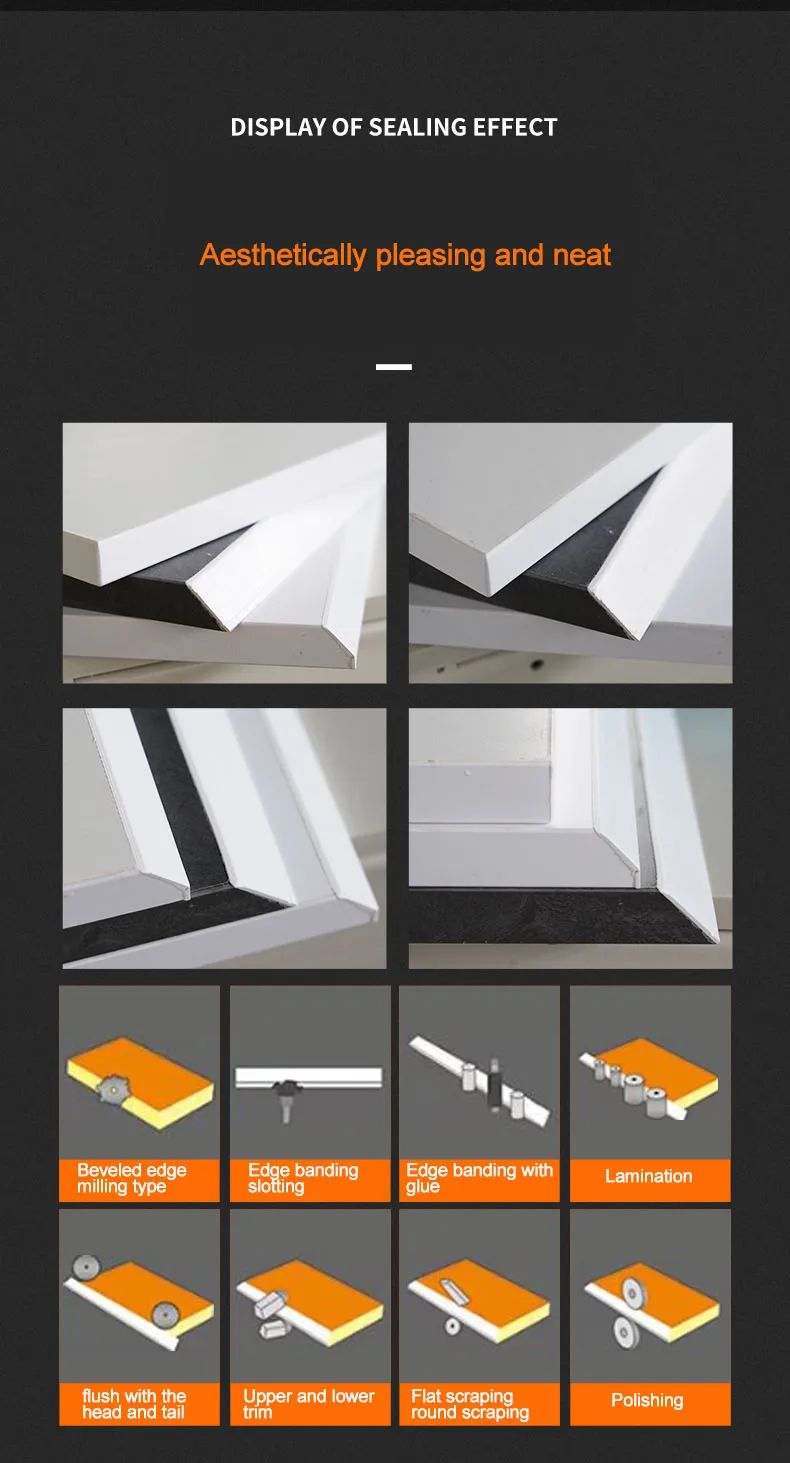
Straight-edge banding covers most carcass work, but cabinet makers producing angled fascia panels, display units, or architectural joinery need 45° bevel edges that meet precisely at corner joints. This machine feeds panels at 0–12 m/min through a dedicated bevel trimming station, producing angled profiles that mate without visible gaps during final assembly.
The glue pot maintains adhesive between 150 °C and 170 °C across a 2000 mL reservoir, which keeps bond lines consistent even when switching between MDF and particleboard substrates mid-batch [NEED_CITE: adhesive temperature windows for PVC and veneer edge banding]. Consistent glue temperature matters more than raw feed speed when bevel joints must close tight under clamping pressure.
Reading the Numbers That Actually Affect Output Quality
Panel thickness options of 18, 22, and 25 mm cover the standard range for European-style cabinet carcasses and shelving. The frequency-controlled conveying motor adjusts feed speed continuously, so operators can slow down for thick PVC strips on curved components and speed up for straight runs on standard MDF panels.
The 3.5 kW milling motor B handles pre-milling passes that remove saw marks before the glue roller applies adhesive. Without adequate milling power, the edge banding bonds to an uneven substrate and glue lines remain visible after trimming — a defect that shows up only when the panel reaches the assembly bench.
Two 0.75 kW trimming motors cut the overhanging strip flush, while the dual 0.37 kW polishing motors finish the edge to a smooth radius. The 100 mm external suction port connects directly to your workshop dust extraction system, keeping the polishing zone clear of PVC swarf that can mar subsequent panels.
What Happens When Specifications Are Assumed Rather Than Confirmed
Edge banding thickness rated up to 1.2 mm works for standard PVC strips, but workshops running thicker ABS or acrylic banding on premium furniture lines may find the trimming stations underpowered and the glue gap too narrow. Discovering this mismatch after delivery means retrofitting or replacing stations that should have been specified differently at the order stage [NEED_CITE: material compatibility limits for edge banding trimming stations].
Similarly, minimum panel dimensions of 100 mm width and 250 mm length mean small drawer fronts and narrow filler strips require a secondary manual process. Buyers who measure their smallest component against these limits before ordering avoid the surprise of hand-finishing work they expected to automate.
Why Procurement Through This Range Works
In-house manufacturing with patented cutting mechanisms means tolerance claims can be verified on the factory floor before the crate is sealed, not discovered during first-article inspection at your dock.
Voltage configuration from 110V to 440V is handled at the production stage, so a 415V/60Hz unit for a South American plant ships ready to connect — no transformer, no re-wiring, no three-week standstill.
The full product family shares control architecture and mechanical interfaces, meaning a workshop that starts with this bevel model can add straight-edge or pre-milling units later without retraining operators or duplicating spare parts stock.
Four-stage quality control covers incoming material inspection, in-process checks, finished product verification, and a pre-shipment test run on your actual panel thickness and edge strip material.
Documentation & Verification
- CE declaration of conformity covering the complete machine assembly and electrical safety
- Machine specification sheet with confirmed voltage, frequency, and phase for your facility
- Electrical schematic showing circuit paths for the 17.5 kW total power distribution
- Factory test record documenting ±0.02mm tolerance on your specified panel thickness
- Operation and maintenance manual in your operator’s language with illustrated fault codes
- Spare parts list cross-referenced to every trimming, milling, and polishing motor
Installation, Commissioning & Support
- Requires a level concrete pad accommodating the 4350×920 mm footprint with clearance for panel infeed
- Dedicated three-phase circuit rated for 17.5 kW with the confirmed voltage and frequency lock
- Delivered as a single skid — the 1650 mm height allows standard container loading
- First-run calibration of the 0–12 m/min feed speed matched to your PVC strip thickness
- Touch screen configured in your operator language before dispatch, with parameter backup on USB
- Trimming and polishing blades listed as consumables with recommended replacement intervals
Starting the Configuration Conversation
Share your primary panel material, thickness range, and the edge strip type you run most often. If your workshop uses a mix of MDF and particleboard across different product lines, note the approximate volume split so the glue pot temperature profile can be set accordingly. Let us know your local power supply specifications — voltage, phase, and frequency — along with your preferred control panel language, and we will return a configuration proposal with verified electrical documentation.
Frequently Asked Questions
Q: How do I choose between a bevel-capable model and a standard straight-edge machine?
A: If your production includes angled fascia panels, display units, or architectural joinery requiring 45° corner joints, the bevel model eliminates a secondary manual routing step. For standard cabinet carcasses and shelving with all-square edges, a straight-edge model from the same product family covers your needs at a lower power draw.
Q: What happens if my facility voltage differs from 380V/50Hz?
A: The machine is configurable from 110V to 440V across various frequency options. Voltage and frequency are confirmed in writing before production begins, and the electrical schematic provided with your documentation reflects the exact configuration shipped. This eliminates the transformer delays I have seen halt commissioning in the past.
Q: Can the control panel be set to a language my operators can read?
A: The Xinjie industrial touch screen supports multilingual configuration, set at the factory before dispatch. Specify your required language during the quotation stage so the interface, alarm messages, and parameter labels are all readable from the first power-on, preventing commissioning delays caused by untranslated screens.
Q: Will this machine handle both PVC and veneer edge banding?
A: The glue pot temperature range of 150–170 °C and the 2000 mL capacity support PVC strips up to 1.2 mm thick. Veneer banding typically requires lower adhesive temperatures and different pressure settings, which can be configured on the touch screen. Confirm your specific veneer thickness and adhesive type so the factory test run uses representative material.
Q: If I buy this unit now, can I add more machines from the same family later?
A: The complete product family shares PLC architecture, touch screen interface, and mechanical spare parts. When you add a pre-milling unit or a second straight-edge machine for increased throughput, your operators already know the control system and your maintenance inventory covers common wear components across both machines.