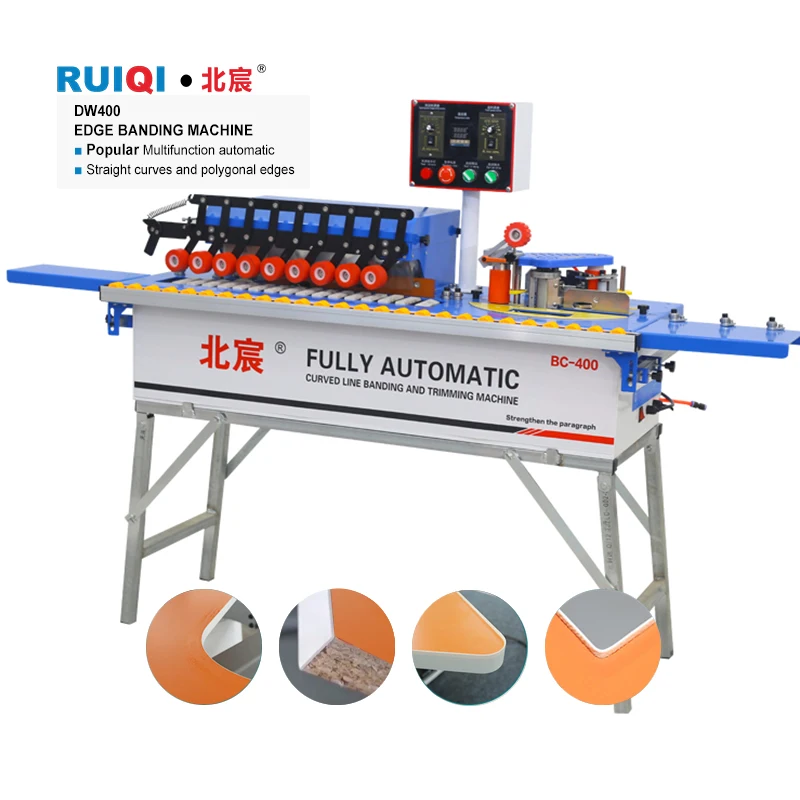
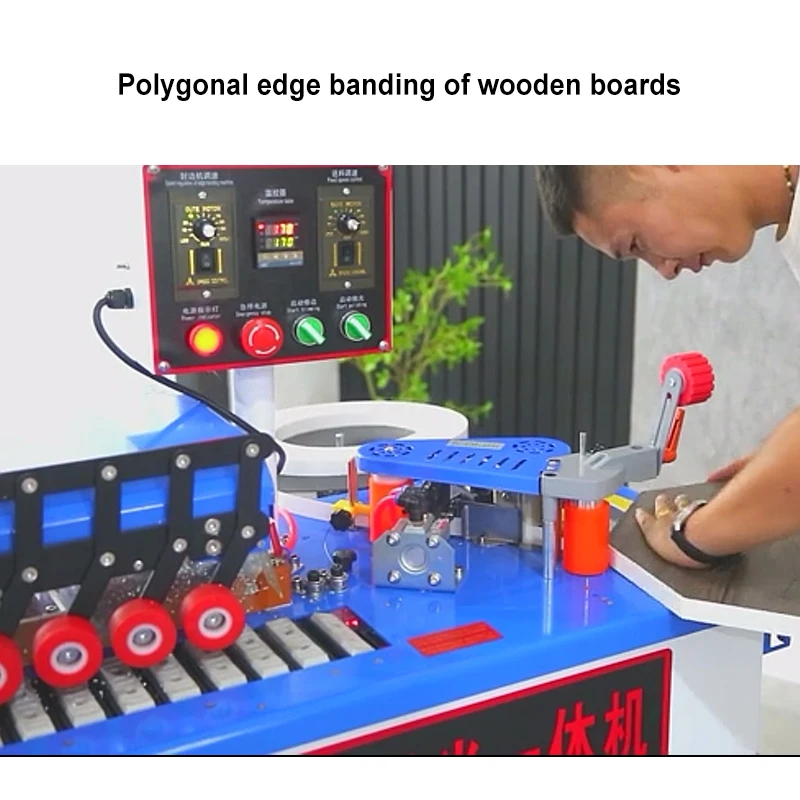
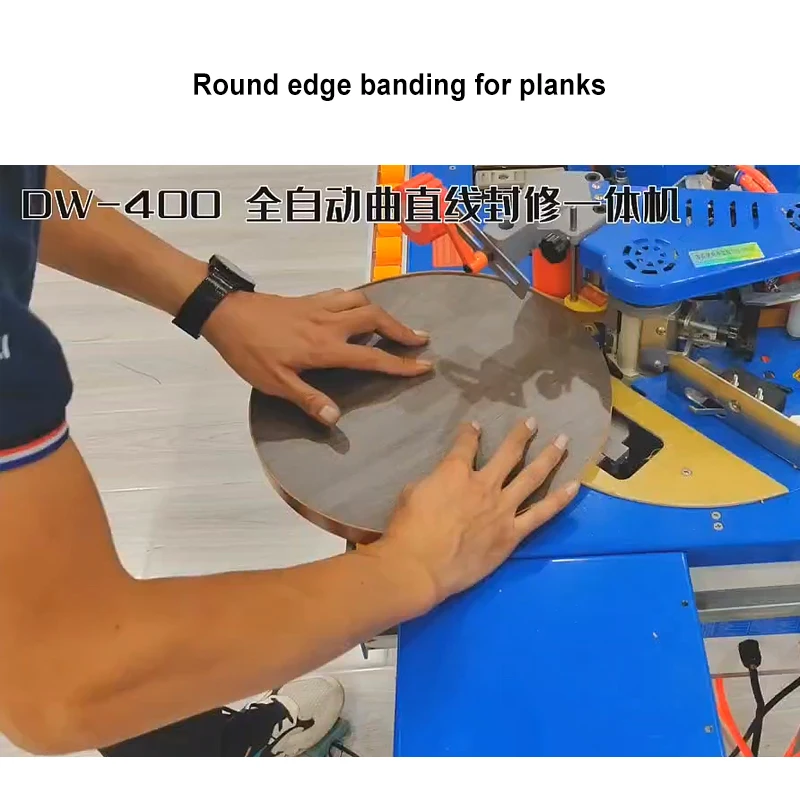
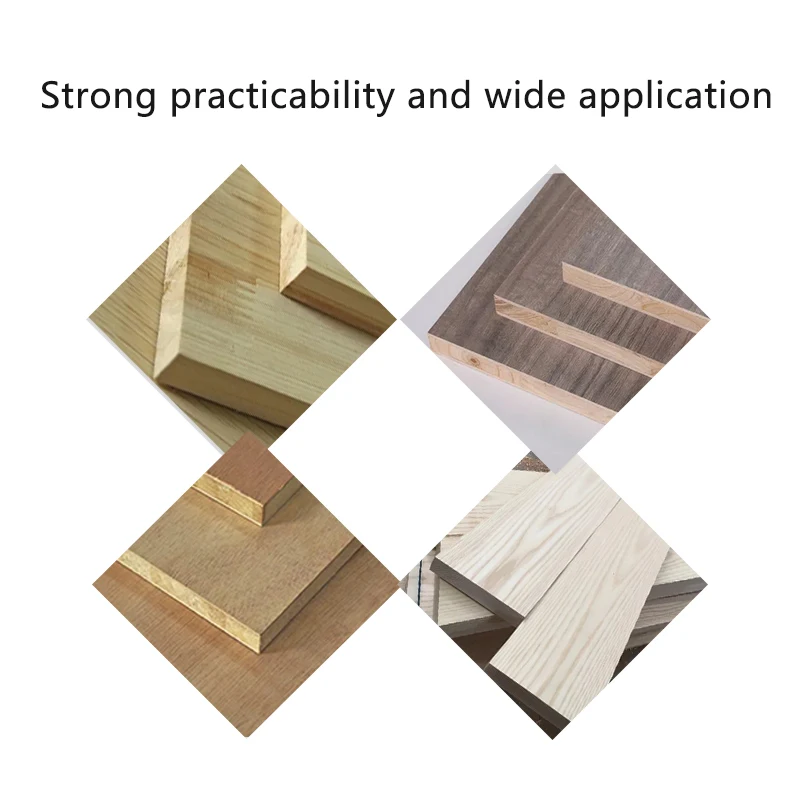
Description
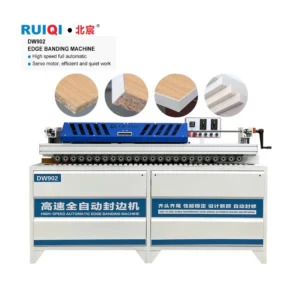
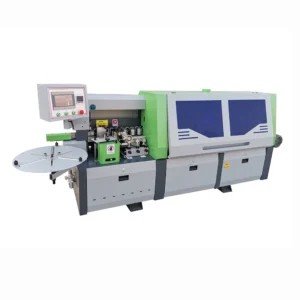
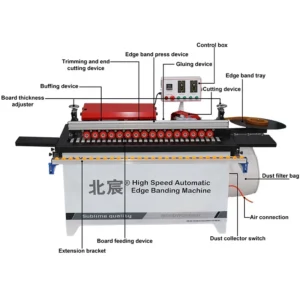
Full catalogue reference — The DW400 anchors the entry tier of a complete automatic edge banding machine family, letting buyers survey every model from basic straight-edge to full pre-milling in one place before committing to a specific production tier.
Technical Specifications
| Parameter | Value |
|---|---|
| Model | DW400 |
| Product Type | Automatic Edge Banding Machine |
| Total Power | 3800W |
| Voltage | 220V/380V/customization |
| Edge Banding Thickness | 0.3–3 mm |
| Edge Banding Height | 0–50 mm |
| Minimum Sheet Length | 25 cm |
| Minimum Sheet Width | 10 cm |
| Trimming Power | 650W × 2 |
| Polishing Power | 180W × 2 |
| Edge Power | 20W |
| Transmission Power | 60W |
| Vacuum Power | 1200W |
| Glue Pot Capacity | 1000 ml |
| Air Source Pressure | 0.5–0.8 MPa |
| Machine Dimensions (L×W×H) | 116 × 47 × 69 cm |
| Net Weight | 70 kg |
| Language Options | Chinese, English (others customizable) |
| Plug Options | EU, USA, AU, UK |
| Key Features | Straight edge banding, trimming, polishing; fully assembled in wooden case |
Application Suitability
| Application | Material or Output |
|---|---|
| Cabinet door edge finishing | MDF and particleboard panels with PVC or veneer edge banding |
| Custom furniture panel processing | Plywood and blockboard sheets up to 50 mm banding height |
| Polymer door edge sealing | Polymer substrates with 0.3–3 mm banding material |
| Small-batch workshop production | Mixed board types in job-shop environments |
Why the Voltage Question Must Precede the Machine Choice
Confirming local voltage and frequency before ordering eliminates the most common commissioning failure we see in cross-border equipment purchases.
I once watched a furniture factory in Southeast Asia take delivery of a 380V edge bander when their workshop ran on a 220V single-phase supply. The machine sat idle for weeks while a transformer was sourced locally. The cost of downtime far exceeded the price difference between configurations. When evaluating any automatic edge banding machine manufacturer, the first technical exchange should always cover the electrical environment at the installation site, not just feed speed or glue pot volume. [NEED_CITE: voltage and frequency standards by export market]
The DW400 is configurable across 220V and 380V with plug options spanning EU, USA, AU, and UK standards. This range covers the majority of export markets, but the confirmation must happen at the quotation stage — not after the crate arrives.
Positioning the DW400 Within the Broader Catalogue
The DW400 occupies the compact, entry-to-mid tier in the Ruiqi edge banding lineup. Workshops surveying the full catalogue will find it positioned below pre-milling and multi-function models that add scraping, buffing, and corner-rounding stations. Its value lies in covering the three core operations — straight edge banding, trimming, and polishing — within a single 116 cm footprint. For a joinery shop moving from manual edge gluing to mechanized finishing, or a cabinet maker running moderate volumes of standard panels, this model represents the smallest viable automatic edge banding machine manufacturer configuration that still delivers consistent trim quality.
Mapping the Upgrade Path Across the Product Family
A buyer comparing the DW400 against higher-tier models should weigh current throughput against future capacity needs. The full catalogue includes machines with additional pre-milling heads for uneven panel edges, dual-glue-pot systems for rapid material changeover, and heavier-duty feed mechanisms designed for continuous two-shift operation. Choosing the DW400 does not lock a workshop into a dead end — the control language, voltage standard, and edge banding material compatibility carry across the family, so upgrading later means adding stations, not retraining operators or rewiring the shop. [NEED_CITE: CE machinery directive requirements for industrial equipment]
How Core Specifications Translate to Workshop Results
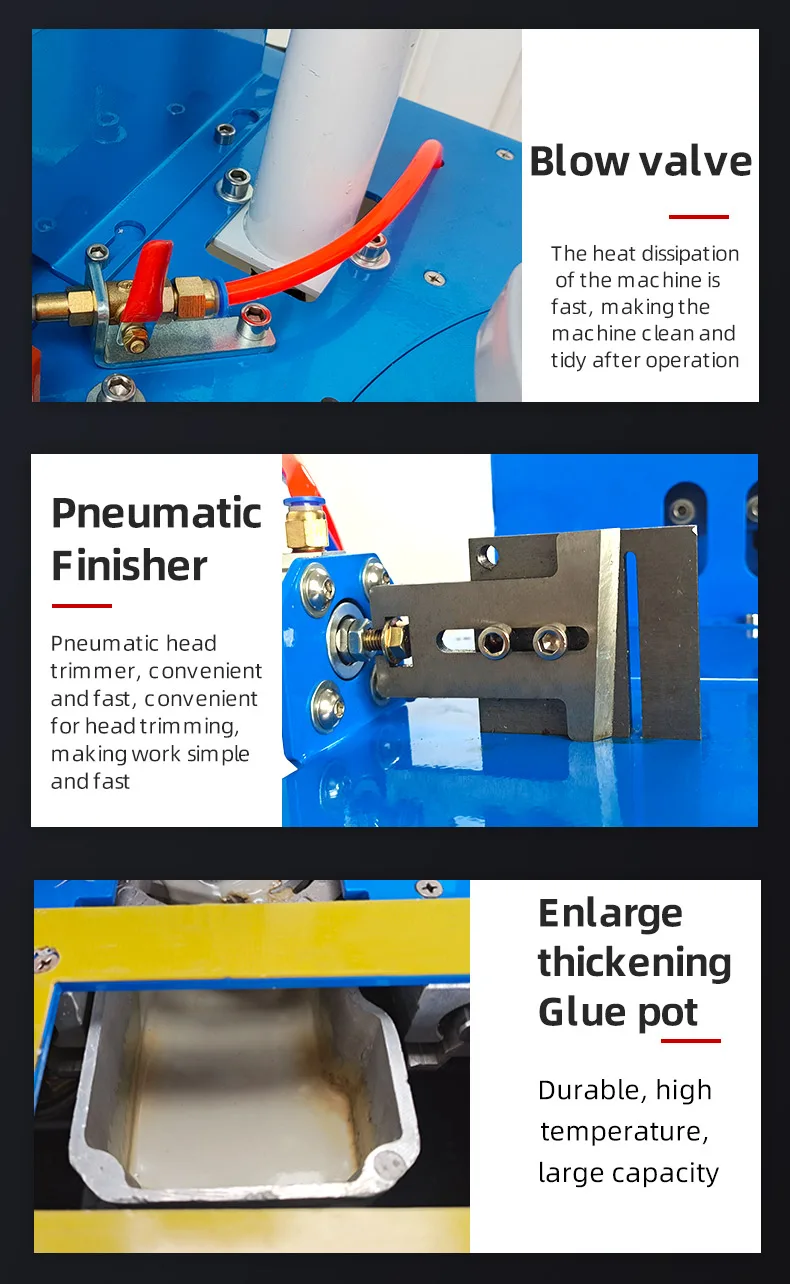
The 0.3–3 mm edge banding thickness range covers the two dominant material families in furniture production: thin PVC foil for cost-sensitive cabinet carcasses and thicker veneer strips for visible door and drawer fronts. Switching between these materials on the DW400 involves adjusting the glue pot temperature and trimming cutter offset rather than changing tooling entirely. The 1000 ml glue pot capacity is sized for batch work rather than continuous high-volume runs, meaning a typical furniture shop can process a full batch of cabinet panels before needing a refill. The dual 650W trimming motors provide adequate torque for clean cuts on both MDF and particleboard without tear-out at the leading and trailing edges. Air source pressure at 0.5–0.8 MPa drives the pneumatic pressure rollers that hold the banding against the panel during glue cure — insufficient pressure produces the visible glue lines that cause downstream assembly rejections.
The Hidden Cost of Under-Specifying the Edge Bander
I have visited workshops that purchased the cheapest available edge bander, only to discover that the machine could not hold tolerance on their thickest panel stock. Panels came off the line with uneven trim and required hand-sanding before they could enter the drilling and doweling stations. The labor cost of that rework quietly consumed any savings from the lower initial purchase. When an entry-level machine is pushed into production volumes it was never designed for, the first symptom is not a breakdown — it is a gradual drift in edge quality that shows up as assembly gaps and rejected doors. [NEED_CITE: typical edge banding tolerance expectations in cabinet manufacturing]
Why Sourcing from a Single Catalogue Matters
In-house manufacturing means the DW400 shares components and control architecture with higher-tier models, simplifying spare parts inventory for distributors stocking the full range. Four-stage quality control — incoming material, in-process, finished product, and pre-shipment verification — applies uniformly across every model in the catalogue, so a buyer does not need to audit each tier separately. Voltage and language customization is handled on the production line rather than through third-party retrofitting. Factory test records are generated on panel thicknesses matching the buyer’s actual stock, not on generic test pieces. And the OEM capability means distributors can private-label the DW400 while still referencing the same technical documentation and spare parts lists as the standard-branded units.
Documentation & Verification
- CE declaration of conformity referencing the DW400 configuration shipped
- ISO 9001 certificate covering the manufacturing process for this model
- Machine specification sheet confirming voltage, plug type, and language selected
- Factory test record run on buyer’s specified panel material and thickness
- Electrical schematic matching the as-built 220V or 380V wiring configuration
Installation, Commissioning & Support
- Dedicated circuit required for the 3800W total load; confirm breaker rating before arrival
- Machine ships fully assembled; position on level floor within the 116 × 47 cm footprint
- Pneumatic line must deliver 0.5–0.8 MPa clean dry air to the machine inlet
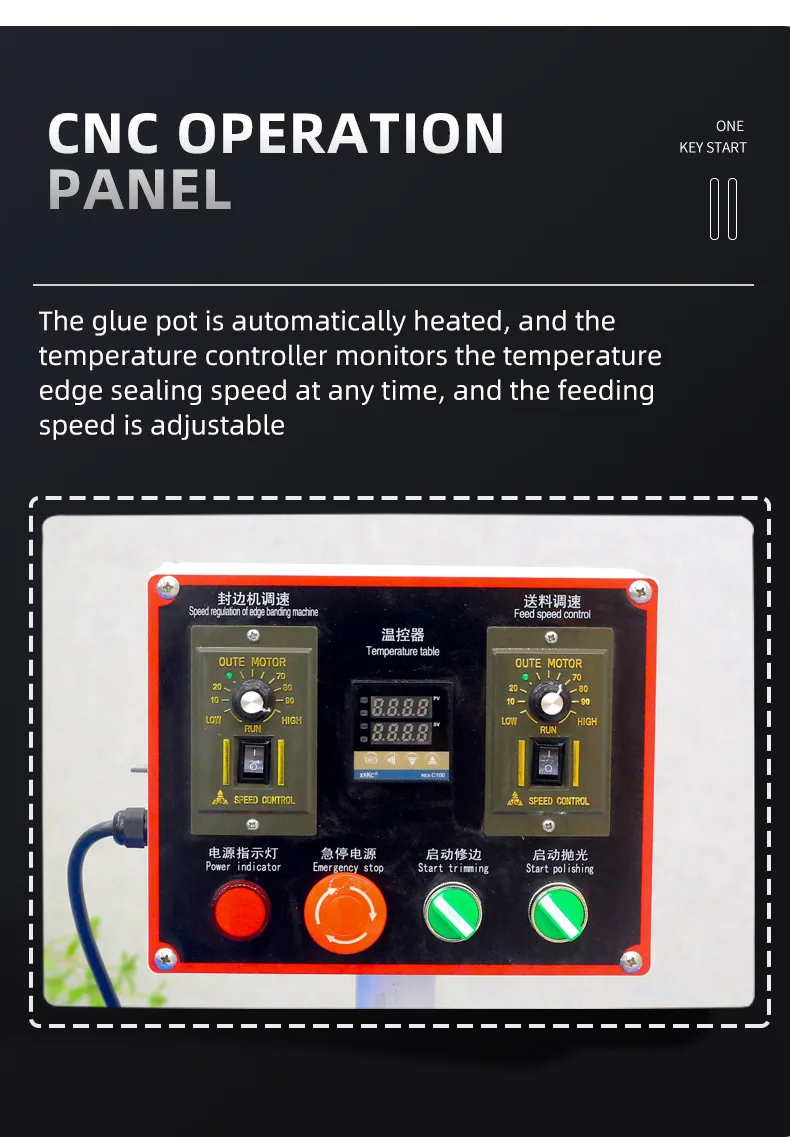
- First-run glue pot calibration included in the operation manual provided in your language
- Spare parts list covers trimming blades, polishing wheels, and pressure roller pads
- Wooden case packing protects the unit during transit; unpack and inspect before energizing
What to Share When Requesting a Quotation
To receive an accurate configuration proposal, provide the panel materials you process most frequently, the edge banding thickness range you need, and the local voltage and frequency at your facility. Mention the control panel language your operators require and whether you are evaluating this model alongside higher-tier options in the catalogue. If you are planning a production line rather than a single-machine purchase, note your existing equipment so throughput compatibility can be reviewed.
Frequently Asked Questions
Q: How does the DW400 compare to higher-tier models in the Ruiqi edge banding range?
A: The DW400 covers straight edge banding, trimming, and polishing in a compact unit. Higher-tier models add pre-milling, scraping, corner rounding, and dual glue pots for higher throughput and more complex edge profiles. All models share the same control architecture and customization options, so upgrading later keeps operator training and spare parts consistent.
Q: What panel materials and edge banding thicknesses does this model handle?
A: The DW400 processes MDF, plywood, particleboard, blockboard, and polymer panels. Edge banding thickness ranges from 0.3 mm to 3 mm, covering PVC foil and natural veneer strips. Barding height accommodates panels up to 50 mm, which spans standard cabinet door and furniture panel dimensions.
Q: Can voltage, plug type, and control panel language be customized for my market?
A: Yes. Voltage is configurable at 220V or 380V, plug options include EU, USA, AU, and UK standards, and the control panel is available in Chinese and English with additional languages on request. All customizations are confirmed at the quotation stage to ensure the machine arrives ready for your local electrical supply and operator requirements.
Q: What documentation is included with shipment for customs and commissioning?
A: Each DW400 ships with a CE declaration of conformity, ISO 9001 manufacturing certificate, machine specification sheet, electrical schematic matching the as-built voltage, factory test record, operation and maintenance manual in the agreed language, and a spare parts list. Packing photographs and customs documentation support are also provided.
Q: Is OEM branding or private label available on this model?
A: OEM branding is available across the full catalogue, including the DW400. Custom logos, color schemes, and private-label documentation can be applied. Distributors receive the same technical support, spare parts backup, and operator training materials regardless of the branding applied to the machine.