
Description
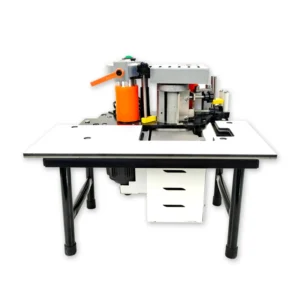
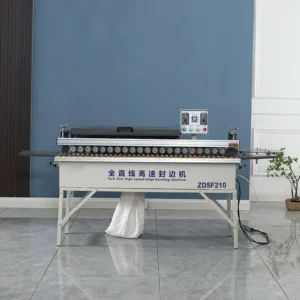
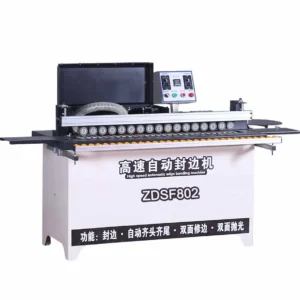
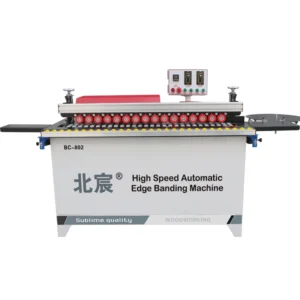
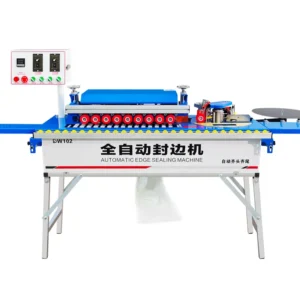
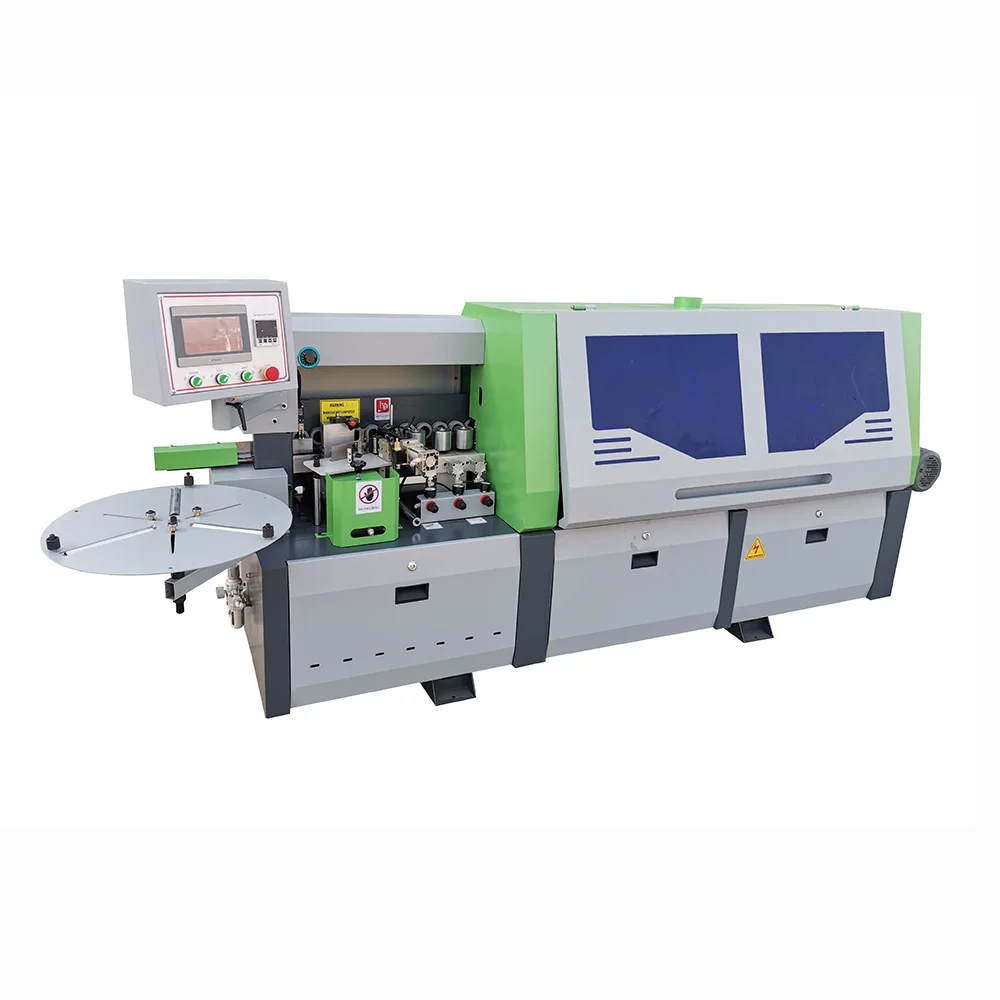
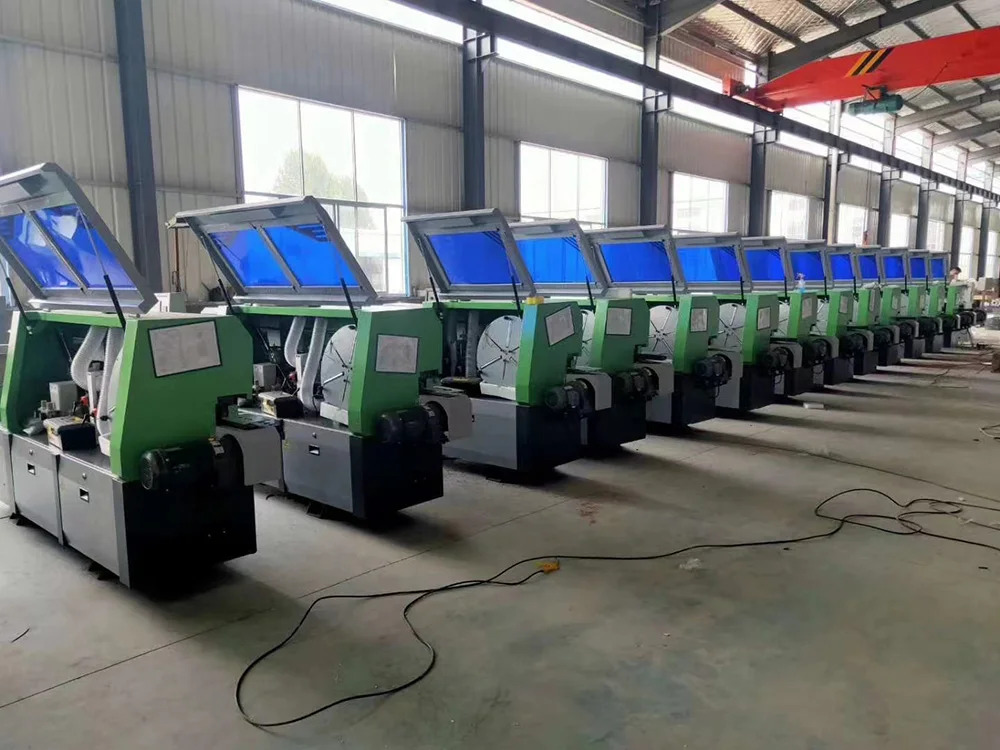
Integrated Station Range — the ZDS280D covers gluing through buffing in one pass, positioned within a broader model family that lets workshops scale without switching suppliers.
Technical Specifications
| Parameter | Value |
|---|---|
| Model | ZDS280D |
| Product Type | Automatic Edge Banding Machine |
| Main Functions | Gluing, End Trimming, Fine Trimming, Scraping, Buffing |
| Panel Thickness Range | 10–60 mm |
| Edge Thickness Range | 0.4–3 mm |
| Conveyor Belt Speed (Feed Speed) | 16 m/min |
| Min. Panel Width | 60 mm |
| Min. Panel Length | 150 mm |
| Working Pressure | 0.6 MPa |
| Rated Power | 7.5 kW |
| Voltage & Frequency | 380V / 3-Phase (frequency to be confirmed) |
| Net Weight | 700 kg |
| Overall Dimensions (L×W×H) | 3100 × 700 × 1400 mm |
| Control System | PLC-based with Omron travel switches; Delixi/Chint air switches and contactors |
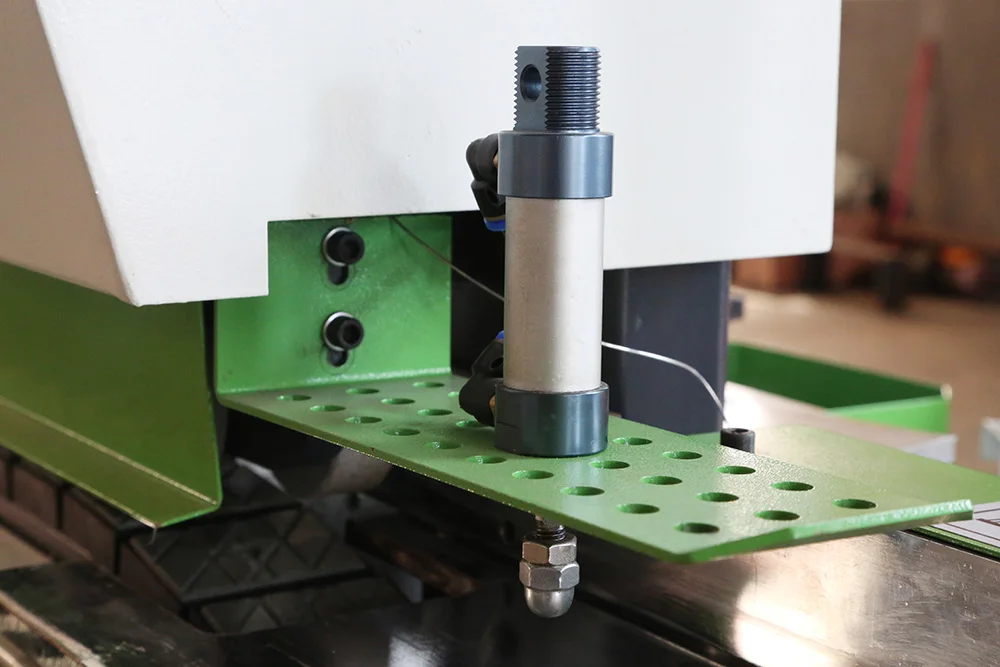
| Pneumatic Components | German Festo or Taiwan AirTAC cylinders and safety valves; AirTAC magnetic switches |
| Conveyor Guide Rail Material | HT260 |
| Machine Body Structure | 14 mm national standard high-strength steel plate, frame-type fuselage, high-temperature quenching treated |
| Conveyor Motor | Customized Taiwan brand with thermal protection system |
| Head Guide Rail | Taiwan brand |
| Key Features | Five integrated processing stations; thermal-protected conveyor motor; PLC automation cycle control |
| Warranty | 1 year |
| Certification | CE |
Application Suitability
| Application | Material or Output |
|---|---|
| Furniture panel edge banding | MDF, particleboard, plywood with PVC edge banding |
| Cabinet door and carcass edge finishing | Melamine-faced board with 0.4–3 mm PVC or veneer strips |
| Custom furniture factory panel processing | Mixed substrate runs requiring consistent edge quality across board types |
| Small to mid-scale workshop operations | Batch production of shelving, drawer fronts, and wardrobe panels |
| Joinery workshop scaling from manual to automatic | Transitioning from hand-held edge trimmers to full-station automated finishing |
Why the Substrate Question Must Come Before the Model Number
Matching the automatic edge banding machine manufacturer configuration to your actual panel material prevents costly commissioning failures.
I once helped a customer bring a full-function edge bander online that had been selected based on MDF throughput assumptions. The workshop was actually running high-density particleboard most days. The feed rate and glue temperature parameters were completely misaligned with the substrate. Edge banding strips bubbled and delaminated across entire batches, and the line’s first-pass yield dropped sharply. Three days of parameter adjustment were needed before production stabilized. The machine was never at fault — the configuration conversation simply skipped the most important question [NEED_CITE: substrate-specific feed and glue parameter matching in edge banding operations].
Mapping the ZDS280D Within the Full Model Family
The ZDS280D occupies the full-function tier of the Ruiqi edge banding lineup, sitting above entry-level models that handle only gluing and basic trimming. For a buyer surveying the complete automatic edge banding machine manufacturer range, this model represents the point where five processing stations — gluing, end trimming, fine trimming, scraping, and buffing — converge into a single-pass workflow. Workshops moving from partial automation to complete edge finishing find this tier eliminates the need for secondary hand-finishing steps.
How Model Tiers Align with Production Stages
A startup joinery shop cutting a few dozen panels daily may start on a compact entry-level machine from the same product family, then move to the ZDS280D as order volume grows. Because all models share common control logic and component sourcing within the Ruiqi range, operator retraining stays minimal during transitions. A production manager planning a phased investment can map each growth stage to a specific model tier without evaluating entirely new supplier relationships [NEED_CITE: phased equipment investment planning in custom furniture manufacturing].
Reading the Specs That Matter for Edge Quality
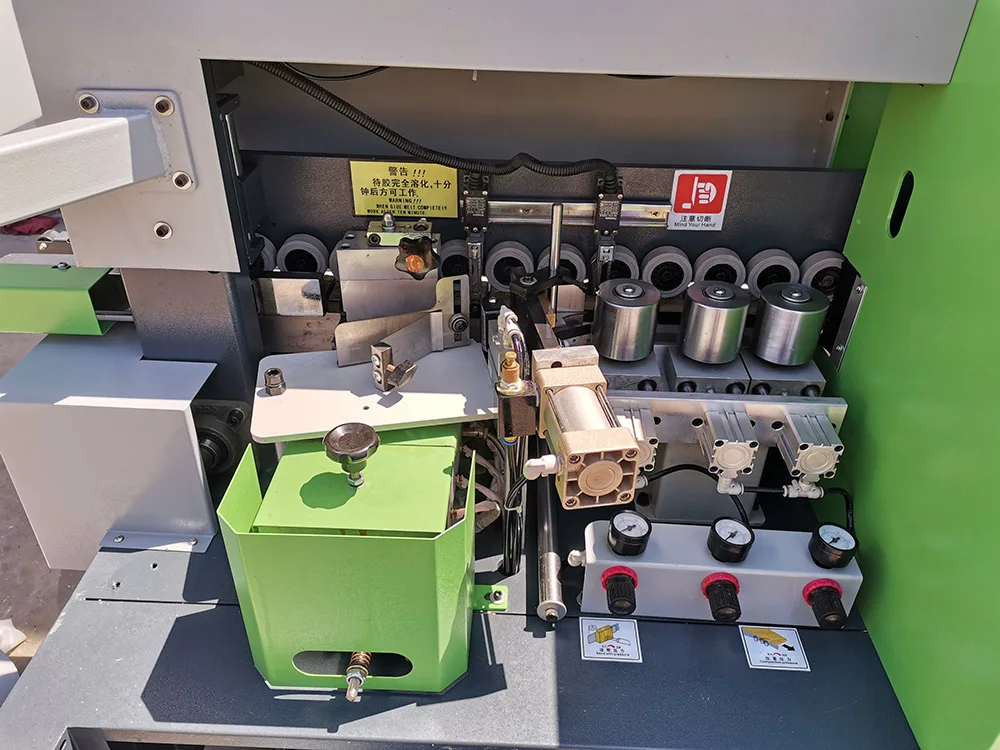
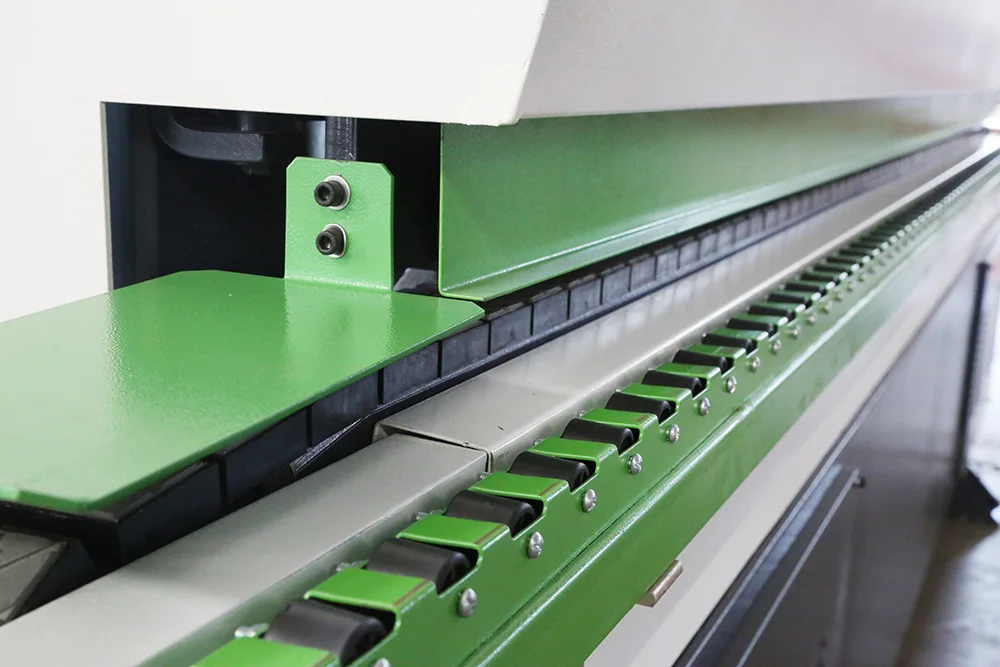
The 10–60 mm panel thickness range covers the full spread of materials a furniture factory encounters, from thin drawer bottoms to thick shelving stock. Running 60 mm panels at 16 m/min feed speed demands the structural rigidity provided by the 14 mm high-strength steel plate frame with high-temperature quenching treatment — a lighter frame would introduce vibration that shows up as chatter marks on the trimmed edge. The HT260 conveyor guide rail works with the thermal-protected conveyor motor to maintain consistent feed pressure across varying panel weights. On the pneumatic side, Festo or AirTAC cylinders drive the trimming and scraping stations with repeatable stroke precision, which directly determines whether the finished edge shows visible transitions between station outputs. The Omron travel switches governing the PLC cycle ensure each station fires at the correct panel position, a detail that matters when processing shorter panels near the 150 mm minimum length.
The Cost of Selecting a Model Below Your Actual Duty Cycle
Running an entry-level edge bander at volumes it was never designed for leads to accelerated wear on guide rails and trimming motors. Shops that buy a single machine based on price, then push it through two shifts of daily particleboard production, typically see edge quality degrade within months. The scraping and buffing stations that the ZDS280D includes are precisely what separate a furniture-grade edge from one that shows glue lines under close inspection. Skipping these stations to save on initial investment means paying for manual touch-up labor on every panel that leaves the shop [NEED_CITE: edge banding station count versus manual rework requirements].
Why Procurement Starts with the Full Range View
Single machines purchased in isolation often turn out incompatible with existing upstream saws or downstream boring equipment in feed height or throughput. Evaluating the complete Ruiqi model family upfront lets you match station counts and feed speeds across your entire line. Each model in the range is built on the same 14 mm steel plate frame construction and uses common pneumatic component sourcing, meaning spare parts inventory stays consolidated. Voltage and frequency are confirmed against your local grid before quotation finalization, not after the machine arrives. The four-stage quality control process — incoming material, in-process, finished product, and pre-shipment verification — applies uniformly across every model tier. Engineer-led configuration recommendations with formal quotation arrive within 24 hours, giving you comparable data across the full lineup rather than a single-model pitch.
Documentation & Verification
- Machine specification sheet listing all five station types, motor counts, and electrical schematic for cross-model comparison
- Voltage and frequency confirmation document matched to your facility grid before order placement
- Factory test record demonstrating edge finish quality on your specific panel substrate and banding material
- CE declaration of conformity covering the ZDS280D configuration as shipped
- Operation and maintenance manual provided in the agreed language with station-by-station adjustment procedures
- Spare parts list identifying wear components for each of the five processing stations
Installation, Commissioning & Support
- Requires a dedicated 3-phase 380V circuit rated for the 7.5 kW total draw with appropriate breaker sizing
- The 3100 × 700 mm footprint needs clear access on both sides for trimming station adjustment and glue pot maintenance
- Machine ships fully assembled; position on level concrete floor and verify conveyor guide rail alignment after settling
- First-run commissioning includes setting glue temperature and feed speed parameters matched to your specific panel material and edge thickness
- Omron travel switch positions calibrated on-site for your typical panel length range down to the 150 mm minimum
- Pneumatic system requires clean, dry compressed air supply at 0.6 MPa with filtration upstream of the Festo or AirTAC cylinders
What to Prepare Before Requesting a Quotation
Share the specific panel substrates you run most often — MDF, particleboard, plywood, or a mix — along with the edge banding materials and thicknesses you use. Confirm your facility voltage and frequency so the electrical configuration can be matched before pricing. Let us know your typical daily panel count and whether you are evaluating this model alongside other tiers in the automatic edge banding machine manufacturer range. If you want to run sample panels at the factory before deciding, specify the board and edge strip combination so test material can be staged in advance.
Frequently Asked Questions
Q: How does the ZDS280D compare to entry-level and pre-milling models in the range?
A: The ZDS280D includes five stations — gluing through buffing — covering full edge finishing in one pass. Entry-level models in the Ruiqi family offer fewer stations for lower-volume workshops, while pre-milling configurations add a milling head upstream of gluing for panels that require edge preparation before banding. An engineer can recommend which tier fits your substrate mix and daily volume.
Q: What voltage and frequency options are available for my region?
A: The standard configuration runs on 380V three-phase power, with frequency to be confirmed for your local grid. Voltage is adjustable across the Ruiqi range from 110V to 440V depending on the model. Your local voltage and frequency are confirmed in writing before the quotation is finalized, ensuring the machine arrives ready for immediate connection.
Q: Which model tier suits my current panel volume and substrate mix?
A: Selection depends on your daily panel count, the substrates you process most often, and the edge quality standard your customers expect. A workshop running mixed MDF and particleboard at moderate volumes typically lands on the ZDS280D tier. Sharing your production details allows an engineer to map your requirements against the full model range within 24 hours.
Q: Can I visit the factory to test panels and compare models directly?
A: Factory visits are welcomed and encouraged. You can bring your own panel samples and edge banding material to run on the ZDS280D and other models in the lineup side by side. Seeing the edge finish output on your actual substrate is the most reliable way to evaluate which configuration meets your quality standard before committing to an order.
Q: How does Ruiqi support phased line expansion over time?
A: Because all models in the edge banding range share common control logic and component platforms, upgrading from an entry-level machine to the ZDS280D or beyond keeps operator retraining minimal. Spare parts sourcing remains consolidated across tiers. You can start with the model that matches today’s volume and plan the next step as production grows without changing supplier.