Description
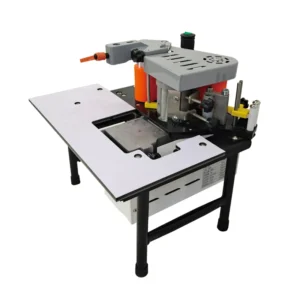
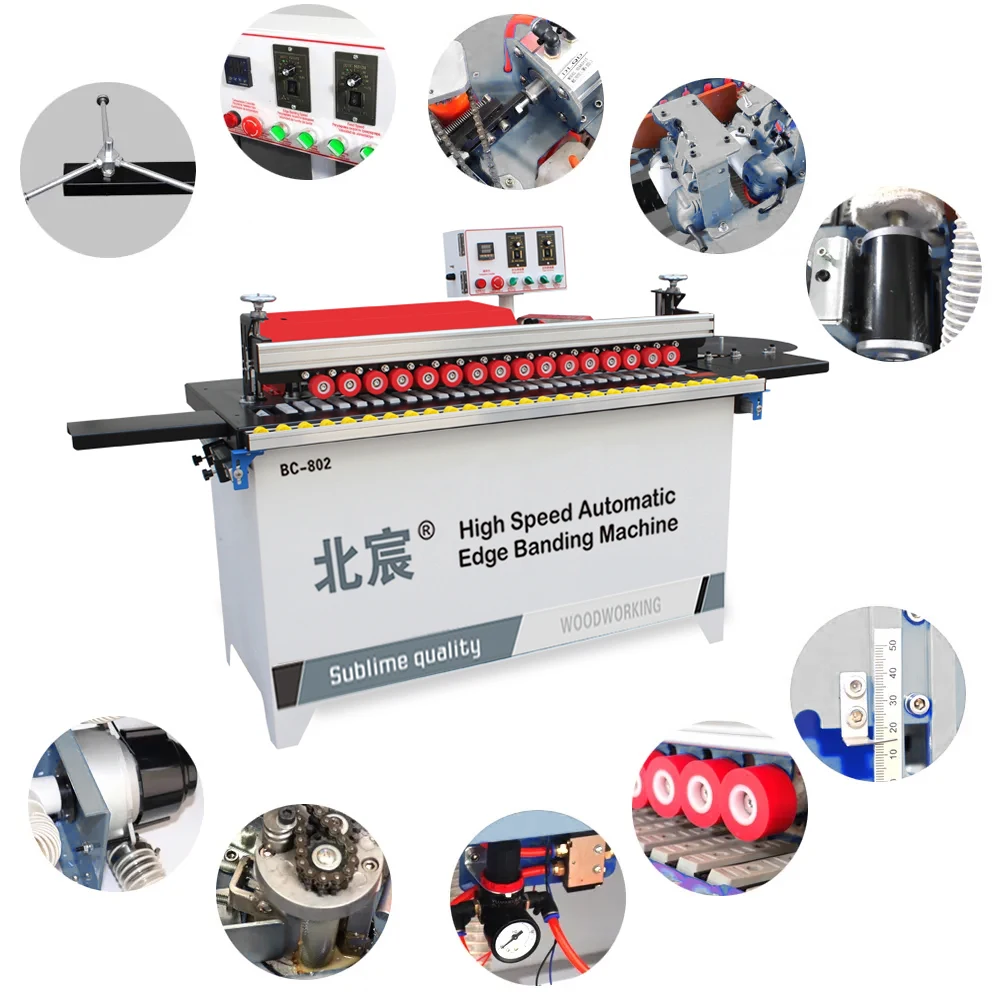
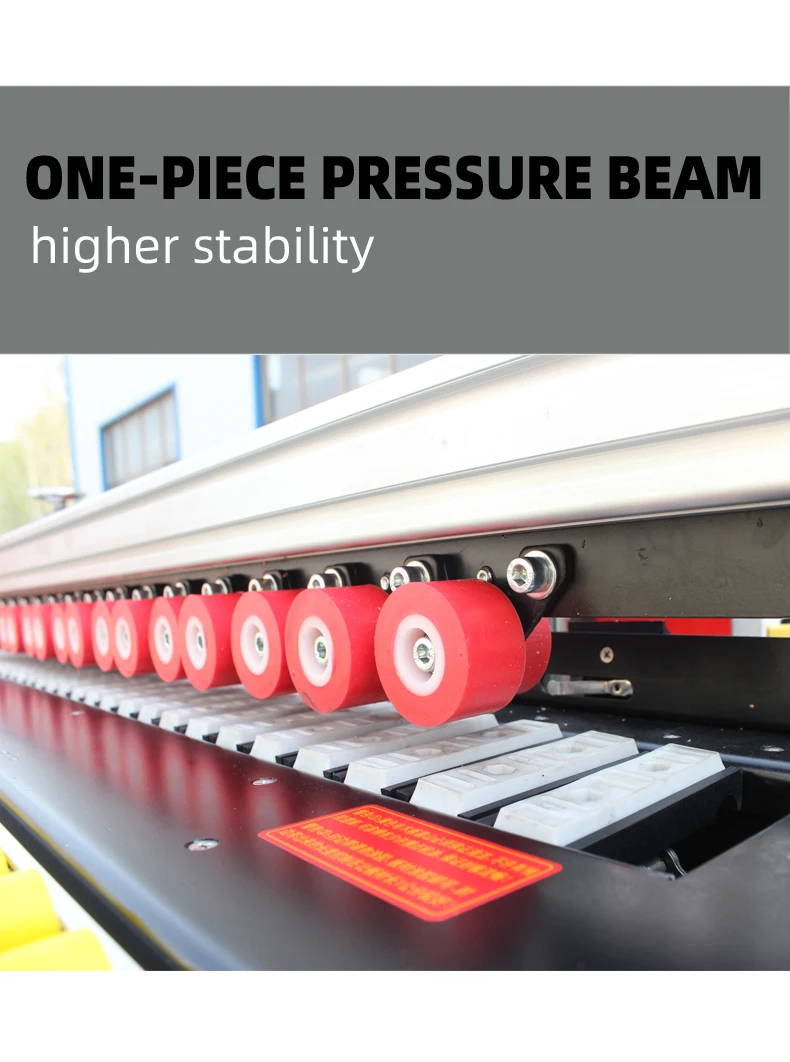
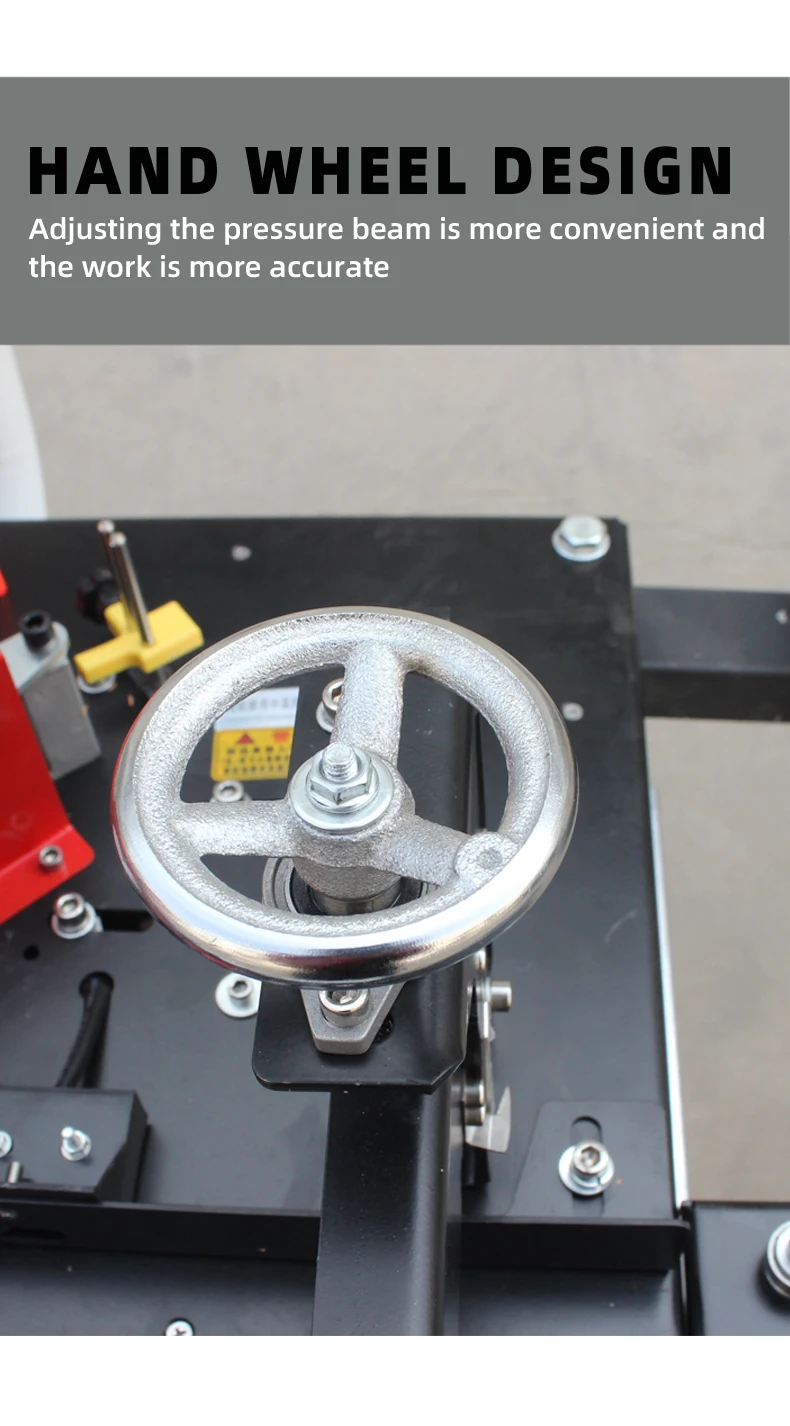
Integrated Pressure Beam Design — the DW802 automatic edge banding machine uses a unified pressure beam with silica gel conveyor belt to maintain consistent panel contact, reducing the scratch marks and feed slippage that often appear when beam pressure is uneven across the sheet width.
Technical Specifications
| Parameter | Value |
|---|---|
| Model | DW802 |
| Product Type | Automatic Edge Banding Machine |
| Total Power | 4200W |
| Voltage & Frequency | 220V/380V/customization (frequency to be confirmed) |
| Minimum Sheet Length | 250mm |
| Minimum Sheet Width | 100mm |
| Panel Thickness Range | 0–50mm |
| Edge Banding Thickness | 0.3–3mm |
| Edge Feed Motor Power | 140W |
| Transmission Motor Power | 140W |
| Trimming Motor Power | 800W × 2 |
| Polishing Motor Power | 180W × 2 |
| Air Source Pressure | 0.4–0.8 MPa |
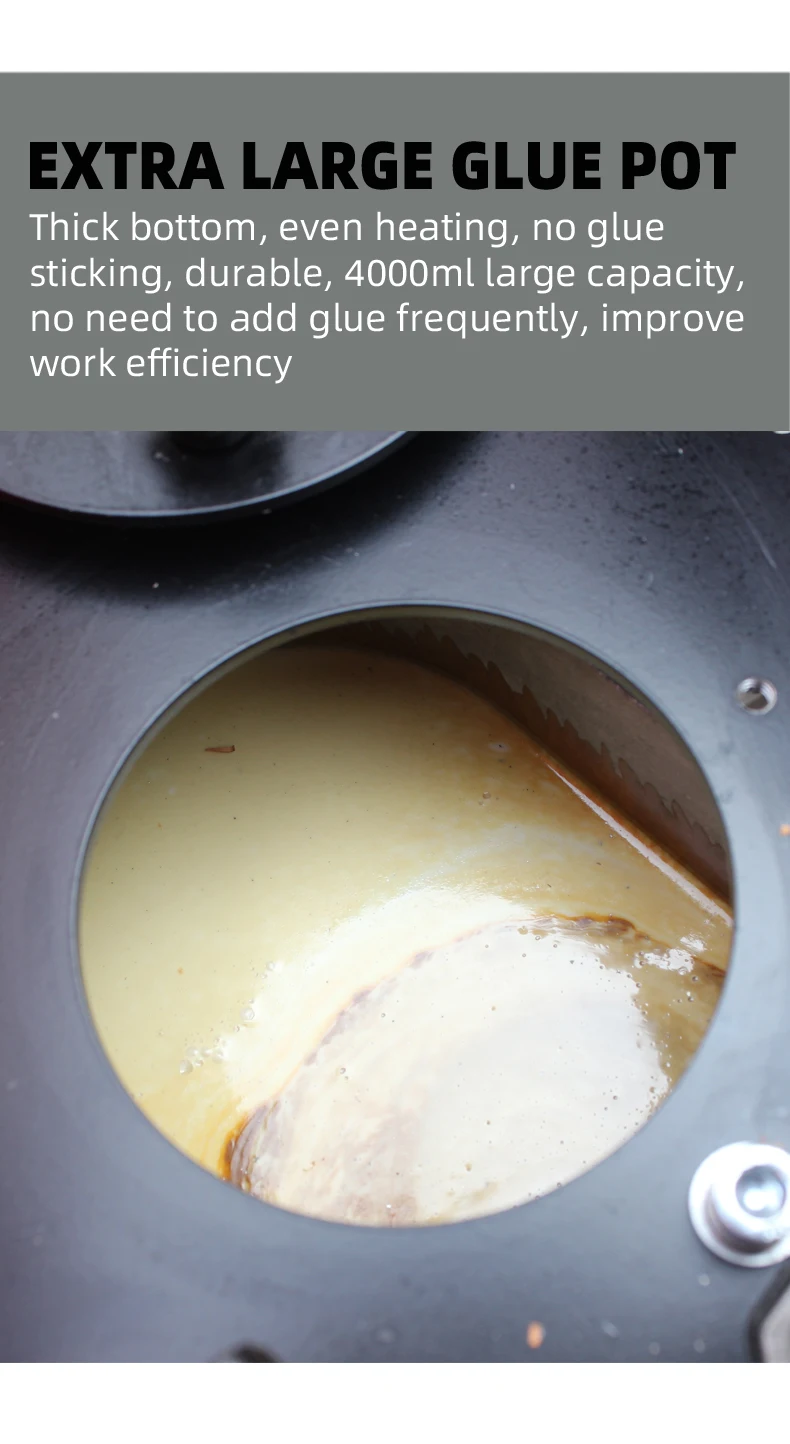
| Glue Pot Capacity | 4000ml |
| Vacuum Power | 1200W |
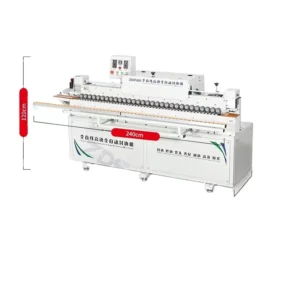
| Overall Dimensions (L×W×H) | 1300 × 600 × 950 mm |
| Net Weight | 135 kg |
| Language Options | Chinese and English standard; Spanish and other languages customizable |
| Plug Options | EU, USA, AU, UK |
| Conveyor Belt Material | Silica gel |
| Pressure Beam Design | Integrated pressure beam |
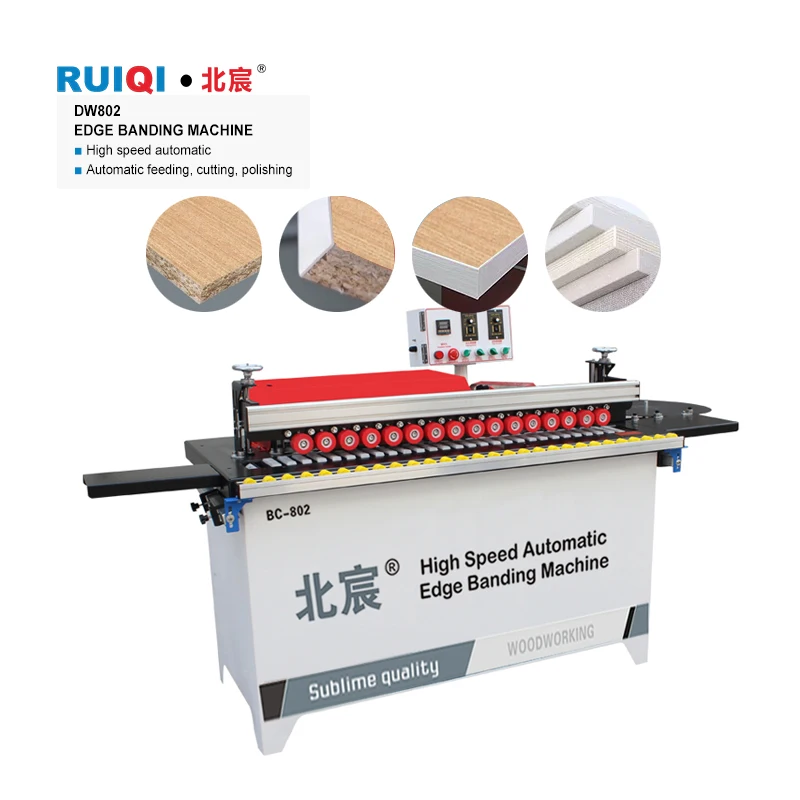
| Key Features | Edge banding, trimming, polishing, automatic head and tail cutting, vacuum hold |
Application Suitability
| Application | Material or Output |
|---|---|
| Custom furniture panel edge sealing | MDF, particleboard, plywood |
| Cabinet door and carcass production | Ecological board, melamine-faced chipboard |
| Solid wood furniture components | Solid wood panels with PVC or veneer banding |
| Home decoration and joinery workshops | Mixed substrate batches at small to medium volume |
Why the Voltage Question Should Come Before the Price
Confirming voltage, frequency, and plug type before production prevents the most expensive kind of commissioning failure — the one that burns out a drive before the first panel is fed.
I spent several years managing equipment procurement for furniture operations across Southeast Asia, and the pattern is painfully consistent. A workshop owner commits to an Automatic Edge Banding Machine manufacturer based on a catalogue spec sheet, pays the deposit, and waits six weeks for the container to clear customs. Then the electrician hooks up the incoming supply and the VFD trips immediately, or worse, the motor winding smokes within minutes. The machine was built for 380V/50Hz, but the factory sits in an industrial park running 415V/60Hz, and nobody checked [NEED_CITE: voltage and frequency standards by export market]. Two weeks of downtime, a replacement drive flown in at courier rates, and a relationship with a new supplier that starts with frustration instead of confidence. The DW802 is offered with voltage customization and multiple plug configurations specifically to close this gap before the order is placed.
Where the DW802 Fits in a Full Machine Catalogue
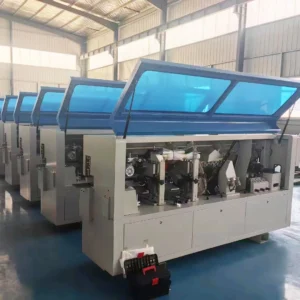
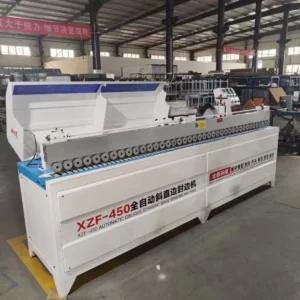
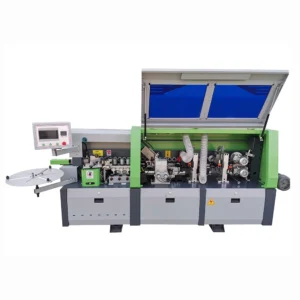
Buying a single edge bander in isolation often leads to feed-height mismatches with an existing panel saw or throughput bottlenecks when production volume grows. The DW802 is positioned within a broader product family that spans entry-level manual-feed units up to full-function pre-milling configurations, all from one Automatic Edge Banding Machine manufacturer. This means a workshop can evaluate the entire range on a single factory visit, compare tier differences directly, and choose the model that matches today’s panel volume without locking into a supplier that cannot follow as capacity requirements change.
Panel Thickness Range and Downstream Assembly Fit
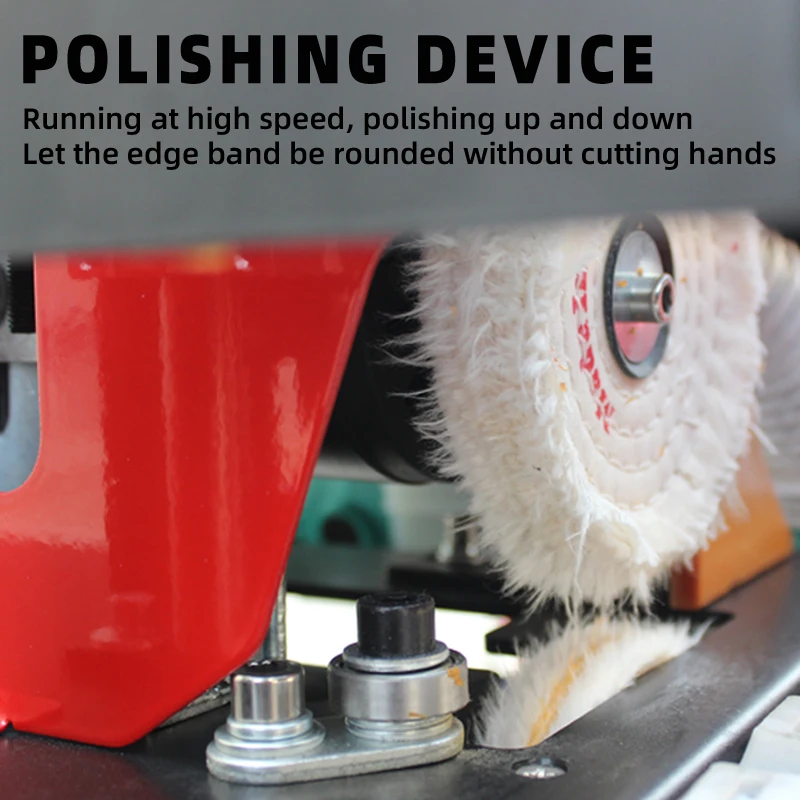
The 0–50mm panel thickness range on the DW802 covers the majority of substrates found in custom furniture and cabinet production — from thin 6mm MDF drawer bottoms up to 40mm solid-wood worktops. The trimming station uses two 800W motors, which provides adequate torque for cleanly removing PVC and ABS overhang on thicker boards without chatter marks. Polishing follows with dual 180W motors to refine the edge profile. When edge trimming leaves visible witness lines or uneven radii, the panel often fails the visual inspection at the assembly bench, and the carpenter spends time hand-sanding edges that should have been finished by the machine [NEED_CITE: edge quality tolerance standards for panel furniture].
Integrated Pressure Beam and Conveyor Mechanics
The integrated pressure beam paired with a silica gel conveyor belt is a design choice that affects every panel passing through the machine. Silica gel offers higher friction than standard rubber belts, which matters when feeding small or narrow workpieces near the 250mm minimum length. The 1200W vacuum system adds additional hold-down at the infeed, keeping the panel flat against the fence. Together, these features address one of the most common complaints in small-to-medium workshops: panels drifting during the gluing station, resulting in skewed banding that the trimmers then cut unevenly. Consistent transport from infeed to outfeed is what separates a clean edge from one that requires rework.
The Hidden Cost of Skipping a Factory Test
An Automatic Edge Banding Machine manufacturer can quote a tolerance and list a panel thickness range, but the only meaningful test is running your actual substrate through the machine before it ships. MDF from one supplier may have a different surface density than MDF from another, and the glue pot temperature that works perfectly on melamine-faced chipboard may leave starved joints on raw plywood. When a buyer skips the sample-processing step, these variables surface only after the machine is bolted to the workshop floor, turning what should be a straightforward commissioning into a round of remote troubleshooting [NEED_CITE: substrate variability effects on hot-melt adhesive bonding]. The DW802’s 4000ml glue pot and adjustable temperature range are designed to handle this variability, but verification before shipment is what converts specification into confidence.
Why Source This Model From a Full-Range Manufacturer
The DW802 benefits from being part of a complete product family rather than a standalone offering. In-house manufacturing with patented cutting mechanisms means the trimming and polishing stations are engineered alongside the gluing unit, not bolted on from a third-party supplier. Voltage and language customization is offered as standard, not as an afterthought negotiated during production. Four-stage quality control covering incoming material, in-process inspection, finished product verification, and pre-shipment testing applies to every unit regardless of its position in the catalogue. An engineer-led configuration recommendation arrives as a formal quotation within 24 hours, giving buyers a clear basis for comparison across the model range.
Documentation & Verification
- CE declaration of conformity issued for the DW802 unit with confirmed voltage rating
- ISO 9001 certificate covering the manufacturing process for this machine family
- Machine specification sheet listing confirmed frequency, plug type, and motor ratings
- Factory test record documenting edge quality on your specified panel material before dispatch
- Operation and maintenance manual provided in the agreed language at shipment
Installation, Commissioning & Support
- Dedicated circuit required matching the confirmed voltage and 4200W total power draw of the DW802
- Machine arrives fully assembled at 135 kg, requiring a level floor and adequate clearance around the 1300 × 600 mm footprint
- Air compressor must supply 0.4–0.8 MPa clean, dry air to the pneumatic system before first run
- Glue pot requires initial heating cycle and temperature calibration for your specific edge banding material
- Silica gel conveyor belt tension checked during commissioning to match your minimum panel width of 100mm
- Spare parts list with part numbers provided at delivery for trimming blades, polishing wheels, and feed rollers
Before You Request a Quotation
To match the right model from the catalogue to your workshop, share the panel materials you run most frequently, the typical board dimensions and daily volume, and your local voltage and frequency. If your operation includes upstream panel sizing or downstream boring stations, note those as well so the throughput between machines can be reviewed. For buyers evaluating the DW802 against higher-tier models in the range, specifying your target edge banding material and required finish quality helps narrow the configuration quickly.
Frequently Asked Questions
Q: How does the DW802 sit within the full model range, and which tier suits my production volume?
A: The DW802 is positioned as a compact, full-function unit covering gluing, trimming, polishing, and automatic head-and-tail cutting in one station. It suits workshops handling small to medium panel volumes. Higher-tier models in the same family add pre-milling, additional trimming stations, or higher feed speeds for production environments running continuous shifts. An engineer-led review of your daily panel count and substrate mix will identify the correct tier.
Q: What voltage, frequency, and plug configurations are available for my country?
A: The DW802 is offered at 220V or 380V with frequency to be confirmed at the order stage. Plug options include EU, USA, AU, and UK standards. Voltage and frequency are verified against your facility supply before production begins, and the electrical schematic is included in the documentation package so your local electrician can prepare the incoming circuit in advance.
Q: Can I visit the factory to see the complete machine family and run a sample test?
A: Factory visits are welcomed at any stage of the evaluation. You can run your own panel material and edge banding stock through the DW802 and compare results against other models in the range. The sample-processing test provides a physical reference for edge quality, glue-line visibility, and trimming accuracy on your specific substrates before you commit to an order.
Q: What panel materials and edge banding types does this model handle?
A: The DW802 processes MDF, particleboard, plywood, ecological board, and solid wood panels within a thickness range of 0–50mm. Edge banding materials include PVC, ABS, and veneer in thicknesses from 0.3mm to 3mm. The 4000ml glue pot and adjustable temperature settings allow tuning the adhesive application to match different substrate densities and banding materials.