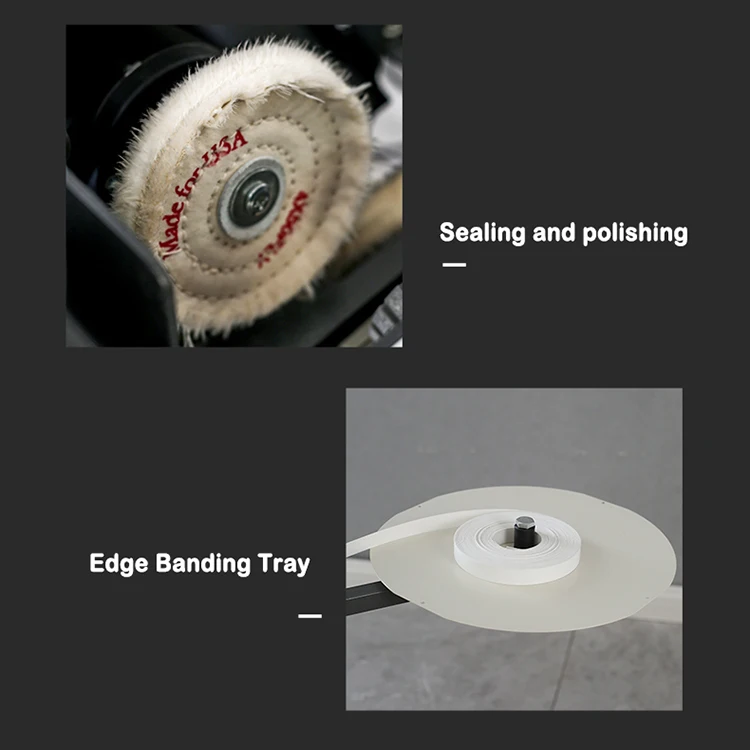
Description
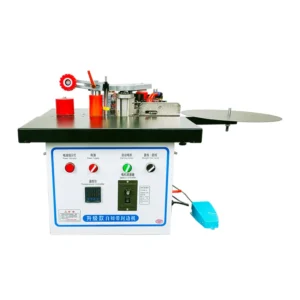
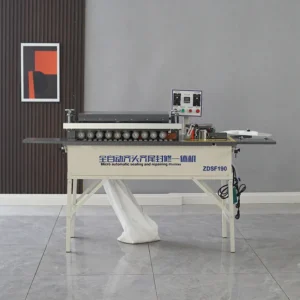
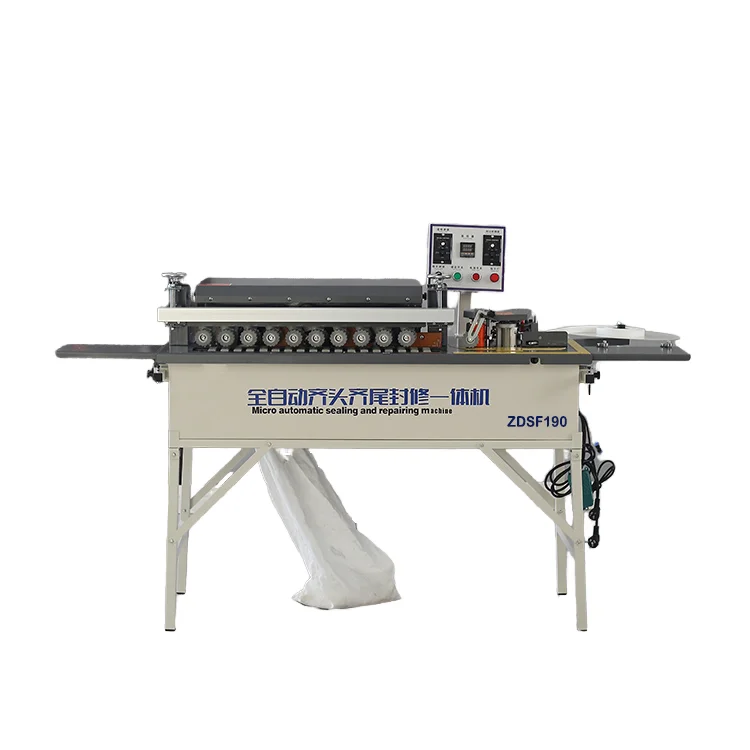
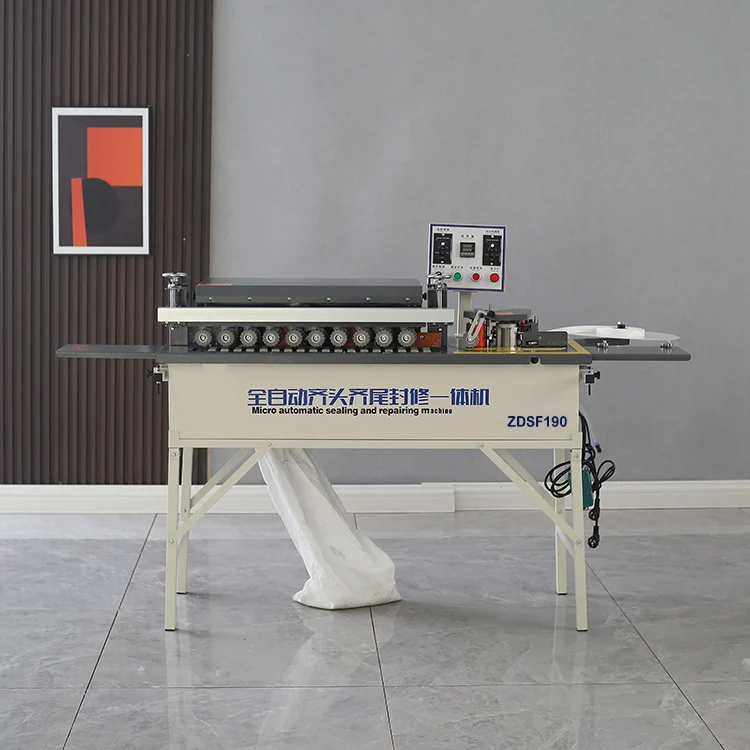
Compact Dual-mode Versatility — The ZDSF190 miniature edge banding machine for sale handles both curved and straight profiles within a single 1900mm footprint, eliminating the need for separate machines in space-constrained workshops.
Technical Specifications
| Parameter | Value |
|---|---|
| Model | ZDSF190 |
| Product Type | Miniature Fully Automatic Curved and Straight Dual-purpose Edge Banding Machine |
| Edge Type | Both curved and straight lines |
| Voltage | 220V 50Hz (custom voltage available) |
| Rated Power | 4kW |
| Heating Power | 800W |
| Suction Power | 1200W |
| Trimming Power | 800W × 2 |
| Polishing Power | 180W × 2 |
| Transmission Power | 120W |
| Belt Power | 25W |
| Rated Air Pressure | 0.4–0.6 MPa |
| Conveyer Belt Speed | 0–14 m/min |
| Sheet Thickness | 10–50 mm |
| Strip Thickness | 0.5–2.5 mm |
| Glue Capacity | 1000 ml |
| Trimming Mechanism | 4-blade alloy arc knife |
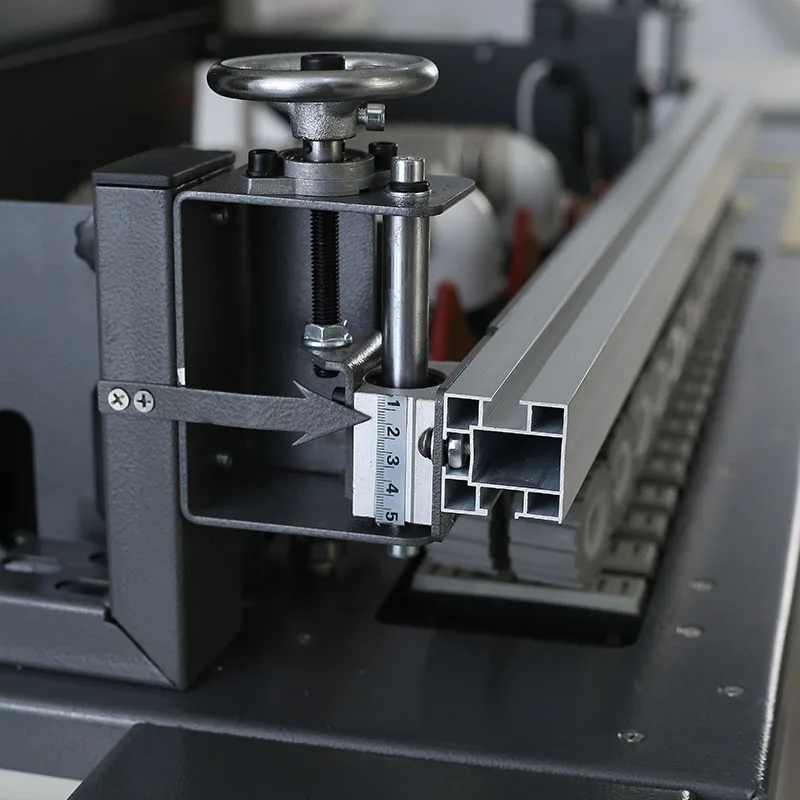
| Pressure Beam | Aluminum alloy adjustable |
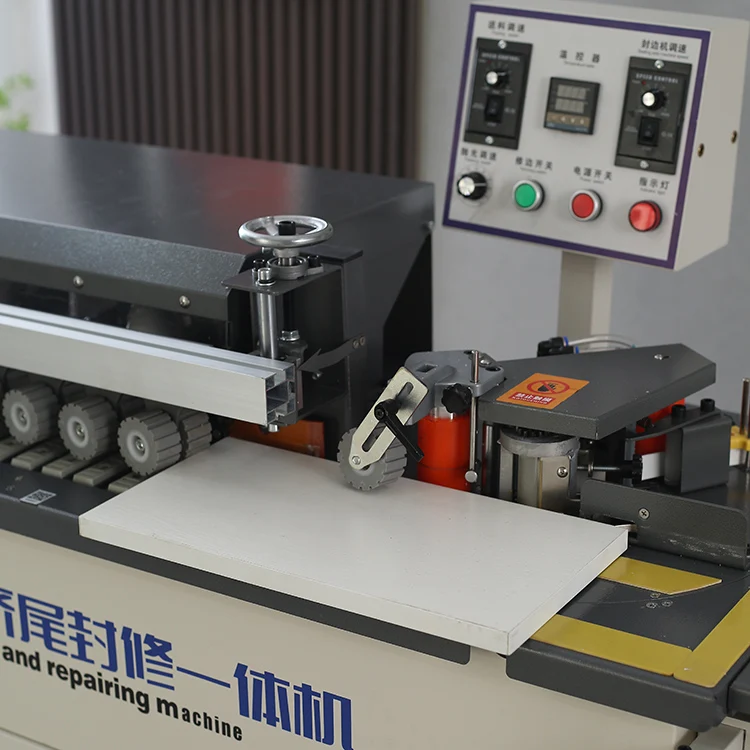
| Feed Mechanism | Double-row rubber pressure wheels |
| Edge Strip Cutting | Pneumatically controlled |
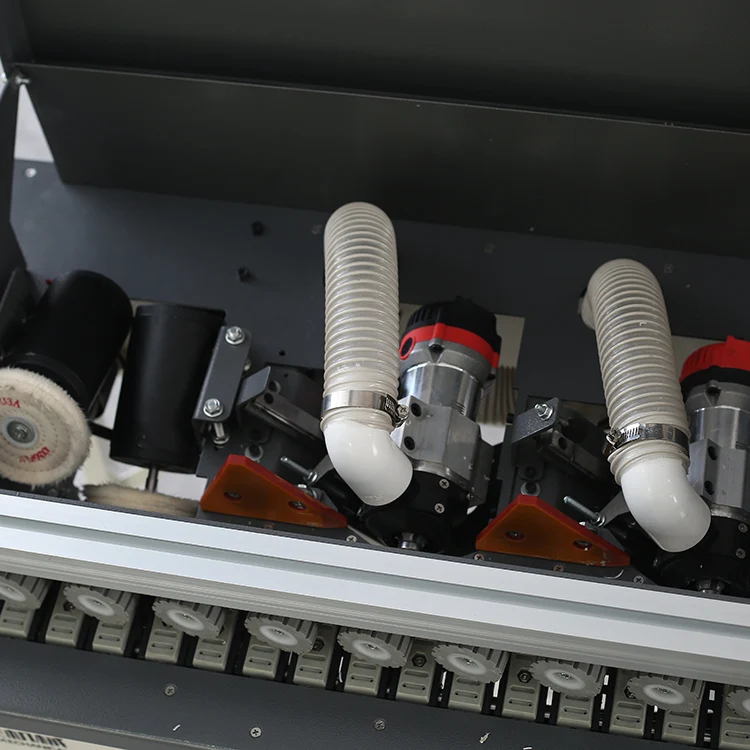
| Dust Collection | Two large-diameter collectors, 99% collecting effect |
| Overall Dimensions | 1900 × 560 × 1300 mm |
| Net Weight | 120 kg |
| Control System | Multi-function button operation |
| Certification | CE |
Application Suitability
| Application | Material or Output |
|---|---|
| Custom furniture panel edging | MDF, particleboard, plywood with PVC or veneer strips |
| Cabinet door and drawer fronts | Curved and straight profile components up to 50mm thick |
| Small workshop edge finishing | Solid wood panels with 0.5–2.5mm edge banding |
| Joinery prototyping and short runs | Mixed batch processing requiring frequent mode changes |
| Retrofit operations for existing furniture lines | Supplementary curved edge work alongside primary straight-line machines |
Why the Voltage Question Should Come Before the Price on a Miniature Edge Banding Machine for Sale
Confirming local voltage and frequency before confirming the order prevents weeks of idle equipment on site.
I spent years on the assembly floor before moving into technical sales, and I still remember a shipment we sent to a Middle East customer — a straight-line edge bander that arrived to find the workshop ran on 440V three-phase while the machine was wired for standard 380V. The transformer retrofit took three weeks and cost the customer more in delayed production than the machine itself. Since then, every quotation I prepare starts with a voltage confirmation sheet signed by the buyer. The ZDSF190 ships at 220V 50Hz as standard, but this miniature edge banding machine for sale can be configured to match your facility’s supply before it leaves our Ningjin factory. Getting that detail wrong turns a compact, ready-to-run unit into a very expensive paperweight. [NEED_CITE: voltage and frequency standards by export market]
Switching Between Curved and Straight Modes Without Downtime
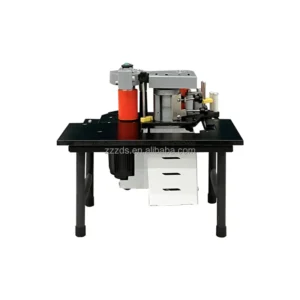
The 180-degree rotation mechanism lets an operator convert the ZDSF190 from curved to straight edge banding mode in a single motion, without tools or recalibration. This matters in small workshops where a single operator may run cabinet sides in the morning and curved shelf brackets in the afternoon. Rather than maintaining two separate machines — each requiring its own floor space, power circuit, and dust collection connection — the dual-mode design consolidates both operations. The miniature edge banding machine for sale addresses the common procurement mistake of buying curved and straight edge banders as separate units only to discover they require incompatible feed heights or throughput rates.
Precision Trimming That Holds Tolerance Across Both Profiles
The 4-blade alloy arc knife trimming system profiles the edge strip flush with the panel surface on both curved radii and straight runs. In curved mode, the trimming head follows the contour continuously, which is where single-blade or fixed-angle trimmers typically leave visible step marks at transition points. The aluminum alloy adjustable pressure beam maintains consistent downward force regardless of sheet thickness across the 10–50mm range, ensuring the panel does not shift during trimming. For a joinery workshop moving from hand-held routers to mechanized edge finishing, this level of repeatability reduces the secondary sanding and touch-up work that often consumes hours on curved components. [NEED_CITE: edge banding tolerance standards for furniture assembly]
Reading the Specs That Actually Matter for Your Workshop
The 4kW rated power covers all stations simultaneously — heating, trimming, polishing, and conveyor — meaning the machine does not require load-shedding between functions. At 220V single-phase, the ZDSF190 plugs into standard workshop circuits without a dedicated three-phase supply, which is a practical advantage for smaller operations or garage-scale startups. The 0–14 m/min feed speed range lets operators slow down for tight curves where the strip needs more dwell time on the glue roller, then open up for long straight cabinet sides. Sheet thickness capacity from 10 to 50mm covers everything from 12mm MDF cabinet backs through 40mm solid-wood worktops. The pneumatic strip cutting system, operating at 0.4–0.6 MPa, cleanly severs PVC and veneer banding without crushing the material — a detail that matters when working with thin 0.5mm veneer strips that mechanical cutters tend to splinter. Two large-diameter dust collectors rated at 1200W suction handle the trimming and polishing debris, keeping the work area clear without requiring an external centralized extraction system for basic operation.
What Happens When You Ignore the Air Supply Requirement
I have seen workshops plug in a new edge bander, run the first panel, and wonder why the strip cut is ragged and the feed stalls midway. The issue almost always traces back to compressed air — either the shop compressor cannot sustain 0.4 MPa under continuous demand, or the air line is undersized and drops pressure at the machine inlet. The ZDSF190 relies on pneumatic actuation for strip cutting and pressure regulation, so an unstable air supply directly degrades edge quality. Buyers who skip verifying their compressor capacity and line diameter before installation typically discover the problem only after blaming the machine for faults that were never mechanical. [NEED_CITE: compressed air system sizing for pneumatic woodworking machinery]
Why Procurement Verification Starts Before the Machine Ships
Every ZDSF190 passes a four-stage quality control sequence — incoming material inspection, in-process assembly checks, finished product verification, and pre-shipment testing — before crating. The pre-shipment test runs actual panels through both curved and straight modes, generating a documented test record specific to your sheet thickness and strip material. Voltage configuration is confirmed against your signed specification sheet before wiring begins, so there is no ambiguity when the unit arrives. The in-house manufacturing process means the engineering team that designed the rotation mechanism is the same team validating your machine on the factory floor. Configuration recommendations come from engineers who understand how a 120kg compact unit behaves under sustained production loads, not from a catalog algorithm. Single-unit orders receive the same documentation package as full container loads, and factory visits are available for buyers who want to witness their machine running before it ships.
Documentation & Verification
- CE declaration of conformity specific to the ZDSF190 dual-purpose configuration
- Factory test record run on your specified sheet thickness and edge strip material
- Electrical schematic reflecting confirmed voltage and frequency for your facility
- Operation and maintenance manual written in the language agreed at order placement
- Spare parts list with part numbers for trimming blades, pressure wheels, and glue pot components
- Packing photographs documenting machine condition and crate sealing before dispatch
Installation, Commissioning & Support
- Floor space requirement of 1900 × 560mm with clearance for the 180-degree rotation swing path
- Dedicated 220V circuit rated for the 4kW total draw, with breaker sizing confirmed by your electrician
- Machine ships assembled; connect power, air supply at 0.4–0.6 MPa, and dust collection before first run
- Initial commissioning includes feed speed calibration across both curved and straight modes on your panels
- Operator training covers mode switching, glue temperature adjustment, and 4-blade trimming alignment
- Recommended spare stock of alloy arc knives and rubber pressure wheels for continuous production
Preparing Your Inquiry for an Accurate Configuration Quote
To prepare a quotation that matches your actual production conditions, we need to know the panel materials you work with most often, the range of sheet thicknesses you run, and whether curved profiles make up a significant share of your output or are occasional specialty work. Share your workshop’s confirmed voltage and frequency — measured at the panel board, not assumed from national standards — along with your preferred control panel language. If you have existing dust extraction or air compression infrastructure, note its capacity so we can confirm compatibility with the ZDSF190’s requirements before the order is placed.
Frequently Asked Questions
Q: How does the curved-to-straight mode conversion work on the ZDSF190?
A: The machine uses a 180-degree rotation mechanism that repositions the feed and trimming path for curved or straight operation. The operator rotates the working section manually, locks it in position, and adjusts the pressure beam for the panel thickness. No tools or recalibration steps are needed. The switch takes a few minutes and can be done mid-shift without interrupting the production schedule.
Q: What sheet materials and edge banding types are compatible?
A: The ZDSF190 handles MDF, particleboard, plywood, and solid wood panels from 10 to 50mm thick. Compatible edge strip materials include PVC and veneer in the 0.5–2.5mm thickness range. The double-sided gluing system and adjustable glue temperature accommodate the different adhesion requirements of PVC versus natural veneer strips.
Q: Can the voltage be customized for my country’s electrical standard?
A: Yes. The standard configuration is 220V 50Hz, but the machine can be built to match your facility’s confirmed voltage and frequency before production begins. We require a signed voltage confirmation sheet with your order to prevent the on-site mismatch problems that occur when assumptions are made from national standards rather than actual workshop measurements.
Q: What maintenance does the 4-blade trimming system require?
A: The alloy arc knives should be inspected for edge wear at regular intervals depending on the abrasiveness of your edge strip material. PVC is less demanding than melamine-faced strips. Blade replacement is a straightforward swap — each knife is individually mounted and can be changed without removing the others. Keeping a spare set on hand prevents production stops while waiting for replacement parts.