
Description
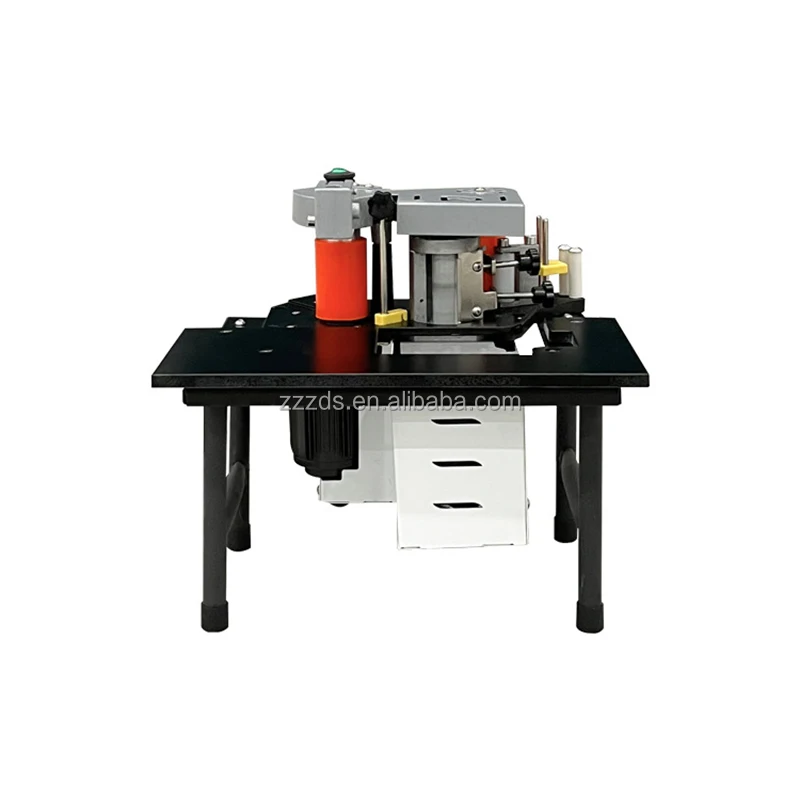
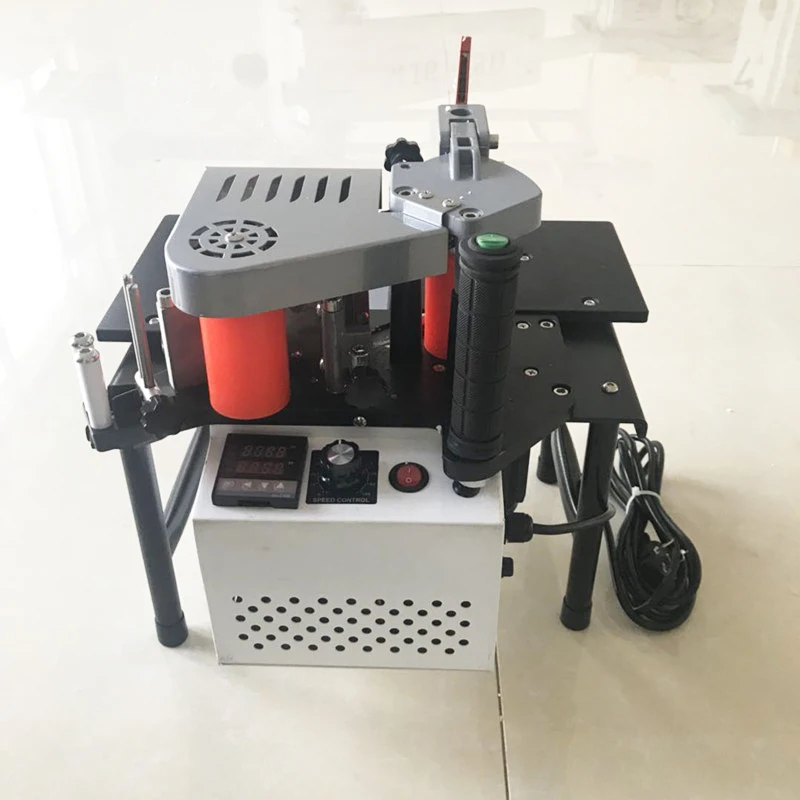
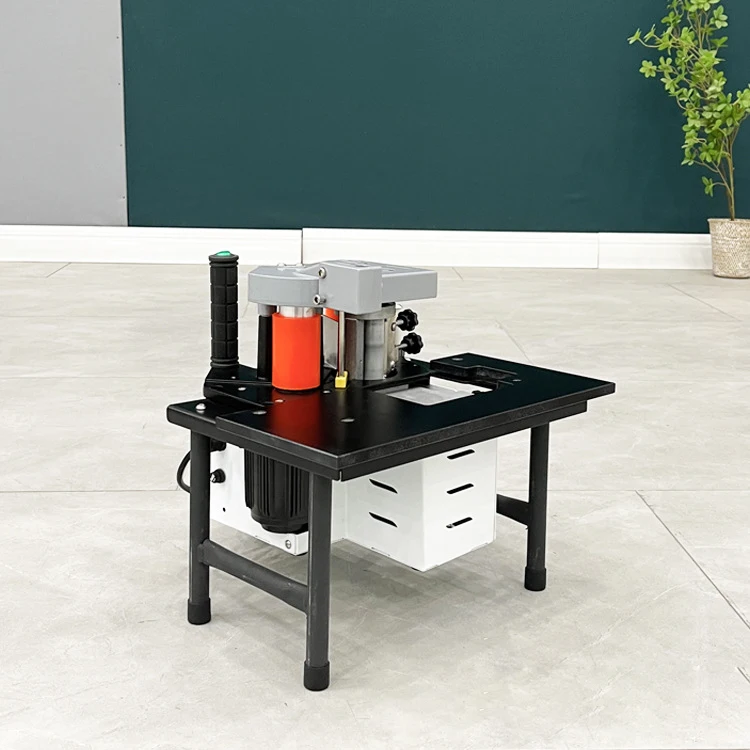
Verified Tolerance in Hand-Held Edge Work — Portable Edge Banding Machine delivers ±0.02mm precision on curved and straight panel edges, backed by a four-stage QC process that includes a pre-shipment test on your actual board material.
Technical Specifications
| Parameter | Value |
|---|---|
| Product Type | Portable Edge Banding Machine |
| Shape of Edge-banding Plates | Curved, Straight and Special-shaped Sheet |
| Edge Thickness Range | 0.3–3mm |
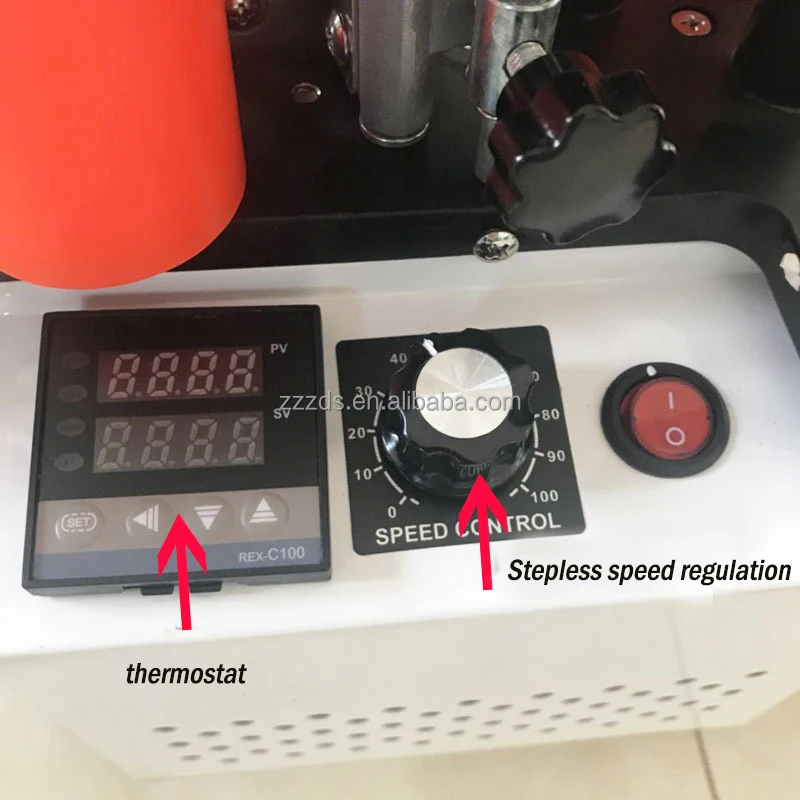
| Edge Sealing Speed | 0–6 m/min |
| Panel Thickness Range | 7–60mm |
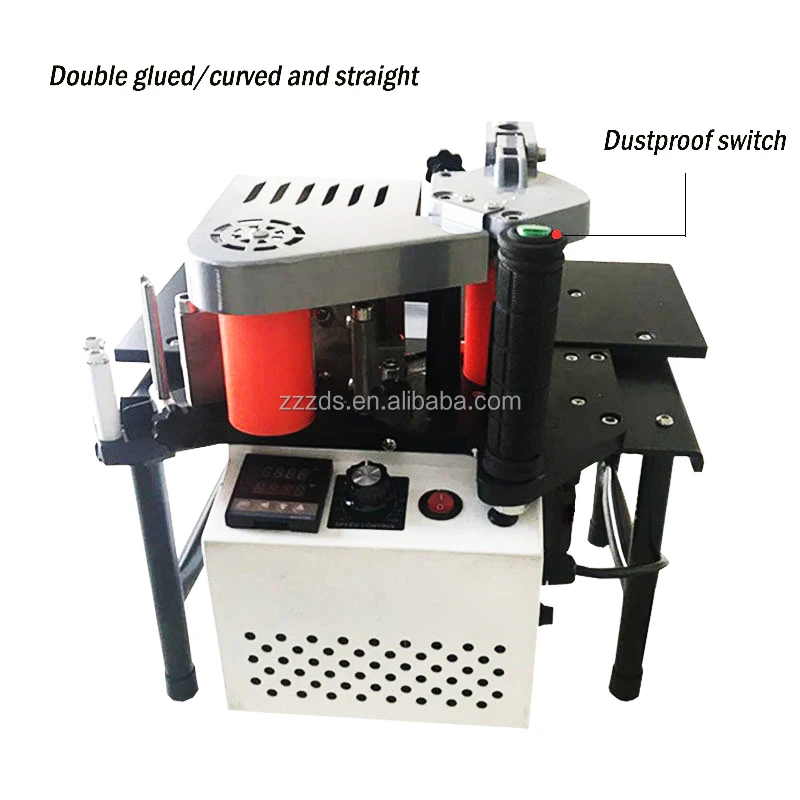
| Gluing Method | Double-sided gluing |
| Glue Pot Volume | 1000 ml |
| Machine Weight | 14 kg |
| Assembly State | Portable / hand-held |
| Plug Options | EU / AU / UK / USA / CN |
| Logo Customization | Available |
| Warranty | 1 year (factory defect spare-part replacement) |
Application Suitability
| Application | Material or Output |
|---|---|
| Custom furniture curved-edge banding | MDF and plywood panels with PVC edge banding |
| On-site joinery and installation touch-ups | Particleboard and blockboard cut on-site |
| Small workshop straight-edge finishing | Melamine-faced chipboard and veneered panels |
| Special-shaped cabinet door and countertop edges | Solid wood panels with curved or contoured profiles |
| Prototyping and short-run edge work | Plywood and MDF sample boards for client approval |
Why the Voltage Question Must Come Before the Quote
Confirming local voltage and frequency before ordering prevents a machine that arrives dead on the workshop floor.
I have seen portable edge banders sit in crates for weeks because the buyer assumed 220V single-phase was universal. In reality, export markets range from 110V/60Hz to 240V/50Hz, and a mismatched motor will either stall under load or burn out within the first production run. The Portable Edge Banding Machine manufacturer should provide an electrical schematic confirming the exact winding configuration matched to your site power before the unit ships. [NEED_CITE: voltage and frequency standards by export market]
Skipping this step means discovering the incompatibility only after the machine has cleared customs, at which point returning it or rewinding the motor costs far more than a five-minute conversation at the inquiry stage.
Where a Hand-Held Unit Fits in Your Production Flow
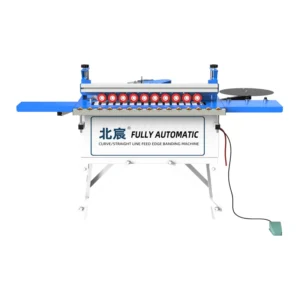
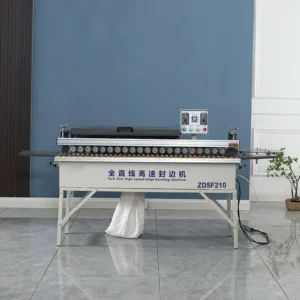
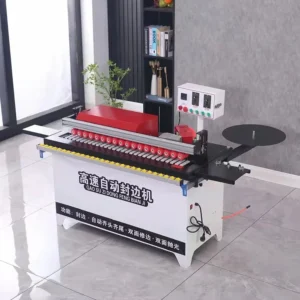
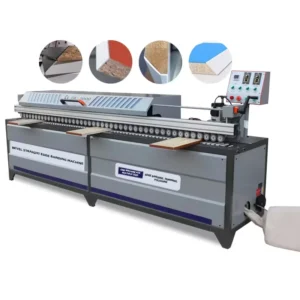
A full automatic edge bander handles high-volume straight runs, but custom furniture shops regularly encounter curved countertops, radius cabinet doors, and one-off special-shaped panels that cannot feed through a conveyor-based system. This portable unit fills that gap, covering edge sealing on profiles the main line was never designed to process. Positioning it as a supplementary workstation rather than a primary production machine keeps expectations realistic and output quality consistent.
Matching Board Substrate to Glue Behaviour
Different panel cores absorb adhesive at different rates. Recycled particleboard soaks up glue faster than virgin MDF, which changes the open time and bonding strength at the edge. Running a test piece on the exact substrate you intend to produce is the only reliable way to set feed speed and glue temperature. The double-sided gluing system and 1000 ml glue pot on this machine allow operators to adjust application volume by hand, giving enough latitude to compensate for substrate variation without changing hardware. [NEED_CITE: adhesive penetration rates across engineered wood substrates]
Reading the Numbers That Matter for Edge Quality
Panel thickness range of 7–60mm covers the vast majority of board stock used in cabinet and furniture production, from thin shelf panels to thick worktops. Staying within this window ensures the pressure roller maintains even contact along the full edge height. Edge thickness capacity from 0.3 to 3mm accommodates both thin PVC foil and thicker solid-wood banding, though operators should note that the upper limit demands slower feed rates to let the adhesive fully wet the bonding surface. The variable speed control between 0 and 6 m/min gives the operator manual command over pace, which is critical when switching between straight runs and tight curves where the banding material must stretch or compress around the radius. Net weight of 14 kg keeps the unit manageable for one person to carry between workstations or onto a job site, while still providing enough mass to resist vibration during operation.
The Cost of Skipping a Pre-Shipment Substrate Test
Ordering on specification alone leaves edge adhesion unverified until the machine reaches your floor. By that point, production schedules are already committed and operators are waiting. I have watched factories accept delivery only to discover that their specific grade of particleboard produced visible glue lines on every panel, forcing a round of rework that delayed an entire kitchen run. A factory test record generated on your own board samples eliminates this risk before the crate leaves the shipping dock. [NEED_CITE: common edge banding adhesion failures on recycled particleboard]
What Manufacturing Depth Means for This Product Class
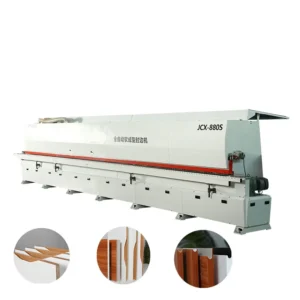
The patented cutting mechanism held to ±0.02mm tolerance is not a generic claim — it is verified through a four-stage QC sequence that runs from incoming material inspection through to pre-shipment operation on real board stock. Engineers configure the voltage, plug type, and control language to match the destination market before assembly begins, rather than adapting a standard unit after the fact. The full product family — from this portable model through to automatic pre-milling lines — lets a workshop scale capacity without switching supplier, keeping spare parts and service knowledge in one place. Factory visits are open so buyers can watch their own material run on the machine before signing off on the order.
Documentation & Verification
- Machine specification sheet confirming panel thickness range and edge capacity for your product mix
- Electrical schematic with voltage and frequency locked to your facility power supply
- Factory test record on your supplied board samples showing edge adhesion and trim quality
- Operation and maintenance manual in the operator’s working language
- CE declaration of conformity covering this specific portable unit configuration
- Packing photographs documenting condition and accessory completeness before dispatch
Installation, Commissioning & Support
- Requires a dedicated single-phase circuit matching the confirmed voltage and frequency specified on the electrical schematic
- Arrives fully assembled; operator needs only to fill the 1000 ml glue pot and conduct a warm-up cycle
- First-run commissioning should use offcut panels from your regular stock to verify glue penetration and trim settings
- Daily cleaning of the glue roller and pressure wheel prevents adhesive build-up that degrades edge finish quality
- Spare PVC trimming blades and replacement glue rollers included in the initial parts kit for the first maintenance interval
- Technical guidance available remotely for parameter adjustment when switching between substrate types
What to Share When Requesting a Quotation
Send the exact board material, edge banding type, and typical panel dimensions your workshop processes so the configuration can match your real production conditions. Confirm your site voltage, frequency, and preferred plug format to avoid rework after shipment. If you are evaluating this unit alongside an automatic edge bander, describe your current line layout and daily panel volume so the engineer can advise whether the portable model fills a supplementary role or if a different tier in the range is a better fit.
Frequently Asked Questions
Q: How do I decide between this portable edge bander and a full automatic machine?
A: The portable unit handles curved, special-shaped, and low-volume edges that cannot pass through a conveyor-fed automatic line. If your daily output consists mainly of straight panels in batch quantities, an automatic machine is the correct primary choice, with the portable model reserved for odd shapes and on-site touch-up work.
Q: What happens if my local voltage does not match the standard machine?
A: Voltage and frequency are confirmed during the specification stage before assembly. The electrical schematic is adjusted so the motor winding, heater element, and control circuit all match your facility supply, preventing damage or underperformance on arrival.
Q: How can I verify edge quality on curved panels before committing to an order?
A: Send samples of your actual board material and preferred edge banding for a pre-shipment factory test. The test record documents glue adhesion, trim finish, and edge profile conformity on your specific substrates before the machine is crated for dispatch.
Q: Is the control interface and manual available in my local language?
A: The operation panel labels and maintenance manual can be produced in the agreed language during order confirmation. Specify your requirement at the inquiry stage so the documentation is ready when the machine ships.
Q: Can I visit the factory and run my own material on the machine?
A: Factory visits are welcomed. You can bring or ship your board samples in advance, watch the portable unit process them, and inspect edge quality firsthand before finalizing the order specification.