Description
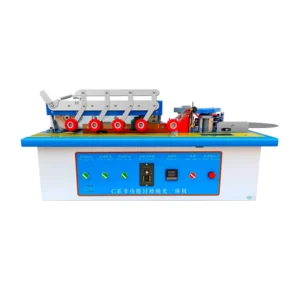
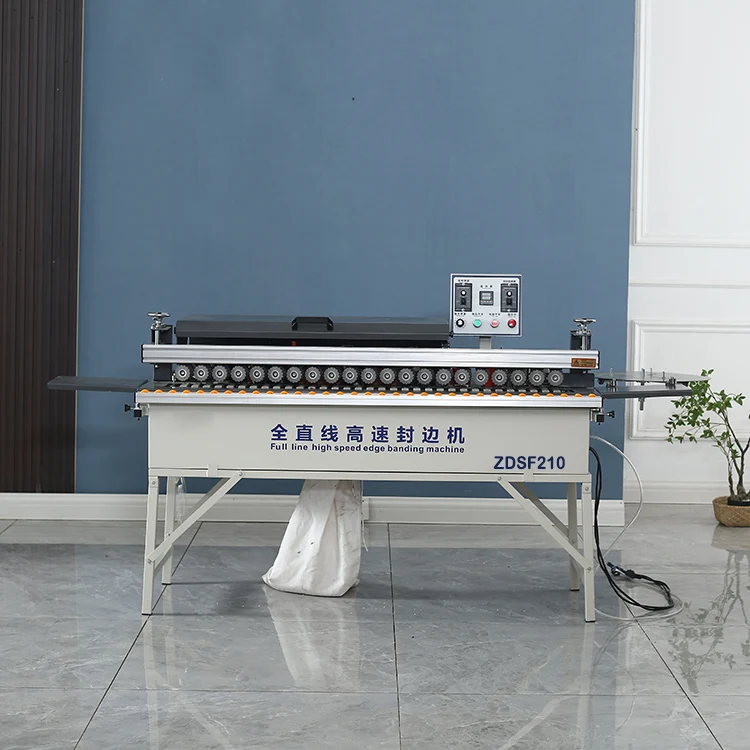
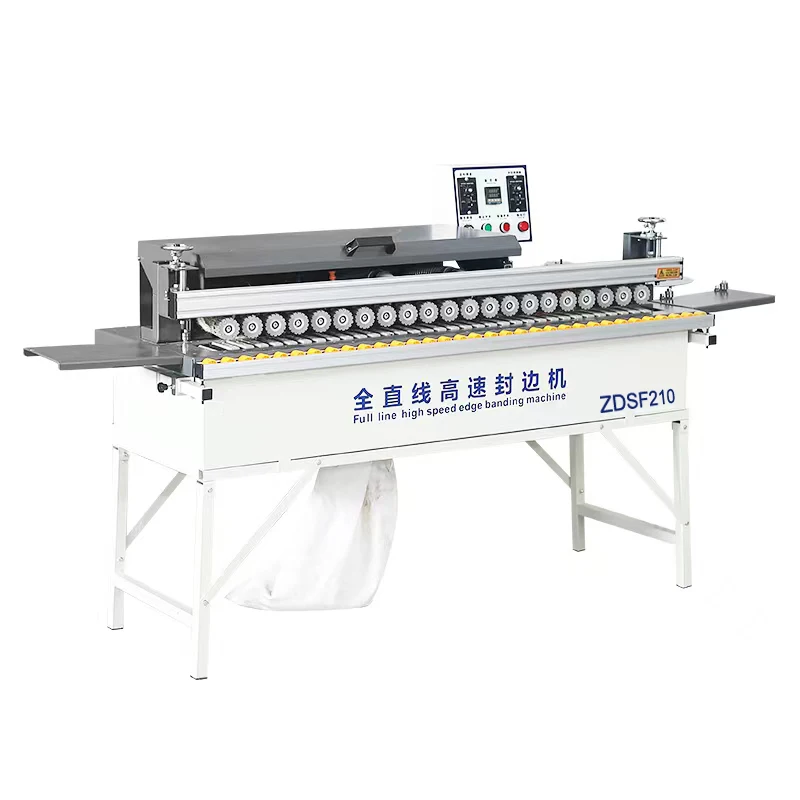
Verified Tolerance in Every Cut — the ZDSF210 portable automatic edge banding machine ships with a factory test record confirming ±0.02mm edge finish on your exact panel stock before it leaves our Ningjin floor.
Technical Specifications
| Parameter | Value |
|---|---|
| Model | ZDSF210 |
| Product Type | Portable Automatic Edge Banding Machine |
| Edge Type | Straight line |
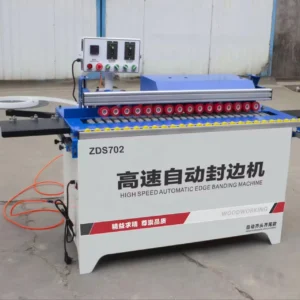
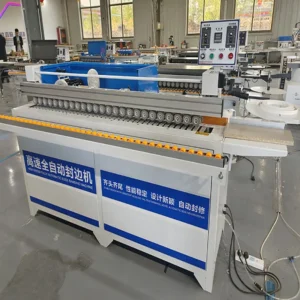
| Function Sequence | Automatic plate feeding, double-sided gluing, upper and lower polishing, automatic trimming, wood cleaning system up and down |
| Voltage & Frequency | 220V / 50Hz (configurable from 110V to 440V) |
| Rated Power | 4 kW |
| Suction Power | 1200 W |
| Belt Power | 25 W |
| Transmission Power | 120 W |
| Heating Power | 800 W |
| Polishing Power | 180 W × 2 |
| Trimming Power | 800 W × 2 |
| Rated Air Pressure | 0.4–0.6 MPa |
| Feed Speed | 0–14 m/min |
| Panel Thickness Range | 10–50 mm |
| Edge Strip Thickness Range | 0.5–2.5 mm |
| Glue Pot Capacity | 1000 ml |
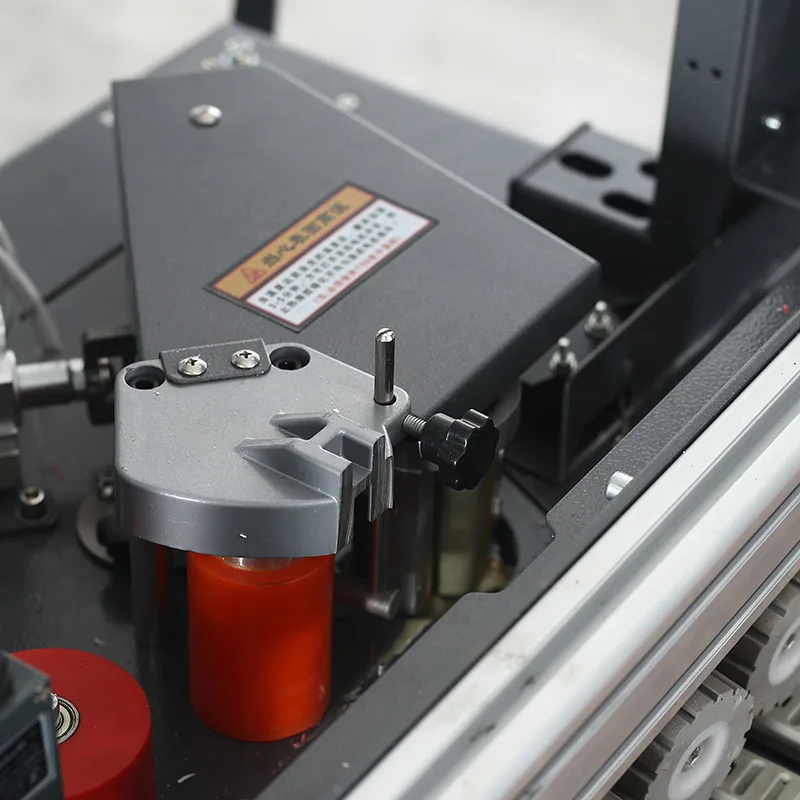
| Trimming Station | Dual high-speed motors with precision guide rail sliders, 4-edge 1.5 alloy trimming knife, profiling trimming |
| Scraping | Profile scraping for smoother edges |
| Cleaning | Upper and lower board cleaning to remove excess glue lines |
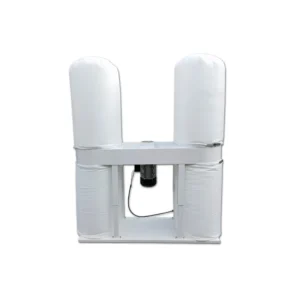
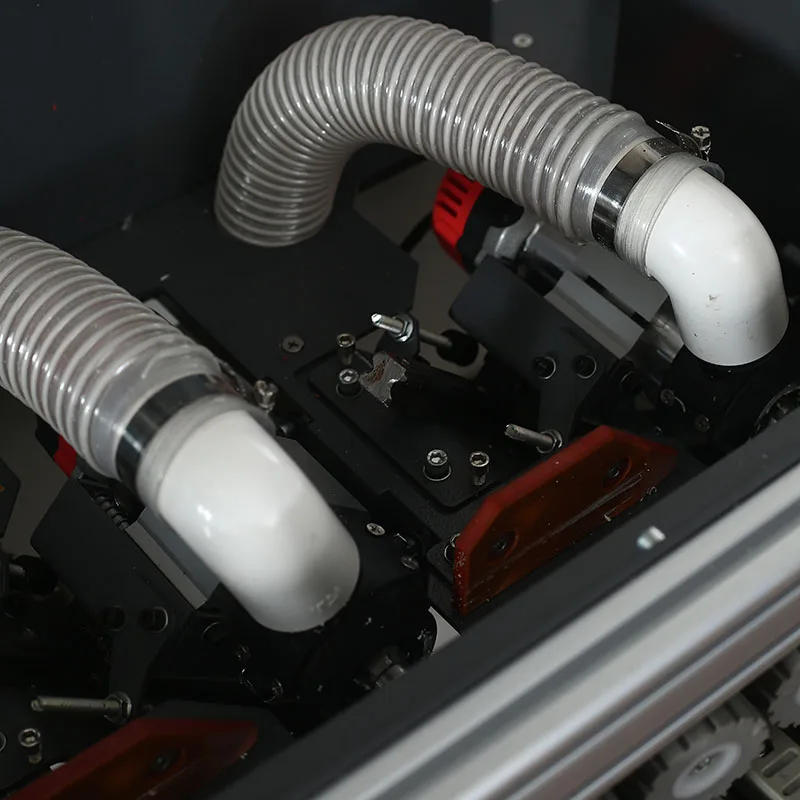
| Dust Extraction | Large diameter closed dust collector |
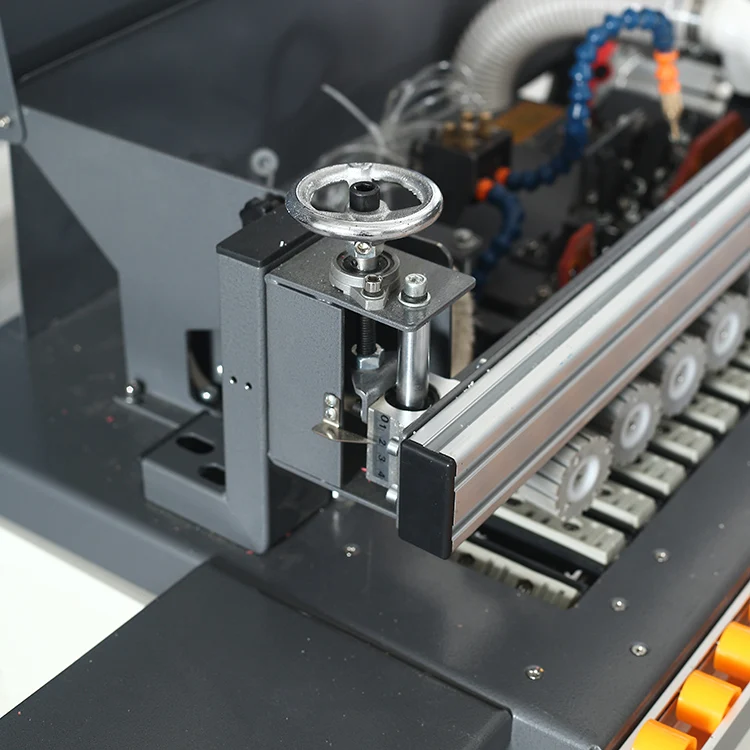
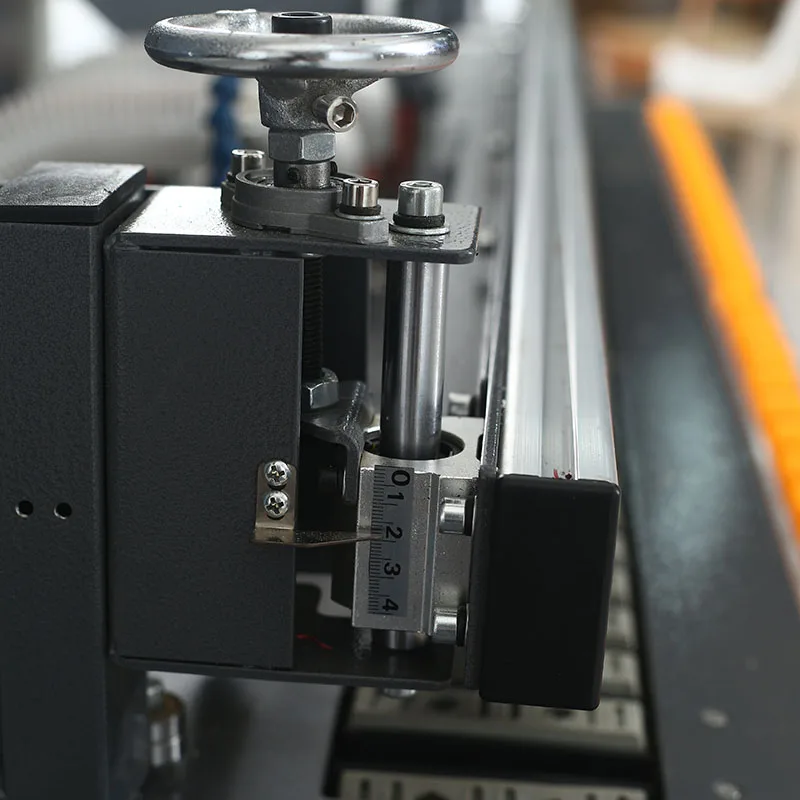
| Pressure Beam | Integrated all-aluminum pressure beam with rotating hand crank and precise scales |
| Feed Mechanism | Double rows of inner inclined pressure rollers |
| Control Panel | Multi-function button operation |
| Overall Dimensions (L×W×H) | 2100 × 570 × 1120 mm |
| Net Weight | 140 kg |
| Standards | CE declaration of conformity, ISO 9001 certified manufacturing |
Application Suitability
| Application | Material or Output |
|---|---|
| Custom cabinet straight-line edge sealing | MDF, particleboard, plywood with PVC or veneer edge banding |
| Small joinery workshop panel processing | Solid wood panels and melamine-faced chipboard up to 50 mm thick |
| On-site furniture installation trimming | Pre-cut panels requiring portable edge finishing at the job site |
| Prototype and short-run panel edging | Low-volume batch runs where a full-size line is not justified |
Why Feed Speed Alone Will Not Tell You If This Machine Fits Your Shop
Matching feed rate to your panel substrate and glue open time determines whether edges hold or delaminate on the assembly bench.
I once specified a portable unit for a Shandong cabinet maker running high-density particleboard. The feed speed was fine on paper, but the glue parameters did not match the board density, and edges started lifting within hours. The line sat idle for two days while we recalibrated temperature and pressure. [NEED_CITE: glue open time and substrate density interaction in edge banding] When sourcing a portable automatic edge banding machine for sale, the number on the spec sheet is only the starting point — the real question is whether the machine can maintain consistent adhesion across the specific boards you run every day.
Where the ZDSF210 Sits in a Growing Workshop
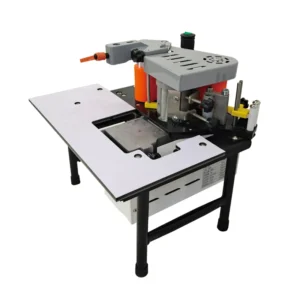
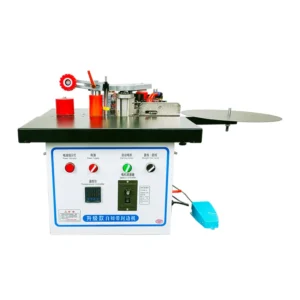
This model occupies the compact, portable tier within a broader machine family that extends upward to full-function pre-milling edge banders. A joinery shop moving from manual edge banding to its first automatic unit typically starts here, processing straight-line edges on MDF, plywood, and particleboard without committing to a full production line footprint. The 2100 mm length and 140 kg weight mean the ZDSF210 can be relocated within a workshop or transported to a job site, which matters for installers who finish cabinetry on location.
As volume grows, the same product family offers mid-range and production-grade models with additional stations — pre-milling, corner rounding, buffing — so a buyer who starts with this portable automatic edge banding machine for sale can scale without switching suppliers or relearning a new control interface. The upgrade path stays within one configuration philosophy, reducing the learning curve when throughput demands increase. [NEED_CITE: edge banding machine station configurations and throughput tiers]
Straight-Line Focus and What It Means for Your Panel Mix
The ZDSF210 handles straight-line edges only, which covers the majority of cabinet carcase and shelving work in a small to mid-scale joinery operation. Curved or contoured edges require a separate shaping-and-banding station, and buyers processing a high proportion of shaped components should evaluate whether a full-function model with a profiling unit better matches their daily mix. The 0.5–2.5 mm edge strip thickness range accommodates standard PVC, ABS, and thin veneer tapes commonly used in custom furniture, while the 10–50 mm panel thickness range covers everything from thin shelving stock to heavy worktop substrates.
Reading the Specs That Actually Affect Edge Quality
The integrated all-aluminum pressure beam with rotating hand crank and dual precision scales is the first component worth examining closely. Aluminum resists warping under the thermal load of the 800 W heating element, and the dual scales let operators set the beam position repeatably when switching between 18 mm MDF and 38 mm blockboard — a common changeover in custom cabinet shops. Inconsistent beam pressure is a frequent cause of visible glue lines on lighter substrates.
The dual high-speed trimming motors mounted on precision guide rail sliders, paired with 4-edge 1.5 alloy profiling knives, determine how cleanly the edge strip is trimmed flush with the panel face. Blunt or misaligned trimming knives leave micro-steps that show up under lacquer or when panels are assembled into visible carcase joints. Having four usable edges on each knife extends the interval between blade changes, which matters when the machine runs daily in a small shop without a dedicated tool setter.
Feed speed interacts directly with glue pot temperature and the 1000 ml glue capacity. At the upper 14 m/min feed rate, the glue must transfer and set quickly enough to hold before the panel reaches the trimming station; at lower speeds, excess glue can squeeze out and require more aggressive scraping. The double-sided gluing system applies adhesive to both the panel edge and the strip, improving bond strength on porous substrates like particleboard where single-sided application often starves the joint. [NEED_CITE: double-sided gluing adhesion performance on porous wood-based panels]
The Hidden Cost of Skipping the Voltage Conversation
Buyers who select a portable automatic edge banding machine for sale based on feed speed and price, then discover their workshop runs on a different voltage or frequency, face weeks of delay while transformers are sourced or motors are rewound. [NEED_CITE: voltage and frequency standards by export market] The ZDSF210 is specified at 220V / 50Hz but is configurable from 110V to 440V, and confirming local supply before production begins avoids a machine that arrives electrically incompatible. A 60Hz supply running a 50Hz-rated motor will spin the trimming and polishing motors faster than designed, accelerating bearing wear and altering the glue roller surface speed relative to the feed belt.
Why Source This Model Through This Range
The ZDSF210 is built on the same manufacturing floor as the full-function pre-milling edge banders, meaning component sourcing, precision grinding standards, and four-stage QC apply across the entire product family rather than being reserved for top-tier models. The patented cutting mechanism used in the trimming station delivers the verified tolerance claimed in the specification sheet — not a nominal figure that degrades after the first month of use. Voltage, control panel language, and plug configuration are confirmed during the quotation stage, not left as a surprise at commissioning. An engineer reviews your panel types and production volume before recommending whether this portable tier or a mid-range model better matches your actual workflow, and a formal quotation follows within one working day. Factory visits are open to buyers who want to see the machine run their own substrate before committing to an order.
Documentation & Verification
- Machine specification sheet confirming feed speed, panel thickness range, and trimming station configuration
- Electrical schematic with voltage and frequency matched to your local supply before dispatch
- Factory test record demonstrating edge finish on your actual panel substrate and edge banding material
- CE declaration of conformity and ISO 9001 certificate available for download
- Operation and maintenance manual in the agreed language with spare parts list
Installation, Commissioning & Support
- 220V single-phase supply with dedicated 4 kW circuit; confirm local voltage and frequency before shipment
- 2100 × 570 mm footprint fits standard workshop doors; verify access route for the 140 kg unit
- Rated air pressure of 0.4–0.6 MPa requires a clean, dry compressed air line with regulator
- First-run calibration of glue temperature, beam pressure, and trimming knife alignment on your panel stock
- 1000 ml glue pot capacity suits short to medium runs; refill procedure covered in operator training
- Large diameter closed dust collector connects to existing workshop extraction or a standalone unit
What We Need to Configure the Right Machine for You
Share the panel materials you process most often — MDF, particleboard, plywood, or solid wood — along with typical panel thickness and the edge banding material and width you run. Let us know your local voltage and frequency, the language your operators need on the control panel, and whether the machine will stay in one location or move between sites. If you have existing upstream saws or downstream assembly stations, tell us the feed height and throughput so we can confirm the ZDSF210 integrates without bottlenecks.
Frequently Asked Questions
Q: How does the ZDSF210 portable model compare to full-function edge banders in the same product family?
A: The ZDSF210 covers straight-line edge banding with gluing, trimming, scraping, polishing, and cleaning in a compact 2100 mm footprint. Full-function models in the same range add pre-milling, corner rounding, and buffing stations for higher-volume production and contoured edges. The portable model suits workshops processing straight panels at moderate volumes, while the full-function units serve shops running continuous daily output across a wider panel mix.
Q: What panel materials and edge strip thicknesses can this machine handle?
A: The ZDSF210 processes MDF, particleboard, plywood, and solid wood panels from 10 to 50 mm thick on straight-line edges. Edge strip thickness ranges from 0.5 to 2.5 mm, covering standard PVC, ABS, and veneer tapes. The double-sided gluing system and 800 W heating element maintain bond consistency across porous substrates like particleboard as well as denser materials like MDF.
Q: What voltage configurations are available and how is local electrical compatibility confirmed?
A: The standard configuration is 220V / 50Hz, but the machine is configurable from 110V to 440V to match local supply standards. Voltage and frequency are confirmed during the quotation stage, and an electrical schematic reflecting your exact supply is included in the documentation package. This prevents the common problem of machines arriving with incompatible motors or control transformers.
Q: Is a factory visit or sample processing test available before placing an order?
A: Yes. Buyers can send representative panel stock and edge banding material for a sample processing test, or visit the Ningjin facility to watch the machine run their exact substrate. The factory test record from that run ships with the machine, providing a documented baseline for edge finish quality and trimming accuracy against your production requirements.
Q: What documentation ships with the machine and what after-sales support is provided?
A: Each ZDSF210 ships with a specification sheet, electrical schematic, factory test record, CE declaration, ISO 9001 certificate, operation manual in the agreed language, spare parts list, and packing photographs. Installation guidance covers air supply, electrical connection, and first-run calibration. After-sales support includes remote troubleshooting and spare parts supply for the trimming knives, glue rollers, and polishing wheels.