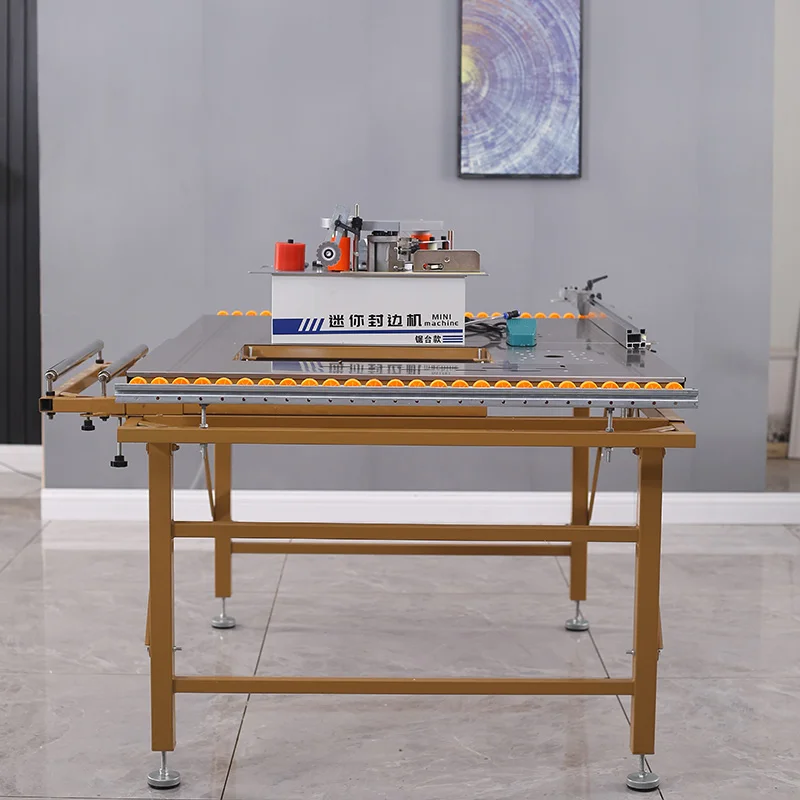
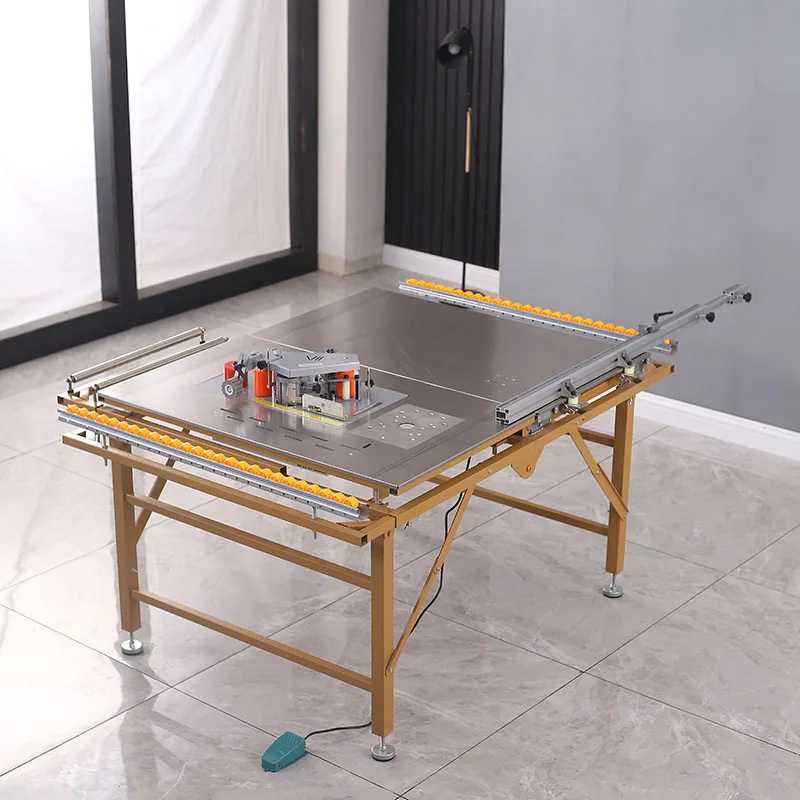
Description
Precision-ground portable banding — verified tolerance control on curved and straight profiles, built by a manufacturer with two decades of woodworking machinery experience and serving workshops across varied production environments.
Technical Specifications
| Parameter | Value |
|---|---|
| Product Type | Portable Edge Banding Machine |
| Voltage | 220V single-phase |
| Rated Power | 825W |
| Heating Time | 5–10 min |
| Air Pressure | 0.4–0.6 MPa |
| Glue Pot Capacity | 1000 ml |
| Edge Banding Speed | 0–10 m/min (variable, operator-controlled) |
| Edge Pattern Compatibility | Curves, straight lines, special-shaped lines |
| Overall Dimensions (L×W×H) | 50×30×27 cm |
| Net Weight | 13.5 kg |
| Key Features | Compact footprint, variable feed speed, single-phase operation, lightweight portable design |
Application Suitability
| Application | Material or Output |
|---|---|
| Custom cabinet edge finishing | MDF and plywood panels with PVC or melamine banding |
| On-site furniture installation adjustments | Particleboard and MDF field-cut edges requiring immediate banding |
| Small workshop curved profile work | Veneer and PVC edge banding on radiused panel corners |
| Joinery startup production | Mixed straight and curved edges on panel substrates up to workshop capacity |
| Repair and rework stations | Replacement banding on previously assembled cabinet and shelving units |
Why Voltage Compatibility Matters Before You Commit to a Portable Curve Edge Bander
A portable edge banding machine that does not match your local grid is a 13.5 kg paperweight the day it arrives.
I have watched workshops lose entire commissioning weeks because the voltage question was an afterthought on the purchase order. A 220V single-phase portable curve edge bander for sale sounds right until you realize your site runs on a different frequency or phase configuration. The heating element and glue pot depend on stable input — fluctuating voltage shifts melt temperature, which then shows up as inconsistent adhesion on PVC and veneer [NEED_CITE: voltage and frequency standards by export market]. Asking about electrical compatibility first is not caution, it is the difference between plugging in and filing a return claim.
Compact Footprint Without Sacrificing Pattern Versatility
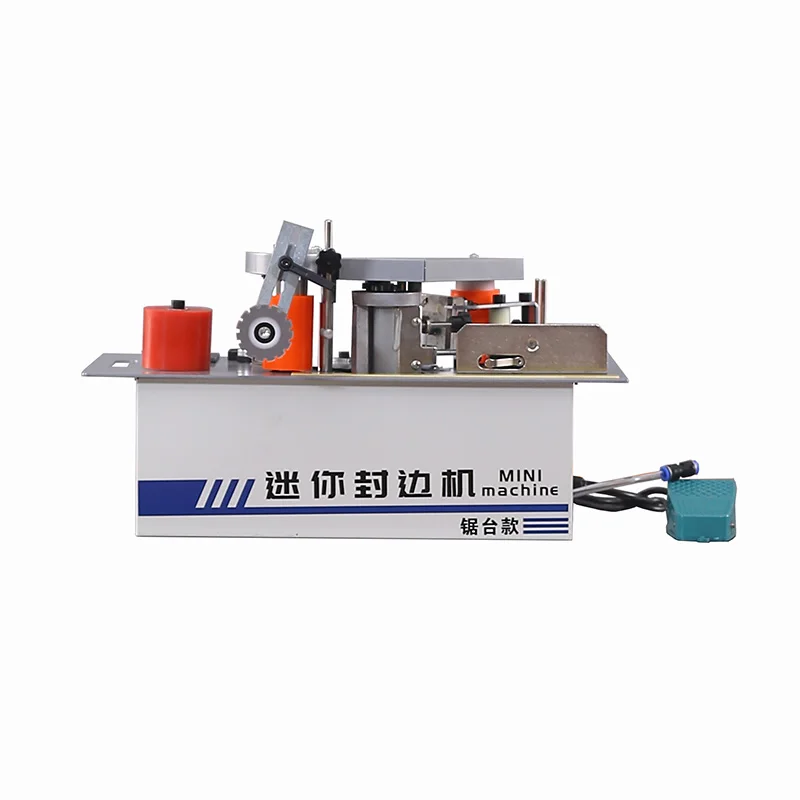
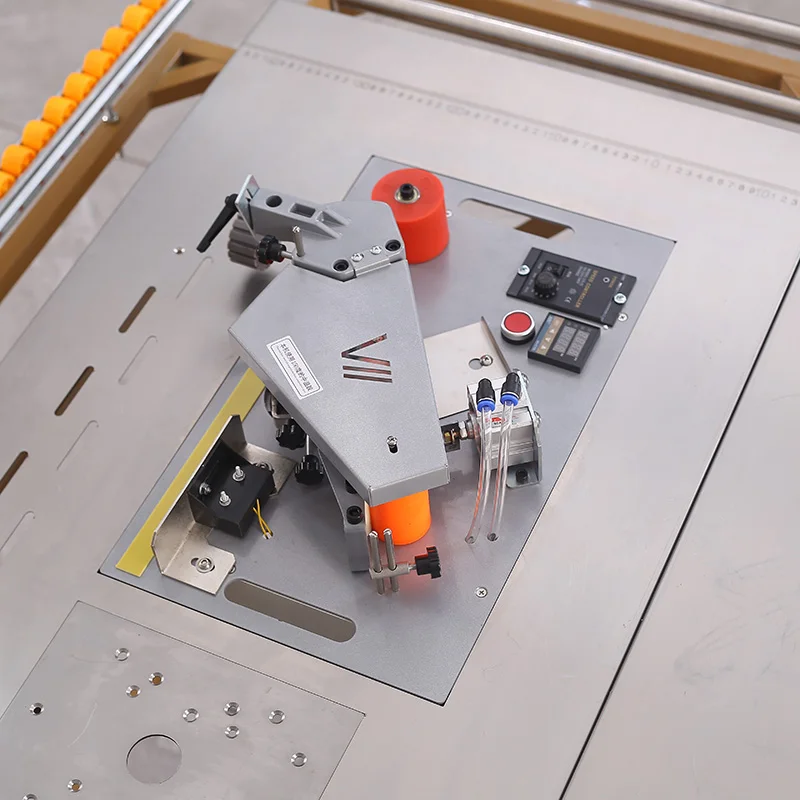
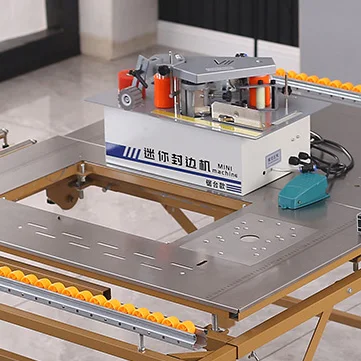
This portable edge banding machine handles curves, straight lines, and special-shaped profiles within one 50×30×27 cm body. For a small joinery shop, that means one unit covers the radius corners on cabinet doors and the straight runs on shelving — without moving panels to a stationary line. The 13.5 kg weight lets a single operator relocate the unit between benches or carry it onto an installation site, which matters when you are finishing field-cut panels that cannot travel back to the shop floor.
Operator-Controlled Feed Speed for Substrate Sensitivity
The 0–10 m/min variable feed puts the operator in direct control of how fast banding meets substrate. Softer PVC tends to stretch and curl at higher feed rates on curved sections; dropping the speed gives the adhesive more dwell time and reduces visible glue lines on porous MDF edges. This level of manual control is exactly what a portable curve edge bander for sale should offer when the job mix shifts between veneer, melamine, and PVC throughout a single production day [NEED_CITE: adhesive dwell time and edge banding quality on porous substrates].
Reading the Specs That Actually Affect Your Edge Quality
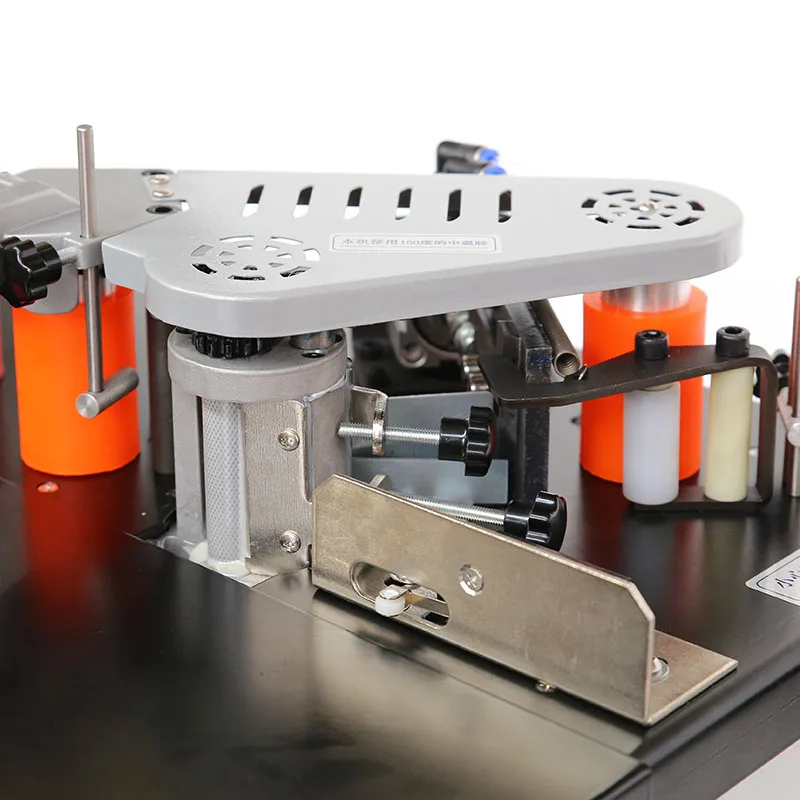
The 825W rated power drives both the glue pot heater and the feed mechanism simultaneously. A 1000 ml glue pot capacity is sufficient for a full shift of intermittent banding work but will require refilling during continuous high-volume runs — planning refill breaks prevents cold-glue starts that leave un-bonded sections. The 5–10 minute heating time reflects a thermal mass appropriate for portable use; larger pots take longer to reach stable melt temperature, which would delay first-piece output each morning. Air pressure at 0.4–0.6 MPa is standard for the pneumatic pressure roller that maintains contact force on curved profiles — dropping below this range weakens adhesion on concave radii, while exceeding it can crush thin veneer banding before the adhesive sets.
What Happens When the Portable Unit Is the Wrong Fit for Your Volume
A workshop running continuous eight-hour production on a portable edge bander will exhaust the 1000 ml glue pot repeatedly and push the 825W motor toward its thermal limit. I have seen shops buy a portable unit for cost reasons, then discover their daily output demands a stationary automatic line with pre-milling and multi-station trimming. The portable machine is not at fault — it was specified for the wrong production volume [NEED_CITE: matching edge banding machine class to daily throughput requirements]. Mismatched capacity shows up as overheating, inconsistent edge finish, and operator fatigue from constant manual feeding.
Why Procurement Through This Channel Works for Your Workshop
The configuration recommendation comes from an engineer who reviews your panel thickness, banding material, and daily volume before issuing a formal quotation — typically within 24 hours. Voltage customization from 110V to 440V is available, confirmed on the electrical schematic before production begins. Every unit passes four-stage quality control including incoming material inspection, in-process checks, finished product testing, and pre-shipment verification. OEM branding and private-label capability are standard for distributors building inventory under their own name. Factory visits are welcomed so you can witness assembly and test-run your specific panel and banding combination before the machine ships.
Documentation & Verification
- Machine specification sheet confirming 220V single-phase input and 825W rated power for your electrical planning
- Electrical schematic with voltage and frequency confirmation matched to your local grid before production
- CE declaration of conformity and ISO 9001 certificate from the manufacturing facility
- Operation and maintenance manual written in your agreed language with curve and straight-edge setup procedures
- Factory test record documenting edge banding performance on your specified panel material and thickness
- Spare parts list covering glue pot, pressure roller, and feed mechanism consumables
Installation, Commissioning & Support
- Single-phase 220V connection on a dedicated circuit rated for the 825W draw to prevent voltage drop during heating cycles
- Stable bench surface required — the 50×30×27 cm footprint needs a level, vibration-free workspace for consistent banding pressure
- Air supply line rated to 0.6 MPa with a regulator and moisture trap installed upstream of the machine inlet
- First commissioning includes glue pot temperature calibration and feed speed adjustment for your specific PVC or veneer material
- Operator training covers curve banding technique, glue refill timing, and daily pressure roller inspection
- Spare parts kit available covering high-wear items identified during pre-shipment testing
Starting the Conversation on the Right Foot
Send your typical panel substrate, edge banding material type, and the range of curve radii you encounter most often. Include your local voltage and frequency so the electrical schematic is confirmed before build. If you are replacing manual banding with this unit, note your current daily piece count so the engineer can confirm whether a portable edge banding machine manufacturer should recommend this model or a higher-throughput stationary line.
Frequently Asked Questions
Q: What panel thickness and edge banding material types does this portable unit support?
A: The unit is designed for PVC, melamine, and veneer edge banding on MDF, plywood, and particleboard substrates. Panel thickness range is confirmed during the pre-order configuration review based on your specific material stack. The 0–10 m/min variable feed lets the operator adjust for thinner veneers that require slower application speeds on curved sections.
Q: How do I verify the voltage and frequency match my local power supply before ordering?
A: The standard configuration is 220V single-phase, but customization from 110V to 440V is available. You provide your local voltage and frequency during the inquiry stage, and the electrical schematic is confirmed in writing before production begins. This prevents the machine from arriving with incompatible electrical specifications that would delay commissioning.
Q: What is the tolerance and edge finish quality compared to a stationary automatic edge bander?
A: A portable unit relies on operator-controlled feed speed and manual guidance along the panel edge, which means finish quality depends on technique and consistency. Stationary automatic banders with pre-milling and multi-station trimming achieve tighter tolerance on high-volume straight runs. The portable edge banding machine is the correct choice for low-to-medium volume mixed curve and straight work where floor space and portability matter more than fully automated throughput.
Q: Can this machine be integrated into a larger production line as volume grows?
A: The portable unit operates as a standalone station and does not integrate mechanically into a conveyor-linked line. When volume grows beyond what manual feeding supports, the transition is typically to a stationary automatic edge bander within the same manufacturer’s product family — preserving familiarity with controls, glue systems, and support channels while gaining automated feed and trimming.