

Description
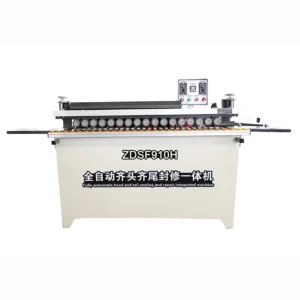
Full Catalogue Depth — The ZDS290 sits within a complete model range spanning entry-level to full-function pre-milling edge banders, allowing workshops to map current needs against future production stages without changing suppliers.
Technical Specifications
| Parameter | Value |
|---|---|
| Model | ZDS290 |
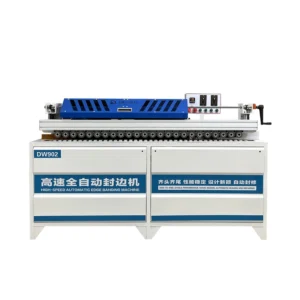
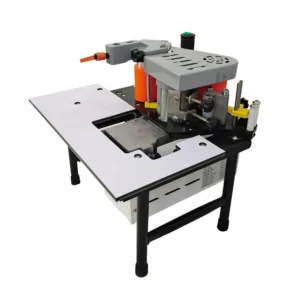
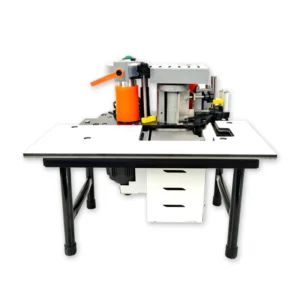
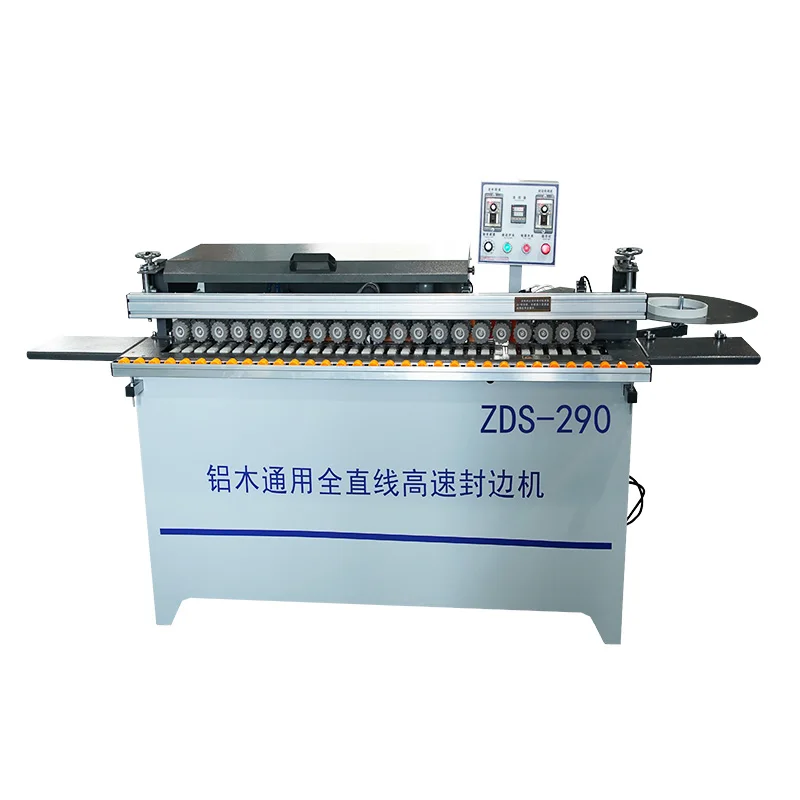
| Product Type | Aluminum-Wood Universal Full Linear High-Speed Edge Banding Machine |
| Rated Voltage | 220V (configurable from 110V to 440V) |
| Rated Power | 4165W |
| Edge Banding Speed | 6 m/min (basis not stated in source — confirm feed speed unit) |
| Conveying Motor | 180W |
| Rated Air Pressure | 0.6–0.8 MPa |
| Machine Size | 150 × 57 × 96 cm |
| Strip Thickness Range | 0.5–2.5 mm |
| Sheet Thickness Range | 10–50 mm |
| Glue Pot Capacity | 1000 ml |
| Glue Pot Heating | 800W (5–10 min heat-up) |
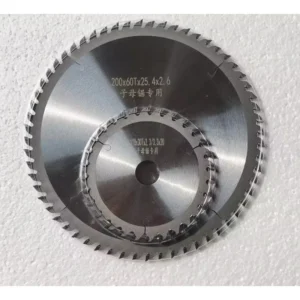
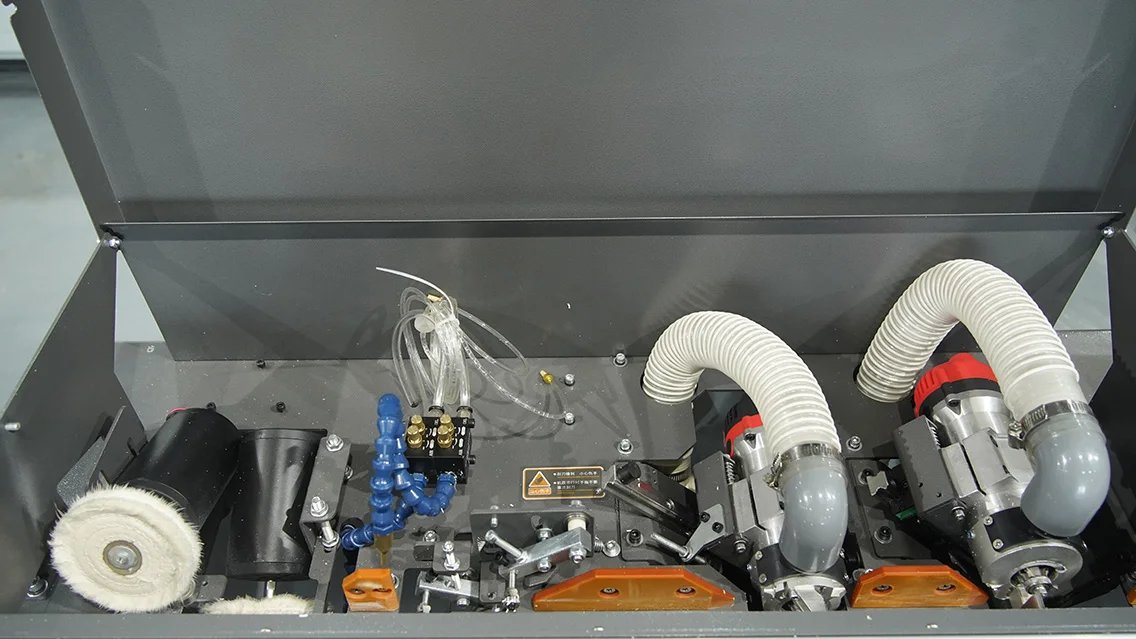
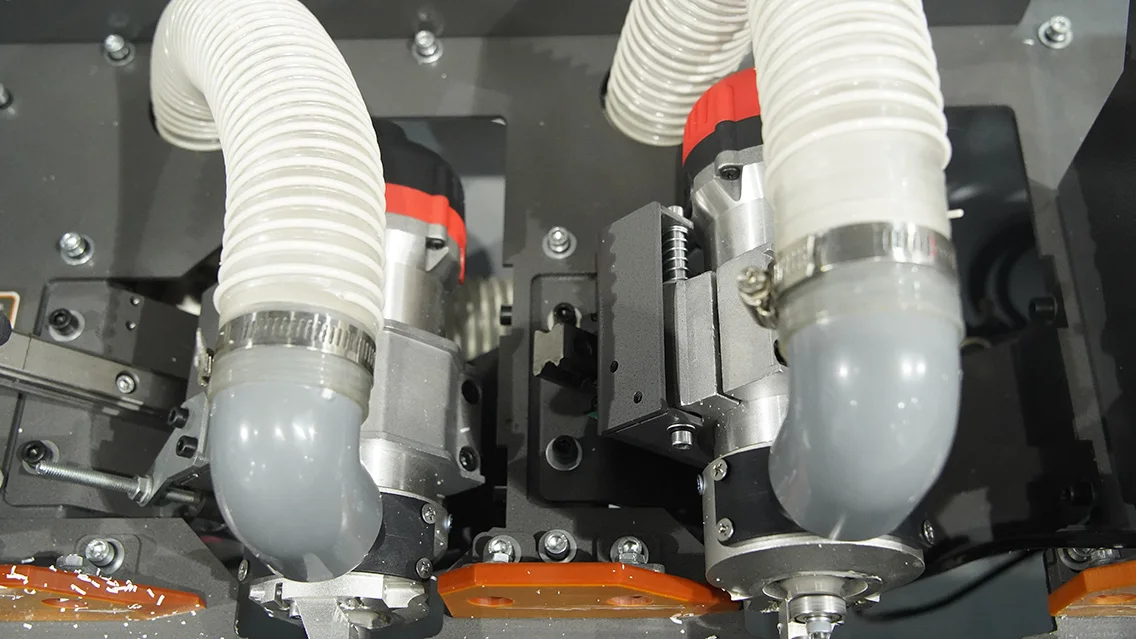
| Trimming Motors | 800W × 2 |
| Polishing Motors | 180W × 2 |
| Vacuuming Motor | 1200W |
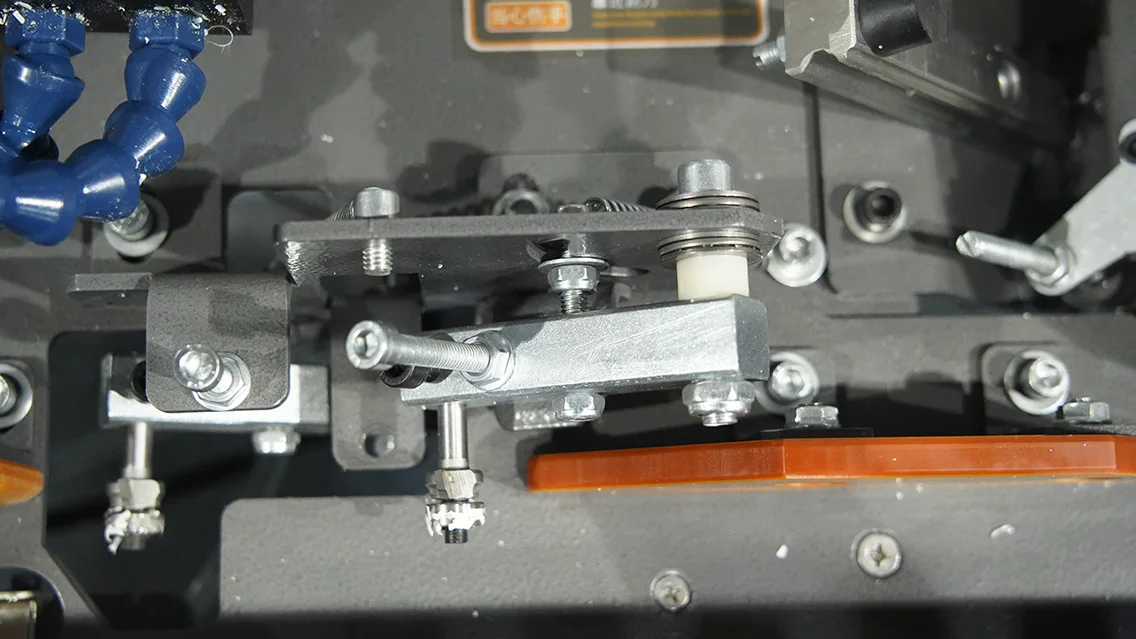
| Pressure Beam | Integrated thickened aluminum alloy |
| Pressure Wheel | Double-row inclined |
| Board Thickness Display | Digital display |
| Pressure Beam Adjustment | Hand-crank wheel |
| Glue Pot Type | Imitation glue pot with concave-convex gum wheel |
| Additional Stations | Secondary scraping and cleaning |
| Key Features | Digital thickness readout, secondary scraping, double-row pressure wheels |
Application Suitability
| Application | Material or Output |
|---|---|
| Honeycomb aluminum panel edge banding | Aluminum honeycomb cores with PVC or veneer strip |
| Aluminum-wood composite panel edging | Composite boards with mixed substrate layers |
| MDF and particleboard edge finishing | Standard wood-based panels for cabinet and furniture production |
| Plywood edge processing | Multi-layer plywood sheets for structural and decorative use |
| Solid wood panel edge finishing | Natural timber boards requiring clean strip adhesion |
| Custom furniture and cabinet production | Mixed-material runs in small-to-medium batch workshops |
Why the Voltage Question Must Come Before the Machine Ships
Confirming local voltage and frequency before dispatch prevents weeks of idle production at the customer site.
I once watched a fully automatic edge bander sit silent on a factory floor in the Middle East for three weeks because the voltage configuration did not match the local grid. The operator had the panels staged, the glue loaded, and the crew ready — but the machine would not power on. Every day of downtime meant delayed deliveries and mounting frustration. Since that experience, I treat voltage verification as the most critical pre-shipment checkpoint on any automatic edge banding machine for sale, regardless of how straightforward the order seems [NEED_CITE: voltage and frequency standards by export market].
Mapping the ZDS290 Across the Complete Machine Range
When an edge banding machine manufacturer offers a full catalogue, buyers need to understand where each model sits relative to the rest of the lineup. The ZDS290 occupies the universal aluminum-wood segment, positioned above basic entry-level units that handle only standard MDF or particleboard. Its double-row inclined pressure wheels and concave-convex gum wheel give it the clamping stability and glue distribution consistency required for honeycomb aluminum and composite substrates — materials that cause visible defects on lighter machines. Workshops evaluating their current and projected material mix can use this model as a reference point to decide whether they need this level of capability or can start with a simpler tier.
How Universal Substrate Handling Reduces Rework
Factories that process both honeycomb aluminum panels and conventional wood-based boards often run into trouble when a single machine cannot handle the transition cleanly. Glue lines become visible on aluminum substrates, trimming leaves burrs on composite edges, and operators resort to manual scraping that introduces inconsistency. The ZDS290 addresses this through its imitation glue pot with concave-convex gum wheel, which distributes adhesive more evenly across varied surface textures. Combined with secondary scraping and cleaning stations downstream, the machine produces a clean edge finish on both aluminum and wood materials without requiring the operator to stop and rework panels by hand [NEED_CITE: edge banding adhesion standards on composite substrates].
Reading the Specifications That Matter Most
The sheet thickness range of 10–50 mm, shown on the digital display, determines how many different panel types a workshop can run without mechanical changeover delays. When an operator adjusts the hand-crank wheel to match a new board thickness, the digital readout eliminates guesswork that leads to uneven pressure and poor strip adhesion. The trimming station uses two 800W motors — adequate for cutting PVC and veneer strips cleanly at the feed speeds this class of machine operates within. The 1000 ml glue pot with 800W heating reaches working temperature in roughly five to ten minutes, which affects how quickly a morning shift can begin production after startup. Meanwhile, the 1200W vacuuming motor captures trim waste and dust at the source, keeping the work area clear and preventing debris from contaminating the glue line on subsequent panels.
The Hidden Cost of Underspecifying Pressure and Glue Delivery
When a workshop buys an edge bander based solely on price or feed speed, the pressure beam and glue delivery system often receive insufficient attention. Panels that are thicker or denser than the machine was designed for will show uneven clamping, leading to strips that lift at the edges after cooling. Honeycomb aluminum is particularly unforgiving — any inconsistency in pressure distribution creates visible gaps along the bond line. On the glue side, a flat gum wheel applies adhesive unevenly on textured or composite surfaces, producing thick spots that squeeze out and thin spots that fail to bond. These defects only become apparent during assembly or final inspection, by which point dozens of panels may already be affected [NEED_CITE: common edge banding failure modes on aluminum substrates].
Why Sourcing From a Full-Range Manufacturer Matters
In-house manufacturing with patented cutting mechanisms means the ZDS290 is built and tested under one roof, not assembled from third-party sub-contracts where accountability blurs. The four-stage quality control process — incoming material, in-process, finished product, and pre-shipment verification — ensures each unit is validated before it leaves the factory floor. Voltage customization from 110V to 440V is offered as standard, not as an afterthought, so the machine arrives ready to connect to the local grid. An engineer-led configuration recommendation ensures buyers receive a formal quotation that accounts for their actual panel materials and production volume, rather than a generic quote generated from a price list. Factory visits are welcomed, allowing buyers to see the ZDS290 running on their specific substrates before committing to an order.
Documentation & Verification
- CE declaration of conformity covering the ZDS290 electrical and mechanical safety requirements
- ISO 9001 certificate confirming quality management system scope includes edge banding machine production
- Machine specification sheet with confirmed voltage, strip thickness range, and feed speed values
- Electrical schematic and voltage confirmation document matched to the buyer’s local grid standard
- Factory test record showing the ZDS290 running on the buyer’s specified panel substrate before dispatch
- Operation and maintenance manual written in the buyer’s agreed language with illustrated spare parts list
Installation, Commissioning & Support
- Floor space planning based on the 150 × 57 × 96 cm footprint with clearance for panel infeed and outfeed
- Dedicated electrical circuit matching the confirmed voltage and 4165W rated power draw
- Air supply connection rated for 0.6–0.8 MPa with clean, dry compressed air to protect pneumatic valves
- First-run parameter setup covering glue pot temperature, pressure beam height, and feed speed calibration
- Operator training on digital thickness display use and hand-crank adjustment for sheet changes
- Spare parts list covering trim blades, gum wheel, polishing pads, and vacuum filter elements
Preparing Your Inquiry
When you are ready to evaluate the ZDS290 for your production line, the most useful information to include is your panel material mix — whether you run honeycomb aluminum, MDF, plywood, or a combination — along with the strip materials you use such as PVC or veneer. Confirming your local voltage and frequency upfront avoids the kind of on-site delays that shut down production. If you have existing upstream or downstream equipment, sharing those details helps the engineering team verify feed height compatibility and throughput matching across your line.
Frequently Asked Questions
Q: How does the ZDS290 compare to other models in the full catalogue?
A: The ZDS290 sits in the universal aluminum-wood segment, above entry-level machines built for single-material MDF or particleboard runs and below full-function pre-milling models designed for high-volume continuous production. Its concave-convex gum wheel and secondary scraping stations give it the substrate versatility that simpler tiers lack, making it suitable for workshops that process mixed materials without needing separate machines.
Q: What voltage and frequency options are available for my market?
A: The ZDS290 is configurable from 110V to 440V, with frequency matching to your local grid standard. Voltage and frequency are confirmed during the specification stage before production begins, and the electrical schematic shipped with the machine reflects the exact configuration built for your site. This prevents the costly delays that occur when a machine arrives with an incompatible power setup.
Q: Can I visit the factory to see the ZDS290 running on my panel material?
A: Factory visits are welcomed and encouraged before order confirmation. You can bring samples of your actual honeycomb aluminum, MDF, or composite panels and watch the ZDS290 process them in real time. This allows you to verify edge quality, glue line consistency, and trimming accuracy on your own substrates rather than relying on generic demonstration materials.
Q: What documentation ships with the machine?
A: Each ZDS290 ships with a CE declaration of conformity, ISO 9001 certificate, machine specification sheet, electrical schematic matching your confirmed voltage, factory test record, operation manual in your agreed language, spare parts list, packing photographs, and full customs documentation support for export clearance.
Q: How does the machine handle PVC and veneer strips on different substrates?
A: The concave-convex gum wheel distributes adhesive evenly across both smooth PVC and porous veneer surfaces, while the double-row inclined pressure wheels maintain consistent clamping whether the substrate is rigid honeycomb aluminum or softer MDF. Secondary scraping and cleaning stations remove excess glue and smooth the edge, producing a uniform finish across material transitions.