Description
Patented cutting mechanisms — The DW1800 integrates proprietary trimming technology to hold edge quality across varied panel substrates, verified at the factory before dispatch.
Technical Specifications
| Parameter | Value |
|---|---|
| Model | DW1800 |
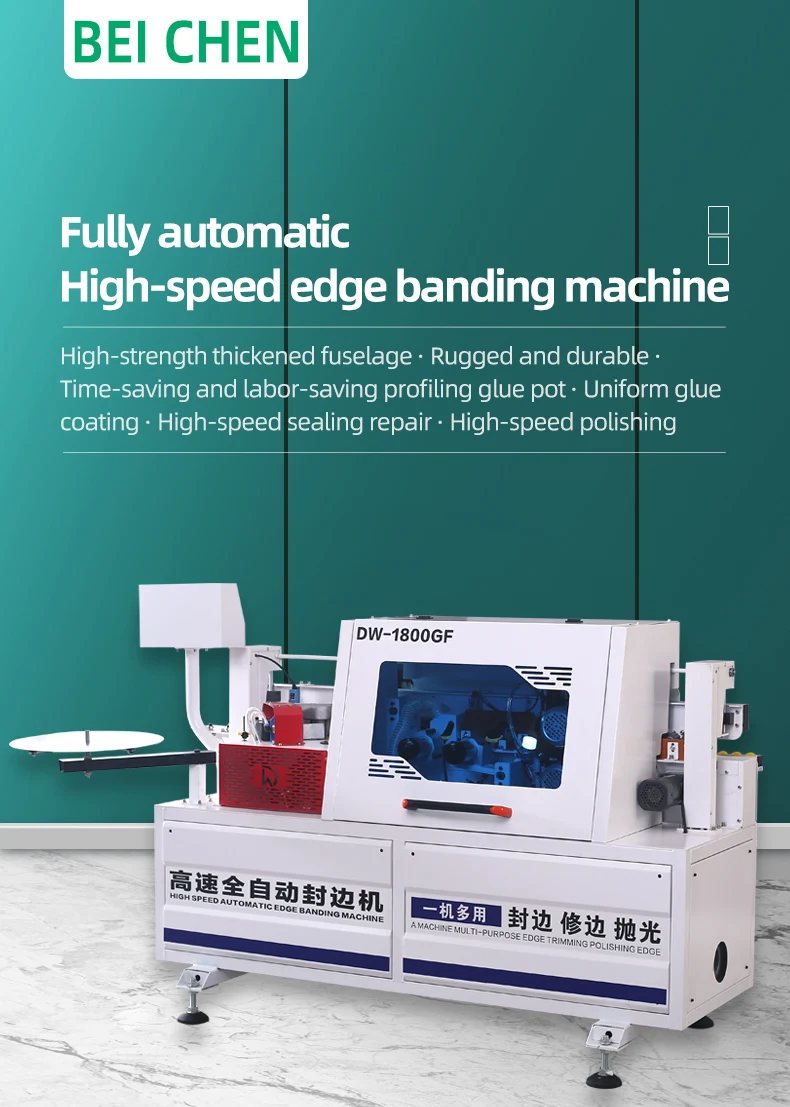
| Product Type | Automatic Edge Banding Machine |
| Total Power | 4.9 kW |
| Voltage Options | 380V / 220V / 415V (frequency to be confirmed) |
| Feed Speed | 0–14 m/min |
| Edge Banding Thickness | 0.3–3 mm |
| Edge Banding Height | 0–50 mm |
| Minimum Sheet Size | 200 mm (L) × 100 mm (W) |
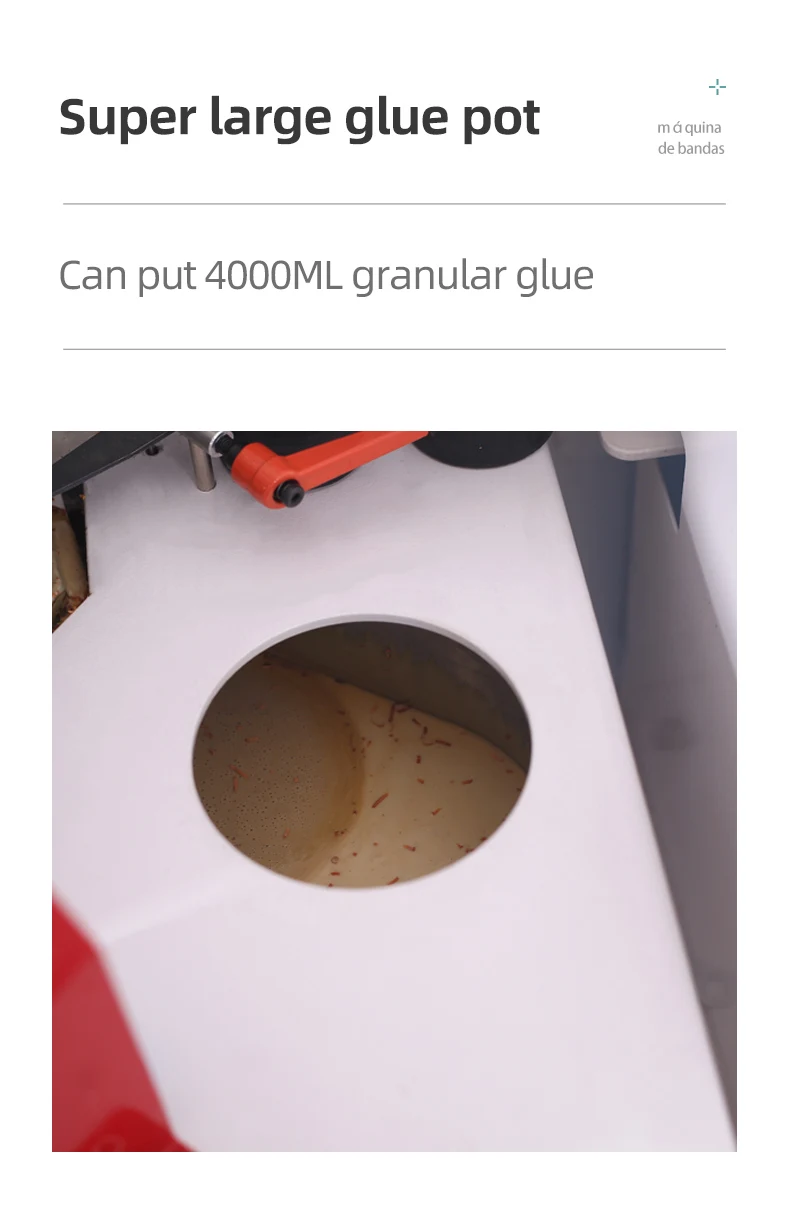
| Glue Pot Capacity | 4000 ml |
| Trimming Power / Speed | 800 W × 2 / 24,000 r/min |
| Vacuum Power | 550 W |
| Polishing Power | 380 W × 2 |
| Edge Power | 160 W |
| Transmission Power | 180 W |
| Air Source Pressure | 0.4–0.6 MPa |
| Overall Dimensions | 220 × 65 × 125 cm |
| Weight | 320 kg |
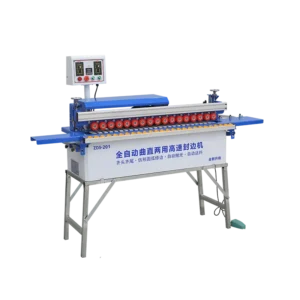
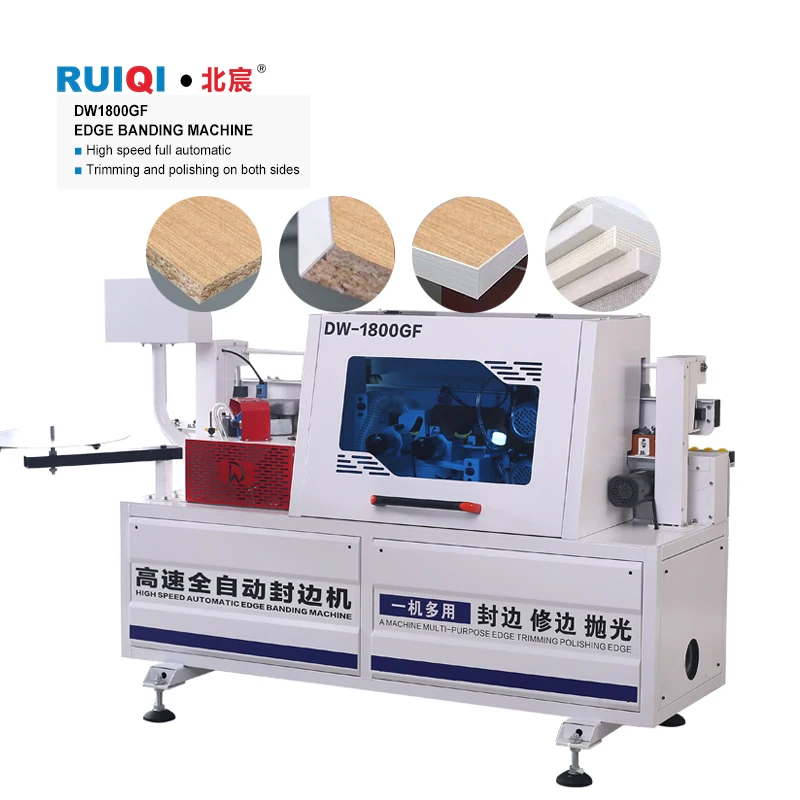
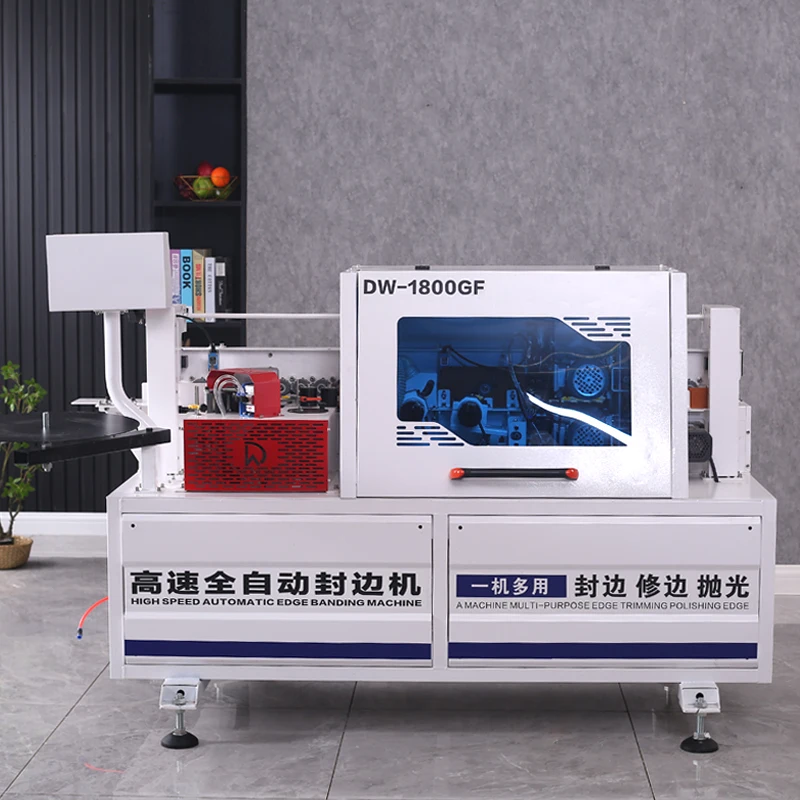
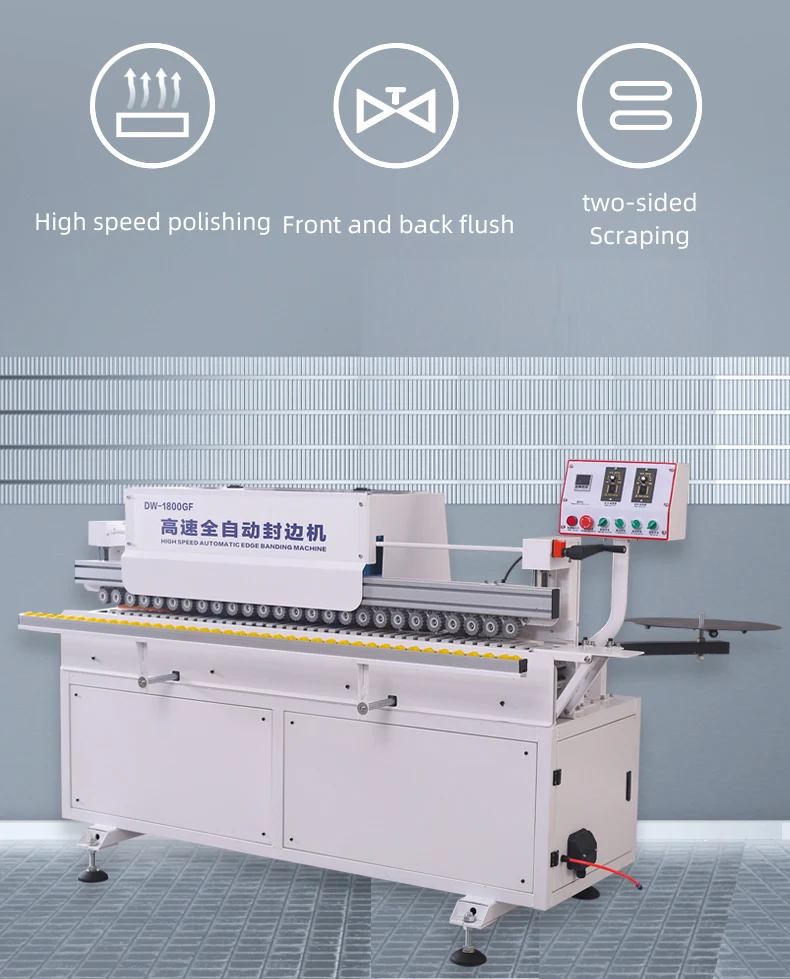
| Key Features | Double-sided gluing, top/bottom trimming, front/rear alignment, flexible edge scraping, top/bottom polishing, dust suction |
| Control System | To be confirmed (PLC or manual panel) |
| Language Options | Chinese and English standard; other languages customizable |
| Certification | CE (to verify for this model), ISO 9001 (company level) |
Application Suitability
| Application | Material or Output |
|---|---|
| Custom furniture panel edge banding | MDF, particleboard, plywood |
| Cabinet door and drawer front finishing | PVC panels, ABB boards |
| Joinery workshop double-sided edging | Solid wood and similar hardness panels |
| Decorative board lamination edging | Organic glass plates, melamine-faced boards |
| Small-to-mid volume batch production | PVC, veneer, and melamine edge banding strips |
Why Voltage Confirmation Must Precede Every Other Specification
Ordering an automatic edge banding machine manufacturer configuration without locking in your local voltage and frequency is the most common reason machines arrive unusable.
I have watched container loads of woodworking equipment sit idle on factory floors because the buyer approved a 380V/50Hz build while the workshop runs on 415V/60Hz. The DW1800 offers 380V, 220V, and 415V options, yet frequency is equally critical — a motor wound for 50Hz running on 60Hz will overspeed and burn out within weeks. Confirming the exact supply standard at quotation stage avoids this entirely [NEED_CITE: voltage and frequency standards by export market]. Skipping that single conversation turns a productive asset into dead weight.
Where the DW1800 Sits in the Full Edge Bander Catalogue
The DW1800 occupies the full-function tier of the Ruiqi edge banding range, bundling gluing, trimming, tracking, scraping, and polishing into one continuous pass. Buyers surveying the catalogue will find entry-level units that handle only gluing and basic trimming, while this model adds front and rear alignment plus flexible scraping for workshops that need finished edges without secondary stations.
Double-Sided Gluing and What It Demands from Your Feed Setup
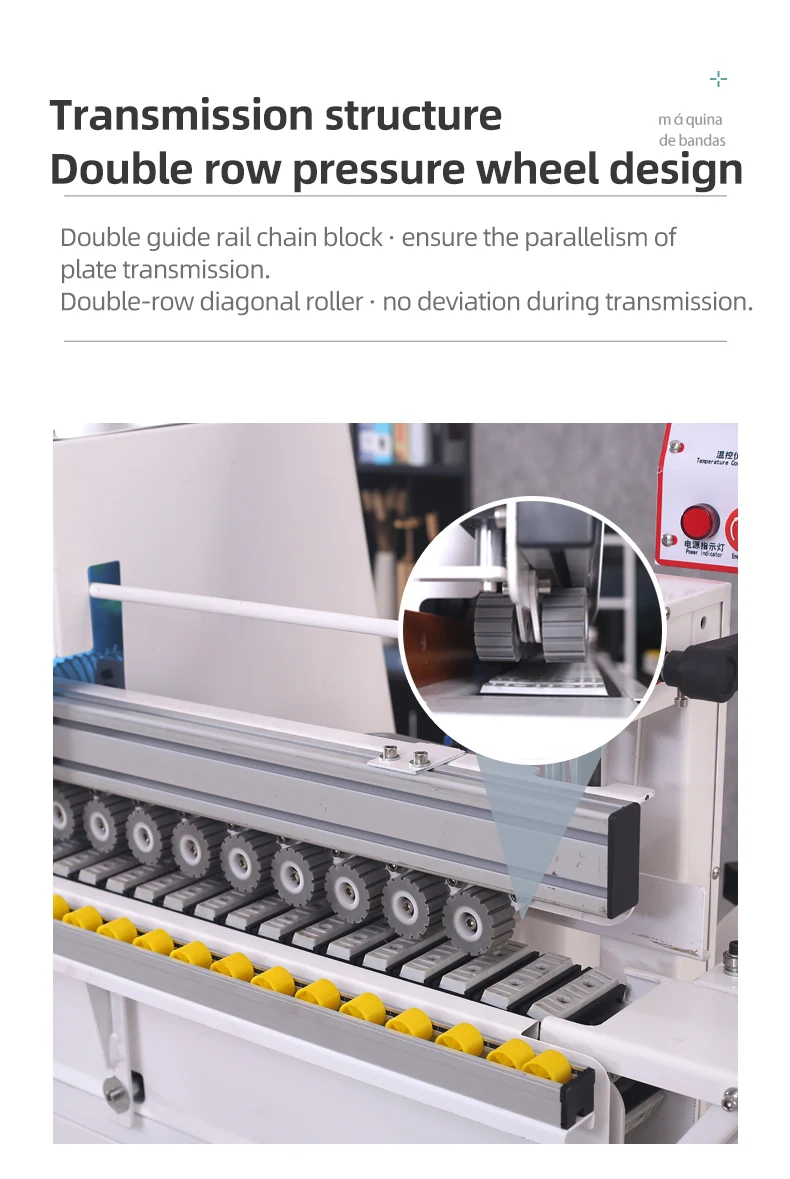
Double-sided gluing on the DW1800 means both faces of the panel receive adhesive and banding simultaneously, which requires the feed mechanism to maintain consistent pressure across both glue rollers. The 4000 ml glue pot supports extended runs without frequent refills, and the separate 160 W edge motor paired with the 180 W transmission motor allows operators to adjust band feed and panel feed independently. This matters when switching between thin PVC strip and thicker veneer banding within the same shift [NEED_CITE: edge banding material behavior under varying feed pressures].
Reading the Spec Sheet: What the Numbers Mean on the Floor
The 0–14 m/min feed speed range gives operators room to slow down for delicate veneer banding or speed up for standard PVC runs, but the practical ceiling depends on panel weight and banding thickness. Trimming at 24,000 r/min with dual 800 W motors is sufficient for clean cuts on PVC and melamine; harder materials like solid wood banding may require reduced feed rates to avoid tear-out. The 0.3–3 mm banding thickness range covers most furniture-grade strips, and the 50 mm height capacity accommodates standard cabinet panel thicknesses. Air pressure at 0.4–0.6 MPa drives the pneumatic tracking and scraping cylinders — dropping below that threshold causes inconsistent corner rounding, which shows up as visible gaps during assembly.
The Hidden Cost of Buying Piecemeal Instead of Matching the Line
Workshops that add a single edge bander to an existing mismatched line often discover that upstream panel saws produce cuts too rough for the bander to seal cleanly, or downstream drilling stations expect panel dimensions the bander’s feed table cannot accommodate. The DW1800’s minimum sheet size of 200 mm × 100 mm handles small offcuts, but feeding it panels from a saw that leaves heavy chip-out means the trimming station works harder and tooling wears faster [NEED_CITE: upstream cut quality impact on edge banding adhesion]. Evaluating the machine against the entire production sequence prevents costly throughput bottlenecks.
Why Source This Model Through the Ruiqi Catalogue Channel
In-house manufacturing means the DW1800’s trimming mechanism is built and tested under the same roof where final assembly occurs, not outsourced and bolted together. Four-stage quality control covers incoming components through pre-shipment verification, so the unit that arrives matches the tested sample. Voltage, control language, and panel-specific configuration are confirmed before production begins, not guessed at packing. Engineer-led recommendations within 24 hours ensure the model you select actually fits your panel mix and daily volume rather than simply being the cheapest option on the list.
Documentation & Verification
- Machine specification sheet listing every station function with individual motor ratings for the DW1800
- Electrical schematic and voltage confirmation document matched to your facility’s exact supply
- Factory test record showing edge banding results on your specified panel material and banding type
- Operation and maintenance manual produced in the language agreed at order stage
- Spare parts list with part numbers for trimming blades, glue rollers, and scraping inserts
- Packing photographs confirming crate condition and component placement before container loading
Installation, Commissioning & Support
- Confirm floor levelness within tolerance across the DW1800’s 220 cm footprint before positioning
- Provide a dedicated circuit matching the confirmed voltage option and 4.9 kW total draw
- Unit ships partially assembled; allow time for feed table and dust hood attachment on arrival
- First-run parameter setting includes glue temperature calibration and pneumatic pressure adjustment
- Operator training covers banding changeover between PVC, veneer, and melamine strip types
- Schedule trimming blade inspection after the initial break-in period and quarterly thereafter
What to Prepare Before Requesting a Quotation
Share the specific panel materials and thicknesses you run most often, the edge banding types in your current inventory, and your local voltage and frequency. Let us know the control panel language your operators need and whether you plan to integrate the DW1800 into an existing line or run it standalone. If you have sample panels available, sending them for a factory test run ensures the configuration we quote matches your actual output requirements.
Frequently Asked Questions
Q: Where does the DW1800 sit in the Ruiqi edge banding range?
A: It occupies the full-function tier, combining double-sided gluing, top and bottom trimming, front and rear alignment, flexible scraping, and polishing in one pass. Entry-level models in the catalogue cover fewer stations for simpler workshops, while the DW1800 suits buyers who need integrated edge finishing without auxiliary equipment.
Q: How do I match function stations to my panel material and banding type?
A: PVC banding on particleboard typically runs well at higher feed speeds with standard trimming. Veneer on MDF requires slower feed and careful scraping to avoid surface damage. Confirming your material mix at quotation stage ensures glue pot temperature and trimming speeds are preset for your specific combination.
Q: What voltage and frequency options are available for my market?
A: The DW1800 supports 380V, 220V, and 415V configurations. Frequency must be confirmed separately as 50Hz or 60Hz depending on your country’s grid standard. Specifying both values before production prevents motor damage and ensures the control system operates correctly on arrival.
Q: Can I specify a control panel language other than Chinese or English?
A: Yes. Chinese and English are standard, but additional languages can be configured at order stage. Specify the language your operators read fluently when confirming the quotation so the manual and panel labels match before the machine ships.
Q: How does the DW1800 compare to other catalogue models on feed speed and automation?
A: The DW1800 offers a 0–14 m/min feed speed range and includes tracking and scraping stations that entry-level models omit. Models higher in the catalogue may add pre-milling or servo-driven feed for heavier production volumes, while the DW1800 targets workshops needing full-function finishing at a moderate throughput level.