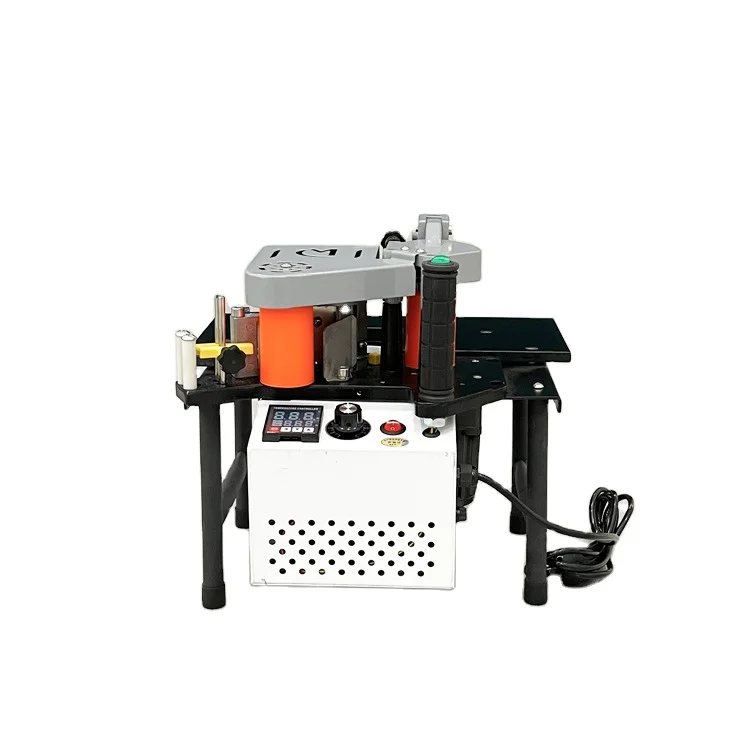
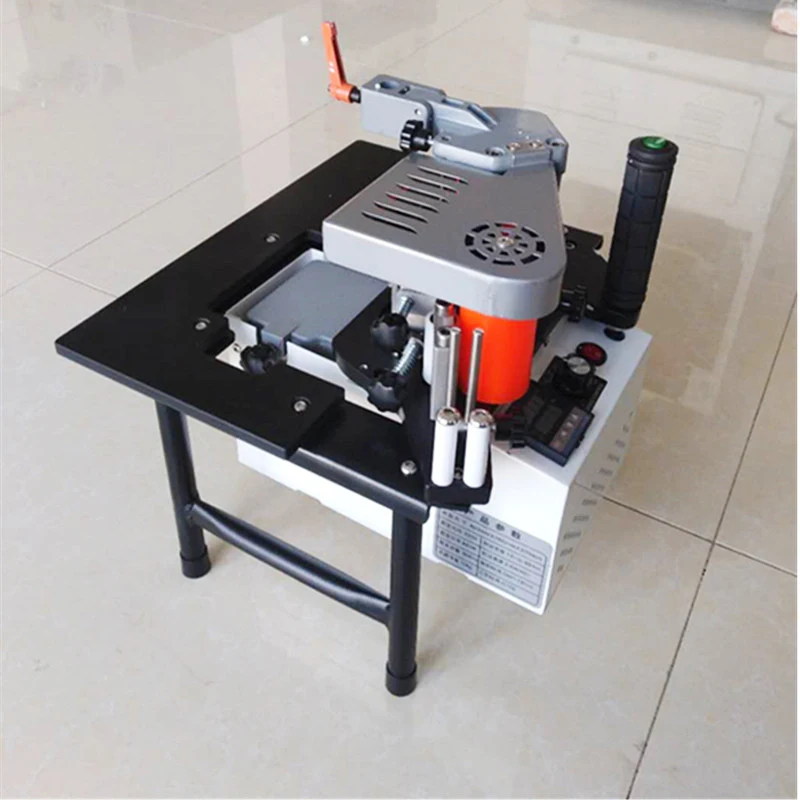
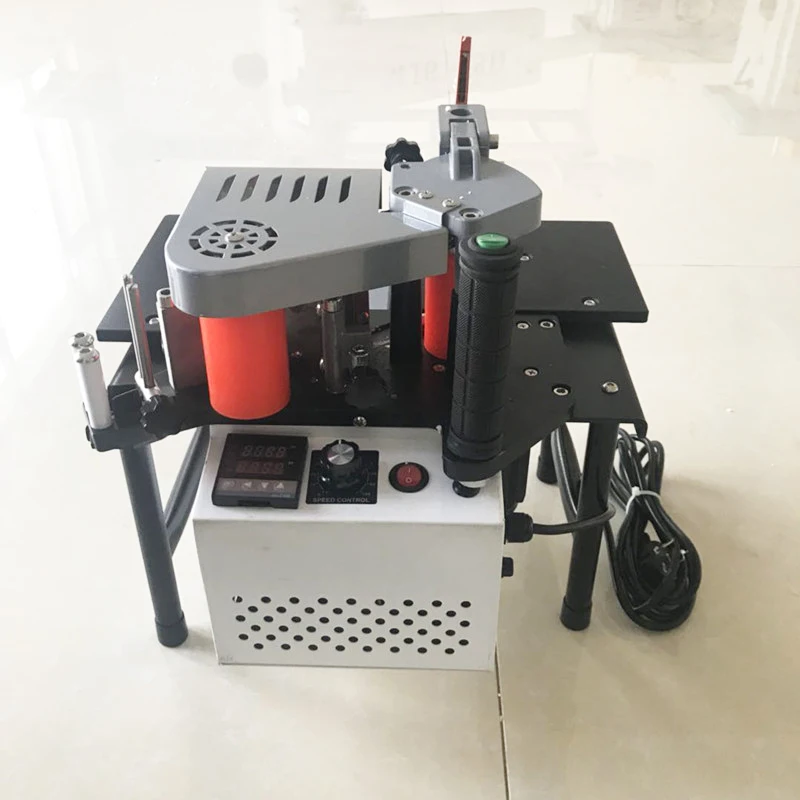
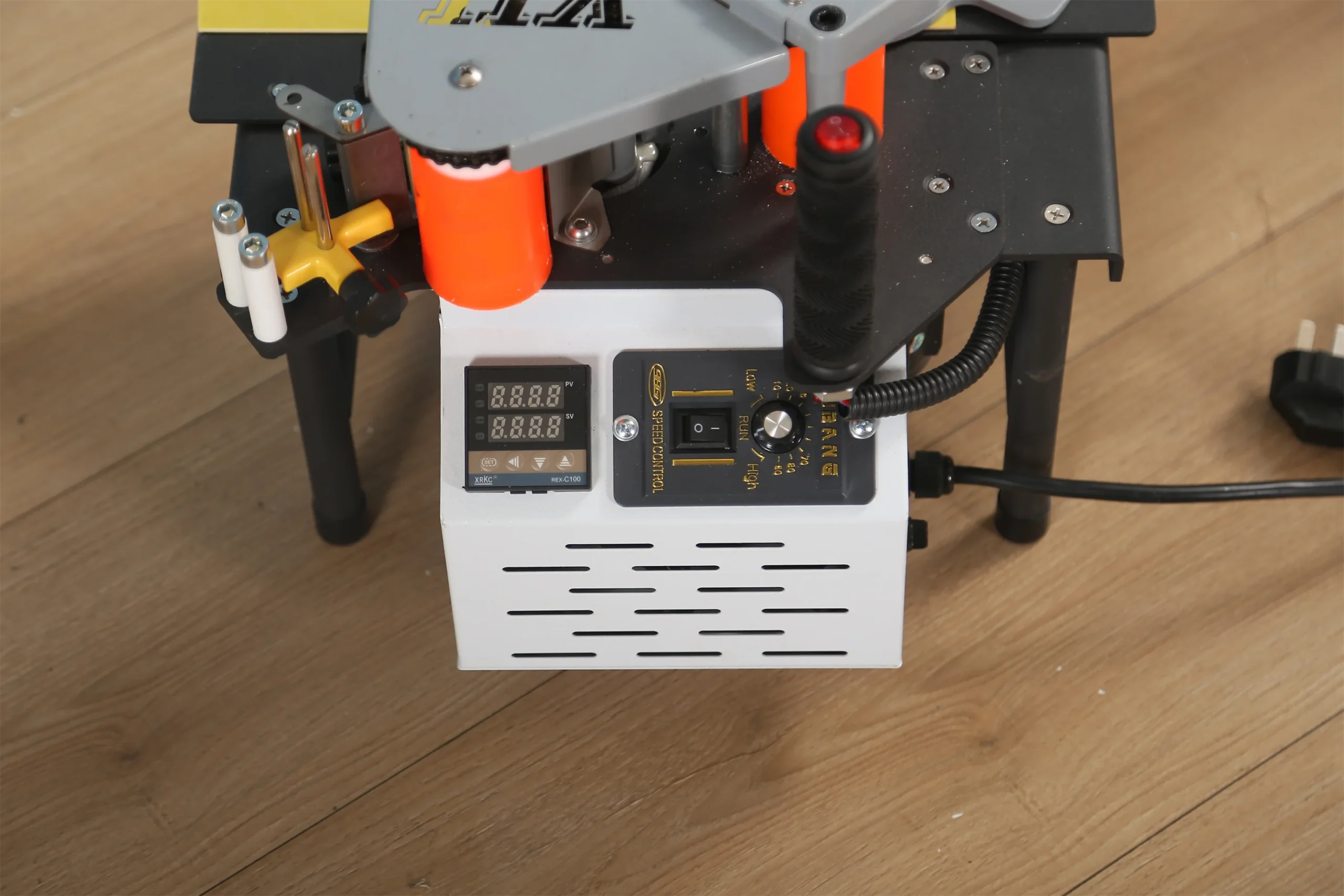
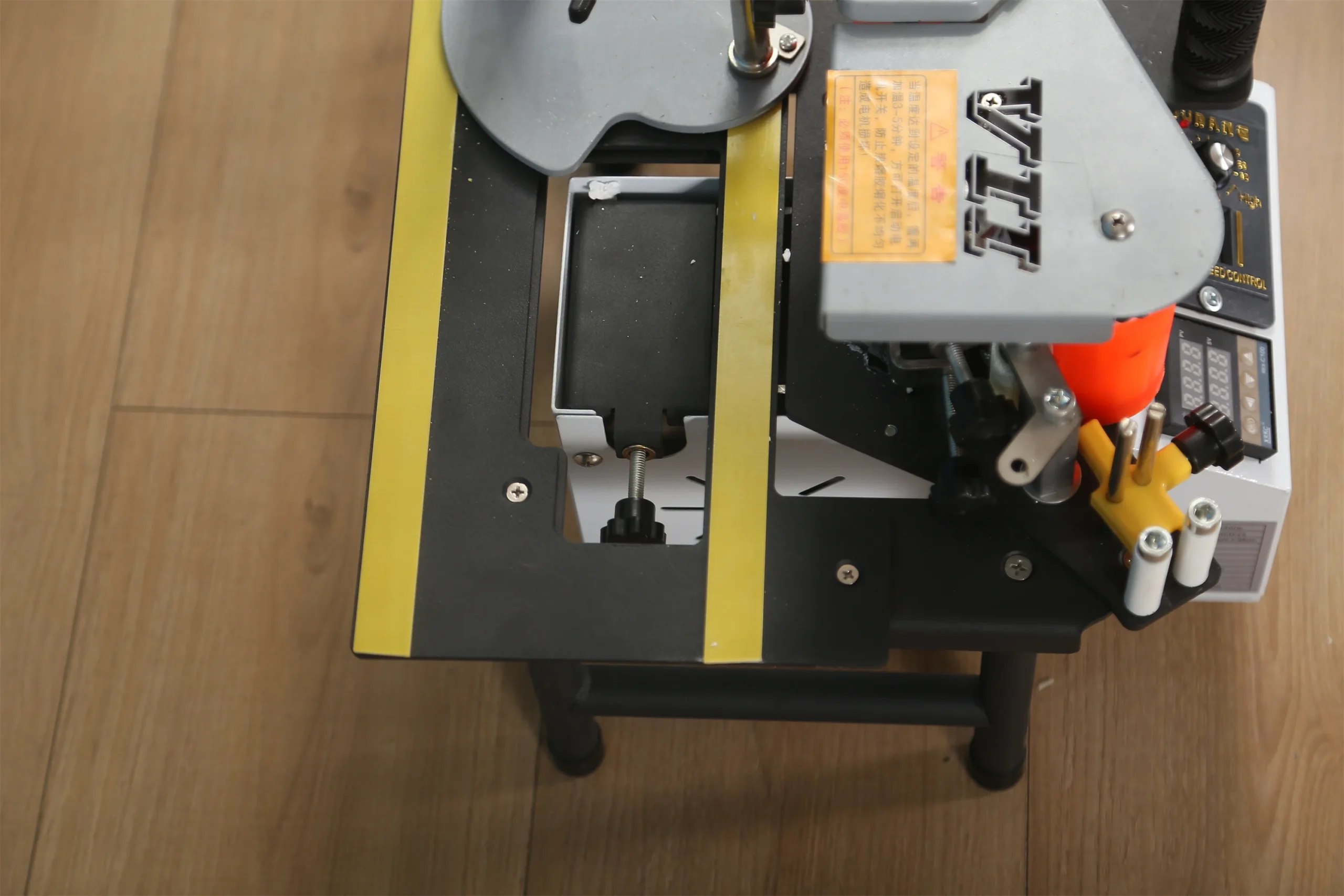
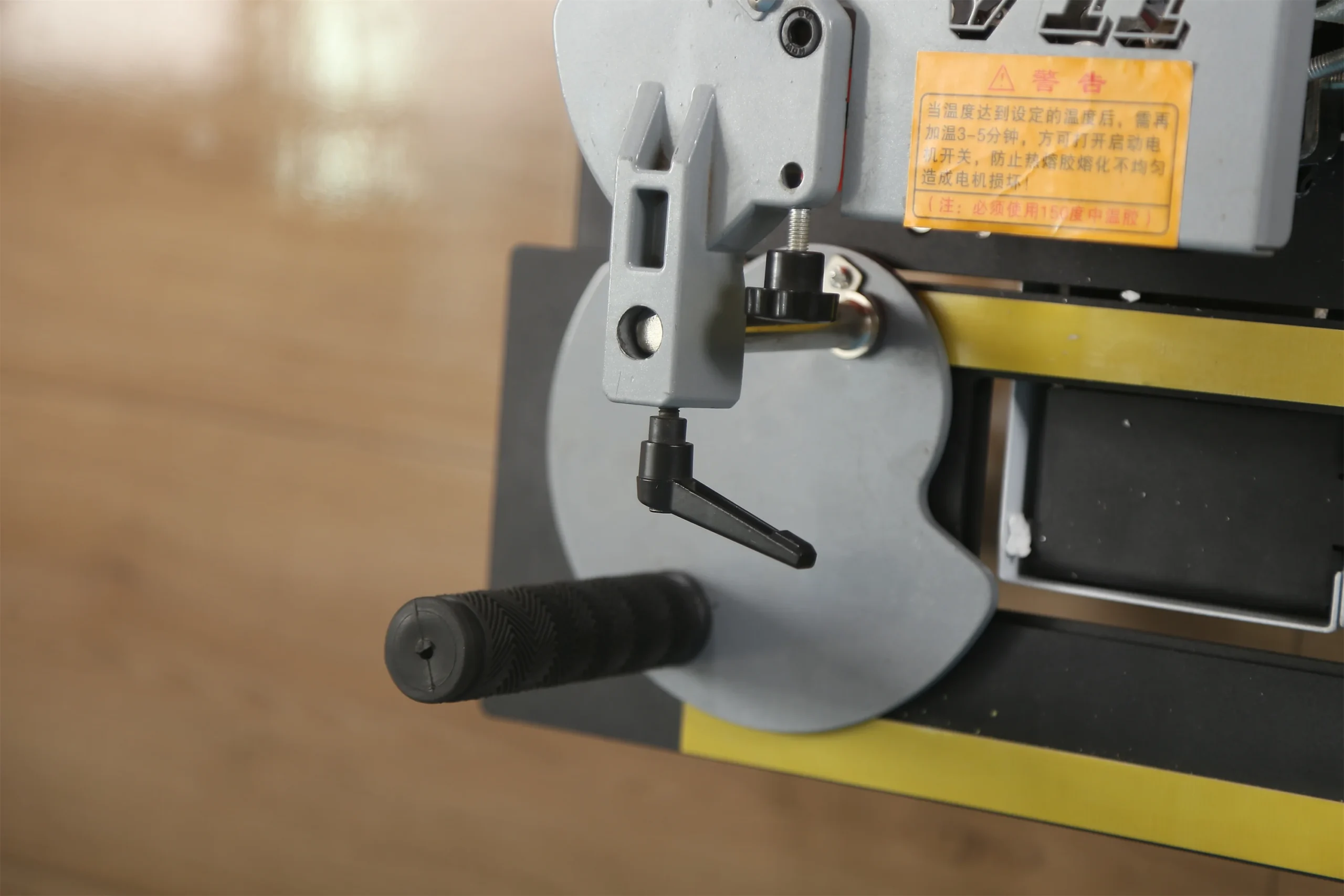
Description
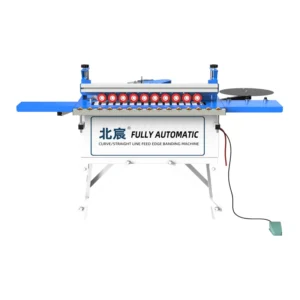
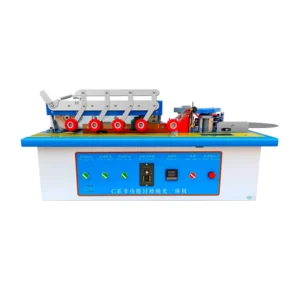
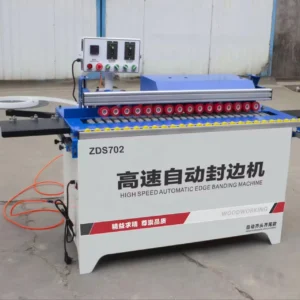
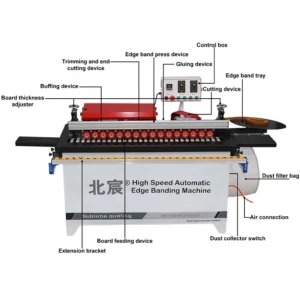
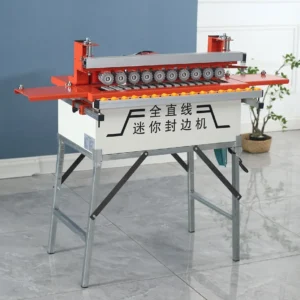
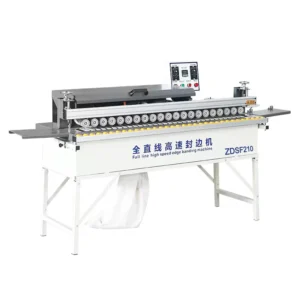
Complete Product Family — one manufacturer offering every tier from a 14 kg portable unit to full pre-milling automatics, so your edge banding capacity scales without switching supplier.
Technical Specifications
| Parameter | Value |
|---|---|
| Product Type | Portable Edge Banding Machine |
| Voltage | 220V |
| Rated Power | 1000W |
| Shape of Plates | Curved & Straight |
| Edge Thickness Range | 0.3–3 mm |
| Board Thickness Range | 7–60 mm |
| Gluing Method | Double-sided |
| Glue Pot Capacity | 800 ml |
| Net Weight | 14 kg |
| Plug Options | EU / AU / UK / USA / CN |
| Logo Customization | Available |
| Control System | Manual / Basic switch control (source value — verify against manufacturer catalog) |
| Certification | CE (inferred from company profile; confirm per unit) |
Application Suitability
| Application | Material or Output |
|---|---|
| Small workshop cabinet edge banding | MDF and particleboard with PVC or melamine edge banding |
| Custom furniture curved panels | Plywood and solid wood panels with veneer banding |
| On-site carpentry and field installation | Pre-cut panels requiring straight or curved edge finishing |
| Prototype and small-batch production | Mixed substrates up to 60 mm board thickness |
Why the Voltage Question Must Come Before the Quotation
Confirming local voltage and frequency before any order prevents a machine that arrives dead on the workshop floor.
A Portable Edge Banding Machine manufacturer that ships without verifying electrical compatibility is selling you a problem. [NEED_CITE: voltage and frequency standards by export market] I have seen workshops receive 220V single-phase units when their facility runs three-phase 380V, leaving the machine sitting on a pallet for weeks. The cost is not just the return shipment — it is the delayed production schedule and the frustrated operator who was ready to run panels that day. Specifying plug type alone does not guarantee the internal transformer matches the local grid.
The Complete Range Under One Roof
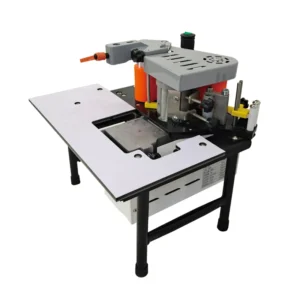
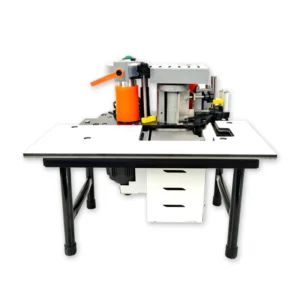
When a joinery workshop moves from hand-trimming edges to its first machine-assisted process, the Portable Edge Banding Machine is often the starting point. This 14 kg unit handles both straight and curved profiles, which matters when custom cabinet makers produce shaped doors and radius panels alongside standard rectangular components. Having the full product family — from this portable tier through semi-automatic and up to full pre-milling automatics — means a growing workshop does not need to learn a new supplier’s ordering process, spare parts catalog, or service contacts every time production volume increases.
Scaling Without Switching Supplier
A workshop that starts with a portable unit and later adds a sliding table saw or a multi-boring machine benefits from dealing with one Portable Edge Banding Machine manufacturer for the entire line. Feed heights, throughput expectations, and control panel languages stay consistent across stations. [NEED_CITE: production line throughput matching between edge banding and upstream panel sizing] This is especially relevant for custom furniture factories where batch sizes vary daily and operators move between machines depending on the job.
How Board Thickness and Edge Thickness Ranges Drive Real Output
The 7–60 mm board thickness range covers the majority of panel furniture substrates, from thin 7 mm MDF backs to 60 mm solid wood worktops. Pairing this with the 0.3–3 mm edge thickness range means a single portable unit can handle thin PVC on particleboard shelving as well as thicker veneer on solid wood table edges. The 800 ml glue pot capacity with double-sided gluing ensures adhesive reaches both the panel edge and the banding material simultaneously — critical for curved profiles where one-sided gluing leaves visible gaps at the radius. The 1000W rated power supports the glue pot heating element sufficiently for standard PVC and melamine banding, though thicker veneer materials may require slower feed rates to maintain consistent glue temperature across the bond line.
What Happens When You Buy a Machine Not Rated for Your Volume
Entry-level machines sold into production volumes they were never designed for create a predictable failure pattern. The glue pot cannot recover temperature between consecutive panels, adhesion weakens, and the operator compensates by slowing down — which then becomes the shop’s actual bottleneck. [NEED_CITE: edge banding adhesion failure caused by glue temperature drop under sustained use] The portable unit here is specified for small-batch and on-site work; pushing it into continuous full-day production on thick PVC will reveal its limits quickly. Matching the machine tier to actual daily panel count is a conversation that must happen before the order, not after.
Why Procurement Through This Manufacturer Holds Up
In-house manufacturing with patented cutting mechanisms means tolerance claims can be verified on a factory test record, not just a brochure. The four-stage QC process — incoming material, in-process, finished product, and pre-shipment — applies to every unit regardless of tier, so the portable model receives the same inspection discipline as the full-automatic line. Voltage customization from 110V to 440V and multilingual control panels are standard options, not special requests. Engineer-led configuration recommendation means the quotation arrives with a specification sheet that confirms every parameter against the buyer’s actual workshop conditions.
Documentation & Verification
- Machine specification sheet confirming 220V, 1000W, and board thickness range for your selected configuration
- Electrical schematic and voltage confirmation document matching your local grid supply
- Factory test record with pre-shipment verification on your actual panel and edge banding materials
- Operation and maintenance manual provided in the agreed language for operator-level commissioning
- CE declaration of conformity and ISO 9001 certificate documentation for customs clearance
Installation, Commissioning & Support
- Requires a dedicated 220V circuit with sufficient capacity for the 1000W rated power draw
- 14 kg net weight allows single-person deployment on any stable workbench without floor anchoring
- Multi-region plug options (EU/AU/UK/USA/CN) eliminate the need for external adapters at installation
- Glue pot first heat-up and temperature stabilization must be verified before the first production panel
- Double-sided gluing mechanism requires periodic cleaning to prevent adhesive buildup on curved profile runs
- Spare parts list provided with consumable items identified for local sourcing where available
What We Need to Quote Accurately
Before any formal quotation, share the panel materials you work with most often — MDF, plywood, particleboard, or solid wood — along with the edge banding type and thickness you use. Confirm your workshop voltage and frequency, and let us know the daily panel count you expect the machine to handle. If you need a sample processing test on your own materials before committing, specify that in the inquiry so we can schedule it.
Frequently Asked Questions
Q: Which tier in the range suits my current production volume — portable, semi-auto, or full-automatic?
A: The portable unit fits small workshops, on-site carpentry, and custom shops running varied panel shapes in low to medium batches. Semi-automatic models suit dedicated furniture factories with steady daily volumes of straight-edge panels. Full-automatic pre-milling machines are for high-throughput plants running long production runs. An engineer-led configuration review matches your actual output requirement to the correct tier.
Q: How do I confirm voltage and frequency compatibility before ordering for my target market?
A: Provide your local supply voltage and frequency in the inquiry. The manufacturer configures each unit between 110V and 440V and supplies an electrical schematic confirming the match. This verification happens before production begins, ensuring the machine runs on arrival without transformers or rewiring.
Q: What is the upgrade path from a portable unit to a full production line within the same product family?
A: Because all tiers share one manufacturer, spare parts, control logic, and service channels remain consistent. A workshop can add a semi-automatic edge bander, sliding table saw, or multi-boring machine later without re-learning a new supplier. Line layout planning is available when you are ready to expand beyond a single station.
Q: Can I visit the factory to see the complete range and run a sample processing test?
A: Factory visits are welcomed and can include a live sample processing test using your own panel material and edge banding stock. This lets you verify glue adhesion, edge finish quality, and machine handling on curved profiles before placing an order.