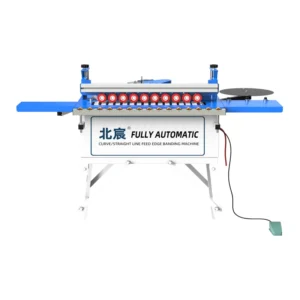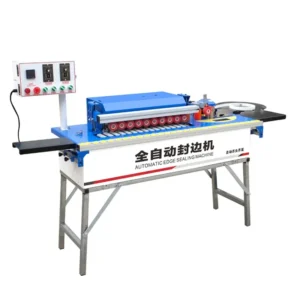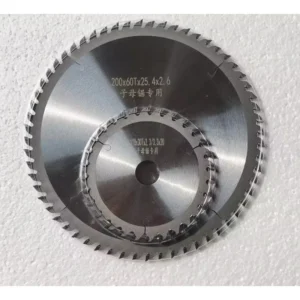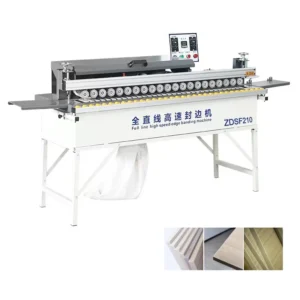
Description
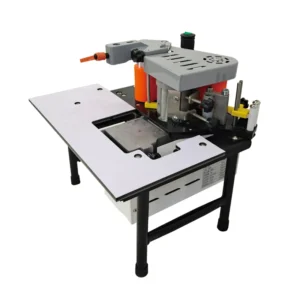
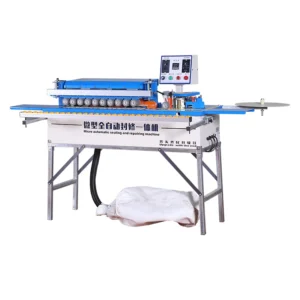
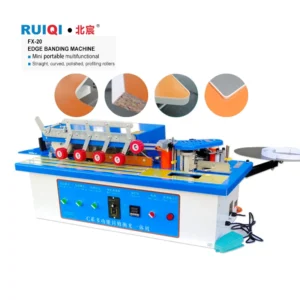
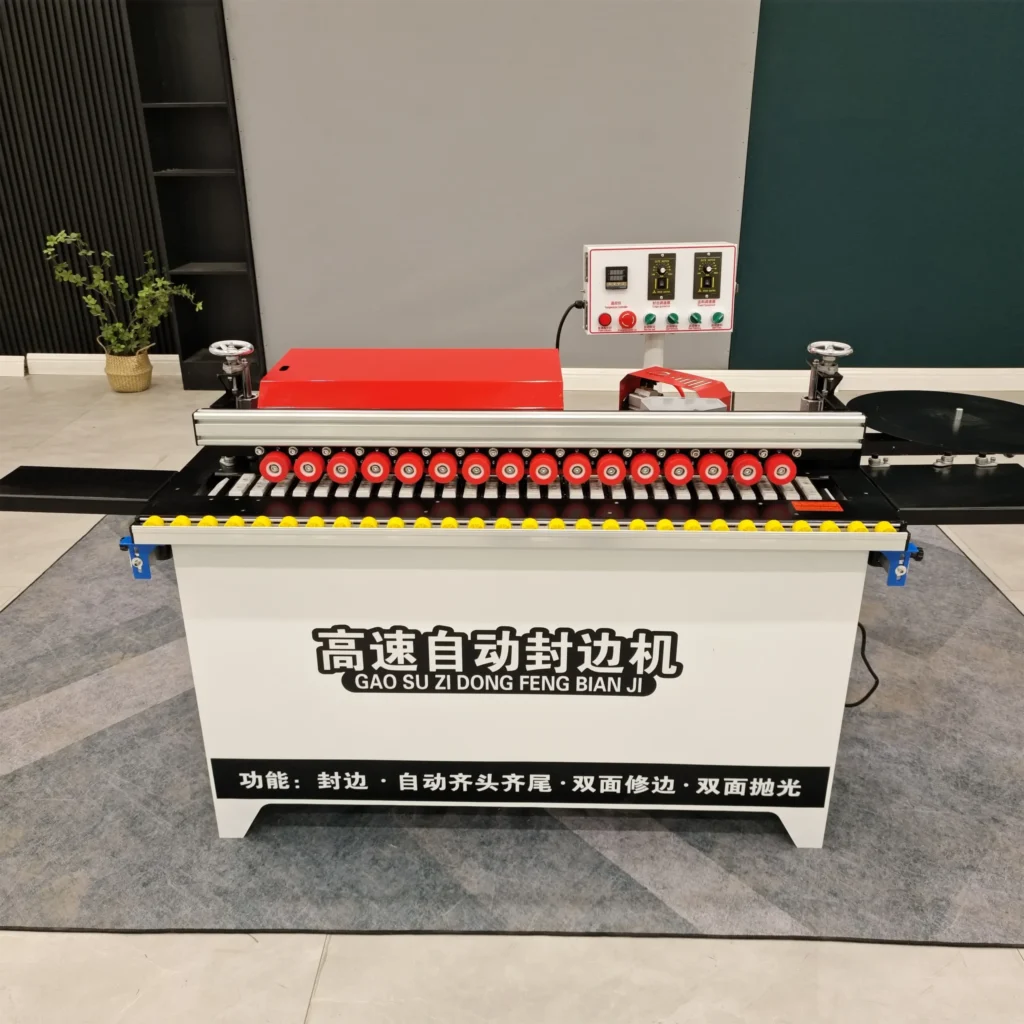
Voltage-Customized Production Range — from entry-level trimming to full-function pre-milling configurations, this automatic edge banding machine family lets workshops scale capacity without replacing their supplier or retraining operators.
Technical Specifications
| Parameter | Value |
|---|---|
| Product Type | Automatic Edge Banding Machine |
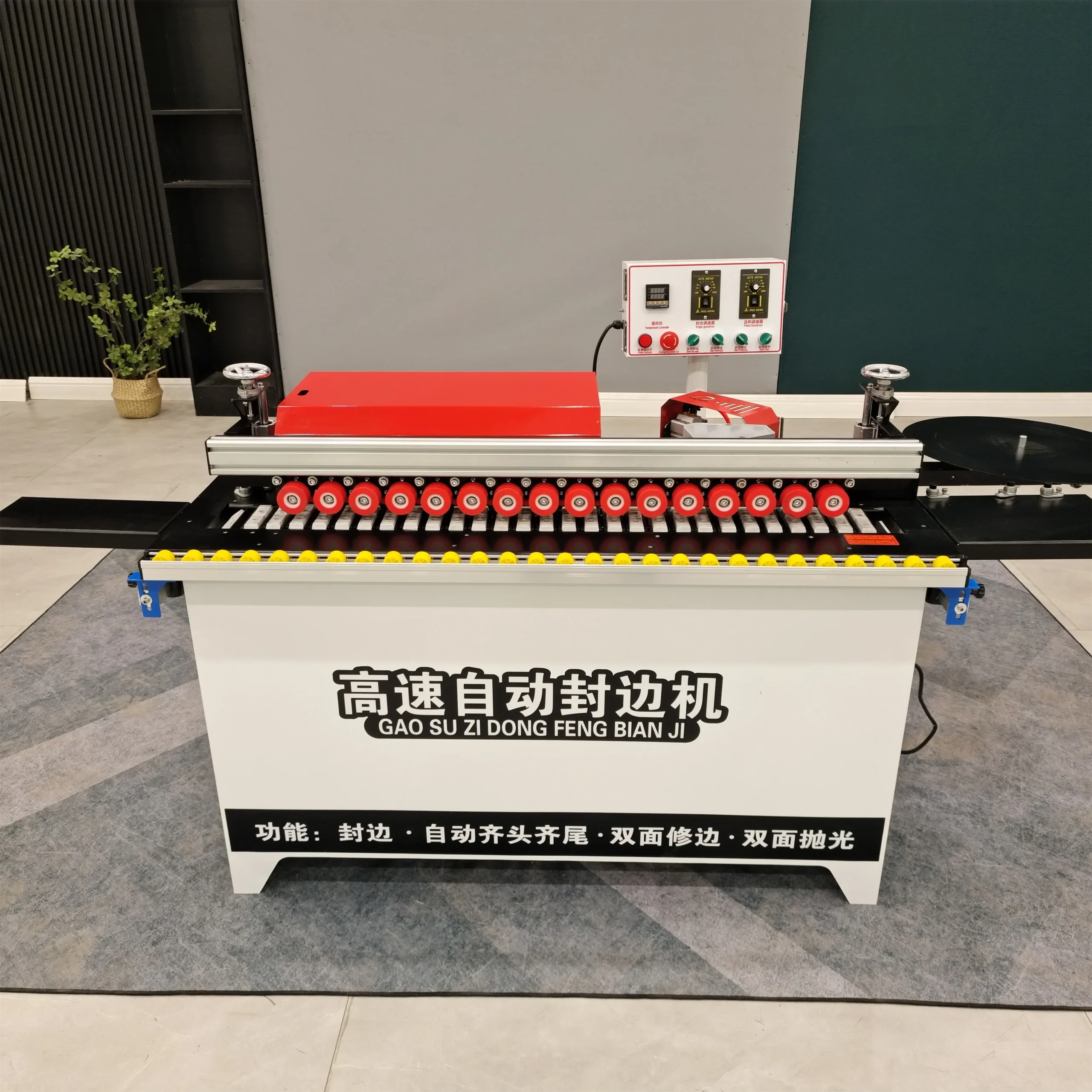
| Function Stations | Gluing, End cutting, Trimming, Vacuuming, Buffing |
| Rated Voltage | 220V (frequency and phase to be confirmed per market) |
| Rated Power | 4 kW |
| Working Speed | 0–7 m/min |
| Conveyor Belt Speed | 0–14 m/min (basis to be confirmed) |
| Strip Thickness Range | 0.5–2.5 mm |
| Sheet Thickness Range | 10–50 mm |
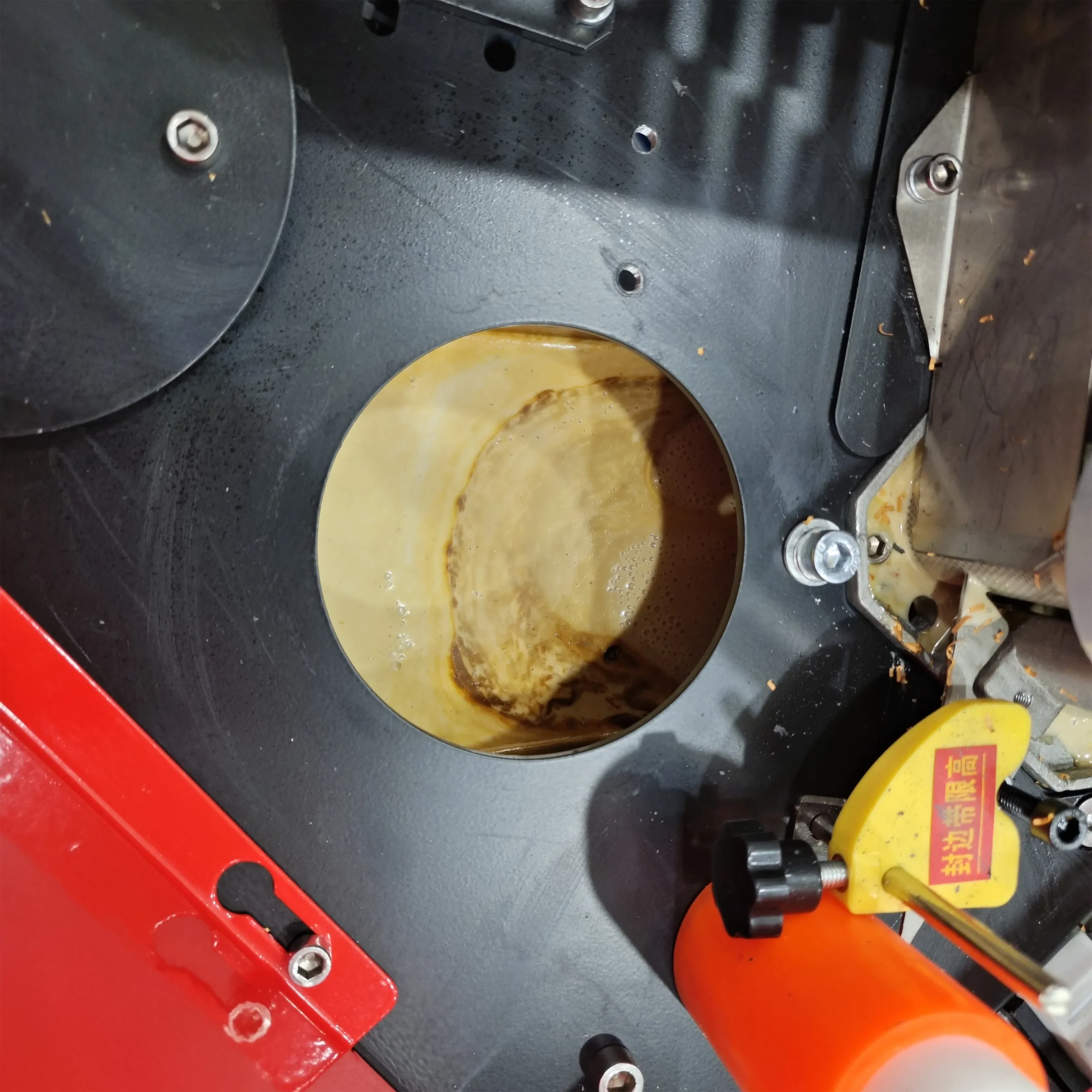
| Glue Pot Capacity | 4000 ml |
| Rated Air Pressure | 0.6–0.8 MPa |
| Overall Dimensions | 190 × 60 × 130 cm |
| Machine Weight | 150 kg |
| Glue Temperature Control | Digital display with independent switch |
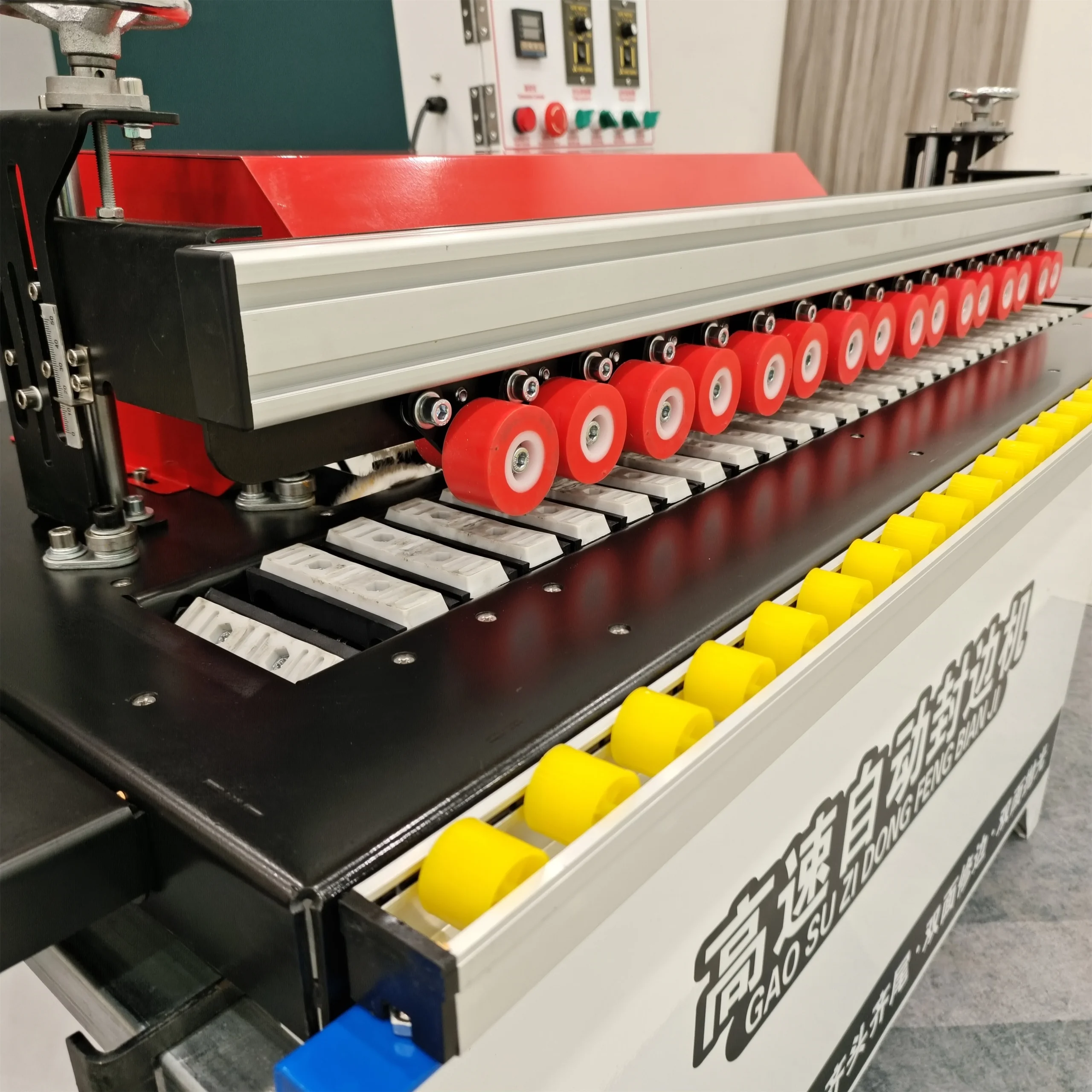
| Pressure Beam | Integrated, double rows of pressure wheels |
| Conveyor Belt Material | Silicone |
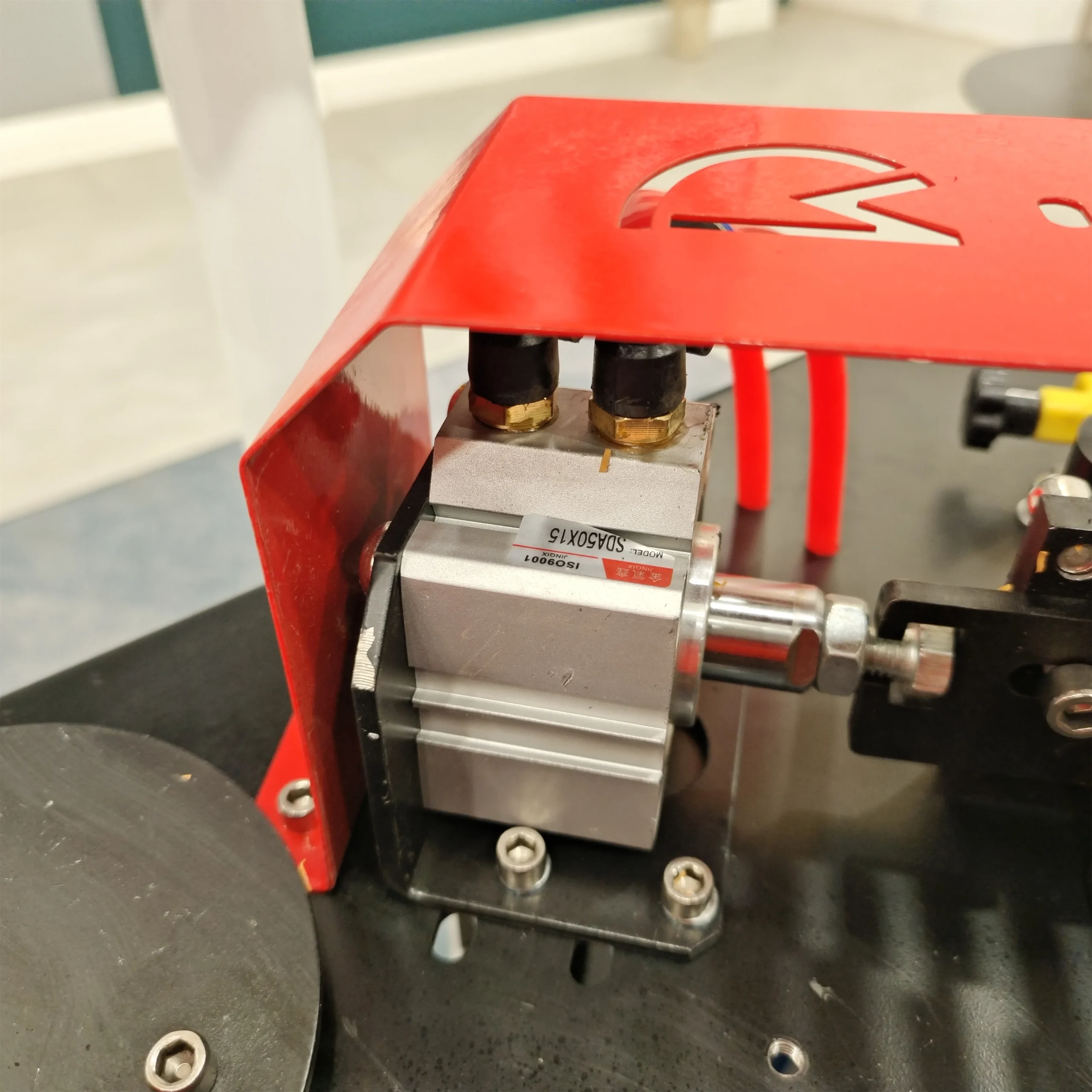
| Belt Breaking Method | Pneumatically controlled |
| Trimming Configuration | Double high-speed motors, up and down |
| Polishing Configuration | Up and down dual motors |
| Assembly State | KD packing or assembled depending on variant |
| Warranty | One year |
| Certification | CE, ISO 9001 |
Application Suitability
| Application | Material or Output |
|---|---|
| Custom cabinet door edging | PVC and melamine strips on particleboard |
| Wardrobe panel finishing | MDF sheets 10–50 mm thick with 0.5–2.5 mm banding |
| Office furniture production | Plywood panels with veneer or PVC edge banding |
| Small-batch joinery work | Solid wood panels requiring trimming and buffing |
| Shelving and storage units | Laminated boards with standard thickness edge strips |
Why Voltage Confirmation Must Precede Every Other Conversation
An automatic edge banding machine manufacturer that skips the voltage question is selling you a problem you will discover on commissioning day.
I have watched crates arrive in Bogotá and Lima with 380V three-phase motors wired into workshops running 220V single-phase. The machine does not start, the electrician rewires it incorrectly, and the glue pot overheats within a week. That failure is not a warranty issue — it is a specification gap that was never closed before the order was placed. Every export market has its own voltage and frequency standards, and confirming these details at inquiry stage prevents costly returns and weeks of idle production time. [NEED_CITE: voltage and frequency standards by export market]
Mapping the Product Family to Your Production Stage
Workshops at different stages of growth need different configurations from the same automatic edge banding machine manufacturer. A startup joinery shop cutting twenty panels per day benefits from a compact unit with basic trimming, while a furniture factory running two shifts requires the full-function model with pre-milling, multi-stage trimming, and dual polishing motors. The advantage of sourcing from one product family is that operators trained on the entry-level model already understand the control logic when the workshop scales to the full-line version.
How Machine Tiers Connect Across a Workshop Lifecycle
A cabinet maker who begins with a simple gluing-and-trimming setup will eventually need end cutting and buffing as customers demand higher finish quality. Rather than replacing the machine, the product range allows the workshop to specify the next tier up with compatible feed heights, control panel layouts, and spare part families. This continuity reduces the learning curve during expansion and keeps maintenance predictable across the production floor. [NEED_CITE: CE machinery directive requirements for industrial equipment]
Reading the Numbers That Actually Matter on the Shop Floor
The 4000 ml glue pot capacity means operators spend less time pausing production to refill adhesive during continuous runs, which matters on days when a single batch requires hundreds of linear meters of edging. The pneumatically controlled belt breaking method delivers cleaner end cuts compared to manual or spring-loaded systems, reducing the amount of rework needed on panel ends. Sheet thickness range from 10 to 50 mm covers most standard furniture panels, but buyers processing unusually thick solid wood slabs should verify feed clearance before ordering. The integrated pressure beam with double rows of silicone pressure wheels keeps panels flat against the conveyor, which directly affects glue line uniformity — a detail that becomes visible only when finished cabinets reach the customer.
The Hidden Cost of Skipping the Configuration Conversation
When a buyer selects an entry-level model based solely on price and then pushes it through volumes it was never designed to handle, the trimming motors wear prematurely and edge quality degrades within months. Similarly, specifying a full-line machine for a workshop that only processes thin melamine strips means paying for pre-milling and buffing stations that sit idle while consuming floor space and power. The mismatch is rarely obvious until the machine has been running for several weeks, at which point the production schedule cannot absorb a swap. [NEED_CITE: common causes of edge banding machine downtime in export markets]
Why Buyers Source This Range From One Manufacturer
In-house manufacturing with patented cutting mechanisms means tolerance claims can be verified during a factory visit rather than taken on faith. The full product family from entry-level to full-function allows a distributor to stock a coherent model mix for their regional market without juggling multiple suppliers. Voltage customization from 110V to 440V is treated as a standard configuration step, not a special request that delays the quotation. Four-stage quality control covering incoming material through pre-shipment verification ensures that each unit is tested under conditions matching the buyer’s actual panel materials. Engineer-led configuration recommendations arrive as formal quotations within 24 hours, so buyers can compare tiers side by side without waiting for sales follow-ups.
Documentation & Verification
- Machine specification sheet confirming voltage, frequency, and phase for your local grid
- Factory test record run on panel materials matching your actual production substrates
- Electrical schematic with confirmed wiring diagram before container loading
- Operation and maintenance manual translated into the language your operators read
- Spare parts list with part numbers matching the specific configuration shipped
- CE declaration of conformity and ISO 9001 certificate included with customs paperwork
Installation, Commissioning & Support
- Unit footprint of 190 × 60 cm requires a level concrete floor with clearance on both sides for material staging
- 4 kW power draw demands a dedicated circuit matching the confirmed voltage and phase
- KD-packed variant arrives partially disassembled and requires on-site alignment of the pressure beam
- Digital glue pot display must be calibrated to the adhesive type before first production run
- Pneumatic belt breaking system requires connection to a compressed air supply at 0.6–0.8 MPa
- Silicone conveyor belt inspection recommended weekly to prevent feed slippage on smooth laminates
What We Need to Recommend the Right Configuration
Share the primary panel materials you process daily — particleboard, MDF, plywood, or solid wood — along with the edge banding strip types and thicknesses. Tell us your local voltage, frequency, and whether the supply is single-phase or three-phase. If you are planning a phased line expansion, indicate which upstream and downstream machines are already on the floor so we can match feed heights and throughput between stations.
Frequently Asked Questions
Q: How do I decide between an entry-level and a full-function model for my workshop?
A: The decision depends on your daily panel volume and the finish quality your customers expect. Entry-level models handle basic gluing and trimming for lower volumes, while full-function configurations add end cutting, multi-stage trimming, and buffing for higher output and tighter edge quality requirements.
Q: What voltage options are available for my regional market?
A: Configurations range from 110V to 440V, with frequency and phase confirmed during the quotation stage. We verify your local grid specifications before production begins so the motor, control panel, and glue pot heater all match your site conditions upon arrival.
Q: Which edge banding materials work best with each machine tier?
A: PVC strips from 0.5 to 2.5 mm run reliably across all tiers. Melamine paper and wood veneer banding may require adjusted glue temperature and feed speed settings, which we confirm during the sample processing test before shipment.
Q: Can I add stations later if my production volume grows?
A: The product family is designed so that workshops can move to a higher-tier model within the same series. Control panel logic, spare part compatibility, and feed height standards carry across tiers, reducing the transition effort when capacity demands increase.