Description
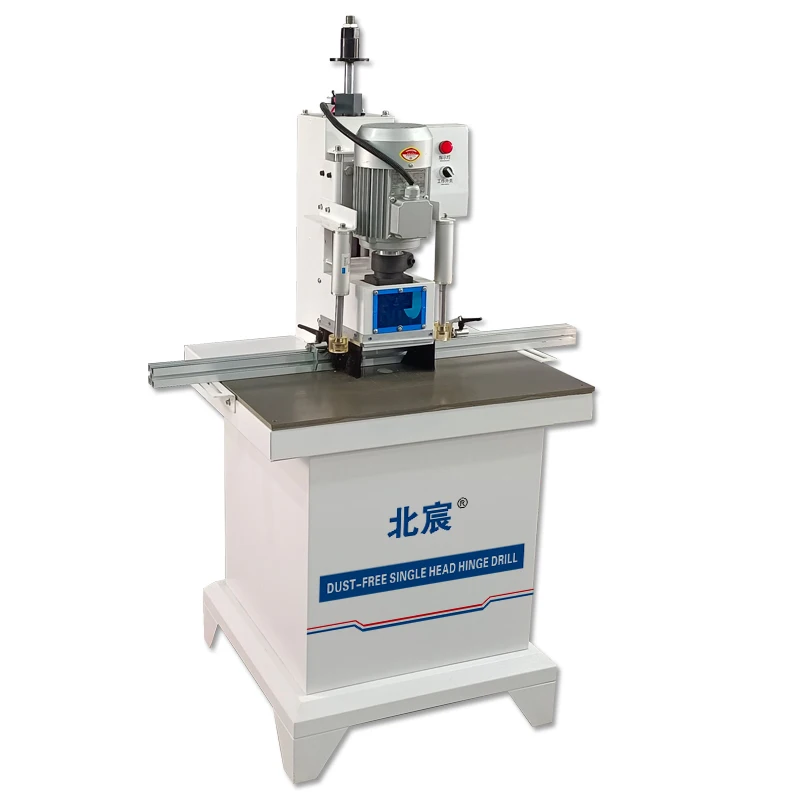
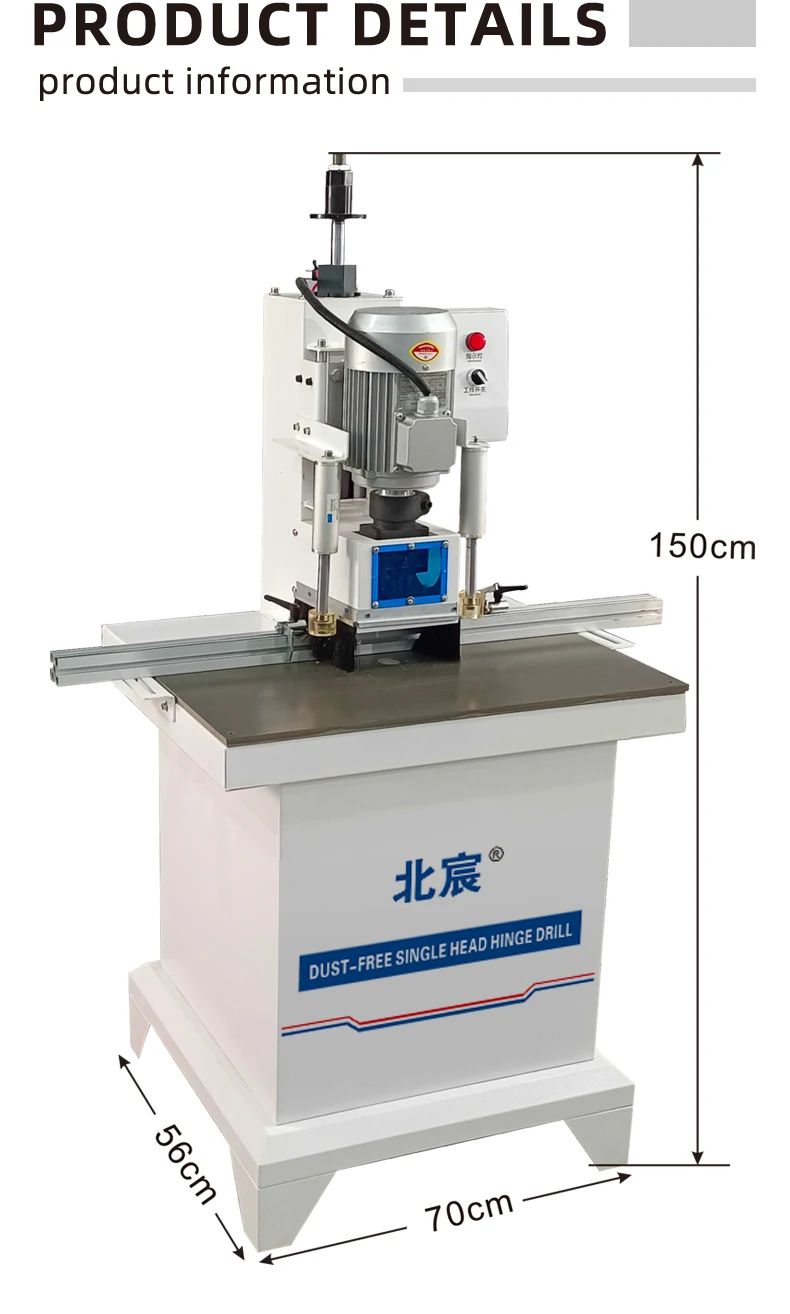
Precision guide rail boring — The JL-1 single head hinge boring machine uses a sliding rail system to position 35 mm and 3 mm drill heads in one setup, forming part of a complete boring machine family so a workshop can scale without changing supplier.
Technical Specifications
| Parameter | Value |
|---|---|
| Model | JL-1 |
| Product Type | Single Head Hinge Boring Machine |
| Rated Power | 1.5 kW |
| Voltage & Frequency | 380V/415V three-phase four-wire (frequency to be confirmed per destination market) |
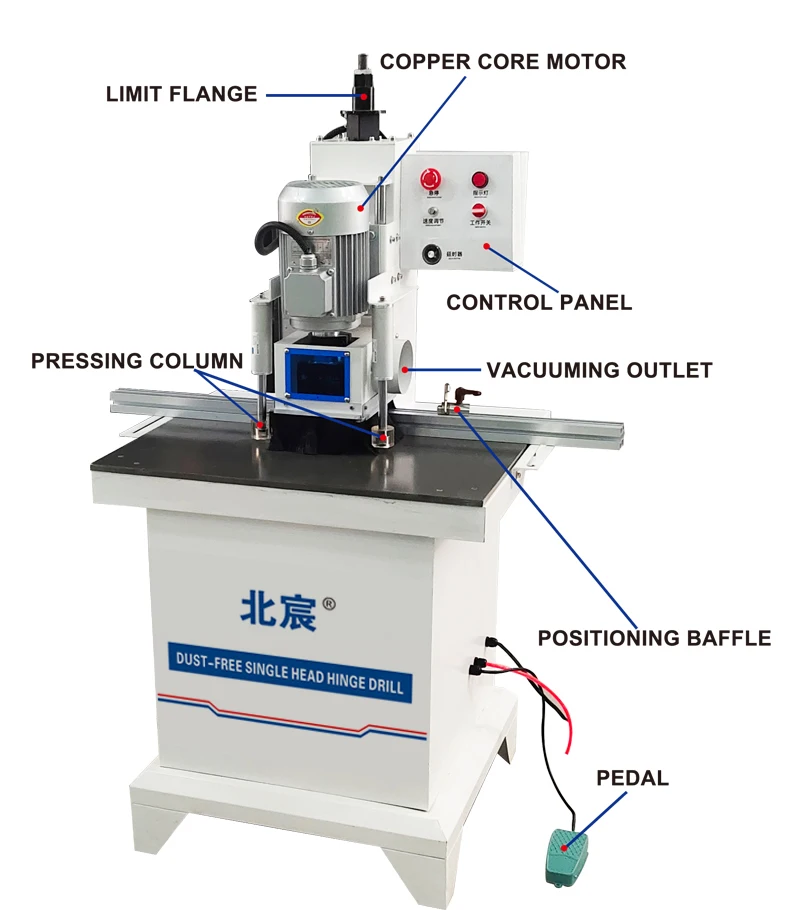
| Control System | Foot switch operation |
| Drill Capacity | 35 mm hinge cup + 3 mm pilot hole |
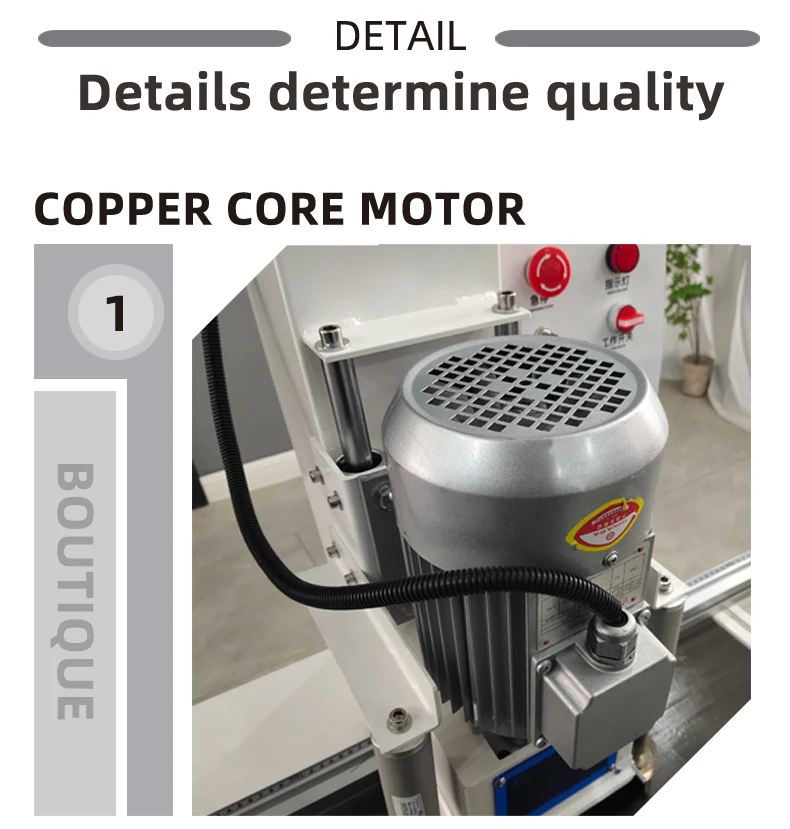
| Motor Type | Pure copper wound motor |
| Guide System | Precision guide rails for sliding head positioning |
| Overall Dimensions (L×W×H) | 700 × 560 × 1450 mm |
| Net Weight | 55 kg |
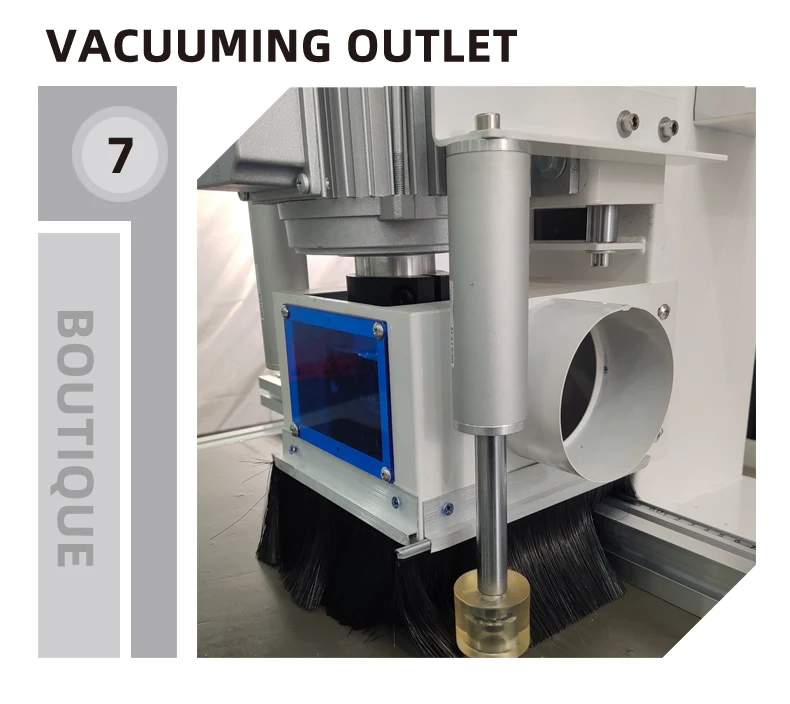
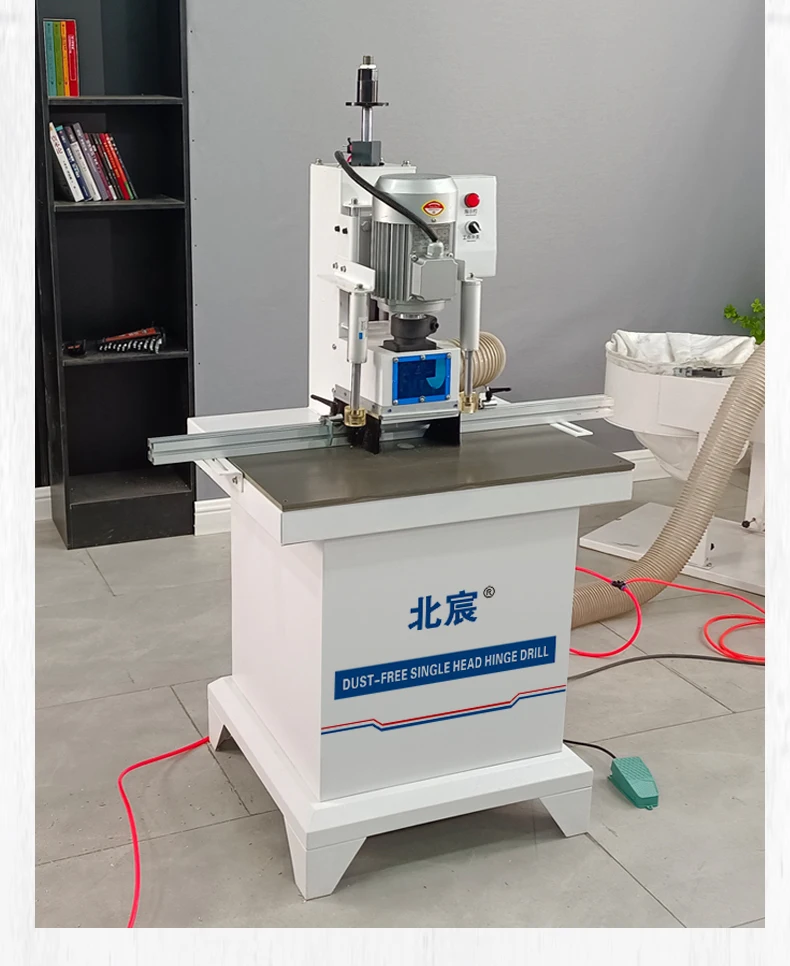
| Vacuum Requirement | External vacuum connection required |
| Language Options | Chinese and English standard; customizable to Spanish or other languages |
| Assembly State | Fully assembled (crating details to be confirmed) |
Application Suitability
| Application | Material or Output |
|---|---|
| Cabinet door hinge cup drilling | MDF, particleboard, plywood panels |
| Wardrobe panel hinge boring | Solid wood panels and veneered boards |
| Interior door hinge preparation | Laminated substrates with concealed hinge cups |
| Loose leaf hinge pilot drilling | Hardwood and softwood door stiles |
| Small-batch custom joinery | Mixed panel thicknesses across production runs |
Why the Voltage Question Should Come Before the Price
A machine that arrives with the wrong voltage sits idle until a transformer is sourced, and that downtime always costs more than a conversation.
I learned this the hard way early in my career. A hinge boring unit was shipped to a Middle East customer at 380V without confirming the local supply was actually 415V at a different frequency. The machine arrived, the operator plugged it in, and nothing happened. Three weeks later, after a transformer was retrofitted on site, production finally started. That delay could have been avoided with one document reviewed before crating [NEED_CITE: voltage and frequency standards by export market]. Every JL-1 Single Head Hinge Boring Machine for sale now ships with an electrical schematic and voltage confirmation sheet reviewed line by line before production begins.
The Full Boring Machine Family at One Source
Single machines bought in isolation often create problems when a workshop grows. A single head hinge boring unit handles hinge cups well, but once cabinet volume increases, the bottleneck shifts to multi-spindle boring for shelf pins and system holes. Sourcing the JL-1 within a broader product family means the next machine in the line comes from the same engineering team, the same spare parts inventory, and the same documentation format. The feed height, control logic, and operator interface stay familiar, reducing the commissioning gap when production scales.
Positioning Accuracy Through Guide Rail Design
Hinge cup placement must land within tight tolerances or the door will not sit square in the frame. The precision guide rails on the JL-1 allow the operator to slide the drill head to the marked position with repeatable results across hundreds of panels in a single shift. Unlike fixed-position jigs that require manual measurement for each piece, the rail system holds position once set, reducing cumulative drift during long production runs [NEED_CITE: hinge boring tolerance requirements for cabinet assembly]. This matters most when a factory is running mixed batches of cabinet doors and wardrobe panels back to back.
What the Drill Sizes Mean for Daily Output
The JL-1 carries a 35 mm large drill for standard hinge cups and a 3 mm small drill for pilot or screw holes, both mounted on the same head. This dual-drill arrangement means the operator bores the cup and the mounting screws in one clamping cycle without repositioning the panel. The foot switch control keeps both hands free to guide the workpiece, which matters when panels are large or awkwardly shaped. The pure copper motor is rated at 1.5 kW, giving enough torque to bore cleanly through dense MDF and particleboard without bogging down on deeper cuts. Panel thickness range and feed rate depend on material density and operator technique, so verifying performance on your own stock before order confirmation is always recommended.
The Hidden Cost of Piecemeal Machine Buying
Workshops that add one machine at a time from different suppliers often discover compatibility problems only after installation. Feed heights may not match between a saw and a borer. Control panels arrive in languages the operators cannot read. Spare parts come from three different countries with three different lead times. A Single Head Hinge Boring Machine for sale from a full-range manufacturer avoids these mismatches because the electrical standards, documentation language, and mechanical interfaces are coordinated across the product line [NEED_CITE: woodworking machinery compatibility standards across production lines].
Why Source This Machine Through Ruiqi
The JL-1 is manufactured in-house with precision-ground components inspected at multiple stages before assembly. Voltage customization from 110V to 440V is treated as standard procedure, not a special request, so the electrical confirmation happens during the quotation phase rather than after the crate is sealed. The four-stage quality check covers incoming material, in-process assembly, finished product testing, and pre-shipment verification with a factory test record documenting actual bore accuracy on the agreed panel material. Engineer-led configuration means you receive a formal proposal within one working day that accounts for your local power supply and operator language from the start.
Documentation & Verification
- Electrical schematic confirming voltage and frequency match for your destination market
- Factory test record showing bore positions drilled on your specified panel material
- Machine specification sheet listing drill sizes, motor rating, and guide rail travel
- Operation and maintenance manual written in your agreed operator language
- CE declaration of conformity and ISO 9001 certificate for customs clearance
Installation, Commissioning & Support
- Requires a dedicated 1.5 kW circuit at the confirmed voltage and frequency
- External vacuum connection must be routed before first operation to manage drilling dust
- Arrives fully assembled; position on a level floor within the 700 × 560 mm footprint
- Foot switch calibration and guide rail alignment verified during commissioning walkthrough
- Spare drill bits and motor brushes listed in the included parts inventory
What to Include With Your Inquiry
Send your panel material types and thickness range so the bore depth and speed can be matched to your stock. Confirm your workshop voltage and frequency to avoid any transformer delay on arrival. Specify the language your operators read so the control labels and manual are prepared accordingly. If you have an existing production line, share the upstream saw and downstream assembly setup so the JL-1 can be positioned correctly in the workflow.
Frequently Asked Questions
Q: Where does the JL-1 sit in the full hinge boring range, and when should I move to multi-head models?
A: The JL-1 is the entry-level single head hinge boring machine in a broader family. It suits workshops producing cabinet doors and wardrobe panels at moderate volume. When daily output grows and hinge cup drilling becomes a bottleneck, multi-spindle configurations from the same product family handle multiple bores per cycle without requiring a new supplier relationship or operator retraining.
Q: How is voltage and frequency confirmed before shipment?
A: During the quotation phase, your local power supply details are recorded on an electrical confirmation document. The engineering team reviews the schematic against your stated voltage and frequency before production begins. A signed copy ships with the machine so there is no ambiguity when the unit arrives on site and connects to your workshop supply.
Q: Can the manual and control labels be supplied in my operator’s language?
A: Yes. Chinese and English are standard options, and Spanish or other languages are available on request. The language selection is confirmed during the specification review so that the physical control panel labels, operation manual, and maintenance guide all arrive in a language your team can read without translation delays.
Q: What documentation ships with the machine for customs and commissioning?
A: Each JL-1 ships with a CE declaration of conformity, ISO 9001 certificate, machine specification sheet, electrical schematic, factory test record, operation manual in the agreed language, spare parts list, and packing photographs. These documents support customs clearance and provide the reference material needed for first-day commissioning.
Q: Can I visit the factory or request a sample boring test before ordering?
A: Factory visits are welcome and can be arranged to see the JL-1 in production. If travel is not practical, a sample boring test on your own panel stock can be conducted and documented with a test record showing bore accuracy, edge quality, and cycle timing before you commit to an order.