Description
Voltage-Locked Configuration — every portable electric double table saw leaves the factory with confirmed voltage, frequency, and plug type matching the buyer’s local grid, eliminating the motor burnout risk that plagues piecemeal machinery orders.
Technical Specifications
| Parameter | Value |
|---|---|
| Product Type | Portable Electric Double Table Saw |
| Total Power | 6200W |
| Main Saw Power | 3000W |
| Main Saw Speed | 3800 r/min |
| Main Saw Blade Diameter | 20 cm |
| Sub Saw Power | 2000W |
| Sub Saw Speed | 13000 r/min |
| Vacuum Cleaner Power | 1200W |
| Maximum Plank Cutting Length | 2.44 m |
| Maximum Plank Cutting Thickness | 4 cm |
| Net Weight | 22 kg |
| Product Dimensions (L×W×H) | 50 × 30 × 38 cm |
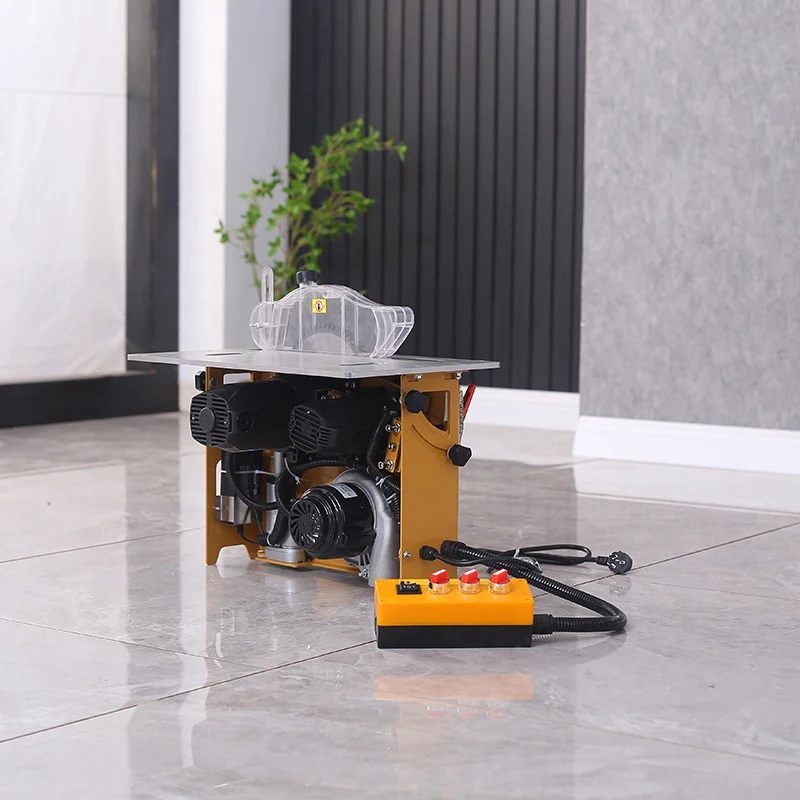
| Assembly State | Portable, benchtop format |
| Plug Options | EU / USA / AU / UK |
| Language Options | Chinese + English standard; English-only, Spanish, or other on request |
| Dust Extraction | Integrated vacuum cleaner included |
Application Suitability
| Application | Material or Output |
|---|---|
| Custom cabinet panel sizing | MDF and particleboard up to 4 cm thick |
| Joinery workshop cross-cutting | Plywood sheets up to 2.44 m long |
| On-site carpentry and mobile fitting | Solid wood panels in space-constrained environments |
| Small-batch furniture production | Laminated boards requiring chip-free dual-saw cuts |
| Renovation and fit-out crews | Mixed panel materials transported between job sites |
Why the Voltage Question Must Come Before the Saw Selection
Confirm local voltage and frequency before you compare any portable saw models — a mismatched motor is a dead motor.
Single machines ordered without locking down the destination voltage arrive on site and either refuse to start or destroy the main winding within minutes. I have seen a precision sliding table saw ship to a Southeast Asian furniture factory with the voltage left at a default setting. The moment the operator flipped the breaker, the main motor burned out. Three weeks of downtime followed while a replacement unit was built and freighted. That failure was not a quality problem; it was a configuration problem that a two-minute conversation before the invoice would have prevented [NEED_CITE: voltage and frequency standards by export market]. An Electric Double Table Saw manufacturer that asks detailed electrical questions up front is protecting your production schedule, not delaying your order.
Where This Saw Sits in the Catalogue
This portable double table saw occupies the compact-format tier within a broader saw range that stretches from benchtop units to full-size sliding table saws with three-metre travel. Buyers evaluating a complete workshop fit-out can use this model as a mobile or secondary cutting station while a larger primary saw handles high-volume ripping. The catalogue structure means every station — saw, edge bander, boring machine — can be sourced from one product family, keeping feed heights and panel handling dimensions compatible across the line. Choosing an Electric Double Table Saw manufacturer that offers this range prevents the throughput mismatches that appear when machines are bought piecemeal from unrelated suppliers.
Dual-Saw Architecture for Laminated Panels
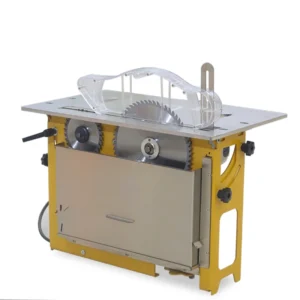
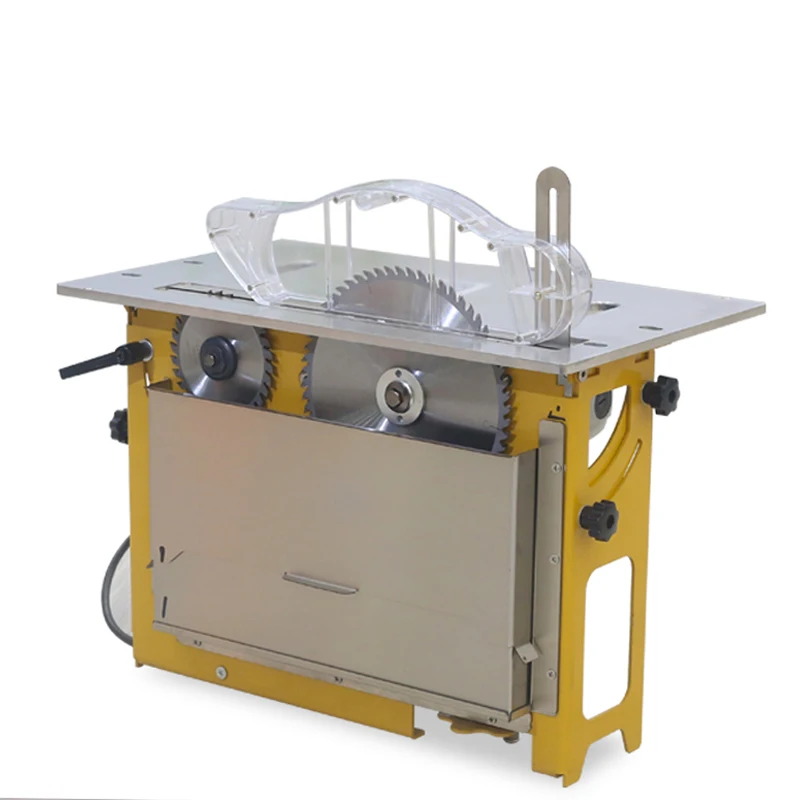
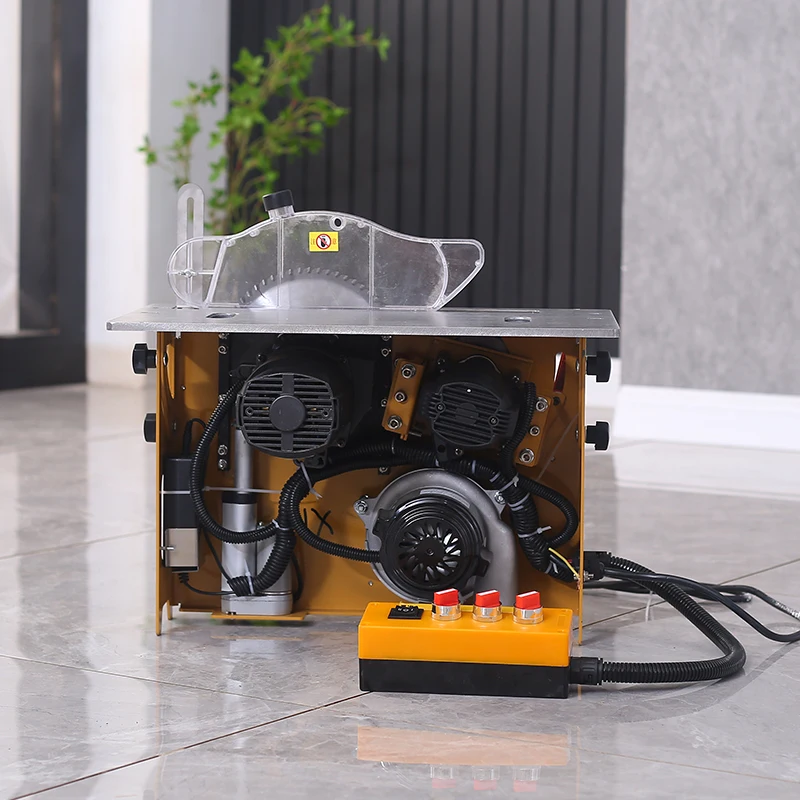
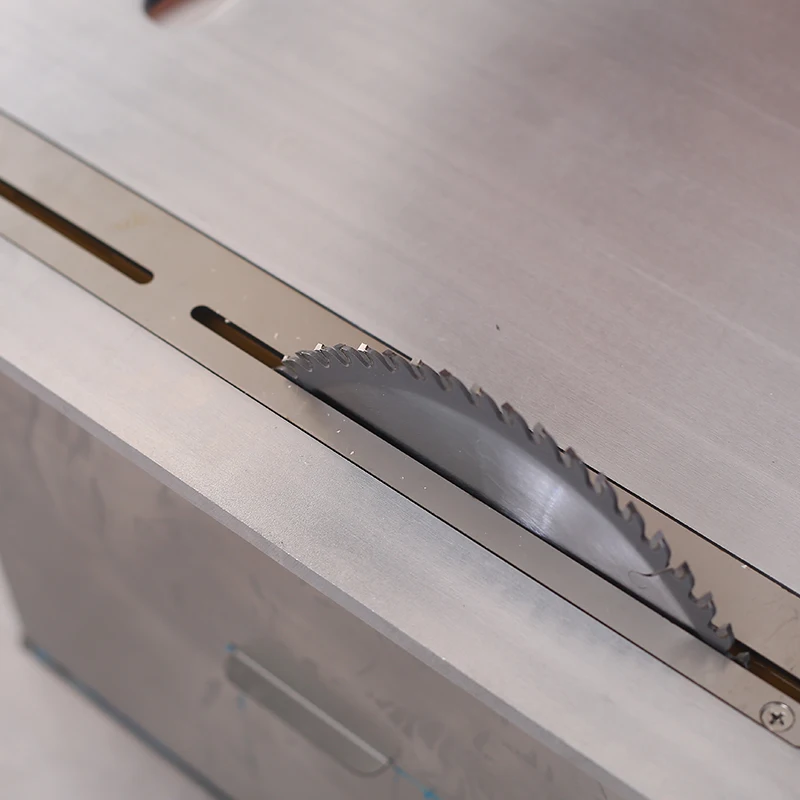
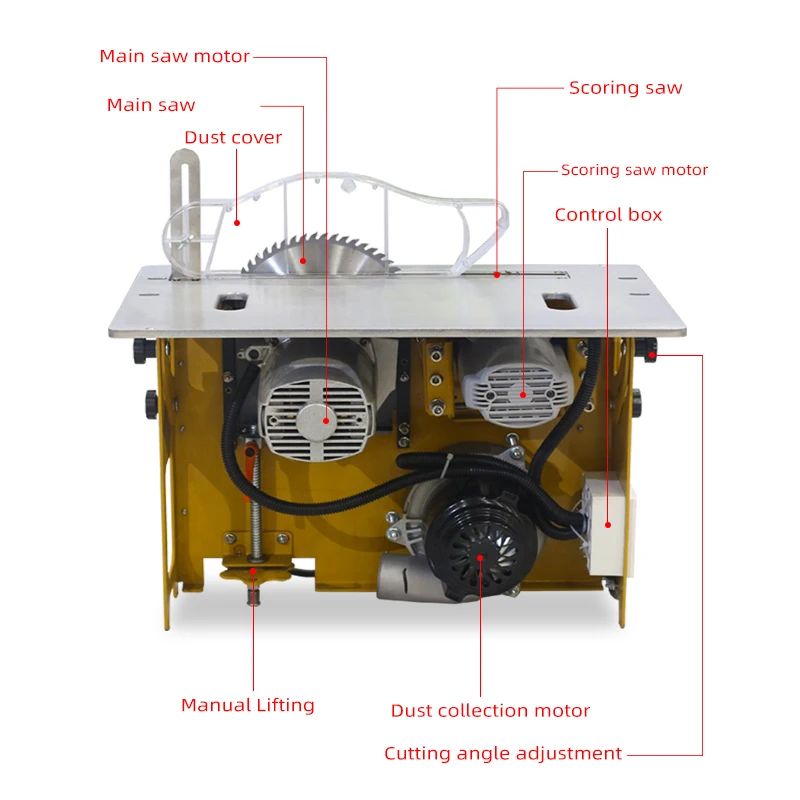
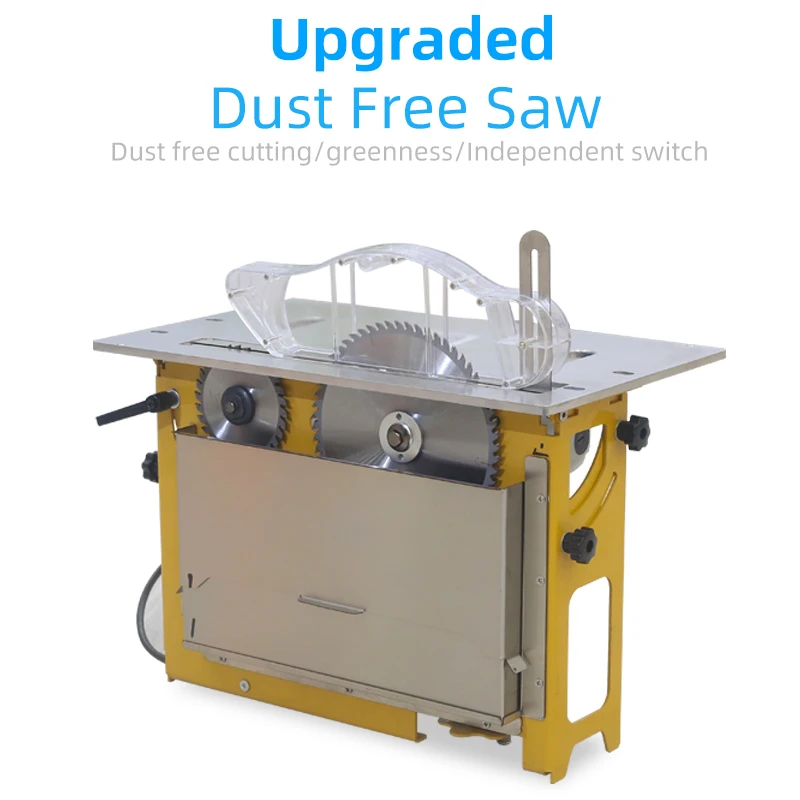
The main saw at 3800 r/min scores through the panel body while the sub saw at 13000 r/min pre-cuts the bottom laminate, preventing chip-out on melamine-faced MDF and veneered plywood. This two-blade arrangement matters most when cut edges will be visible in the assembled cabinet or shelf unit, eliminating the need for secondary sanding or edge repair before banding. The integrated 1200W vacuum captures dust at the blade guard, keeping the work surface clear and reducing airborne particulate in enclosed workshops [NEED_CITE: occupational dust exposure limits in woodworking facilities]. For buyers comparing an Electric Double Table Saw manufacturer on cut quality alone, the dual-saw configuration is the single most relevant hardware distinction.
Reading the Numbers That Matter
The 4 cm maximum cutting thickness defines the upper boundary for solid wood stock and double-stacked MDF panels; exceeding it risks blade deflection and inaccurate rip cuts. At 2.44 m maximum cutting length, the saw accommodates standard full-size sheets in one pass, avoiding the repositioning errors that occur when operators must flip oversized boards mid-cut. The 22 kg net weight and 50 × 30 × 38 cm footprint mean the unit can be lifted by one person onto a workbench or loaded into a van, which is the practical reason portable saws exist alongside their stationary counterparts. Main saw blade diameter at 20 cm limits the depth of cut but keeps replacement blade costs and availability straightforward for most markets.
The Cost of Skipping Configuration Checks
When a portable saw arrives with a control panel in a language the operator cannot read, commissioning stalls until someone translates the menus or a new board is shipped. Voltage mismatches cause immediate motor failure, and the resulting production gap often exceeds the lead time of a replacement machine [NEED_CITE: CE machinery directive requirements for industrial equipment]. Buyers who selected a machine based on catalogue specs alone, without confirming plug type or frequency, end up purchasing adapters and step-down transformers that introduce their own failure points. These are not warranty claims — they are configuration gaps that fall outside manufacturer responsibility once the unit leaves the factory.
What Manufacturing Depth Means for This Product
In-house production with patented cutting mechanisms ensures the dual-saw alignment is set and verified under one roof, not assembled from outsourced sub-frames with unknown tolerances. A four-stage quality process covering incoming material, in-process assembly, finished product, and pre-shipment testing catches wiring errors before the crate is sealed. Voltage customization from 110V to 440V and multilingual control panels are treated as standard options, not special requests that add weeks to delivery. The same product family spans entry-level and full-function models, so a workshop can add a larger saw later without switching suppliers. Factory visits are welcomed, letting buyers witness the grinding and inspection stages that determine long-term cutting accuracy.
Documentation & Verification
- Machine specification sheet confirming dual-saw power ratings and cutting envelope
- Electrical schematic with voltage and frequency locked to destination market
- Factory test record on buyer-specified panel material and thickness
- Operation and maintenance manual delivered in agreed operator language
- Packing photographs showing plug type and control panel before crate sealing
- Customs documentation support including CE declaration of conformity
Installation, Commissioning & Support
- Benchtop placement requires a stable surface rated for 22 kg plus workpiece load
- Dedicated circuit matching confirmed voltage and plug type before first power-on
- Dual-saw blade alignment check using test cuts on buyer-supplied panel sample
- Integrated vacuum hose routing verified for dust-free operation in enclosed spaces
- Spare blade and brush inventory recommended based on expected weekly cutting volume
- Multilingual control panel walkthrough included with operation manual at delivery
What to Include in Your Inquiry
Specify the panel materials you cut most often — MDF, particleboard, plywood, or solid wood — along with typical sheet dimensions and thickness range. State your local voltage and frequency so the correct motor winding and plug are fitted at the factory. Indicate whether this saw will operate standalone or feed into downstream edge banding and boring stations, so the configuration can be matched to your line layout.
Frequently Asked Questions
Q: How does this portable model compare with full-size sliding table saws in the catalogue?
A: The portable double table saw handles sheets up to 2.44 m at a compact footprint, suited for mobile crews and small workshops. Full-size sliding table saws in the same catalogue offer longer travel, heavier frames, and higher feed rates for production-volume ripping. The choice depends on daily panel volume and whether the saw must move between sites.
Q: What voltage and plug options are available for my market?
A: The saw supports voltage customization from 110V to 440V with plug options including EU, USA, AU, and UK standards. Voltage and frequency must be confirmed before order so the correct motor winding and plug are fitted at the factory, preventing on-site motor failure.
Q: Can the control panel language be customised to my operator’s language?
A: Yes. Chinese and English are standard, with English-only, Spanish, or other languages available on request. Confirming the operator’s language before production ensures the control panel arrives readable, avoiding commissioning delays that occur when menus must be translated after delivery.
Q: How does this saw integrate with edge banders and boring machines in a growing workshop?
A: This portable saw can serve as a secondary or mobile cutting station while larger catalogue models handle primary sizing. Sourcing from one Electric Double Table Saw manufacturer keeps panel handling dimensions and feed heights compatible across stations, preventing the throughput bottlenecks that appear when machines from unrelated suppliers are combined.
Q: What panel materials and thicknesses can be cut cleanly with the dual-saw setup?
A: The dual main and sub saw configuration scores laminated surfaces before the main blade passes through, producing chip-free edges on melamine MDF, veneered plywood, and particleboard up to 4 cm thick. Solid wood panels within the same thickness range also benefit from the pre-scoring cut on the reverse face.