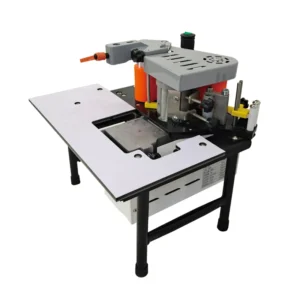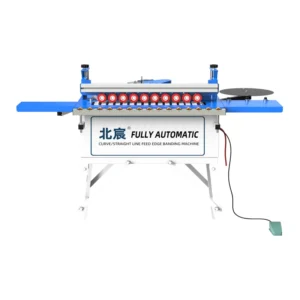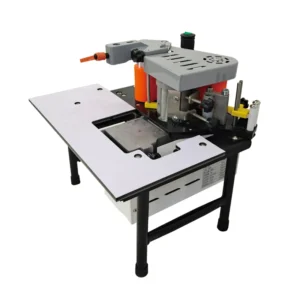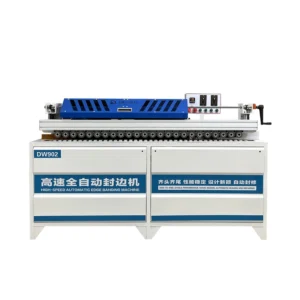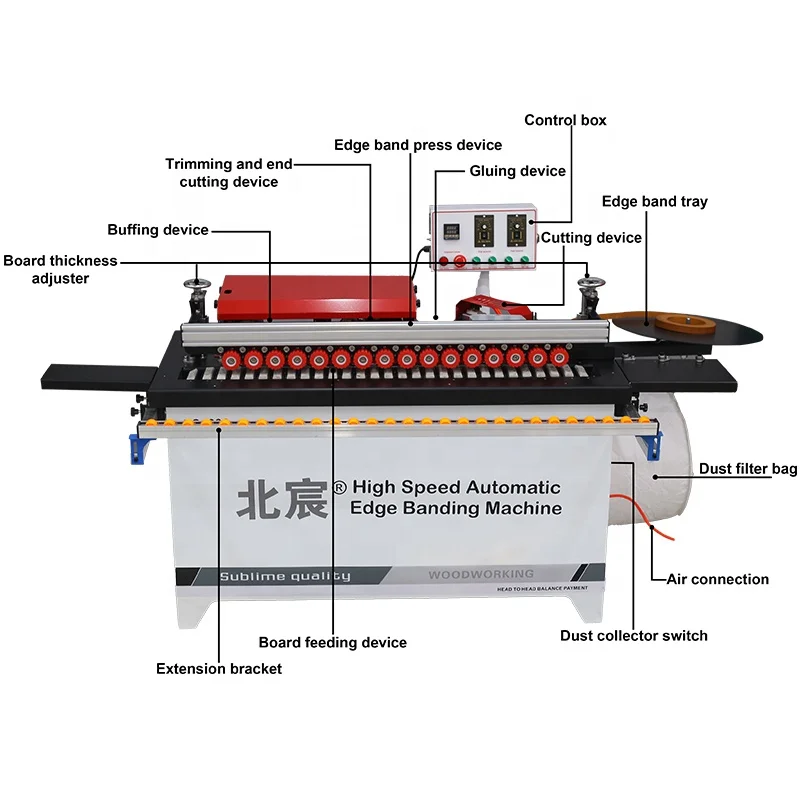
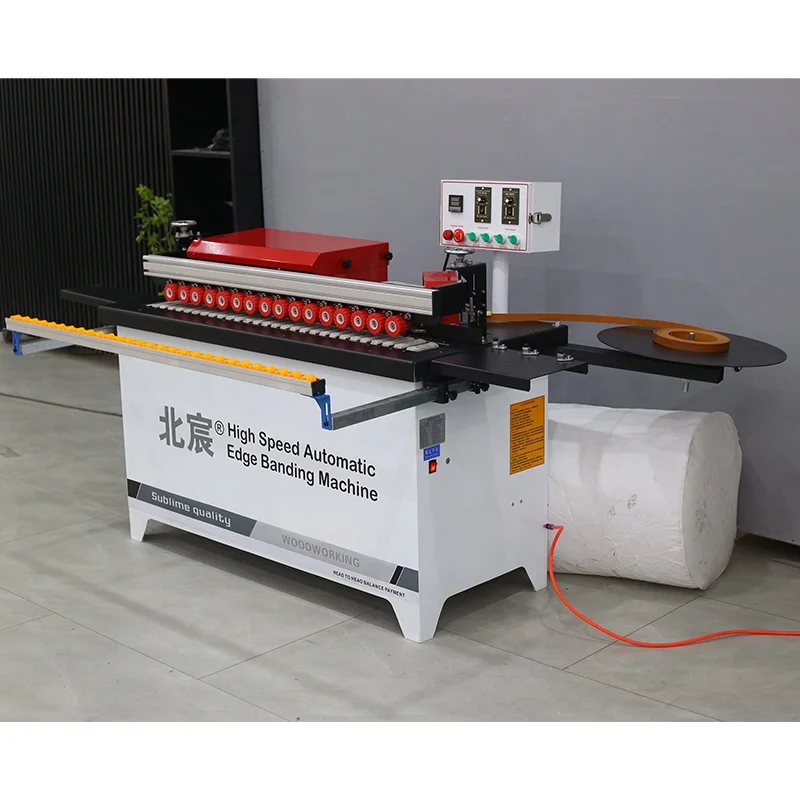
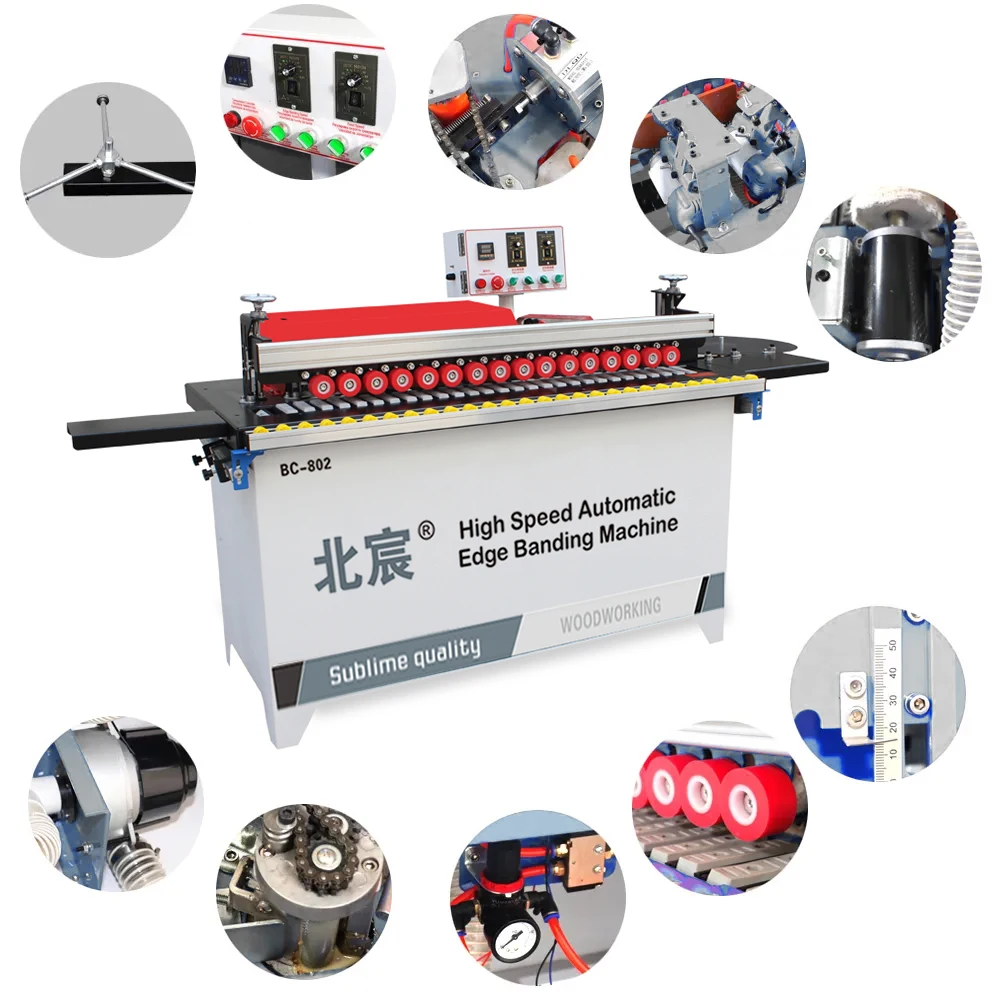

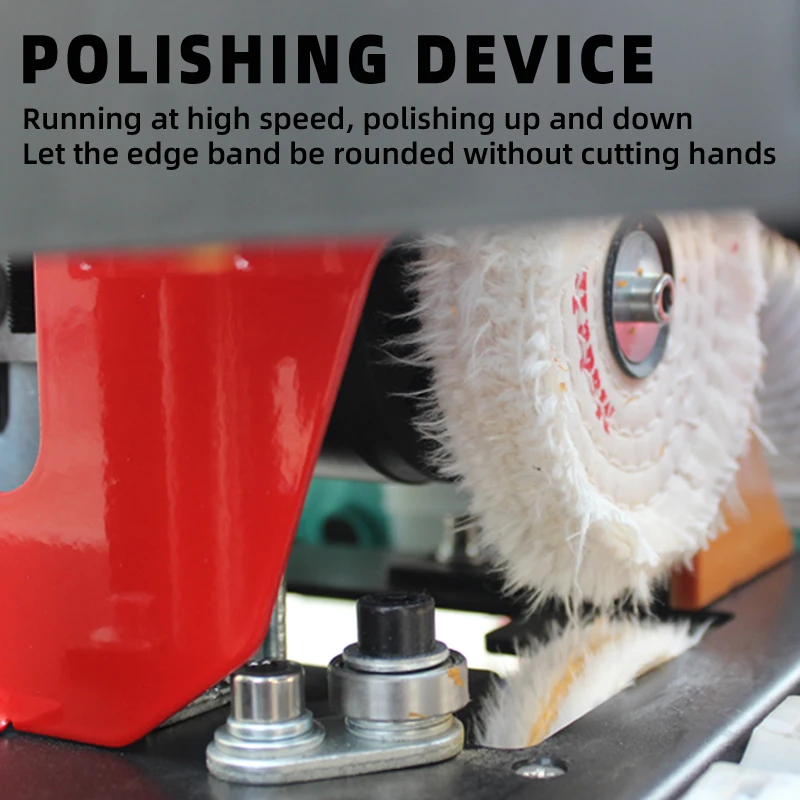
Description
Customized Configuration — Every DW802 unit ships with voltage matched to the destination grid and control panels printed in the operator’s language, verified before dispatch.
Technical Specifications
| Parameter | Value |
|---|---|
| Model | DW802 |
| Product Type | Automatic Edge Banding Machine |
| Total Power | 4200W |
| Voltage Options | 220V / 380V / Customizable |
| Edge Banding Height | 0–50mm |
| Edge Banding Thickness | 0.3–3mm |
| Minimum Sheet Length | 250mm |
| Minimum Sheet Width | 100mm |
| Edge Feed Motor Power | 140W |
| Transmission Motor Power | 140W |
| Trimming Motor Power | 800W × 2 |
| Polishing Motor Power | 180W × 2 |
| Vacuum Power | 1200W |
| Glue Pot Capacity | 4000ml |
| Air Source Pressure | 0.4–0.8 MPa |
| Product Dimensions | 1300 × 600 × 950mm |
| Product Weight | 135kg |
| Control Panel Language | Chinese / English (other languages customizable) |
| Plug Options | EU / USA / AU / UK |
| Assembly State | Fully assembled |
| Certification | CE |
Application Suitability
| Application | Material or Output |
|---|---|
| Custom home furniture edge sealing | MDF, particleboard, ecological board |
| Small-batch cabinet production | Plywood, blockboard with PVC or veneer tape |
| Joinery workshop automation | Solid wood panels requiring clean trim and polish |
| Regional distributor stocking | Compact entry-level automatic edge bander for resale |
Why Voltage Must Be Settled Before an Automatic Edge Banding Machine Manufacturer Quotes Price
A machine built for 380V 50Hz will not survive a 440V 60Hz grid — the inverter trips or burns within the first hour.
I spent years running installations across West Africa and South Asia, and the single most disruptive failure mode was electrical mismatch. The Automatic Edge Banding Machine manufacturer sends the unit, the buyer plugs it in, and the variable-frequency drive faults immediately. Three weeks of downtime follow while replacement boards ship internationally. This problem does not show up in a brochure; it only reveals itself at the first power-on. [NEED_CITE: voltage and frequency standards by export market]
Mapping the Model Tiers in the Ruiqi Catalogue
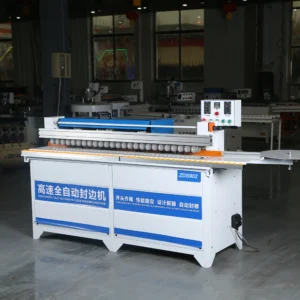
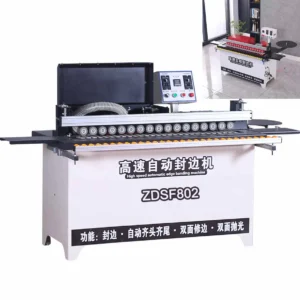
The DW802 occupies the entry point of Ruiqi’s edge bander lineup, designed for workshops that are transitioning from manual edge banding to an automated cell. As an Automatic Edge Banding Machine manufacturer, Ruiqi structures the catalogue so that buyers can start here and move to pre-milling or multi-station models as throughput requirements grow, without changing the supplier relationship or retraining operators on a different control philosophy.
Where Entry-Level Meets Production Reality
A workshop processing several dozen panels per day will find the DW802 sufficient through its trimming and polishing sequence. However, once daily volumes push into continuous shift work with frequent material changeovers, higher-tier models with rapid glue-pot swap or CNC-controlled trimming become necessary. Choosing the right tier at the outset prevents the common mistake of pushing an entry-level unit beyond its intended duty cycle. [NEED_CITE: CE machinery directive requirements for industrial equipment]
How Key Parameters Shape the Edge Finish
The 4000ml glue pot allows sustained operation without frequent refills, reducing pauses mid-batch. The dual 800W trimming motors handle both sides of the panel in one pass, which directly affects edge squareness and downstream assembly fit. Vacuum hold-down at 1200W keeps lightweight MDF and thin particleboard flat against the silicone belt, preventing the micro-shift that causes visible glue lines. The 0.3–3mm banding thickness range covers standard PVC and melamine tapes used in furniture production, while the 0–50mm height window accommodates everything from thin shelf boards to thicker worktop panels.
The Cost of Skipping Specification Confirmation
When a buyer orders without locking in the edge banding height against their actual board stack, the machine may physically reject the thickest panels in the production schedule. Similarly, ordering a unit with a control panel in a language the floor operators cannot read stalls commissioning until re-labeling or translation arrives. These issues never appear on a quotation summary but they halt real production schedules. [NEED_CITE: common commissioning delays in imported woodworking machinery]
Why Buyers Source This Range Here
In-house manufacturing means the cutting mechanism patents and precision-ground components are controlled from raw material to final test, not assembled from outsourced sub-assemblies. The four-stage quality control process — incoming inspection, in-process checks, finished-product verification, and pre-shipment testing — is applied to every DW802 before it leaves the facility. Voltage, plug type, and panel language are confirmed during the quotation stage rather than treated as afterthoughts. Factory visits are encouraged so buyers can run their own sample boards on the actual machine they will receive.
Documentation & Verification
- CE declaration of conformity covering the DW802 electrical and mechanical safety scope
- Machine specification sheet reflecting confirmed voltage, plug type, and panel language
- Factory test record on buyer’s board thickness and edge banding material before dispatch
- Electrical schematic with confirmed voltage and frequency for local electrician reference
- Operation and maintenance manual in the agreed language with spare parts list
Installation, Commissioning & Support
- Requires a level floor area of approximately 1300 × 600mm with clearance on both ends for panel feeding
- Dedicated circuit matching confirmed voltage and a 0.4–0.8 MPa compressed air line at the inlet
- Ships fully assembled — connect power and air, then run the first calibration board
- Glue pot temperature and feed speed set during commissioning to match the specific banding tape
- Operator training covers loading sequence, emergency stop locations, and daily glue-pot cleaning
- Spare trimming blades and polishing wheels included in the initial shipment
What to Prepare Before Requesting a Quote
Share the board materials you process most often, including thickness range and the edge banding tape type you intend to use. Confirm the local three-phase voltage and frequency at the installation site so the correct transformer and motor configuration can be selected. If you plan to integrate the DW802 into an existing line, provide the upstream and downstream equipment models so feed height and conveyor direction can be matched.
Frequently Asked Questions
Q: What production volume is the DW802 designed to handle?
A: The DW802 sits at the entry level of the Ruiqi catalogue, intended for custom furniture workshops and small panel processing shops running tens to low hundreds of panels per day. If your daily volume requires continuous shift operation with minimal changeover time, higher-tier models with additional automation stations would be a more appropriate fit within the same product family.
Q: How does the upgrade path work when production scales up?
A: Moving to a higher-tier Ruiqi edge bander retains the same control logic and operator workflow, reducing retraining time. Key differences include pre-milling stations for uneven panel edges, larger glue pots for uninterrupted long runs, and automated tape-loading systems. Your existing DW802 can be redeployed to a secondary line or a satellite workshop.
Q: Can the voltage and plug be set for my country’s grid standard?
A: Yes. Voltage is configurable across 220V, 380V, or other values, and plug types include EU, USA, AU, and UK standards. The exact voltage and frequency at your site must be confirmed before production begins so that motors, transformers, and the variable-frequency drive are wound and calibrated correctly for safe operation.
Q: Does the minimum sheet size of 250mm × 100mm affect nesting layout?
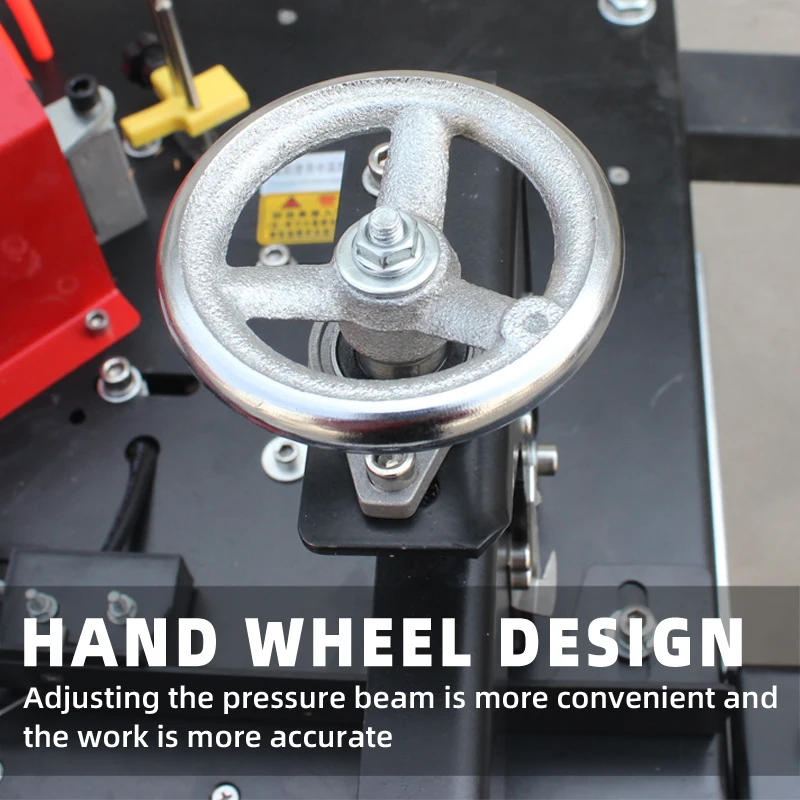
A: Panels smaller than this minimum cannot be fed through the DW802 because the rollers and pressure beam require a minimum contact area to grip and advance the board. When designing nesting patterns on a panel saw, keep this floor in mind so that offcuts intended for edge banding remain above the threshold.
Q: How do I choose the right model across the full Ruiqi edge bander range?
A: Start with your daily panel count, the thickest board in your schedule, and whether you need pre-milling for uneven substrate edges. The Ruiqi catalogue spans from the DW802 for small workshops through to full-function models with pre-milling, corner rounding, and buffing. An engineer configuration proposal can map your specific requirements to the appropriate tier.