Description
Voltage-Verified Configuration — every ZDSF910H fully automatic edge banding machine ships with an electrical schematic confirming local frequency and voltage before the crate is sealed.
Technical Specifications
| Parameter | Value |
|---|---|
| Model | ZDSF910H |
| Product Type | Fully Automatic Edge Banding Machine |
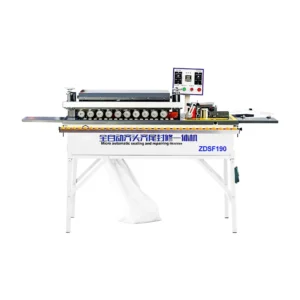
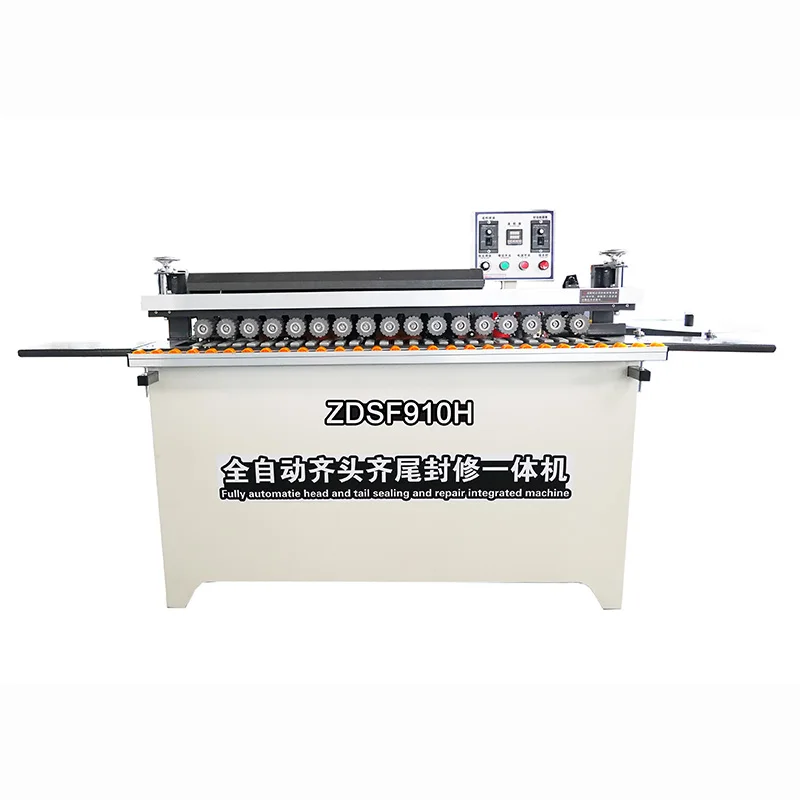
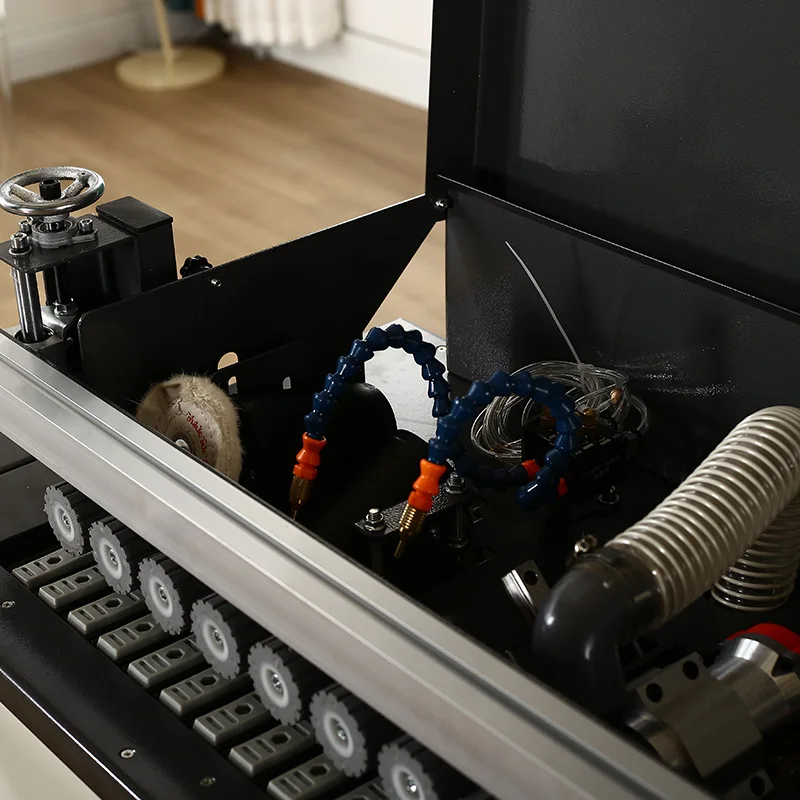
| Function Sequence | Automatic plate feeding, double-sided gluing, end cutting, upper and lower polishing, head and tail trimming, integrated dust collector |
| Voltage & Frequency | 220V 50Hz (configurable from 110V to 440V) |
| Rated Power | 4 kW |
| Heating Power | 800 W |
| Trimming Power | 800 W × 2 |
| Polishing Power | 180 W × 2 |
| Suction Power | 1200 W |
| Belt Power | 25 W |
| Transmission Power | 120 W |
| Rated Air Pressure | 0.4–0.6 MPa |
| Sheet Thickness Range | 10–50 mm |
| Strip Thickness Range | 0.5–2.5 mm |
| Minimum Board Width | 25 mm |
| Glue Pot Capacity | 1000 ml |
| Trimming Mechanism | Square slide rail profiling with imported 4-blade alloy arc knife |
| Transmission System | Steel rod slide rail with double-row rubber pressure wheels |
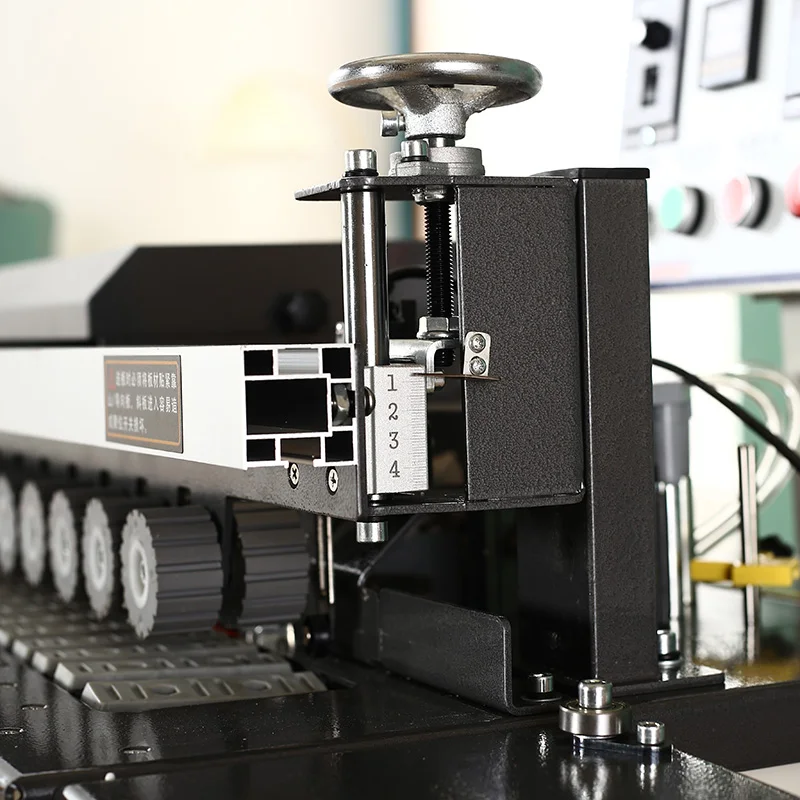
| Pressure Beam | Adjustable aluminum alloy |
| Edge Strip Cutting | Pneumatically controlled |
| Overall Dimensions (L×W×H) | 1300 × 560 × 1090 mm |
| Net Weight | 185 kg |
| Warranty | 1 year |
Application Suitability
| Application | Material or Output |
|---|---|
| Small-scale custom furniture production | MDF, plywood, and particleboard panels with PVC edge banding |
| Cabinet drawer sides and narrow shelving | Solid wood and composite boards from 25 mm minimum width |
| Joinery workshop transition from manual banding | Veneer and melamine strips on substrate panels |
| Sample and prototype furniture runs | Mixed board materials with varying strip thicknesses from 0.5 to 2.5 mm |
Why Voltage Confirmation Must Precede Every Fully Automatic Edge Banding Machine Order
A machine wired for the wrong frequency will run — but the glue pot and trimming motors will not hold tolerance.
I once watched a workshop in Southeast Asia unbox a bander that powered on perfectly, yet the heating element could never stabilize at the set temperature. The local grid ran 60Hz while the machine was built for 50Hz. The operator spent weeks blaming the glue formulation before anyone checked the nameplate. Mismatches like this surface only when production starts, not during the unboxing [NEED_CITE: voltage and frequency standards by export market]. Specifying your facility’s exact electrical standard before quotation eliminates this failure mode entirely.
Where This Model Sits in a Growing Workshop Line
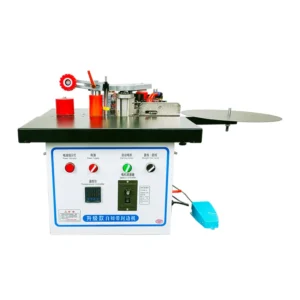
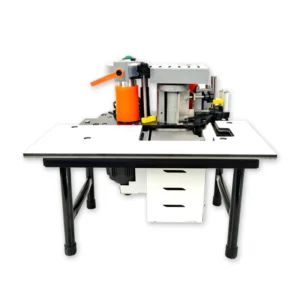
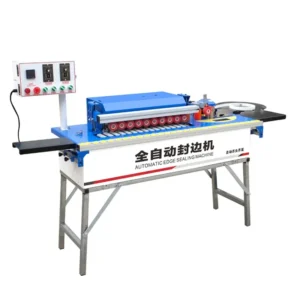
The ZDSF910H fully automatic edge banding machine occupies the entry point of Ruiqi’s edge banding range, delivering the complete function sequence — gluing, end cutting, trimming, polishing — within a 1300 mm footprint. Small workshops replacing manual banding gain consistent edge quality without surrendering floor space needed for panel saws and boring stations nearby.
Compatibility Across Edge Banding Materials
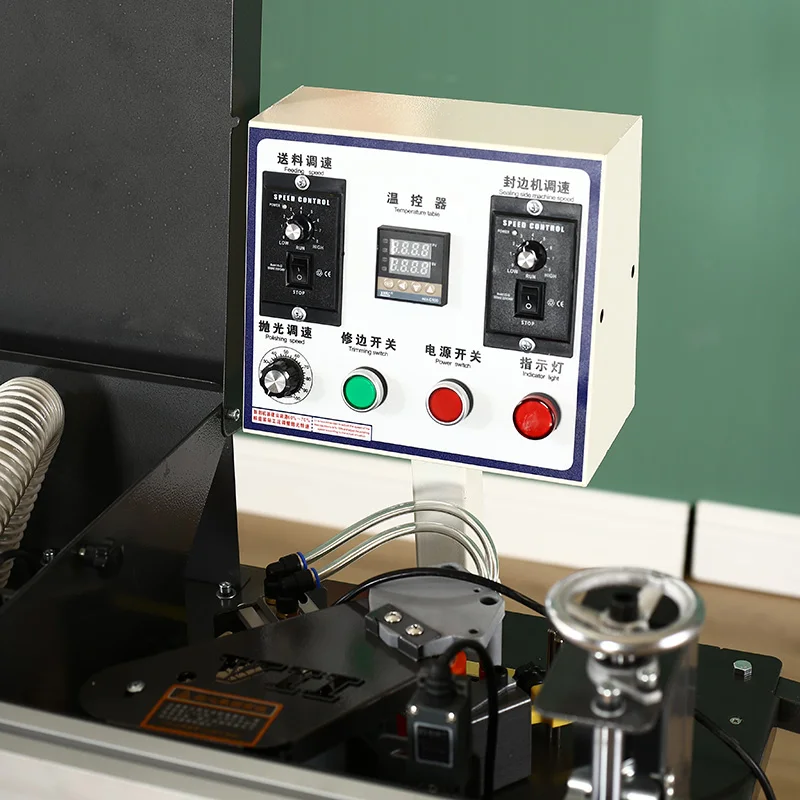
Hot-melt adhesives behave differently on PVC, veneer, and melamine strips. The 800 W heating element paired with a 1000 ml glue pot gives operators enough thermal mass to hold steady temperature across these materials. Pneumatically controlled strip cutting ensures clean ends on rigid PVC, while the adjustable aluminum alloy pressure beam prevents veneer from cracking under conveyor tension [NEED_CITE: thermal behavior of EVA hot-melt adhesives on wood-based substrates].
Reading the Numbers That Matter
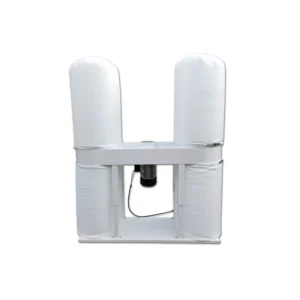
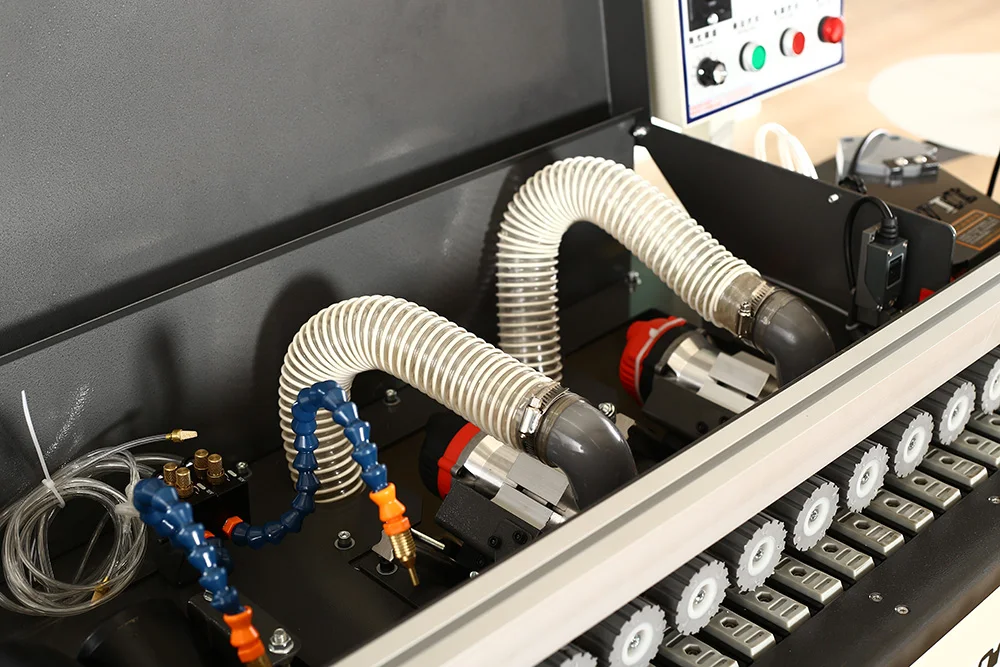
The 10–50 mm sheet thickness range covers the majority of furniture-grade particleboard and MDF in production today. Boards thinner than 10 mm tend to flex under the pressure beam, causing uneven glue transfer, while panels above 50 mm require heavier conveyor drives not present on a compact unit. The square slide rail profiling mechanism with its 4-blade alloy arc knife is designed for arc-shaped trimming on standard furniture edges, and the double-row rubber pressure wheels on the steel rod slide rail keep narrow boards — down to 25 mm — tracking straight through the trimming station. Dust collection at 1200 W suction with dual collectors captures trimming debris before it reaches the polishing wheels, preserving edge finish quality.
The Hidden Cost of Ignoring Board Width and Strip Compatibility
A workshop processing primarily narrow drawer components needs a machine that handles 25 mm boards without the strip wandering off the glue line. When a bander lacks proper narrow-board guidance, operators resort to manual alignment, introducing inconsistency that compounds through trimming and polishing. Similarly, feeding 2.5 mm PVC through a machine rated only for thinner strips overwhelms the trimming knives, leaving visible chatter marks that require hand-sanding downstream [NEED_CITE: edge banding defects from mismatched strip thickness and trimming capacity]. These problems rarely appear during the factory test because the demo uses ideal material.
Why Buyers Source This Model Here
In-house manufacturing with patented cutting mechanisms means the ZDSF910H trimming assembly is built and inspected on the same floor where it is assembled. Four-stage QC covers incoming components through pre-shipment verification, so the machine you receive matches the test record. Voltage customization from 110V to 440V is standard procedure, not a special request, and the electrical schematic is confirmed before production begins. As your workshop scales, larger Ruiqi models share the same control logic and spare parts ecosystem, eliminating integration surprises when you expand capacity.
Documentation & Verification
- CE declaration of conformity covering the ZDSF910H mechanical and electrical safety requirements
- Machine specification sheet confirming rated power, air pressure, and board width range
- Electrical schematic with voltage and frequency matched to your facility standard
- Factory test record using your specified board material and edge strip type
- Operation and maintenance manual in your agreed language with illustrated spare parts list
Installation, Commissioning & Support
- Requires a dedicated 4 kW circuit at confirmed voltage with stable frequency supply
- Footprint of 1300 × 560 mm allows placement against a standard workshop wall
- Arrives assembled; connect air supply at 0.4–0.6 MPa and dust extraction ducting
- First-run calibration includes glue temperature profiling for your specific strip material
- Trimming knife replacement intervals documented in the included spare parts list
- Remote guidance available for initial parameter setup and feed speed adjustment
What We Need to Configure Your Machine
Share the exact board materials and edge strip types you process daily, along with the narrowest board width in your typical production mix. Confirm your facility voltage, frequency, and available air pressure so the machine leaves the factory configured for your grid. If you run multiple strip materials, let us know so the glue pot and heating profile can be validated against each one before shipment.
Frequently Asked Questions
Q: How does the ZDSF910H fit within the Ruiqi edge banding range, and when should I consider a larger model?
A: The ZDSF910H serves small workshops and joinery operations transitioning from manual banding to automated processing. When your daily panel volume grows beyond what a single-operator compact unit can sustain, Ruiqi’s higher-throughput models share the same control family and trimming technology, allowing a transition without retraining staff or changing spare parts suppliers.
Q: What board materials and edge banding types are compatible with this model?
A: This machine handles MDF, plywood, particleboard, and solid wood panels with PVC, veneer, and melamine strips from 0.5 to 2.5 mm thick. The 800 W heating element and 1000 ml glue pot support standard EVA hot-melt adhesives across these materials. Share your specific strip supplier and formulation for a factory test on your actual stock.
Q: How do I confirm the voltage and frequency match my facility before ordering?
A: During the quotation stage, you provide your local voltage and frequency from your facility electrical panel. Ruiqi engineers issue an electrical schematic confirming the match before production begins. The machine is built to that specification, and the voltage confirmation document ships with the unit for your electrician’s reference.
Q: What does the factory visit or sample processing test involve for this model?
A: You send representative board samples and edge strip rolls to the factory. Engineers run the ZDSF910H through its full function sequence on your materials, documenting glue adhesion, trimming quality, and polishing finish. A factory test record with photographs and measured results is provided before you approve shipment.
Q: How are spare parts and technical support handled after delivery?
A: The shipment includes a spare parts list with part numbers for trimming knives, pressure wheels, and heating elements. Ruiqi provides remote troubleshooting support, and replacement parts are dispatched with customs documentation. The operation manual covers routine maintenance intervals specific to the ZDSF910H components.