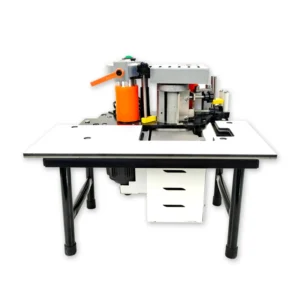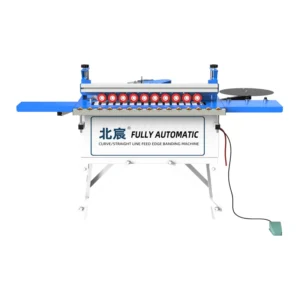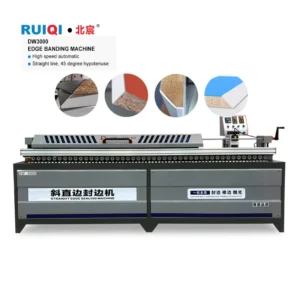
Description
Voltage-Configurable Assembly — The DW1800 is built on a platform supporting 380V, 220V, and 415V input, with the correct winding confirmed before the motor leaves the bench rather than discovered at a foreign port.
Technical Specifications
| Parameter | Value |
|---|---|
| Model | DW1800 |
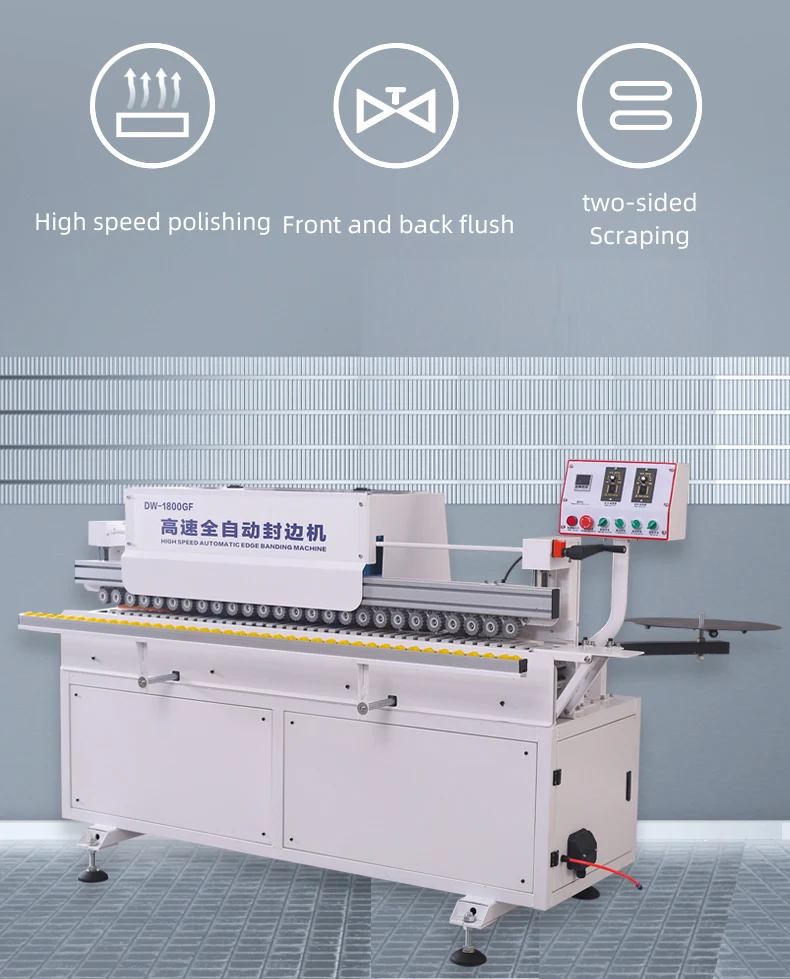
| Product Type | Automatic Edge Banding Machine |
| Rated Power | 4.9 kW |
| Voltage & Frequency | 380V / 220V / 415V (frequency basis to be confirmed) |
| Control System | PLC (basis not stated in source) |
| Feed Speed | 0–14 m/min |
| Edge Banding Thickness Range | 0.3–3 mm |
| Edge Banding Height Range | 0–50 mm |
| Minimum Sheet Length | 200 mm |
| Minimum Sheet Width | 100 mm |
| Glue Pot Capacity | 4000 ml |
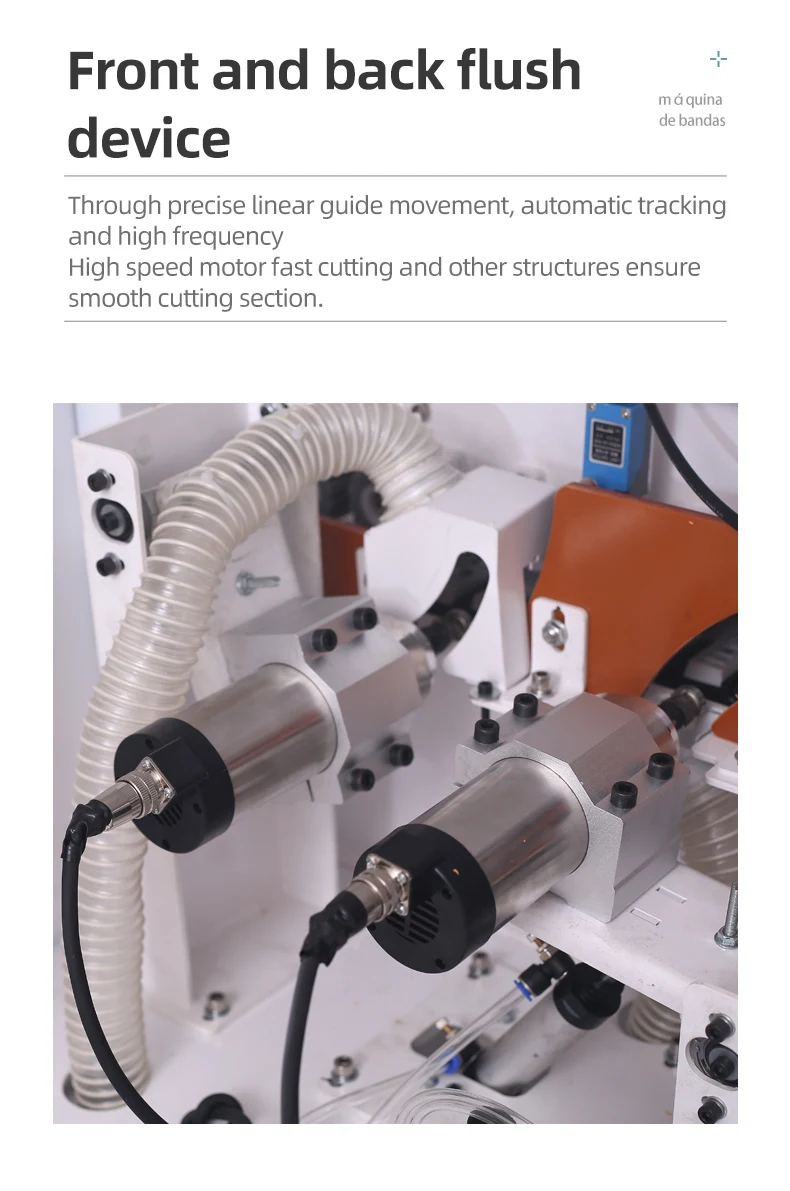
| Trimming Motor Power | 800 W × 2 at 24000 r/min |
| Polishing Motor Power | 380 W × 2 |
| Transmission Motor Power | 180 W |
| Edge Feed Motor Power | 160 W |
| Vacuum Power | 550 W |
| Air Supply Requirement | 0.4–0.6 MPa |
| Overall Dimensions | 2200 × 650 × 1250 mm |
| Net Weight | 320 kg |
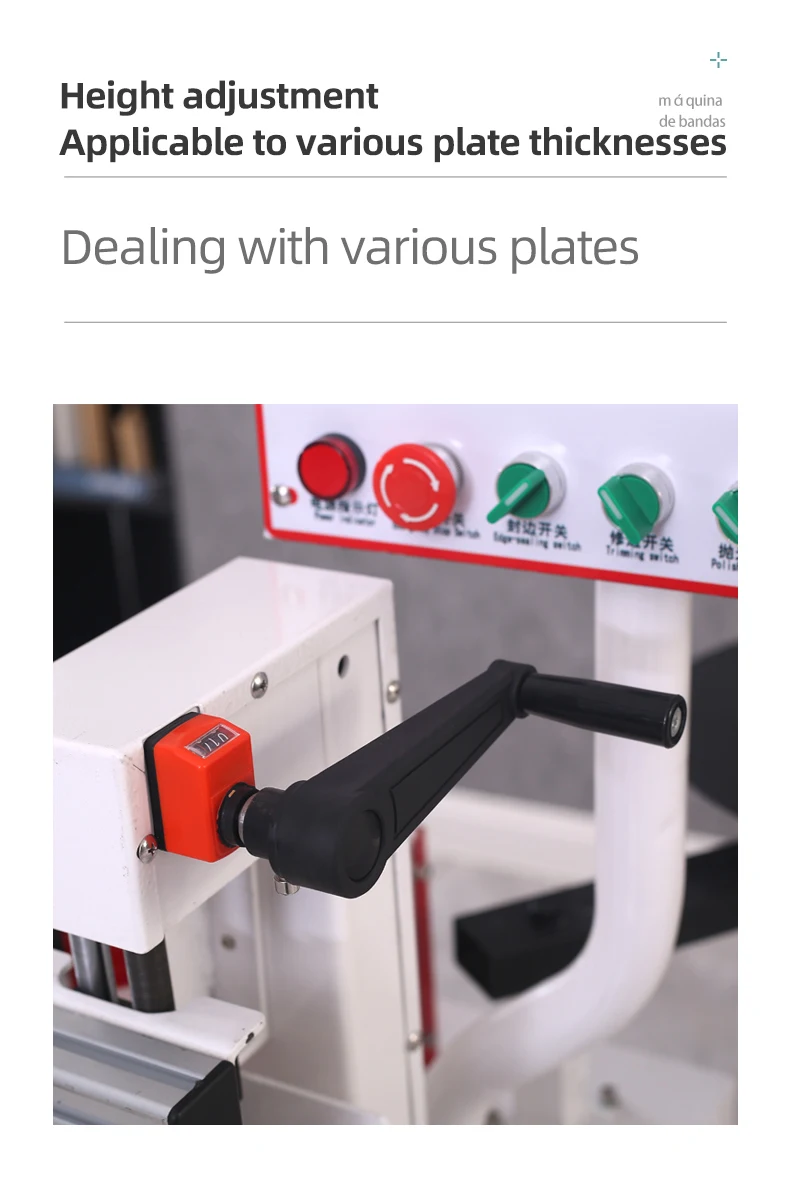
| Worktable Structure | Roll-ball differential guide, oxidized extruded aluminum alloy rail |
| Standard Functions | Double-sided gluing, front/rear alignment, top/bottom trimming, flexible scraping, top/bottom polishing, corner rounding, dust extraction |
Application Suitability
| Application | Material or Output |
|---|---|
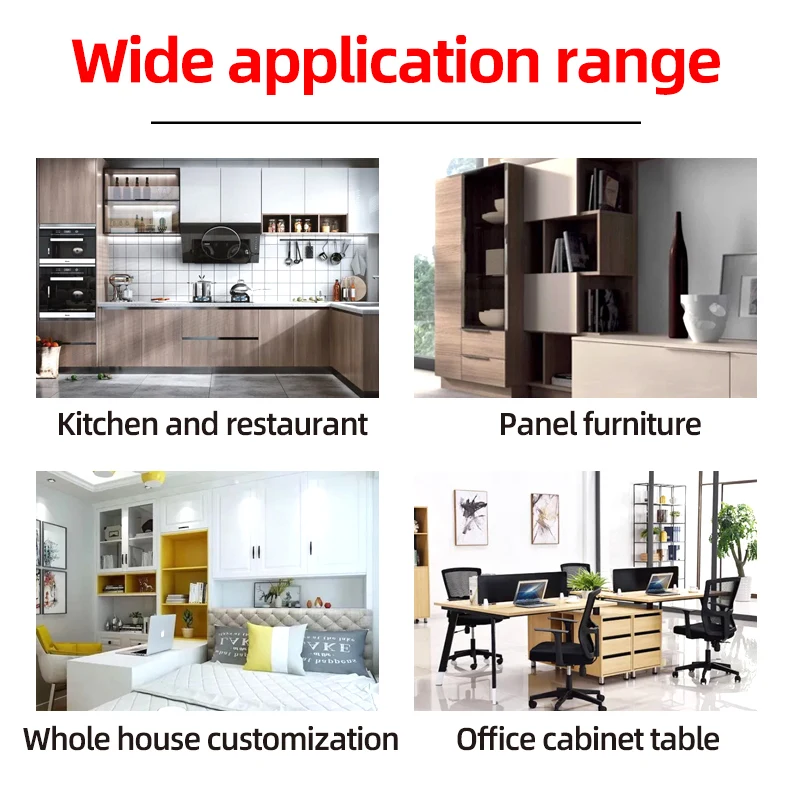
| Custom cabinet door production | MDF and particleboard with PVC edge banding |
| Plywood carcass finishing | Plywood panels with wood veneer or melamine strips |
| Small-batch furniture runs | Solid wood panels up to 50 mm edge height |
| Workshop automation transition | Replacing manual edge application on batch boards |
Why the Voltage Question Should Come Before the automatic edge banding machine manufacturer Quote
A machine wired for the wrong grid is not a delayed project; it is a stopped project.
I watched a container arrive in the Gulf once with a motor wound for a grid the buyer didn’t have. The local electrician spent three weeks sourcing a step-down transformer while the carpentry crew stood idle. Most failures in the commissioning phase trace back to this single mismatch, and it surfaces only because the voltage confirmation document was skipped during the order cycle [NEED_CITE: voltage and frequency standards by export market]. An automatic edge banding machine manufacturer worth the paperwork will put the spec sheet in front of you before asking for a deposit.
From Manual Hand-Feeding to Single-Pass Finishing
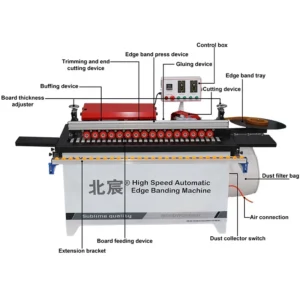
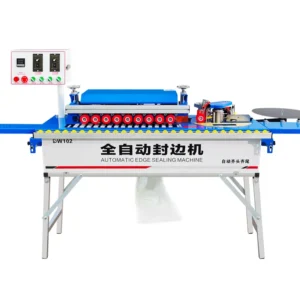
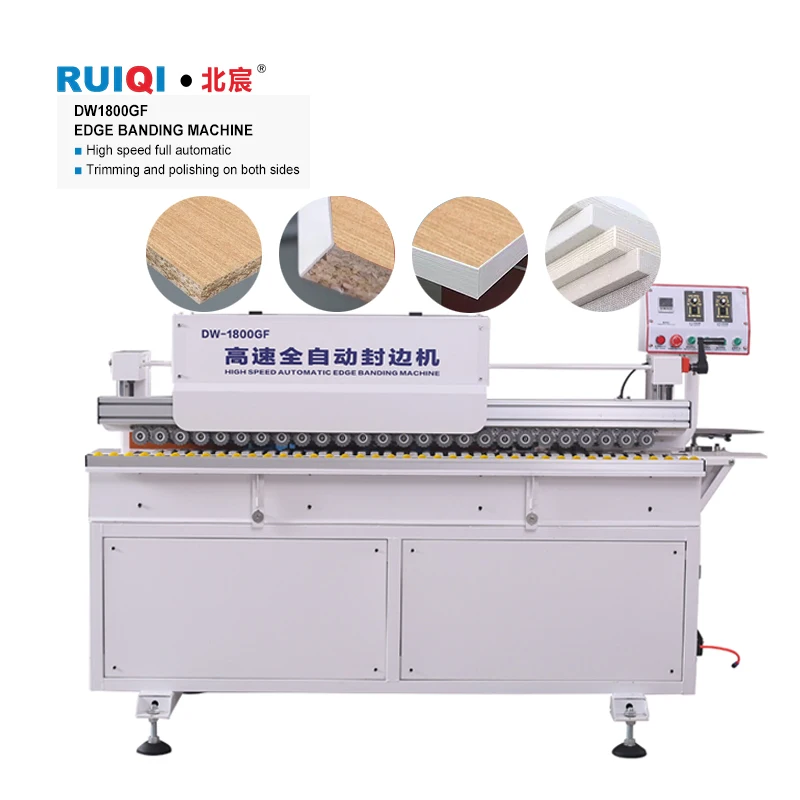
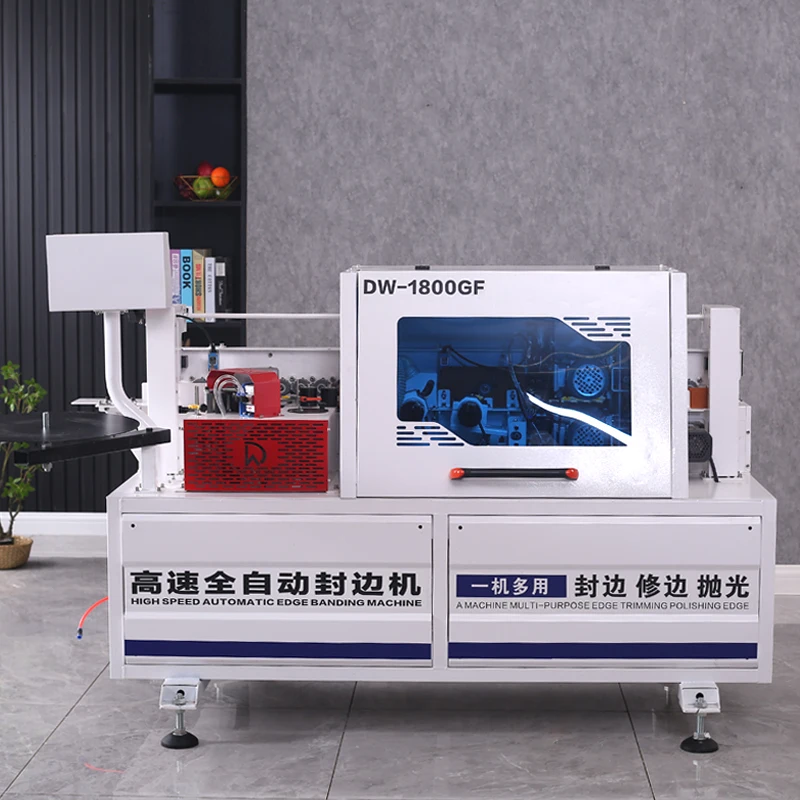
Workshops moving off portable edge banders usually hit a wall when daily volume climbs. The DW1800 addresses that gap by chaining seven stations — gluing, alignment, trimming, scraping, polishing, dust extraction, and corner rounding — into one continuous feed path. The operator loads the panel, and the roll-ball differential guide carries it through without manual steering.
What Compact Footprint Actually Means on the Floor
At 2200 mm in length, this automatic edge banding machine fits against a wall in most joinery shops that already have a panel saw and a drill press competing for space. The 4000 ml glue pot is sized for moderate daily runs, meaning the operator tops up between shifts rather than mid-job, which keeps the adhesive temperature stable across the batch.
Reading the Spec Sheet Against Your Actual Panels
Edge height range determines whether the machine can handle the thick solid-wood lipping some cabinet makers use on open shelving. At 0–50 mm, the DW1800 covers standard PVC and thin veneer as well as heavier profiles. The trimming motors at 24000 r/min are what produce the clean cut on melamine-faced chipboard without chipping the brittle surface layer. If your panels tend to arrive with slight thickness variation from the supplier, the double-sided gluing system distributes adhesive to both the panel edge and the banding back, compensating for minor substrate inconsistency [NEED_CITE: adhesive coverage and bond strength on variable-density MDF].
The Cost of Discovering Incompatibility After Crating
When a buyer purchases a single machine piecemeal without confirming the feed height against upstream saws and downstream drills, the line bottlenecks at the edge bander. Panels stack up waiting for the operator to hand-feed an undersized unit, or worse, the machine cannot physically accept the thickness the saw is producing. That mismatch usually shows up in the first week of production, when the crew realizes the throughput assumption was based on the wrong board profile [NEED_CITE: production line throughput matching between woodworking stations].
Why Ruiqi’s Build Approach Fits This Tier
The DW1800 sits in the full-function range, meaning a workshop can start here and later add a pre-milling head or a buffing station without changing the feed system architecture. In-house manufacturing with patented cutting mechanisms means tolerance claims come from the same floor that does the assembly. Voltage customization is standard across the line, not an afterthought. The four-stage QC process ends with a pre-shipment test on actual panel stock, so the machine has already run material before it is crated. An engineer reviews the configuration against the buyer’s stated production requirement before the formal quotation issues.
Documentation & Verification
- Machine specification sheet confirming voltage, frequency, and plug type for your facility
- Electrical schematic and voltage confirmation document signed before production starts
- Factory test record showing the DW1800 running your panel thickness and edge material
- Operation and maintenance manual supplied in the agreed language, not just English or Chinese
- Packing photographs and skid-mount details for customs and receiving dock planning
Installation, Commissioning & Support
- Skid-mounted assembly arrives fully built; only dust extraction ducting and power connection required on site
- Dedicated 4.9 kW circuit with the confirmed voltage rating must be in place before uncrating
- PLC control panel language configurable at order — specify beyond the Chinese/English default if your operators require it
- Air supply line must deliver 0.4–0.6 MPa consistently; undersized compressors cause intermittent trimming faults
- Glue pot and feed motor first-run calibration performed during commissioning against your actual banding stock
- Spare parts list provided with part numbers matching the factory inventory for reordering
What to Include in Your Inquiry
Send the panel material types and thickness range you run most often, the edge banding material (PVC, veneer, melamine), and the daily linear meter target. Confirm your facility voltage and frequency, the plug type required, and whether the control panel needs to be in a language other than English. If you are integrating the DW1800 into an existing line, share the upstream saw output dimensions so feed height compatibility can be verified before the order is placed.
Frequently Asked Questions
Q: How does the DW1800 compare to other models in the Ruiqi range for a workshop scaling up?
A: The DW1800 occupies the full-function tier, offering corner rounding and double-sided gluing in a single pass. Workshops still below moderate daily volume may start on an entry-level model with fewer stations, while higher-throughput operations move to a pre-milling variant. The feed system architecture stays consistent, so upgrading later does not mean retraining operators.
Q: What voltage options are available, and how is local grid compatibility confirmed?
A: The platform supports 380V, 220V, and 415V configurations. Frequency must be stated separately at order. The voltage and frequency are written into the contract attachment and the electrical schematic is confirmed by both parties before the motor is wound. This prevents the three-week transformer delay scenario.
Q: Can the control panel language be set to something other than English or Chinese?
A: Yes. The PLC interface supports additional languages on request. This must be specified at order stage so the correct firmware is loaded before the pre-shipment test. Panels arriving with an unreadable interface stall commissioning until the file is updated remotely or on site.
Q: What edge banding thicknesses does this model hold within tolerance?
A: The DW1800 handles 0.3–3 mm banding on edge heights up to 50 mm. Materials include PVC, wood veneer, and melamine. The trimming motors run at 24000 r/min to prevent chipping on brittle melamine edges. For banding outside this range, a different model in the range may be more appropriate.