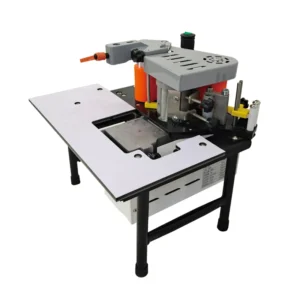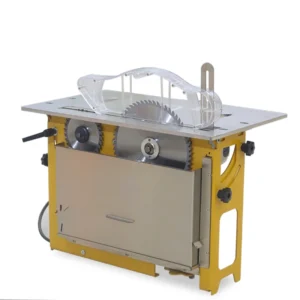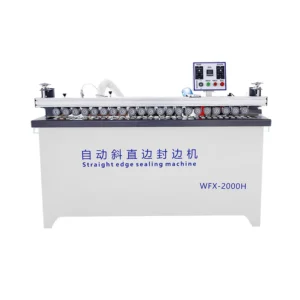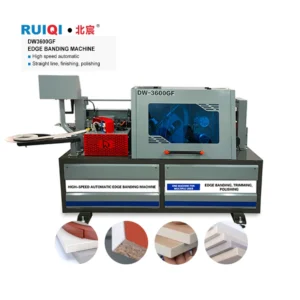
Description
Voltage-Adaptive Configuration — the DW802 is built to ship with electrical schematics matching your facility’s exact 220V or 380V supply, avoiding the dead-on-arrival machines that plague cross-border equipment purchases.
Technical Specifications
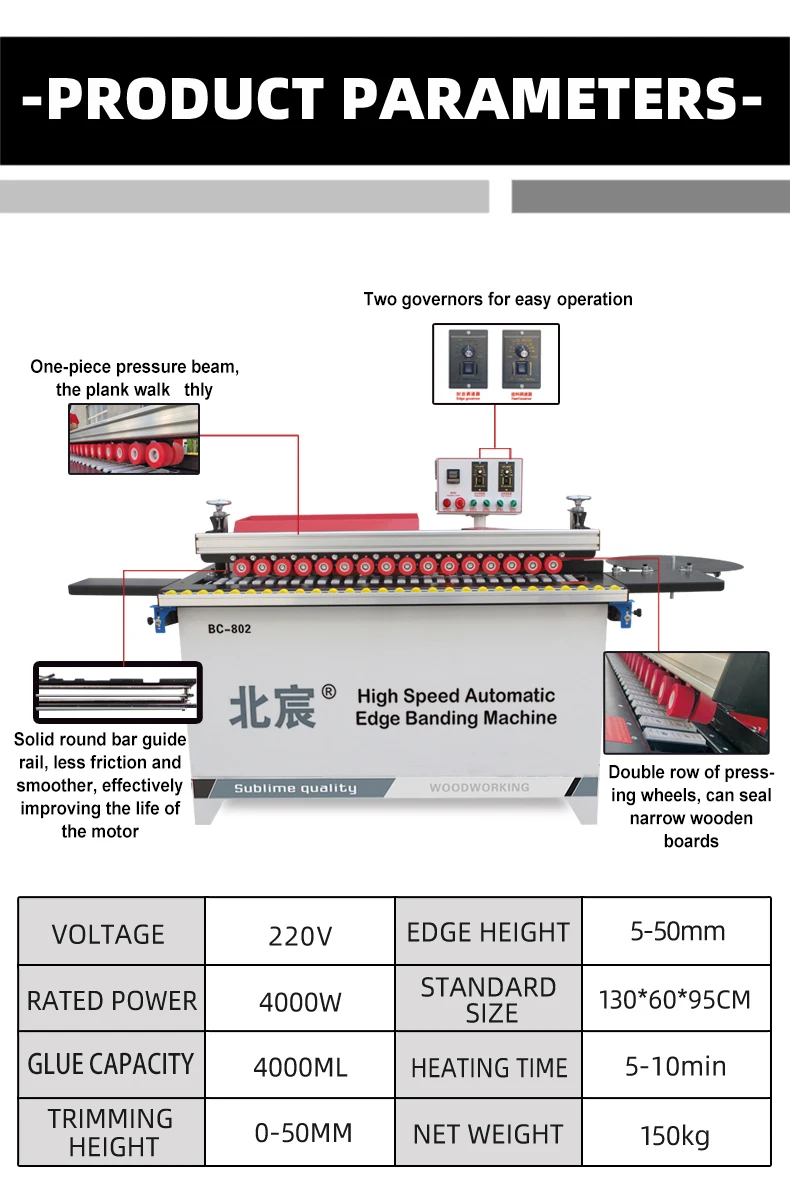
| Parameter | Value |
|---|---|
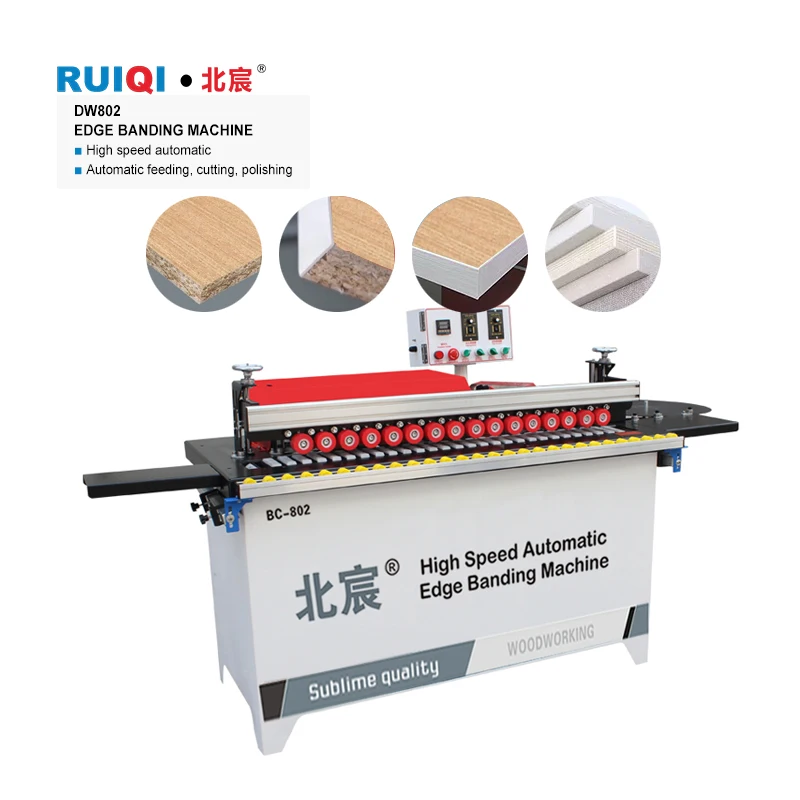
| Model | DW802 |
| Product Type | Automatic Edge Banding Machine |
| Total Power | 4200W |
| Voltage & Frequency | 220V/380V/customization (frequency to be confirmed) |
| Overall Dimensions (L×W×H) | 130×60×95 cm |
| Net Weight | 135 kg |
| Minimum Panel Length | 25 cm |
| Minimum Panel Width | 10 cm |
| Edge Banding Height | 0–50 mm |
| Edge Banding Thickness | 0.3–3 mm |
| Edge Power | 140W |
| Transmission Power | 140W |
| Trimming Power | 800W×2 |
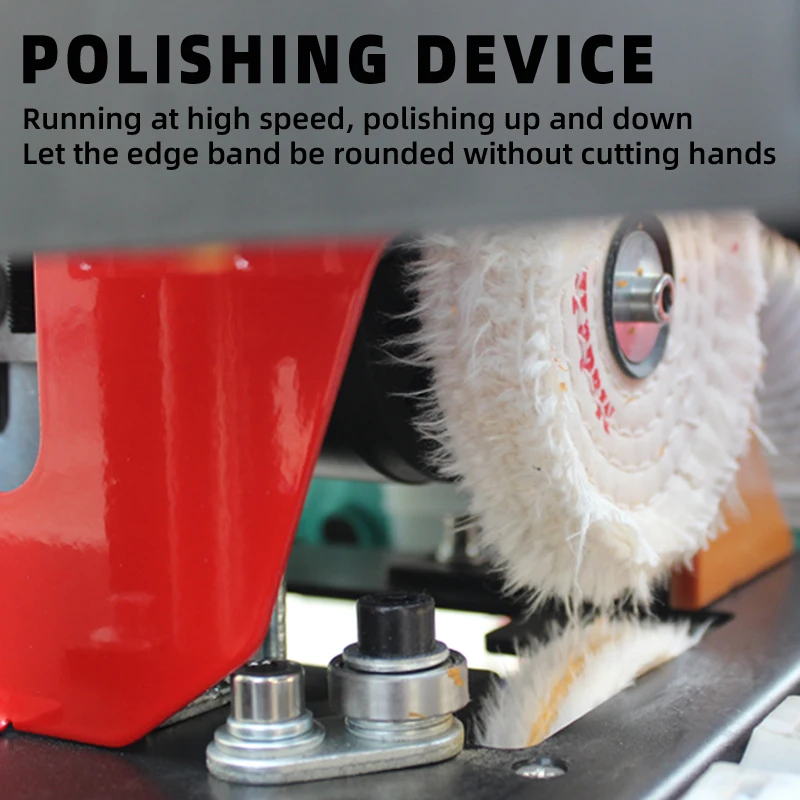
| Polishing Power | 180W×2 |
| Vacuum Power | 1200W |
| Air Source Pressure | 0.4–0.8 MPa |
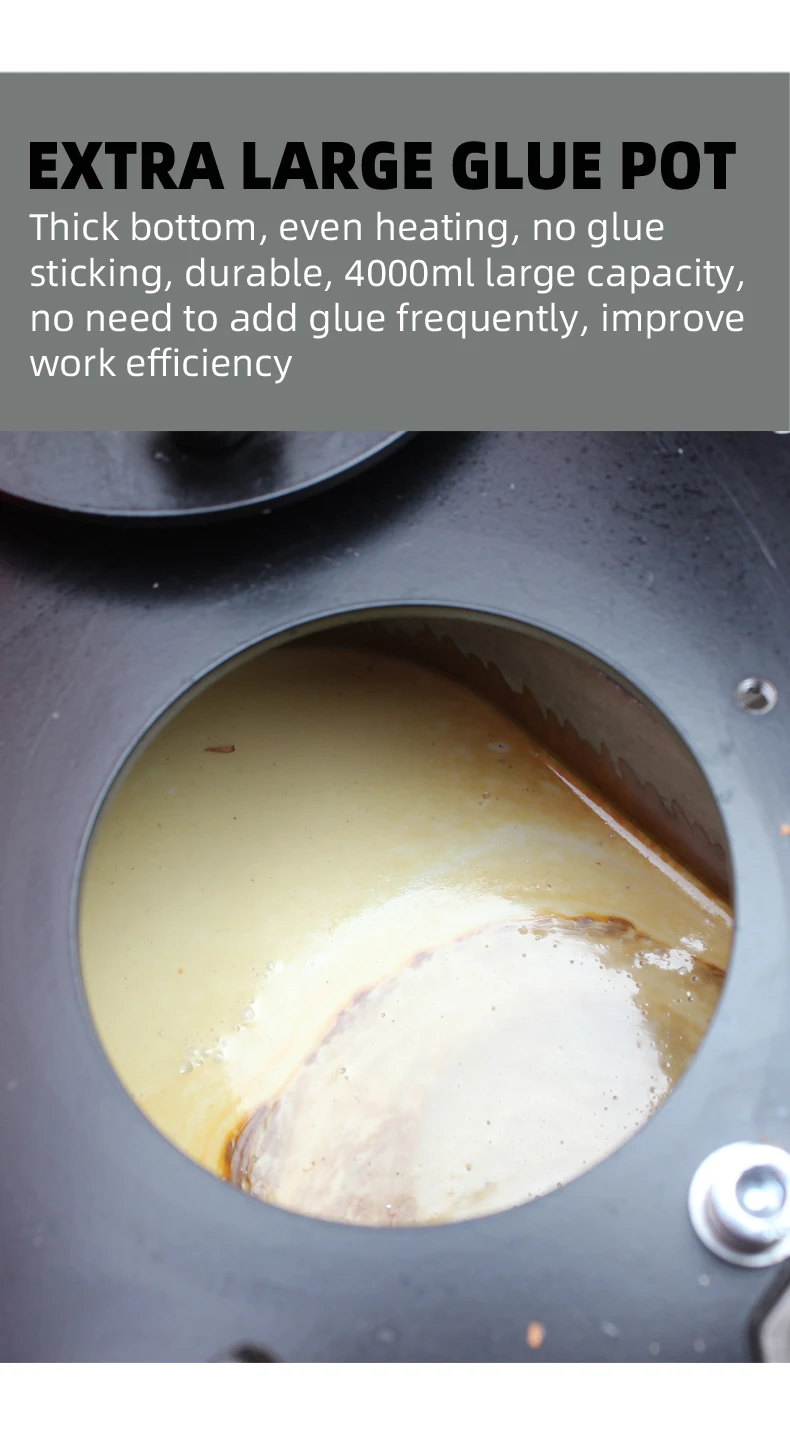
| Glue Pot Capacity | 4000 ml |
| Conveyor Belt Material | Silica gel |
| Control System | Operation panel with language options (Chinese/English standard, Spanish and others customizable) |
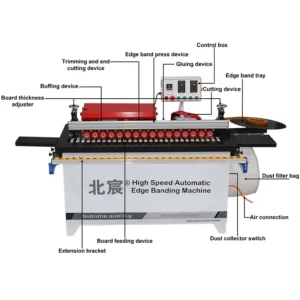
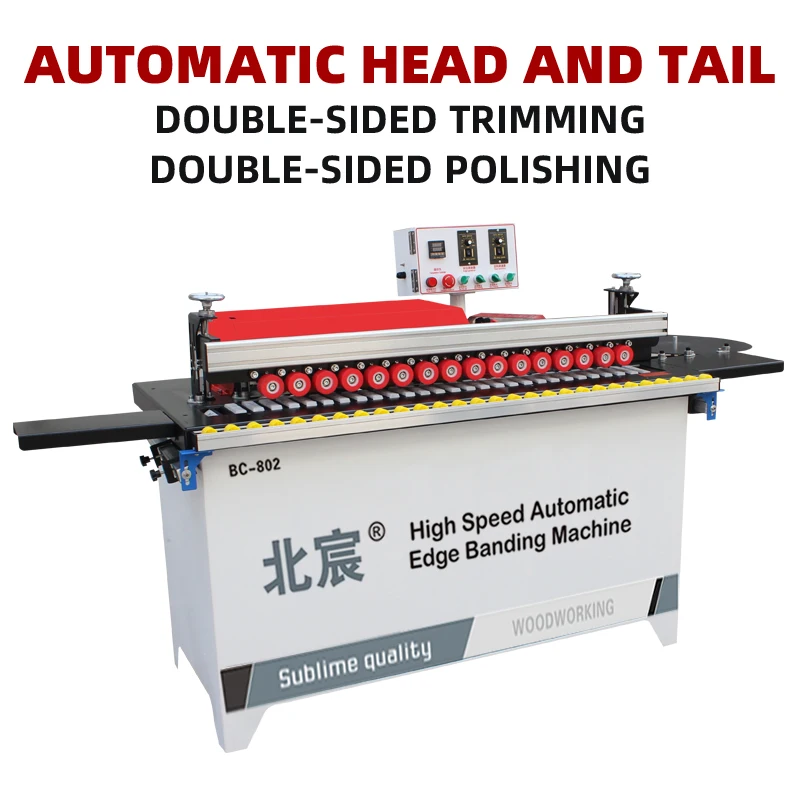
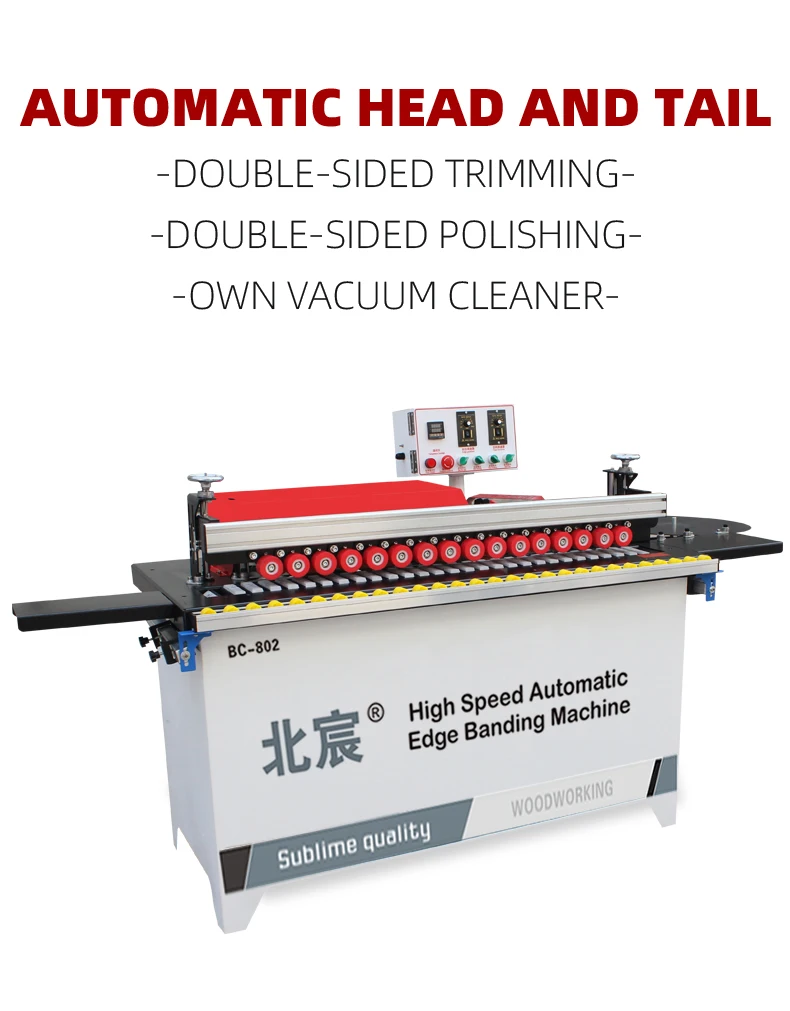
| Key Features | Edge banding, trimming, polishing, automatic head and tail cutting, with vacuum |
Application Suitability
| Application | Material or Output |
|---|---|
| Home decoration cabinet production | MDF and particleboard panels with PVC edge banding |
| Small-to-medium custom furniture workshops | Ecological board and plywood with veneer or melamine strips |
| Joinery shops transitioning from manual banding | Solid wood board edge sealing at moderate daily volumes |
| Compact workshop panel processing | Boards requiring clean trimmed edges within a small footprint |
Why the Voltage Question Must Come Before the Price Tag
Ordering an automatic edge banding machine manufacturer quote without confirming your local frequency is how equipment arrives as expensive dead weight.
I once saw a workshop receive a 380V/50Hz machine in a region running 60Hz. The feed motor ran faster than designed, the glue pot overshoot its target temperature, and the trimming cutters chattered against every panel edge. Two weeks of rework followed before they sourced a replacement. This happens far more often than buyers expect [NEED_CITE: voltage and frequency standards by export market].
When sourcing from any automatic edge banding machine manufacturer, the electrical conversation needs to happen during the quotation stage, not after the machine is crated. The DW802 addresses this by offering configurable voltage and multilingual control panels confirmed before production begins.
Where the DW802 Sits in the Full Machine Range
The woodworking machinery market segments edge banders from basic single-function units to multi-station lines with pre-milling and buffing. The DW802 occupies the compact full-function tier — it delivers banding, automatic head-and-tail cutting, trimming, and polishing within a 130×60×95 cm footprint. For a workshop currently hand-applying edge tape and looking to mechanize, this model covers the complete sequence without requiring multiple separate machines.
Scaling Up Without Changing Supplier
Workshops that start with the DW802 on moderate MDF volumes often expand into higher-density substrates or thicker banding materials as orders grow. Because the manufacturer produces a full family from entry-level through pre-milling models, the transition stays within one technical support channel and one spare parts supply chain. This matters when the operator already knows the control logic and the maintenance team has standardized on one service protocol. The DW802 serves as the foundation that later models build on [NEED_CITE: CE machinery directive requirements for industrial equipment].
What the Specs Mean on the Shop Floor
The 4000 ml glue pot capacity determines how many panels you can run continuously before stopping to refill — for a small cabinet shop running standard kitchen carcasses, this typically covers a full morning shift without interruption. The dual 800W trimming motors provide enough torque to cleanly shear 3mm PVC banding without stalling on dense particleboard edges. The 0.3–3mm banding thickness range handles the common spectrum from thin melamine tape to thicker PVC used on visible furniture faces. The silica gel conveyor belt grips panels without marring pre-finished surfaces, which matters when processing laminated boards where scratch marks would mean rejection. Air pressure at 0.4–0.8 MPa powers the pneumatic cutters and pressure rollers, so confirming your compressor capacity before installation avoids mid-cycle feed failures.
The Cost of Underspecifying Your First Edge Bander
Buying the smallest available machine to save budget often creates downstream expenses that erase the initial savings. If your panels regularly exceed the minimum dimensions this model handles, operators will force undersized stock through and produce inconsistent glue transfer on the leading edges. When the vacuum extraction at 1200W proves insufficient for high-volume trimming debris, dust accumulates on the conveyor and transfers onto the next panel’s glue surface. These quality defects surface during assembly when edge gaps become visible on finished cabinets. Workshops that mapped their actual panel sizes and daily volume before selecting a model avoided this cycle entirely [NEED_CITE: edge banding adhesion failure causes in furniture manufacturing].
Why Source This Model Here
The DW802 ships with a four-stage quality verification covering incoming components, in-process assembly checks, finished product testing, and pre-shipment panel runs. Every unit receives a factory test record documenting performance on the buyer’s specified material before crating. The manufacturer holds proprietary cutting mechanism patents achieving verified tolerances relevant to furniture assembly requirements. Voltage confirmation and electrical schematics are issued during the quotation stage, not as an afterthought. Language-matched operation panels and maintenance manuals ensure the operator can read the interface on day one of commissioning.
Documentation & Verification
- CE declaration of conformity specific to the DW802 model configuration
- ISO 9001 certificate covering the manufacturing process for this product line
- Machine specification sheet with confirmed voltage and frequency for your facility
- Factory test record on your actual panel material and edge banding thickness
- Electrical schematic matching the configured power supply before production begins
- Operation and maintenance manual in your agreed language with illustrated spare parts list
Installation, Commissioning & Support
- Requires a level concrete floor supporting the 135 kg net weight without vibration transfer
- Dedicated electrical circuit matching confirmed voltage specification with proper grounding
- Arrives fully assembled requiring only conveyor alignment and air line connection
- First-run parameter setting for glue temperature matched to your specific banding material
- Operator training on control panel interface in the configured display language
- Spare parts list covering trimming cutters, conveyor belt sections, and glue pot seals
- Recommended maintenance intervals for pneumatic system checks at 0.4–0.8 MPa operating pressure
Before You Request a Quotation
Provide your primary panel materials and their thickness range so the configuration matches your actual stock. Share your facility voltage and frequency so the electrical package is specified correctly from the start. Indicate which languages your operators need on the control panel interface.
Frequently Asked Questions
Q: Where does the DW802 fit in the range, and when should a workshop step up to a pre-milling model?
A: The DW802 serves workshops running standard panel materials at moderate volumes where edge preparation is already clean. When your substrate has surface irregularities or you process recycled particleboard with uneven edges, a pre-milling station becomes necessary to square the panel face before banding. The manufacturer offers pre-milling models within the same product family for that transition.
Q: How is voltage and frequency confirmed before the machine ships?
A: During the quotation stage, you provide your facility’s exact voltage and frequency. The manufacturer issues an electrical schematic and voltage confirmation document showing the configured motor windings, transformer specifications, and control circuit ratings. Production begins only after you approve these documents, preventing the common problem of equipment arriving incompatible with local power infrastructure.
Q: What panel materials and edge banding thicknesses does the DW802 handle?
A: The machine processes MDF, particleboard, solid wood board, ecological board, and plywood. Edge banding thickness ranges from 0.3 mm to 3 mm, covering thin melamine tape through standard PVC strips used on visible cabinet faces. The 0–50 mm banding height accommodates typical panel thicknesses encountered in furniture and joinery production.
Q: How does a workshop plan an upgrade path from this model?
A: Because the manufacturer produces a complete family of edge banders, moving to higher throughput or additional functions stays within one supplier relationship. Your operators retain familiarity with the control logic, and your maintenance team continues working with the same component supply chain. The transition preserves training investment while adding capacity.
Q: What documentation arrives with the machine for customs and commissioning?
A: Each shipment includes the CE declaration, ISO 9001 certificate, machine specification sheet, factory test record, electrical schematic, operation manual in your language, spare parts list, and packing photographs. These documents support customs clearance in most markets and provide the technical reference needed for local electricians during installation.