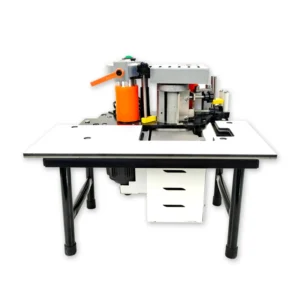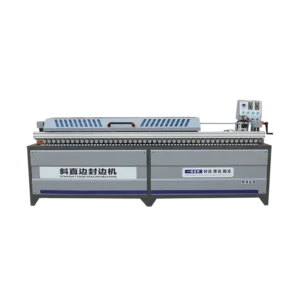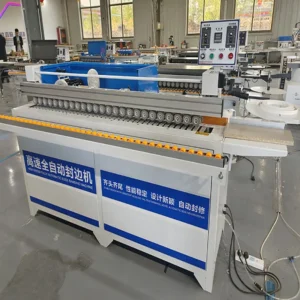
Description
Verified tolerance and in-house precision grinding — every 802 unit undergoes a four-stage inspection process, ensuring the ±0.02mm edge banding accuracy holds across MDF, plywood, and particleboard before it leaves the factory.
Technical Specifications
| Parameter | Value |
|---|---|
| Product Type | Automatic Edge Banding Machine |
| Model | 802 |
| Edge Type | Straight line |
| Rated Voltage | 220V (configurable from 110V to 440V) |
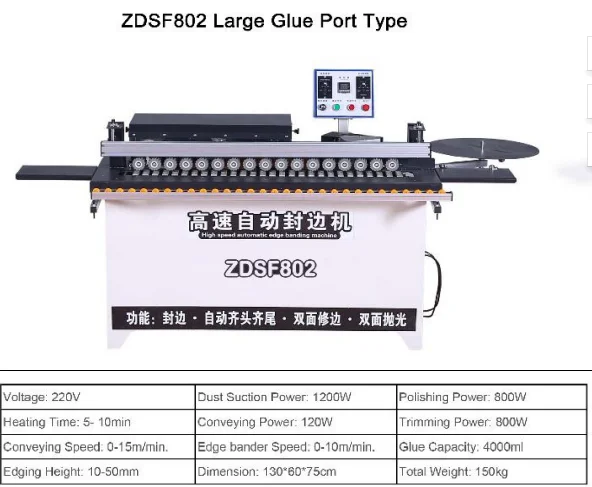
| Rated Power | 4 kW |
| Feed Speed | 0–10 m/min |
| Conveyor Belt Speed | 0–10 m/min |
| Strip Thickness | 0.5–2.5 mm |
| Sheet Thickness | 10–50 mm |
| Trimming Power | 800 W × 2 |
| Polishing Power | 180 W × 2 |
| Suction Power | 1200 W |
| Glue Pot Capacity | 4000 ml |
| Heating Power | 1000 W (5–10 min warm-up) |
| Rated Air Pressure | 0.4–0.6 MPa |
| Overall Dimensions | 130 × 65 × 75 cm |
| Machine Weight | 150 kg |
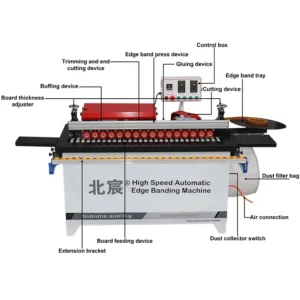
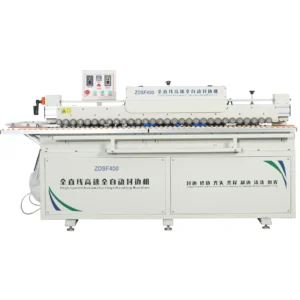
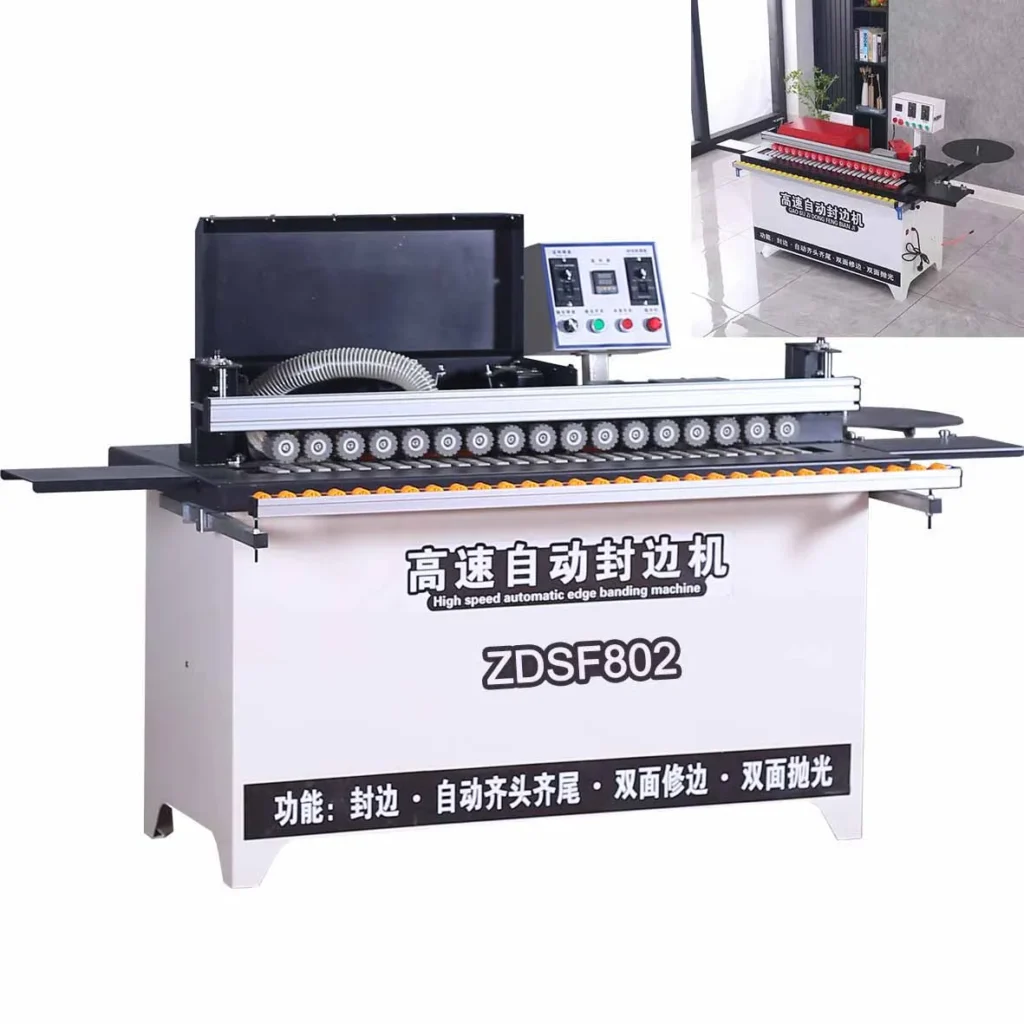
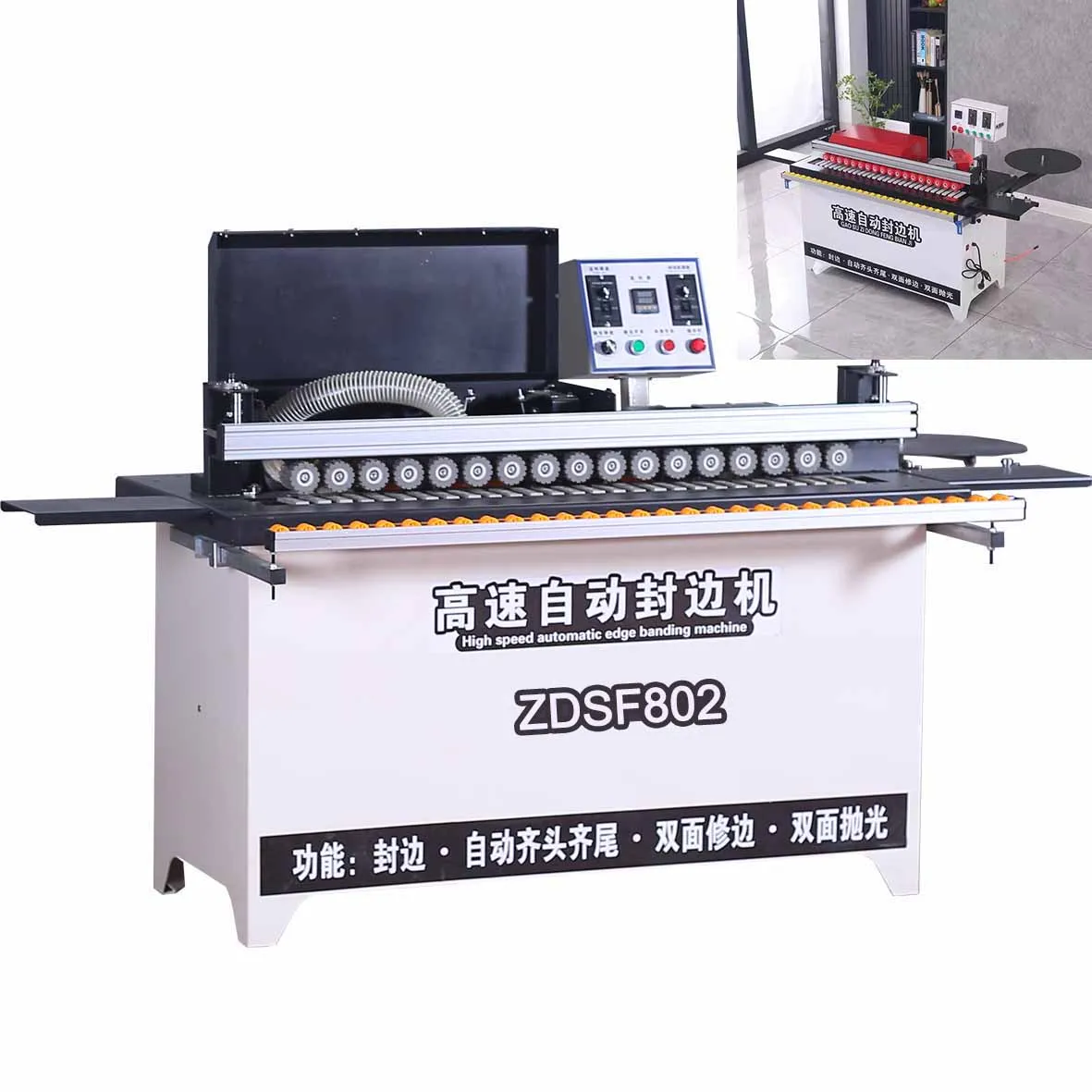
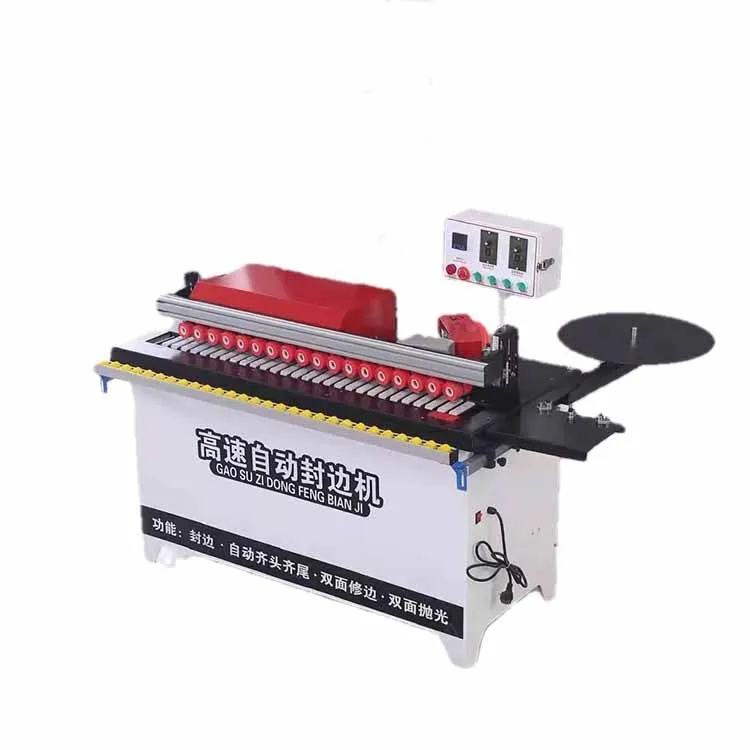
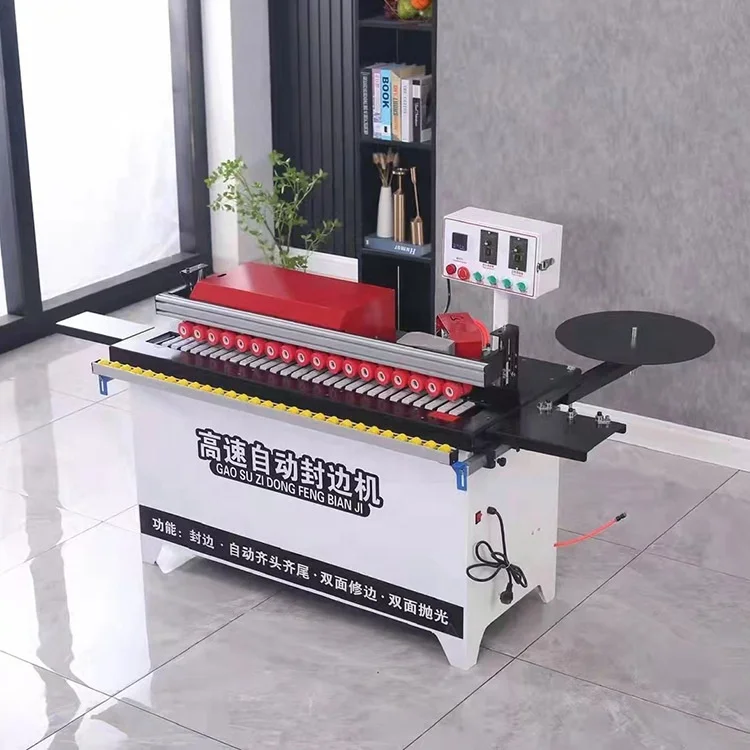
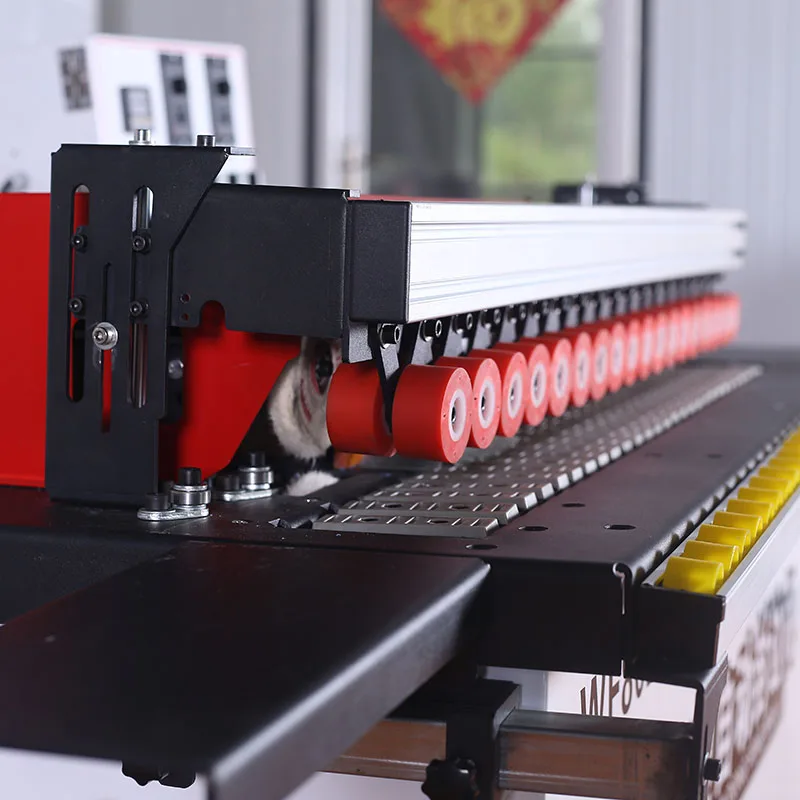
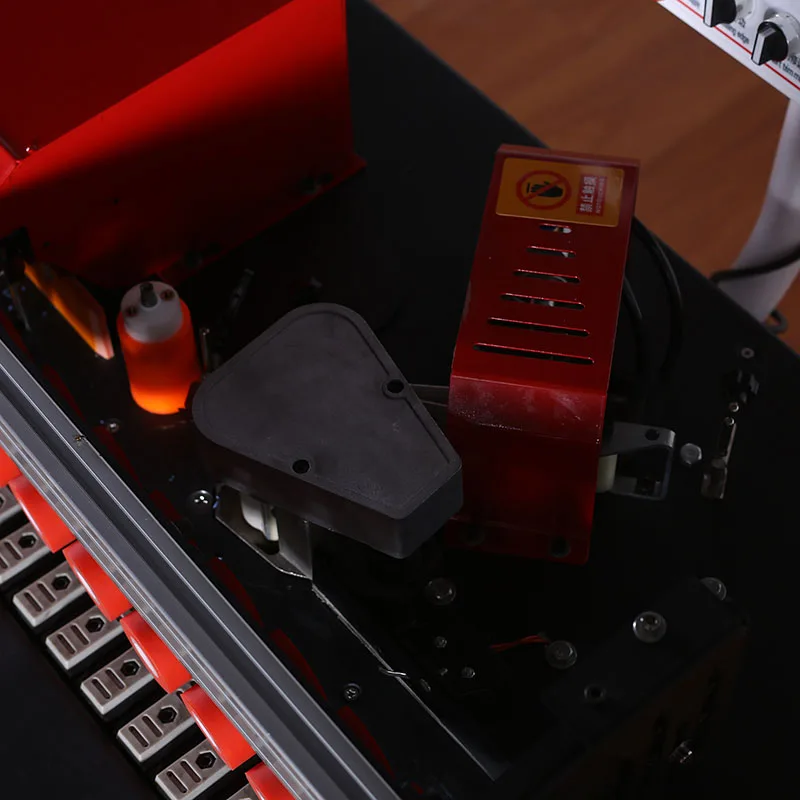
| Key Features | Automatic plate feeding, end cutting, head and tail trimming, upper and lower polishing, digital glue pot temperature display, integrated dust collector, one-piece pressure beam, double-row pressure wheels, silicone conveyor belt, pneumatically controlled belt breaking, fluent strip extendable support |
Application Suitability
| Application | Material or Output |
|---|---|
| Custom furniture panel edge banding | MDF and melamine-faced particleboard |
| Cabinet door and drawer front edging | Plywood with PVC or veneer strip |
| Small-batch joinery production | Solid wood panels up to 50 mm thickness |
| Workshop-scale panel finishing | Straight-line substrates requiring hot melt adhesive bonding |
Why the Voltage Question Should Come Before the Price
Confirming local supply voltage and frequency at inquiry stage eliminates the most common commissioning failure for imported Automatic Edge Banding Machine equipment.
I watched a high-speed edge bander sit idle for two weeks in a Vietnamese furniture factory because the main supply was wired to the wrong phase — the hot melt glue pot never reached operating temperature. The 802 runs at 4 kW total with a dedicated 1000 W heating element, meaning any voltage mismatch directly affects glue viscosity and bond quality. When factories order without this verification, the machine arrives, the operator presses start, and nothing behaves as expected [NEED_CITE: voltage and frequency standards by export market]. That delay costs more in lost production than any price difference between suppliers.
Where the 802 Sits in a Scalable Machine Family
This Automatic Edge Banding Machine represents the compact tier within a full product family, designed for workshops moving from manual edging to mechanized production. The 0–10 m/min variable feed speed and 10–50 mm sheet thickness range cover the majority of board stock a small furniture shop handles daily. When volume grows, moving to a higher-tier model in the same family means operators already understand the control logic and maintenance routines.
Matching the Glue System to Production Runs
The 4000 ml glue pot on the 802 is sized for sustained runs without constant refills, which matters when a joinery shop is batching cabinet components through a single afternoon shift. The digital temperature display and independent heating switch give the operator direct control over the hot melt state, reducing the risk of cold glue application on dense MDF edges [NEED_CITE: hot melt adhesive viscosity and temperature relationship for panel bonding]. Pneumatically controlled belt breaking ensures the strip shears cleanly at each panel end without dragging residual material onto the next board.
Reading the Specifications That Actually Matter
The sheet thickness range of 10–50 mm and strip thickness of 0.5–2.5 mm define which panel stock this machine can physically accept — ordering outside those boundaries risks jamming at the pressure beam or incomplete trimming. The double high-speed trimming motors at 800 W each handle both top and bottom edges in a single pass, which directly determines whether the finished panel can move to assembly without hand-sanding. The one-piece pressure beam with double rows of pressure wheels maintains consistent downward force across the full 50 mm depth, preventing the strip from lifting at the trailing edge of shorter panels. At 0.4–0.6 MPa air pressure, the pneumatic systems — including the belt breaker and trimming actuators — require a stable compressor supply, so undersizing the air source will cause intermittent faults that are difficult to diagnose on the shop floor.
The Hidden Cost of Ordering a Single Machine in Isolation
When an edge bander is purchased without considering what feeds into it and what comes after, the feed height or conveyor throughput often mismatches the rest of the line. The 802 at 75 cm overall height needs to align with the panel saw output table and any downstream drilling station. If the upstream saw delivers panels faster than 10 m/min, the edge bander becomes the bottleneck and partially finished stacks accumulate on the floor. These incompatibilities only surface after installation, when repositioning machines and rewiring becomes the real expense [NEED_CITE: production line throughput matching for panel processing].
What Manufacturing Depth Means at This Tier
Every 802 unit is built with proprietary cutting mechanisms covered by in-house patents, and the precision-ground components pass through incoming material, in-process, finished product, and pre-shipment verification stages. Voltage customization from 110V to 440V is configured at the factory based on the destination country’s grid, not adapted in the field after delivery. The electrical schematic and voltage confirmation document ship with the machine, so the local electrician knows exactly how to connect it. Factory visits are open, and buyers can run a sample processing test on their own panel stock before the order is finalized. The complete machine range from entry-level to full-function pre-milling lives under one roof, meaning a growing workshop scales within the same supplier relationship.
Documentation & Verification
- CE declaration of conformity covering the full 802 machine assembly
- Machine specification sheet listing all 802 parameters as built
- Electrical schematic with confirmed voltage and phase configuration for your facility
- Factory test record showing actual trim and polish results on your specified panel thickness
- Operation and maintenance manual written in your agreed language
- Spare parts list covering trimming blades, polishing wheels, and silicone belt sections
Installation, Commissioning & Support
- Requires a level concrete floor supporting the 150 kg machine weight across the 130 × 65 cm footprint
- Dedicated 220V single-phase circuit rated for the 4 kW total draw with appropriate breaker sizing
- Arrives partially assembled; the pressure beam and extendable fluent strips are mounted on site
- First-run commissioning includes glue pot temperature calibration at 1000 W and trimming motor alignment
- Operator training covers the digital display interface, independent heating switch, and pneumatic pressure settings
- Silicone conveyor belt and trimming blades are the primary consumables; a starter set ships with the machine
What to Include with Your Inquiry
To receive an accurate configuration proposal, share the panel substrates you process most frequently, including typical sheet dimensions and edge strip material. Specify your local voltage and frequency so the electrical system is built to match from the start. If you are integrating the 802 into an existing line, note the feed height and conveyor speed of adjacent machines so throughput compatibility can be confirmed before shipment.
Frequently Asked Questions
Q: How does each model tier in the range map to different production volumes and panel types?
A: The 802 handles straight-line edge banding for workshops with moderate daily output on MDF, plywood, and particleboard up to 50 mm thick. Higher-tier models add pre-milling, corner rounding, and buffing stations for factories running thicker boards or requiring mirror-finish edges. The product family is structured so a workshop can move up as volume grows without changing supplier or retraining operators from scratch.
Q: What is the voltage and frequency customization process for different target markets?
A: Voltage is confirmed during the quotation stage — the factory configures the 802 for any supply between 110V and 440V based on your local grid. The electrical schematic shipped with the machine documents the exact wiring, so your on-site electrician connects it correctly the first time. This eliminates the hot melt glue pot failures and motor burnout that happen when a standard-voltage machine arrives in a region with different supply standards.
Q: How is edge banding tolerance verified before shipment?
A: Each 802 goes through a four-stage quality check — incoming material inspection, in-process assembly review, finished product testing, and pre-shipment verification. The factory test record documents actual trimming and polishing results on panel stock matching your specification. This record ships with the machine so you have a baseline to compare against once the unit is running in your own workshop.
Q: Can I visit the factory to see the full machine range and run a sample processing test?
A: Factory visits are welcomed at any stage. You can bring or specify your own panel material and edge strip, and the 802 will run a live test so you can inspect glue line quality, trimming accuracy, and edge finish before committing to an order. This also lets you see the full range from entry-level to high-function models in one location.
Q: What documentation is included with each machine for installation and commissioning?
A: Every 802 ships with a CE declaration, machine specification sheet, electrical schematic with your confirmed voltage, factory test record, operation manual in your chosen language, spare parts list, and packing photographs. These documents cover everything from initial wiring through daily maintenance, and the pre-shipment verification record gives you a quality baseline from day one.