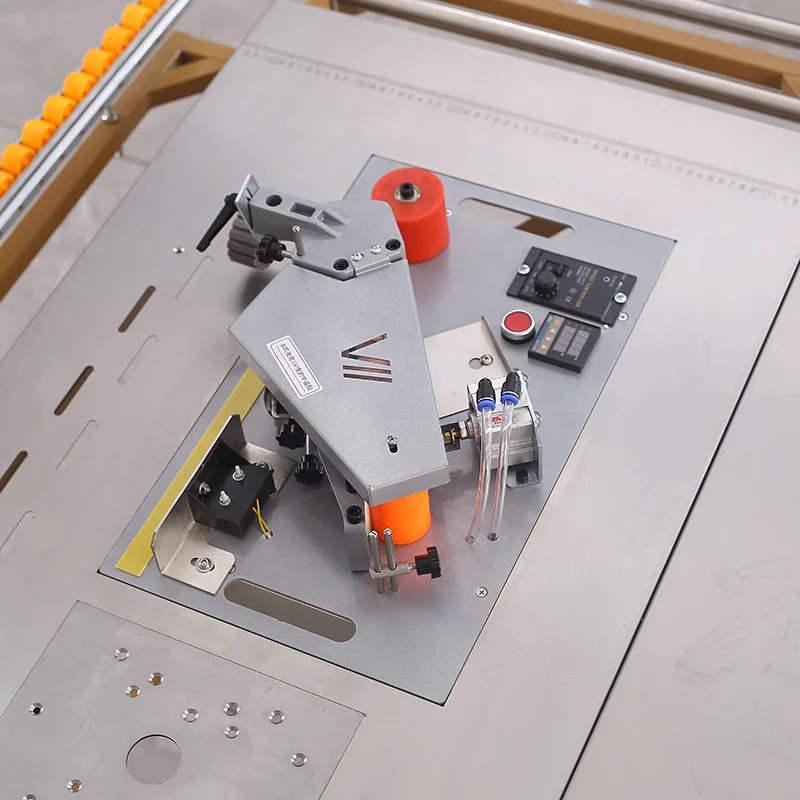
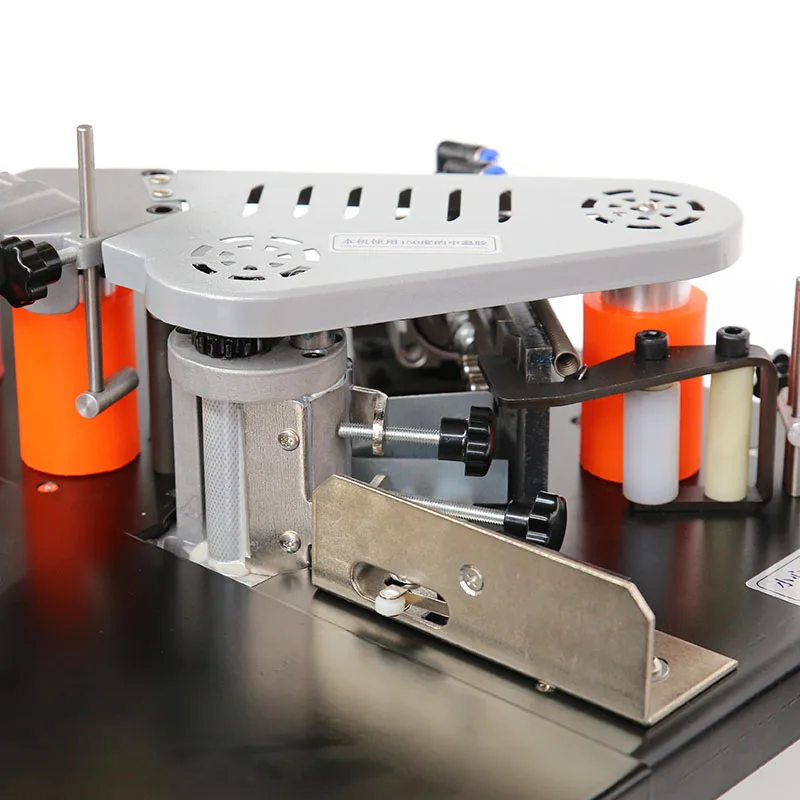
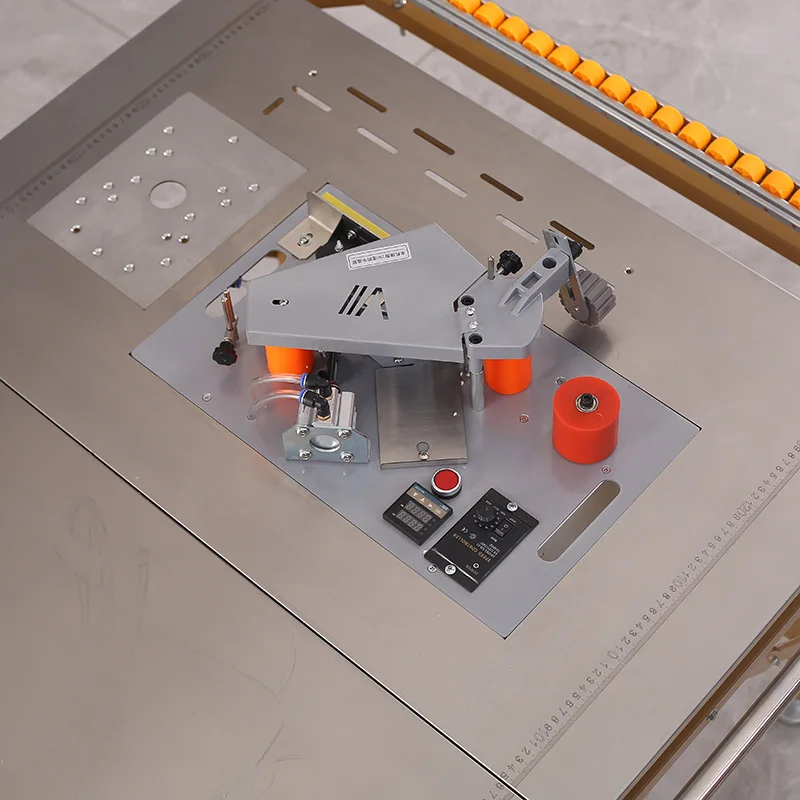
Description
Voltage-ready configuration — confirmed 220V supply compatibility for the portable mini edge bander before it leaves the factory, preventing motor burnout on arrival.
Technical Specifications
| Parameter | Value |
|---|---|
| Product Type | Portable Edge Banding Machine |
| Voltage | 220V |
| Rated Power | 825W |
| Heating Time | 5-10 min |
| Air Pressure Requirement | 0.4-0.6 MPa |
| Glue Pot Capacity | 1000 ml |
| Edge Banding Speed | 0-10 m/min |
| Edge Pattern Capability | Curves, straight lines, special shaped lines |
| Overall Dimensions (L×W×H) | 50×30×27 cm |
| Control System | Manual / handheld operation |
| Assembly State | Portable / handheld unit |
Application Suitability
| Application | Material or Output |
|---|---|
| Small-scale furniture edge finishing | MDF, plywood, particleboard panels |
| Curved cabinet component banding | Solid wood panels with radius profiles |
| On-site installation touch-up work | PVC and veneer edge banding strips |
| Joinery workshop short-run production | Custom-shaped melamine-faced boards |
The Voltage Question Most Quotations Skip Entirely
Confirming the portable edge banding machine for sale matches your workshop supply prevents a two-week idle line.
I walked into a cabinet shop in Vietnam once where a compact bander sat silent under a tarp. The supplier shipped a 440V unit to a 380V line that nobody had verified before purchase. The main motor overheated on the first day of production, and the owner spent weeks sourcing a step-up transformer while orders piled up [NEED_CITE: voltage and frequency standards by export market]. A handheld machine drawing 825W is far less demanding than a full automatic line, but the principle remains identical. When you evaluate a portable edge banding machine for sale, the voltage confirmation must appear on the specification sheet before any other discussion.
Curve and Straight Coverage in a Single Handheld Pass
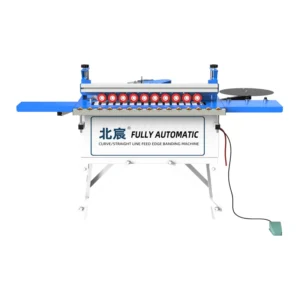
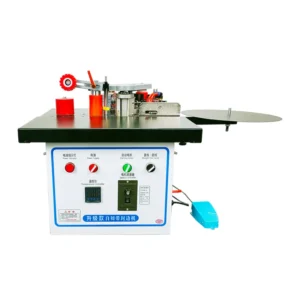
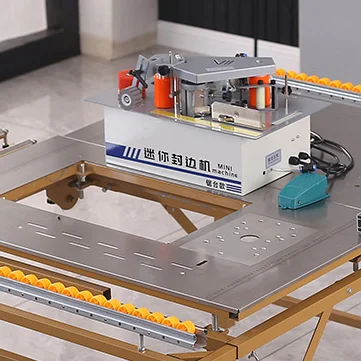
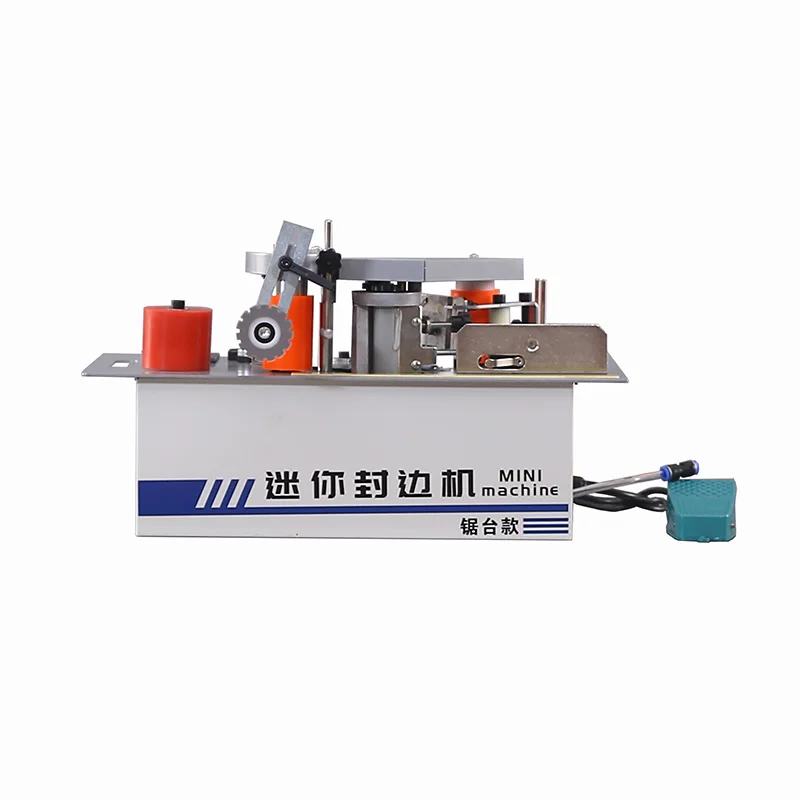
The edge path versatility on this unit covers curves, straight lines, and special shaped profiles without requiring a second tool or a fixture change. For a small joinery shop handling one-off radius panels that cannot physically pass through a stationary automatic bander, this portability becomes the difference between mechanised finishing and hand-trimming with a router and file. The 1000 ml glue pot provides enough adhesive volume for short production runs without frequent refills interrupting the operator.
Air Pressure Alignment with Standard Workshop Compressors
The 0.4–0.6 MPa air pressure requirement falls within the output range of most standard piston compressors already present in small workshops. This means you rarely need a dedicated air supply for the portable edge banding machine for sale — you simply tee into your existing line. The air-assisted feed stabilises the banding strip against the panel edge during the glue setting phase, which matters considerably when you are working curved profiles where gravity and strip tension pull the material away from the substrate [NEED_CITE: pneumatic feed stability on curved edge banding applications].
Reading the Specs That Actually Determine Output Quality
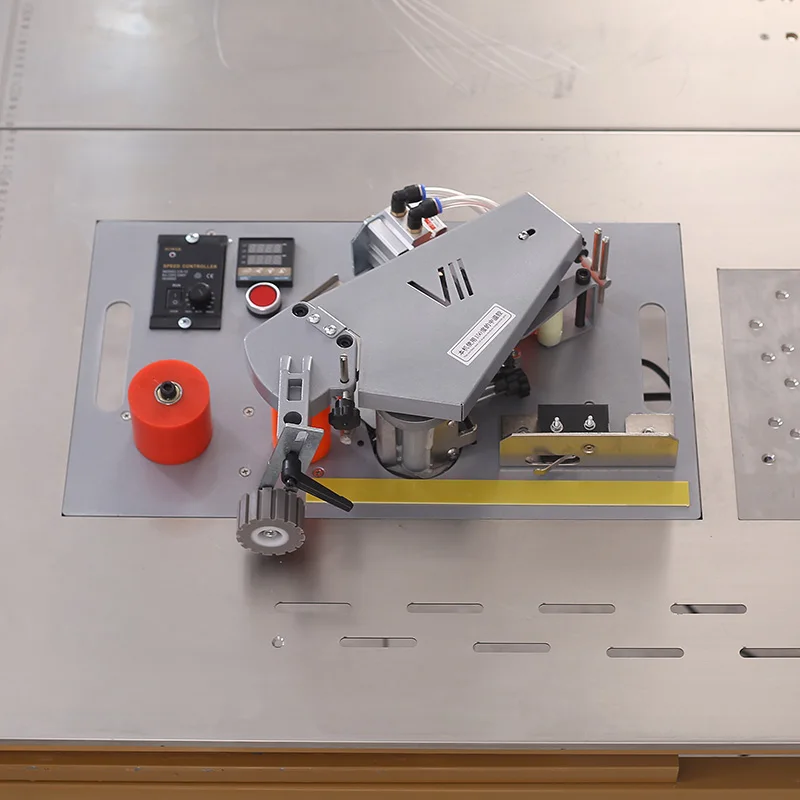
The 0–10 m/min banding speed range gives the operator control over feed rate depending on the banding material. PVC strips typically tolerate the upper end of that range, while thin wood veneer demands a*ous back of the strip before it skins over. The 825W rated power drives the heating element and feed motor simultaneously; this is adequate for the glue pot capacity but means the unit cannot sustain continuous high-throughput operation the way a 4 kW stationary machine can. The 5–10 minute heating time sets the realistic start-of-shift preparation window — an operator switching the unit on at the bench will have it at working temperature before the first panel is staged.
What Happens When the Specification Sheet Is Ignored
Purchasing a portable unit without matching it to your actual panel material and banding type leads to visible glue lines on porous substrates like raw particleboard. The adhesive temperature suited to PVC may scorch veneer, and a feed speed that works on straight edges will cause the strip to lift on tight curves. I have seen workshops blame the machine for banding failures that were entirely a configuration mismatch [NEED_CITE: adhesive temperature requirements across PVC veneer and melamine banding materials]. The operator reads a control panel in a language they cannot follow, guesses at the temperature dial, and wonders why the edge quality varies from panel to panel.
Why Procurement Through Ruiqi Wood Reduces That Risk
The full catalogue here lets you place this portable unit in context against the stationary range — entry-level through full-function pre-milling models — so you can see whether a handheld machine genuinely fits your current volume or whether you need the next tier. Voltage confirmation from 110V through 440V is handled as a standard step before order, not an afterthought discovered at the dock. An engineer-led configuration review matches your panel material and banding type to the correct glue and feed settings, documented in a formal quotation. The four-stage QC process includes a pre-shipment test run on sample stock, so you receive verification footage rather than a promise.
Documentation & Verification
- Machine specification sheet confirming 220V and 825W against your local supply
- Factory test record demonstrating banding on your specified MDF or plywood thickness
- Operation manual translated to your operator’s working language before dispatch
- Electrical schematic showing heating element and motor circuit for local electrician reference
- Spare parts list covering glue pot, feed rollers, and pressure shoes with part numbers
- Packing photographs verifying portable unit condition and accessories before container loading
Installation, Commissioning & Support
- Requires only a standard 220V single-phase outlet, no dedicated three-phase circuit needed
- 50×30×27 cm footprint fits on any workbench without floor space planning
- Arrives fully assembled with no on-site mechanical installation required
- First commissioning involves heating the 1000 ml glue pot and verifying air line connection at 0.4 MPa
- Operator training covers speed dial adjustment for PVC versus veneer banding materials
- Daily maintenance limited to glue pot cleaning and feed roller wipe-down after each shift
Before You Request a Quotation
To match this portable edge banding machine for sale to your workshop, tell us the panel materials you process most frequently, the banding strip types and thicknesses you stock, and your local voltage and frequency supply. If you are evaluating this unit as a bridge before scaling to a stationary automatic bander, share your expected daily panel count so we can confirm where this machine fits in your growth path.
Frequently Asked Questions
Q: How do I choose between a portable bander and a stationary automatic edge bander for my workshop volume?
A: A portable unit suits short runs, curved profiles, and on-site touch-up work where panels cannot pass through a fixed machine. If your daily output involves long straight edges on standard rectangular panels in high volume, a stationary automatic bander with pre-milling and multi-stage trimming will deliver consistent quality at higher throughput. We can map your panel count and profile mix to show where each machine sits.
Q: What voltage and frequency options are available, and how do I confirm compatibility before ordering?
A: This portable edge banding machine for sale is configurable across voltage ranges. Before we finalise the order, we request your workshop supply specification — voltage, phase, and frequency — and print the confirmed values on your machine specification sheet. Your local electrician can cross-reference the included electrical schematic before the unit arrives, eliminating the transformer scramble I have witnessed on poorly specified orders.
Q: Which edge banding materials does this portable unit handle best?
A: The unit works with PVC and veneer banding strips across the 0–10 m/min speed range. PVC tolerates faster feed rates and higher glue temperatures, while veneer requires slower passes and careful temperature control to prevent scorching. Melamine-faced strips are workable but demand precise heat management. We recommend a sample test on your specific strip stock before committing to a production protocol.
Q: Can this machine serve as a stepping stone before upgrading to a full-function pre-milling edge bander?
A: Yes. Many joinery workshops start with a portable unit to mechanise edge finishing on custom curved work, then add a stationary automatic bander as their straight-panel volume grows. The portable machine remains useful for one-off radius components and on-site installation work even after the main production line is established, so the initial investment retains utility rather than becoming redundant.
Q: What does the full Ruiqi edge banding range look like from entry-level to production-grade?
A: The catalogue spans from this portable handheld unit through compact stationary banders for small workshops, up to full-function pre-milling models with automatic feed, multi-stage trimming, and buffing stations for high-volume panel processing plants. Each tier shares the same QC protocol and documentation standard, so moving between models within the range does not mean changing your quality expectations or supplier relationship.