Description
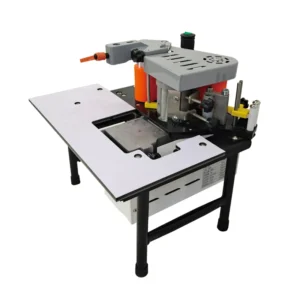
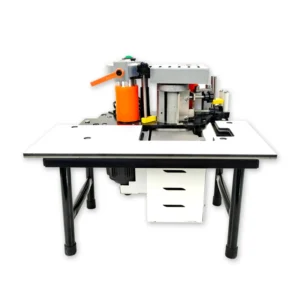
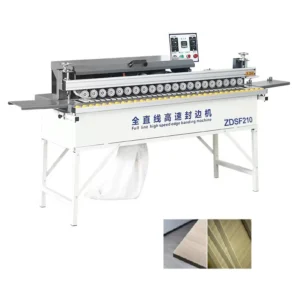
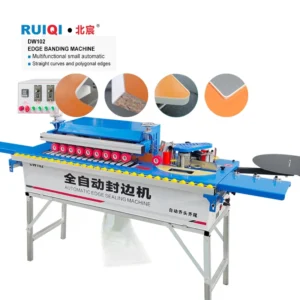
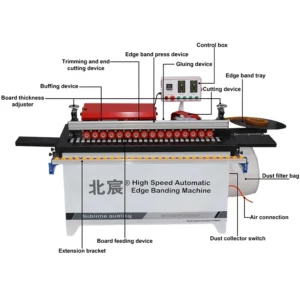
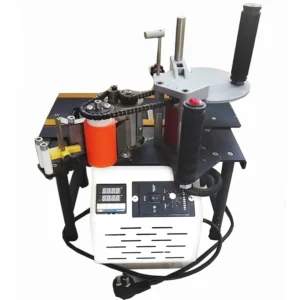
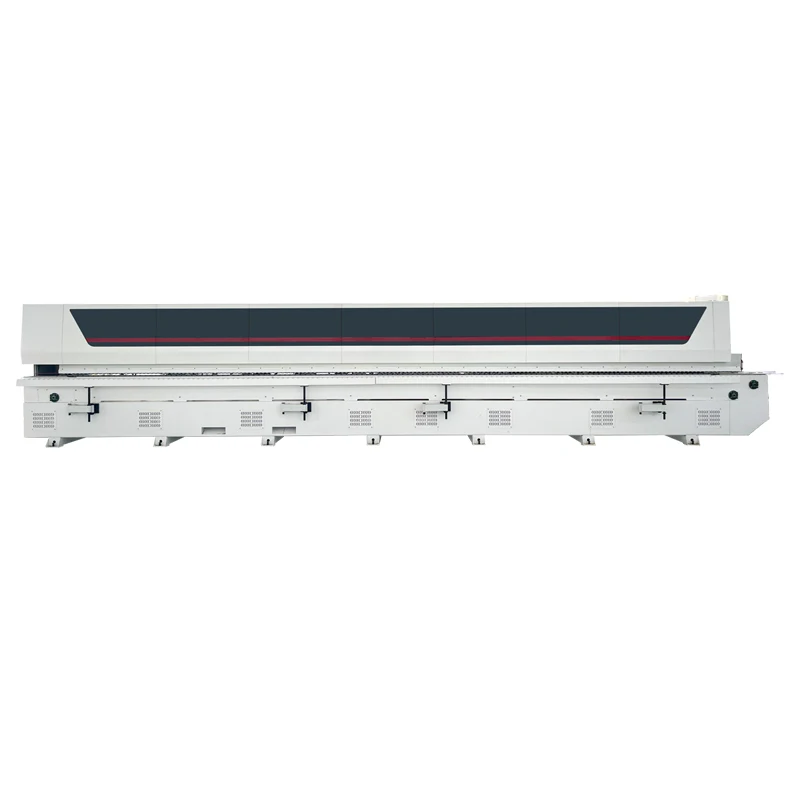
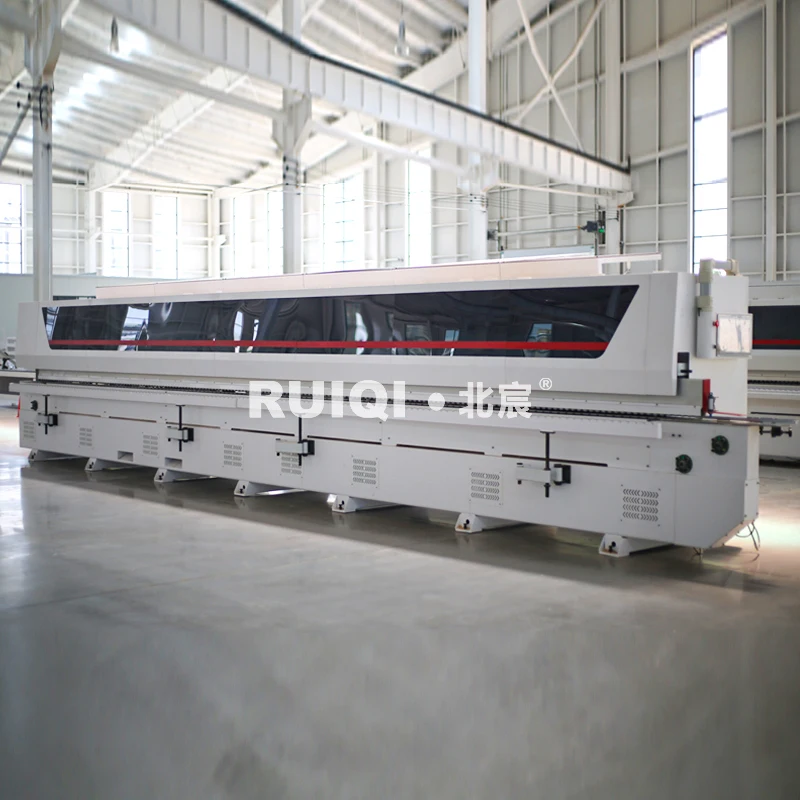
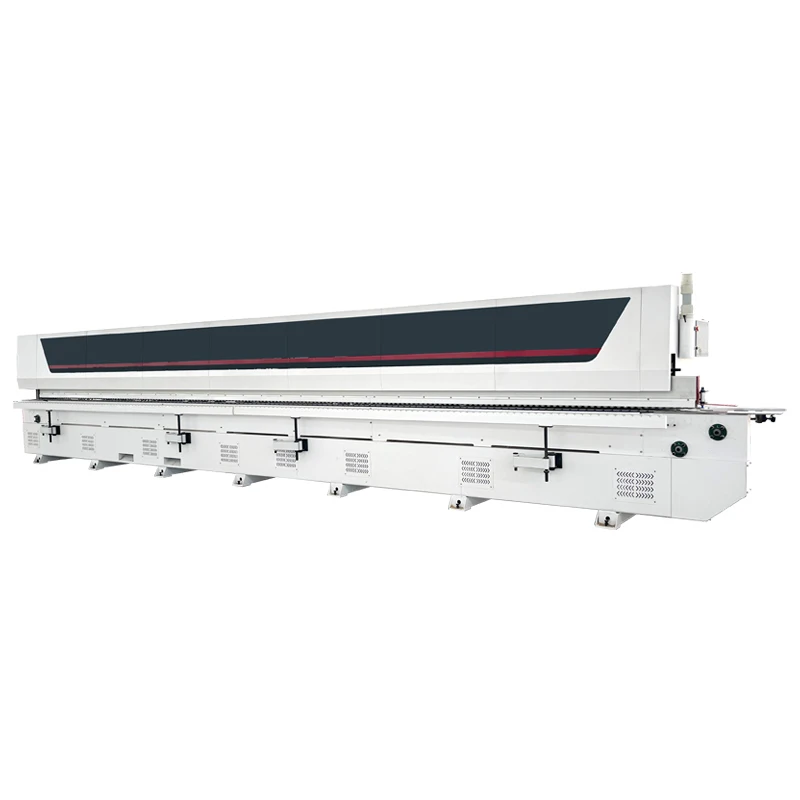
Full Product Family Coverage — The DW985 soft forming edge banding machine sits within a complete range from entry-level to production-line configurations, allowing your workshop to scale capacity without switching equipment suppliers.
Technical Specifications
| Parameter | Value |
|---|---|
| Model | DW985 |
| Product Type | Soft Forming Edge Banding Machine |
| Processing Speed | 8–12 m/min |
| Control System | Touch screen operation |
| Profiling System | Wheeled profiling with remote shape upgrading |
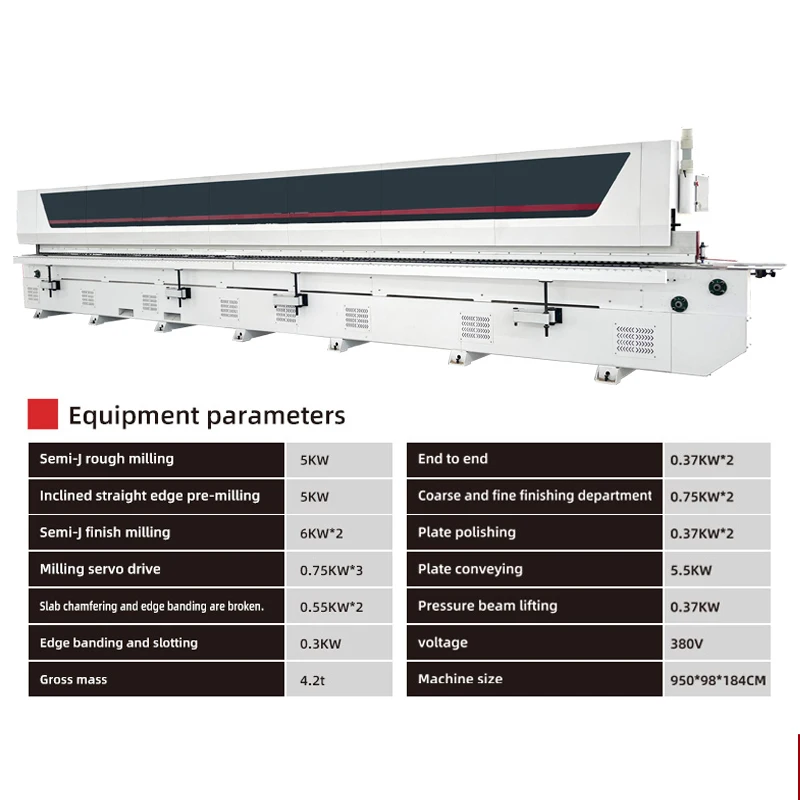
| Semi-J Rough Milling Power | 5 kW |
| Inclined Straight Edge Pre-milling Power | 5 kW |
| Semi-J Finish Milling Power | 6 kW × 2 |
| Milling Servo Drive Power | 0.75 kW × 3 |
| Slab Chamfering & Edge Banding Breaking Power | 0.55 kW × 2 |
| Edge Banding & Slotting Power | 0.3 kW |
| End-to-End Power | 0.37 kW × 2 |
| Coarse & Fine Finishing Department Power | 0.75 kW × 2 |
| Plate Polishing Power | 0.37 kW × 2 |
| Plate Conveying Power | 5.5 kW |
| Pressure Beam Lifting Power | 0.37 kW |
| Voltage | 380V (frequency and alternative voltages to be confirmed) |
| Gross Mass | 4.2 t |
| Machine Size | 950 × 98 × 184 cm |
| Plug Options | EU / USA / AU / UK |
| Language Options | Chinese + English standard; English / Spanish / other customizable |
| Assembly State | Fully assembled |
| Process Stations | Separate → Linear Pre-milling → Milling → Rough Mill → Inclined Straight Pre-milling → Finish Milling → Finishing Milling 2 → Handle-free Chamfer → Plate Heating → Wash → Edge Banding and Slotting → Rubber Coating → Heating System → Soft Forming and Pressing Edge Banding Breaking → End to End → Rough Repair → Truing → Edge Scraping → Copying Chamfer → Wash → Polish |
Application Suitability
| Application | Material or Output |
|---|---|
| Custom furniture panel edge banding | MDF, particleboard, plywood with PVC or veneer edge banding |
| Cabinet and cupboard door production | Laminated board with soft-forming contour edges |
| Wardrobe and shelving panel finishing | Particleboard and MDF with melamine or PVC edging |
| Panel processing plant batch runs | Mixed substrate boards requiring multi-function trimming and polishing |
Why the Voltage Question Should Come Before the Price
Confirming local voltage and frequency compatibility is the single most important step before committing to any soft forming edge banding machine for sale.
I once spent weeks on the phone with a Middle East customer whose newly delivered machine sat idle on the factory floor. The local supply was a different frequency from what the motor was wound for, and no adapter could fix it. The workshop lost production time while a replacement motor was sourced and shipped [NEED_CITE: voltage and frequency standards by export market]. Since that incident, I check the electrical specification against the destination country grid before any production order is released.
Sixteen Stations Under One Touch Screen
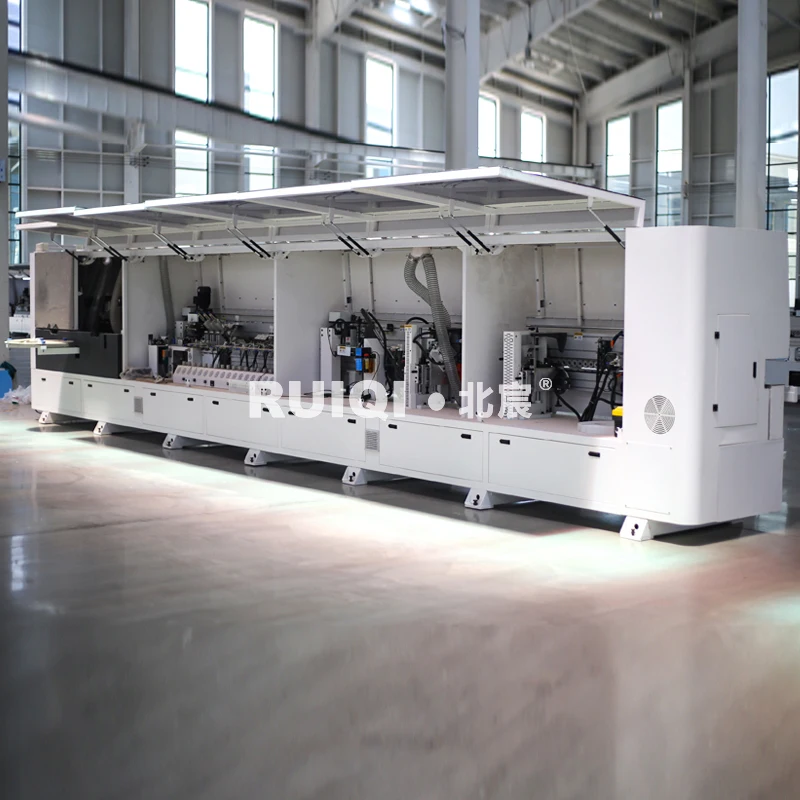
The DW985 soft forming edge banding machine integrates 16 process stations into a single linear workflow, from linear pre-milling through to final polishing. Operators select the required sequence on the touch screen, and the machine configures each station accordingly. This eliminates the need for separate trimming, chamfering, and polishing units scattered across the workshop floor.
Profiling That Grows With Your Product Range
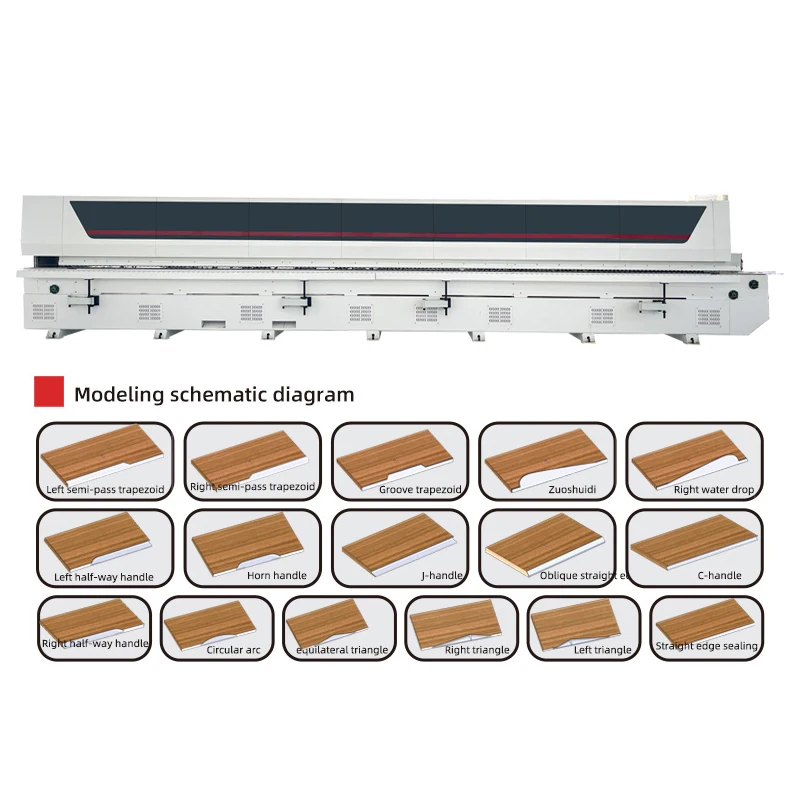
The wheeled profiling system supports remote shape upgrades, meaning new contour profiles can be added without replacing hardware. When a furniture customer introduces a new door profile, the updated shape data is loaded into the control system. This keeps the machine relevant across product line changes that would otherwise require new equipment.
Reading the Power Ratings Against Your Panel Mix
The combination of 5 kW pre-milling motors and dual 6 kW finish milling units provides the torque needed for consistent edge removal across MDF, particleboard, and plywood substrates. The three 0.75 kW servo drives on the milling stations hold the cutting head against the panel edge under variable feed conditions, maintaining tolerance when board density shifts between batches. The 5.5 kW conveying motor sustains the 8–12 m/min feed rate under the full load of heavy panels, while the pressure beam lifting motor secures thinner stock without crushing the substrate surface [NEED_CITE: CE machinery directive requirements for industrial equipment].
What Happens When Feed Height and Throughput Do Not Match
Purchasing a standalone machine without checking compatibility against upstream saws and downstream assembly benches often leads to bottlenecks. Panels arrive at the edge bander at a height the feed rollers cannot accept, or the output pace overwhelms the next station. The DW985 is designed to integrate within a broader family of equipment at matching throughput levels, reducing the risk of incompatible feed dimensions across a mixed-vendor line [NEED_CITE: production line integration standards for woodworking machinery].
Why Buyers Source the Full Range Here
In-house manufacturing with patented cutting mechanisms means the DW985 carries verified tolerance backed by proprietary tooling design rather than generic components. Voltage, language, and plug configuration are confirmed per order, so the machine arrives ready for the local electrical grid and operator language. The four-stage quality control process includes pre-shipment verification on the actual panel thickness range specified in the purchase order. Engineer-led configuration recommendations are delivered within one working day, matching machine specification to the buyer’s stated production requirement.
Documentation & Verification
- CE declaration of conformity referencing the DW985 model designation
- Electrical schematic confirming voltage and frequency for the destination country
- Factory test record run on buyer-specified panel thickness and edge material
- Operation and maintenance manual in the agreed control panel language
- Spare parts list with part numbers matching the installed station configuration
- Packing photographs showing secured crating before container loading
Installation, Commissioning & Support
- Foundation must support 4.2 t gross mass across the 950 × 98 cm footprint
- Dedicated 380V circuit with breaker rated for total connected motor load
- Machine ships fully assembled, requiring only power connection and dust extraction hookup
- Touch screen calibrated on-site during first-run parameter setting
- Operator training covers station selection, profiling changeover, and daily maintenance
- Spare wear parts shipped with initial order to cover early production running
Before You Request a Quotation
Provide the substrate types, panel thickness range, and edge banding materials your workshop processes most frequently. Include the local voltage and frequency at the installation site, the preferred control panel language, and whether the machine will operate as a standalone unit or within an existing line. If your product range includes contoured edges, share the profile drawings so the profiling system can be evaluated for compatibility.
Frequently Asked Questions
Q: How do I confirm the DW985 voltage matches my workshop supply?
A: The standard configuration is 380V, but alternative voltages from 110V to 440V are available on request. Provide your local supply voltage and frequency when inquiring so the motor windings and transformer can be matched before production begins. A formal electrical schematic is included with the quotation.
Q: Which languages does the touch screen support?
A: Chinese and English are standard on every unit. Spanish and other languages can be configured at the factory before shipment. Specify your preferred language during the quotation stage so the control panel and printed operation manual both arrive in the correct version.
Q: How does the DW985 compare to entry-level models in the same range?
A: The DW985 offers 16 full-function stations including soft forming, profiling, and multiple polishing stages. Entry-level models in the same family cover basic straight-edge banding with fewer trimming stations. The choice depends on whether your product mix includes contoured panels and multiple edge banding materials.
Q: Can I send sample panels for a test run before ordering?
A: Yes. Send representative panels in your most common substrate, thickness, and edge banding material. The factory runs a full-cycle test on the DW985 and returns the processed samples along with the test record so you can evaluate edge quality, glue adhesion, and trimming accuracy in your own workshop.
Q: What spare parts should I stock for the first year of operation?
A: Common wear items include profiling wheels, trimming cutters, scraper blades, polishing buff wheels, and glue pot seals. A recommended spare parts list with quantities matched to your expected running hours is included with every quotation, and parts can be bundled with the initial shipment.