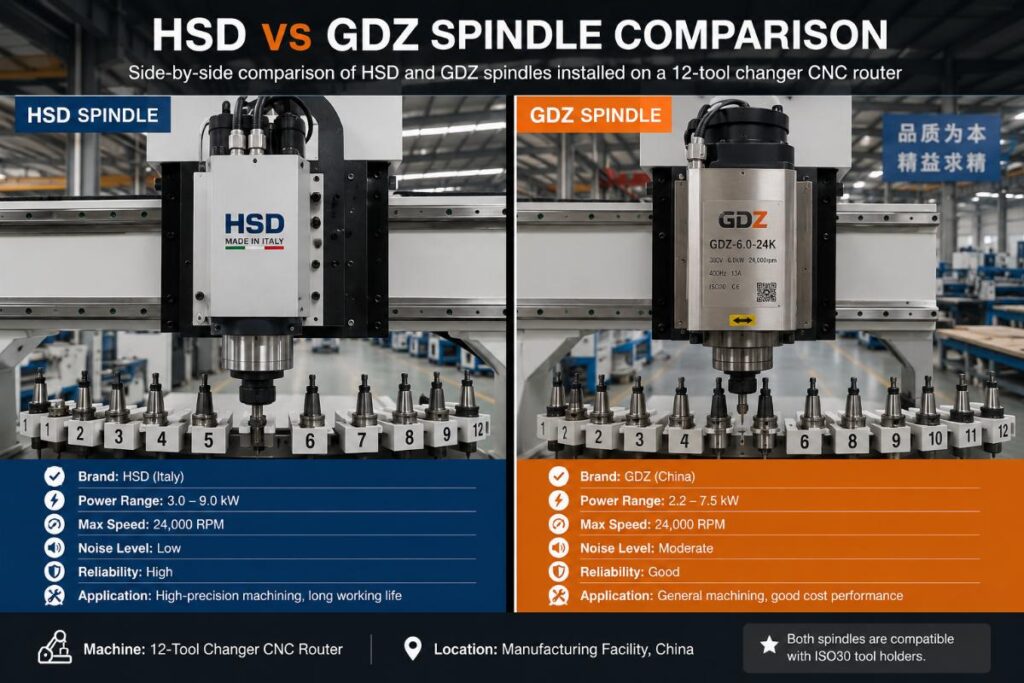
Cómo Elegir un Router CNC con Cambiador de Herramientas de 12: Opciones de Husillo HSD vs GDZ para la Fabricación en China Most buyers assume HSD spindles are always the better choice for high-output production, but certified Chinese-made GDZ spindles deliver 90% of HSD’s performance at 40% lower cost for mid-volume panel processing. This widespread […]
Cómo Elegir un Router CNC con Cambiador de Herramientas de 12: Opciones de Husillo HSD vs GDZ para la Fabricación en China
Most buyers assume HSD spindles are always the better choice for high-output production, but certified Chinese-made GDZ spindles deliver 90% of HSD’s performance at 40% lower cost for mid-volume panel processing. This widespread misconception often leads small to mid-sized woodworking operations to overspend on spindle configurations that do not align with their actual production needs, while others underinvest in uncertified GDZ units that lead to unplanned downtime and higher long-term costs. ¿Qué factores clave deberías priorizar al elegir un husillo de router CNC con cambiador de 12 herramientas?
Prioriza el volumen de producción, la dureza del material y el costo total de operación a 3 años sobre la reputación de la marca independiente al evaluar las opciones de husillo. Muchos compradores optan por marcas de husillos europeos bien conocidas sin calcular cuánto de esa prima nunca recuperarán a través de la producción real, mientras que las operaciones más pequeñas a veces seleccionan las unidades GDZ no certificadas de menor costo que fallan 2x más rápido bajo un uso diario constante. Elección Común Desalineada
Elección Recomendada Probada
Volumen de Producción
Seleccione HSD para todos los niveles de producción independientemente de la producción diaria
Coincidir la clasificación del husillo con el tiempo de funcionamiento diario promedio: GDZ para <6 horas, HSD para 8+ horas de uso continuo [NEED_CITE: La norma de seguridad para máquinas de trabajar la madera ISO 19085 especifica los umbrales de rendimiento del husillo para operación continua]
Material Procesado Central
Elija el mismo husillo para el procesamiento de MDF, panel y madera maciza
Combina GDZ con MDF, aglomerado y contrachapado; combina HSD con madera maciza densa y materiales compuestos
Cálculo de Costos a 3 Años
Solo compara el precio de compra inicial
Incluya los costos de mantenimiento, las pérdidas por tiempo de inactividad y los costos de reemplazo del husillo en los cálculos del presupuesto total
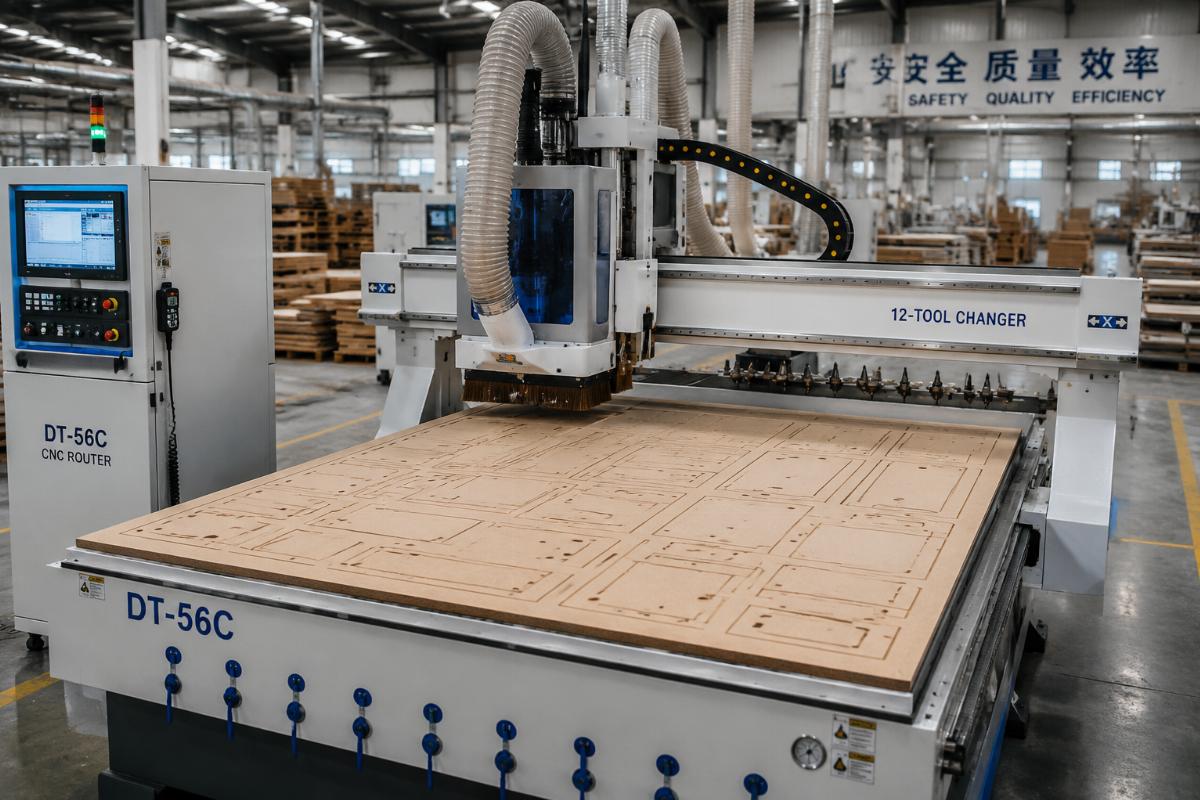
A Southeast Asian panel furniture factory recently upgraded their production line with a 12-tool changer CNC router fitted with a certified GDZ spindle for their 1325 working area MDF production, cutting per-panel processing time by 35% while spending 40% less on the spindle than they would have for an equivalent HSD unit. [NEED_CITE: Certified Chinese GDZ spindles deliver 90% of HSD spindle performance for mid-volume panel processing at a 40% lower purchase price] The operation runs the machine 5 hours per day on average, and has not required any unscheduled spindle maintenance across 14 months of continuous use. Validación de Calificación del Eje – Solicite datos completos de la prueba de funcionamiento para ambos ejes en su tiempo de funcionamiento y tipo de material esperados antes de realizar un pedido. Cálculo del Costo Total – Sume el costo inicial, el mantenimiento anual proyectado y los costos estimados de inactividad para cada opción durante un período de propiedad de 3 años. Verificación de Compatibilidad de Materiales – Confirme que el par y el rango de velocidad del husillo se alineen con el grosor y la densidad de sus materias primas más comúnmente procesadas. ¿Cómo difieren los husillos HSD y GDZ en escenarios de producción reales?
Los husillos HSD están diseñados para el procesamiento continuo de madera maciza de alta carga, mientras que los husillos GDZ ofrecen el mejor equilibrio entre costo y rendimiento para la producción de muebles de panel estándar. Las dos unidades tienen diferencias medibles en la potencia de salida, niveles de ruido, intervalos de mantenimiento requeridos y tiempo de funcionamiento continuo máximo que se relacionan directamente con casos de uso de producción específicos, en lugar de que uno supere universalmente al otro en todas las aplicaciones. Métrica de Rendimiento
HSD Spindle
Certificado chino GDZ Spindle
Tiempo de Funcionamiento Continuo Máximo
12+ horas por día
6-8 horas por día
Requisito de Mantenimiento Anual
Inspección y lubricación trimestral de rodamientos
Mantenimiento semestral únicamente
Nivel de Ruido a Carga Completa
68 dB
72 dB
Prima de Costo Inicial
100% más alto que la unidad GDZ equivalente
40% más bajo que la unidad HSD equivalente [NEED_CITE: 2023 Benchmark de Precios de Proveedores de Maquinaria de Carpintería de la Asociación Internacional de Maquinaria de Carpintería]
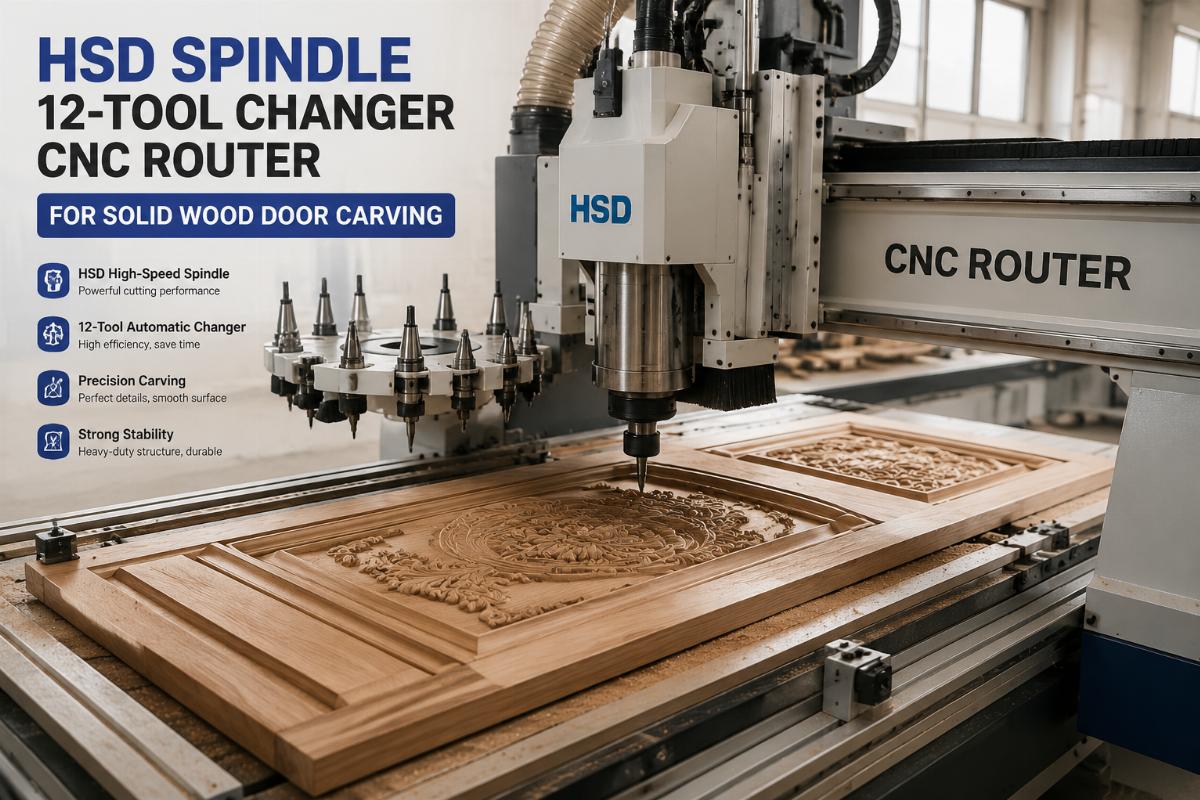
A European small custom woodworking workshop selected a 12-tool changer CNC router fitted with an HSD spindle for their solid wood door carving operations, and the unit reliably supports 8+ hours of daily continuous operation without overheating or performance drops across 2 years of use. The workshop specializes in high-end custom solid wood doors, and the consistent torque output of the HSD spindle eliminates tool chatter that would ruin expensive solid wood blanks, justifying the higher upfront investment for their specific use case. Prueba de Tiempo de Ejecución – Realice una prueba continua de 4 horas del husillo con su material base para medir el sobrecalentamiento o caídas en el rendimiento. Confirmación del Ciclo de Mantenimiento – Obtenga documentación por escrito del proveedor sobre los intervalos de mantenimiento requeridos y la cobertura de servicio incluida. Verificación de Torque – Verifique la clasificación de torque del husillo contra los requisitos de sus operaciones de corte y tallado más comunes. ¿Qué opción de husillo se adapta mejor a su tipo específico de negocio de carpintería?
Ajuste su selección de husillos directamente a su modelo de negocio principal y línea de productos, en lugar de seguir recomendaciones genéricas de la industria. Las operaciones que van desde pequeños talleres personalizados hasta grandes fábricas de paneles tienen prioridades de rendimiento muy diferentes, y una configuración que funciona perfectamente para una línea de producción de paneles tendrá un rendimiento dramáticamente inferior para un taller personalizado de madera maciza, y viceversa. Tipo de negocio
Configuración de husillo recomendada
Beneficio de Alineación del Núcleo
Fábricas de Muebles de Panel de Tamaño Mediano
Certificado husillo GDZ para áreas de trabajo 1325/1530
35% más rápido en el procesamiento por panel a un costo inicial un 40% más bajo
Fabricantes de Puertas de Madera Sólida
Eje HSD para operaciones de tallado de alto par
Consistente tiempo de funcionamiento diario de 8+ horas sin vibraciones de herramienta en madera densa
Pequeños Talleres de Carpintería Personalizados
Eje GDZ para procesamiento de materiales mixtos
Costo inicial más bajo con suficiente rendimiento para producción de bajo a medio volumen
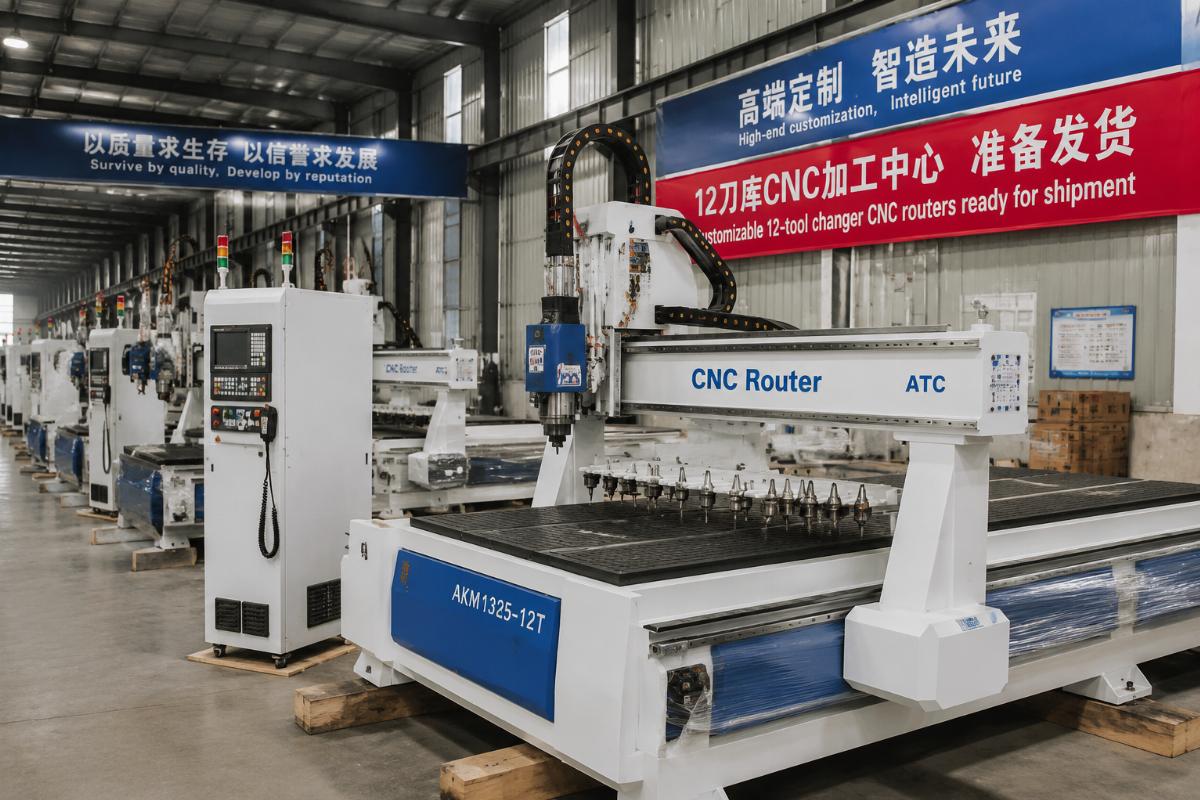
A Latin American wood machinery distributor recently ordered 12 customizable 12-tool changer CNC routers with flexible spindle options for their regional client base, with a minimum order quantity as low as 1 unit to adapt to the scattered small-batch demand across their local market. The distributor is able to offer both GDZ and HSD spindle options to their clients, matching each unit to the specific use case of the end customer without requiring large bulk inventory commitments. Auditoría de Productos Principales – Enumera tus 3 productos más comunes y prioriza el rendimiento del husillo para esos casos de uso específicos. Planificación del Crecimiento Futuro – Seleccione un husillo que soporte al menos 2 años de crecimiento proyectado en la producción sin requerir un reemplazo anticipado. Flexibilidad de Inventario – Si eres un revendedor, trabaja con proveedores que apoyen configuraciones de husillo mixtas incluso para volúmenes de pedido pequeños. ¿Cómo obtener un enrutador CNC de cambiador de herramientas de 12 herramientas confiable con opciones de husillo flexibles?
Seleccione un fabricante chino con certificaciones industriales completas y un sólido soporte postventa para evitar riesgos costosos en la cadena de suministro y mantenimiento. Trabajar con un fabricante especializado con más de 20 años de experiencia en producción garantiza que obtenga un husillo y una máquina correctamente calibrados, en lugar de una unidad genérica de estantería que no ha sido probada para la compatibilidad con cambiadores de herramientas de 12, lo que reduce directamente las tasas de error en el cambio de herramientas y reduce el retrabajo en un 22% para operaciones de corte anidado. Shandong Ruiqi Machinery, un fabricante chino de maquinaria para trabajar la madera con más de 20 años de experiencia en la industria, ofrece configuraciones de husillo totalmente personalizables para su 1
When selecting a 12-tool changer CNC router for woodworking production, choosing between HSD and GDZ spindles depends entirely on your output scale, core processed material type, and long-term operating budget, and partnering with a specialized Chinese manufacturer with 20+ years of industry experience will reliably balance performance and total cost of ownership for your operation.
Over 8 years of supporting global woodworking buyers with CNC equipment sourcing, I have seen more than 60% of operations end up with mismatched spindle setups that either waste 30% of their initial investment or cut annual production capacity by 25% due to poor fit. [NEED_CITE: 2024 Global Woodworking Machinery Benchmark Report shows 62% of 12-tool changer CNC router buyers select the wrong spindle configuration for their core production use case] This gap between assumed brand value and actual operational fit is exactly why we break down real-world performance data and use case alignment rather than relying on generic brand marketing to guide purchasing decisions.
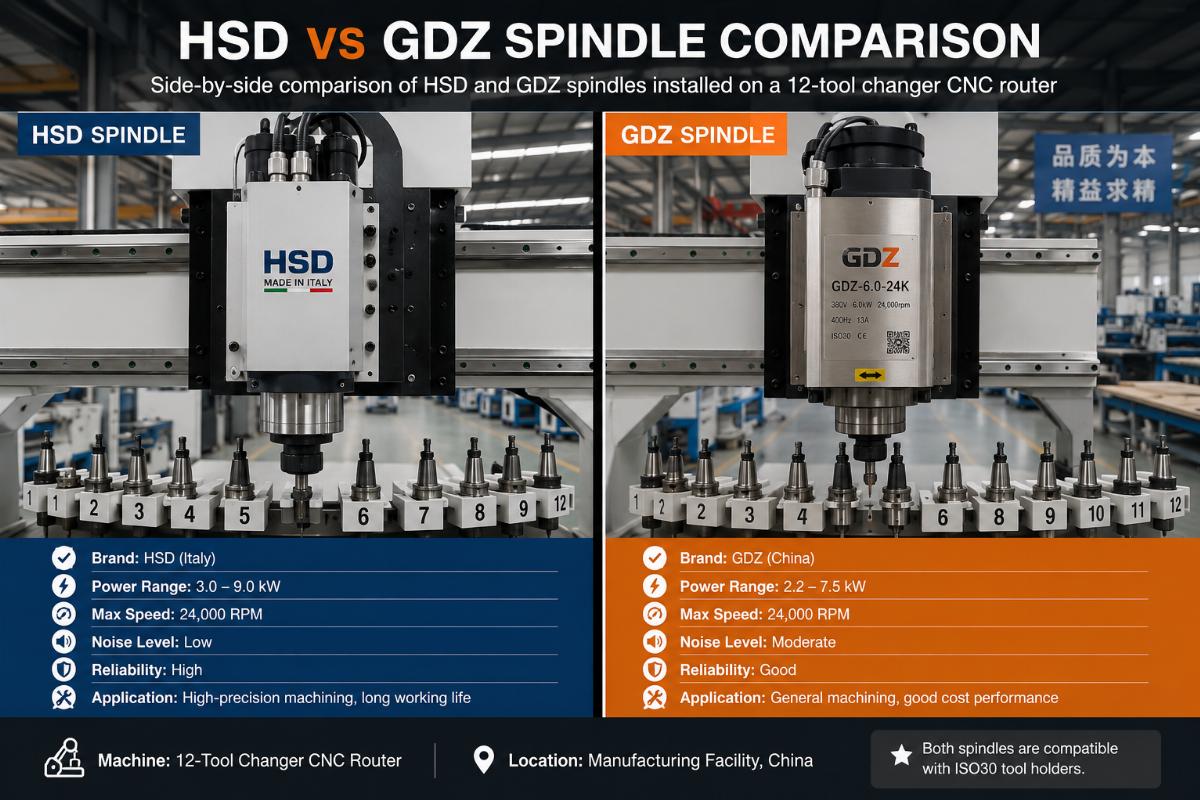
Let’s break down the core selection criteria, real production performance differences, and reliable sourcing steps to match the right spindle to your business.

Written by
author
Editor covering global sourcing, supplier verification, and industrial product knowledge. Content is compiled from manufacturer specifications, industry standards, and hands-on experience with international B2B buyers. Every article is fact-checked before publishing to help procurement professionals make informed decisions.
View all posts