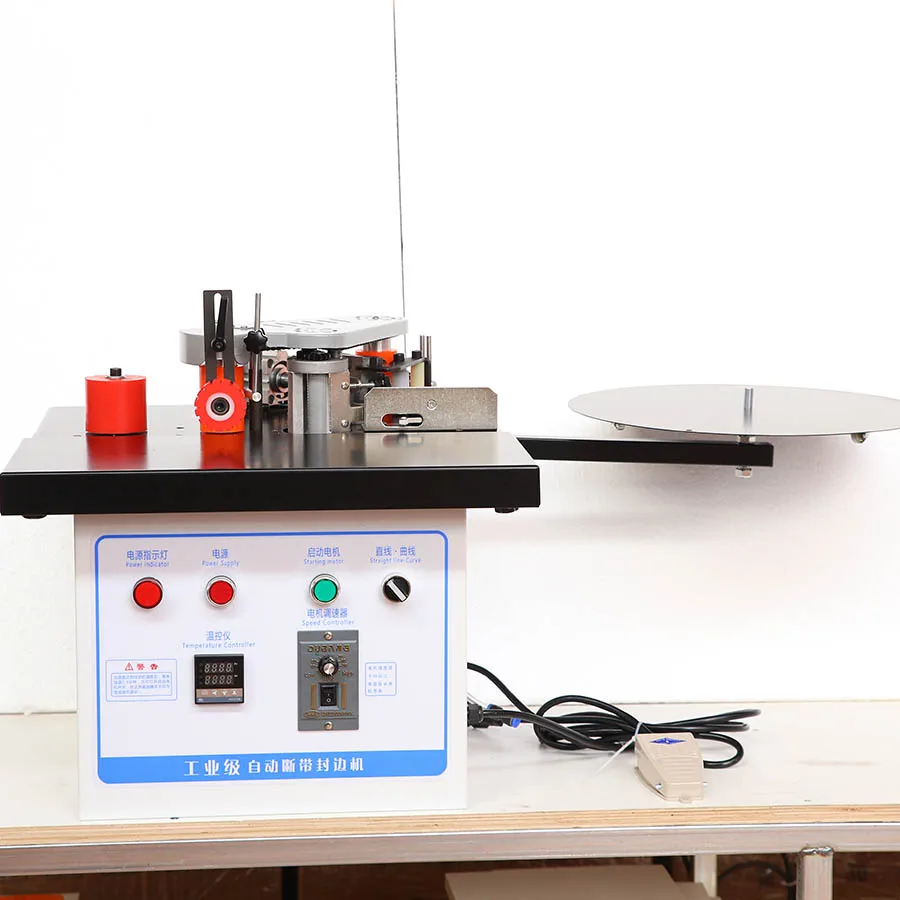

Description
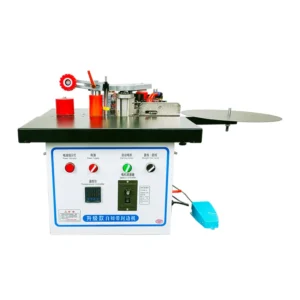
Precision-ground edge banding — Verified ±0.02mm tolerance on the ZDSF50 through four-stage quality control, forming the entry point of a complete product family you can scale within as your workshop grows.
Technical Specifications
| Parameter | Value |
|---|---|
| Model | ZDSF50 |
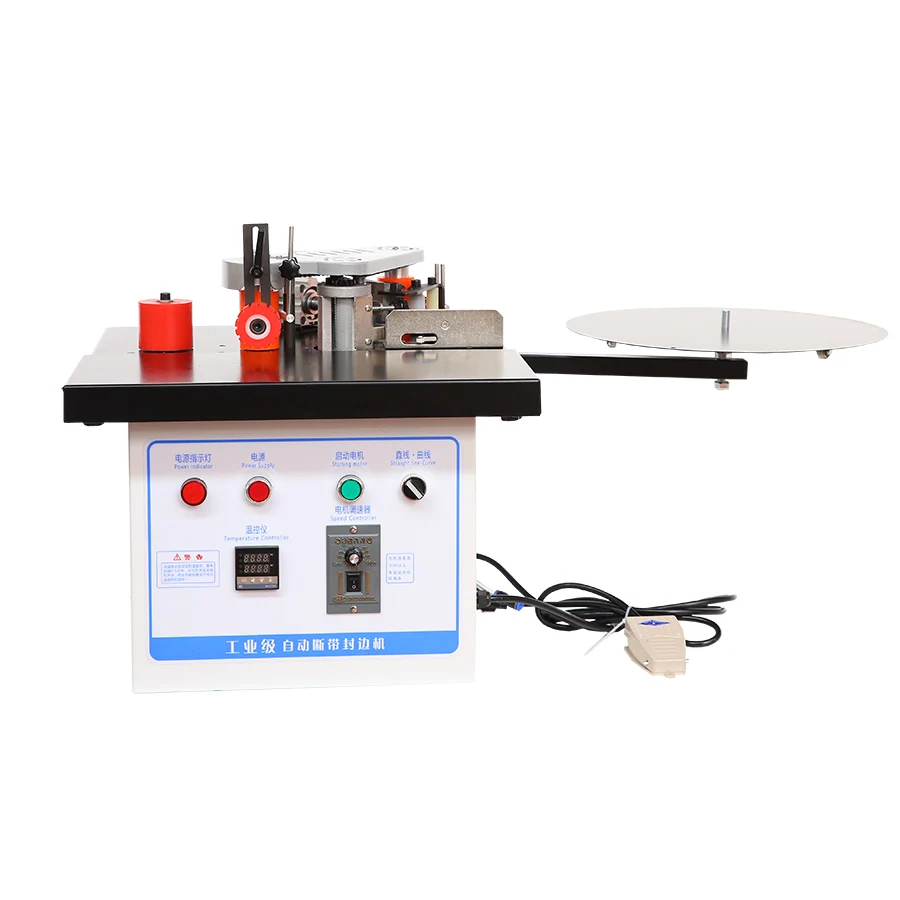
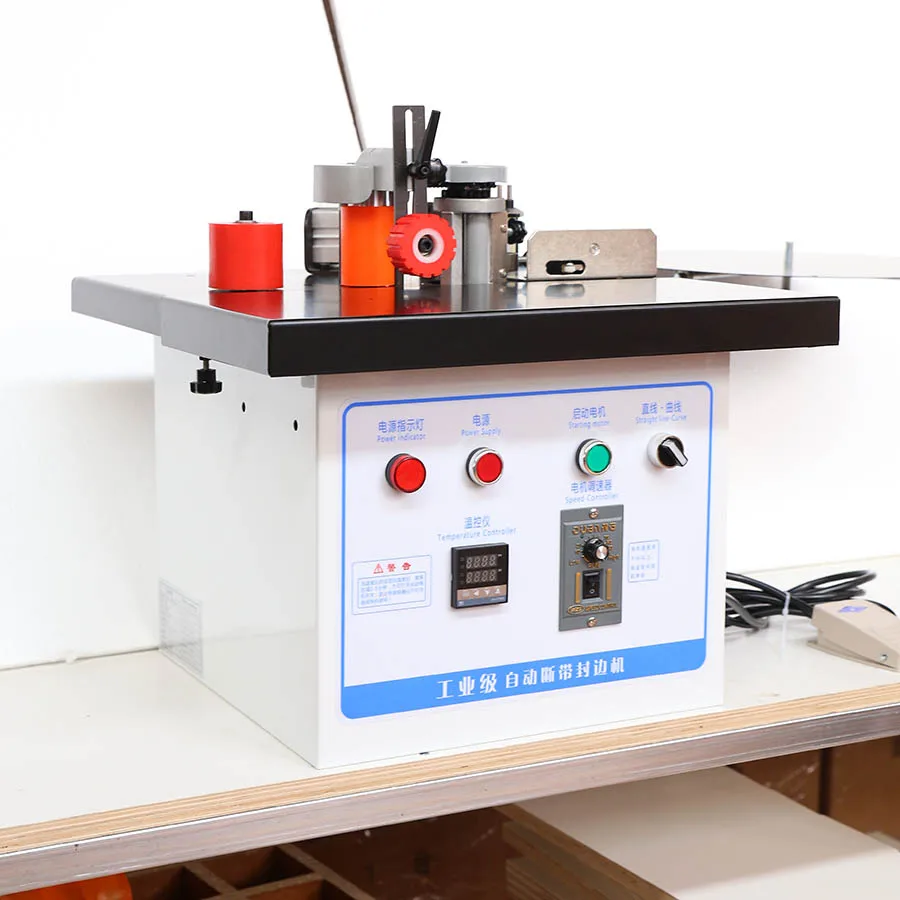
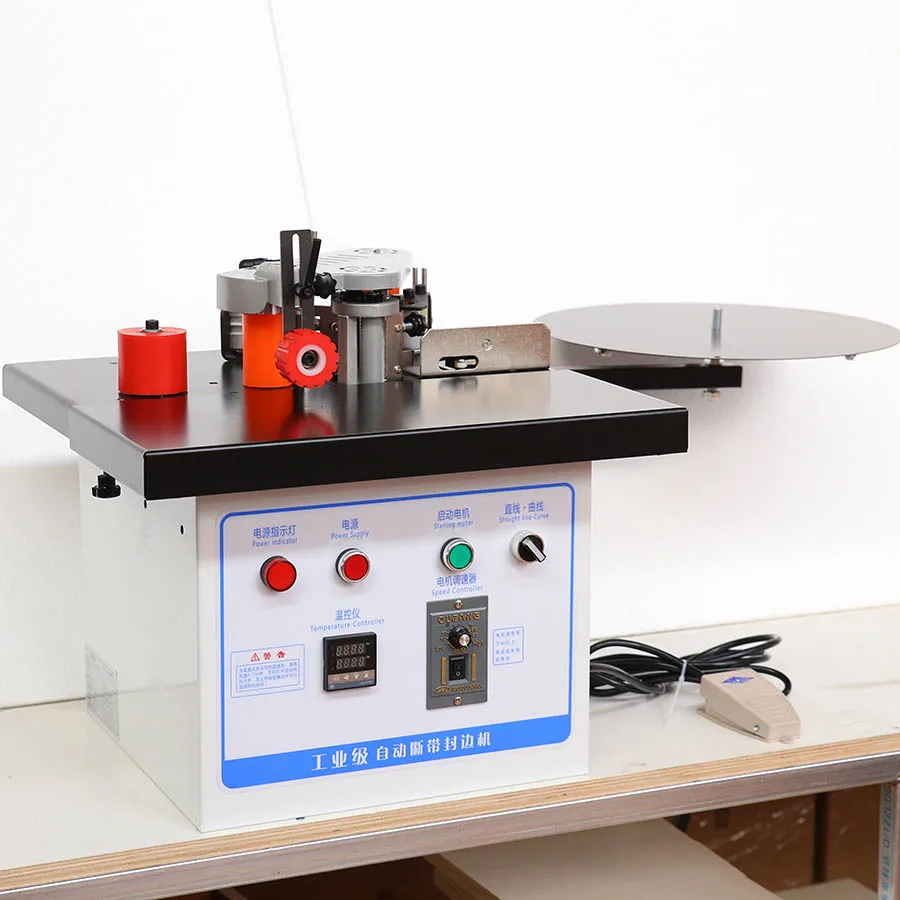
| Product Type | Mini Portable Edge Banding Machine |
| Rated Power | 1.2 kW |
| Voltage | 220V |
| Rated Air Pressure | 0.4–0.6 MPa |
| Strip Thickness Range | 0.5–1.5 mm |
| Sheet Thickness Range | 10–60 mm |
| Glue Pot Capacity | 1000 ml |
| Heating Time | 5–10 min |
| Feed Speed | 0–6 m/min |
| Overall Dimensions | 54 × 54 × 56 cm |
| Net Weight | 26 kg |
| Glue Application Method | Double-sided glue-coated rollers |
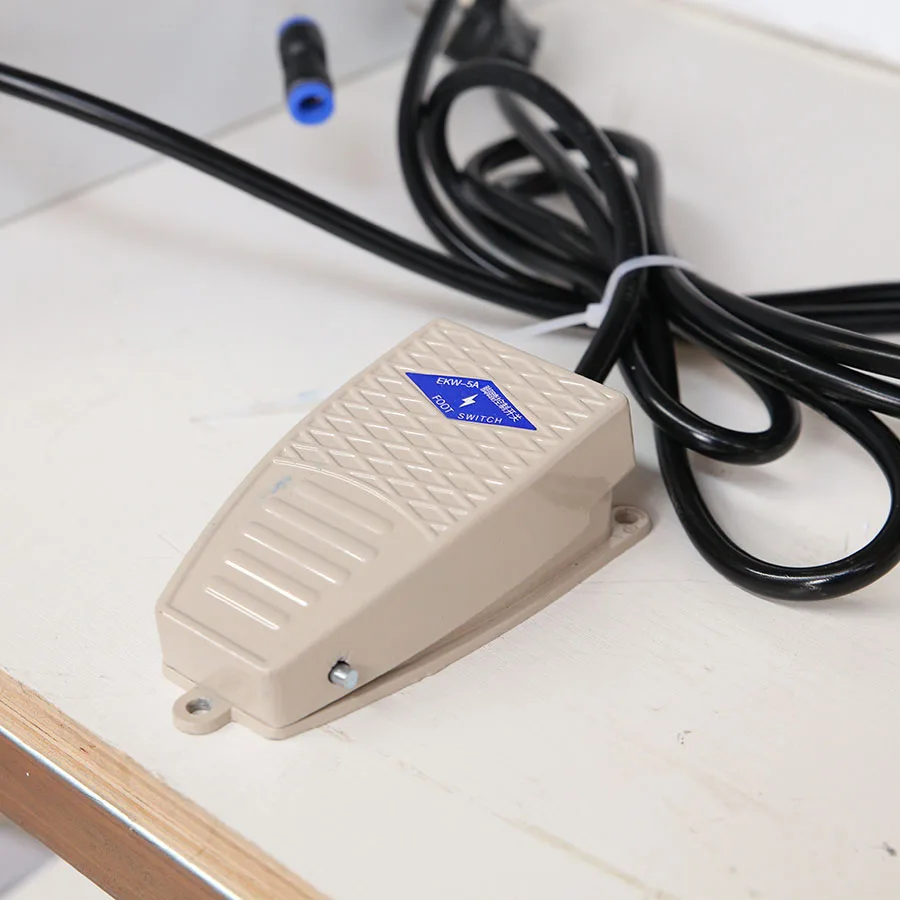
| Edge Breaking Control | Pneumatic belt breaking device with foot switch; automatic travel switch for straight-line edge breaking |
| Pressure Roller | Adjustable, rubber-made |
| Edge Strip Transport | Adjustable bayonet based on strip height |
| Glue Pot Heating | 4 heating tubes |
| Assembly State | Portable / Tabletop |
| Certification | CE |
Application Suitability
| Application | Material or Output |
|---|---|
| Small workshop joinery | MDF, plywood, and particleboard panels with PVC or veneer edge strips |
| Custom cabinet and countertop edging | Curved, straight, and shaped profiles on solid wood and composite boards |
| On-site furniture finishing | Portable edge banding for installed cabinetry and built-in units |
| Prototype and small-batch production | Short-run edge finishing before scaling to automatic lines |
Why the Voltage Question Should Come Before the Price
A Mini Portable Edge Banding Machine manufacturer that ships without confirming your local electrical standard is handing you a problem, not a solution.
Early in my career at the assembly floor in Shandong, I configured an edge bander for a furniture factory overseas and forgot to lock down the voltage and frequency. The machine arrived, the electrician plugged it in, and nothing happened. Three weeks of dead time before a transformer and rewiring sorted it out. Since then, every machine I spec goes through a hard electrical check before the crate closes. The ZDSF50 is rated at 220V, but export markets run on different standards — some at 50 Hz, others at 60 Hz, and single-phase availability varies by region [NEED_CITE: voltage and frequency standards by export market]. A machine that cannot run on your shop floor is a machine that does not exist.
Where the ZDSF50 Sits in a Complete Machine Range
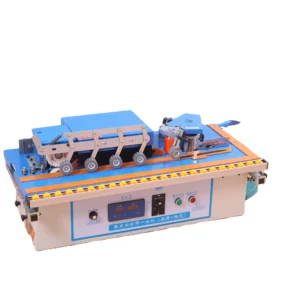
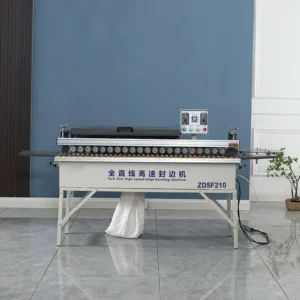
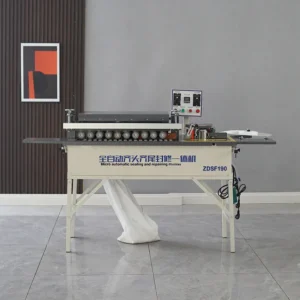
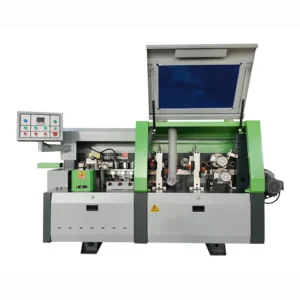
The ZDSF50 serves as the starting position in a full edge banding lineup, designed for workshops that need straight, curved, and shaped edge capability without committing to a full automatic line. Its tabletop footprint means you can run it on a bench, move it between workstations, or take it to a job site for on-location finishing. As your volume grows, the same supplier ecosystem offers pre-milling automatic models with higher feed speeds and additional processing stations, so you never outgrow your supplier relationship.
How Double-Sided Gluing Changes Edge Adhesion
Single-side gluing applies adhesive only to the panel edge, leaving the strip to rely on contact pressure alone. The ZDSF50 uses double-sided glue-coated rollers that apply adhesive to both the board edge and the strip backing simultaneously, which creates a stronger bond across the full width of PVC, veneer, and ABS strips in the 0.5–1.5 mm thickness range. This matters most on curved and shaped edges, where gravitational pull and strip tension work against adhesion during the pressing phase.
Reading the Spec Sheet for Actual Production Impact
The 10–60 mm sheet thickness range tells you this machine handles everything from thin shelving stock up to thick countertop panels, but the practical implication is that your pressure roller and transport bayonet must be adjusted for each thickness change. The adjustable bayonet system bases its setting on strip height rather than a fixed guide, so operators switching between 0.5 mm veneer and 1.5 mm PVC will need to reset the transport mechanism each time. The 0–6 m/min variable feed speed lets you slow down on tight curves where glue open time matters and speed up on long straight runs. The 1000 ml glue pot with four heating tubes maintains consistent melt temperature during short production runs, though shops running continuous shifts should evaluate whether pot capacity matches their daily consumption rate before committing to this model. The pneumatic belt breaking device gives you foot-switch manual control on curves and switches to automatic travel on straight edges — a practical split that keeps operator hands free during the most demanding part of the process [NEED_CITE: CE machinery directive requirements for edge banding equipment].
The Real Cost of Mismatched Feed Height and Throughput
Buying machines piecemeal from different suppliers often means discovering that feed heights do not align when you try to link a panel saw to an edge bander on a shared roller table. A portable unit like the ZDSF50 operates independently, so this risk is lower — but the danger shifts to throughput mismatch. If your upstream cutting station produces panels faster than 6 m/min edge processing can absorb, work-in-progress piles up and glue open time expires before the strip meets the board. Workshops that started with a single machine and added a second from a different brand also report inconsistent glue line quality between the two units, making downstream assembly unpredictable [NEED_CITE: common edge banding faults in multi-machine workshops]. Standardizing within one product family eliminates this variable.
What In-House Manufacturing Means for This Machine
The ZDSF50 is built in a facility that runs four-stage quality control covering incoming material inspection, in-process checks, finished product verification, and pre-shipment testing. The cutting and glue application mechanisms are produced on-site rather than sourced as assemblies, which means replacement parts match original tolerances. Voltage and control panel language are configured before shipment based on your confirmed electrical standard and operator requirements. An engineer reviews your panel material, strip type, and production volume before issuing a formal quotation, so the machine that arrives is the machine your operation actually needs. Factory visits are open for sample processing tests on your own board stock before you commit to an order.
Documentation & Verification
- CE declaration of conformity specific to the ZDSF50 portable edge bander
- Machine specification sheet with confirmed voltage and frequency for your facility
- Electrical schematic showing 220V wiring layout and 1.2 kW load requirements
- Operation and maintenance manual in your agreed operator language
- Factory test record showing edge banding results on your specified panel material
Installation, Commissioning & Support
- Place on a stable bench or tabletop; the 54 × 54 × 56 cm footprint fits standard workstations
- Connect to a dedicated 220V single-phase circuit rated above the 1.2 kW draw
- Machine ships fully assembled; verify glue pot heating tubes and roller alignment on arrival
- First run should test glue temperature across the 5–10 minute heating cycle on scrap board
- Adjust the bayonet transport and pressure roller for your specific strip thickness before production
- Keep spare glue pot heating tubes and rubber pressure rollers in your workshop inventory
What to Share When Requesting a Quotation
To get an accurate configuration for the ZDSF50, provide your primary panel material type and thickness range, the edge strip materials you work with most often, and your confirmed local voltage and frequency. If you have specific curved or shaped profiles you need to band, share the minimum radius and strip width so the engineer can validate feed speed and roller compatibility before quotation.
Frequently Asked Questions
Q: How does the ZDSF50 fit into the broader edge banding machine range, and what is the upgrade path?
A: The ZDSF50 is the entry-level portable model in a complete product family. As your workshop volume increases, you can move to full-function automatic edge banders from the same manufacturer that add pre-milling, scraping, and buffing stations. Because the product family shares a common engineering platform, your supplier relationship and spare parts sourcing remain consistent as you scale.
Q: Is the 220V rating compatible with my local power supply, and can custom voltage be specified?
A: The standard configuration is 220V, but voltage and frequency must be confirmed against your local supply before shipment. The manufacturer offers voltage customization across a range of options. Provide your exact voltage, phase, and frequency at the inquiry stage so the electrical schematic and components are matched to your facility before the machine is built.
Q: What panel materials and edge strip types does this model handle reliably?
A: The ZDSF50 processes MDF, plywood, particleboard, and solid wood panels within the 10–60 mm thickness range. It applies PVC and veneer edge strips from 0.5 to 1.5 mm thick using double-sided gluing. ABS strips within the same thickness range are also compatible. Request a sample test on your specific material combination to verify glue line quality.
Q: Can I visit the factory for a sample edge banding test on my own board stock before ordering?
A: Factory visits are welcome and encouraged. You can bring or ship your own panel material and edge strips for a live processing test on the ZDSF50. This lets you verify edge adhesion, glue line visibility, and curved-edge performance on your actual production materials before placing a purchase order.
Q: What documentation ships with the machine?
A: Every ZDSF50 ships with a CE declaration of conformity, a machine specification sheet, an electrical schematic with confirmed voltage details, a factory test record, and an operation and maintenance manual in your agreed language. A spare parts list and packing photographs are included for customs and receiving verification.