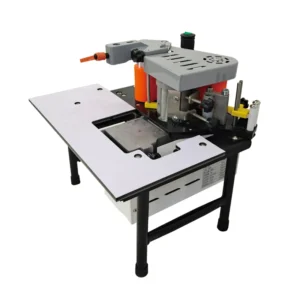
Description
Voltage-Agnostic Configuration — The DW702 automatic edge banding machine ships with confirmed electrical schematics matching your local grid before the crate is sealed.
Technical Specifications
| Parameter | Value |
|---|---|
| Model | DW702 |
| Product Type | Automatic Edge Banding Machine |
| Total Power | 3800W |
| Voltage & Frequency | 220V / 380V / customization |
| Overall Dimensions (L×W×H) | 120 × 55 × 110 cm |
| Net Weight | 105 kg |
| Minimum Sheet Length | 25 cm |
| Minimum Sheet Width | 10 cm |
| Edge Banding Height | 0–50 mm |
| Edge Banding Thickness | 0.3–3 mm |
| Trimming Stations | Double-sided trimming (800W × 2) |
| Polishing Stations | Double-sided polishing (180W × 2) |
| Glue Pot Capacity | 1000 ml |
| Air Source Pressure | 0.4–0.8 MPa |
| Vacuum Power | 1200W |
| Edge Power | 20W |
| Transmission Power | 140W |
| Standard Features | Edge banding, trimming, polishing, automatic head and tail, vacuum |
| Language Options | Chinese, English; customizable to Spanish, French, or other languages |
| Certification | CE |
Application Suitability
| Application | Material or Output |
|---|---|
| Custom cabinet door edge finishing | MDF and particleboard with PVC or melamine banding |
| Plywood furniture panel processing | Plywood panels with veneer or PVC edge strips |
| Polymer door production | Polymer substrates with compatible adhesive banding |
| Medium-volume workshop runs | Blockboard and solid wood panels requiring double-sided trim |
| Small-batch custom joinery | Mixed panel materials where quick banding changeover is routine |
Why the Voltage Question Must Come Before the Quotation
A machine wired for the wrong frequency will run, but it will not edge-band correctly.
I spent years on the assembly floor before moving to technical sales, and the most expensive mistakes I witnessed had nothing to do with mechanics. A buyer receives an automatic edge banding machine manufacturer shipment, plugs it in, and the feed motor runs slightly off its rated speed. The trimming stations chatter. The glue pot holds temperature inconsistently. The machine is technically "working," but the edge finish fails inspection [NEED_CITE: voltage and frequency standards by export market]. We now confirm voltage and frequency in writing before production begins — because rewriting a control panel and swapping transformer taps after the fact costs everyone time.
Where the DW702 Fits Across the Machine Range
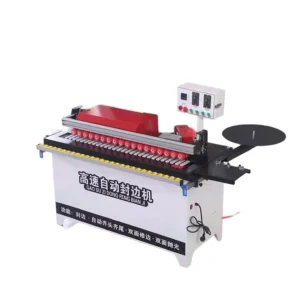
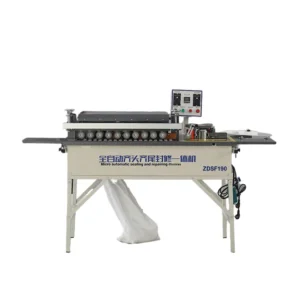
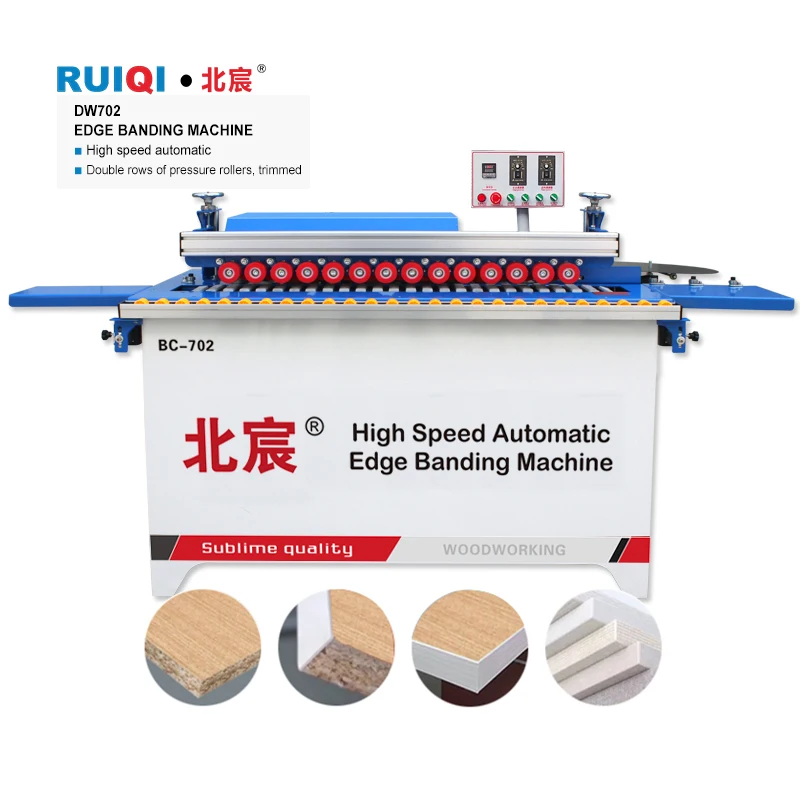
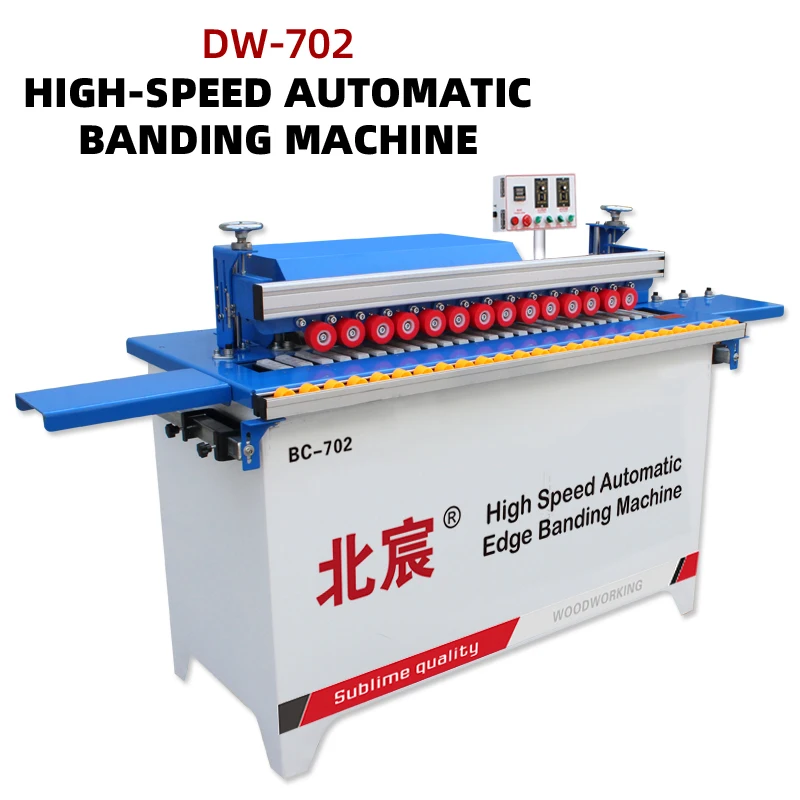
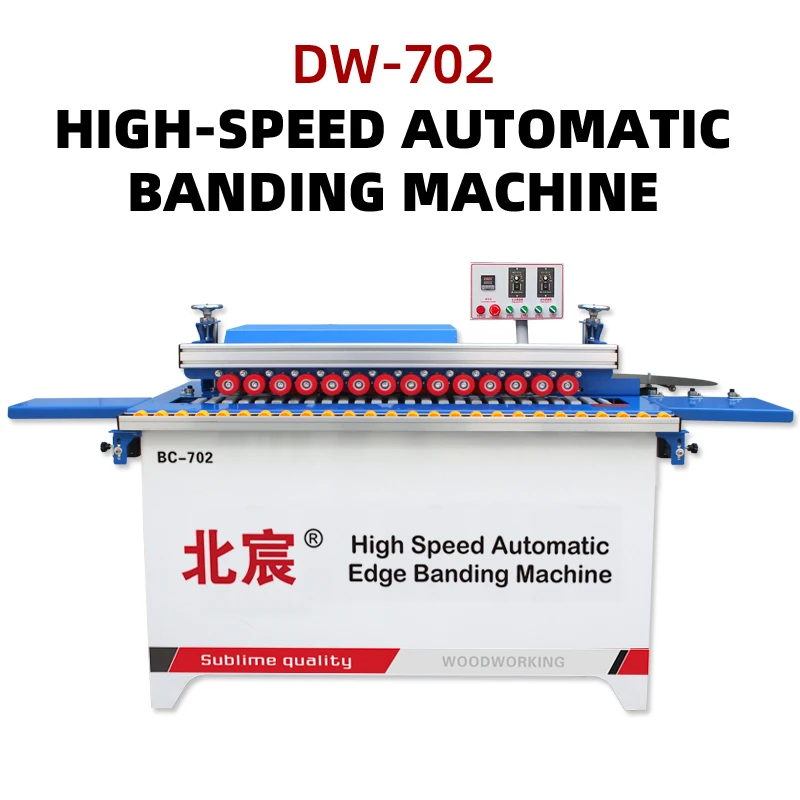
Workshops evaluating an automatic edge banding machine manufacturer often start by looking at entry-level units, then jump to full-function lines without knowing what sits between. The DW702 occupies the middle tier: double-sided trimming and double-sided polishing in a single pass, with a 1000 ml glue pot that handles sustained runs without constant refill stops. For a cabinet maker processing MDF and particleboard daily, this configuration removes the bottleneck of manual trimming while staying within a compact footprint.
Matching Machine Tier to Your Actual Production Volume
A joinery shop cutting twenty panels a day does not need a full pre-milling line, but a furniture factory pushing mixed-panel batches through the same machine all week will outgrow a basic trimmer fast. The DW702 handles edge banding thickness from 0.3 mm to 3 mm, covering PVC, veneer, and melamine strips within one setup [NEED_CITE: edge banding material compatibility across substrate types]. The question we always ask before confirming a configuration is whether your next twelve months of work will stay within this machine’s range — or whether you need the next tier up.
Reading the Specs That Actually Affect Edge Quality
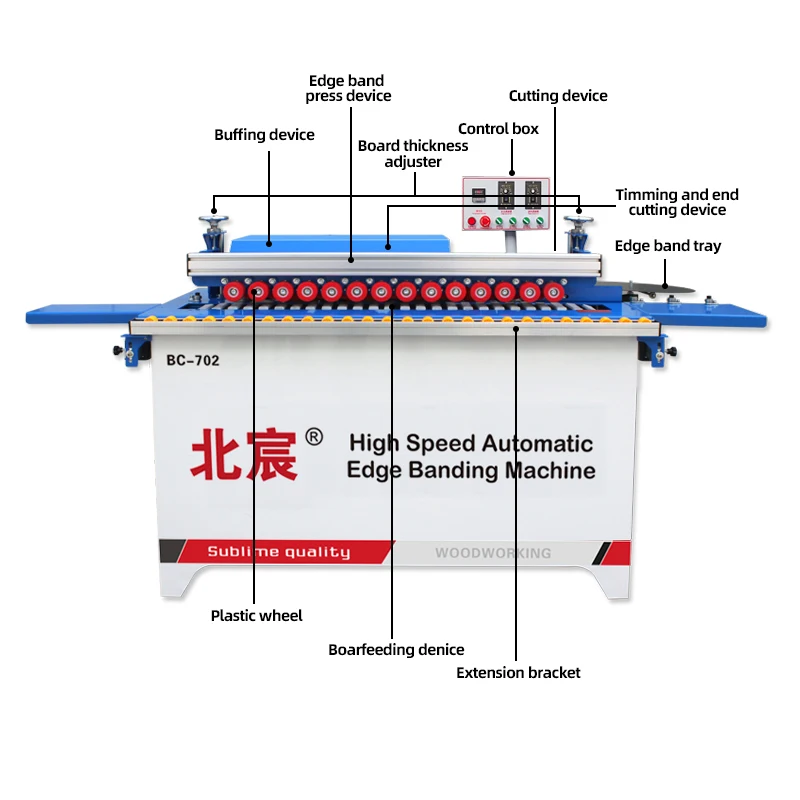
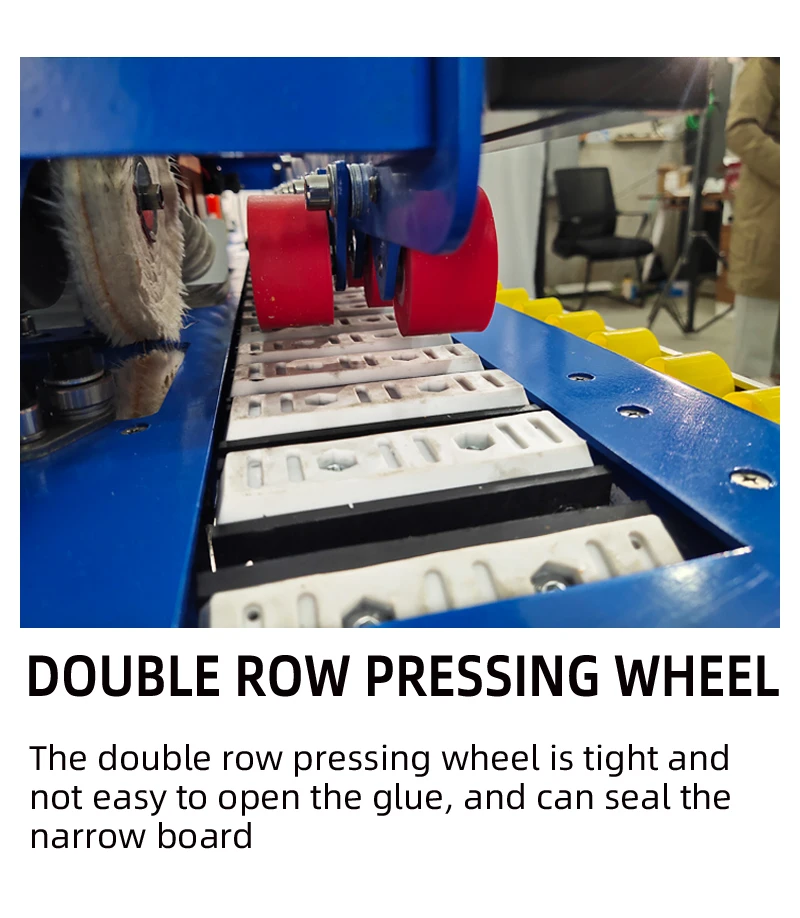
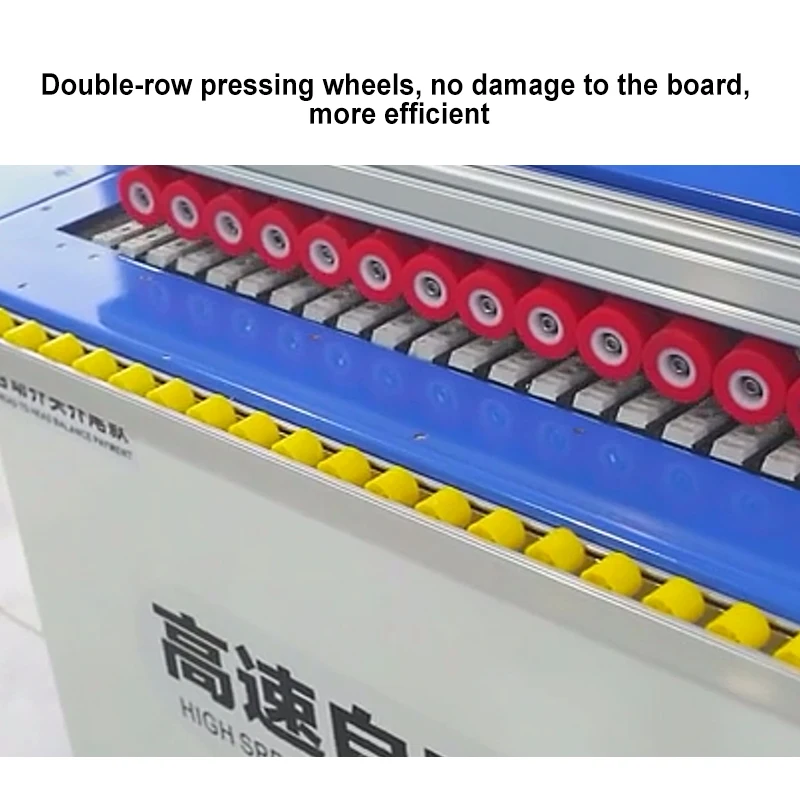
The double-sided trimming stations at 800W each provide enough spindle authority to cut cleanly through both PVC and real wood veneer without tearing the edge grain. Panel width starts at 10 cm and length at 25 cm, which covers most cabinet component sizes but excludes very small offcuts that a manual router would handle. The edge banding height range of 0–50 mm means standard 18 mm board plus thicker tabletop stock both pass through without adjustment to the feed rails. Air pressure between 0.4 and 0.8 MPa drives the pneumatic pressure rollers — running below that range causes incomplete bonding, particularly on porous substrates like particleboard. The 1200W vacuum system pulls edge dust and trim chips away from the polishing wheels, which matters because residual dust embedded in the polish stage shows up as fine scratches on gloss PVC finishes.
What Happens When Feed Height and Throughput Are Not Verified
Buying a single edge banding machine in isolation seems straightforward until it arrives and the feed height does not match your existing panel saw output or your downstream boring machine infeed. I have seen workshops spend weeks shimming conveyor heights and building custom transfer tables because nobody asked about the line during the quotation stage [NEED_CITE: production line integration challenges in small furniture workshops]. The DW702’s overall height of 110 cm and compact 120 cm length make it physically flexible, but the working height at the feed rail is what determines whether panels transfer smoothly from your cutting station.
Why Sourcing From This Range Reduces Configuration Risk
Every model in this edge banding family shares the same control logic and spare parts architecture, so operators trained on one tier transition to another without relearning the interface. Voltage customization from 220V to 380V and beyond is confirmed on the electrical schematic before the machine enters production. Multilingual control panels — Chinese, English, Spanish, French, or other languages on request — are configured at the factory so commissioning does not stall on day one. The four-stage QC process includes a pre-shipment test run with your specified panel material, meaning the edge finish you see on arrival matches what was demonstrated. CE certification is documented and shipped with the machine for customs clearance in regulated markets.
Documentation & Verification
- CE declaration of conformity matching the DW702 configuration on your purchase order
- Electrical schematic confirming voltage, frequency, and plug type for your facility
- Factory test record using your specified panel material and edge banding stock
- Operation and maintenance manual in your chosen language at delivery
- Spare parts list with OEM part numbers for trimming blades and polishing wheels
- Packing photographs showing crate condition before dispatch
Installation, Commissioning & Support
- Requires a dedicated circuit matching the confirmed voltage and the 3800W total power draw
- Air compressor supply must sustain 0.4–0.8 MPa at the machine inlet for pneumatic roller pressure
- Overall footprint of 120 × 55 cm fits standard workshop bays; allow clearance for panel infeed and offfeed
- First startup includes glue pot temperature calibration for your specific adhesive and banding material
- Operator training covers the multilingual control panel functions and banding changeover procedure
- Trimming and polishing consumables ship with the initial spare parts package
What to Include With Your Inquiry
Send us your primary panel material type and thickness range, along with the edge banding stock you run most often — PVC, veneer, or melamine, and at what thickness. Confirm your local voltage and frequency so the electrical schematic is accurate from the start. If you are integrating the DW702 into an existing line, share the working heights of your upstream saw and downstream drilling or assembly stations so we can verify feed compatibility. If panel samples are available, ship them to us for a test run before we finalize the configuration.
Frequently Asked Questions
Q: How does the DW702 compare to entry-level and full-function models in the product range?
A: The DW702 sits in the middle tier with double-sided trimming and polishing in one pass, plus a 1000 ml glue pot for sustained production runs. Entry-level models may offer single-sided trimming only, while full-function units add pre-milling and corner rounding. Your daily panel volume and edge finish requirements determine which tier fits.
Q: How is voltage and frequency compatibility confirmed before shipment?
A: We require written confirmation of your facility’s voltage and frequency before production begins. The electrical schematic is generated to match your grid specification, and a voltage confirmation document is included in the shipping documentation package.
Q: What control panel languages are available for the DW702?
A: Standard options include Chinese and English. Spanish, French, and other languages are configurable at the factory. Specify your preferred language during the quotation stage so the panel is set up before dispatch.
Q: Which edge banding materials and thicknesses does the DW702 support?
A: The machine handles PVC, veneer, and melamine strips from 0.3 mm to 3 mm thick. Edge banding height covers 0–50 mm, accommodating standard panel thicknesses as well as thicker tabletop stock.
Q: Can I send panel samples for a test run before ordering?
A: Yes. We encourage buyers to ship representative panel material and edge banding stock so we can run a factory test and provide output samples. This confirms edge finish quality and adhesion before the order is finalized.