Description
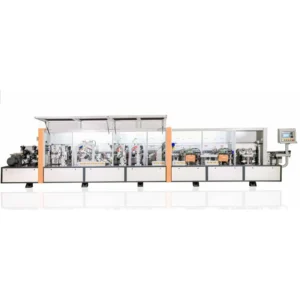
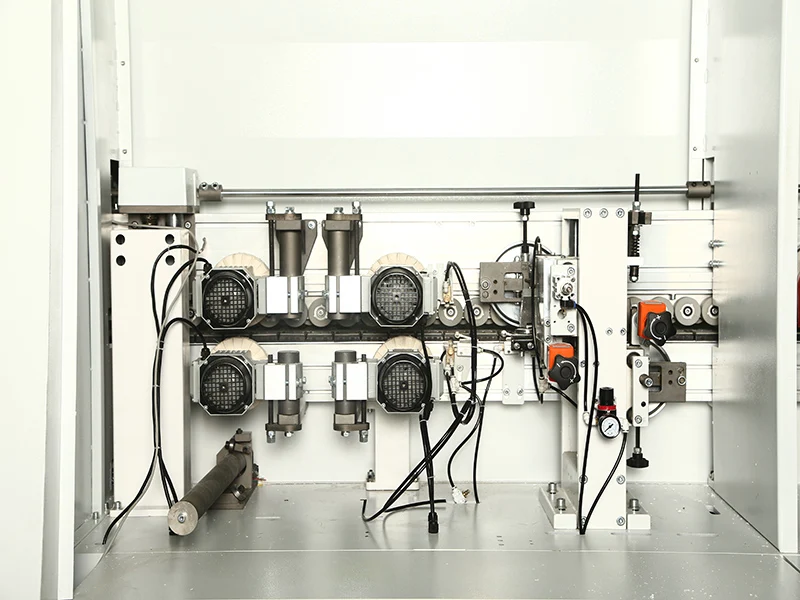
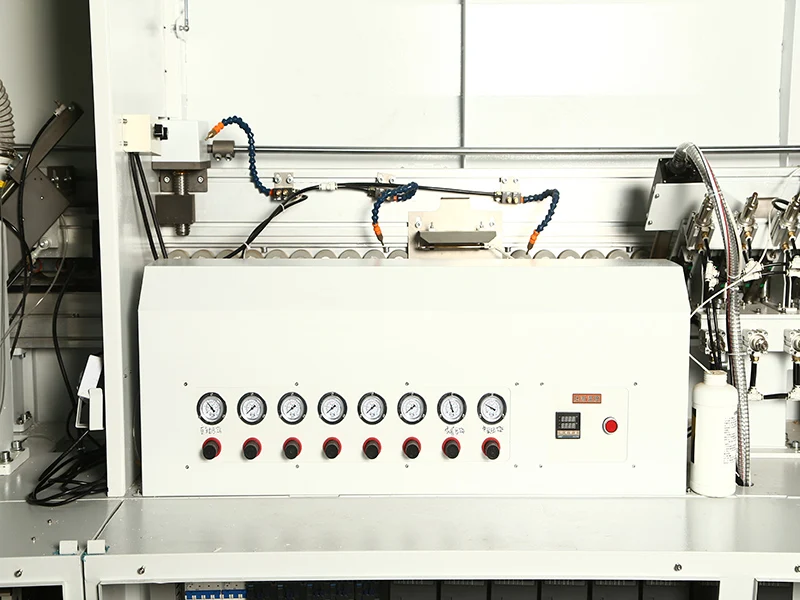
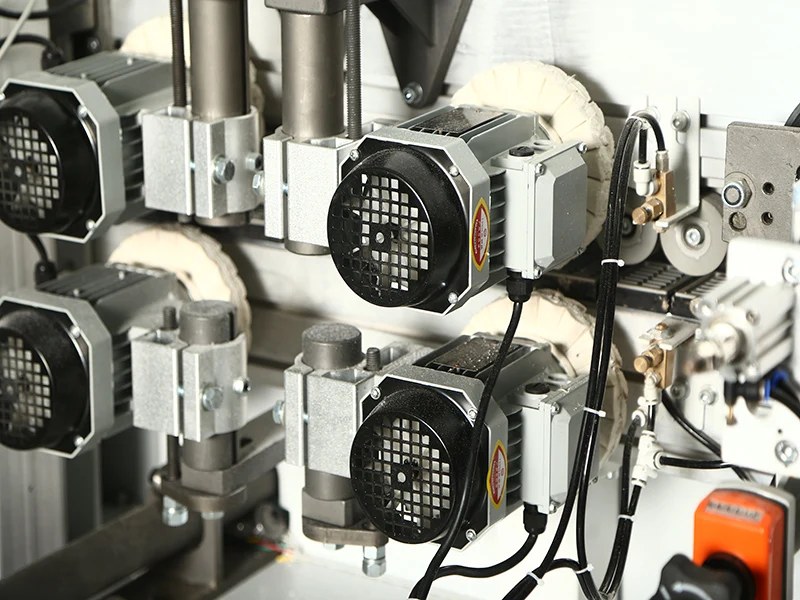
Precision-ground cutting mechanisms — verified ±0.02mm tolerance on the ZDSJCX-880S pre-milling station ensures consistent edge quality across MDF, particleboard, and plywood panels.
Technical Specifications
| Parameter | Value |
|---|---|
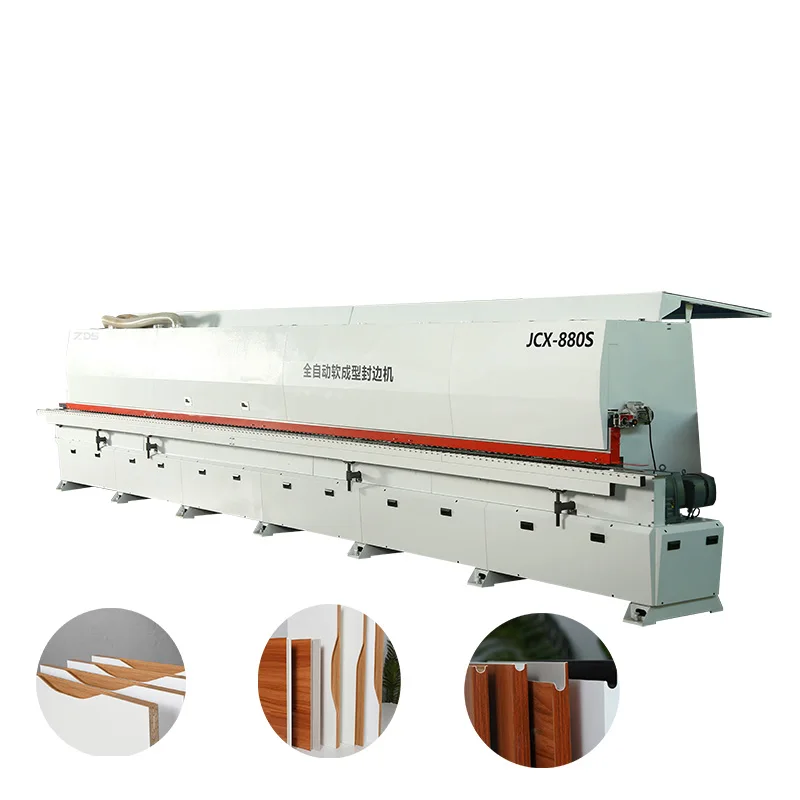
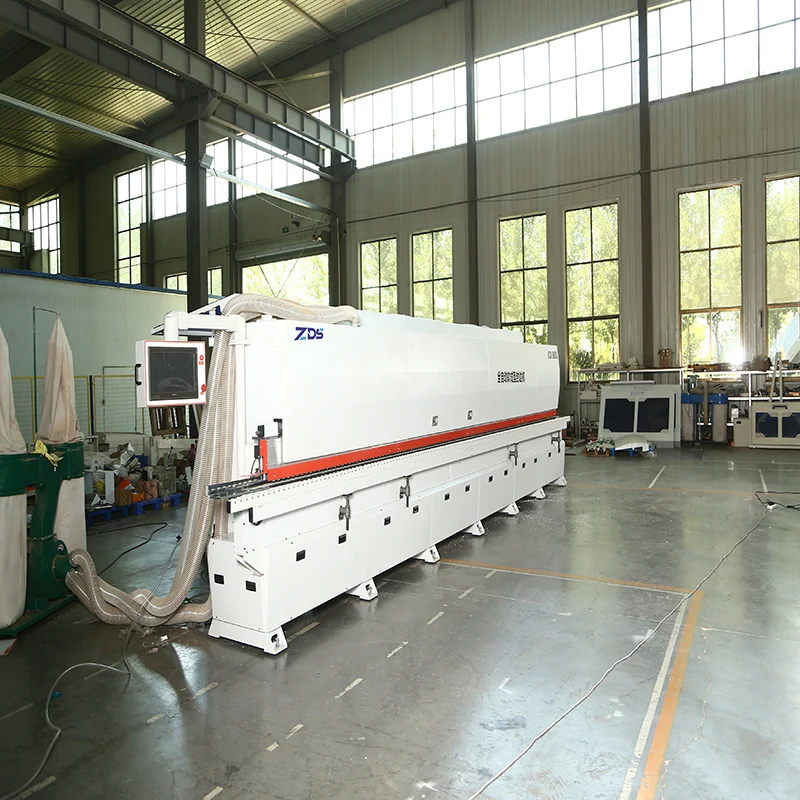
| Model | ZDSJCX-880S |
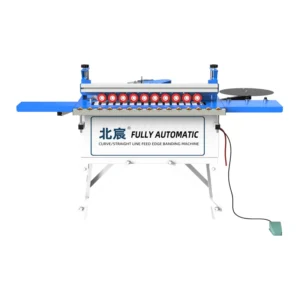
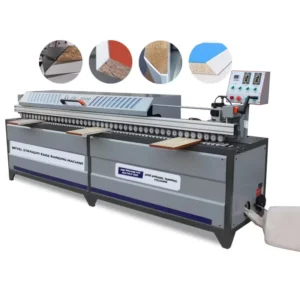
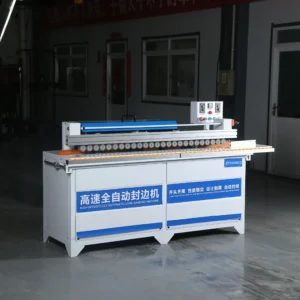
| Product Type | Automatic Edge Banding Machine with Pre-milling |
| Thickness of Panel | 18-22mm |
| Thickness of Edge Banding | 0.5-0.8mm |
| Edge Banding Width | 58mm |
| Minimum Sheet Width | 150mm |
| Minimum Sheet Length | 300mm |
| Conveying Speed | 6-8m/min |
| Total Power | 47.1KW |
| Voltage | 380V |
| Pressure | 0.6-0.8 MPa |
| Vacuum Opening Size | Ф100×6 |
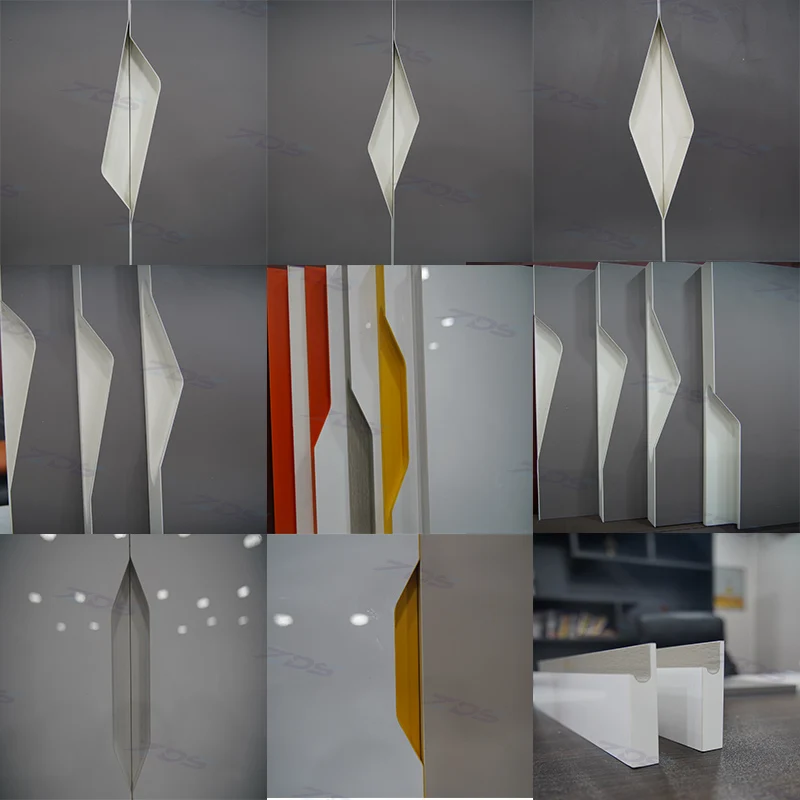
| Machining Shape | J type, C type, oblique straight, semi-pass, water drop, rhombus, triangle (15+ types) |
| Overall Dimensions (L×W×H) | 8.82×1.07×1.85 m |
| Total Weight | 3200kg |
Application Suitability
| Application | Material or Output |
|---|---|
| Custom cabinet door production | MDF and particleboard with PVC edge banding |
| Office furniture panel processing | Plywood and melamine-faced boards |
| Wardrobe and shelving components | Solid wood panels up to 22mm thickness |
| High-volume panel sizing and edging | Batch runs requiring consistent ±0.02mm edge tolerance |
Why Voltage Confirmation Must Precede the Purchase Order
A machine that cannot run on local power is a stationary asset, not production equipment.
I have witnessed edge banders sit idle for weeks because the buyer assumed 380V/50Hz was universal, only to discover their facility operates on a different frequency or phase configuration. Electricians spend days rewiring, and the production line waits. The ZDSJCX-880S, like any automatic edge banding machine manufacturer produces for export markets, requires explicit voltage and frequency confirmation before build begins. Frequency mismatches affect motor speed and feed rate accuracy; phase imbalance trips protection circuits. This verification step takes minutes during inquiry but prevents costly commissioning delays. [NEED_CITE: voltage and frequency standards by export market]
Scaling from Single Machine to Full Line Without Supplier Changes
Workshops often start with one edge bander, then add panel saws, boring machines, and auxiliary stations as order volume grows. When machines come from different suppliers, feed heights and throughput rates rarely align — panels jam at transfer points, or one station idles waiting for the next. The ZDSJCX-880S sits within a complete product family, so upgrading from entry-level to full-function pre-milling keeps the same control logic, maintenance protocols, and spare parts ecosystem. This continuity matters when production managers train operators across multiple stations.
Matching Conveying Speed to Workshop Throughput Requirements
The 6-8m/min conveying speed range serves workshops producing custom furniture where batch sizes vary and setup changes occur frequently. Slower feed allows careful monitoring during short runs of specialized profiles; higher speed suits repeat orders of standard cabinet carcasses. Shops running exclusively high-volume particleboard panels may eventually move to faster dedicated lines, but this range covers the majority of custom and semi-custom operations. [NEED_CITE: typical feed speed ranges for panel furniture production]
Panel Thickness, Edge Banding Width, and Pre-milling Interaction
The 18-22mm panel thickness range targets the standard dimensions used in cabinet and furniture carcass construction. Pre-milling removes saw marks and sizing defects before the glue station, which becomes critical when panels arrive from beam saws or sliding table saws with less-than-perfect edges. The 0.5-0.8mm edge banding thickness and 58mm width handle PVC, ABS, and veneer strips common in furniture finishing. The 15+ machining shapes — including J type, C type, water drop, and rhombus profiles — allow the machine to handle contoured workpieces without requiring a secondary shaping station. Dust extraction through six Ф100 vacuum openings maintains edge visibility for operators monitoring glue line quality.
The Cost of Discovering Incompatibility After Delivery
Buying machines piecemeal from different sources often reveals problems only when they sit on the shop floor. Feed height mismatches between a panel saw and an edge bander force operators to manually lift sheets, creating fatigue and edge damage. Control panels in an unfamiliar language slow troubleshooting during breakdowns. These issues compound: a single machine bottleneck cascades into missed delivery dates. Buyers who specify the complete line configuration upfront avoid discovering these integration gaps during commissioning. [NEED_CITE: machinery integration failures in furniture factories]
Manufacturing Depth That Supports the Full Catalogue
In-house production of cutting mechanisms with proprietary patents means tolerance claims rest on verifiable machining rather than assembled components of unknown origin. Four-stage quality control — incoming material, in-process, finished product, and pre-shipment verification — catches deviations before machines leave the facility. Voltage customization from 110V to 440V and multilingual control panels are standard options, not special requests requiring extended lead times. The complete product family from entry-level to full-function means distributors can recommend appropriate models for different customer segments without sourcing from multiple manufacturers.
Documentation & Verification
- CE declaration of conformity specific to the ZDSJCX-880S model configuration
- ISO 9001 certificate covering manufacturing and quality management systems
- Machine specification sheet with confirmed voltage, frequency, and control language
- Electrical schematic showing circuit protection and motor ratings
- Factory test record demonstrating edge banding on buyer-specified panel material
- Operation and maintenance manual in the agreed operator language
Installation, Commissioning & Support
- Foundation requirements for 3200kg total weight on leveled concrete floor
- Dedicated 47.1KW circuit with appropriate breaker rating for 380V supply
- Machine arrives assembled; requires leveling and conveyor alignment verification
- Pre-milling cutter calibration and glue pot temperature setup during first power-on
- Operator training on control panel navigation and edge banding loading procedures
- Spare parts list covering wear items: pre-milling cutters, pressure rollers, scraper blades
- Scheduled maintenance intervals for lubrication points and vacuum system inspection
Information Needed for Accurate Configuration
Provide your primary panel materials and thickness range, typical edge banding type and thickness, and daily production volume expectations. Confirm local voltage, phase, and frequency at the installation point. Specify preferred control panel language and any required profile shapes from the 15+ machining options available.
Frequently Asked Questions
Q: How do I choose between entry-level and full-function pre-milling models for my workshop?
A: Entry-level models suit joinery shops processing smaller batches with simpler edge profiles. Full-function pre-milling models like the ZDSJCX-880S serve factories running MDF and particleboard where saw marks must be removed before banding to achieve invisible glue lines. Production volume, panel material mix, and required edge profile complexity determine the appropriate tier within the product family.
Q: What does pre-milling actually do to improve edge banding quality?
A: Pre-milling cutters remove 0.5-1mm of material from the panel edge immediately before the glue application station. This eliminates saw blade marks, tear-out, and sizing inaccuracies that cause visible glue lines or banding adhesion failures, particularly on MDF and particleboard substrates where edge integrity varies.
Q: How do I confirm the machine voltage matches my facility?
A: Provide your facility voltage, phase configuration, and frequency during the inquiry stage. The manufacturer configures motors, transformers, and control components to match your local supply. Never assume standard voltage — confirm with your electrician and provide the exact specification before production begins.
Q: What supporting equipment do I need alongside this edge bander for a complete line?
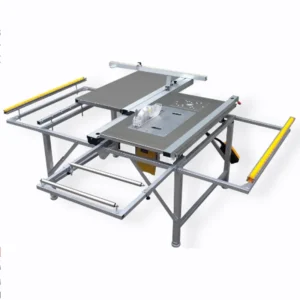
A: Typical configurations include a panel saw for sizing, boring machines for hardware holes, and dust extraction connected to the six Ф100 vacuum openings. The product family includes compatible machines with matched feed heights and throughput rates, allowing phased investment without integration problems.