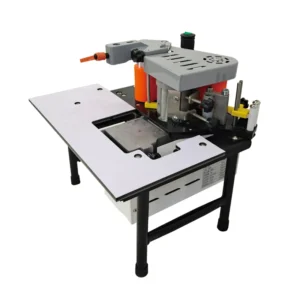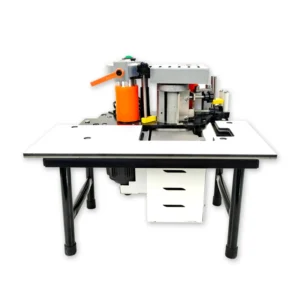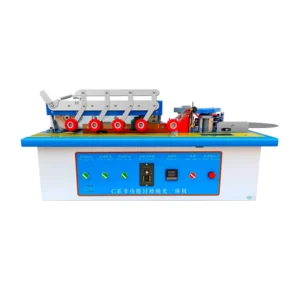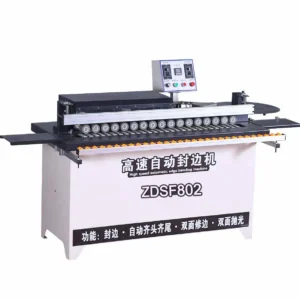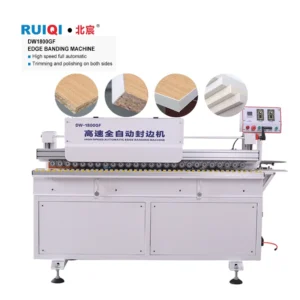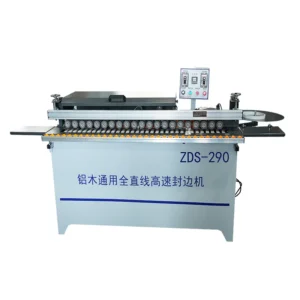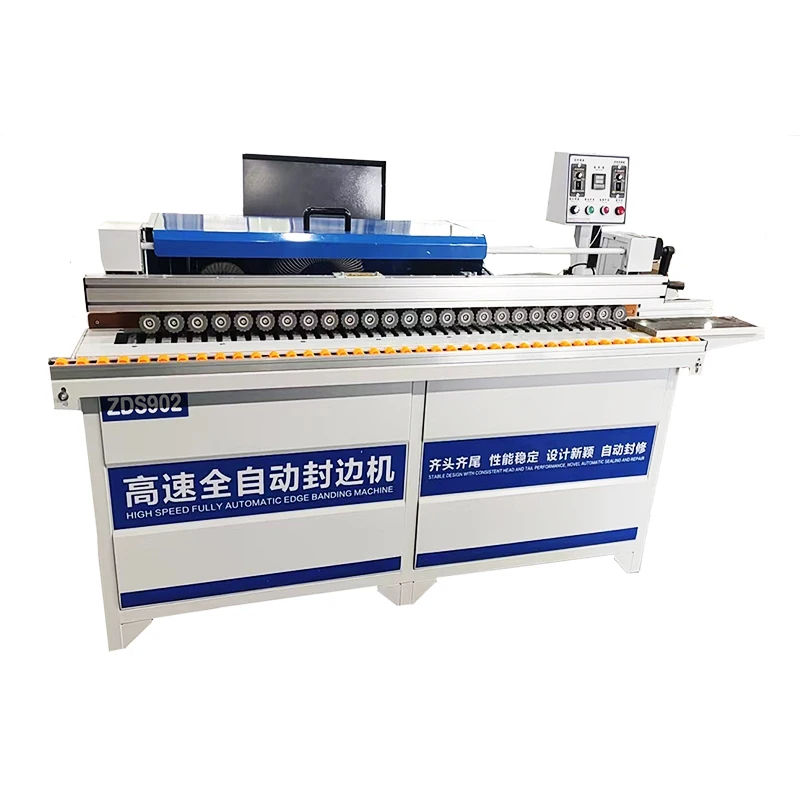
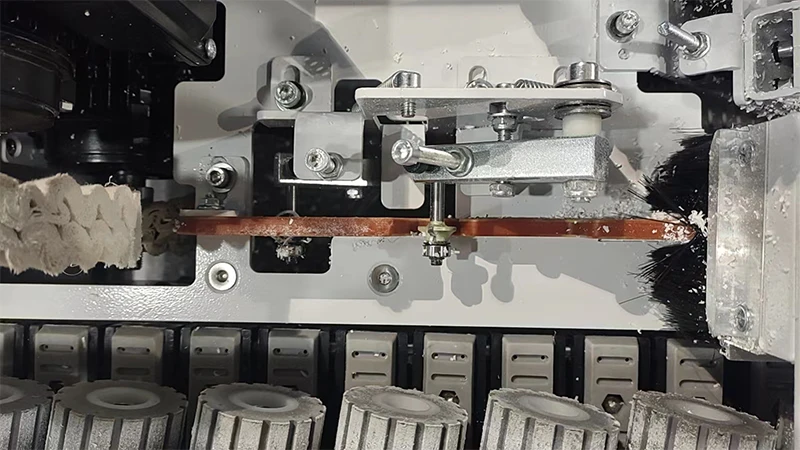
Description
Voltage-Verified Catalogue — every automatic edge banding machine configuration is matched to local frequency and control language before it leaves the factory floor.
Technical Specifications
| Parameter | Value |
|---|---|
| Product Type | Automatic Edge Banding Machine |
| Total Power | 4200W |
| Voltage | 220V |
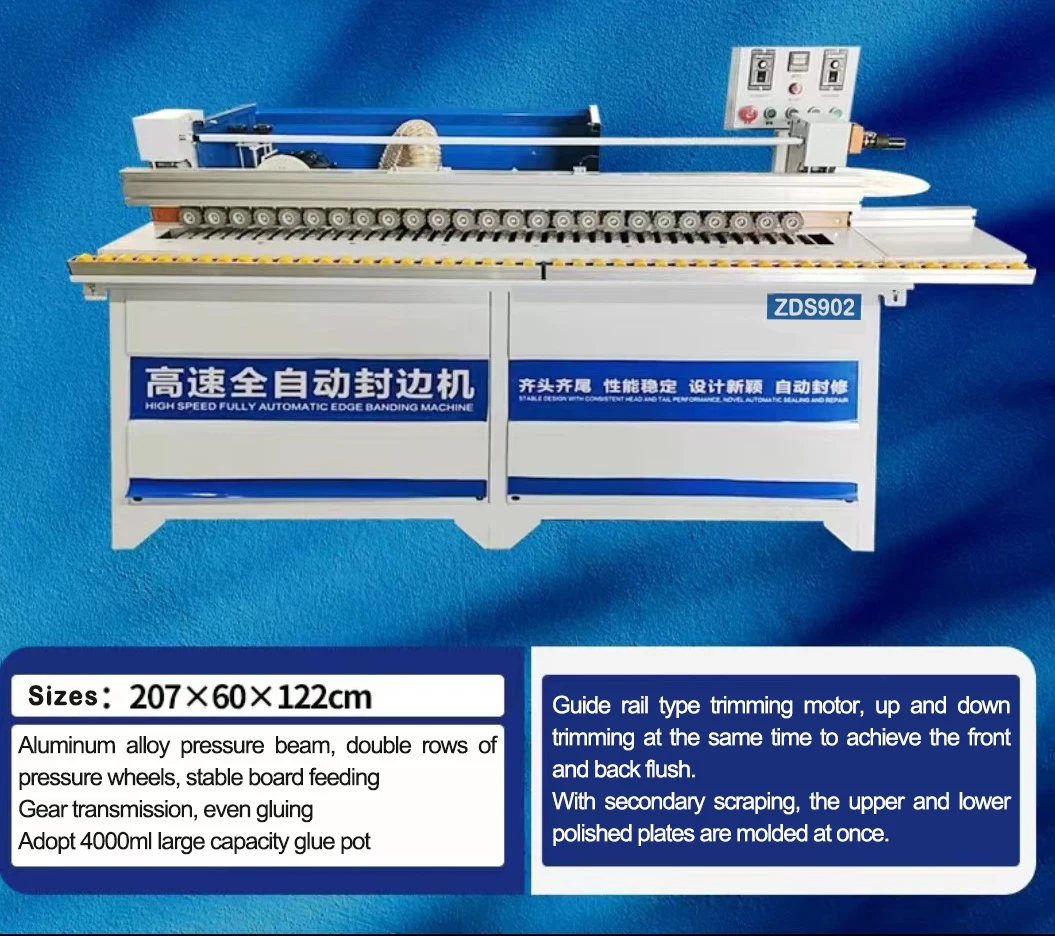
| Equipment Size | 207 × 60 × 122 cm |
| Net Weight | 245 kg |
| Edge Banding Type | Linear Edge Banding Machine |
| Edge Band Height Range | 0–35 mm |
| Edge Band Thickness Range | 0.5–2.5 mm |
| Glue Pot Capacity | 4000 ml |
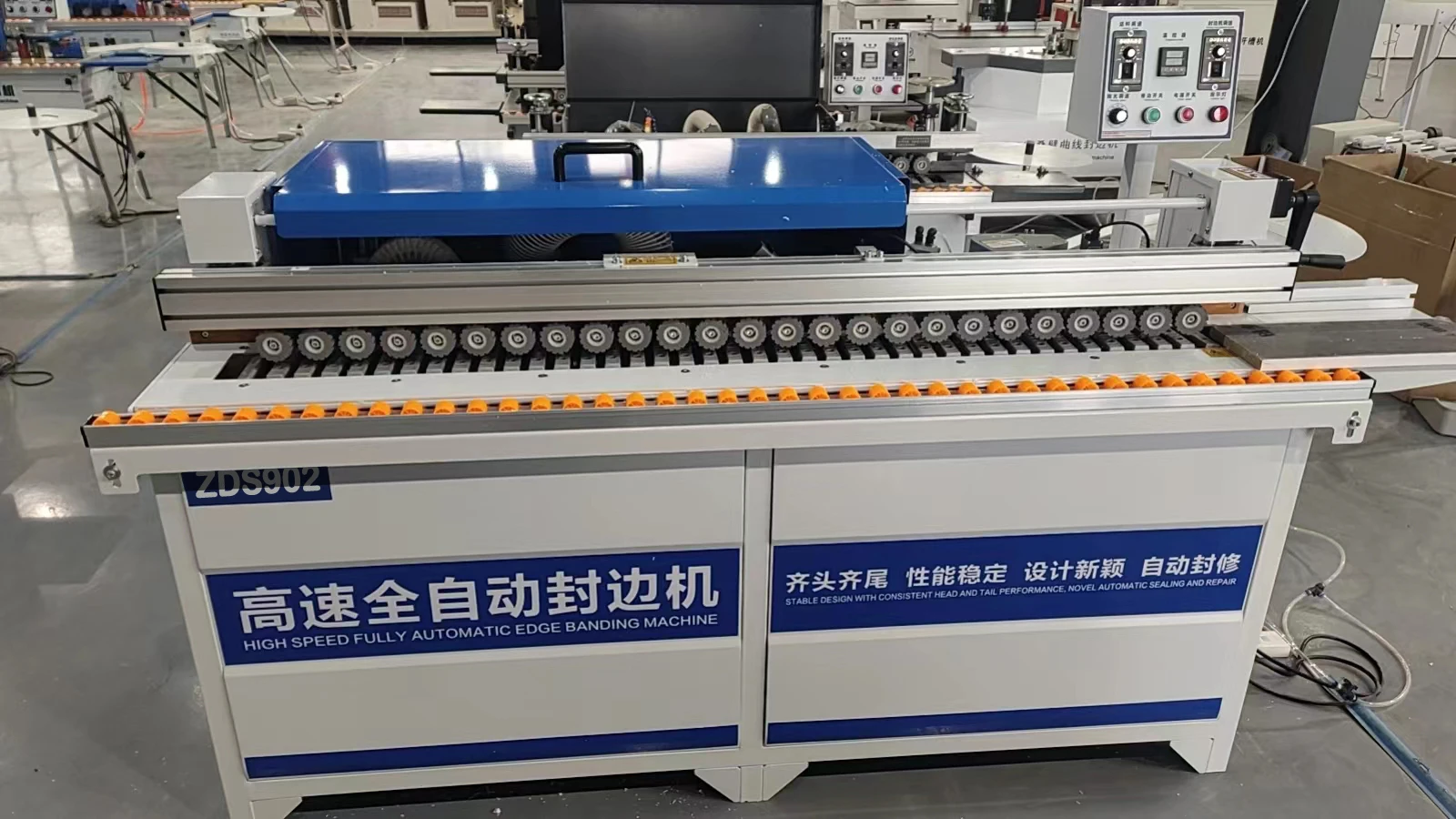
| Pressure Beam | Integrated, adjustable handle |
| Conveyor Belt Material | Silicone |
| Pressure Wheel Arrangement | Double rows |
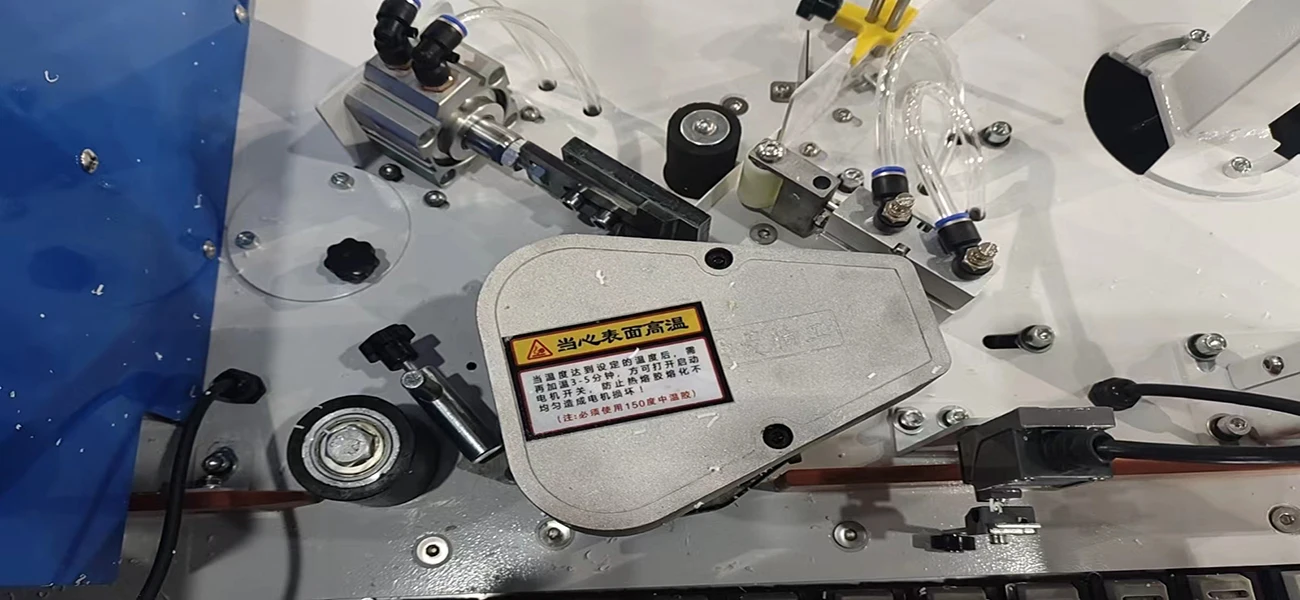
| Edge Strip Cutting Device | Pneumatically controlled |
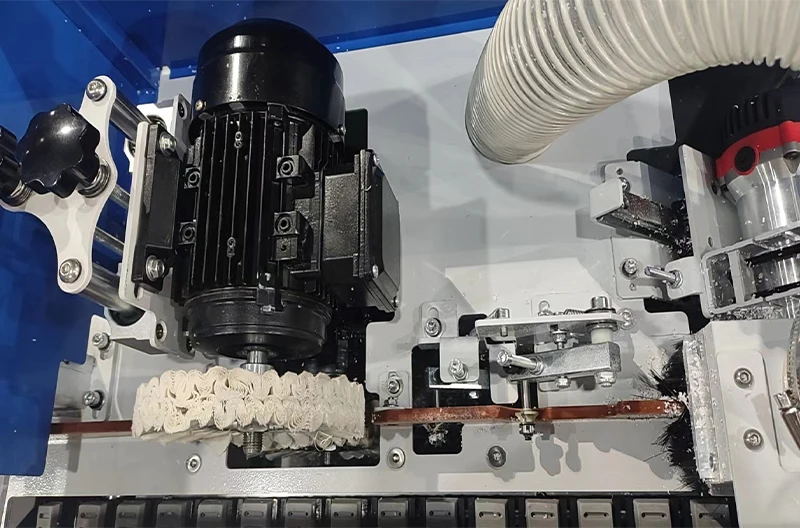
| Polishing Configuration | Up and down dual motors |
| Trimming Configuration | Double high-speed motors (up and down) |
| Functions | Double-sided gluing, intelligent temperature control, polishing and trimming |
Application Suitability
| Application | Material or Output |
|---|---|
| Custom cabinet door edge finishing | MDF and melamine-faced particleboard |
| Wardrobe panel edge banding | Plywood with PVC or veneer strips |
| Small workshop furniture production | Solid wood panels up to 35 mm band height |
| Batch processing for regional distributors | Mixed substrate runs across MDF, particleboard, and plywood |
Why Voltage Confirmation Should Precede Every Quotation
A machine wired for the wrong frequency will stall on day one, regardless of how precise its trimming motors are.
I watched an automatic edge banding machine manufacturer ship a unit to a Southeast Asian furniture factory where the local grid ran at a frequency the control panel was never set up for. The operator flipped the breaker, the conveyor stuttered, and three days of production evaporated before anyone traced it back to a motor rated for a different standard [NEED_CITE: voltage and frequency standards by export market]. The cost of rewinding a motor on-site dwarfs the two minutes it takes to confirm electrical specs at the quotation stage.
Matching the Model Tier to Your Workshop Throughput
A compact workshop producing fifty cabinet carcasses a week does not need the same glue pot volume or feed speed as a panel processing plant running three shifts. The 4000 ml glue pot on this unit sustains continuous runs without frequent refills, which matters when your operator is cycling panels back-to-back through morning production blocks. Choosing the right tier within an automatic edge banding machine manufacturer catalogue prevents both under-specifying for volume and overpaying for capacity you will never use.
Substrate Behaviour and Edge Quality Consistency
Different board materials respond differently to heat and pressure at the glue line. MDF absorbs adhesive at a different rate than particleboard, and plywood grain direction affects how firmly the pressure wheels must engage. The double-row pressure wheel arrangement and pneumatic edge strip cutting device on this machine address those variables mechanically rather than relying on operator judgement alone [NEED_CITE: edge adhesion standards for wood-based panel substrates]. Consistent edge quality across substrates is what keeps downstream assembly square and reduces rejection at the fitting stage.
Reading the Specs That Actually Affect Your Panels
The integrated pressure beam with an adjustable handle sets the upper limit for panel thickness the machine can accept, and that determines whether your 25 mm shelving stock and your 18 mm cabinet sides both pass through the same station. Edge band thickness range from 0.5 to 2.5 mm covers thin PVC through to solid wood lipping, but the trimming motors must be matched to the heavier end of that range to produce a clean flush cut. Intelligent temperature control at the glue pot stabilises adhesive viscosity across seasonal workshop temperature swings, which is often the hidden variable behind visible glue lines on lighter substrates. The dual polishing motors finish both top and bottom edges in a single pass, removing the secondary hand-finishing step that bottlenecks smaller shops.
The Hidden Cost of Ignoring Operator Language
Control panels shipped in a language the floor crew cannot read lead to incorrect feed speed settings, wrong glue temperature inputs, and emergency stops triggered by misunderstood alarms. An automatic edge banding machine manufacturer that does not confirm the operator language at the order stage is leaving commissioning success to chance [NEED_CITE: multilingual control panel requirements for exported machinery]. The downtime from a misconfigured interface is not measured in minutes — it stretches across the entire first production week while someone translates parameter menus one screen at a time.
What Makes This Catalogue Different for Buyers
In-house manufacturing with patented cutting mechanisms means tolerance claims are traceable to the grinding bench, not borrowed from a trading company’s brochure. The full model family sits within one product ecosystem, so a workshop scaling from entry-level volume to multi-shift output can stay with the same supplier without relearning maintenance procedures. Voltage and language customisation is treated as standard order configuration rather than a special request. Four-stage quality control includes pre-shipment verification on the buyer’s specified substrate. Engineering-led configuration recommendations arrive as formal quotations within 24 hours, giving buyers a documented baseline to compare against other automatic edge banding machine manufacturer offers.
Documentation & Verification
- CE declaration of conformity matched to the exported machine configuration
- Electrical schematic confirming voltage, frequency, and circuit protection ratings
- Factory test record on buyer-specified panel thickness and edge band material
- Operation manual printed in the agreed operator language
- Spare parts list with part numbers for consumables and wear components
Installation, Commissioning & Support
- 220V single-phase supply with dedicated circuit breaker rated above 4200W draw
- Floor space allocation for 207 cm machine length plus infeed and outfeed clearance
- Pneumatic line connection for the edge strip cutting device at specified pressure
- Glue pot first-heat procedure and temperature calibration for local ambient conditions
- Conveyor belt tension and pressure beam adjustment for initial panel thickness range
- Operator walkthrough of control panel in the confirmed site language
Preparing Your Enquiry
Send your primary panel materials, the board thickness range you process most often, and your daily edge banding volume so the configuration can be matched to actual throughput rather than catalogue maximums. Include your local voltage and frequency along with the language your operators read, so the control panel and electrical package arrive ready for first-day production.
Frequently Asked Questions
Q: How do I choose the right model tier for my workshop output?
A: Start with your daily panel count and the substrate mix you run most often. A workshop cycling a few hundred panels a day on MDF and particleboard needs different glue pot capacity and feed speed than a plant running mixed materials across multiple shifts. The right tier keeps the machine within its designed duty cycle rather than pushing an entry-level unit into production volumes it was never built for.
Q: Can voltage and frequency be configured for my local grid?
A: Yes. Voltage is configurable across the range needed for export markets, and frequency is confirmed at the quotation stage to match local grid standards. The motor, control transformer, and heating elements are all specified to the confirmed supply, so the machine arrives ready to connect without field modification or adapter transformers.
Q: What language options are available for the control panel?
A: Control panels are configured in the language your operators read before the machine ships. This covers all parameter screens, alarm messages, and maintenance prompts. The operation manual is also produced in the same language, so training and daily reference use a single consistent terminology.
Q: How is edge banding tolerance verified before the machine ships?
A: Each machine undergoes pre-shipment testing on the buyer’s specified panel material and edge band thickness. The factory test record documents the measured edge finish and glue line quality, providing verifiable evidence rather than an untested tolerance claim on a specification sheet.