Description
Verified Tolerance Control — the DW602 maintains ±0.02 mm edge banding accuracy through proprietary cutting mechanisms, confirmed on every unit before dispatch.
Technical Specifications
| Parameter | Value |
|---|---|
| Model | DW602 |
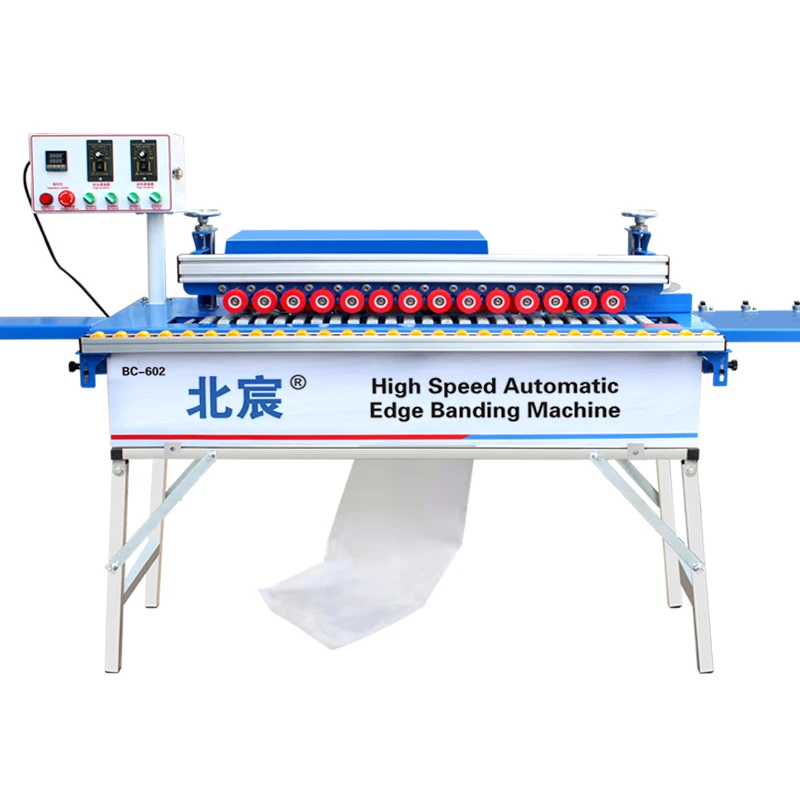
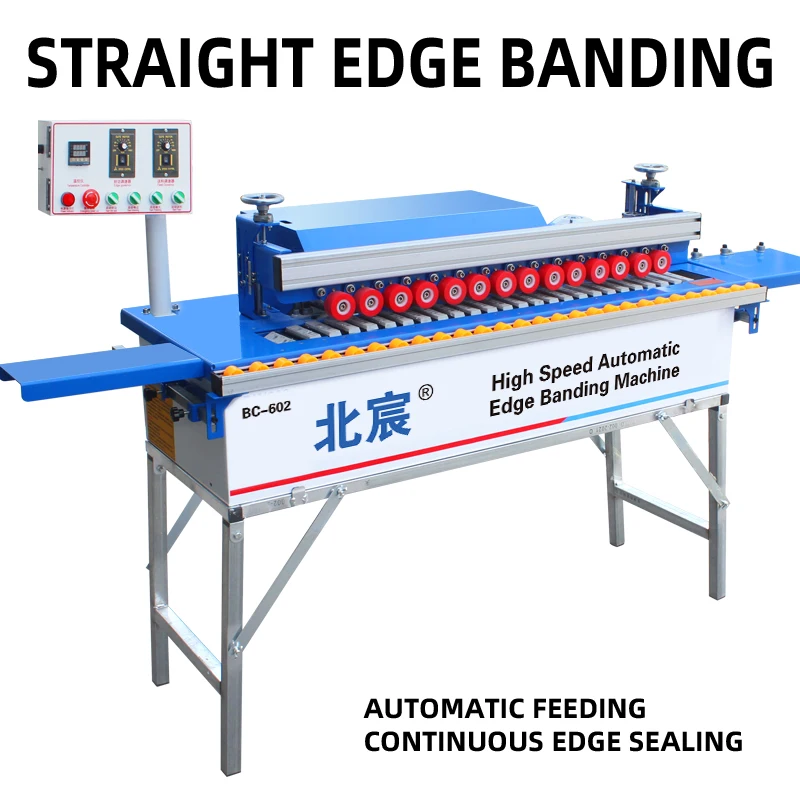
| Product Type | Automatic Edge Banding Machine |
| Total Power | 3800 W |
| Voltage & Frequency | 220 V / 380 V / customization available |
| Overall Dimensions (L×W×H) | 128 × 47 × 69 cm |
| Net Weight | 90 kg |
| Minimum Sheet Length | 25 cm |
| Minimum Sheet Width | 5 cm |
| Edge Banding Height Range | 0–50 mm |
| Edge Banding Thickness Range | 0.3–3 mm |
| Edge Feed Power | 20 W |
| Transmission Power | 60 W |
| Trimming Power | 650 W × 2 |
| Polishing Power | 180 W × 2 |
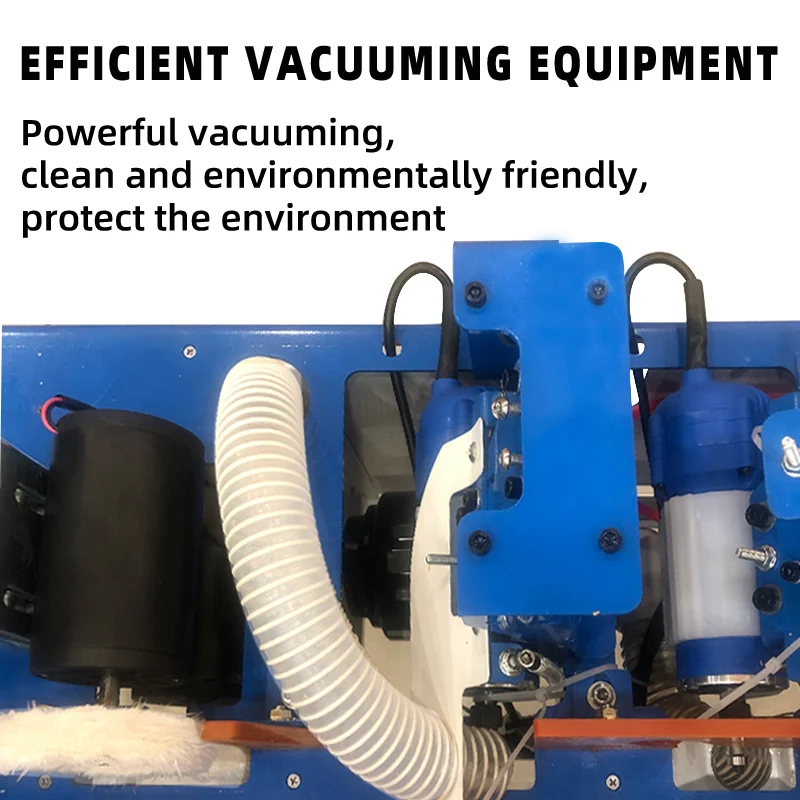
| Vacuum Power | 1200 W |
| Glue Pot Capacity | 1000 ml |
| Air Source Pressure | 0.5–0.8 MPa |
| Control Panel Language | Chinese and English standard; Spanish, French, or other languages on request |
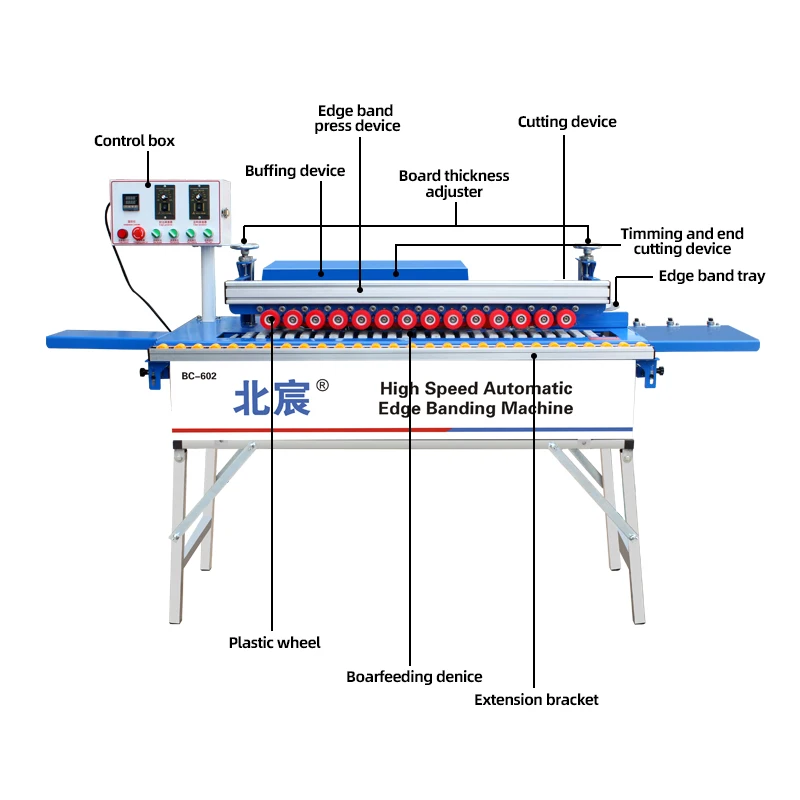
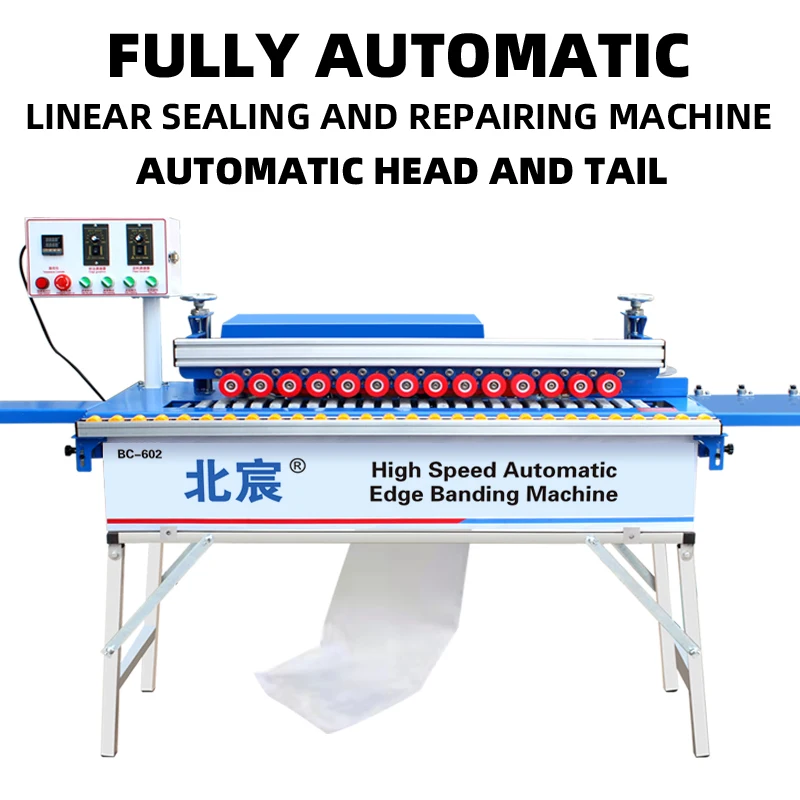
| Key Features | Edge banding, trimming, polishing, automatic head and tail cutting, vacuum hold-down |
Application Suitability
| Application | Material or Output |
|---|---|
| Cabinet door edge finishing | MDF and melamine-faced particleboard with PVC edge banding |
| Custom furniture panel processing | Plywood and blockboard with veneer or melamine strips |
| Polymer door production | Polymer composite panels requiring clean trimmed edges |
| Medium-volume workshop output | Batch runs of shelving, wardrobe panels, and drawer fronts |
Why Voltage Confirmation Must Precede Every Automatic Edge Banding Machine for Sale Order
A machine wired for the wrong grid frequency will underperform from day one, and the fault is rarely diagnosed until weeks of inconsistent output have passed.
I once walked into a workshop where a newly installed edge bander was leaving visible glue lines on every second panel. The root cause was not the glue or the pressure roller — it was a 60 Hz motor running on a 50 Hz supply, dropping the feed speed below the threshold needed for consistent adhesive transfer. The buyer had confirmed the voltage but never mentioned frequency. Electrical mismatches remain one of the most common avoidable failures in exported woodworking equipment [NEED_CITE: voltage and frequency standards by export market].
The DW602 is configurable for 220 V or 380 V with frequency matched to the destination grid. Confirming this before production begins eliminates the most expensive category of post-delivery troubleshooting.
Mapping the Complete Machine Range for Informed Selection
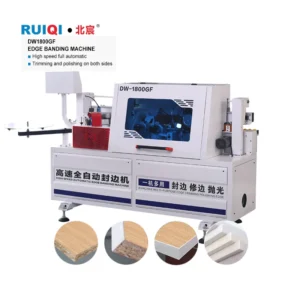
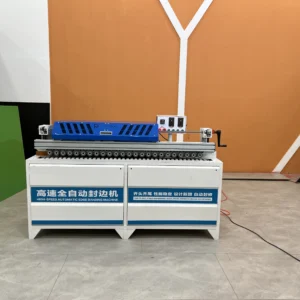
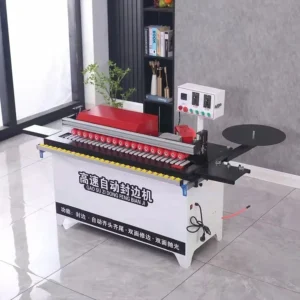
This Automatic Edge Banding Machine for sale occupies the mid-tier position within a broader product family that spans entry-level manual-feed units through to full-function pre-milling configurations. Workshops evaluating their first automatic edge bander often find the DW602 covers their current throughput requirement while leaving headroom for moderate volume growth.
Distributors surveying the range can position this model for customers who have outgrown manual edge banding but do not yet require the additional stations — pre-milling, corner rounding, scraping — found on higher-tier machines. The consistent control platform across the family means operators trained on the DW602 transition to more advanced models without relearning the interface.
Material Compatibility and Edge Banding Thickness Coverage
The 0.3–3 mm edge banding thickness range covers PVC, veneer, and melamine strip materials commonly specified in cabinet and furniture production. Thinner PVC in the 0.4–0.8 mm range is typical for high-volume carcass work, while 2–3 mm solid PVC or ABS is reserved for visible edges on premium pieces [NEED_CITE: edge banding material thickness standards for furniture manufacturing].
Glue pot capacity of 1000 ml supports sustained batch runs without frequent refill interruptions. The dedicated 1200 W vacuum system and 0.5–0.8 MPa air pressure requirement together ensure panels remain stable through the banding, trimming, and polishing sequence — a factor that directly influences edge finish consistency across varying substrate densities.
How Trimming Power and Vacuum Stability Shape Edge Quality
The dual 650 W trimming motors provide sufficient torque to cut cleanly through 3 mm PVC without the chatter marks that appear when underpowered trimmers encounter dense edge material. In panel processing, trimming quality determines whether the finished edge is ready for assembly or requires secondary hand-finishing — a step that adds labor cost and cycle time.
Polishing at 180 W × 2 removes residual adhesive and burnishes the trimmed edge to a uniform sheen. The relationship between vacuum hold-down force and panel thickness is equally significant: lighter substrates like 8 mm MDF require lower vacuum to avoid surface marking, while 25 mm particleboard demands the full vacuum capacity to prevent lateral drift during trimming. The 0–50 mm edge banding height range accommodates standard panel thicknesses used in furniture and cabinet manufacturing.
The Cost of Skipping a Sample Processing Test Before Order
Buyers who specify an edge bander based on catalog specifications alone often discover after delivery that their particular combination of substrate density, edge banding material, and adhesive type produces results outside acceptable tolerance. A workshop processing high-resin particleboard, for instance, may require different glue pot temperatures than the factory default setting assumes.
When the material arrives and the first test panel shows delamination or uneven trimming, the machine is blamed — but the issue is configuration, not capability. Requesting a sample processing test with your actual materials before committing to an order compresses the commissioning timeline and eliminates the most common category of post-installation dispute [NEED_CITE: common causes of edge banding machine commissioning delays].
Why Sourcing This Automatic Edge Banding Machine for Sale Here Makes Sense
The DW602 is built on an in-house manufacturing line with patented cutting mechanisms and verified ±0.02 mm tolerance, so claimed accuracy is measurable on the finished panel rather than stated only in the brochure.
Voltage and language customization are treated as standard configuration steps, not optional extras that add lead time — the control panel arrives in the operator’s working language and wired for the local grid.
A four-stage quality control sequence covers incoming material, in-process assembly, finished product, and pre-shipment verification, reducing the likelihood of field failures traced to manufacturing defects.
Engineer-led configuration recommendations ensure the machine is matched to the buyer’s actual production requirement rather than sold on generic specifications.
The product family structure means a workshop can add higher-tier models from the same supplier as volume grows, maintaining parts commonality and operator familiarity across the production floor.
Documentation & Verification
- Machine specification sheet with confirmed voltage and frequency for your local grid
- Factory test record processed on panel thickness range matching your production
- Electrical schematic for site power supply and air compressor preparation
- Operation and maintenance manual delivered in the agreed operator language
- CE declaration of conformity and ISO 9001 certificate included with shipment
- Packing photographs and customs documentation support for export clearance
Installation, Commissioning & Support
- Allocate floor space for the 128 × 47 × 69 cm footprint with clearance for panel infeed and outfeed
- Provide a dedicated circuit matching the confirmed 220 V or 380 V supply and 3800 W total draw
- Machine ships fully assembled; connect power, air supply at 0.5–0.8 MPa, and vacuum extraction
- First-run parameter setting covers glue pot temperature calibration for your specific edge banding material
- Operator training addresses control panel navigation in the configured language and trimming adjustment
- Spare parts list identifies wear items including trimming blades and polishing wheels for stocking
Preparing Your Inquiry
To receive a configuration recommendation matched to your production requirement, include your primary panel materials, typical edge banding thickness, and daily output target. Specify your local voltage, frequency, and preferred control panel language. If you are integrating the DW602 into an existing line, note the upstream cutting equipment and downstream assembly process so feed height and throughput can be cross-checked.
Frequently Asked Questions
Q: Where does the DW602 sit in the full edge banding machine range, and when should I consider a higher-tier model?
A: The DW602 covers edge banding, trimming, polishing, and automatic head-and-tail cutting in a compact format. It suits workshops processing standard panel materials at moderate volumes. When your production requires pre-milling for uneven panel edges, corner rounding for safety edges, or scraping for high-gloss finishes, stepping to a full-function model within the same family is the appropriate move.
Q: How do I confirm the correct voltage and frequency for my facility before ordering?
A: Provide your local supply voltage and frequency during the inquiry stage. The DW602 is configurable for 220 V or 380 V with frequency matched to your grid. An electrical schematic is supplied before shipment so your electrician can prepare the dedicated circuit and verify phase rotation in advance of machine arrival.
Q: Can the control panel language be matched to my operators, and is this confirmed before production?
A: Chinese and English are standard language options. Spanish, French, and other languages are available on request. The agreed language is confirmed during the specification review stage before production begins, ensuring the control panel and operation manual both match your operator requirement on delivery.
Q: What edge banding materials and thicknesses is the DW602 rated for?
A: The machine handles PVC, veneer, and melamine edge banding from 0.3 mm to 3 mm thickness. This covers most furniture and cabinet applications from thin melamine strips on carcass panels to thick PVC on visible door edges. For materials outside this range, a higher-tier model may be recommended.
Q: Is a sample processing test available before I commit to an order?
A: Yes. You can send your actual panel material and edge banding stock for a sample processing test at the factory. This confirms glue adhesion, trimming quality, and polishing finish on your specific substrate before the order enters production. Factory visits are also welcomed for buyers who prefer to witness the test in person.