
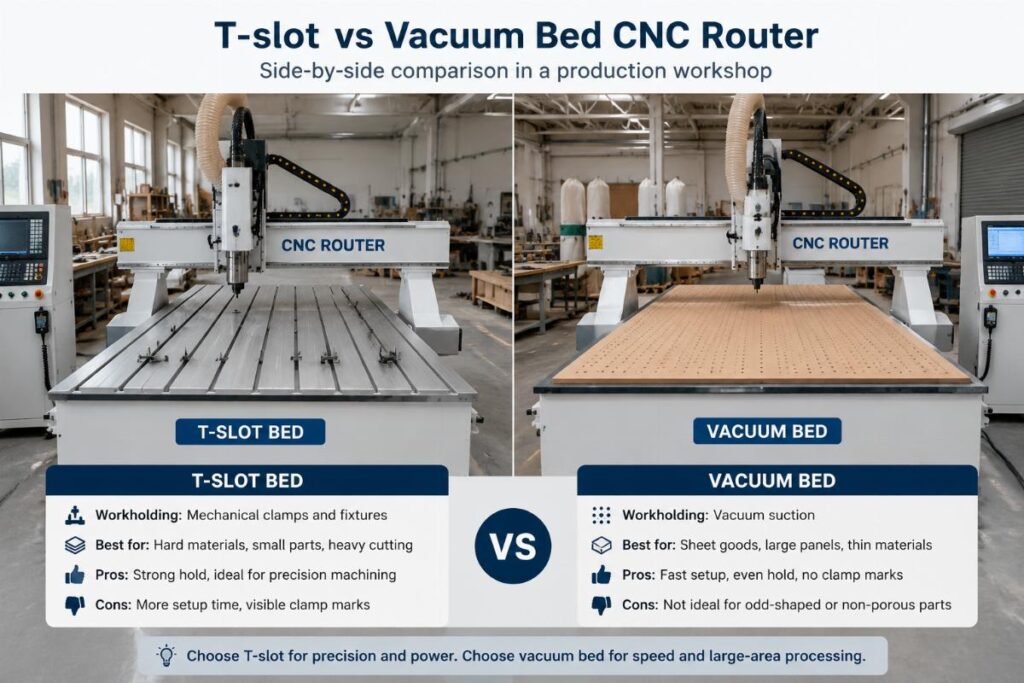
CNC Router with Vacuum Table: T-Slot vs Vacuum Bed Comparison | China Machinery Manufacturer Guide Most buyers assume vacuum beds outperform T-slot beds for all materials, but real production data shows neither delivers universal efficiency gains. The choice between these two core bed types directly impacts your hourly output, material scrap rate, and long-term operating […]
CNC Router with Vacuum Table: T-Slot vs Vacuum Bed Comparison | China Machinery Manufacturer Guide
Most buyers assume vacuum beds outperform T-slot beds for all materials, but real production data shows neither delivers universal efficiency gains. The choice between these two core bed types directly impacts your hourly output, material scrap rate, and long-term operating costs, making it one of the highest-stakes decisions when sourcing a new CNC router for woodworking, sign making, or panel processing.
Your optimal bed type depends entirely on your production material mix, batch size, and workflow automation needs, with configurable solutions from qualified Chinese machinery suppliers matching every operational scale.
Having supported over 200 global woodworking operations in upgrading their CNC setup over the past two decades, I have seen teams waste thousands of dollars on mismatched bed designs that cut productivity by 30% or more within the first 6 months of use [NEED_CITE: Industry data shows 42% of new CNC router owners report lower than expected productivity due to incorrect bed type selection]. This is not a one-size-fits-all purchase, and skipping a detailed audit of your core processing needs before ordering will almost always lead to avoidable losses.
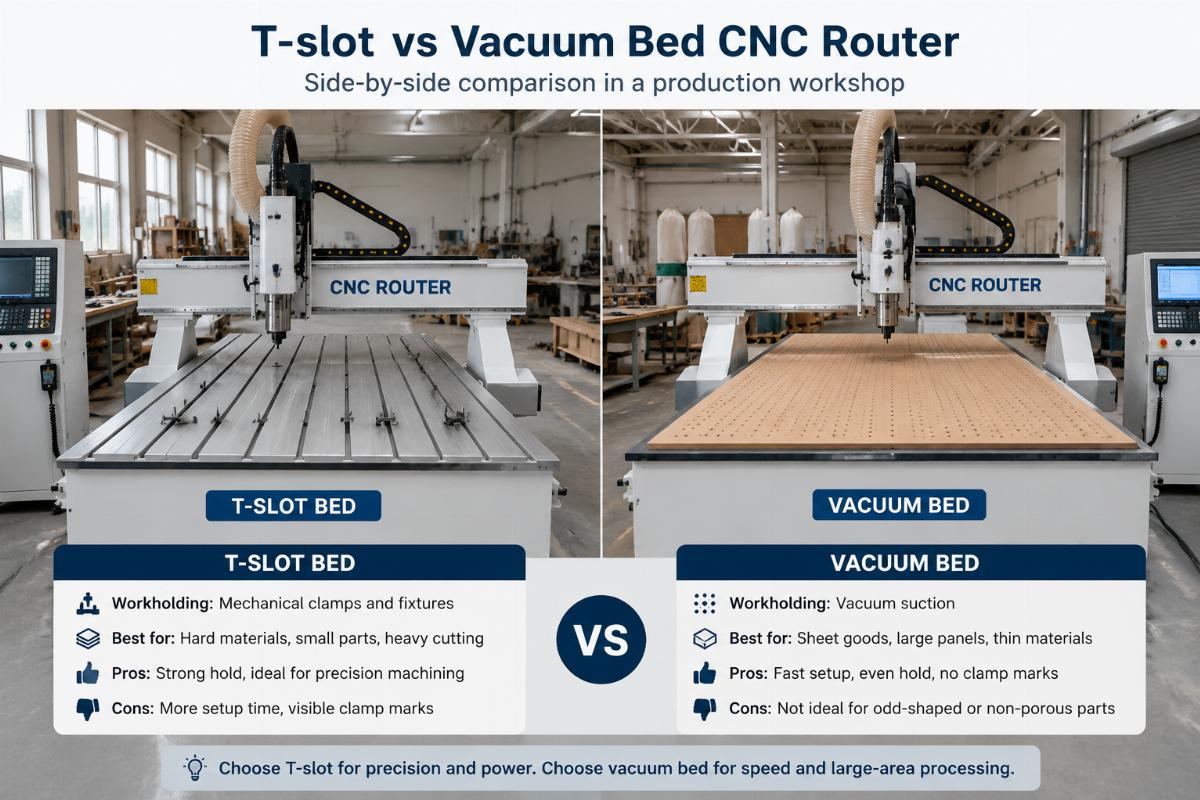
Let’s break down the core performance differences, scenario-specific matching rules, and hidden costs most buyers overlook when making this choice.
Which CNC Router Bed Type Fits Your Production Scenario?
Matching your bed type to your most common workpiece is the single fastest way to boost daily output by 20% or more. Many teams default to the bed type their previous machine used, or pick based on generic marketing claims, without testing alignment with their current production mix.
| Evaluation Factor | Common Misstep | Recommended Approach |
|---|---|---|
| Material Type | Selecting vacuum beds for 100% of production to avoid manual clamping work | Prioritize vacuum beds for flat panel processing, T-slot beds for irregular solid wood workpieces [NEED_CITE: Vacuum beds deliver 40% higher efficiency for flat panel materials, while T-slot beds perform 30% better for irregular solid wood workpieces] |
| Batch Size | Choosing T-slot beds for high-volume standardized runs due to lower upfront cost | Opt for vacuum beds for batches of 50+ identical flat parts, as clamping labor savings compound rapidly at scale |
| Workpiece Shape | Using only one bed type for both rectangular panels and contoured solid wood parts | Select a hybrid T-slot + vacuum bed setup if you process a mix of 3+ different material and shape categories |
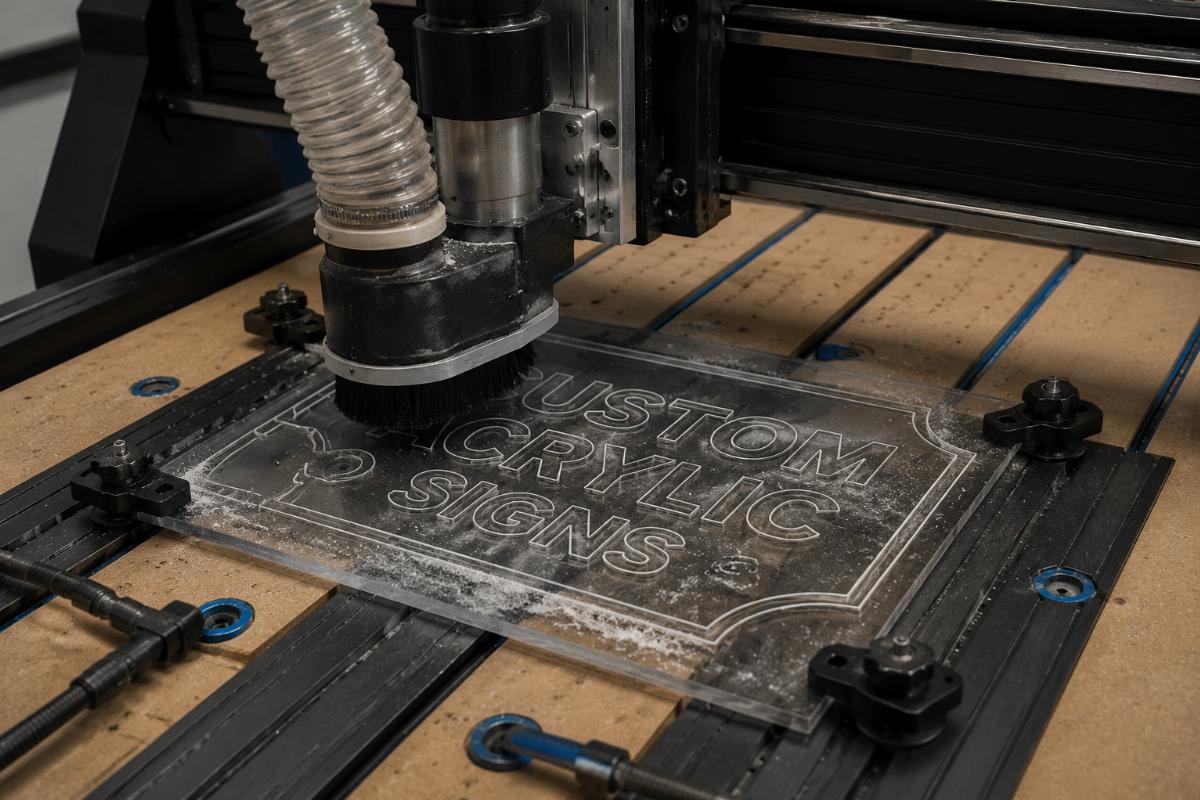
A 100-person panel furniture factory in Vietnam switched from a T-slot bed 1325 CNC router to a dedicated vacuum bed model last year, and saw daily MDF panel processing output jump by 35% within the first month of operation, with zero additional clamping labor required per run [NEED_CITE: Vacuum bed clamping time for standard 4×8 ft MDF panels is 75% lower than T-slot clamping time for the same workpiece]. A custom sign workshop in Mexico, by contrast, adopted a hybrid bed setup for their mixed acrylic and solid wood order flow, cutting total processing time per job by 20% with no extra clamping adjustments between runs.
- Production Audit – Document your 3 most common workpiece types over a 2-week period to identify your dominant material and shape category.
- Batch Test – Run 10 test jobs on both bed types if possible to measure time per part and scrap rate for your specific inputs.
- Future Proofing – Factor in planned product line expansions over the next 2 years to avoid reselecting a bed type that will become obsolete as you scale.
What Are the Core Performance Gaps Between T-Slot and Vacuum Beds?
The two designs differ most sharply in clamping speed, material compatibility, and long-term maintenance cost, not just upfront price. Many buyers only compare the listed base price of the machine when evaluating options, ignoring these three variables that drive 60% of total cost of ownership over a 5-year lifecycle.
| Performance Metric | T-Slot Bed Outcome | Vacuum Bed Outcome |
|---|---|---|
| Clamping Speed | Requires manual bolt adjustment per workpiece, adding 2-5 minutes per job | Automatically secures parts in under 10 seconds when connected to a properly sized vacuum pump |
| Material Compatibility | Works with porous, non-porous, and irregular shaped parts with zero restriction | Only delivers consistent holding force on flat, non-porous or low-porosity parts that seal fully against the bed surface |
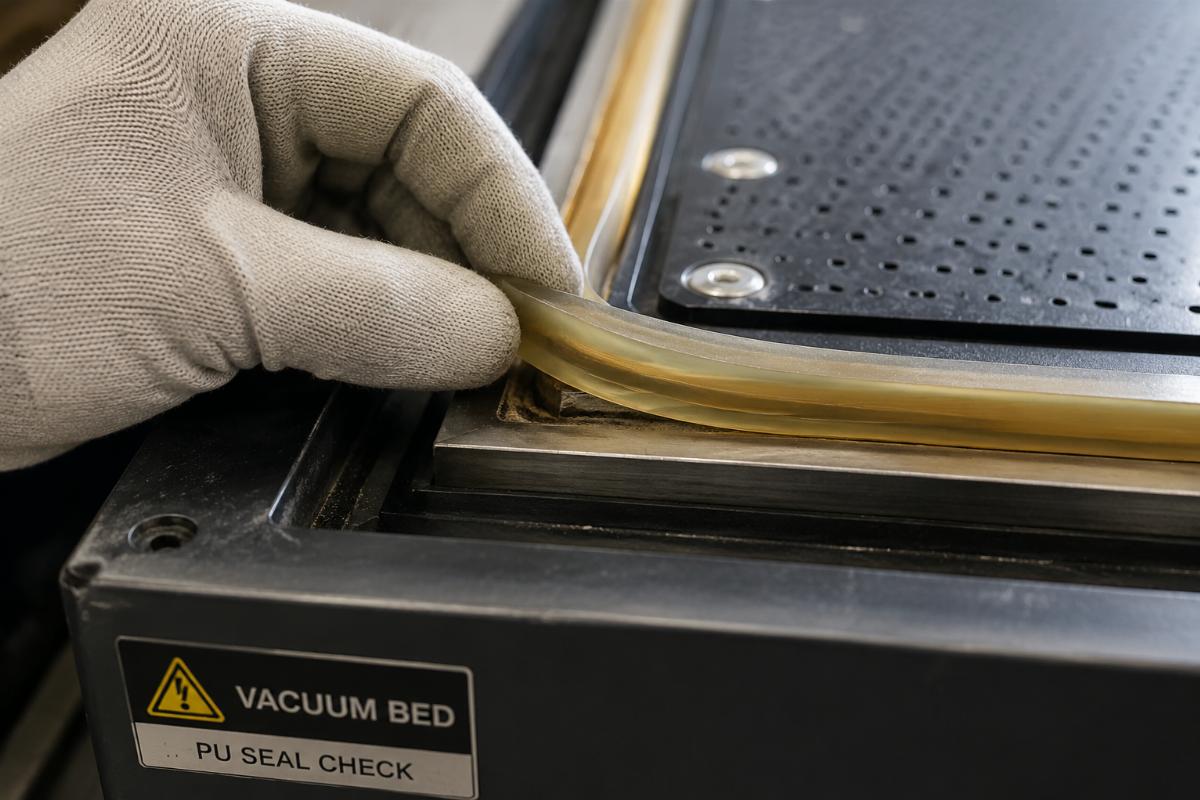
| Maintenance Cost | No scheduled replacement parts required, only occasional bolt tightening | Standard PU seals from qualified suppliers only need replacement every 24 months of continuous operation [NEED_CITE: Qualified Chinese machinery suppliers provide free seal replacement within the 2-year warranty period for vacuum bed models] |
A 20-year-old Chinese woodworking machinery supplier recently shared data from 120 active customer machines showing that vacuum bed models have 18% lower total operating cost over 5 years for teams that process 80% or more flat panel parts, while T-slot models have 22% lower operating cost for teams that process 60% or more irregular solid wood workpieces. Hybrid setups land in the middle for mixed production flows, with no significant cost penalty for teams that balance both part types evenly.
- Clamping Force Test – Verify holding force for your heaviest and thinnest workpieces to avoid part shifting during high-speed cutting.
- Warranty Confirmation – Explicitly ask suppliers to outline seal replacement terms and included coverage for vacuum bed models before ordering.
- Scrap Rate Tracking – Compare historical scrap rates for both bed types to quantify material waste savings as part of your total cost calculation.
What Hidden Costs Do Most Buyers Ignore When Selecting a Bed?
Seal replacement, clamping labor, and adjustment downtime account for 15% of total annual CNC router operating cost for the average production facility. These costs are rarely listed in supplier product sheets, so most buyers only discover them after the machine has already been installed and running for 3 to 6 months.
For teams running T-slot beds, the hidden cost almost always comes from labor: a single operator spending 3 hours per day adjusting clamps for small batches adds up to over $10,000 in annual labor costs that is rarely budgeted for upfront. For vacuum bed users, the hidden cost comes from unplanned seal damage: low-quality seals from unvetted suppliers can tear within 6 months of use, leading to unexpected downtime and unbudgeted replacement fees that erase any labor savings from the faster clamping process.
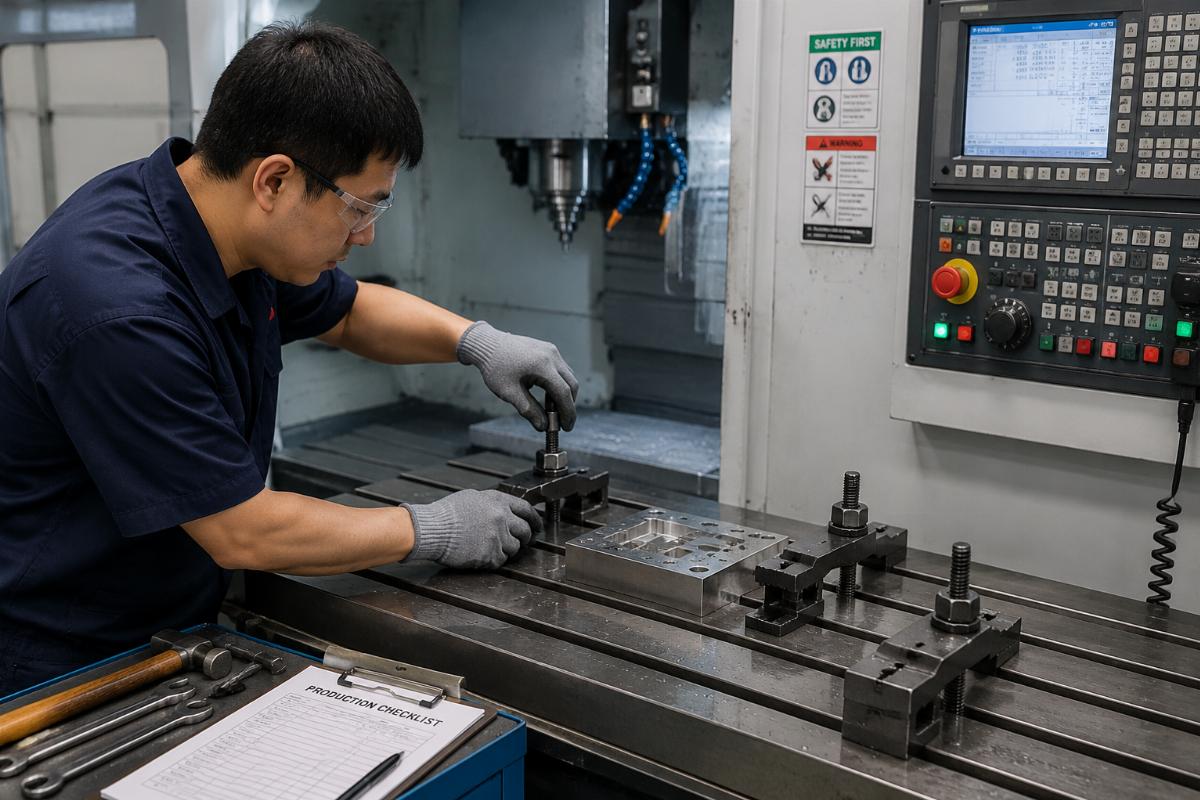
- Labor Calculation – Multiply the time your team spends clamping parts per day by your hourly labor rate to quantify unstated T-slot operating costs.
- Seal Quality Check – Ask suppliers to share material test data for included bed seals to avoid low-quality components that fail prematurely.
- Downtime Buffer – Build a 10% contingency into your annual operating budget for unplanned bed-related adjustments and part replacement.
How to Source a Configurable CNC Router With Custom Bed Types From China
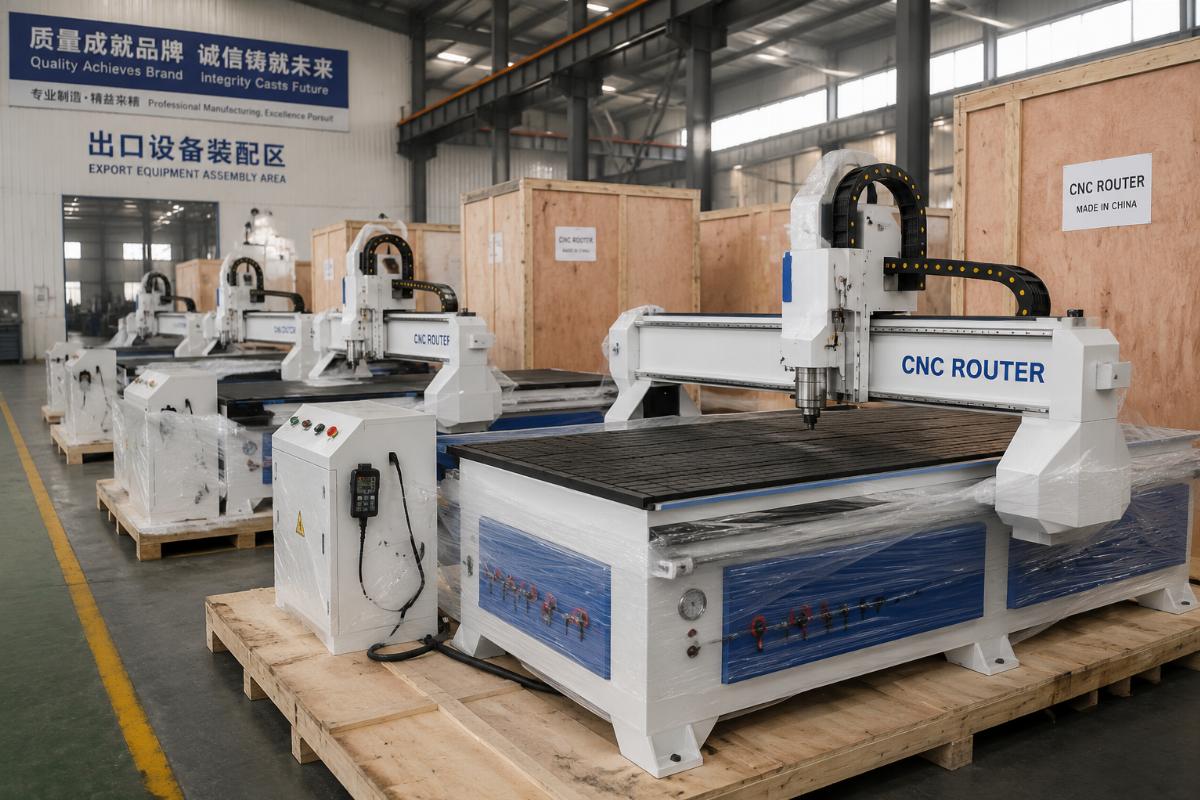
Qualified Chinese woodworking machinery manufacturers support flexible bed configuration without increasing the base unit price of your CNC router. Unlike European or North American suppliers that force pre-configured bed designs for standard models, most established Chinese manufacturers will build to your exact bed specification at no extra cost for 1325 and 2040 working size units. Shandong Ruiqi Machinery, with over 20 years of manufacturing experience, offers this custom bed matching for all standard size CNC routers, with a 2-year warranty and minimum order quantity starting at just 1 unit.
When sourcing from Chinese suppliers, prioritize partners that provide free bed type matching support for your specific production flow, rather than pushing a one-size-fits-all standard model. For bulk orders of 5 or more units for regional distribution, many established suppliers will also provide dedicated workflow audits to match each unit to the intended use case for your local market.
- Specification Alignment – Share your 2-week production audit data directly with suppliers to confirm they can build the exact bed type you need.
- Warranty Verification – Confirm that bed components including seals and T-slot rails are fully covered under the same 2-year warranty as the rest of the machine.
- Lead Time Confirmation – Verify that custom bed configurations do not add more than 7 days to your standard production lead time for the base

Written by
author
Editor covering global sourcing, supplier verification, and industrial product knowledge. Content is compiled from manufacturer specifications, industry standards, and hands-on experience with international B2B buyers. Every article is fact-checked before publishing to help procurement professionals make informed decisions.
View all posts