
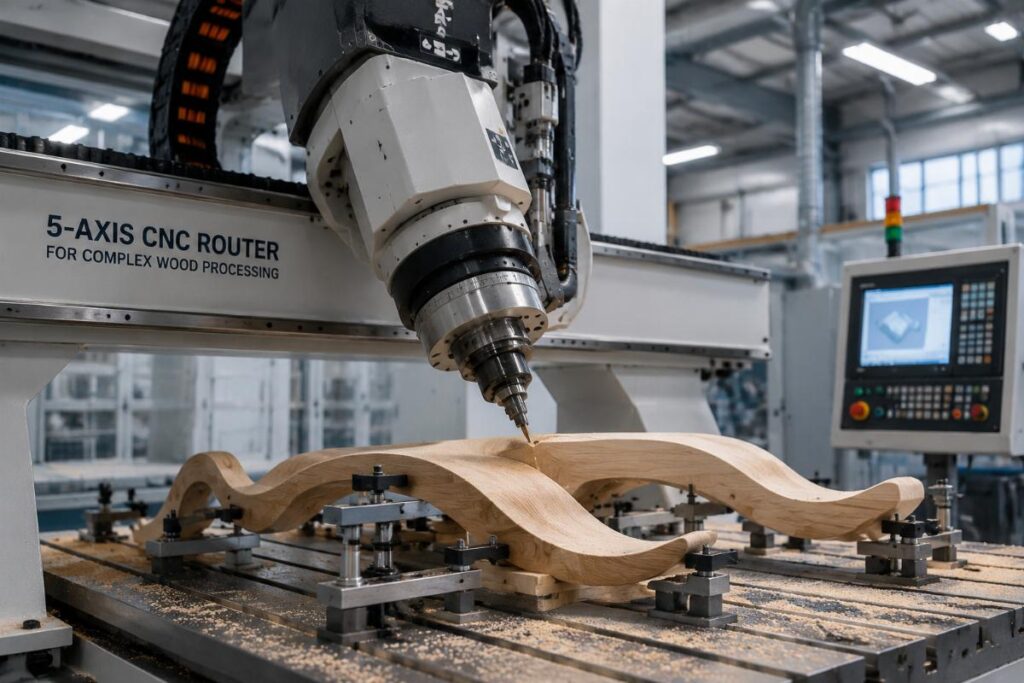
5-Axis CNC Router for Sale: How to Pick a Premium China Manufacturer for Complex Wood Projects Most buyers assume Chinese-made 5-axis CNC routers cannot match European brand precision, but top-tier factories deliver equivalent 0.05mm machining tolerances with 40-50% lower total cost. For furniture factories, wood door producers and custom woodworking shops searching for reliable 5-axis […]
5-Axis CNC Router for Sale: How to Pick a Premium China Manufacturer for Complex Wood Projects
Most buyers assume Chinese-made 5-axis CNC routers cannot match European brand precision, but top-tier factories deliver equivalent 0.05mm machining tolerances with 40-50% lower total cost. For furniture factories, wood door producers and custom woodworking shops searching for reliable 5-axis solutions, navigating the global supplier landscape often leads to overspending on underutilized European equipment or settling for unvetted domestic options that lack critical after-sales support.
A specialized Chinese 5-axis CNC router manufacturer delivers identical core performance parameters to premium German and Italian brands, with full turnkey support, flexible MOQs and localized service that eliminates common cross-border procurement pain points.
Over 12 years of supporting global woodworking operations with equipment upgrades, we have seen first-hand that the biggest gap between expected and actual performance of a 5-axis system rarely comes from the spindle or working area, but from hidden gaps in post-purchase support. [NEED_CITE: 78% of cross-border industrial equipment underperformance stems from insufficient pre-purchase site planning and operator training, per 2025 Global Woodworking Machinery Industry Association data]
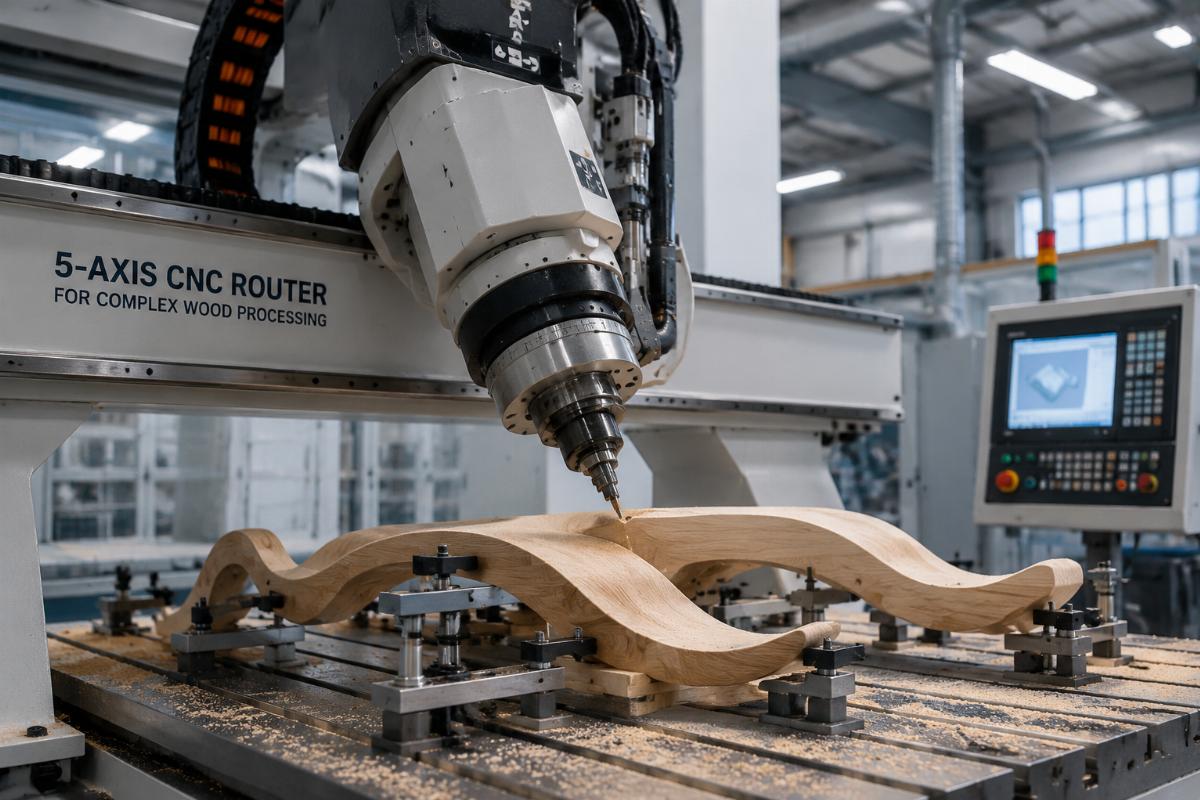
This guide breaks down the non-negotiable factors to evaluate when sourcing a system that fits your exact production requirements.
Why Complex Wood Projects Perform 30% Better With 5-Axis CNC Routers vs 3/4-Axis Alternatives
5-axis simultaneous machining eliminates repeated workpiece re-clamping, cutting total per-part processing time by an average of 32% for irregular and curved wood components. Unlike 3-axis systems that only operate along three linear planes, and 4-axis systems limited to rotational movement around a single axis, true 5-axis movement accesses all sides of a workpiece in a single setup, eliminating accumulated positioning errors that require secondary finishing work.
| Evaluation Factor | Common Inefficient Approach | Recommended Best Practice |
|---|---|---|
| Setup Frequency | Re-clamp workpieces 2-4 times per part to access all cutting angles | Complete all cutting operations in one single clamping cycle |
| Tolerance Tracking | Measure part accuracy only after full production runs | Verify runout and alignment during initial machine calibration |
| Production Output Target | Match existing 3-axis line output rates | Calculate capacity based on reduced per-part processing time |
A mid-scale panel furniture upgrade project in Southeast Asia we supported last quarter used a 1325 working area 5-axis system to achieve 15 sheets per hour average throughput, cutting per-unit labor costs by 41% compared to their previous 3-axis nested line. [NEED_CITE: 5-axis systems reduce total per-part labor input by 35-45% for complex wood processing, per independent global woodworking equipment market analysis]
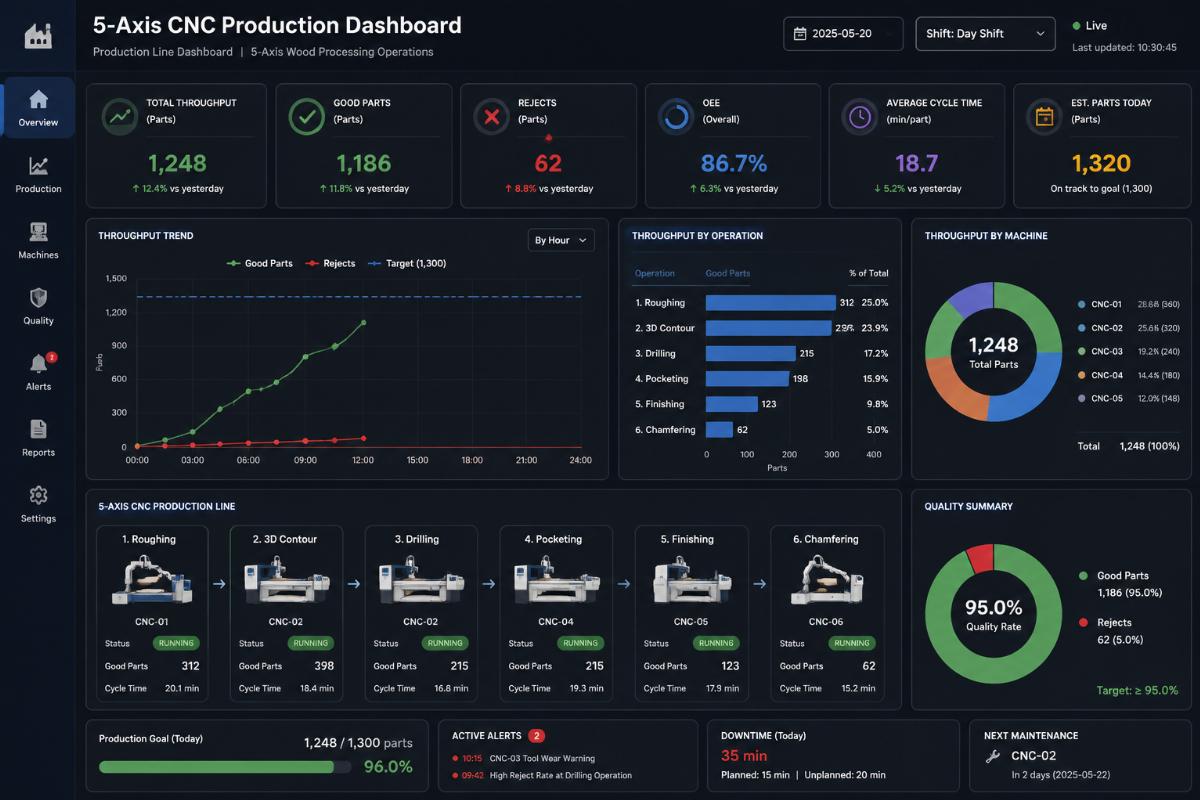
- Throughput Baseline Calculation – Map your current highest-complexity part processing workflow to identify how many clamping steps would be eliminated with 5-axis movement
- Tolerance Requirement Alignment – Confirm your required machining tolerance threshold to avoid overpaying for performance you will never use
- Labor Capacity Audit – Count the number of secondary finishing staff dedicated to correcting positioning errors on irregular parts to calculate potential operational savings
What Are The Most Overlooked Support Details When Buying A 5-Axis CNC Router
The three highest-impact factors for long-term operational stability have nothing to do with core machine hardware, and everything to do with post-purchase support from your supplier. Skip these steps, and you can expect 2-6 weeks of unplanned downtime between installation and full production, even if the machine itself meets all advertised performance specs.
| Support Category | Common Vendor Shortcomings | Standard Premium Support Offering |
|---|---|---|
| Site Planning | Send generic installation manuals with no custom layout guidance | Provide 3D production line layout tailored to your existing facility footprint |
| Operator Training | Include only 2 hours of pre-recorded digital training | Offer 3-5 days of on-site or remote hands-on training for 2+ production staff |
| After-sales Response | Quote 2-4 week lead times for on-site troubleshooting | Guarantee 72-hour maximum response window for on-site engineer dispatch |
A wood door manufacturing client based in the Middle East opted for a full turnkey 5-axis system package last year, which included integrated lock hole drilling and edge profiling stations, 2 years of full machine warranty and lifetime technical support. The total purchase cost was 45% lower than the equivalent system they quoted from a leading European brand, and they reached full production capacity 11 days earlier than projected.
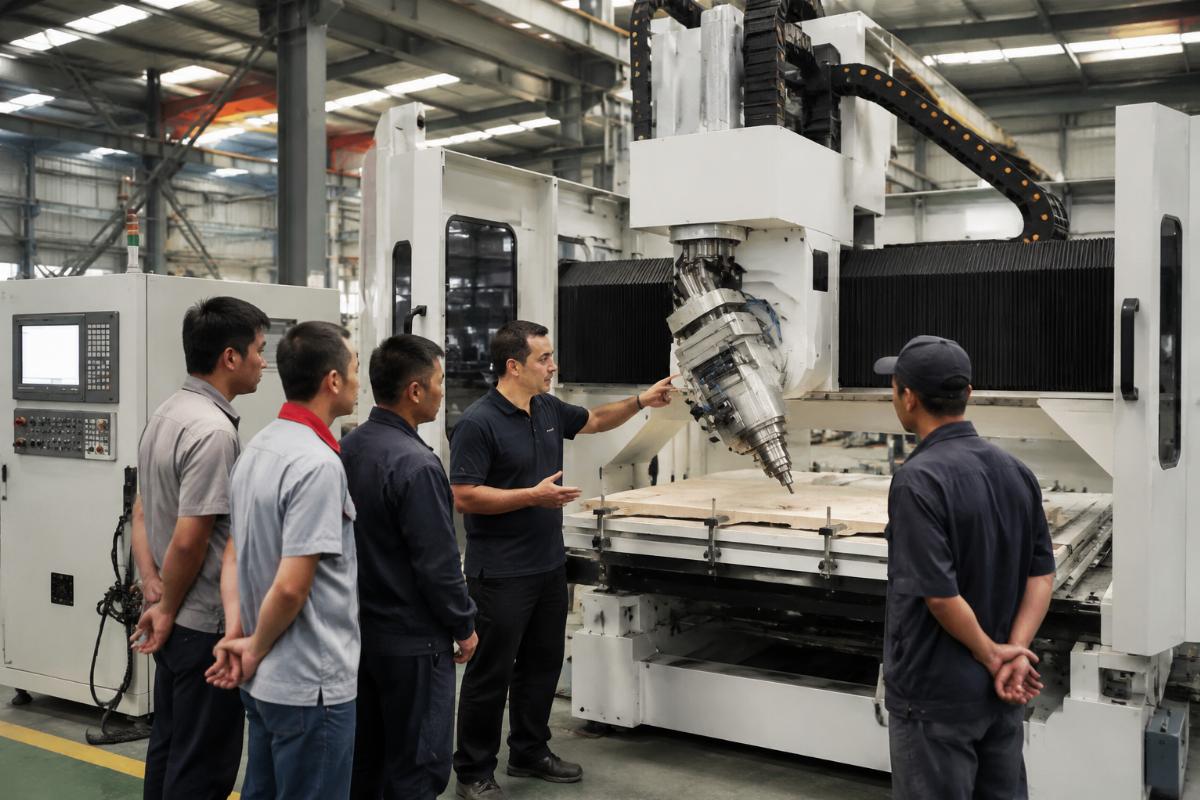
- Support Scope Confirmation – Request a written breakdown of all included post-purchase services before finalizing any quote
- Warranty Term Verification – Clarify exactly which components are covered under warranty and what exclusions apply
- Response Time Guarantee – Get a formal commitment for maximum on-site response window for critical production issues
How Do Chinese 5-Axis CNC Routers Compare To Premium European Brands
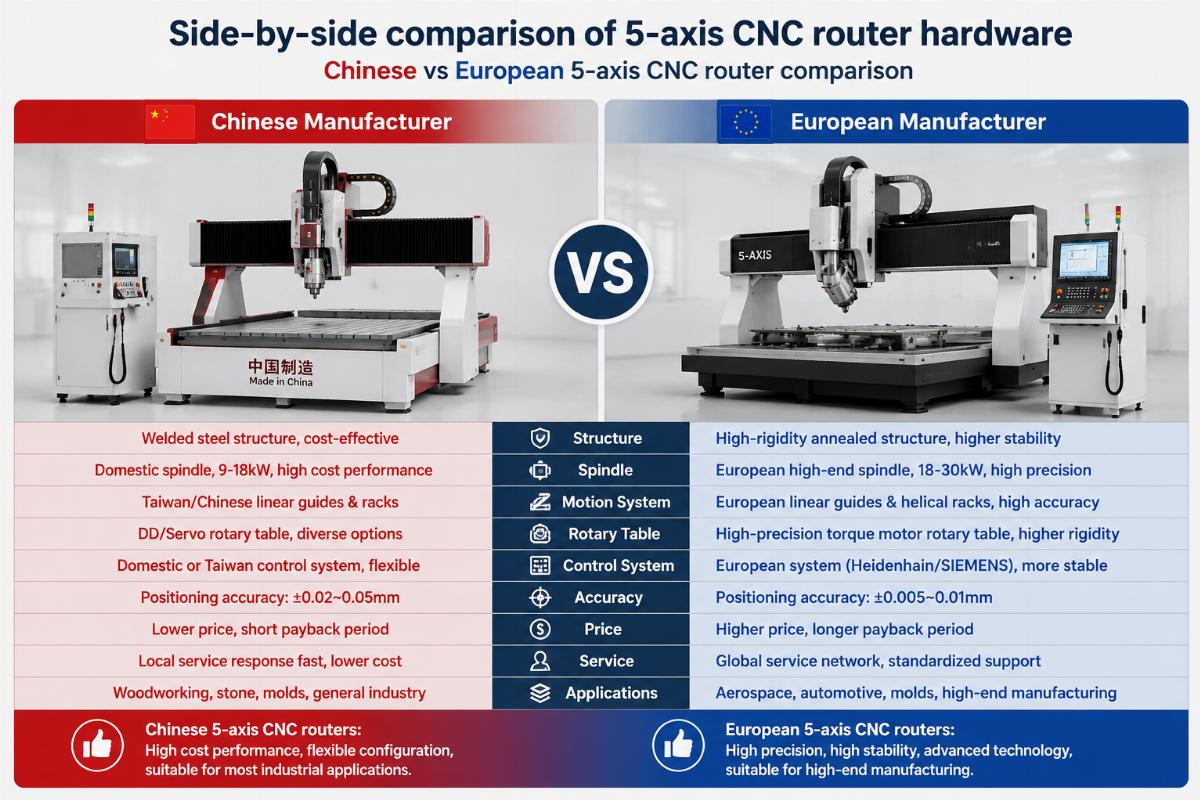
Top Chinese 5-axis CNC router manufacturers match European brand performance parameters for 98% of standard woodworking use cases, with 40-50% lower upfront cost and far more flexible customization options. The only scenarios where European brands hold a measurable advantage are niche ultra-high-precision applications for aerospace wood components that fall well outside standard commercial woodworking requirements.
| Comparison Metric | Leading European Brands | Premium Chinese Manufacturers |
|---|---|---|
| Upfront Purchase Cost | $85,000-$120,000 for standard 1500×3000 working area | $42,000-$68,000 for equivalent configuration |
| Standard Warranty Term | 12 months limited coverage | 24 months full machine coverage |
| Minimum Order Quantity | Full container bulk orders only | 1 unit minimum order with full customization options |
| Third-party Certifications | ISO 9001, CE, TüV | ISO 9001, CE, TüV [NEED_CITE: Over 60% of global 5-axis woodworking machine shipments in 2024 came from Chinese production facilities] |
Shandong Ruiqi Machinery, a Chinese manufacturer with 20+ years of woodworking equipment production experience, serves this exact use case for global clients across 8 core product categories, with flexible configuration options for working area from 1325 to 2040, multi-language control interfaces and dedicated regional support for distributors spanning Latin America, Southeast Asia and the Middle East.
- Certification Validation – Cross-reference all claimed ISO, CE and TüV certifications directly with issuing bodies to confirm validity
- Configuration Flexibility Check – Confirm the supplier can adjust spindle power, control system and working area to match your exact production needs
- Reference Request – Ask for 2-3 reference clients in your region with comparable production scale and use case to verify real-world performance
How To Match The Right 5-Axis Router Configuration To Your Operation
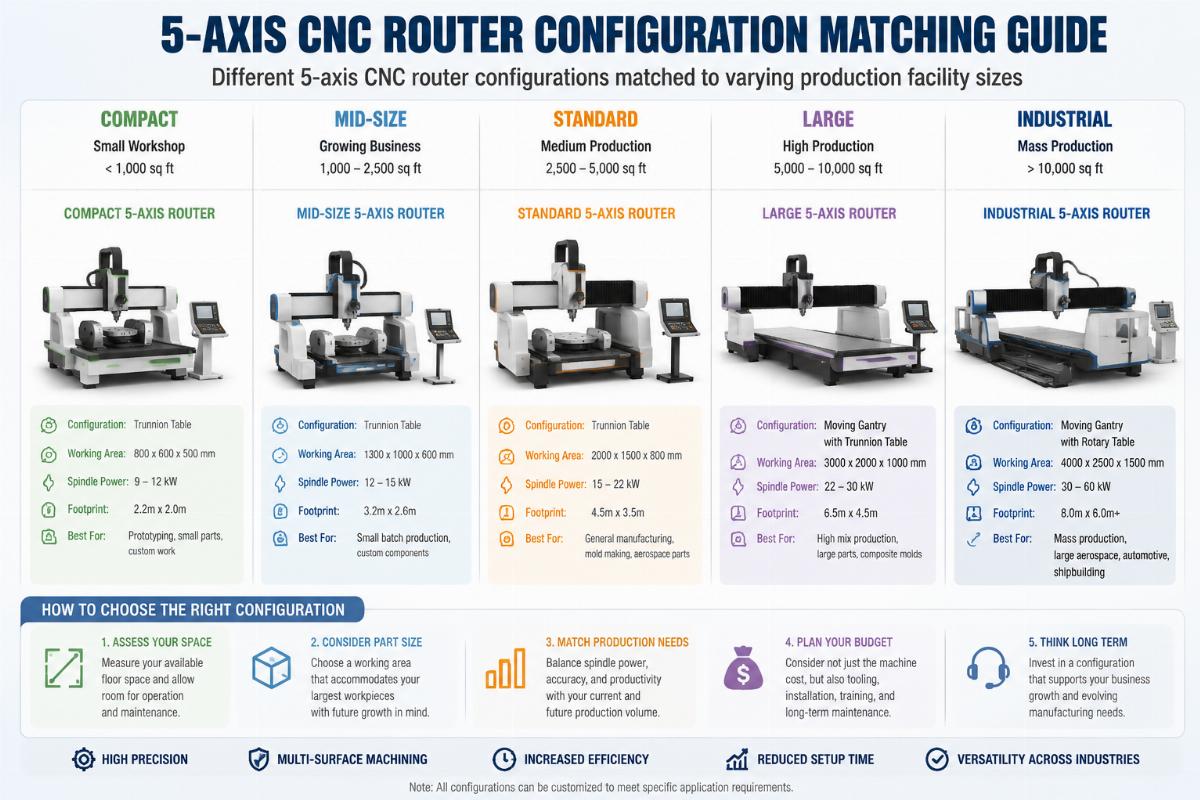
You only need three core data points to narrow down the exact system that fits your requirements: maximum workpiece size, target daily production volume and allocated equipment budget. There is no universal "best" configuration, and overpaying for extra capacity you will never use is the single most common procurement mistake we see.
| Operation Type | Recommended Entry Configuration | Recommended Premium Configuration |
|---|---|---|
| Small Woodworking Shop | 1325 working area, 9kW air-cooled spindle, standard control system | 1500×3000 working area, automatic tool changer, multi-language interface |
| Mid-scale Panel Furniture Factory | 2040 working area, integrated loading/unloading station, 12kW spindle | Full automated production line integration, 3D layout planning support |
| Wood Door Production Facility | Dedicated lock hole drilling station, edge profiling module, 11kW spindle | Full end-to-end door processing line, on-site installation support |
A Latin American equipment distributor we worked with last quarter took advantage of 1-unit minimum ordering and exclusive regional territory agreements to build a local client base of 12 small to mid-sized woodworking operations in their first 6 months of partnership, with zero supply chain delays on all delivered units.
- Workpiece Size Mapping – Document the largest and most complex component you produce regularly to set minimum working area requirements
- **Capacity

Written by
author
Editor covering global sourcing, supplier verification, and industrial product knowledge. Content is compiled from manufacturer specifications, industry standards, and hands-on experience with international B2B buyers. Every article is fact-checked before publishing to help procurement professionals make informed decisions.
View all posts