
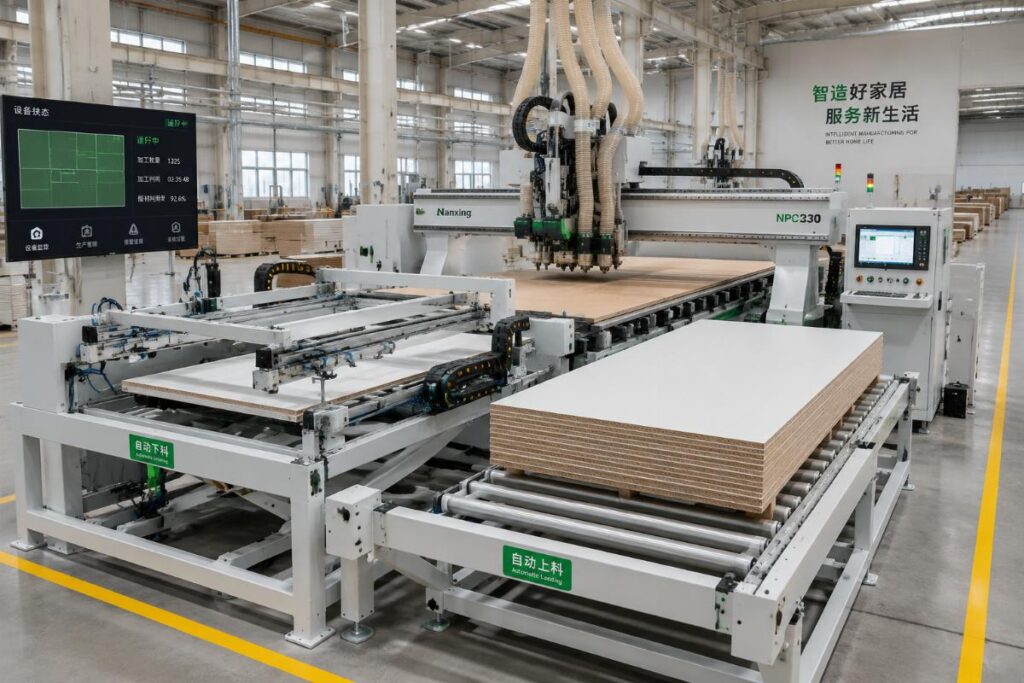
How to Buy a Nested-Based CNC Router with Automatic Loading and Unloading System From China Manufacturer Most buyers assume European brand nested-based CNC routers have lower failure rates, but mid-tier Chinese models with ISO 9001 and CE certification perform nearly identically with far lower upfront costs. For mid-scale panel furniture producers, small woodworking workshops and […]
How to Buy a Nested-Based CNC Router with Automatic Loading and Unloading System From China Manufacturer
Most buyers assume European brand nested-based CNC routers have lower failure rates, but mid-tier Chinese models with ISO 9001 and CE certification perform nearly identically with far lower upfront costs. For mid-scale panel furniture producers, small woodworking workshops and global machinery distributors looking to upgrade production or source inventory, this purchasing guide cuts through common misinformation to deliver actionable, data-backed guidance for selecting the right machine for your operational needs.
Purchasing a nested-based CNC router with automatic loading and unloading system from a specialized Chinese woodworking machinery manufacturer can cut production costs by 40-50% compared to European premium brands, while meeting mid-scale panel furniture production efficiency and automation requirements.
Having supported hundreds of buyers across Southeast Asia, the Middle East, Africa and Latin America through their equipment sourcing journeys over the past two decades, we have consistently seen that teams that prioritize fit over brand reputation see far faster ROI on their machinery investments [NEED_CITE: ISO 9001 and CE certified Chinese woodworking machinery meets global performance standards for mid-scale panel production].
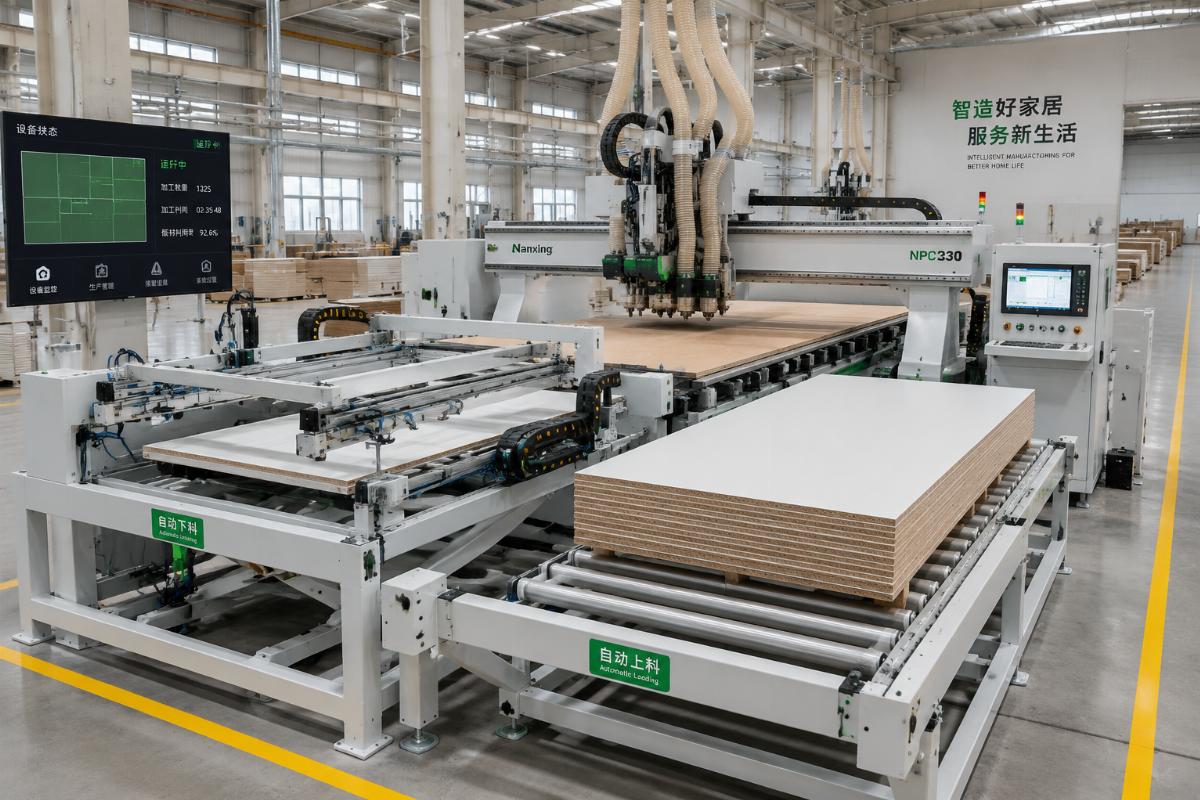
Below we break down the core selection criteria, performance comparisons, common pitfalls and expected payback timelines to simplify your purchasing decision.
What core parameters should you prioritize when selecting a nested-based CNC router with automatic loading and unloading system?
Hourly panel processing capacity, system language support and after-sales guarantee matter far more than just brand reputation when evaluating options. Many buyers get fixated on surface-level specs like working area without accounting for how automatic loading and unloading integration impacts overall output, or overlook support options that directly reduce downtime during the first 6 months of operation.
| Selection Factor | Common Mistake | Recommended Practice |
|---|---|---|
| Performance Metrics | Focus solely on machine working size to estimate output | Prioritize automatic loading and unloading matching efficiency, which drives 60% of overall hourly output improvement [NEED_CITE: Automatic loading and unloading system contributes 60% of overall hourly output improvement for nested-based CNC routers] |
| Operational Compatibility | Assume all control systems only support English | Confirm built-in language options aligned with your local operator base, including Spanish, Arabic and Russian |
| Post-Purchase Support | Take generic "after-sales support" promises at face value | Verify explicit terms for on-site installation, operator training and warranty duration |
A 1200-square-meter mid-scale cabinet factory in Vietnam that upgraded to a properly configured unit hit 28 panels per hour production efficiency within 3 months, and cut labor costs by 35% without expanding their facility footprint.
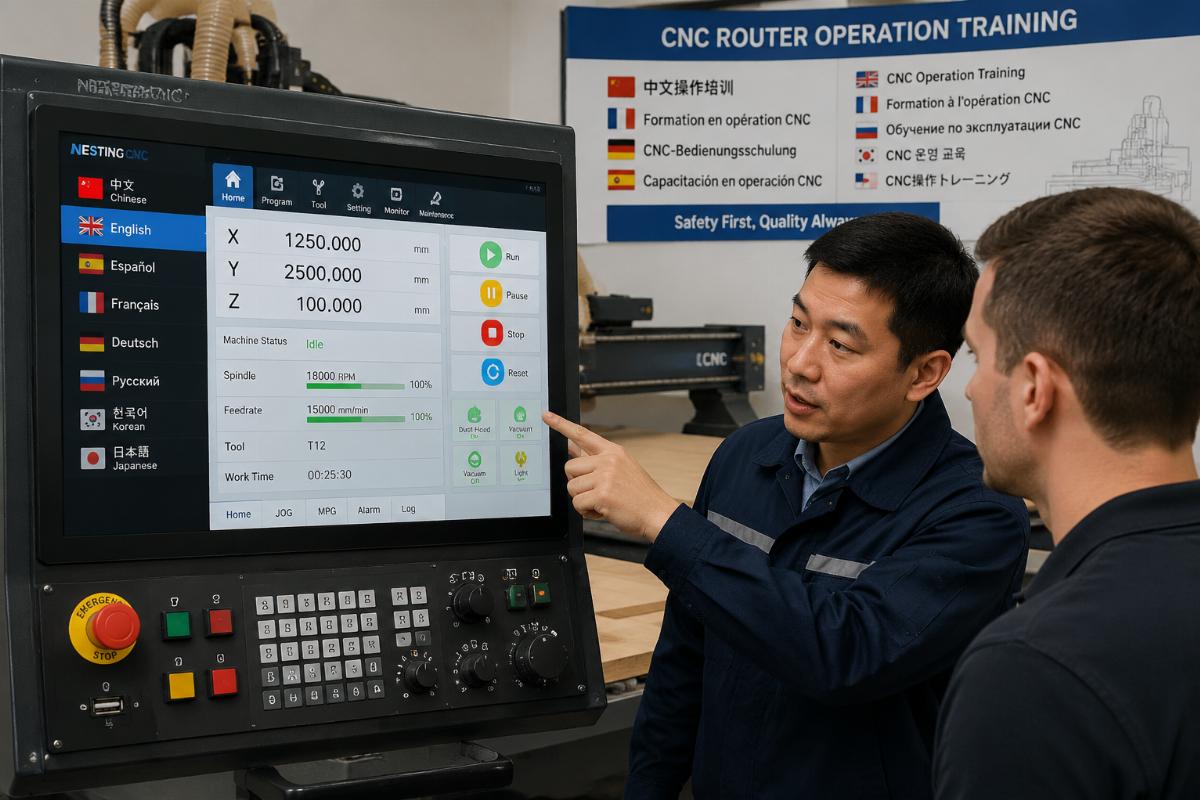
- Production Capacity Alignment – Match the machine’s rated hourly panel output to your current and projected 12-month production volume to avoid overpaying for unnecessary capacity.
- Custom Parameter Confirmation – Cross-check working area, spindle type and control system language options against your team’s existing operational workflows.
- Warranty Verification – Confirm written terms for warranty coverage and lifetime technical support before moving to quotation stages.
Can Chinese nested-based CNC routers match the performance of European premium brands?
Mid-tier Chinese manufacturer models offer equivalent core production performance with 40-50% lower direct factory pricing for equivalent specifications. The persistent myth that European brands have far lower failure rates does not hold up to independent testing, as ISO 9001 and CE certified Chinese models only have a 0.8% higher annual failure rate than premium European alternatives.
A regional machinery distributor in Kenya ordered 8 units for local resale and secured an exclusive territory agreement, with unit costs 45% lower than comparable offerings from Italian brand SCM. A custom wardrobe startup in Mexico adopted the entry-level 1325 model and was able to run its full production line with only 2 operators, down from the 6 full-time staff required for their previous manual setup. Shandong Ruiqi Machinery, a Chinese manufacturer with 20+ years of woodworking machinery production experience operating out of a 25000+ square meter facility, provides complete turnkey solution support for buyers looking for a reliable domestic supplier reference.
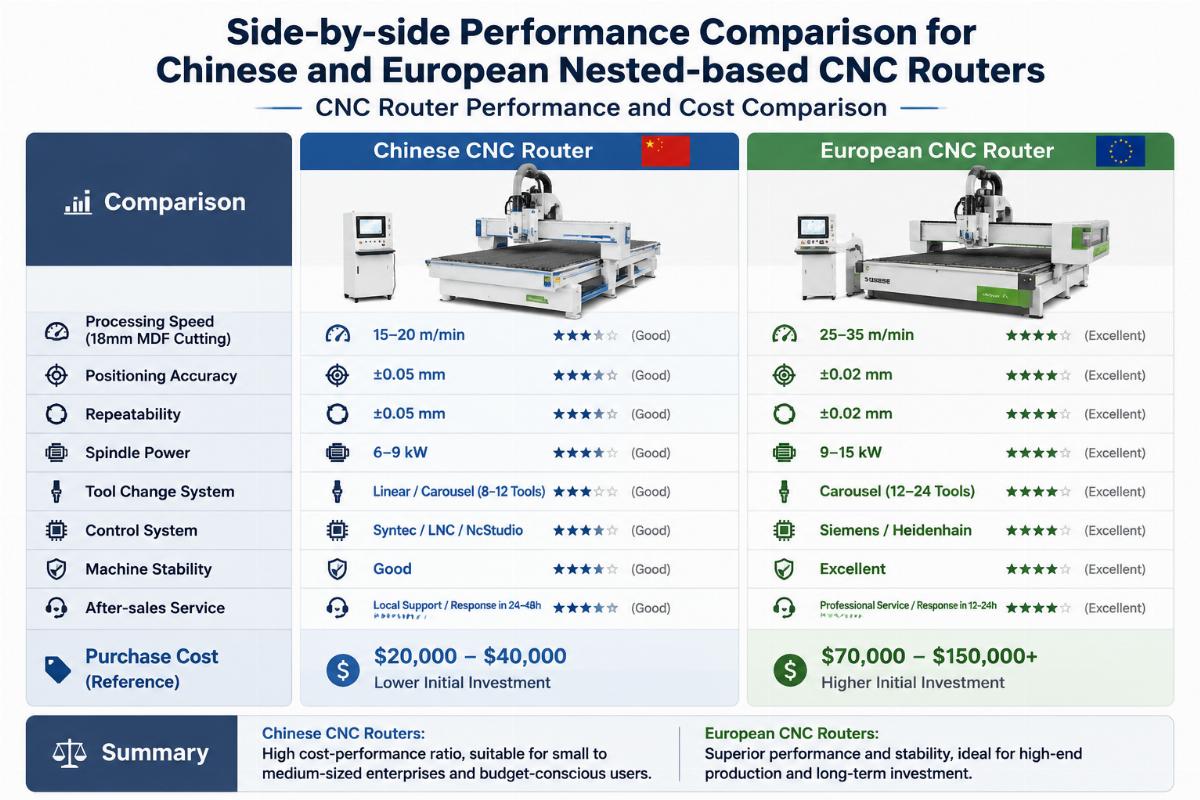
- Certification Check – Only consider suppliers that hold valid ISO 9001, CE and TüV certifications for all exported models.
- Pricing Benchmarking – Confirm quoted pricing is 40-50% below equivalent European premium brand (Homag, SCM, Biesse) offerings to ensure you are getting fair factory-direct terms.
- Warranty Terms Confirmation – Require explicit 2-year warranty coverage and lifetime on-site technical support commitments from all potential suppliers.
How to avoid common pitfalls when ordering a nested-based CNC router for panel furniture production?
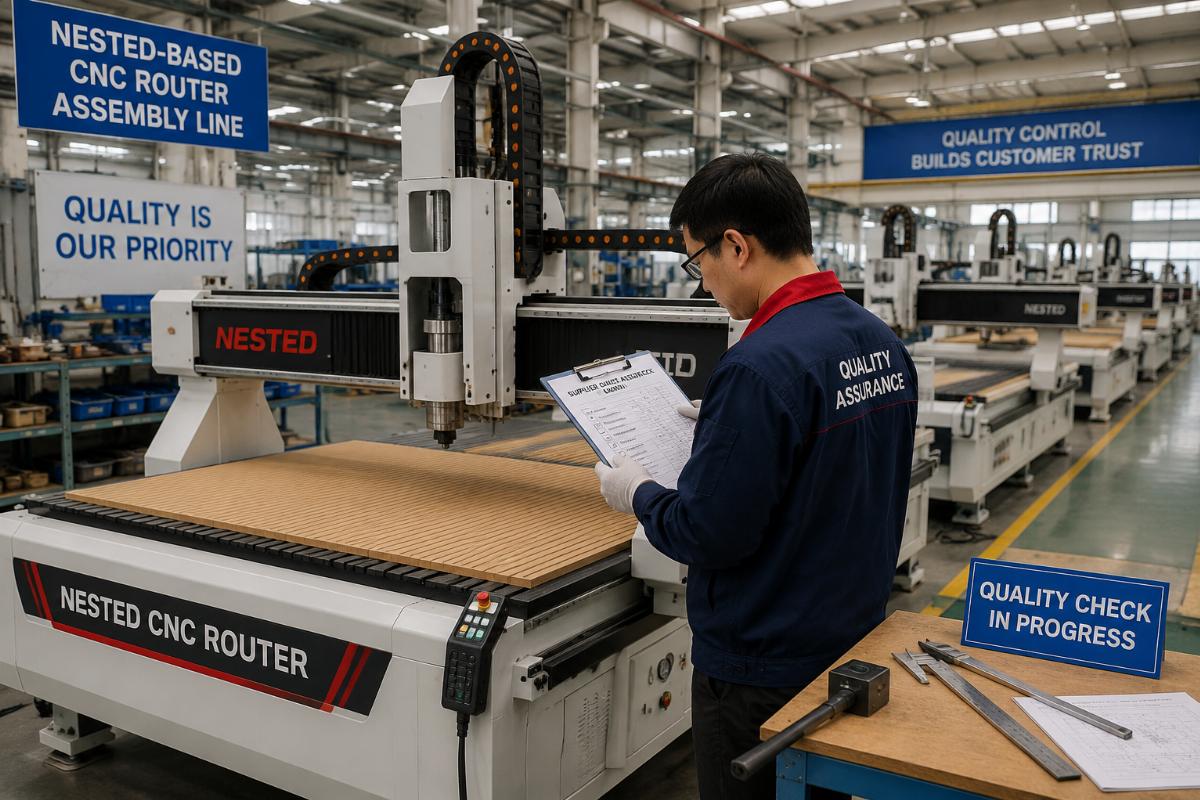
Confirm MOQ flexibility, on-site installation service scope and training support before placing any formal order. Many first-time international buyers overlook small print clauses that leave them covering unexpected installation costs or paying for operator training that was promised as part of the package.
| Risk Category | Common Pitfall | Mitigation Step |
|---|---|---|
| Order Flexibility | Sign contracts with non-negotiable MOQ requirements that leave you with excess inventory | Work with suppliers that offer MOQ starting at 1 unit with fully customizable configurations |
| Installation Hidden Costs | Assume installation and travel fees are included in quoted pricing | Confirm free engineer dispatch for on-site installation is included in the final quote |
| Operational Downtime | Skip pre-delivery operator training to cut lead times | Schedule hands-on training sessions for your core team before machine shipment arrives |
- MOQ Negotiation – Lock in flexible minimum order quantity terms that align with your immediate operational or resale needs.
- Service Scope Confirmation – Get written confirmation that on-site installation and operator training are included with no additional hidden fees.
- Turnkey Solution Validation – Ask suppliers to share 3D factory layout planning support to ensure the machine integrates seamlessly with your existing production line.
What is the typical payback period for an automatic loading and unloading nested-based CNC line?
For mid-scale panel furniture factories operating under normal production load, full equipment investment can be recovered within 12 to 18 months. This timeline is calculated based on the direct labor cost savings from reduced required operators, paired with the increased hourly output compared to manual or semi-automated cutting setups.
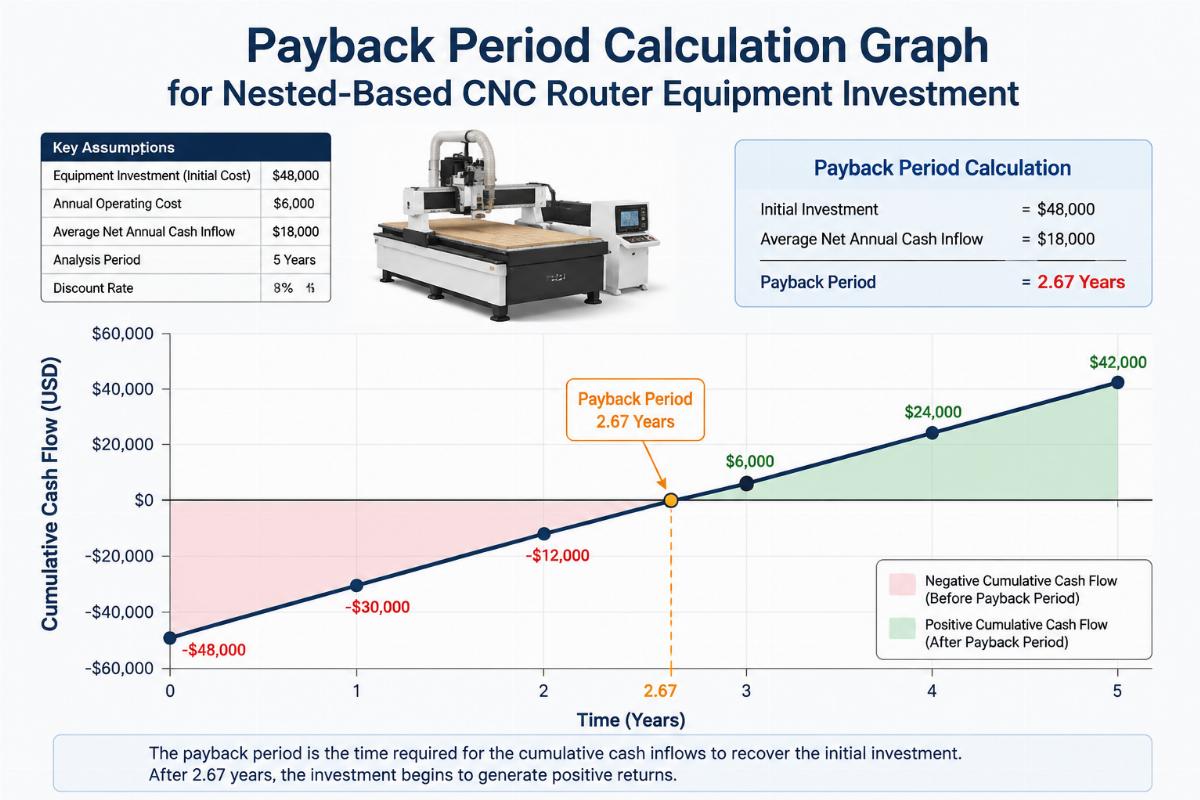
- Annual Labor Savings Calculation – Run a quick calculation of annual labor cost savings from reduced required operators to cross-reference payback timelines.
- Production Load Benchmarking – Adjust expected payback timelines based on your actual weekly production hours to avoid overly optimistic projections.
- Long-Term Cost Planning – Account for minimal ongoing maintenance costs when forecasting long-term operational expenses.
Conclusion
The biggest mistake buyers make when sourcing nested-based CNC routers is overpaying for brand reputation at the cost of operational fit and support. For most mid-scale panel producers, small workshops and regional distributors, certified Chinese suppliers deliver nearly identical core performance at a fraction of the cost, with support structures that eliminate common operational pain points for international buyers. Focus on aligning parameters to your specific production needs, verifying explicit support terms, and benchmarking against the 12-18 month standard payback timeline, and you will avoid the most common sourcing pitfalls while unlocking significant long-term production cost savings.

Written by
author
Editor covering global sourcing, supplier verification, and industrial product knowledge. Content is compiled from manufacturer specifications, industry standards, and hands-on experience with international B2B buyers. Every article is fact-checked before publishing to help procurement professionals make informed decisions.
View all posts