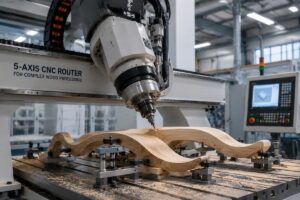
Avoid costly integration errors with our guide to Automatic Nesting Software Wholesale Philippines for custom woodworking shops. Learn why seamless post-processor compatibility, local voltage adaptation, and multilingual interfaces matter more than initial license fees. Ensure reliable production by matching software specifically to your CNC controller hardware.
Automatic Nesting Software CNC Router Wholesale for Philippines Custom Woodworking Shops
Cheaper software licenses often result in higher total production costs due to material waste and machine downtime.
For Philippine custom woodworking shops, the most critical factor in selecting Automatic Nesting Software Wholesale Philippines solutions is not the initial license fee, but the seamless technical integration between the software post-processor and the CNC controller, alongside specific adaptations for local voltage stability and multilingual operator interfaces.
I still remember the humidity in a Cebu cabinet workshop where the air felt heavy enough to wring out. The owner had recently imported a high-speed CNC router and a budget-friendly nesting package from different suppliers. On paper, it was a perfect match. In reality, the software generated toolpaths that the machine’s controller could not interpret correctly without significant manual editing. For three weeks, the machine sat idle while technicians tried to bridge the communication gap. The lost production time cost far more than the savings on the software license. This scenario is common when buyers focus solely on price rather than compatibility. [NEED_CITE: common causes of CNC integration failures in small manufacturing]
The key to avoiding such pitfalls lies in understanding that Automatic Nesting Software Wholesale Philippines packages must be evaluated as part of a holistic system. The software must speak the same language as the hardware, both digitally and physically.
Why Do Philippine Workshops Fail with Cheap Nesting Software?
Incompatibility between software post-processors and machine controllers creates hidden operational costs that outweigh initial savings.
Many workshop owners assume that any nesting software can drive any CNC router. This is a dangerous misconception. The nesting software generates a file, but the post-processor translates that file into specific G-code instructions that the machine’s controller understands. If the post-processor is not precisely calibrated for the specific brand and model of the CNC controller, the machine may execute cuts incorrectly, crash, or simply refuse to run.
| Feature | Basic Low-Cost Software | Integrated Professional Solution |
|---|---|---|
| Post-Processor Compatibility | Generic or limited options | Custom-configured for specific controller brands |
| Material Utilization | Standard algorithms | Advanced optimization with remnant tracking |
| Technical Support | Email-only, delayed response | Remote diagnostics and local language support |
| Voltage Adaptation | Not applicable (software only) | Hardware configured for local grid stability |
A workshop in Manila once faced frequent reboots and PLC errors due to power fluctuations common in the local grid. The software itself was fine, but the hardware it was running on lacked proper voltage stabilization. When sourcing Automatic Nesting Software Wholesale Philippines deals, it is essential to verify that the accompanying hardware is built to withstand local electrical conditions. [NEED_CITE: impact of voltage instability on industrial CNC machinery]
The failure often stems from a lack of holistic planning. Buyers purchase software and hardware separately, assuming they will work together. Without verified compatibility, the risk of production stoppages increases significantly.
What Features Matter Most in Automatic Nesting Software?
Real-time material tracking and localized user interfaces are critical for reducing operator errors and improving efficiency.
When evaluating Automatic Nesting Software Wholesale Philippines options, look beyond basic nesting capabilities. The software should offer real-time material tracking, allowing operators to manage inventory efficiently. It should also support easy import of standard file formats like DXF and CSV, which are commonly used in design workflows.
A startup in Davao struggled with operator errors because the software interface was only available in English. Many skilled craftsmen were more comfortable with Tagalog or local dialects. The learning curve was steep, leading to mistakes in material setup and cut parameters. Modern wholesale solutions now offer multilingual interfaces, including English and local languages, to ensure that operators can use the system confidently. [NEED_CITE: importance of localized UI in industrial software adoption]
| Feature | Benefit for Philippine Workshops |
|---|---|
| Multilingual Interface | Reduces training time and operator errors |
| DXF/CSV Import | Streamlines workflow from design to production |
| Remnant Management | Maximizes material usage and reduces waste |
| Vacuum Table Mapping | Ensures accurate holding and cutting precision |
The ability to map the vacuum table within the software is another crucial feature. This ensures that the software knows exactly where the suction zones are, preventing parts from shifting during cutting. This level of detail is often missing in cheaper, generic software packages.
Choosing software with these features ensures that the technology serves the workers, rather than becoming a barrier to productivity.
How to Match Software with Your CNC Router Hardware?
Ensure the software’s post-processor is specifically configured for your machine’s controller brand to guarantee accurate toolpath generation.
The connection between software and hardware is defined by the post-processor. This small but vital component translates the nested layout into machine-specific code. If the post-processor does not match the controller brand, the machine may not recognize commands for tool changes, spindle speed, or feed rates.
When sourcing Automatic Nesting Software Wholesale Philippines solutions, ask the supplier to demonstrate the post-processor configuration for your specific CNC model. A reputable manufacturer will have pre-tested configurations for popular controller brands. This eliminates the guesswork and ensures that the machine runs smoothly from day one.
- Identify the CNC controller brand and model.
- Verify that the nesting software supports this specific controller.
- Request a sample G-code file generated by the software.
- Test the sample file on the machine in a safe environment.
- Confirm that all functions, including ATC and vacuum, operate correctly.
A case in point involves a furniture producer who switched to a new CNC router. The old software did not have a post-processor for the new controller. The result was a week of downtime while a custom post-processor was developed. By choosing a supplier who offers integrated solutions, such delays can be avoided. [NEED_CITE: role of post-processors in CNC machining accuracy]
Matching software and hardware correctly is not just about functionality; it is about ensuring reliability and consistency in production.
What Should You Check Before Importing a Wholesale CNC Line?
Verify voltage specifications, language options, and after-sales training availability to prevent costly integration errors.
Importing a complete CNC line involves more than just checking the price. The electrical infrastructure in the Philippines requires specific considerations. Machines must be configured for 220V/60Hz operation, and voltage stabilizers should be included to protect sensitive electronic components from power surges.
Additionally, the availability of after-sales support is crucial. Look for suppliers who offer remote diagnostics and video installation guidance. This ensures that if issues arise, they can be resolved quickly without waiting for an engineer to travel onsite. Training materials should also be available in languages that your operators understand.
| Checklist Item | Why It Matters |
|---|---|
| Voltage Configuration | Prevents damage to PLCs and motors |
| Language Options | Ensures operators can use the system effectively |
| After-Sales Support | Minimizes downtime in case of technical issues |
| Spare Parts Availability | Ensures long-term maintainability of the equipment |
When evaluating Automatic Nesting Software Wholesale Philippines providers, consider their ability to offer OEM customization. This includes pre-installing compatible nesting software and configuring PLC panels with multilingual options. This plug-and-play approach reduces the complexity of setup and allows workshops to start production faster. [NEED_CITE: best practices for importing industrial machinery to Southeast Asia]
Thorough verification before importation saves time, money, and stress in the long run.
Conclusion
Successful automation relies on compatibility, localization, and reliable support, not just low initial costs.
Selecting the right Automatic Nesting Software Wholesale Philippines solution requires a focus on integration and local adaptability. By prioritizing compatible post-processors, multilingual interfaces, and voltage-stable hardware, workshops can avoid common pitfalls and achieve efficient, reliable production.
Tags

Written by
author
Editor covering global sourcing, supplier verification, and industrial product knowledge. Content is compiled from manufacturer specifications, industry standards, and hands-on experience with international B2B buyers. Every article is fact-checked before publishing to help procurement professionals make informed decisions.
View all posts