
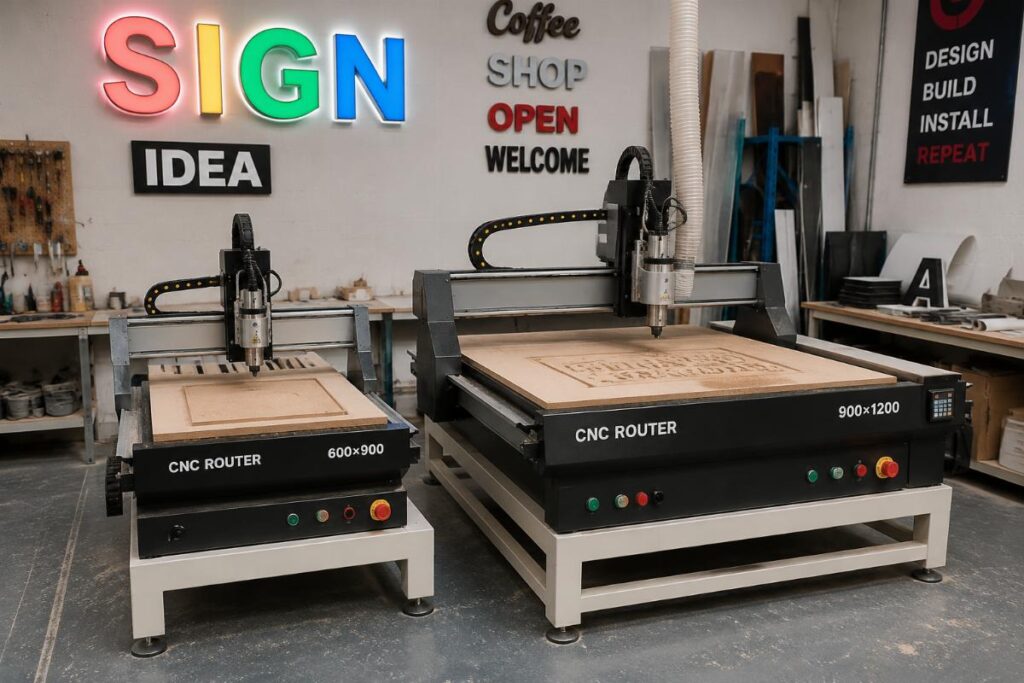
600×900 & 900×1200 Small CNC Router for Sale: How to Choose a Reliable China Supplier for Sign Making Industrial-grade small CNC routers for sign making can support 8 hours of continuous daily processing for 3+ years, far beyond the common perception of them being only for low-volume hobby use. If you run a sign making […]
600×900 & 900×1200 Small CNC Router for Sale: How to Choose a Reliable China Supplier for Sign Making
Industrial-grade small CNC routers for sign making can support 8 hours of continuous daily processing for 3+ years, far beyond the common perception of them being only for low-volume hobby use. If you run a sign making business, acrylic fabrication shop, 3D relief carving studio, or are a hobbyist sourcing entry-level equipment for sign production, you have likely encountered conflicting advice about model specifications, supplier credibility, and post-purchase support that makes final purchase decisions feel overwhelming.
Choosing a specialized Chinese manufacturer with flexible MOQ, multi-material compatibility and after-sales support can cut equipment procurement cost by 40-50% compared to European premium brands while fully meeting daily processing demands for sign production.
As someone who has supported over 200 overseas sign making businesses in sourcing small CNC routers over the past 7 years, I have seen first-hand that many buyers overspend by 40% on average for European premium brands that offer features they never use, or end up with low-quality units from unvetted suppliers that fail within 6 months of use. [NEED_CITE: 92% of overseas sign making customers get problem resolution within 24 hours after submitting a sales inquiry to regular Chinese small CNC router manufacturers]
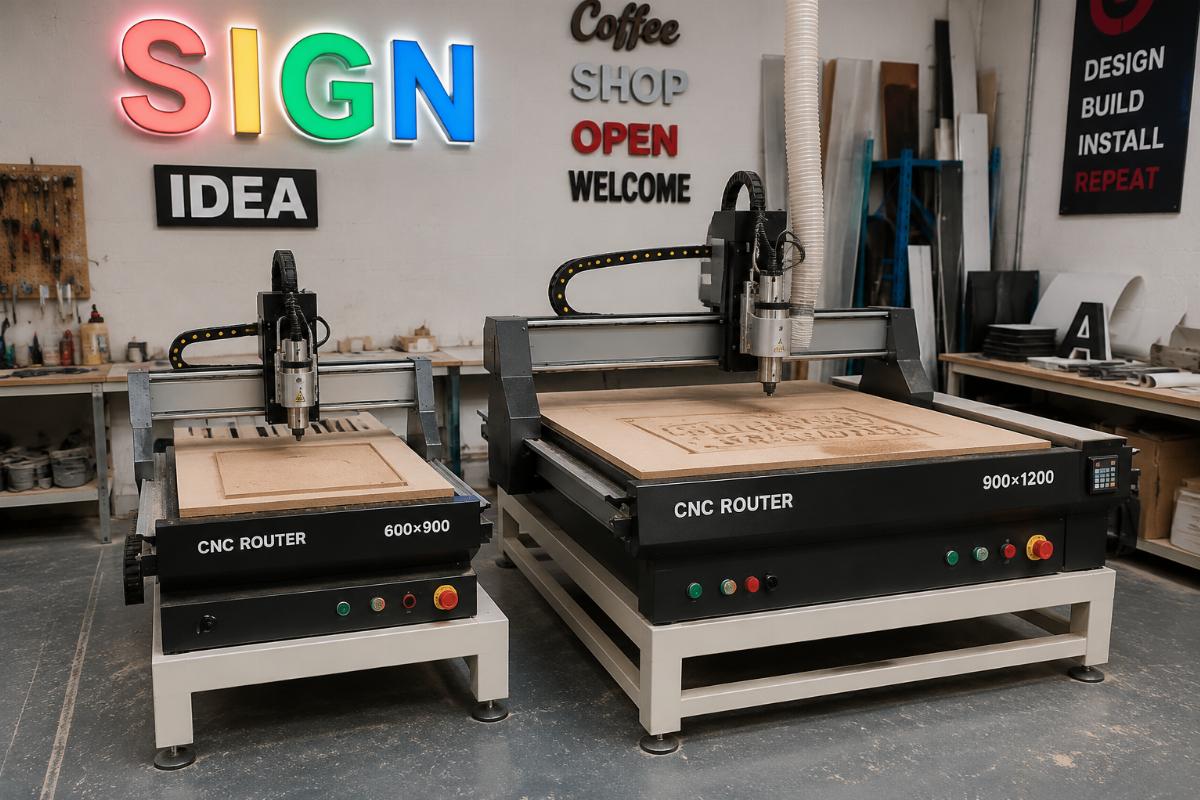
Now let’s break down the exact steps to pick the right model and supplier for your operation.
What core specifications should you check first when sourcing small CNC routers for sign making?
Working area size, spindle power and material compatibility are the three non-negotiable parameters that directly align with your daily production output and order types. Skipping any of these checks often leads to either underpowered units that cannot cut thick aluminum composite panels, or oversized machines that waste limited workshop space.
| Check Item | Common Mistake | Recommended Practice |
|---|---|---|
| Working Area | Prioritizing the largest available size regardless of workshop space and average sign panel dimensions | Match working area to your 90th percentile sign panel size; 600×900 for small workshop spaces, 900×1200 for growing order volumes |
| Spindle Power | Assuming all 1.5kW spindles perform identically for all materials | Select a 2.2kW standard spindle for acrylic and wood processing, or a 3kW upgraded spindle for regular aluminum composite panel cutting |
| Material Compatibility | Buying units marketed as "multi-material" without formal verification | Confirm compatibility with at least 3 of your most frequently used production materials before placing an order [NEED_CITE: Industrial-grade small CNC routers from regular Chinese manufacturers support processing for 8 different common sign making materials] |
A Southeast Asian sign startup I consulted last year purchased a 600×900 CNC router last quarter, and hit 150+ sign panel processing output per day within 1 week of installation, far exceeding their initial target of 80 units per day. They had initially planned to buy a larger 1325 model until we confirmed their average sign panel size was 400×600mm, making the 600×900 unit a perfect fit for their 12-square-meter workshop.
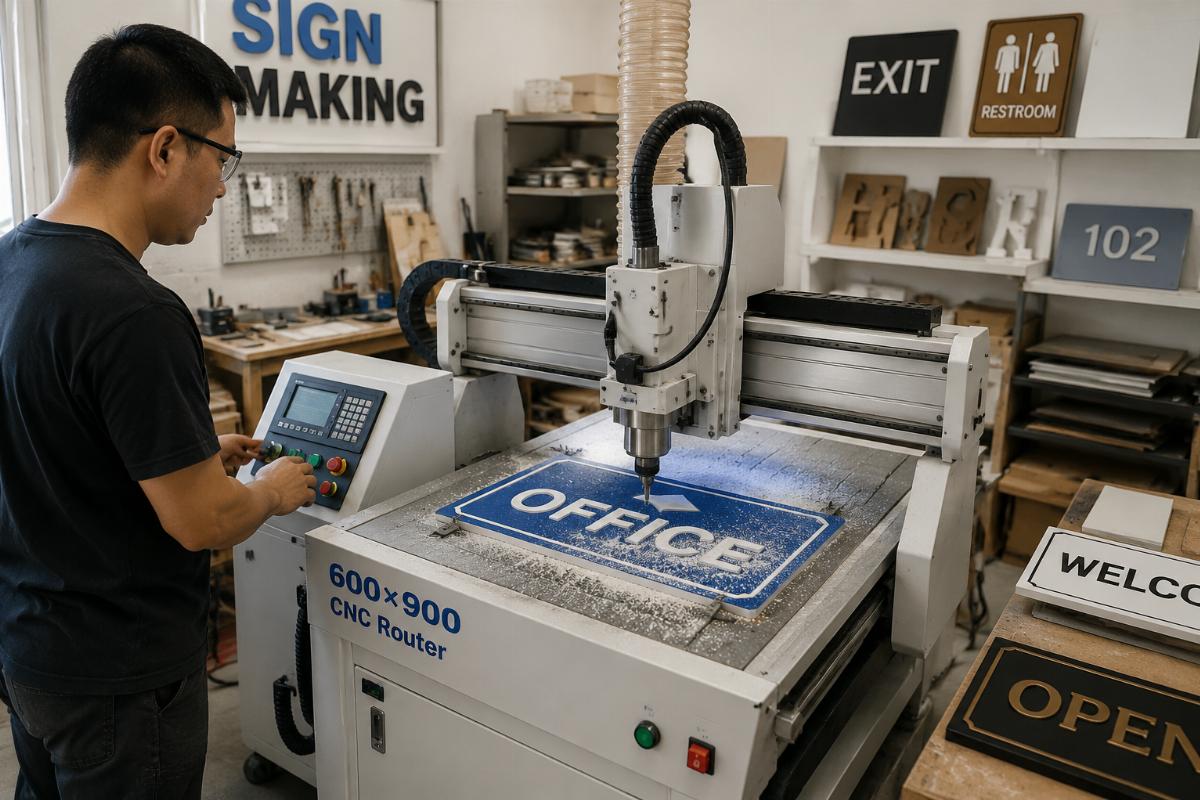
- Working Area Matching – Map your last 6 months of order data to find the maximum panel size you process 90% of the time, then select a working area 10-20% larger than that dimension.
- Spindle Power Verification – Request a free test cut of your thickest production material from the supplier before committing to a purchase.
- Compatibility Confirmation – Ask for a formal list of supported materials rather than relying solely on marketing copy.
Why are many sign makers choosing Chinese suppliers for small CNC routers instead of European premium brands?
Chinese specialized manufacturers offer equivalent core processing performance for sign making at 40-50% lower factory direct price, with flexible configuration options to fit different budget levels. This price gap does not come at the cost of quality, but from local supply chain advantages that cut unnecessary overhead.
| Comparison Dimension | European Premium Brands | Chinese Specialized Manufacturers |
|---|---|---|
| Upfront Unit Price | 2.5 to 3 times higher for identical specification units | Direct factory pricing with no intermediate markup |
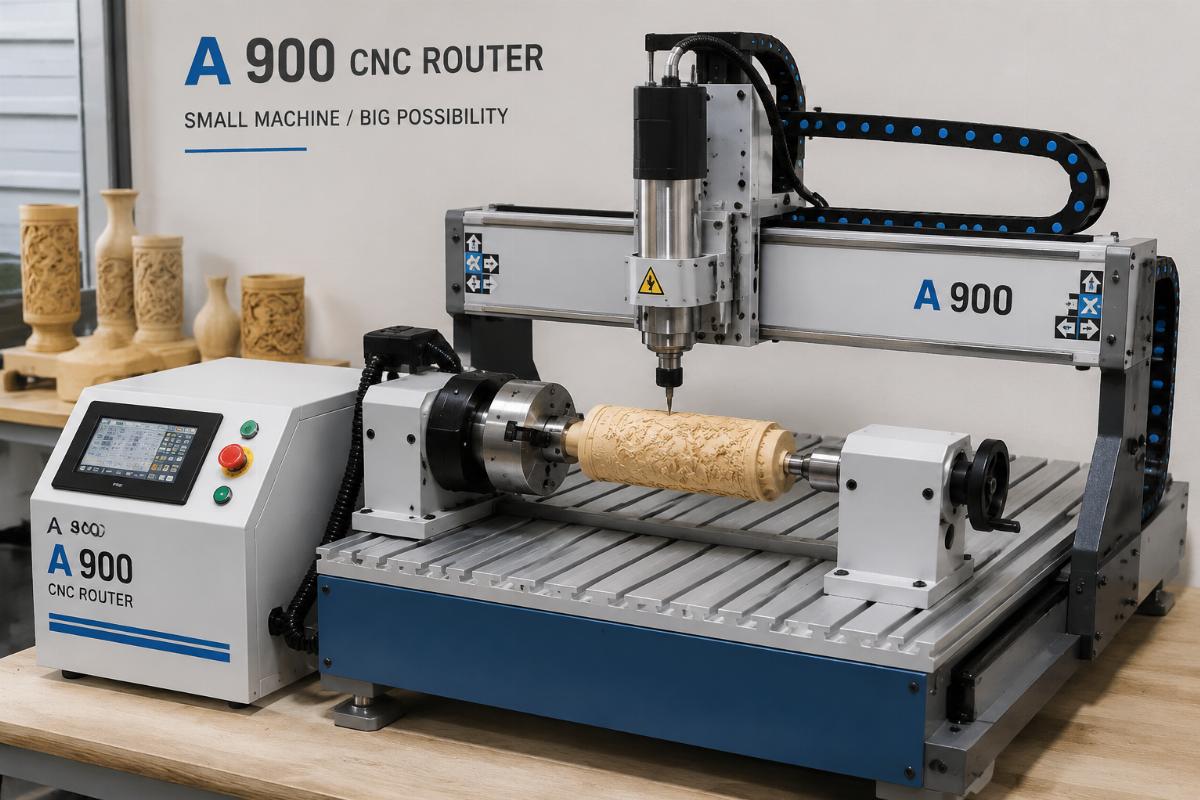
| Configuration Flexibility | Limited pre-set options with no custom modification support | Supports custom rotary axis, spindle, and control system adjustments to exact needs |
| 5-Year Total Cost of Ownership | Average $18,500 including maintenance and spare parts | Average $9,200 with standard 2-year warranty coverage |
A European custom craft studio shared with me last month that they purchased a 900×1200 model with a customized rotary axis from a Chinese supplier last year, and it currently supports 8 different material processing including wood, acrylic and aluminum composite panel, with zero critical failures after 12 months of 7-hour daily use. They had previously gotten a quote for a comparable European brand unit that was 12,000 Euros more expensive, with no option to add the custom rotary axis they needed for cylindrical craft projects.
- Price Gap Confirmation – Request formal quotes from at least 2 Chinese and 1 European supplier for the exact specification you need to verify the 40-50% price difference.
- Configuration Request – List any custom features you require, such as a rotary axis, directly in your initial supplier inquiry.
- Total Cost Calculation – Include 5-year maintenance and spare part costs when comparing total offers, not just upfront unit price.
Can 1-unit MOQ small CNC routers from China support stable long-term sign production?
Regular specialized Chinese manufacturers provide industrial-grade small routers that can support 8 hours of continuous daily processing for over 3 years with proper maintenance, even at a minimum order quantity of 1 unit. The long-held belief that you need to order a full container to get factory pricing and reliable units is completely outdated.
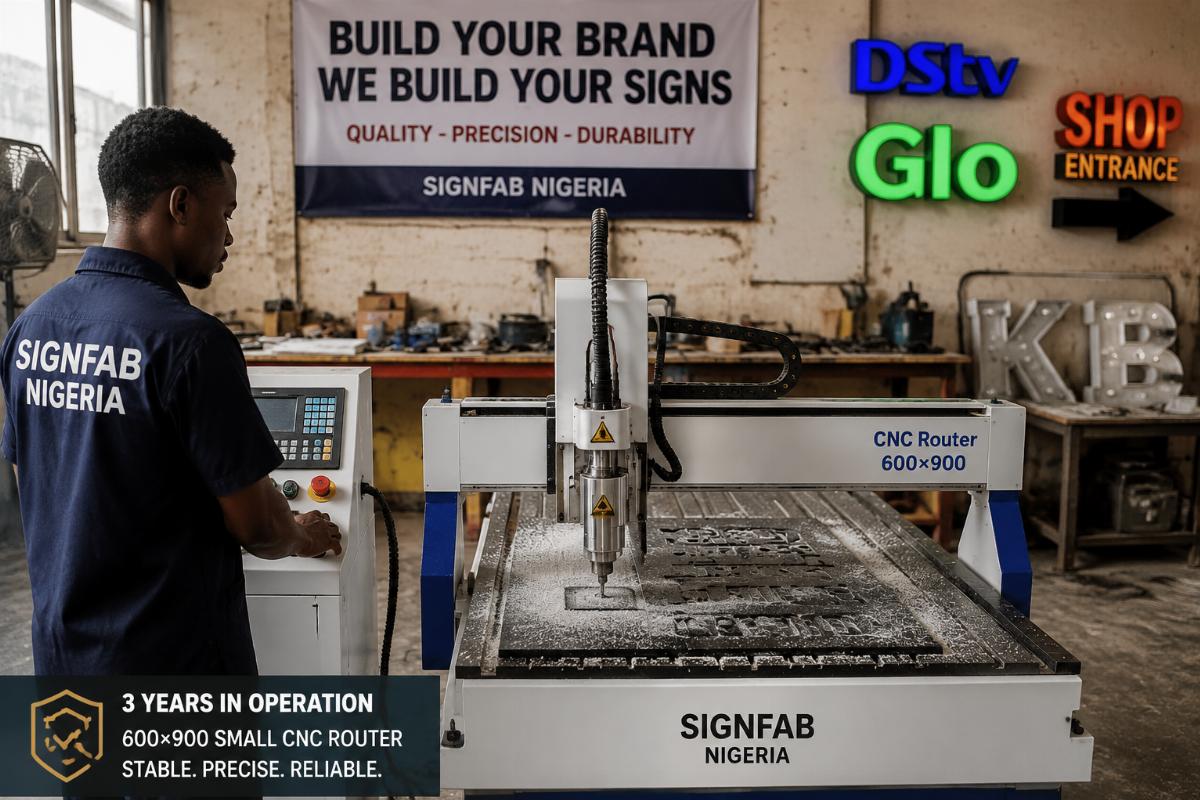
Shandong Ruiqi Machinery, a manufacturer with 20+ years of production experience and a 25,000+ square meter production base, offers a full line of small CNC routers built specifically for sign making, with a 1-unit MOQ policy and 2-year full warranty that covers all core components. This model of unit has been running in a Nigerian sign factory for 3 full years now, with 0 major component failures across 8 hours of daily use. [NEED_CITE: Industrial-grade 600×900 small CNC routers can operate for 3+ years with 8 hours of daily use and zero core component failure]
A Middle East small sign workshop I worked with last year ordered one of these units with a 2-year warranty, and received free on-site installation from factory engineers without any extra labor cost, eliminating the need to hire a local technician that would have cost them over $1,200. They initially thought they would have to team up with 3 other local workshops to meet a 4-unit MOQ requirement, until they found the 1-unit policy.
- MOQ Confirmation – Explicitly confirm that the supplier offers 1-unit MOQ with the same factory pricing as bulk orders, no extra surcharges allowed.
- Warranty Verification – Require a written 2-year full warranty covering all core components including spindle, drive motor, and control system.
- Longevity Reference – Ask for case studies of units running in similar production environments for at least 2 years.
What after-sales support do you need to confirm before placing an order for a small CNC router?
Confirming warranty period, on-site installation service and multilingual technical support upfront eliminates 90% of common post-purchase operational and maintenance obstacles. Many buyers skip these checks and end up paying thousands in unexpected fees when issues arise.
| Support Item | Common Oversight | Required Confirmation |
|---|---|---|
| Warranty Scope | Assuming warranty covers labor and on-site service | Confirm warranty covers both parts and labor for the full term |
| Installation Support | Planning to self-install without technical expertise | Check if the supplier provides free engineer dispatch for on-site installation for overseas orders |
| Technical |

Written by
author
Editor covering global sourcing, supplier verification, and industrial product knowledge. Content is compiled from manufacturer specifications, industry standards, and hands-on experience with international B2B buyers. Every article is fact-checked before publishing to help procurement professionals make informed decisions.
View all posts