Description
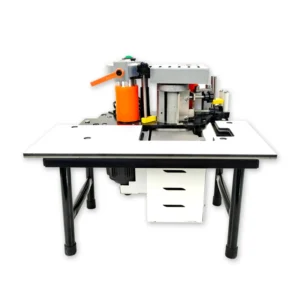
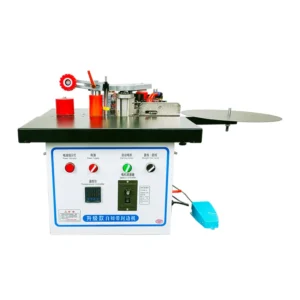
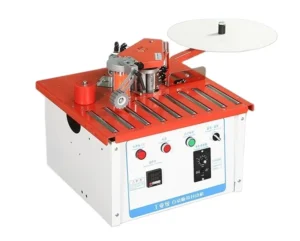
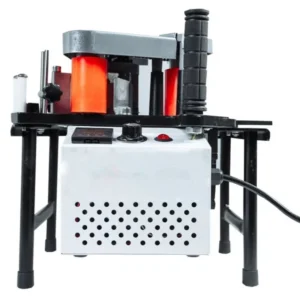
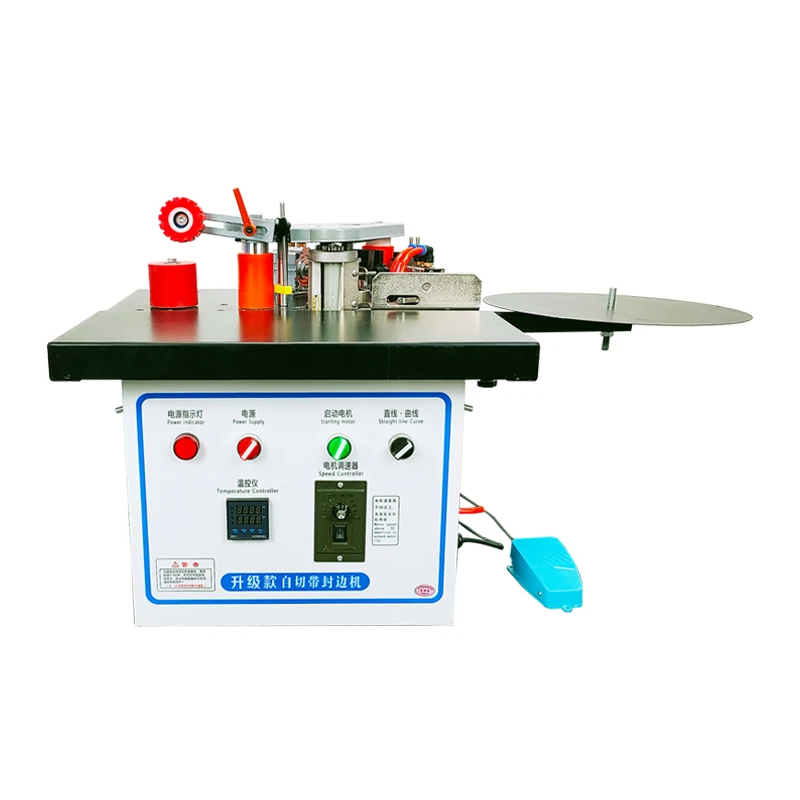
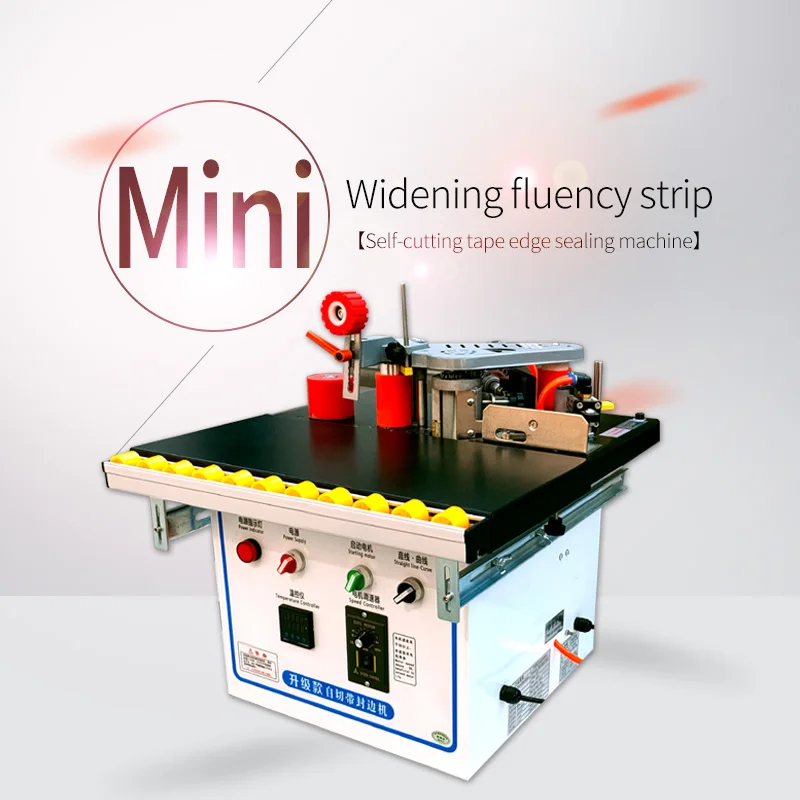
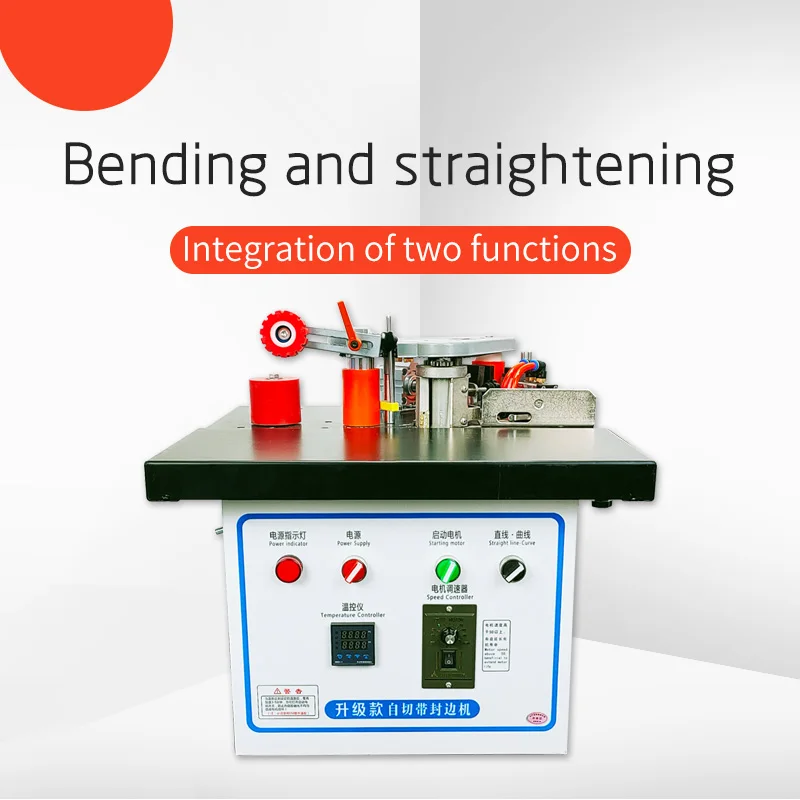
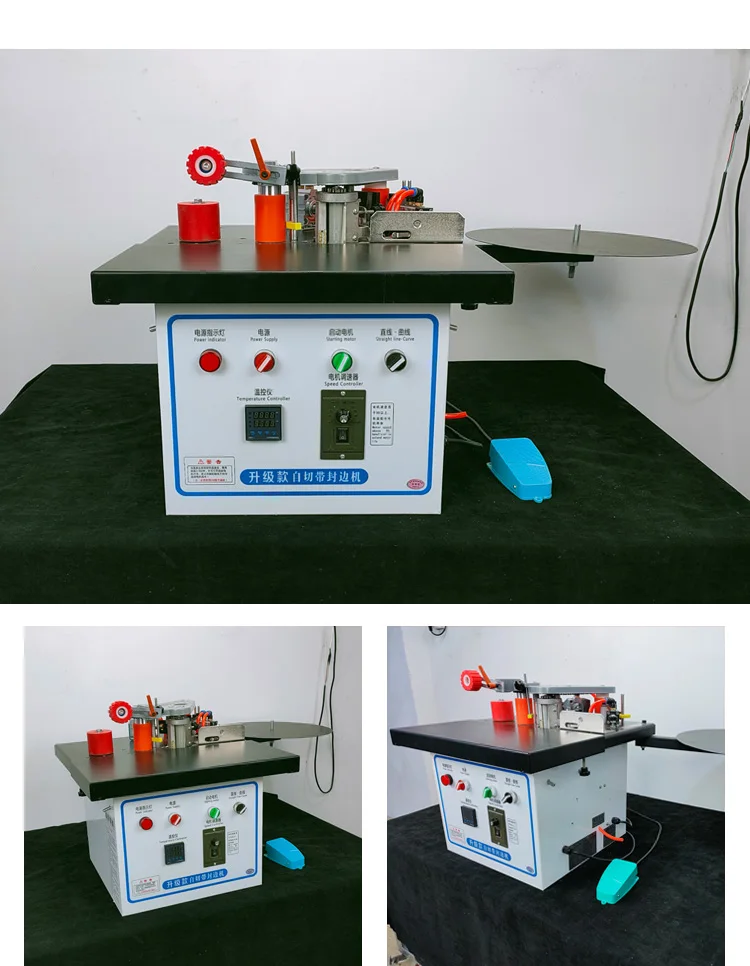
Compact Footprint with Dual Edge Capability — the ST-50 fits a 50×50 cm bench space while handling both curved and straight banding, so a small workshop can process mixed panel shapes without deploying two separate machines.
Technical Specifications
| Parameter | Value |
|---|---|
| Model | ST-50 |
| Product Type | Semi-Automatic Edge Bander |
| Total Power | 1000 W |
| Voltage | 220 V / 380 V / customizable (frequency to be confirmed with buyer) |
| Edge Banding Thickness | 0.3–3 mm |
| Edge Banding Height | 0–50 mm |
| Minimum Sheet Length | 25 cm |
| Minimum Sheet Width | 3 cm |
| Glue Pot Capacity | 1000 ml |
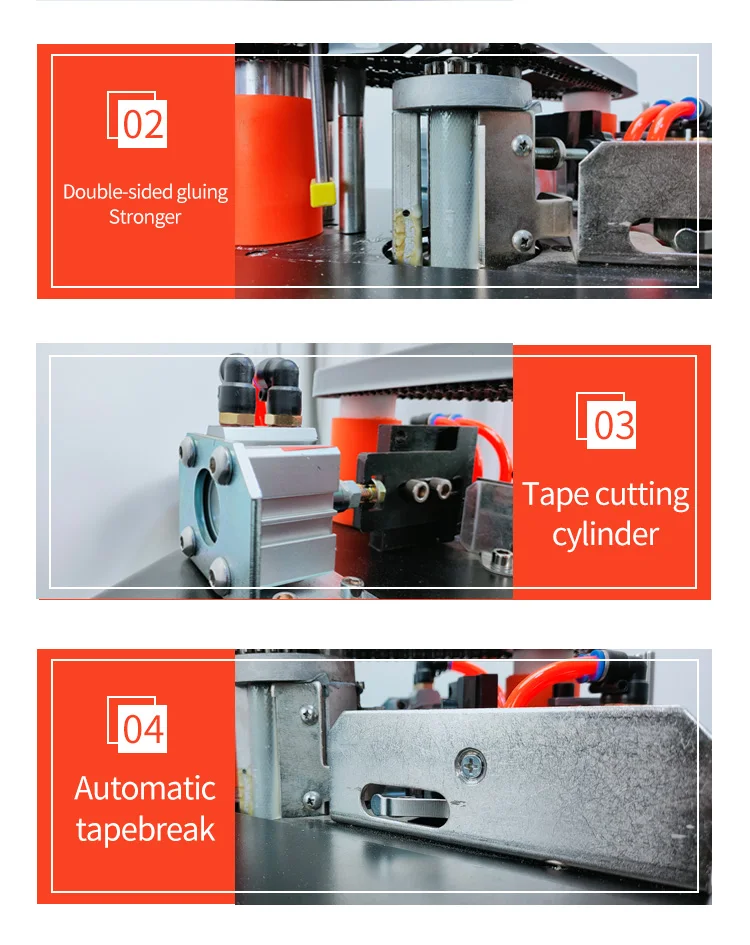
| Air Source Pressure | 0.5–0.8 MPa |
| Product Size | 50 × 50 × 47 cm |
| Product Weight | 22 kg |
| Key Features | Curved and straight edge banding, adjustable glue temperature, fully assembled on delivery |
Application Suitability
| Application | Material or Output |
|---|---|
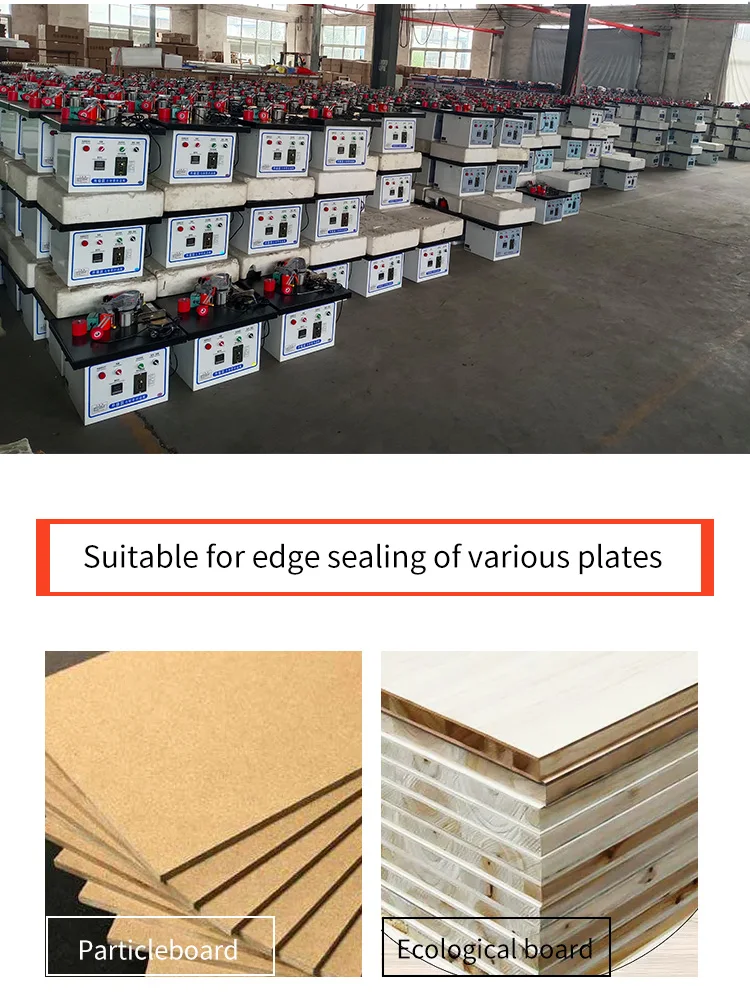
| Home decoration panel finishing | MDF and particleboard with PVC edge banding |
| Small custom furniture workshops | Plywood and ecological board with veneer or PVC strips |
| On-site furniture repair and modification | Solid wood board and melamine-faced panels |
| Prototype and sample production | Mixed substrates requiring both curved and straight edge sealing |
Why the Voltage Question Should Come Before the Price
A Semi-Automatic Edge Bander for sale at a low quote is useless if the motor spins the wrong way on arrival.
I once watched a machine sit idle in a West African workshop for three weeks because the local supply was 220 V single-phase while the unit shipped was configured for 380 V three-phase. The glue pot would not reach temperature and the feed motor reversed direction. That kind of delay costs more than the machine itself. Confirming voltage and frequency before production prevents a dead-on-arrival scenario [NEED_CITE: voltage and frequency standards by export market].
Where the ST-50 Fits in the Broader Machine Range
This model occupies the entry tier of the Ruiqi edge banding family, designed for workshops that handle low-volume orders with a mix of curved and straight panel edges. It is not built for continuous high-throughput production lines. Understanding that boundary keeps expectations aligned with actual output. A Semi-Automatic Edge Bander for sale in this category serves best when daily panel counts remain modest and floor space is limited.
When to Move Beyond a Semi-Automatic Configuration
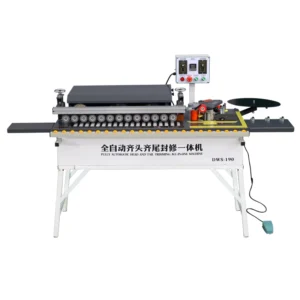
Once a workshop starts running full sheets of particleboard through multiple shifts, the manual feed and single-function trimming of a semi-automatic unit become a bottleneck. That is the point where stepping into a fully automatic model with pre-milling, multi-stage trimming and buffing makes measurable sense. The Ruiqi catalogue covers that transition within one product family, so the next machine speaks the same control language and uses compatible consumables [NEED_CITE: CE machinery directive requirements for industrial equipment].
Reading the Specs That Actually Matter
The edge banding thickness range of 0.3–3 mm covers standard PVC and thin veneer strips used in custom furniture, but thicker solid wood lipping falls outside this model’s capacity. The 1000 ml glue pot is sufficient for intermittent batch work yet requires frequent refilling during longer runs — a deliberate trade-off for the compact 50 × 50 cm footprint. Air pressure at 0.5–0.8 MPa drives the pressure roller mechanism; a workshop without a stable compressor line will see inconsistent adhesion. The minimum sheet dimensions of 25 cm length and 3 cm width mean very small offcuts and narrow strips can be processed, which matters in repair and modification scenarios.
The Hidden Cost of Choosing the Wrong Entry Machine
A unit that seems affordable on paper can stall a workshop when operators cannot read the control panel or when plug standards do not match the local socket. Downtime waiting for an electrician to rewire the supply or translate interface labels erodes whatever was saved on the purchase price. I have seen small joinery shops lose entire production days to these avoidable mismatches [NEED_CITE: electrical compliance requirements for imported machinery].
Why Source This Model Through Ruiqi
Voltage and plug configuration are confirmed per order, with EU, USA, AU and UK plug options available and custom frequency matching. The ST-50 ships fully assembled, so there is no on-site mechanical reassembly required — just electrical connection and a glue pot warm-up. Language options on the control panel include Chinese, English, Spanish and French, with further customization possible for specific markets. A factory test record with sample edge-banded output is prepared before dispatch so the buyer can verify adhesion quality on their chosen substrate. The four-stage QC process covers incoming material through pre-shipment verification, reducing the chance of field defects on a machine this size.
Documentation & Verification
- Machine specification sheet listing confirmed voltage and frequency for destination market
- Electrical schematic with plug type and wiring diagram matching your facility supply
- Operation manual in the agreed language covering glue temperature and feed settings
- Factory test record showing sample edge banding on your specified panel material
- CE declaration of conformity for customs clearance in regulated markets
Installation, Commissioning & Support
- Requires a stable 220 V or 380 V supply with a dedicated circuit rated above 1000 W total draw
- Bench placement on a flat surface with 50 × 50 cm clear footprint and rear ventilation gap
- Arrives fully assembled — first power-on requires only voltage verification and glue pot warm-up
- Compressor connection at 0.5–0.8 MPa must be tested before running the first panel through
- Spare glue pot liner and replacement pressure roller pads included for initial maintenance cycle
Before You Send an Inquiry
Share your panel material types, typical sheet dimensions and the voltage standard at your facility so the configuration can be matched before quotation. If you run both curved and straight edges, note the approximate ratio so the right consumable pack ships with the machine. Confirm your preferred control panel language and plug type to avoid field modifications.
Frequently Asked Questions
Q: How does the ST-50 sit within the full Ruiqi edge bander range and when should I upgrade?
A: The ST-50 is the entry-tier model for low-volume workshops handling mixed curved and straight edges on a compact footprint. When daily panel volume grows to require continuous feed, pre-milling and multi-stage trimming, stepping up to a fully automatic Ruiqi model within the same family keeps consumables and training compatible.
Q: How do I confirm the right voltage and plug setup for my country?
A: Provide your local supply voltage, phase and frequency in the initial inquiry. The ST-50 supports 220 V and 380 V configurations with EU, USA, AU and UK plug options. Custom voltage setups are available. A formal voltage confirmation document is issued before production begins.
Q: What edge banding materials and thicknesses does the ST-50 handle?
A: The machine accepts PVC and veneer edge banding in the 0.3–3 mm thickness range. Edge banding height covers 0–50 mm. Solid wood lipping thicker than 3 mm exceeds the pressure roller capacity of this model and requires a heavier-duty unit.
Q: What minimum and maximum panel sizes can I run on this machine?
A: Minimum sheet dimensions are 25 cm in length and 3 cm in width, allowing small repair pieces and narrow strips to be processed. There is no maximum length limit imposed by the machine itself since the operator feeds manually, though very large sheets may require a support table.
Q: Can I request a sample edge-banded panel before placing an order?
A: Yes. Send your panel material and preferred edge banding strip to the factory, and a sample test will be performed on the ST-50. The test record and output photos are shared for your approval before any order commitment is made.