

Description
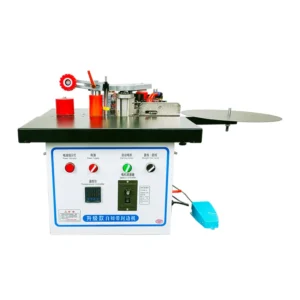
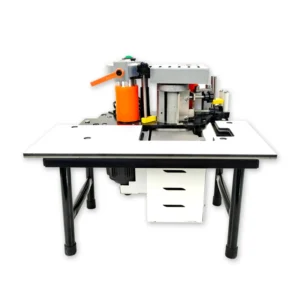
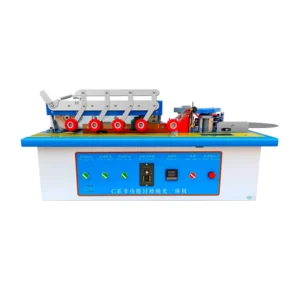
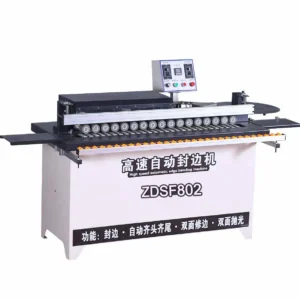
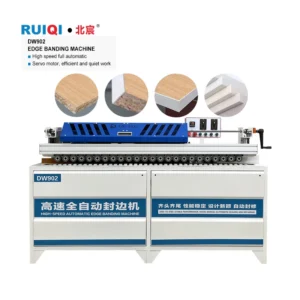
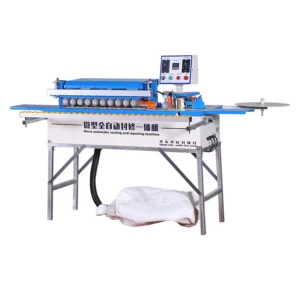
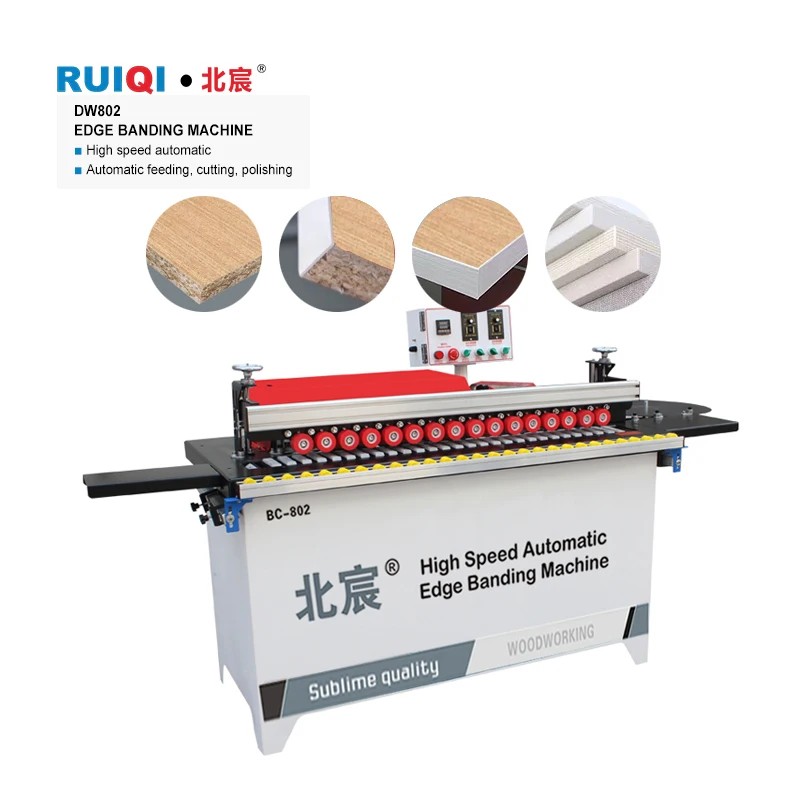
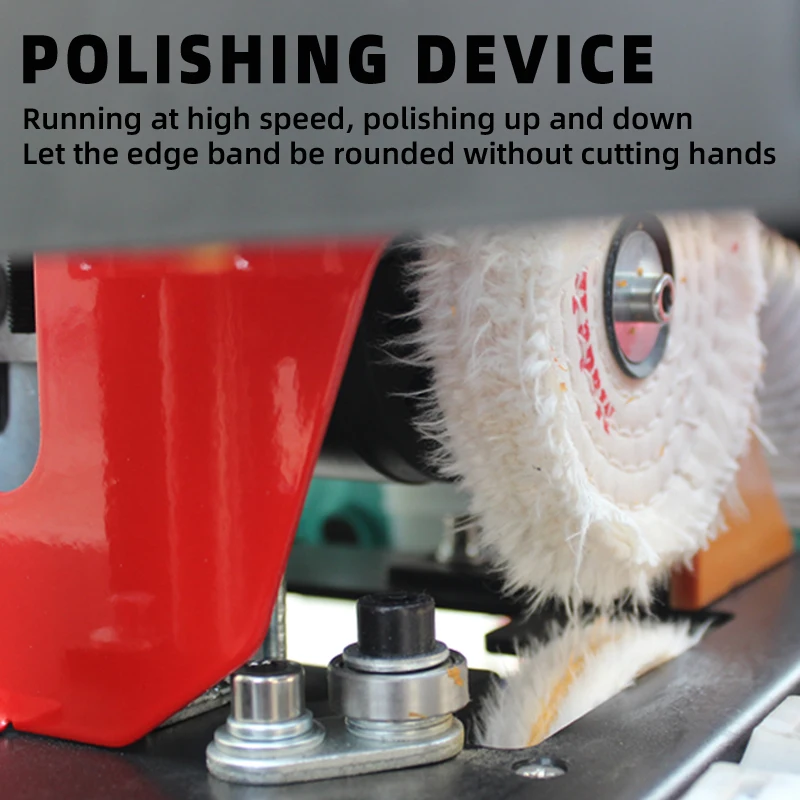
Integrated Station Architecture — The DW802 consolidates gluing, head-and-tail cutting, trimming, and polishing into a single 130×60×95CM footprint, allowing workshops to map each production stage without footprint conflicts.
Technical Specifications
| Parameter | Value |
|---|---|
| Model | DW802 |
| Product Type | Automatic Edge Banding Machine |
| Total Power | 4200W |
| Voltage & Frequency | 220V / 380V / customization |
| Standard Features | Edge banding, trimming, polishing, automatic head and tail cutting, vacuum hold-down |
| Minimum Sheet Length | 25 cm |
| Minimum Sheet Width | 10 cm |
| Edge Banding Height | 0–50 mm |
| Edge Banding Thickness | 0.3–3 mm |
| Edge Feeding Power | 140W |
| Transmission Power | 140W |
| Trimming Power | 800W × 2 |
| Polishing Power | 180W × 2 |
| Vacuum Power | 1200W |
| Air Source Pressure | 0.4–0.8 MPa |
| Glue Pot Capacity | 4000 ml |
| Overall Dimensions (L×W×H) | 130 × 60 × 95 cm |
| Net Weight | 135 kg |
| Assembly State | Fully assembled |
| Language Options | Chinese / English standard; Spanish or other languages customizable |
| Plug Options | EU, USA, AU, UK |
Application Suitability
| Application | Material or Output |
|---|---|
| Custom cabinet door and carcass edge sealing | MDF and particleboard with PVC or melamine edge banding |
| Wardrobe panel processing | Plywood panels up to 50 mm thickness |
| Home decoration joinery | Solid wood boards and ecological boards |
| Small-batch bespoke furniture | Mixed substrate runs requiring quick material changeover |
Why the Voltage Question Must Come Before the Price
Confirming local voltage and plug configuration during the quotation stage prevents a machine arriving electrically incompatible with the workshop supply.
I once stood in a Shandong factory watching a container door open to reveal an edge bander wired for 380V three-phase, headed for a region where the standard workshop supply is single-phase 220V. The buyer had focused negotiations entirely on feed speed and trimming quality, leaving electrical compatibility as an assumption [NEED_CITE: voltage and frequency standards by export market]. That Automatic Edge Banding Machine for sale sat in a warehouse for weeks while transformers were sourced, delaying commissioning and eroding the project timeline. Voltage mismatches are among the most preventable yet costly errors in cross-border machinery procurement.
Matching the Model to Your Workshop Throughput Stage
The DW802 occupies a specific position within a coordinated product family. It suits workshops that have moved past manual edge banding but are not yet running continuous multi-shift production volumes. The 4000 ml glue pot capacity supports extended runs without frequent refill interruptions, while the integrated vacuum hold-down stabilizes lighter panels such as thin MDF or hollow-core substrates during the trimming pass.
Selecting a model from a range where each tier shares common control architecture means your operators do not relearn the interface when production growth demands a higher-tier machine later. This continuity matters more than spec-sheet comparisons suggest.
How Station Integration Affects Edge Finish Consistency
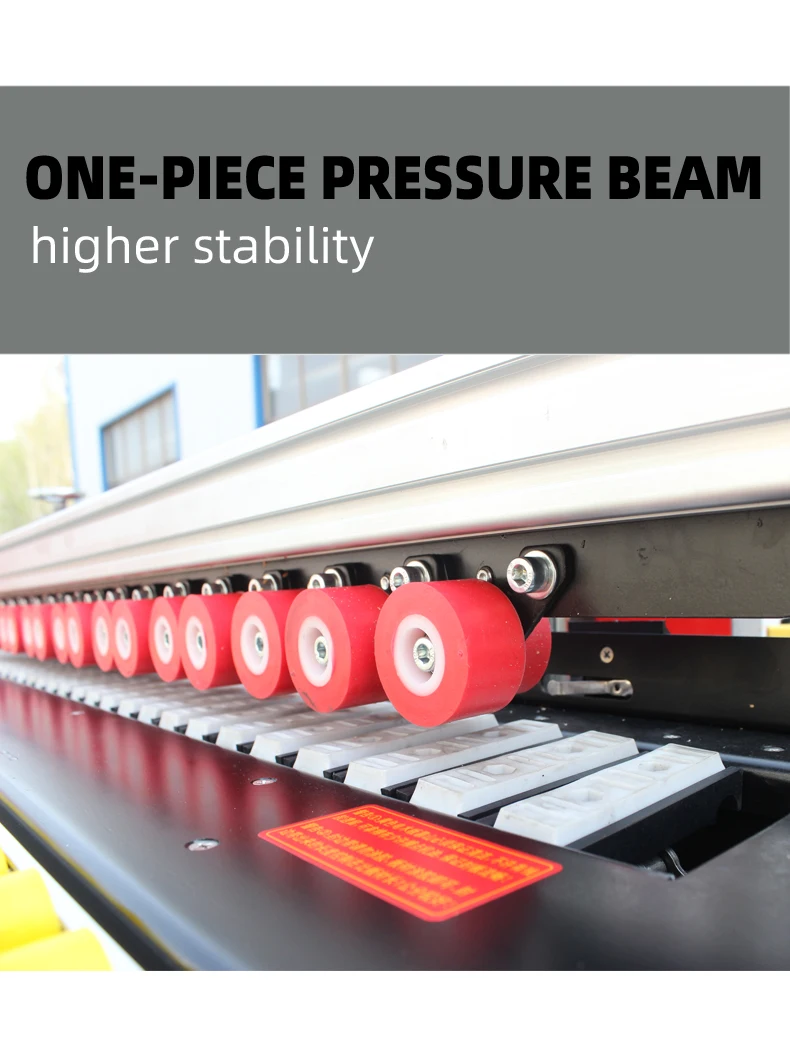
A single-machine configuration where gluing, automatic head-and-tail cutting, trimming, and polishing occur in sequence eliminates the registration errors that arise when panels transfer between separate stations. Each transfer introduces a small positional shift that accumulates into visible edge imperfections [NEED_CITE: effect of multi-station transfer on edge banding finish quality]. The DW802 keeps the panel on one silica gel conveyor belt under a continuous pressure beam from infeed to outfeed.
For workshops processing mixed materials — switching between PVC banding on particleboard one hour and veneer on plywood the next — this integrated approach means the trimming and polishing wheels engage the edge at a consistent reference point regardless of substrate variation.
Reading the Specifications That Actually Govern Output Quality
The 0–50 mm edge banding height range and 0.3–3 mm thickness window define which panel-and-banding combinations this machine can process. When you pair a 25 mm particleboard with a 2 mm PVC edge, the trimming cutters at 800W × 2 must remove the overhang cleanly without chipping the board surface. Insufficient trimming power on thin substrates leaves a ragged edge that requires hand-finishing downstream.
The 0.4–0.8 MPa air source pressure requirement governs pneumatic cylinder response during head-and-tail cutting. If your compressor cannot sustain pressure within this band under continuous cycling, the end-cuts will show hesitation marks on the banding face. Compressor capacity is an installation variable that buyers frequently overlook until the first production run reveals inconsistent end finishes.
Glue pot temperature interacts directly with banding material: PVC and melamine require different melt profiles. A 4000 ml pot maintains thermal stability across longer runs, reducing the cold-start rejection rate at the beginning of each batch.
The Hidden Cost of Underspecifying Infeed Requirements
Buying a single edge bander in isolation, then discovering it cannot accept panels from your existing saw at the correct feed height, creates a bottleneck that no amount of operator adjustment can resolve. The DW802’s 25 cm minimum sheet length and 10 cm minimum width define the lower boundary of what the feed mechanism can grip reliably. Panels smaller than this threshold will slip or skew during the gluing pass, producing waste material and rework [NEED_CITE: minimum panel dimensions and feed mechanism grip requirements for edge banders].
Workshops that add capacity piececemeal without mapping feed heights across stations often find the edge bander becomes the constraint, forcing operators to hand-feed smaller components or reject orders that fall outside the machine’s dimensional window.
Purchasing From a Manufacturer That Builds the Full Range
The DW802 is produced in a facility where the complete edge banding product family shares common manufacturing processes, meaning replacement parts and technical knowledge transfer across models. An in-house engineering team of 60 develops the cutting mechanisms, supported by a four-stage quality control protocol covering incoming material through pre-shipment verification.
Voltage customization and multilingual control panels are configured during production rather than retrofitted afterward. Sample processing tests using your actual substrate and banding material confirm edge quality before the machine leaves the factory floor.
Documentation & Verification
- Factory test record confirming edge quality on your specified panel material and thickness range
- Electrical schematic with voltage and frequency matching your local supply documented before production
- Operation and maintenance manual delivered in your agreed language with illustrated troubleshooting section
- Spare parts list cross-referenced to this specific model with pneumatic and electrical component diagrams
- CE declaration of conformity and ISO 9001 certificate included with shipping documentation
- Packing photographs verifying machine condition and crate integrity before container loading
Installation, Commissioning & Support
- The 130 × 60 × 95 cm overall dimension requires minimum workshop door clearance verification before delivery
- Fully assembled state means no on-site mechanical assembly; connect power, air supply, and begin calibration
- Dedicated 220V or 380V circuit required matching confirmed voltage specification with appropriate breaker rating
- Air compressor must sustain 0.4–0.8 MPa continuously under pneumatic cycling of head-and-tail cutting station
- Initial commissioning includes conveyor tracking adjustment, glue temperature calibration, and trimming wheel alignment
- Glue pot cleaning procedure and daily maintenance checklist provided in operator language
What We Need to Configure Your Machine Correctly
To prepare an accurate quotation for the DW802, provide the primary substrate types and thicknesses you process, along with the edge banding materials and thicknesses in regular use. Specify your workshop supply voltage and frequency so the electrical system is configured correctly during production.
If you are integrating this Automatic Edge Banding Machine for sale into an existing line, share the feed height and throughput expectations of your upstream saw so the conveyor interface is compatible. Sample panels sent for processing tests yield more reliable edge quality confirmation than specification sheets alone.
Frequently Asked Questions
Q: What panel thickness range and edge banding materials does this model support?
A: The DW802 handles edge banding heights from 0 to 50 mm and banding thicknesses from 0.3 to 3 mm. Suitable materials include PVC, melamine, and veneer applied to MDF, particleboard, plywood, and solid wood panels. For substrate-specific glue temperature settings, a sample processing test confirms optimal parameters before dispatch.
Q: How do I confirm the correct voltage and plug type for my country before ordering?
A: Provide your local supply voltage, phase configuration, and frequency during the inquiry stage. The machine is configurable for 220V or 380V with EU, USA, AU, or UK plug options. An electrical schematic confirming the matched specification is issued before production begins, preventing compatibility issues upon arrival.
Q: Can the control panel be supplied in a language my operators can read?
A: Chinese and English are standard options. Spanish and other languages are available as customization. Confirm the required language during quotation so the interface, error messages, and operation manual are all aligned. Multilingual configuration is completed during production, not applied as an after-market modification.
Q: What is the lead time for customization and dispatch from ready stock?
A: Standard models in default voltage and language configurations ship from stock with minimal lead time. Customized voltage, language, or plug configurations require a production cycle to integrate changes during assembly. Confirm your specific requirements early so the quotation reflects accurate dispatch timing rather than generic estimates.
Q: How does this model fit into a larger production line if I need to add equipment later?
A: The DW802 is part of a coordinated product family where feed heights, control interfaces, and throughput ranges are designed to align across stations. When planning future additions such as panel saws or boring machines, reference the same product family to maintain dimensional and operational compatibility throughout the line.