Description
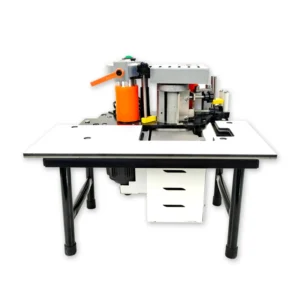
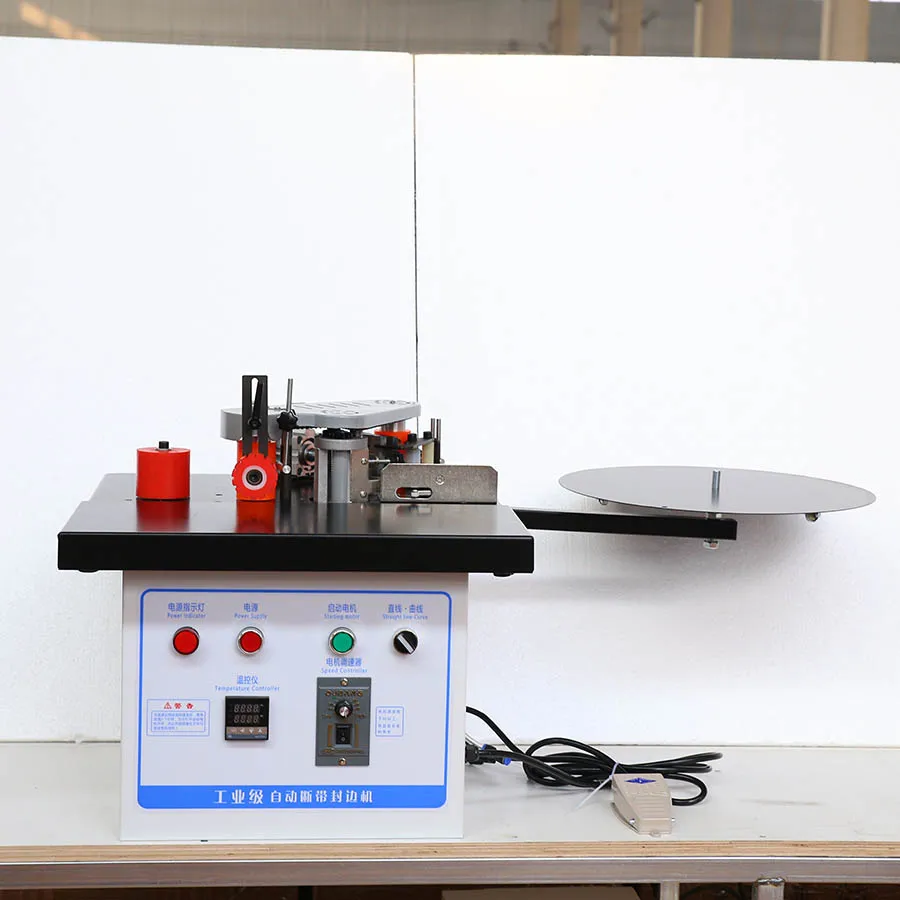
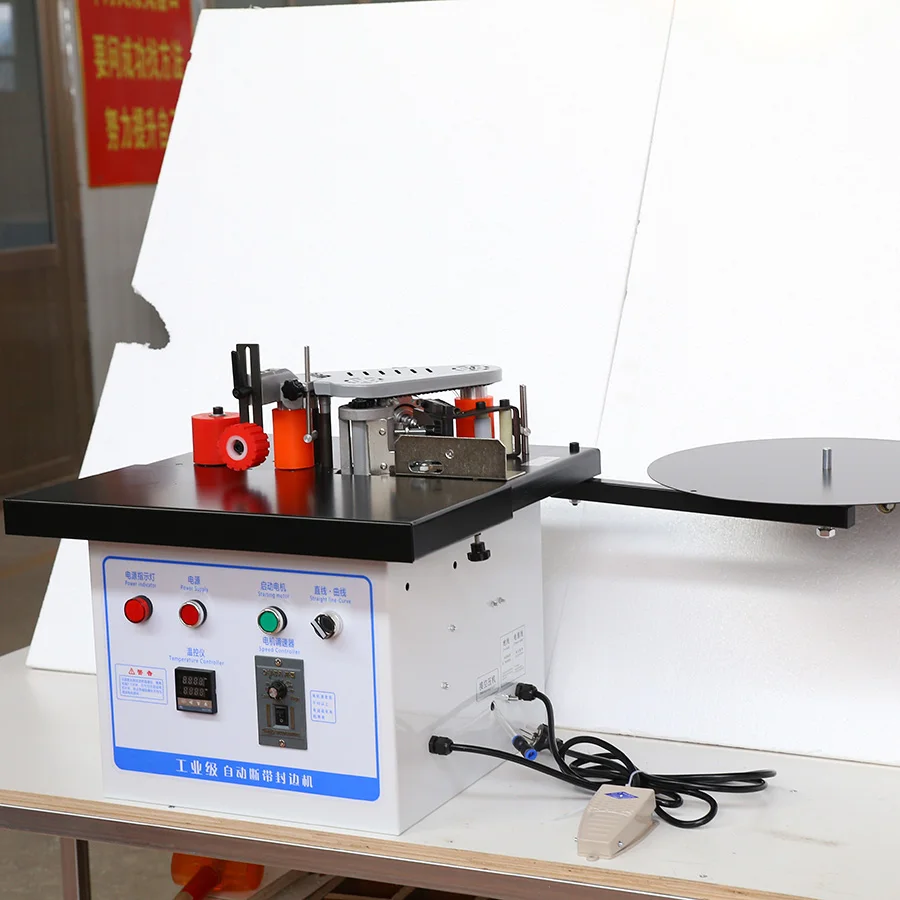
In-House Precision Manufacturing — the ZDSF50 mini edge bander is built on the same proprietary cutting mechanism patents and four-stage QC protocol as our full-function automated lines, ensuring entry-level buyers receive production-grade edge quality verification.
Technical Specifications
| Parameter | Value |
|---|---|
| Model | ZDSF50 |
| Product Type | Mini Edge Banding Machine |
| Rated Power | 1.2 kW |
| Rated Voltage | 220V |
| Rated Air Pressure | 0.4–0.6 MPa |
| Edge Banding Function | Double-sided gluing for straight, curved, and shaped edges |
| Panel Thickness Range | 10–60 mm |
| Strip Thickness | 0.5–1.5 mm |
| Glue Capacity | 1000 ml |
| Heating Time | 5–10 minutes |
| Feed Speed | 0–6 m/min |
| Overall Dimensions | 54 × 54 × 56 cm |
| Net Weight | 26 kg |
| Glue Heating System | 4 heating tubes |
| Glue Application | Glue-coated rollers, double-sided |
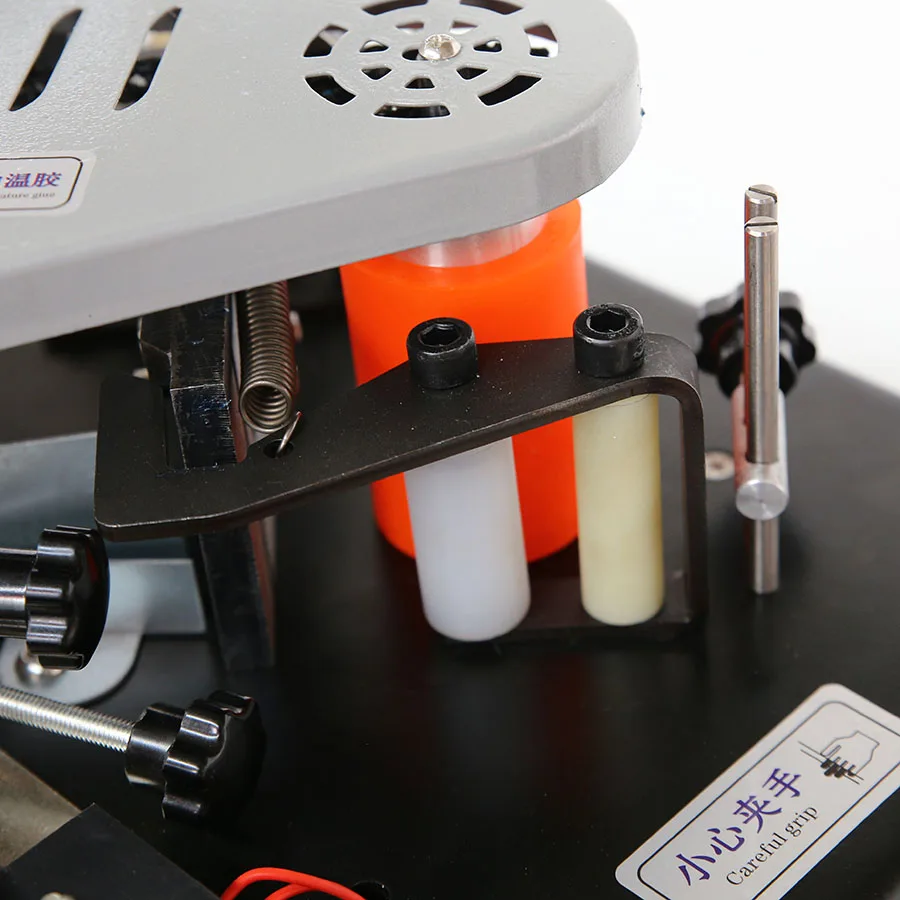
| Pressure System | Adjustable pressure rollers |
| Strip Transport | Adjustable edge strip transport bayonet |
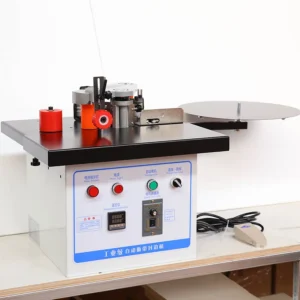
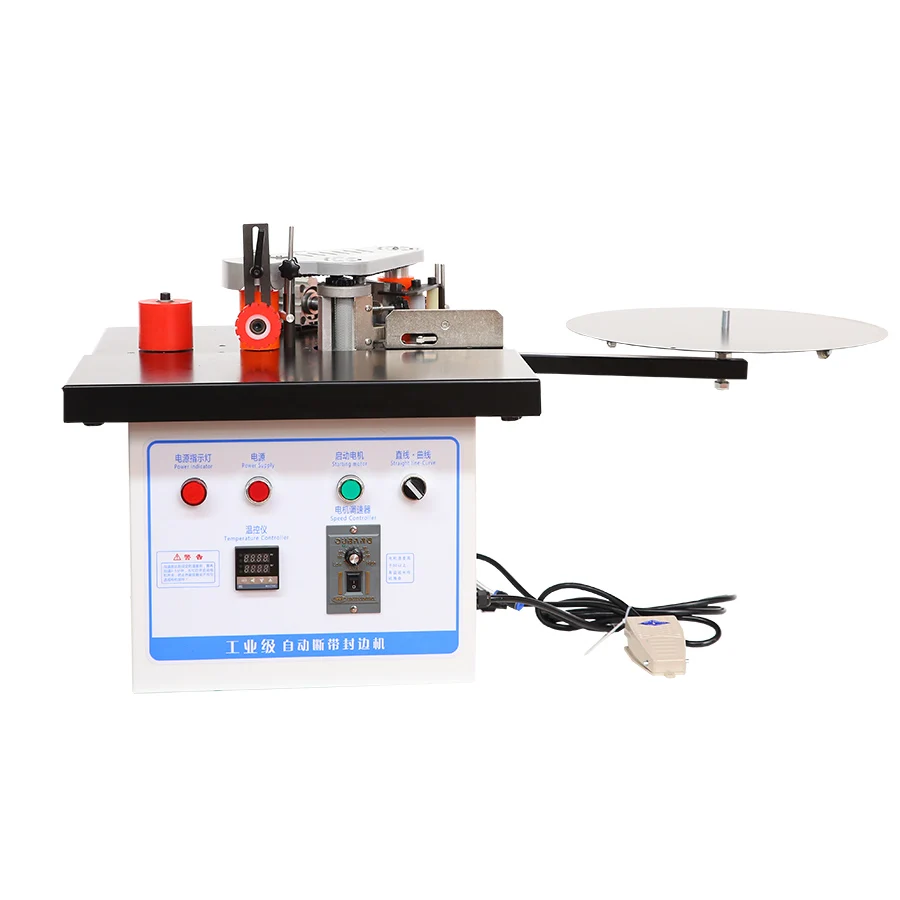
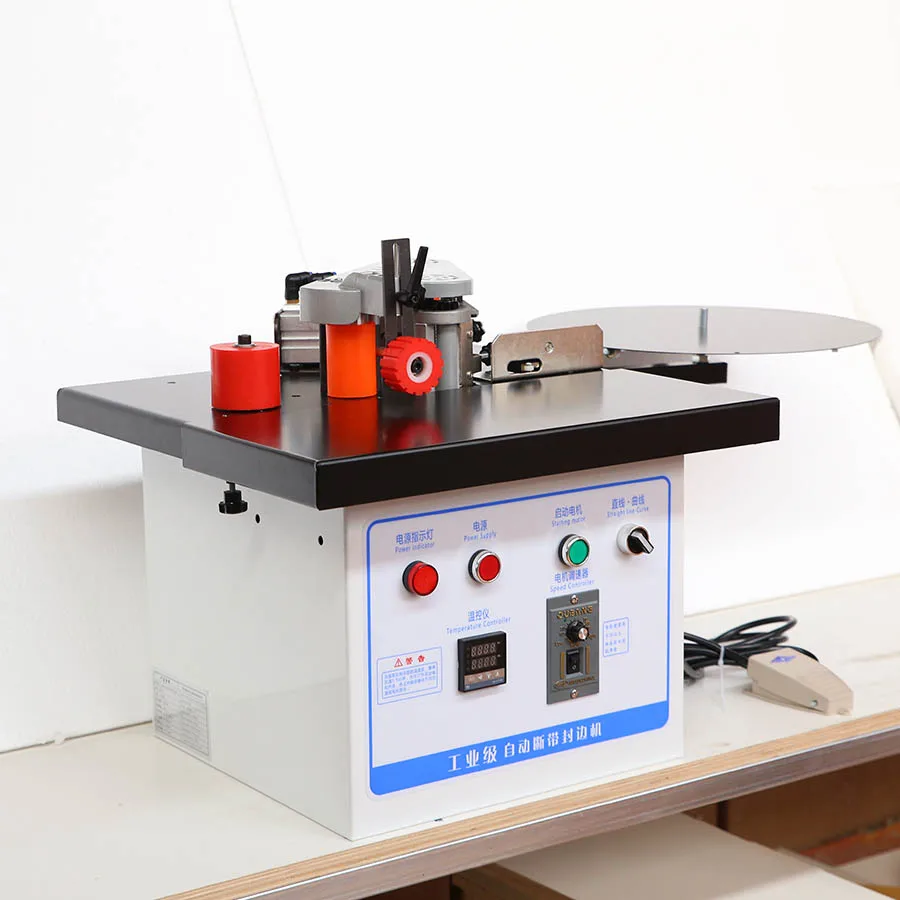
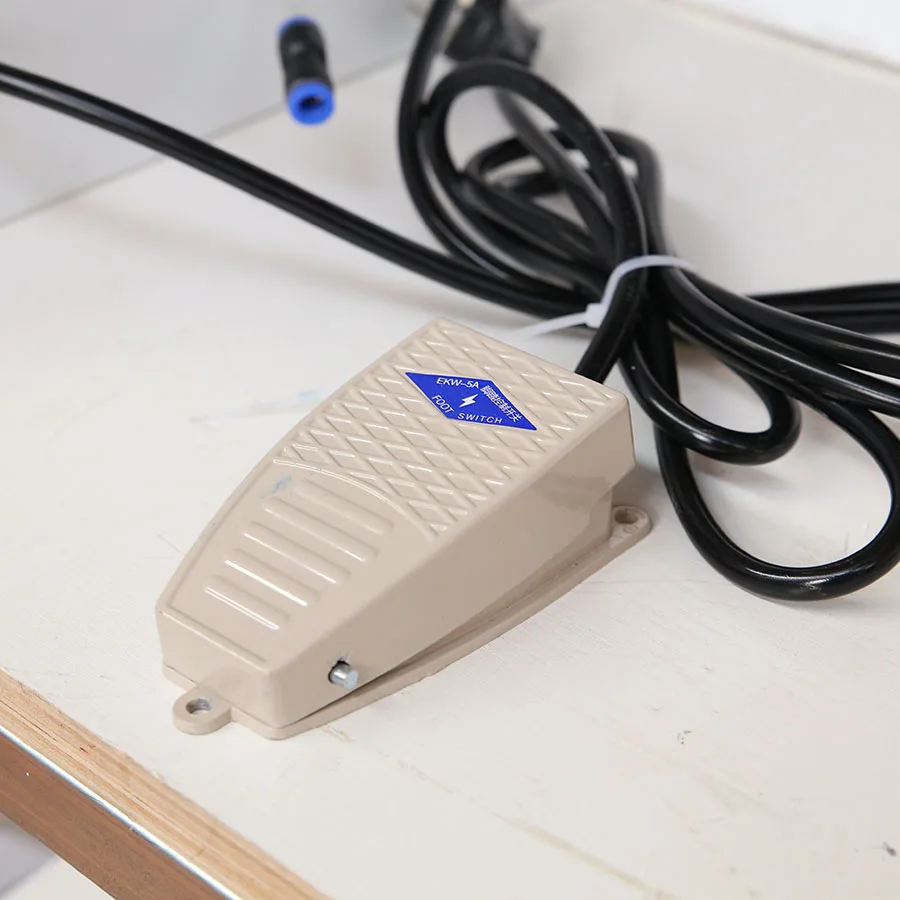
| Belt Breaking Device | Pneumatic with foot switch (curves) and travel switch (straight-line automatic) |
| Pressing Roller Material | Rubber |
Application Suitability
| Application | Material or Output |
|---|---|
| Small-batch custom cabinet doors | MDF and plywood panels with PVC edge banding |
| Curved furniture components | Shaped solid wood and particleboard with veneer strips |
| Joinery workshop transition from manual to machine banding | Straight and curved panels 10–60 mm thick |
| Prototype and sample runs for furniture factories | Mixed substrates requiring quick changeover |
| On-site repair and re-banding | PVC and veneer strips 0.5–1.5 mm thick |
Why the Voltage Question Should Come Before the Machine Selection
Confirm local voltage and frequency before you evaluate any edge bander specification sheet.
I have seen workshops receive single-phase 220V machines only to discover their facility runs on a different standard, leaving the equipment sitting idle until a transformer arrives. The ZDSF50 ships configured for 220V operation, and voltage customization from 110V to 440V is available to match your local supply. [NEED_CITE: voltage and frequency standards by export market] An edge banding machines manufacturer that does not verify your electrical infrastructure upfront is leaving your commissioning timeline to chance.
Entry-Level Banding Without Compromising Edge Adhesion
The ZDSF50 delivers consistent double-sided glue application through its 1000 ml glue pot and four heating tubes, reaching operating temperature within 5 to 10 minutes. This heating configuration maintains stable thermal distribution across the roller surface, which matters when you alternate between straight runs and shaped profiles in the same production session. For a small workshop evaluating a Mini Edge Bander for sale, this glue system handles the same PVC and veneer strip materials used on larger automated lines.
Scaling From Manual to Machine Without Changing Your Supplier
A joinery shop moving from hand-applied edge banding typically starts with a single compact unit, then adds capacity as order volume grows. The ZDSF50 occupies a 54 × 54 cm footprint and weighs 26 kg, making it practical to position beside existing workbenches without facility modifications. When throughput demands increase, Ruiqi’s product family extends through full-function pre-milling models with matched feed heights and compatible control interfaces, so your workshop can expand its edge banding machines manufacturer relationship rather than starting over with a new vendor. [NEED_CITE: CE machinery directive requirements for industrial equipment]
How Panel Thickness and Feed Speed Interact on a Compact Bander
The 10–60 mm panel thickness range covers standard MDF, particleboard, and plywood stock used in custom cabinetry, along with thicker solid wood panels for furniture components. At the lower end of the feed speed range, operators can guide curved and shaped workpieces through the glue-coated rollers with manual control via the foot switch. Straight-edge runs engage the travel switch for automatic belt breaking, reducing operator fatigue during repetitive production. The 0.4–0.6 MPa air pressure requirement drives the pneumatic breaking mechanism and adjustable pressure rollers, which maintain contact force across varying strip thicknesses from 0.5 to 1.5 mm. Rubber pressing rollers conform to slight surface irregularities on plywood and particleboard substrates, improving adhesion compared to rigid steel alternatives.
The Hidden Cost of Undersized Glue Systems on Entry-Level Banders
Workshops that purchase compact edge banders without verifying glue pot capacity often encounter temperature drops during sustained production runs, causing the adhesive to set unevenly and producing visible glue lines or lifting edges. The ZDSF50’s four-tube heating arrangement and 1000 ml reservoir are designed to sustain thermal stability during batch runs typical of small custom furniture operations. Buyers who skip this specification check end up scrapping finished panels and absorbing material waste that far exceeds the initial machine investment. [NEED_CITE: thermal stability requirements for hot-melt adhesive edge banding]
Why Sourcing the Full Range From One Manufacturer Matters
The ZDSF50 sits within a tiered product family where every model shares common control logic and spare parts architecture, meaning your maintenance team learns one system rather than several. Voltage, control panel language, and specification customization are handled as standard order parameters, not special requests. Every unit passes through four-stage QC covering incoming material inspection, in-process assembly checks, finished product testing, and pre-shipment verification with documented test records. Engineer-led configuration recommendations arrive as formal quotations within 24 hours, based on your stated panel materials and daily volume. Factory visits are welcomed so buyers can observe the assembly process and run test pieces on their own substrates before placing an order.
Documentation & Verification
- CE declaration of conformity applicable to the ZDSF50 mini edge bander category
- Electrical schematic confirming your specified voltage before production begins
- Factory test record using your panel thickness and strip material combination
- Operation and maintenance manual produced in your agreed language
- Spare parts list with cross-references to the full Ruiqi product family
- Packing photographs for shipment condition verification
Installation, Commissioning & Support
- Requires a dedicated 220V single-phase circuit rated for the 1.2 kW power draw
- Compact 54 × 54 × 56 cm footprint fits standard workbench areas without floor reinforcement
- Arrives fully assembled with only pneumatic hose connection to your 0.4–0.6 MPa air supply
- Initial heating cycle and roller pressure calibration performed during first commissioning
- Foot switch and travel switch operation training included for straight and curved banding modes
- Glue pot cleaning schedule and replacement heating tube sourcing documented in manual
Preparing Your Inquiry for Accurate Configuration
To receive a formal quotation with the correct specifications for your workshop, provide the panel materials and thickness range you process most frequently, the edge strip type and thickness you intend to use, and your local voltage and frequency standard. If your operation includes shaped or curved components, note the typical radii so the engineer can confirm feed speed suitability. Specify your preferred control panel and manual language to ensure commissioning documentation matches your operator requirements.
Frequently Asked Questions
Q: How do I determine whether the ZDSF50 entry-level bander suits my current production volume?
A: The ZDSF50 is designed for small-batch custom furniture, joinery workshops transitioning from manual banding, and prototype runs. Provide your daily panel count and the mix of straight versus curved edges you process. An engineer will compare your throughput against the 0–6 m/min feed speed range and recommend whether this model or a higher-tier unit from the same product family better matches your output requirement.
Q: Can the voltage and control panel language be customized before shipment?
A: Yes. The standard ZDSF50 is configured for 220V, but voltage customization from 110V to 440V is available to match your local electrical supply. Control panel labeling and the operation manual can be produced in your preferred language. These parameters are confirmed during the specification review stage before production begins.
Q: How is edge quality verified before the machine ships?
A: Each ZDSF50 passes through four-stage QC including a pre-shipment test run. You can request factory test records showing edge banding results on your specific panel material and strip thickness combination. Processing samples are available so you can inspect glue line consistency and adhesion quality on your own substrates before confirming the order.
Q: What happens if my workshop needs higher throughput later?
A: The ZDSF50 belongs to a product family that extends through full-function pre-milling automated models with compatible control systems and shared spare parts. When your volume grows, an upgrade recommendation can be provided without changing your machinery supplier, and the transition is supported by the same engineering team that configured your initial unit.