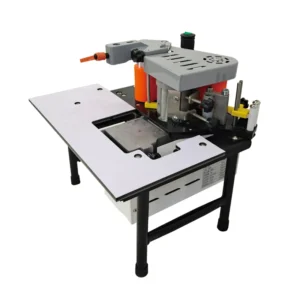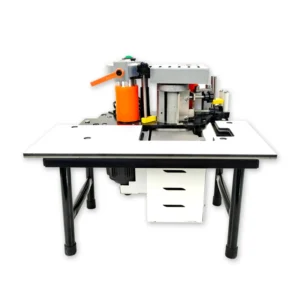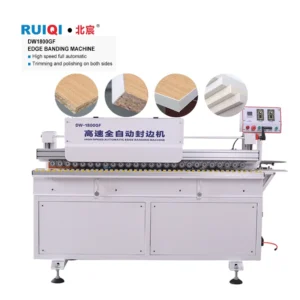
Description
Voltage-Confirmed Before Dispatch — every unit ships with a verified electrical schematic matching the buyer’s local grid frequency and phase, eliminating the three-week site delays I used to see on poorly specified exports.
Technical Specifications
| Parameter | Value |
|---|---|
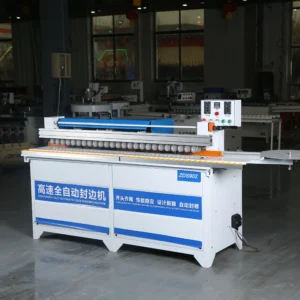
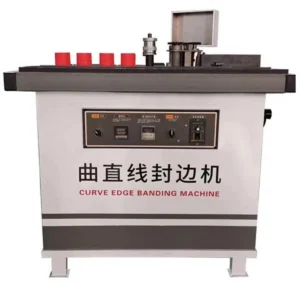
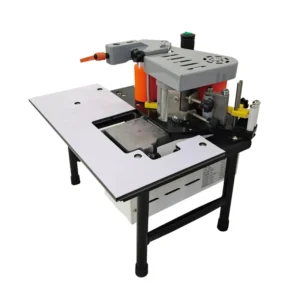
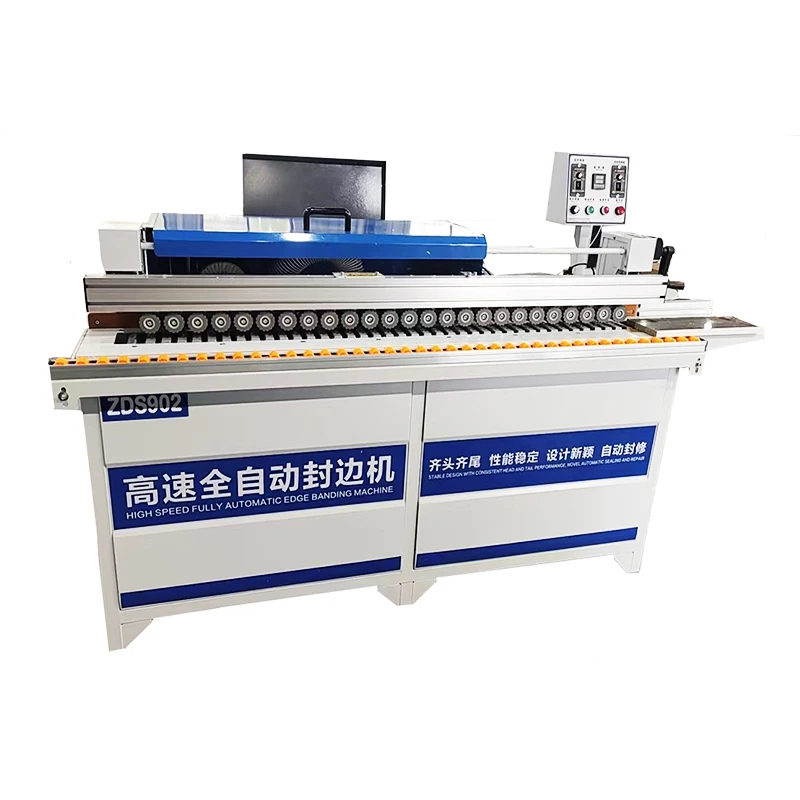
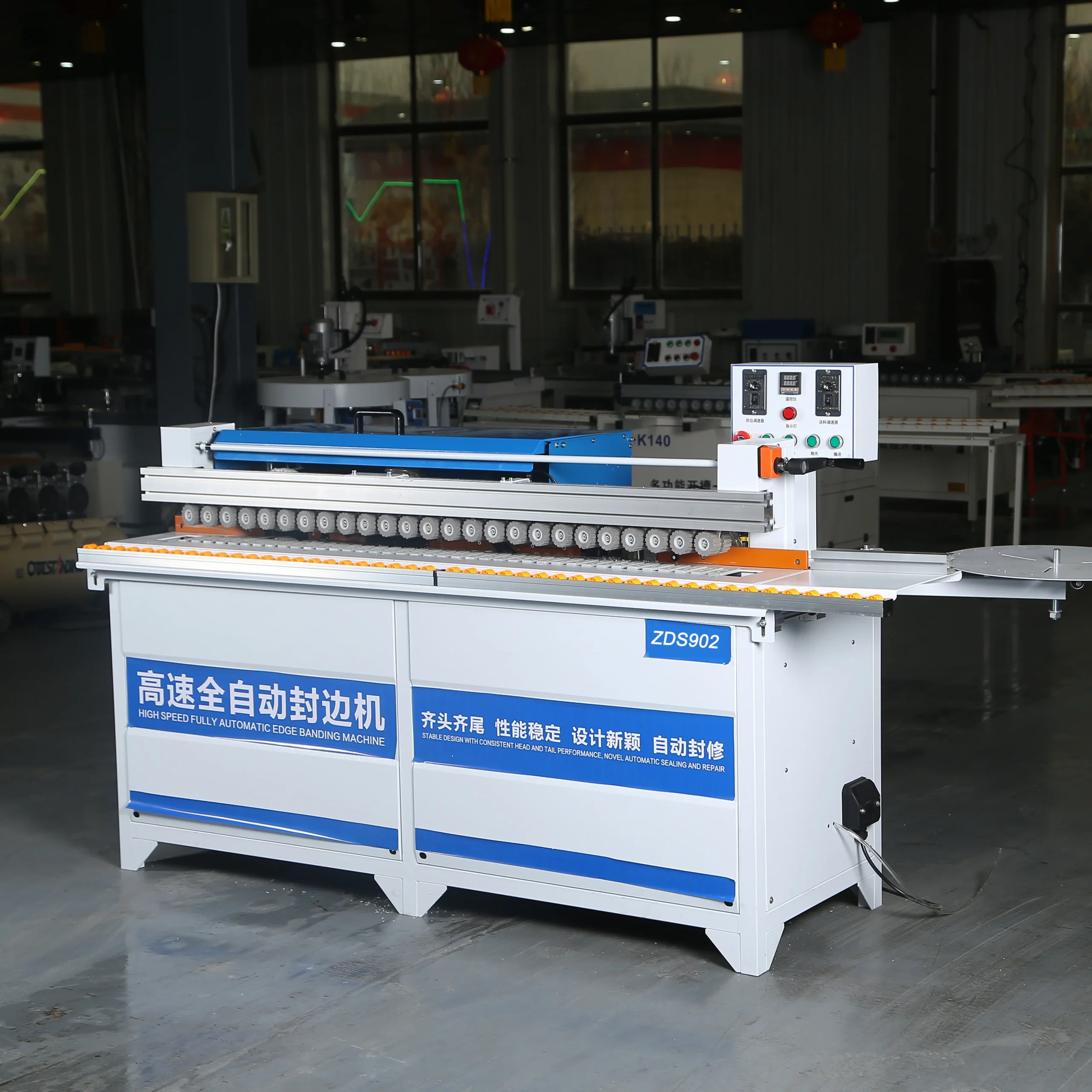
| Product Type | Automatic Edge Banding Machine |
| Voltage | 220V (confirm 50Hz/60Hz and single/three-phase before order) |
| Total Power | 4200 W |
| Overall Dimensions | 207 × 60 × 122 cm |
| Weight | 245 kg |
| Edge Band Height Range | 0 – 35 mm |
| Edge Band Thickness Range | 0.5 – 2.5 mm |
| Glue Pot Capacity | 4000 ml |
| Trimming System | Pneumatically controlled edge strip cutting device |
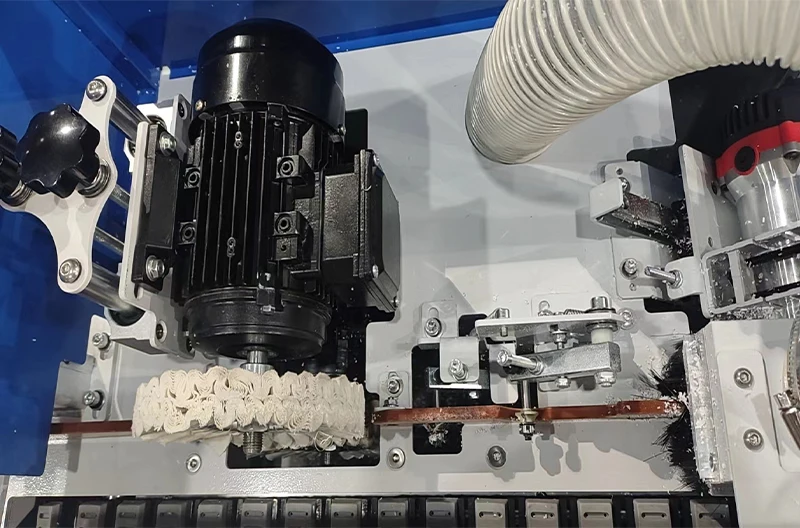
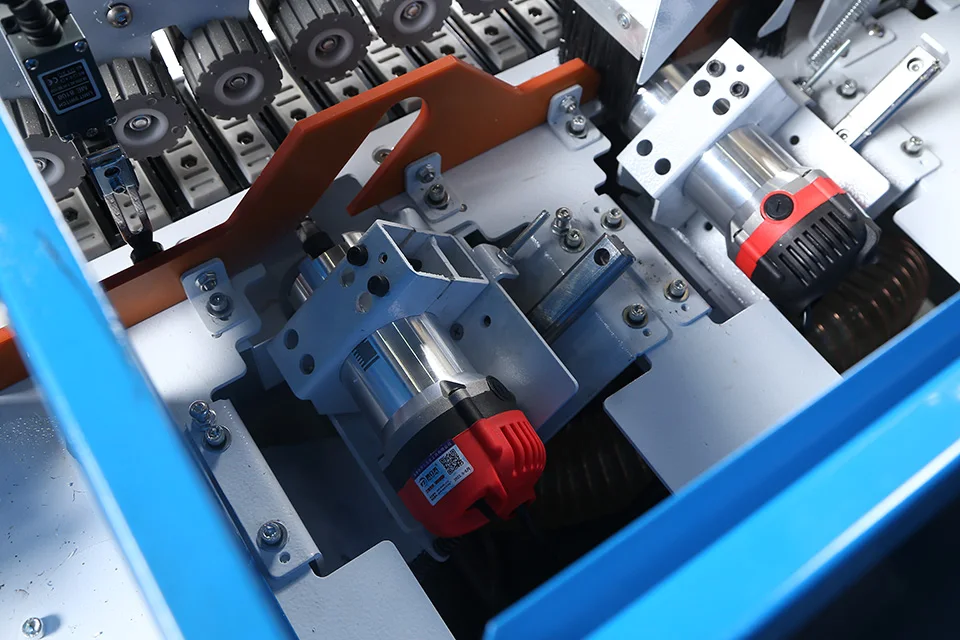
| Trimming Motors | Double high-speed trimming motors, up and down |
| Polishing Motors | Dual polishing motors, up and down |
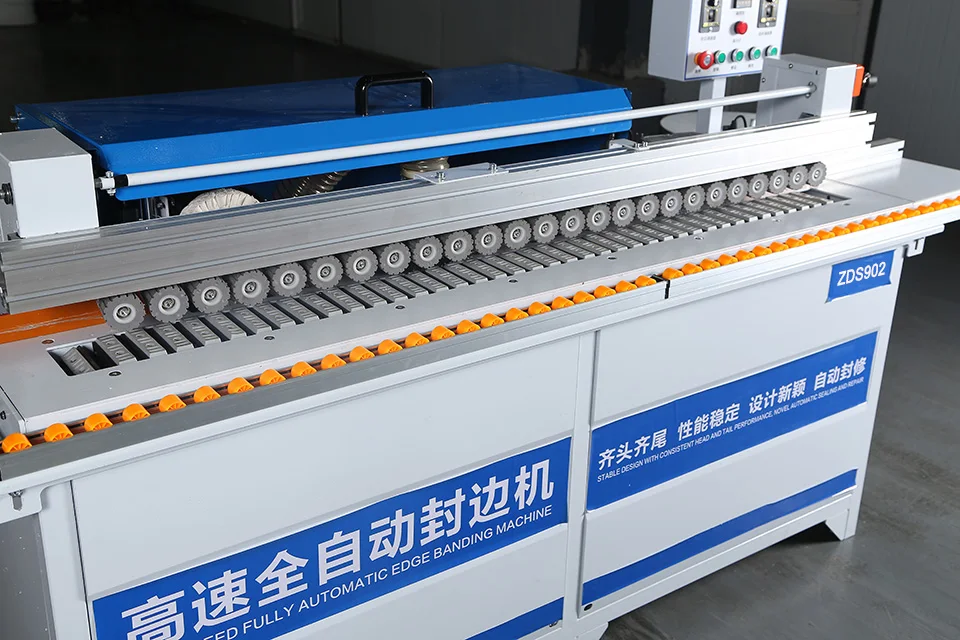
| Conveyor Belt Material | Silicone |
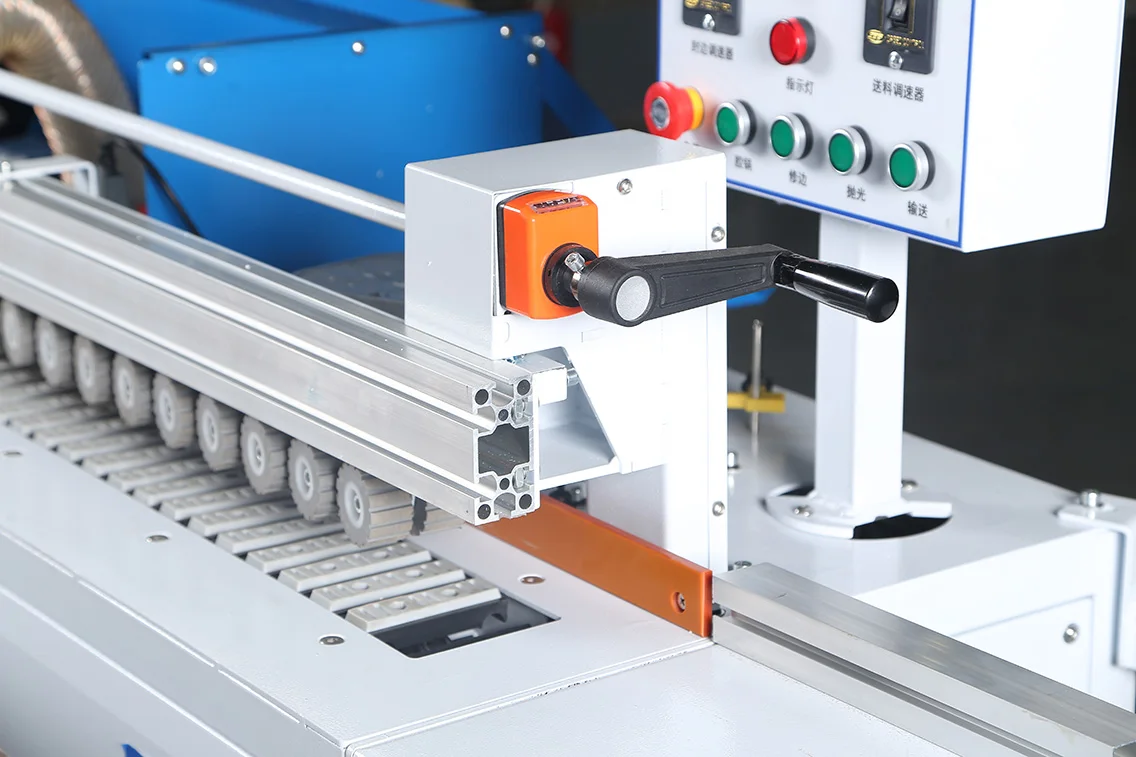
| Pressure Beam | Integrated, adjustable handle for board height |
| Gluing Method | Double-sided gluing with intelligent temperature control |
| Assembly State | Requires on-site assembly; user manual and video guidance provided |
Application Suitability
| Application | Material or Output |
|---|---|
| Custom cabinet door edge finishing | MDF and particleboard with PVC edge banding |
| Wardrobe panel production | Plywood panels with melamine or veneer banding |
| Small-batch furniture workshop | Solid wood panels requiring trimming and polishing |
| Linear edge processing for shelving | Particleboard with 0.5 – 2.5 mm PVC or ABS strips |
Why the Voltage Question Comes Before the Quotation on Any Automatic Edge Banding Machine
A machine wired for the wrong frequency will not hold temperature on the glue pot, and the operator will blame the banding quality.
I spent years in quality control on edge banders before shifting to field technical selection, and the pattern is always the same. A unit arrives at a job site in the Gulf, the local electrician reads the nameplate, sees 380V/50Hz on a 440V/60Hz supply, and refuses to close the breaker. The machine sits idle for weeks while transformers are sourced or the motor is rewound [NEED_CITE: voltage and frequency standards by export market]. The buyer loses production days and starts questioning every other specification on the machine. Asking one question at inquiry stage — local voltage, phase, and frequency — removes the most common cause of commissioning failure on industrial woodworking equipment.
Mapping Model Tiers to Workshop Throughput
Buyers surveying a full catalogue need to know where each machine sits in the production hierarchy. This Automatic Edge Banding Machine manufacturer positions the range from entry-level single-function units through full-function pre-milling configurations, so a workshop can add capacity without switching supplier. The entry tier covers light-duty linear edge sealing for shops running a few hundred panels per week, while upper tiers introduce pre-milling, multi-stage trimming, and buffing for continuous daily output.
Scaling Without Changing Your Equipment Partner
When a joinery workshop moves from manual edge banding to its first machine, the immediate requirement is simplicity and a small footprint. As volume grows, the same product family offers additional stations — pre-milling for panel edge preparation, servo-controlled trimming for tighter tolerance — without the disruption of learning a new control interface or negotiating spare parts from a different vendor. Keeping the equipment within one product lineage simplifies operator training and parts inventory [NEED_CITE: machinery fleet standardisation benefits in panel processing].
How Glue Pot Capacity and Trimming Configuration Affect Edge Quality
The 4000 ml glue pot on this unit sustains longer continuous runs before refill, which matters when a batch of cabinet panels must be edged without thermal interruption. Intelligent temperature control keeps the adhesive within the working window required by both PVC and veneer banding materials. The double high-speed trimming motors — one above, one below — shear the overhang in a single pass, reducing the secondary finishing time at the polishing stage. Dual polishing motors then smooth the trimmed edge, removing micro-scores that would show as visible glue lines under lacquer or laminate. The silicone conveyor belt grips coated and raw board surfaces without leaving feed marks, and the integrated pressure beam with adjustable handle accommodates the full 0 – 35 mm band height range without tooling change.
The Hidden Cost of Underspecifying Feed Speed and Panel Thickness
A machine selected purely on price often lacks the feed speed range needed for production shifts, forcing the operator to slow down or push panels through manually. Without a stated panel thickness range confirmed against actual stock material, the pressure beam may fail to clamp thin MDF or leave feed marks on thick particleboard [NEED_CITE: common specification gaps in entry-level edge banding equipment]. Pneumatic trimmers on underpowered units stall mid-cycle, leaving burrs that the polishing stage cannot recover. The result is visible glue lines, re-work at the assembly bench, and a production manager who loses confidence in the entire line.
Why Procurement Teams Source This Range Here
The catalogue spans entry-level through full-function models within one product family, so configuration changes stay within a single parts and service relationship. Voltage is confirmed at quotation stage — from 110V single-phase to 440V three-phase — matching the machine to the buyer’s local grid before the electrical panel is wired. Control panels are specified in the operator’s language, avoiding the commissioning stalls that happen when instructions appear in an unfamiliar script. Every unit passes a four-stage quality check covering incoming material, in-process assembly, finished product, and pre-shipment verification. Configuration recommendations come from engineers who review the buyer’s panel material, daily volume, and workshop layout, with a formal quotation returned within 24 hours.
Documentation & Verification
- Machine specification sheet listing confirmed voltage, frequency, and phase for the destination market
- CE declaration of conformity and ISO 9001 certificate provided with each shipment
- Factory test record run on buyer-specified panel thickness and edge band material before dispatch
- Electrical schematic and wiring diagram in the agreed language for local electrician handover
- Operation and maintenance manual with troubleshooting section matched to the control system installed
- Spare parts list identifying consumable trimmer blades, polishing wheels, and glue pot seals
Installation, Commissioning & Support
- Requires on-site assembly; allocate floor space exceeding 207 × 60 cm with rear access clearance
- Confirm a dedicated 220V circuit rated above 4200 W before the machine arrives
- User manual and video teaching materials cover full assembly sequence and first power-on
- Intelligent temperature control requires initial calibration against the specific glue and banding material in use
- Pneumatic trimmer needs connection to a workshop air supply rated for continuous cycling
- Silicone conveyor belt tension and pressure beam handle adjustment covered in the commissioning checklist
What to Share When Requesting a Quotation
Provide the panel materials you process most often — MDF, particleboard, plywood, or solid wood — along with typical board thickness and edge band material. State your local supply voltage, phase, and frequency so the electrical configuration is locked before production. Confirm the control panel language your operators require and whether you need a sample edge banding test on your own substrate before committing to the order.
Frequently Asked Questions
Q: How do I identify which model tier matches my production volume and panel material mix?
A: Share your typical daily panel count, the substrates you run most often, and the edge banding material — PVC, ABS, or veneer. The engineering team maps those inputs to the model tier that handles your throughput without over-specifying. A formal configuration recommendation and quotation are returned within 24 hours.
Q: What voltage and frequency configurations are available across the range?
A: Machines are configurable from 110V single-phase through 440V three-phase at either 50 Hz or 60 Hz. The exact combination is confirmed at quotation stage and written into the electrical schematic, so the local electrician can verify compatibility before the machine is connected on site.
Q: Can I see sample edge banding output on my specific substrate before committing?
A: Send a representative panel sample with the edge banding material you intend to use. The factory runs a processing test and returns the finished sample along with a test record documenting glue adhesion, trim quality, and polish finish for your review.
Q: What certifications and test documentation ship with each machine?
A: Every unit ships with a CE declaration of conformity, ISO 9001 certificate, machine specification sheet, factory test record, electrical schematic, and an operation manual in the agreed language. Pre-shipment verification covers electrical safety and functional trim and polish quality.
Q: How does the product family allow upgrading without changing supplier?
A: The range spans entry-level linear edge sealers through full-function pre-milling models sharing common control interfaces and spare parts families. When production volume grows, moving to a higher tier within the same family avoids retraining operators and establishing a new service relationship.