Description
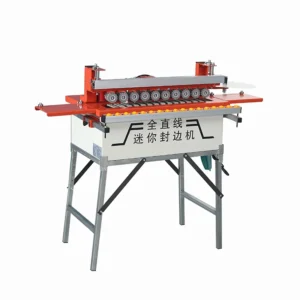
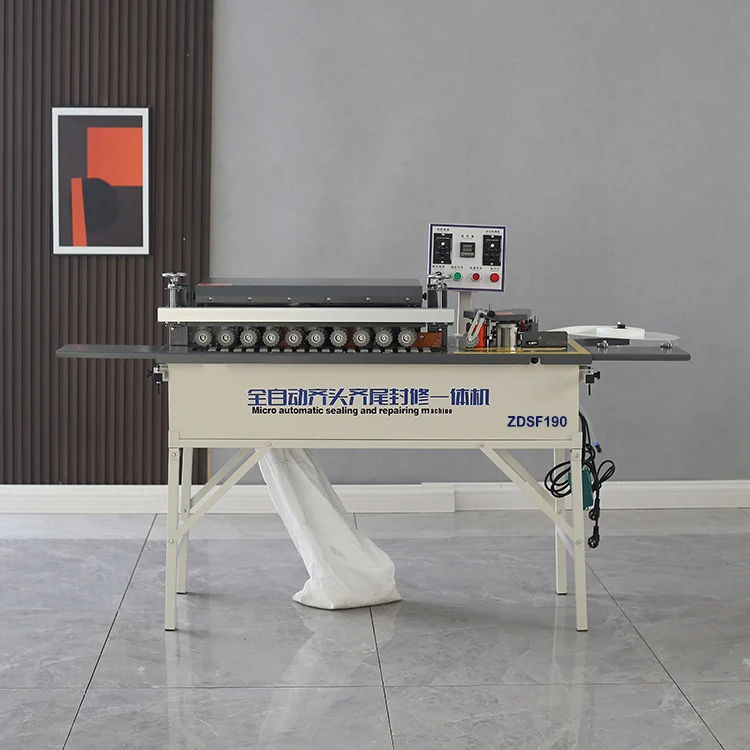
Dual-Purpose Curve and Straight Capability — One unit handles both edge profiles with a 180-degree rotation, cutting the need for separate machines in space-constrained workshops.
Technical Specifications
| Parameter | Value |
|---|---|
| Model | ZDSF190 |
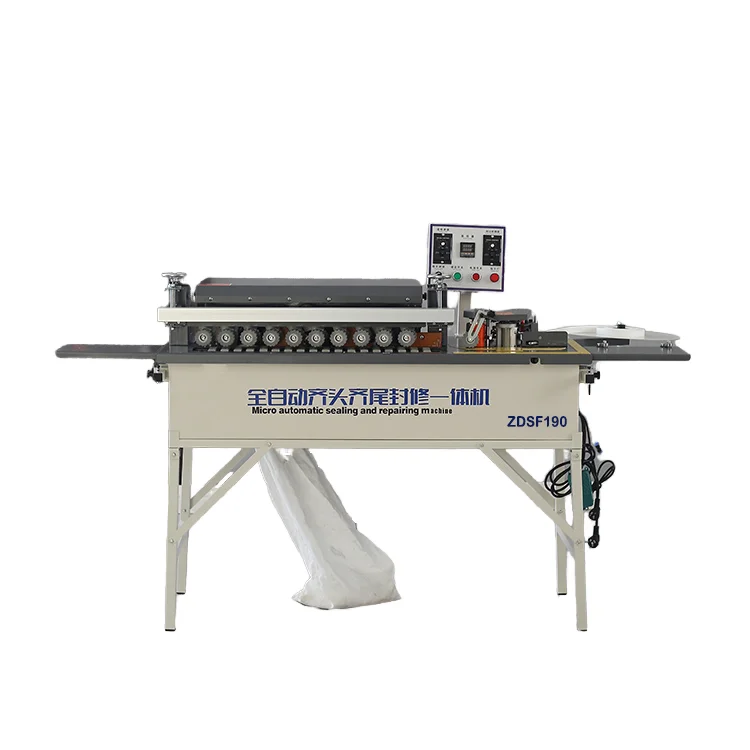
| Product Type | Portable Automatic Curve and Linear Edge Banding Machine |
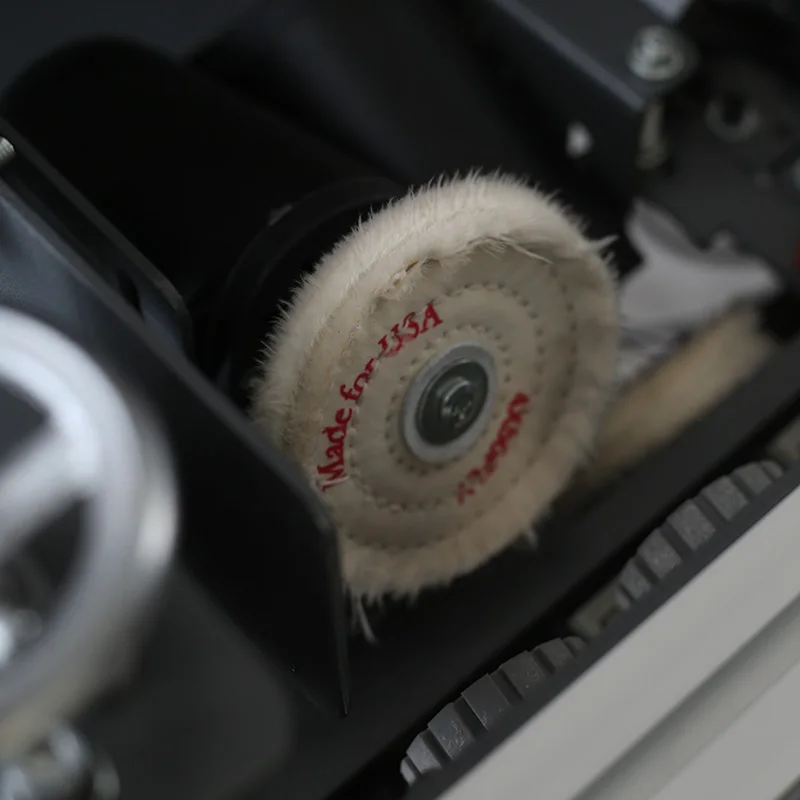
| Function | Automatic plate feeding, automatic belt breaking, double-sided gluing, upper and lower trimming, polishing, curved and straight edge banding |
| Edge Type | Both curved and straight lines |
| Voltage & Frequency | 220V 50Hz |
| Rated Power | 4kW |
| Suction Power | 1200W |
| Heating Power | 800W |
| Trimming Power | 800W × 2 |
| Polishing Power | 180W × 2 |
| Conveyer Belt Speed | 0–14m/min |
| Sheet Thickness Range | 10–50mm |
| Strip Thickness Range | 0.5–2.5mm |
| Glue Capacity | 1000ml |
| Rated Air Pressure | 0.4–0.6MPa |
| Overall Dimensions (L×W×H) | 1900×560×1300mm |
| Net Weight | 120kg |
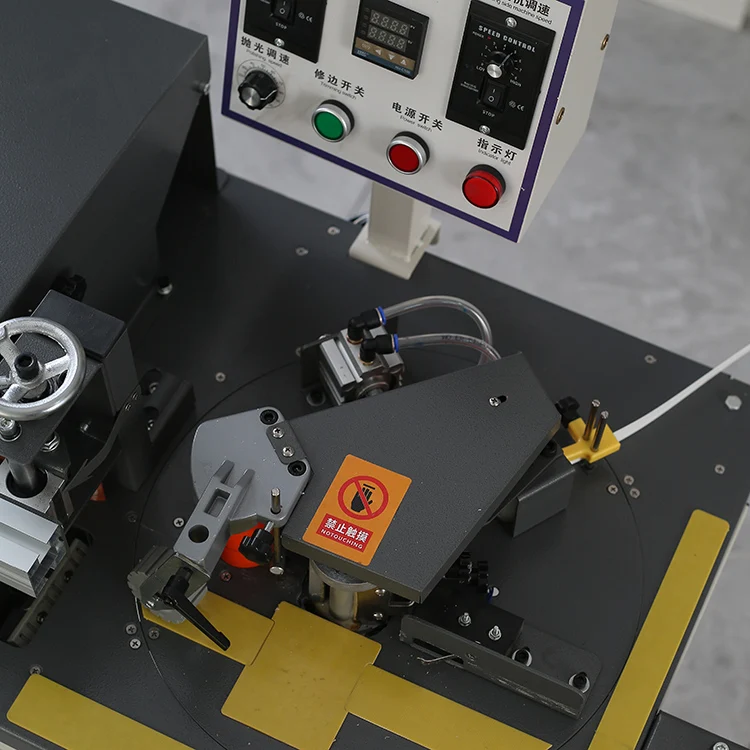
| Control System | Multi-function button operation panel |
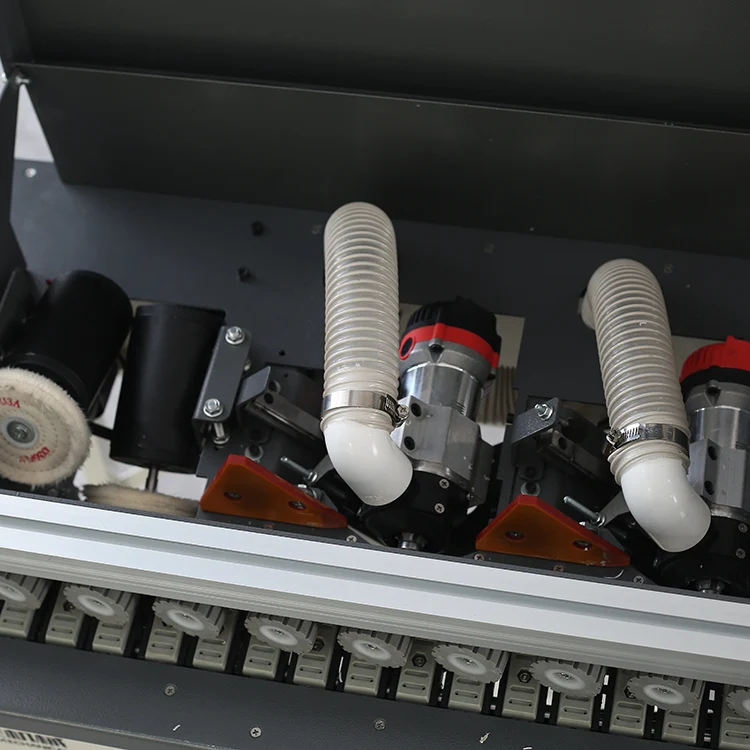
| Trimming Cutter | 4-edge arc-shaped alloy cutter head |
| Pressure Beam | Adjustable aluminum alloy |
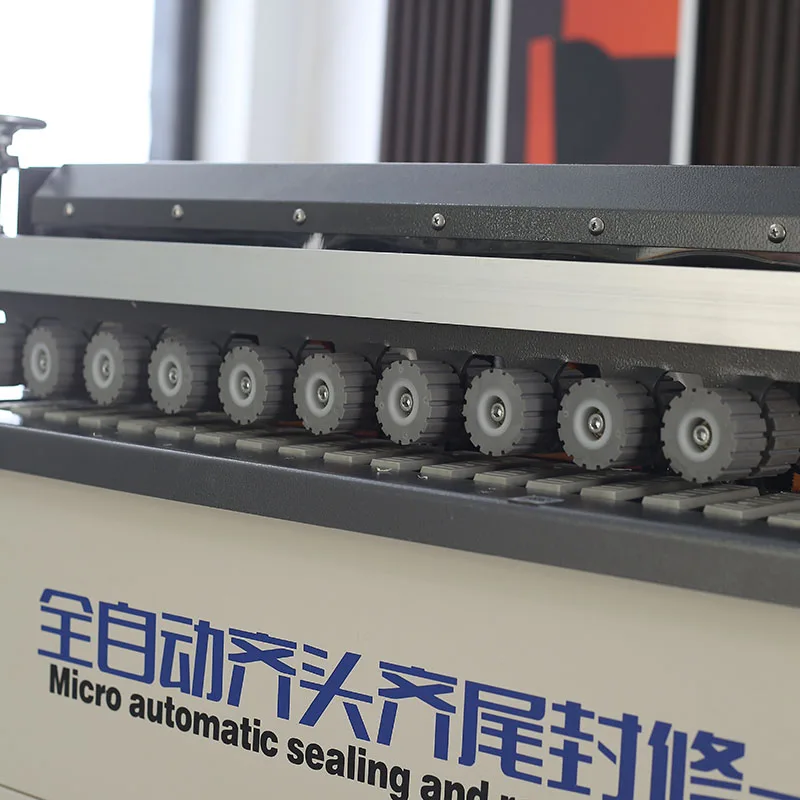
| Transmission Mechanism | Steel rod slide rails with crawler |
| Edge Strip Cutting | Pneumatically controlled |
| Dust Extraction | 2 large diameter dust collectors |
| Assembly State | Requires assembly with user manual or video guidance |
| Warranty | 1 year |
Application Suitability
| Application | Material or Output |
|---|---|
| Custom furniture workshop edge finishing | MDF, particleboard, plywood panels with PVC or veneer edge strips |
| Small to mid-size cabinet making | Solid wood panels and composite boards requiring both curved and straight edges |
| On-site or portable woodworking setups | Panels processed where floor space and standard power supply are limited |
| Joinery workshops scaling from manual | Semi-automatic edge banding on boards from 10mm to 50mm thick |
| Edge banding with various strip materials | PVC and veneer strips between 0.5mm and 2.5mm |
What Happens When a Portable Edge Bander Meets the Wrong Substrate
The machine runs fine on MDF during the test, then chokes on high-density particleboard once real production begins.
I spent weeks with a buyer who purchased a portable edge banding machine for sale based entirely on sample runs done on medium-density fiberboard. When his actual stock — dense particleboard — hit the feed rollers, the glue line broke down at higher speeds and the trimming cutters left visible chatter marks. Output dropped noticeably from what the demonstration suggested. It took parameter recalibration and cutter adjustments to stabilize the line. The lesson stuck with me: substrate density changes everything about how an edge bander performs, and a machine tested only on one material tells you very little about how it will handle your real workload [NEED_CITE: substrate density effects on adhesive bonding in edge banding].
Mapping the Portable Tier Within a Full Edge Bander Range
A portable edge banding machine manufacturer that also builds full-function pre-milling production lines gives you something a single-product supplier cannot: a clear upgrade path. The ZDSF190 occupies the entry point of this product family, suited for workshops processing limited daily volumes with a mix of curved and straight components. When throughput grows or panel variety expands, the same supplier ecosystem offers dedicated curve-only units, inline automatic models, and eventually fully automated lines with pre-milling stations. Starting here means your first purchase fits inside a longer equipment strategy rather than standing alone as an isolated asset.
Why Dual-Purpose Matters Before You Scale
Workshops handling custom furniture orders rarely know whether tomorrow’s batch will be a set of radius-cornered cabinet doors or straight-run shelving panels. Running two separate machines — one for curves, one for straight edges — doubles the floor space requirement and complicates operator training. The ZDSF190 addresses this by allowing a 180-degree rotation to switch between curved and straight modes on the same unit. For a small team juggling varied orders, that flexibility means less machine idle time and fewer changeover complications during short production runs [NEED_CITE: small batch production challenges in custom furniture manufacturing].
How the Specs Translate to Real Panel Work
The 10–50mm sheet thickness range covers the majority of board stock used in cabinet making and furniture assembly, from thin 10mm drawer sides to thick 50mm worktop cores. Feed speed adjustment from 0 to 14m/min allows operators to slow the feed for dense substrates that need longer glue open time, or increase speed for lighter panels where the adhesive bonds quickly. The 800W trimming motors paired with 4-edge arc-shaped alloy cutter heads provide the torque needed to shear through PVC strips cleanly without leaving burrs on the panel edge. The pneumatically controlled edge strip cutting ensures a square cut at the panel end, which matters when two banded panels must meet flush during assembly — a misaligned cut shows up immediately at the joint.
The Cost of Undersizing Your Edge Bander
Buying a portable unit rated for low daily volume and running it at production-line intensity shortens component life noticeably. Feed rollers wear faster when pushed beyond their intended duty cycle, and the glue pot struggles to maintain consistent temperature under continuous use. I have seen workshops replace trimming cutter heads at twice the expected interval because the machine never got the rest cycles it was designed for. The real cost is not just the spare parts — it is the downtime while waiting for replacements and the rejected panels that slip through when a worn cutter starts leaving visible marks [NEED_CITE: edge bander maintenance intervals under varying duty cycles].
What This Purchase Includes Beyond the Machine
In-house manufacturing with patented cutting mechanisms means the trimming technology in the ZDSF190 comes from the same engineering team that builds the full-production models. Voltage confirmation happens before production begins — the unit ships configured for your local supply, not a generic default. A four-stage quality control process covers incoming material inspection, in-process checks, finished product verification, and pre-shipment testing with a documented report. Engineer-led configuration means your panel types, edge strip materials, and daily volume targets inform the setup recommendation. Factory visits are available for buyers who want to see the assembly floor and run their own sample panels before committing.
Documentation & Verification
- CE declaration of conformity covering the ZDSF190 portable unit
- Machine specification sheet confirming your local voltage and frequency
- Factory test record showing edge quality on your specified panel material
- Operation manual written in your operator’s required language
- Spare parts list identifying cutter heads, feed rollers, and glue pot components
- Pre-shipment verification report with photographic evidence of test runs
Installation, Commissioning & Support
- Requires assembly on arrival with guidance from the supplied manual or video
- Dedicated 220V 50Hz circuit needed to handle the 4kW rated power draw
- Pneumatic supply between 0.4–0.6MPa required for edge strip cutting functions
- First-run parameter calibration by your operator using the multi-function control panel
- Trimming cutter alignment check recommended before first production batch
- Dust extraction connection for two collection ports to maintain clean working conditions
Before You Request a Quote
Help us point you toward the right configuration by sharing a few details about your operation. What panel materials do you run most often, and what are their typical thickness and density ranges? What is your local voltage and frequency standard? And are you processing mostly straight edges, mostly curves, or a mix of both? If you have existing upstream or downstream equipment — panel saws, boring machines, sanders — let us know the model and feed height so we can confirm compatibility across the line.
Frequently Asked Questions
Q: How does this portable model compare to full-function pre-milling edge banding machines in the range?
A: The ZDSF190 handles both curve and straight edge banding in a single compact unit, suited for lower daily volumes and workshops with limited floor space. Full-function pre-milling models add a milling station before the glue application, which improves edge preparation on rough-cut panels and supports higher continuous throughput. The choice depends on your current volume and whether your panels arrive pre-cut to tight tolerance or need edge preparation on the machine itself.
Q: What voltage and frequency configurations are available for different markets?
A: While the standard specification lists 220V 50Hz, the manufacturer confirms voltage and frequency before production to match your local electrical supply. This prevents the common problem of machines arriving with incompatible power configurations. Always provide your exact local voltage, phase, and frequency at the inquiry stage so the electrical schematic and motor selection are built for your grid conditions from the start.
Q: Which panel materials and edge strip types is this machine rated to handle?
A: The ZDSF190 processes MDF, particleboard, plywood, and solid wood panels between 10mm and 50mm thick, with PVC and veneer edge strips from 0.5mm to 2.5mm. High-density substrates may require slower feed speeds and closer attention to glue temperature for reliable bonding. Share your primary panel material and edge strip type during the inquiry so the factory can run a relevant sample test before shipment.
Q: What documentation ships with the machine?
A: Every ZDSF190 ships with a CE declaration of conformity, ISO 9001 certificate, machine specification sheet, electrical schematic with confirmed voltage, factory test record, operation and maintenance manual in your chosen language, spare parts list, and packing photographs. Pre-shipment verification reports and customs documentation support are also provided to smooth the import process at your destination port.
Q: How do I know if my workshop needs this tier or a higher-capacity model?
A: Consider your daily panel count, the variety of edge profiles you process, and whether you run the machine continuously or in short batches. If you handle mixed curved and straight edges in low to moderate volumes with space constraints, this portable tier fits well. If you run dedicated straight-edge production at higher throughput or need pre-milling for rough-cut panels, a higher-capacity inline model would be more appropriate. The same supplier range covers both tiers, so you can discuss scaling options during your inquiry.