Description
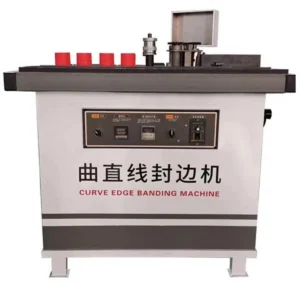
Compact Footprint Advantage — The ZDSF190 dual-purpose edge bander fits within a 1900 mm envelope while covering both curved and straight edge profiles, letting workshops plan a scalable machine range from a single supplier.
Technical Specifications
| Parameter | Value |
|---|---|
| Model | ZDSF190 |
| Product Type | Automatic Edge Banding Machine (Curved and Straight Dual-purpose) |
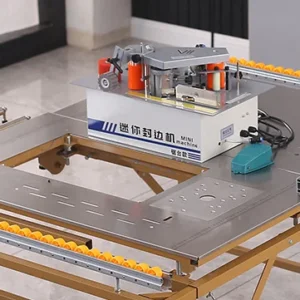
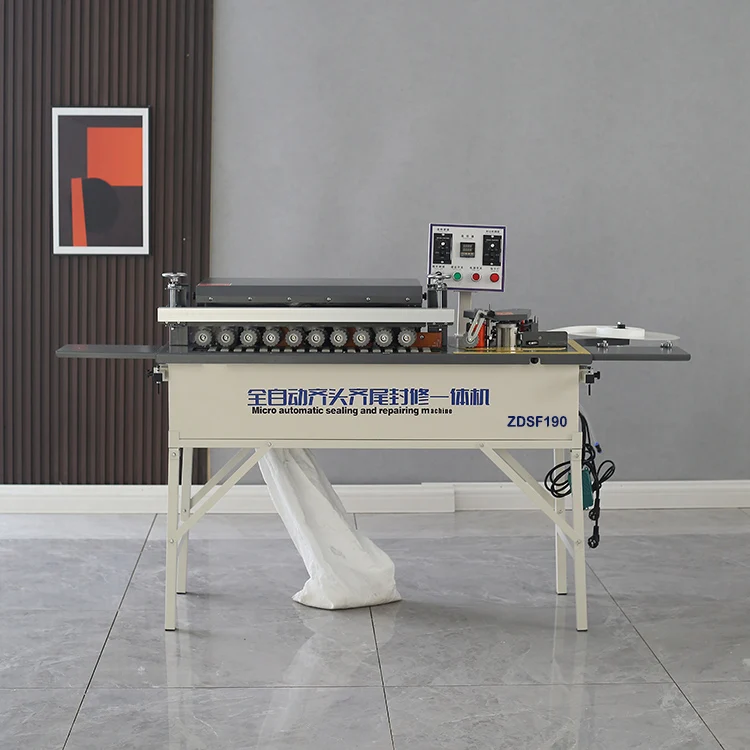
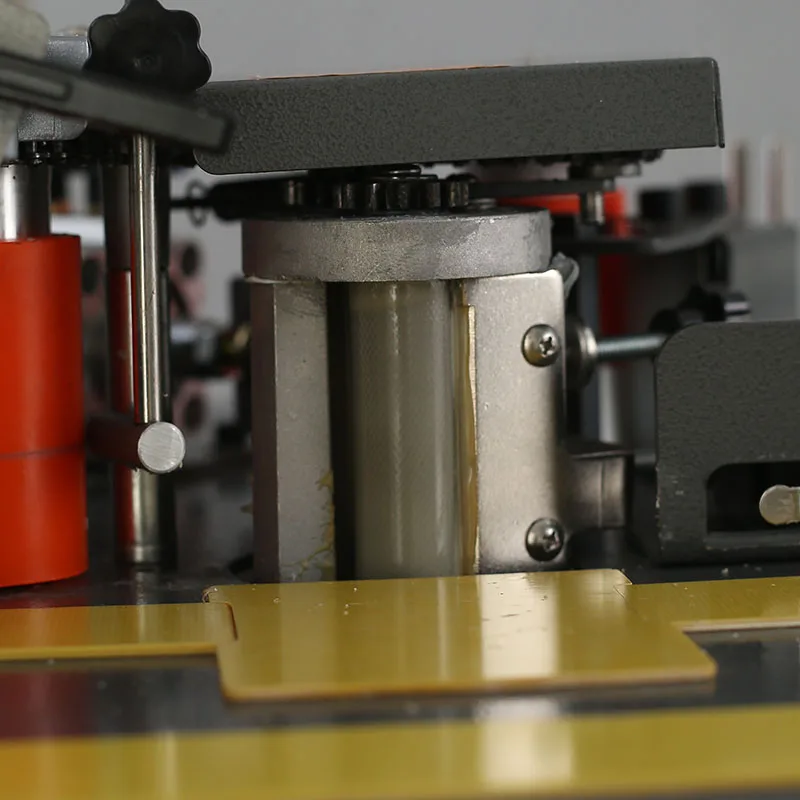
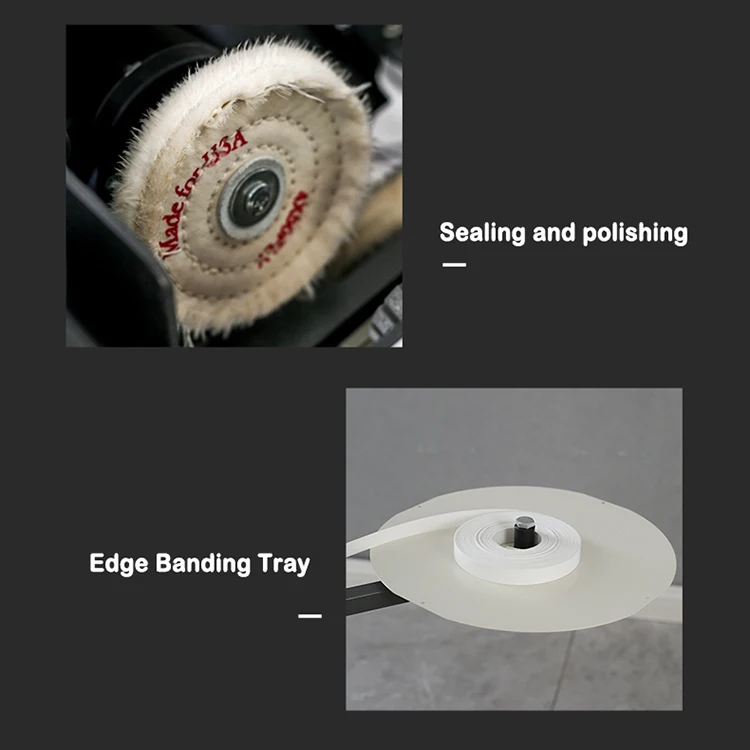
| Function | Automatic plate feeding, belt breaking, double-sided gluing, upper and lower trimming and polishing, curved and straight edge banding, surrounding vacuum |
| Edge Type | Both curved and straight lines |
| Voltage | 220V 50Hz (configurable from 110V to 440V) |
| Rated Power | 4 kW |
| Heating Power | 800 W |
| Trimming Power | 800 W × 2 |
| Polishing Power | 180 W × 2 |
| Suction Power | 1200 W |
| Transmission Power | 120 W |
| Belt Power | 25 W |
| Rated Air Pressure | 0.4–0.6 MPa |
| Feed Speed | 0–14 m/min |
| Conveyor Belt Speed | 0–14 m/min |
| Panel Thickness Range | 10–50 mm |
| Edge Strip Thickness Range | 0.5–2.5 mm |
| Glue Pot Capacity | 1000 ml |
| Trimming Cutter | 4-edge arc-shaped alloy cutter head |
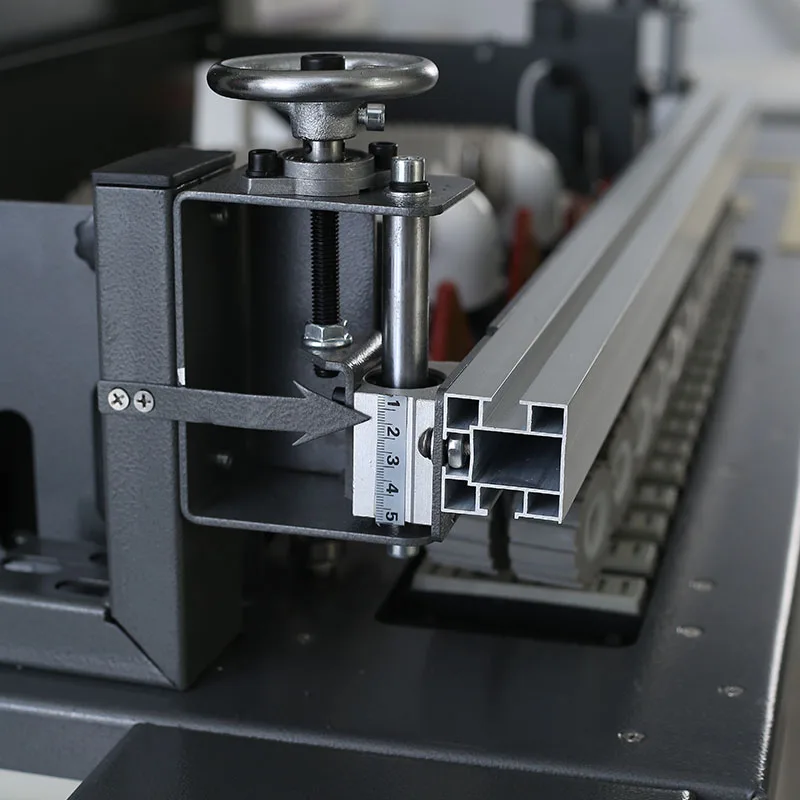
| Pressure Beam | Adjustable aluminum alloy |
| Feed Mechanism | Double-row rubber pressure wheels with extended feed plate |
| Transmission | Crawler transmission with steel rod slide rails |
| Dust Collection | 2 large-diameter dust collectors (efficiency basis to be confirmed) |
| Edge Cutting Device | Pneumatically controlled |
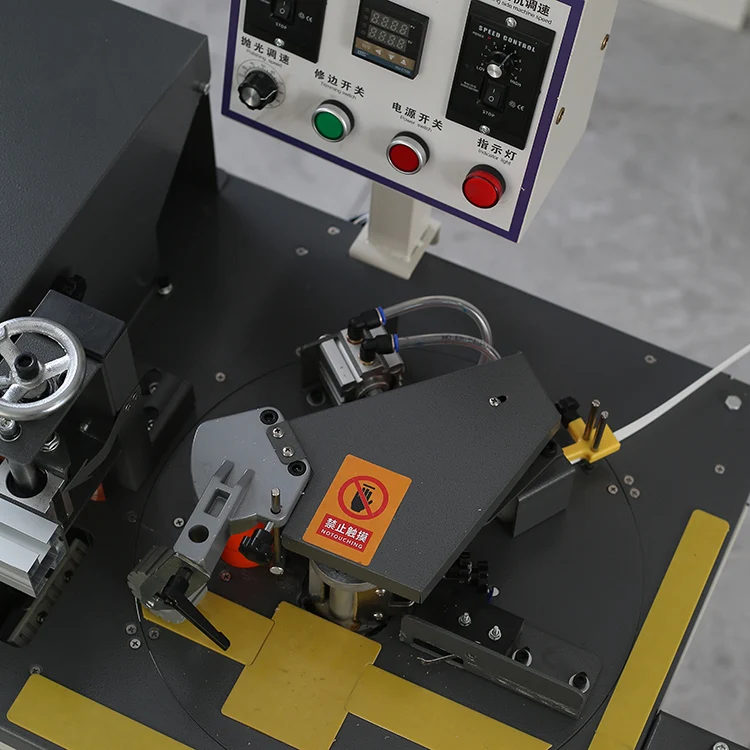
| Control Panel | Multi-function button operation |
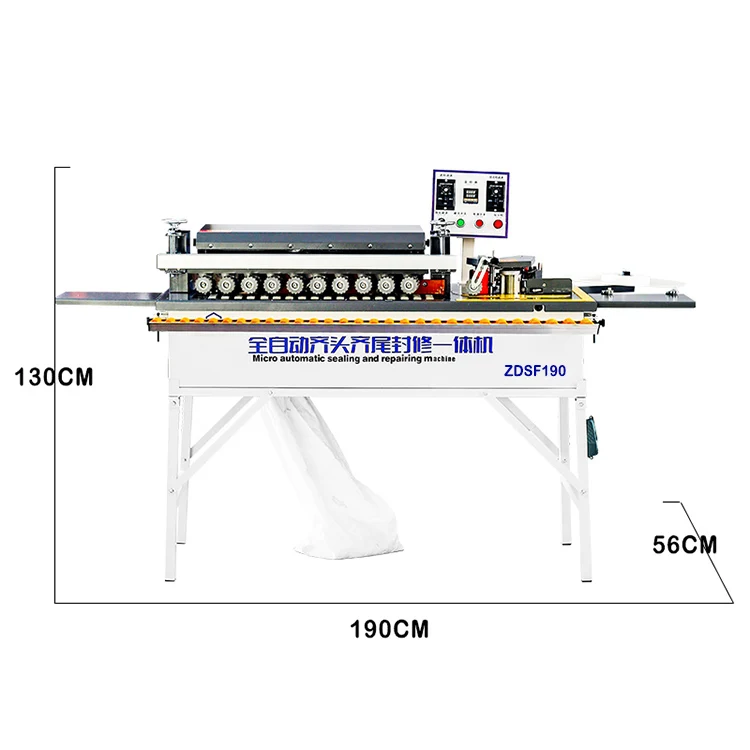
| Overall Dimensions | 1900 × 560 × 1300 mm |
| Net Weight | 120 kg |
| Assembly State | Assembly required (user manual and video teaching provided) |
| Warranty | 1 year (factory defect spare part replacement) |
Application Suitability
| Application | Material or Output |
|---|---|
| Custom cabinet and wardrobe panel production | MDF and particleboard with PVC edge banding |
| Curved furniture components and shaped shelving | Plywood and MDF with veneer or PVC strips |
| Small-batch joinery and bespoke furniture | Solid wood panels with 0.5–2.5 mm edge strips |
| Workshop transitioning from manual to machine edge banding | Mixed straight and curved profiles on standard sheet materials |
| Prototyping and design studio sample runs | Various panel substrates with frequent profile changes |
What "Dual-Purpose" Actually Means on the Shop Floor
A single machine that handles both straight runs and curved profiles eliminates the need for two separate stations during early-stage production scaling.
When workshops first move away from hand-applied edge banding, the temptation is to buy one straight-line machine and deal with curves later. The problem surfaces quickly: curved components pile up unfinished while the straight-line unit sits idle between batches. An automatic edge banding machine manufacturer that offers genuine dual-mode capability addresses this bottleneck at the entry level. With the ZDSF190, the operator rotates the working head to switch between straight and curved modes, keeping both part types flowing through a single station [NEED_CITE: typical workflow sequencing in small furniture workshops]. This matters most when a shop is still building volume and cannot justify dedicating floor space to a second machine.
Positioning Within a Growing Machine Range
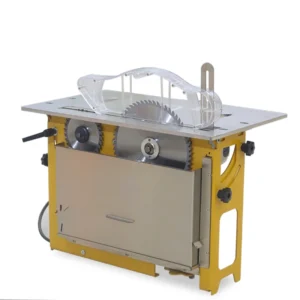
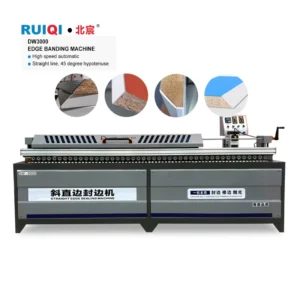
The ZDSF190 sits at the compact entry point of the Ruiqi edge banding lineup, designed for workshops producing mixed batches of straight and curved panels. Its 1900 mm overall length and 120 kg weight allow placement against a wall or inside a tight cell alongside a sliding table saw. As production volumes grow and straight-line throughput becomes the limiting factor, the workshop can add a higher-speed dedicated straight-line model from the same automatic edge banding machine manufacturer without relearning controls or changing edge banding material suppliers. The ZDSF190 then transitions to handling curved and specialty work exclusively.
Matching Machine Capability to Panel Diversity
Curved edge profiles demand different mechanical behavior than straight runs. The arc-shaped alloy cutter head on this unit follows contour changes that would cause a standard straight trimming blade to chatter or leave ridges. The adjustable aluminum alloy pressure beam and double-row rubber pressure wheels maintain consistent panel contact across thicknesses from 10 mm to 50 mm. When processing low-density particleboard on a curve, excessive feed pressure can crush the substrate edge, while high-density MDF requires firm holding to prevent drift [NEED_CITE: substrate density effects on edge trimming quality]. Confirming your actual panel material with the manufacturer before finalizing configuration prevents the kind of mid-run quality failures that only appear once production starts.
Reading the Specification Sheet Against Real Work
The 0–14 m/min feed speed range gives operators room to slow down for tight radii on curved components and open up for longer straight sections. Panel thickness capacity spanning 10–50 mm covers the vast majority of furniture-grade board, from thin MDF drawer bottoms to thick plywood shelving. The 1000 ml glue pot is sized for batch work rather than continuous high-volume production — shops running eight-hour straight-line shifts will eventually need a larger glue reservoir on a dedicated machine. The four individual motor groups (trimming at 800 W × 2, polishing at 180 W × 2, plus separate suction and heating circuits) distribute load across the 4 kW total rated power, which keeps the electrical demand within reach of a standard single-phase workshop supply.
When the Wrong Entry Machine Becomes a Costly Lesson
Buying an entry-level edge bander specified only by price often leads to discovering limitations after installation. Panels that ran fine on the supplier’s sample board may show visible glue lines or chipped trimming edges when the workshop switches to its own stock material. Voltage mismatches discovered at commissioning can leave a machine inoperative for weeks while a transformer is sourced. Control panels in an unfamiliar language slow down operator training and increase the risk of incorrect parameter settings [NEED_CITE: common commissioning failures in exported woodworking machinery]. Each of these issues is avoidable when the buyer provides actual panel samples, confirms local electrical supply, and specifies the required documentation language before placing the order.
Why Sourcing From the Same Range Matters
The ZDSF190 is part of a broader Ruiqi edge banding family, meaning the same engineering team supports configuration from compact dual-purpose through full-function pre-milling models. Voltage and control panel language customization are handled as standard options rather than special requests. A four-stage QC process covers incoming material inspection, in-process assembly checks, finished product testing, and pre-shipment verification with documented results. For workshops planning a phased equipment rollout, having one automatic edge banding machine manufacturer supply the initial compact unit and later additions simplifies spare parts inventory and ensures feed height and throughput compatibility across the line [NEED_CITE: production line integration requirements for furniture factories]. Factory visits are available to witness test runs on the buyer’s own panel material.
Documentation & Verification
- Machine specification sheet listing all motor ratings and dimensional tolerances for the ZDSF190
- Electrical schematic with voltage confirmation matching your local supply standard
- Factory test record run on your specified panel thickness and edge strip material
- Operation and maintenance manual provided in your agreed language before shipment
- Spare parts list identifying consumable cutters and wear components with part numbers
Installation, Commissioning & Support
- Requires a level floor area of approximately 1900 × 560 mm with clearance for panel infeed and outfeed
- Dedicated 220V 50Hz circuit rated for 4 kW with appropriate breaker; other voltages available on confirmation
- Assembly required on arrival with manual and video guidance covering crawler alignment and pressure beam setup
- First-run parameter calibration for feed speed, glue temperature, and trimming depth using your own panels
- Pneumatic supply at 0.4–0.6 MPa needed for edge cutting device and dust collector connection
- Periodic inspection schedule for arc-shaped trimming cutters and rubber pressure wheel condition
Before You Send the Inquiry
To configure the right machine from the range, share your primary panel materials and their density range, the split between straight and curved edge work in your typical production week, and your workshop’s existing voltage and frequency. If you are planning additional stations such as a panel saw or boring machine, mention those so throughput can be matched across the line. Panel samples sent to the factory allow a pre-shipment test run that confirms trimming quality before the machine leaves.
Frequently Asked Questions
Q: Where does the ZDSF190 fit within the overall edge banding machine range?
A: The ZDSF190 serves as the compact dual-purpose entry point, suited for workshops handling both curved and straight profiles at moderate volumes. As straight-line throughput requirements increase, higher-capacity dedicated models within the same range pick up that workload, leaving the ZDSF190 to focus on curved and specialty components. This positioning lets a workshop start with one machine and scale without changing suppliers.
Q: How does switching between curved and straight modes work in practice?
A: The working head rotates to align the trimming and polishing stations for either straight feed or curved contour following. The arc-shaped alloy cutter head handles curved radii while the same feed mechanism and pressure beam configuration maintains panel stability in both modes. No separate tooling change is required for the mode switch itself, though operators adjust feed speed based on the curve radius being processed.
Q: Can the voltage and control panel language be customized for our market?
A: Voltage is configurable from 110V to 440V to match local supply standards, confirmed at the quotation stage before production begins. Control panel labeling and the operation manual are prepared in the buyer’s agreed language. Specifying these requirements upfront prevents commissioning delays that occur when a machine arrives with documentation the operators cannot read.
Q: How does this model integrate with other machines on the production line?
A: The 0–14 m/min feed speed and 10–50 mm panel thickness range define the throughput envelope that upstream cutting and downstream assembly must match. When planning a complete line, the manufacturer reviews each station’s cycle time to identify bottlenecks. Providing your target daily output and existing equipment details allows configuration recommendations that balance flow across the workshop.
Q: What does upgrading from this unit to a full-function model involve?
A: The transition path moves from the ZDSF190 to a pre-milling equipped model within the same product family, adding functions such as scraping and buffing for higher-specification edge finishes. Because both machines share the same manufacturer’s engineering standards, spare parts supply and technical support remain consistent. The ZDSF190 continues handling curved work while the new unit takes over straight-line production.