Description
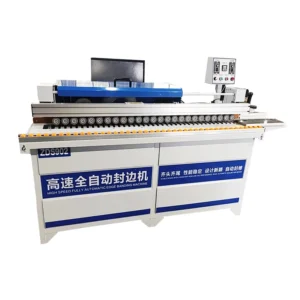
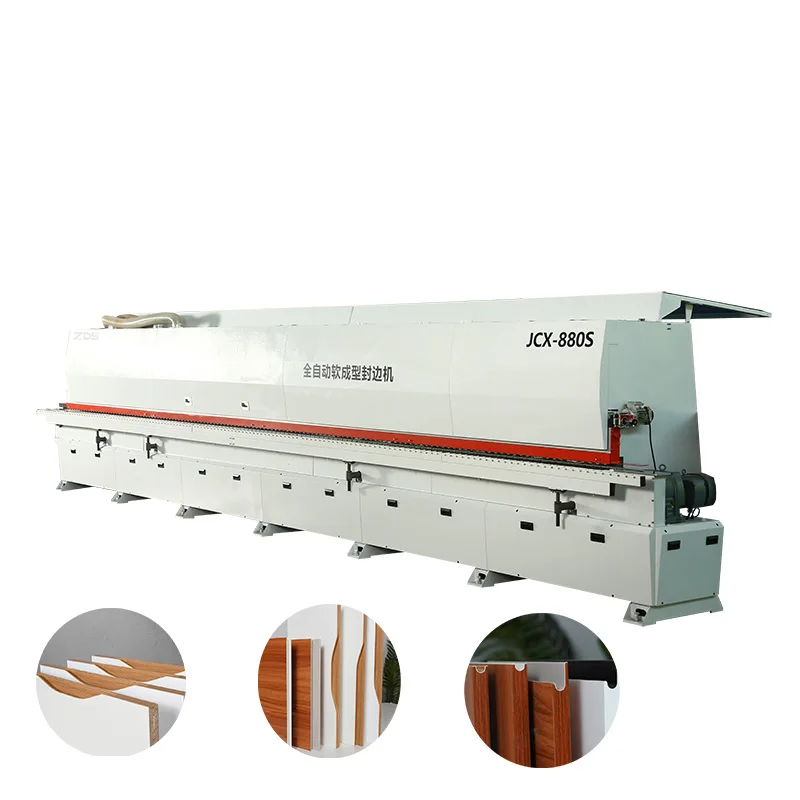
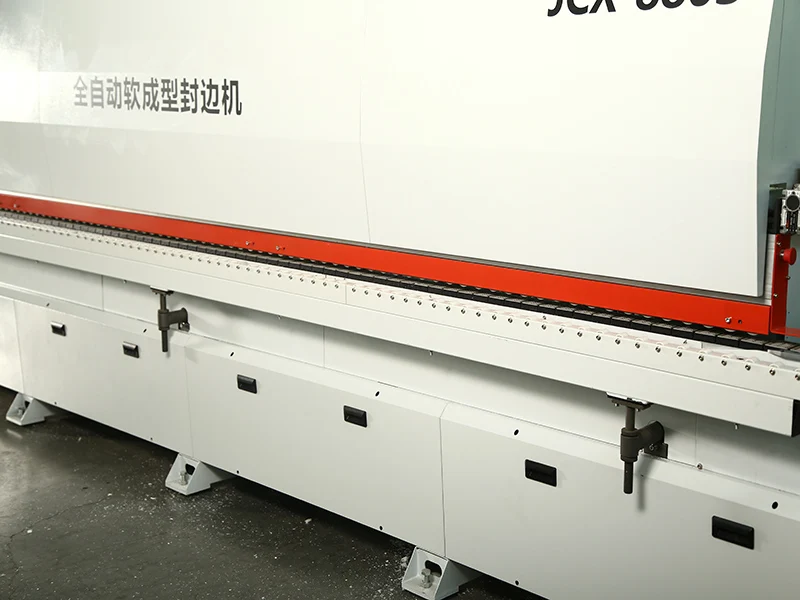
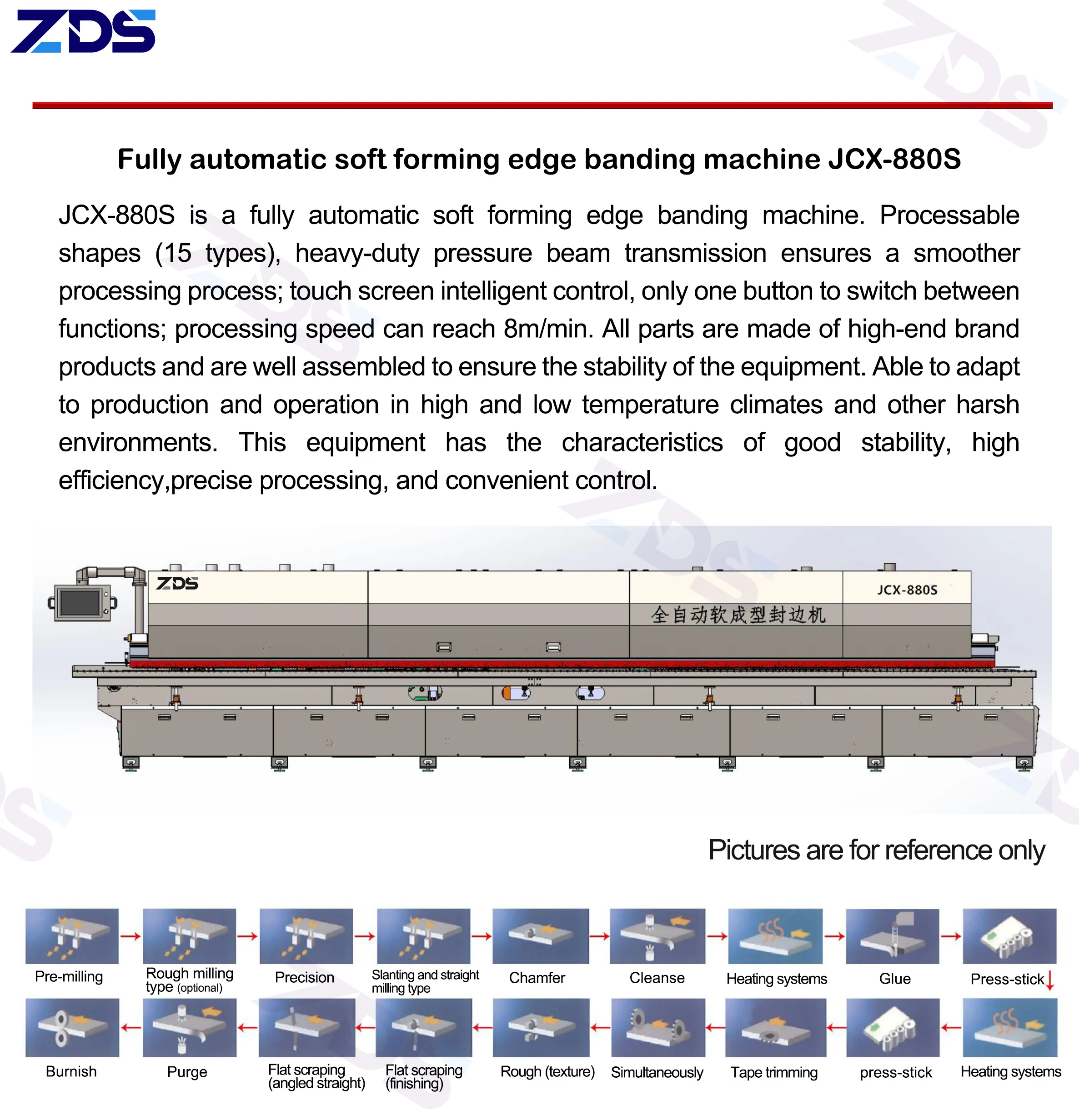
15-Function Edge Banding Coverage — the ZDSJCX-880S pre-mills, bands, trims and grooves in a single pass, positioned within Ruiqi’s complete catalogue so a workshop can scale without changing suppliers.
Technical Specifications
| Parameter | Value |
|---|---|
| Model | ZDSJCX-880S |
| Product Type | Automatic Edge Banding Machine with Pre-milling and Corner Trimming |
| Total Power | 47.1 kW |
| Voltage | 380V (frequency 50Hz/60Hz to be confirmed per destination market) |
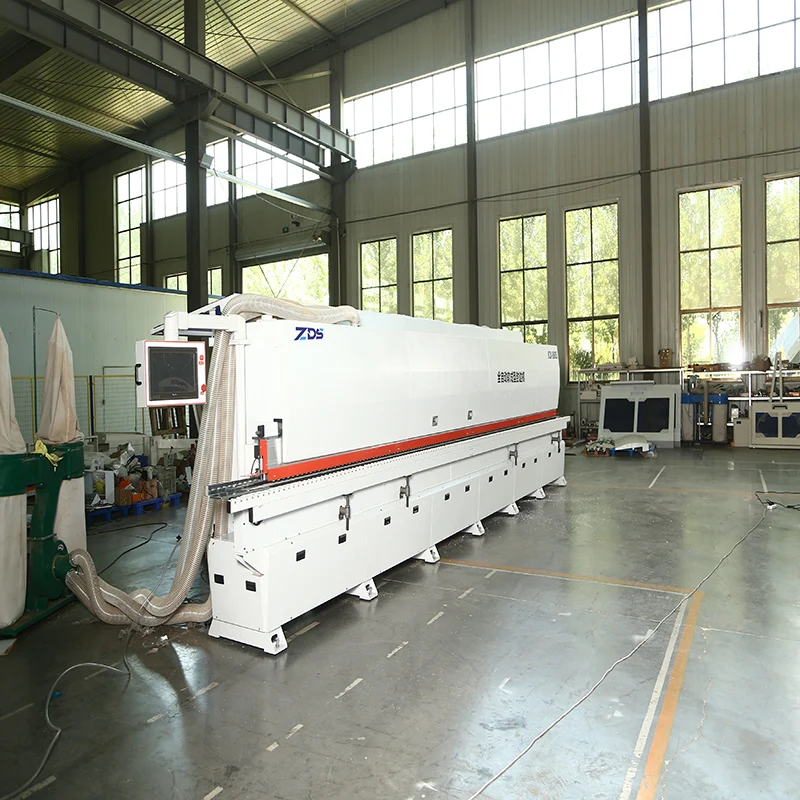
| Overall Dimensions (L×W×H) | 8.82 × 1.07 × 1.85 m |
| Net Weight | 3200 kg |
| Panel Thickness Range | 18–22 mm (basis to be confirmed for full range) |
| Edge Banding Thickness Range | 0.5–0.8 mm (basis to be confirmed for full range) |
| Edge Banding Width | 58 mm |
| Minimum Sheet Width | 150 mm |
| Minimum Sheet Length | 300 mm |
| Feed Speed | 6–8 m/min |
| Air Pressure Requirement | 0.6–0.8 MPa |
| Dust Extraction Ports | Ф100 × 6 |
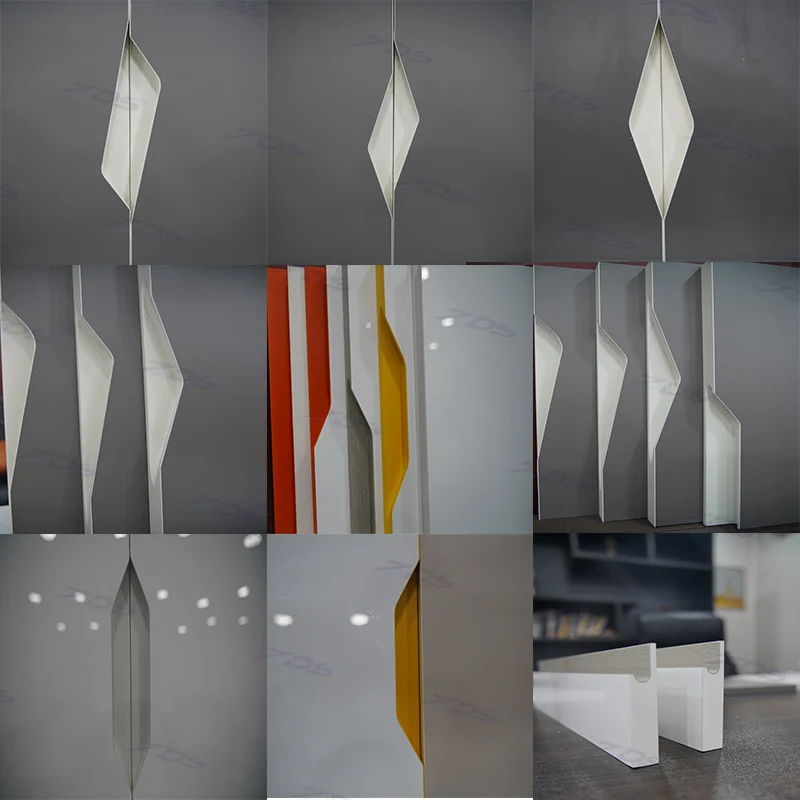
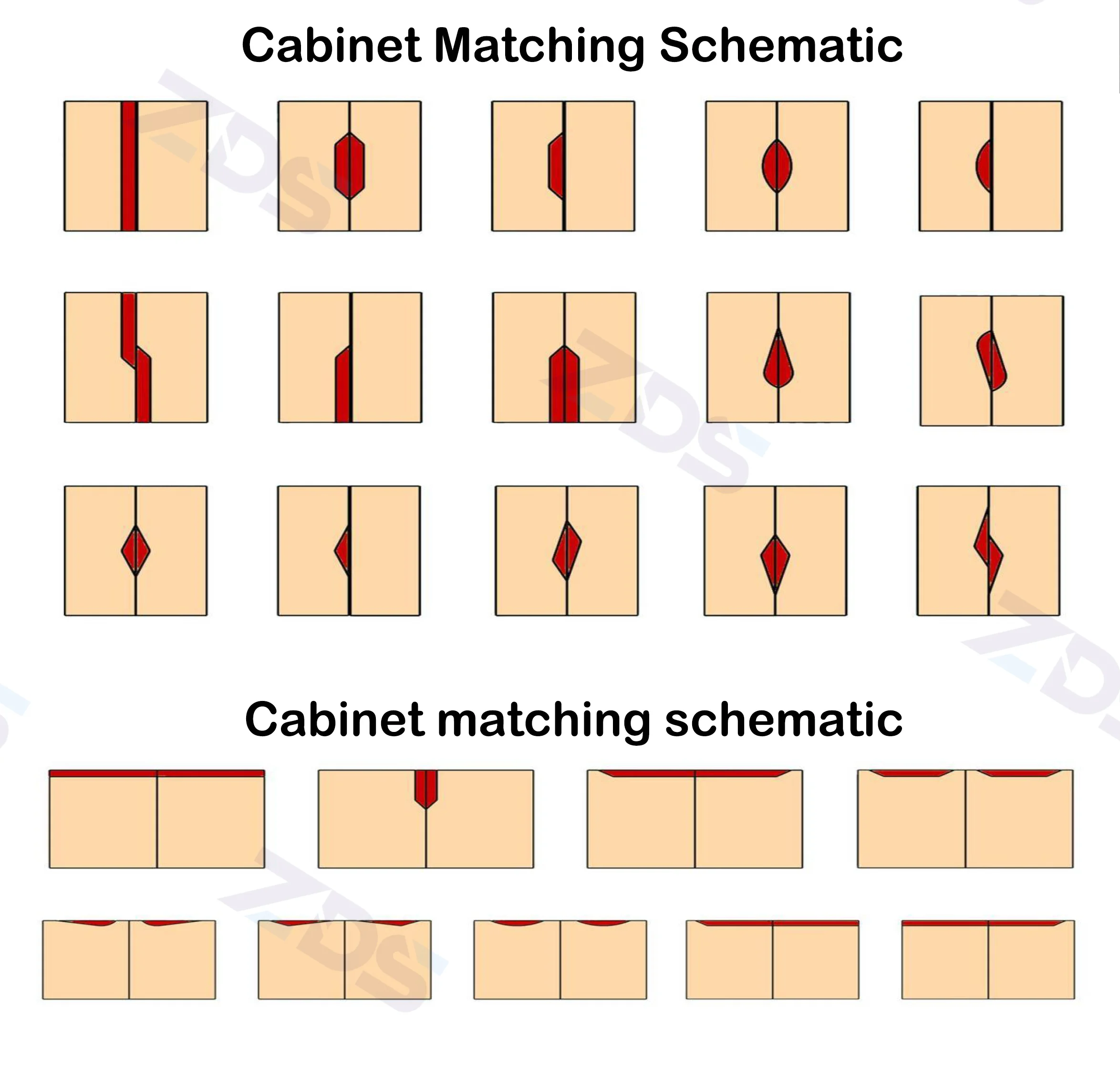
| Machining Shape Profiles | 15+ types including J, C, oblique straight, semi-pass, water drop, rhombus, triangle |
| Key Features | Pre-milling station, multi-function trimming, corner trimming, grooving, buffing |
Application Suitability
| Application | Material or Output |
|---|---|
| Custom furniture panel edge banding | MDF and particleboard with PVC edge banding |
| Cabinet door and carcass production | Plywood panels with veneer or melamine banding |
| Office and commercial joinery | Laminated board requiring pre-milled edge preparation |
| Mixed-material batch processing | Solid wood panels alternating with composite substrates |
| High-profile contour trimming | Curved and shaped furniture components needing J or C profile finishes |
Why Voltage Confirmation Should Precede Any Automatic Edge Banding Machine Manufacturer Quote
A machine that cannot run on your facility’s supply is a machine that never runs.
I spent years carrying a toolkit across the Yangtze Delta repairing woodworking lines, and the most expensive failures were never mechanical. One factory took delivery of an automatic edge banding machine only to discover the 380V motor was connected to a 220V supply — the winding burned out on the first shift, and the entire cabinet line sat idle for weeks waiting for a replacement stator. Voltage mismatches remain among the most frequent causes of early-life motor failure in exported woodworking equipment [NEED_CITE: voltage and frequency standards by export market]. When a buyer skips the electrical confirmation step, the damage is not just to the machine but to every downstream process that depends on it.
Catalogue Positioning for Scaling Workshops
The ZDSJCX-880S occupies the full-function tier within the Ruiqi edge bander range, offering pre-milling through grooving in one continuous pass. An automatic edge banding machine manufacturer that offers entry-level, mid-range and full-function models within a single product family allows a workshop to start small and add capacity later without requalifying a new supplier or retraining operators on an unfamiliar control interface. This model’s 15+ machining profiles handle the contour variety that dedicated single-function trimmers would otherwise require separate stations to achieve.
Pre-milling as the Foundation of Edge Quality
Pre-milling removes saw marks and minor substrate irregularities before the glue pot, ensuring the edge banding material bonds to a clean, flat surface. Without this station, visible glue lines can appear on porous substrates like MDF, and the inconsistency shows up only after the panel reaches the assembly bench. The ZDSJCX-880S places its pre-milling cutter at the infeed end, conditioning every panel before it meets adhesive and pressure rollers [NEED_CITE: edge adhesion failure rates on un-milled MDF surfaces]. For shops running mixed panel materials, this station is the difference between uniform edge quality and batch-to-batch variation.
Reading the Specifications Behind the Numbers
The 47.1 kW total power draw reflects the full station count — pre-milling, gluing, snipping, rough trimming, fine trimming, corner rounding, scraping, buffing and grooving — each driven by its own motor. A lower-power machine in this footprint would indicate fewer active stations or smaller individual motors that may struggle at the upper end of the feed speed range. The six Ф100 dust extraction ports serve pre-milling, rough trim, fine trim, corner trim, scraping and buffing simultaneously; undersized extraction leaves chip residue on the glue roller, degrading bond strength over a production run. The 0.6–0.8 MPa air pressure requirement drives the pneumatic cylinders controlling snipping, trimming and scraping tool engagement, and pressure drops below this range produce inconsistent cut depths across consecutive panels. Panel dimensions as small as 150 mm wide by 300 mm long can be processed, which matters for cabinet drawer fronts and small shelving components that larger-format banders cannot grip reliably.
The Hidden Cost of Skipping Configuration Verification
When a buyer sources edge banders piecemeal from different suppliers, feed height mismatches between the bander and upstream saws or downstream boring machines often surface only at installation. Panels exit one station at a height the next station cannot accept, forcing shimming workarounds that introduce vibration and tolerance drift. Control panels delivered in a language the operator cannot read delay commissioning while the buyer sources translation or waits for a firmware update, adding days or weeks to the startup timeline [NEED_CITE: commissioning delays caused by untranslated HMI interfaces]. Machines specified without considering local ambient temperature and humidity may experience glue pot cycling issues or condensation on pneumatic lines, problems that do not appear in factory acceptance tests but emerge within the first production season.
What Ruiqi’s Manufacturing Depth Means for This Model
In-house production of the cutting mechanisms used in the ZDSJCX-880S means replacement tooling ships from the same facility that built the machine, avoiding the lead times and fit issues of third-party cutters. Voltage and control panel language are configured per order rather than treated as aftermarket modifications, so the machine arrives ready for the destination facility’s electrical supply and operator team. The four-stage quality control sequence — incoming material, in-process, finished product and pre-shipment verification — includes a factory test run on the buyer’s specified panel material before the machine is crated. CE and ISO 9001 certifications apply across the product family, and documentation is prepared to match the destination market’s import requirements. Engineer-led configuration recommendations mean the quotation reflects the buyer’s actual production profile rather than a generic list price.
Documentation & Verification
- Machine specification sheet confirming panel thickness and edge banding ranges for your substrate mix
- Electrical schematic with voltage and frequency matched to your facility’s supply before production begins
- Factory test record produced on your specified panel material and edge banding type prior to dispatch
- Operation and maintenance manual written in the language your operators and maintenance team use daily
- Spare parts list with part numbers matching the as-built configuration of your ZDSJCX-880S
- Packing photographs documenting crate condition and machine securing before the container is sealed
Installation, Commissioning & Support
- Floor space of 8.82 m length plus operator clearance required, with level concrete substrate rated for 3200 kg static load
- Dedicated 380V circuit with confirmed frequency and breaker sizing matched to the 47.1 kW total power draw
- Machine arrives as a single integrated unit requiring pneumatic line connection and dust duct hookup to six Ф100 ports
- First-run commissioning includes feed speed calibration across the 6–8 m/min range on your panel stock
- Operator training covers all 15+ machining profiles and tool change procedures for contour trimming stations
- Wear items including pre-milling cutters, trim blades and buffing wheels listed with reorder intervals
Preparing Your Inquiry
To receive an accurate configuration proposal, share the panel materials and thicknesses your line processes most frequently, along with the edge banding types — PVC, veneer, melamine — and the profiles you run. Confirm your facility’s voltage and frequency so the electrical package is built correctly from the start. If you are integrating the ZDSJCX-880S with existing saws or boring machines, provide the feed height and throughput of those stations so the line can be balanced without bottlenecks.
Frequently Asked Questions
Q: Where does the ZDSJCX-880S sit within the full edge bander range?
A: The ZDSJCX-880S is a full-function model featuring pre-milling, multi-profile trimming, corner rounding and grooving in one pass. Entry-level models in the range omit pre-milling and some trimming stations for lower-volume shops. This model suits mid-to-high volume workshops that need consistent edge quality across mixed panel materials without adding separate contour trimming machines downstream.
Q: How is voltage and frequency confirmed before production starts?
A: During the quotation stage, the buyer provides their facility’s supply voltage and frequency. Ruiqi configures the motor windings, transformer and control cabinet to match, and the electrical schematic is included in the documentation package for the buyer’s electrician to verify before connection. Machines can be built for voltages from 110V to 440V depending on the destination market’s standards.
Q: What panel and edge banding thickness ranges are achievable?
A: The listed specifications show 18–22 mm panel thickness and 0.5–0.8 mm edge banding thickness, but the actual achievable range depends on the specific tooling and pressure roller configuration selected. Buyers should request a specification sheet confirming the full range for their intended substrates, and a factory sample test can validate edge quality on the buyer’s actual panel material before the order is finalized.
Q: Can the control panel language be customized for local operators?
A: Yes. The control interface can be configured in the buyer’s preferred language as part of the standard order process. This is finalized during the specification confirmation stage so the machine arrives with an HMI the operator team can read immediately, avoiding commissioning delays caused by untranslated menus and alarm messages on the production floor.
Q: How does this model integrate with upstream saws and downstream boring machines?
A: The ZDSJCX-880S processes panels from 150 mm wide and 300 mm long, feeding at 6–8 m/min. Integration with upstream panel saws and downstream multi-boring machines requires matching feed heights and balancing throughput so no station becomes a bottleneck. Ruiqi provides line layout guidance covering material flow and station spacing when buyers share their existing equipment specifications.